Cell Adhesion Molecules
(CAM)
Medical Biology
Müjgan Cengiz
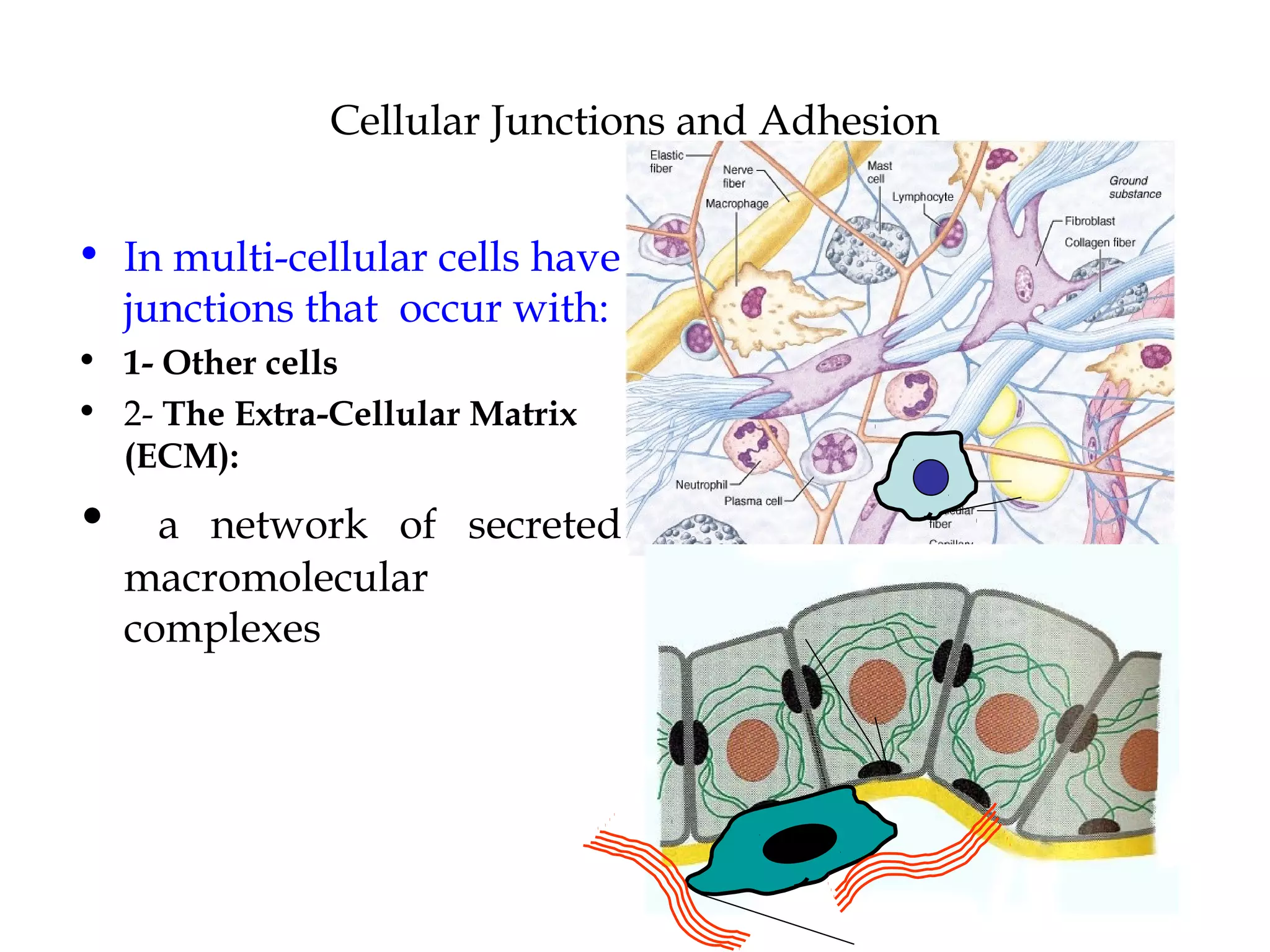
Cellular Junctions and Adhesion
• In multi-cellular cells have
junctions that occur with:
• 1- Other cells
• 2- The Extra-Cellular Matrix
(ECM):

•

a network of secreted
macromolecular
complexes
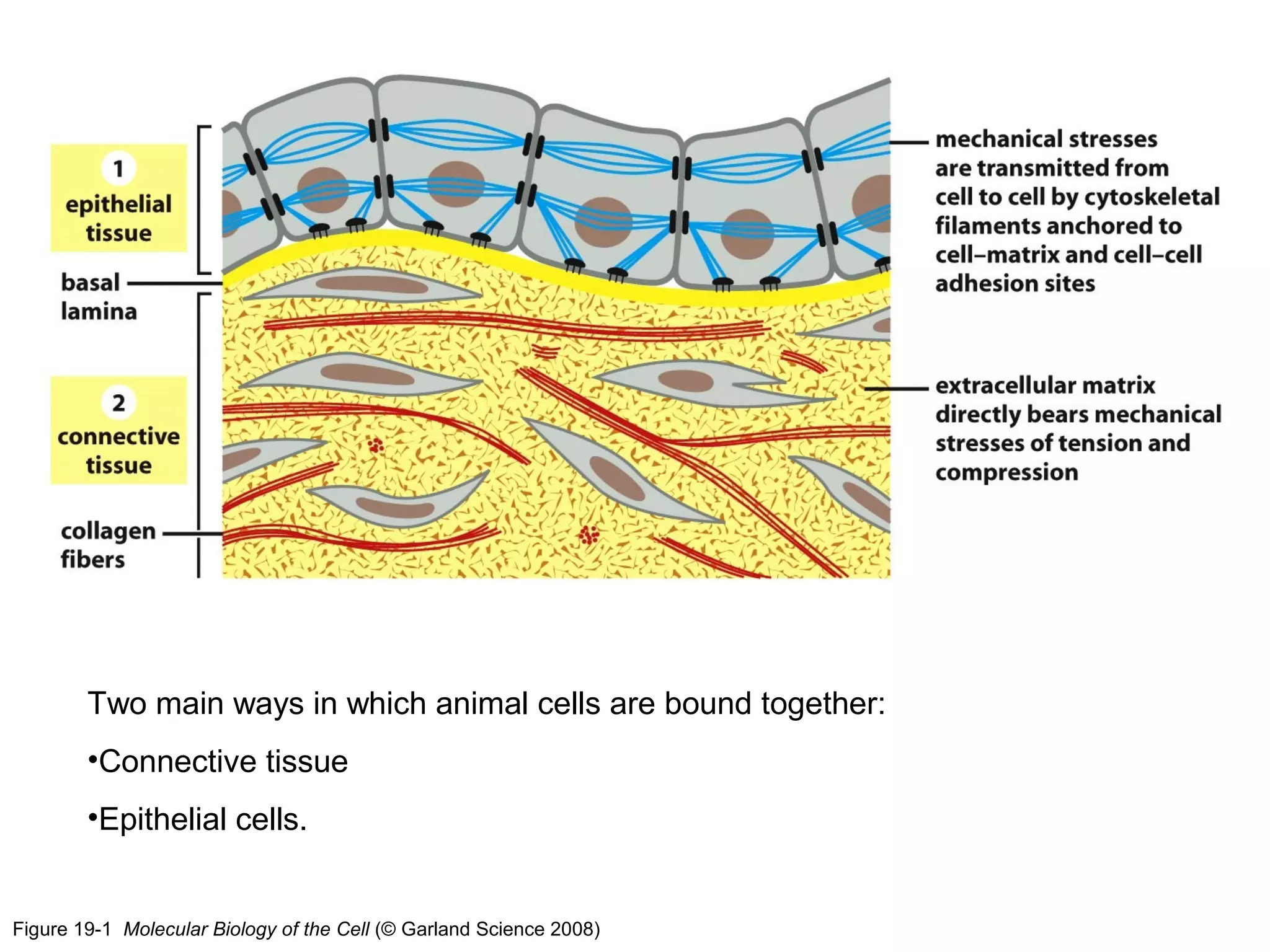
Two main ways in which animal cells are bound together:
•Connective tissue
•Epithelial cells.

Figure 19-1 Molecular Biology of the Cell (© Garland Science 2008)
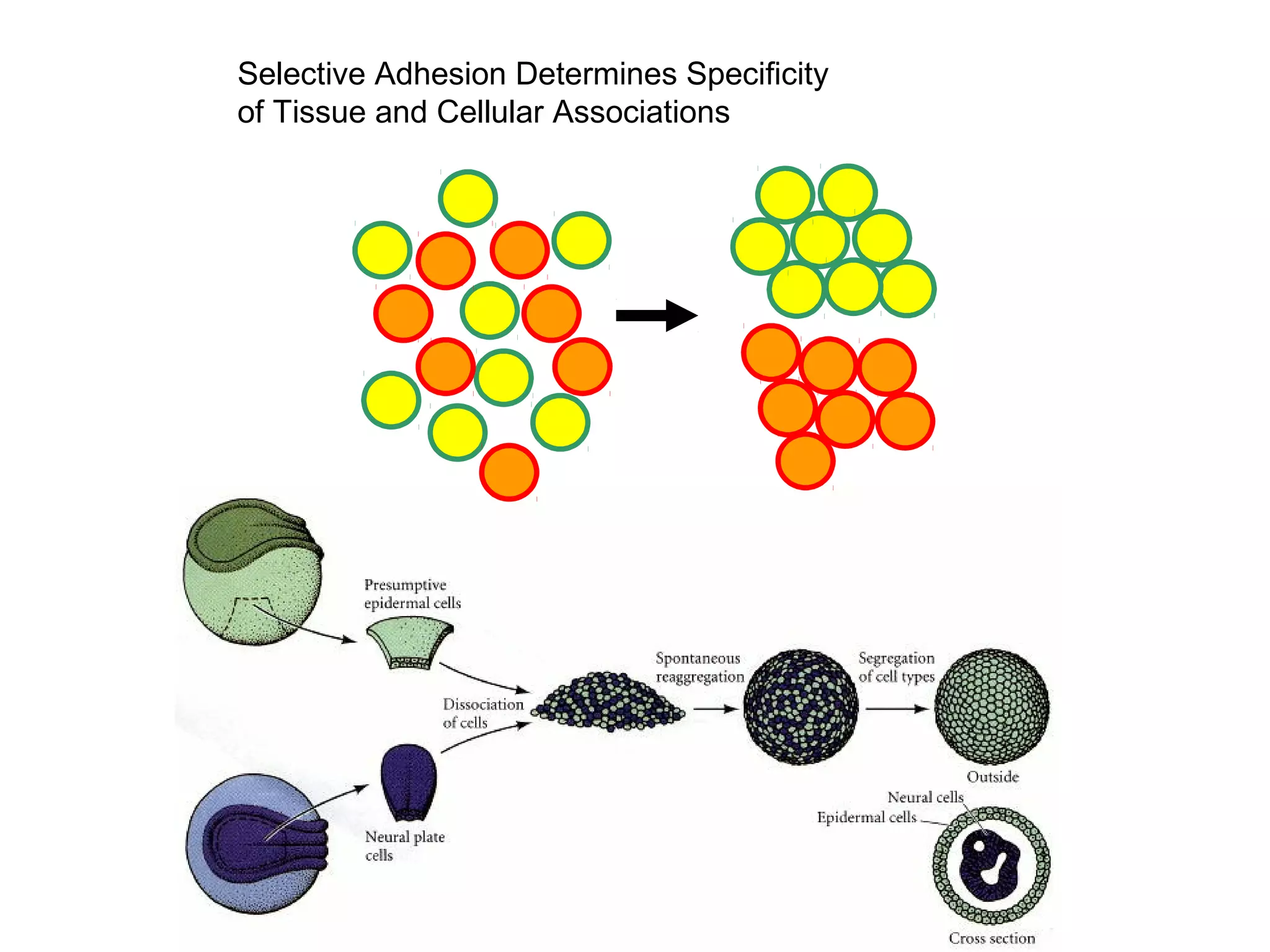
Selective Adhesion Determines Specificity
of Tissue and Cellular Associations
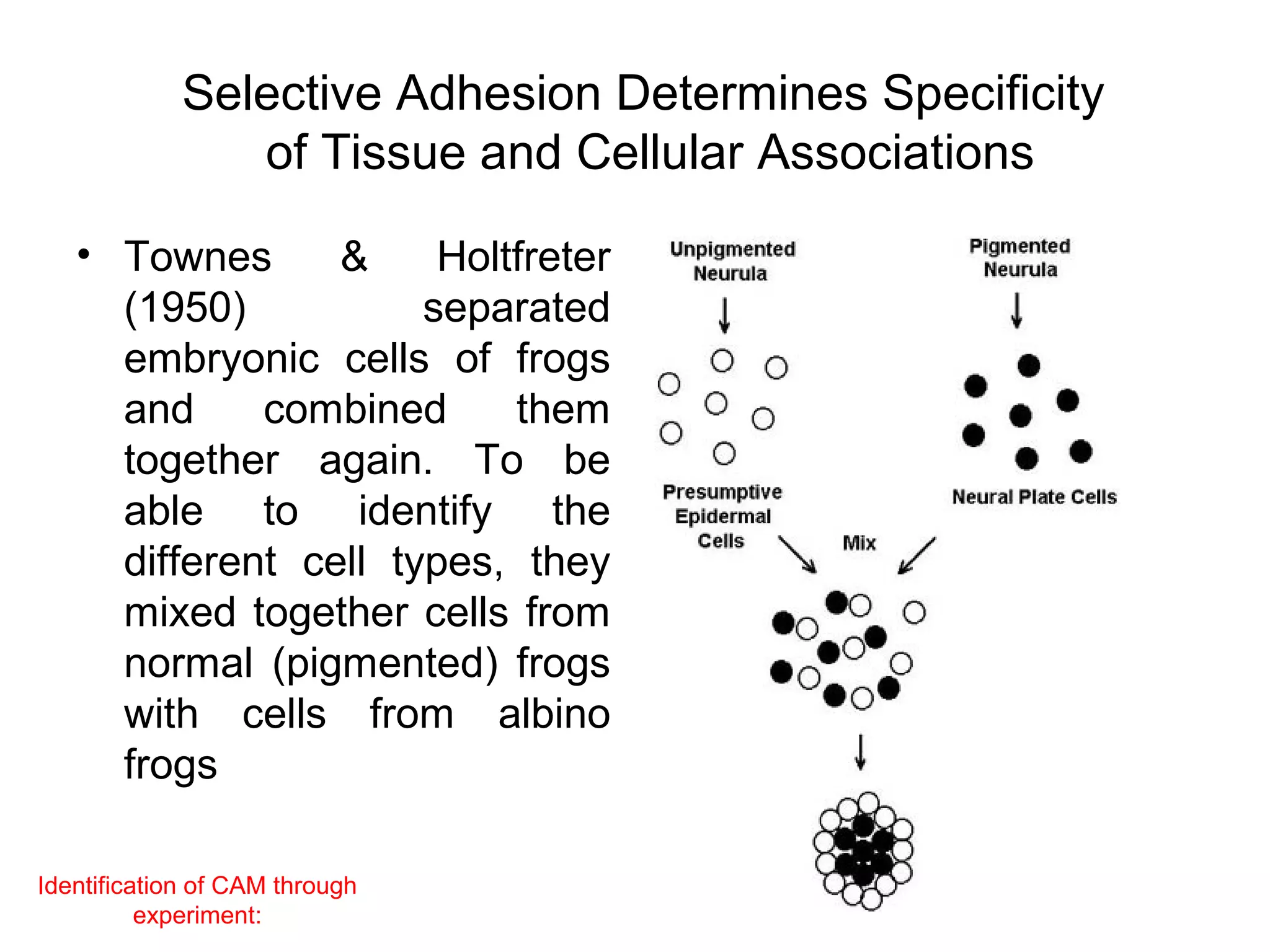
• Townes
&
Holtfreter
(1950)
separated
embryonic cells of frogs
and
combined
them
together again. To be
able to identify the
different cell types, they
mixed together cells from
normal (pigmented) frogs
with cells from albino
frogs
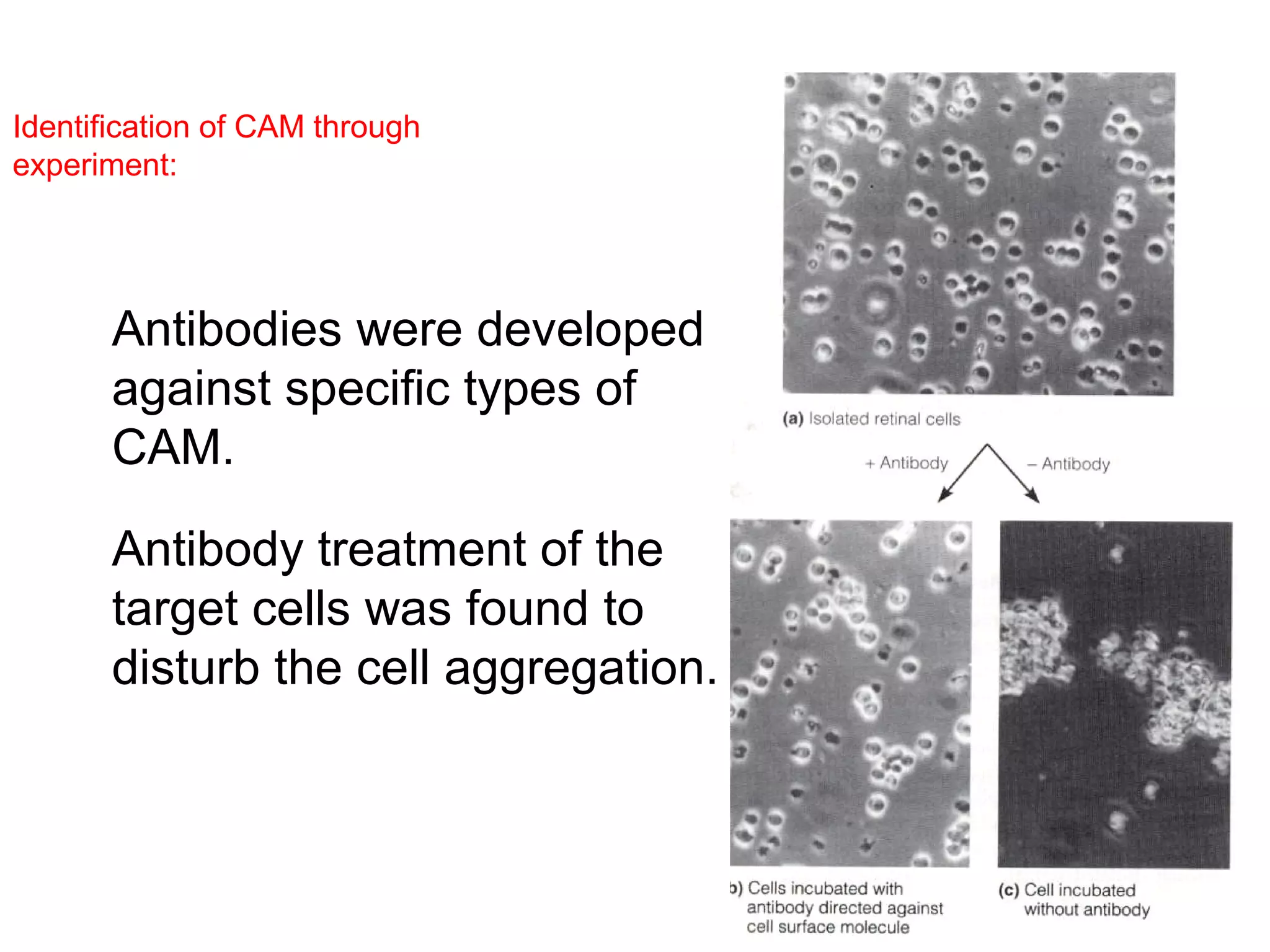
Identification of CAM through
experiment:
Selective Adhesion Determines Specificity
of Tissue and Cellular Associations
Identification of CAM through
experiment:

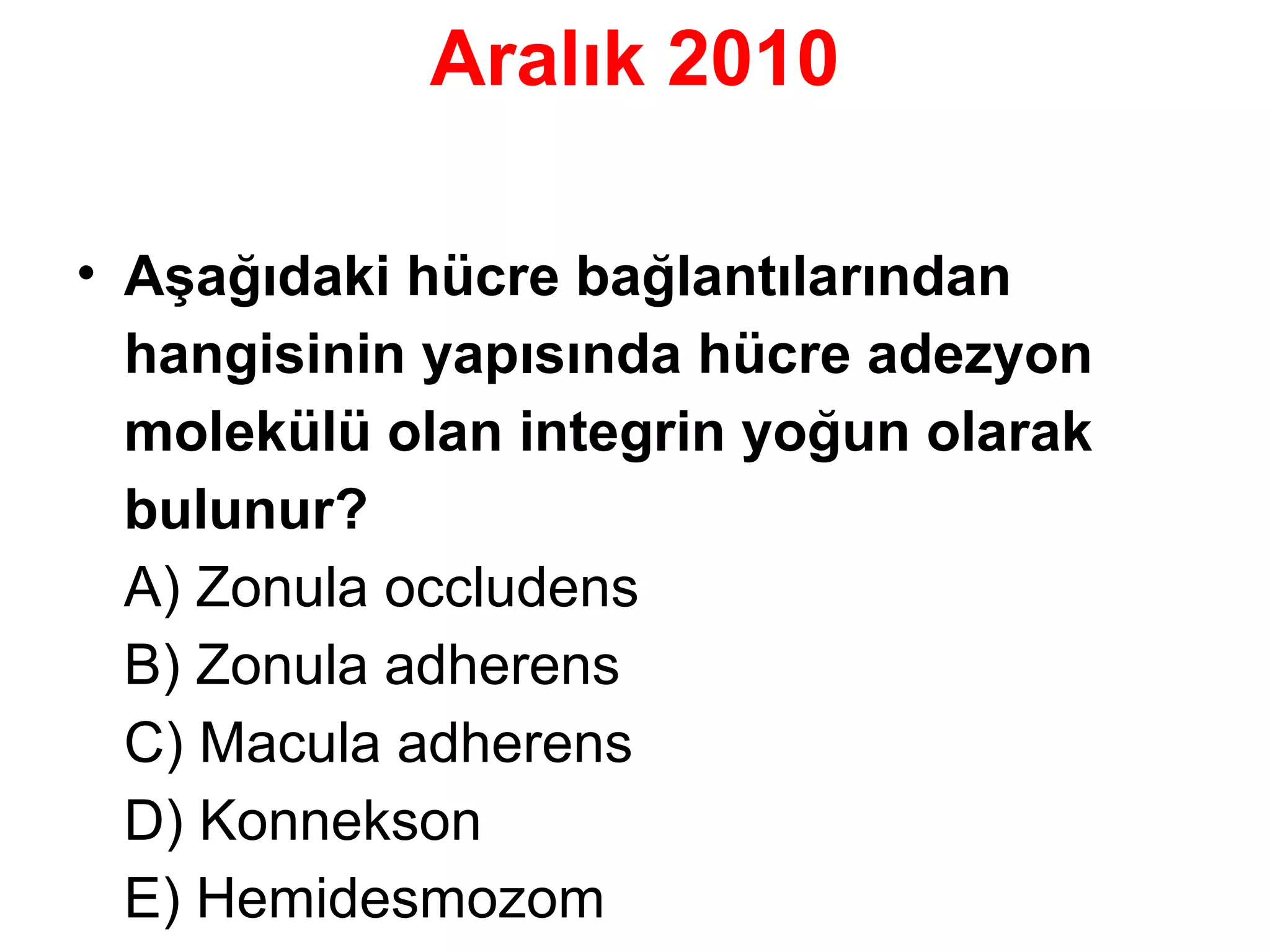
Antibodies were developed
against specific types of
CAM.
Antibody treatment of the
target cells was found to
disturb the cell aggregation.
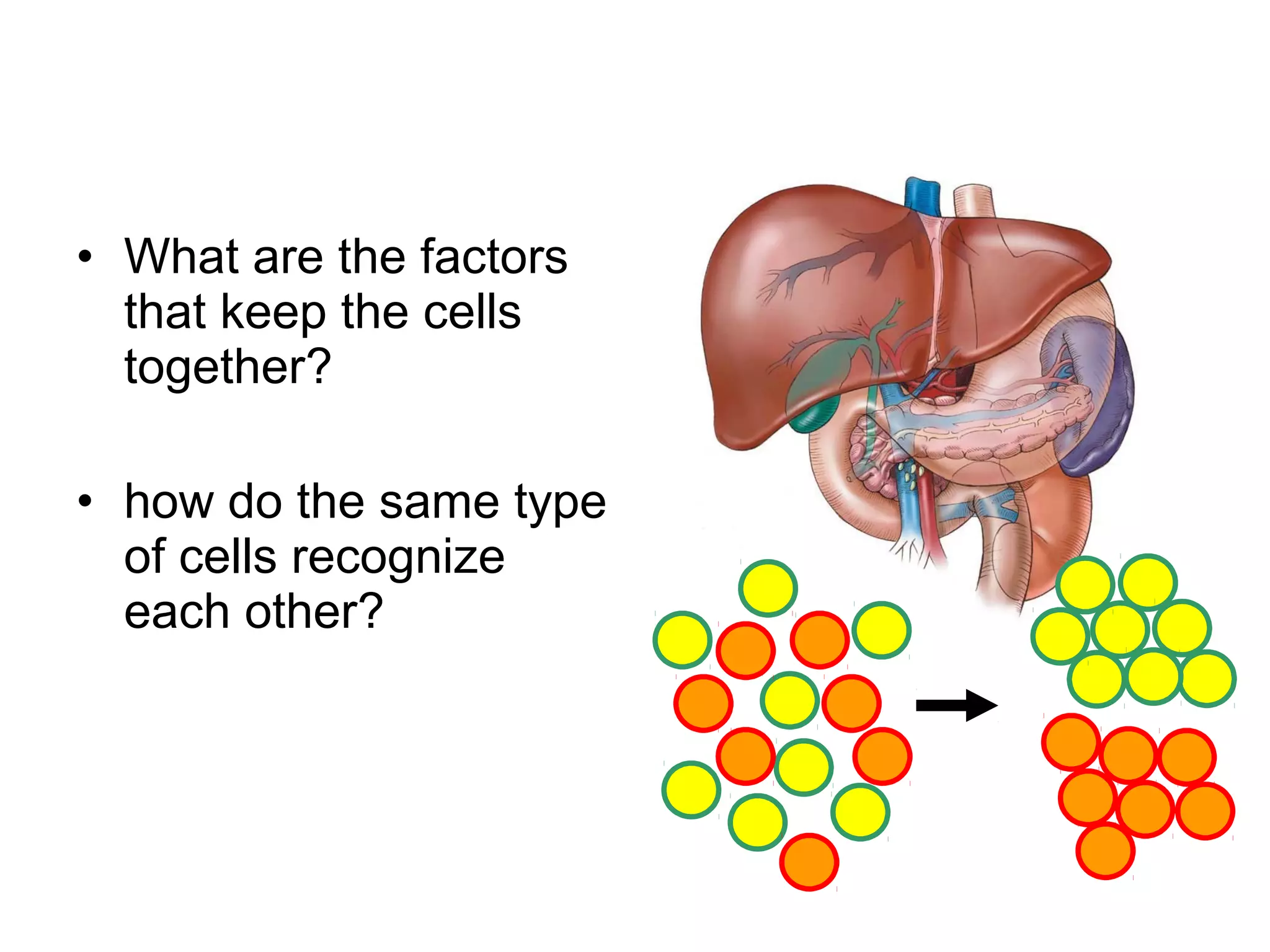
• What are the factors
that keep the cells
together?
• how do the same type
of cells recognize
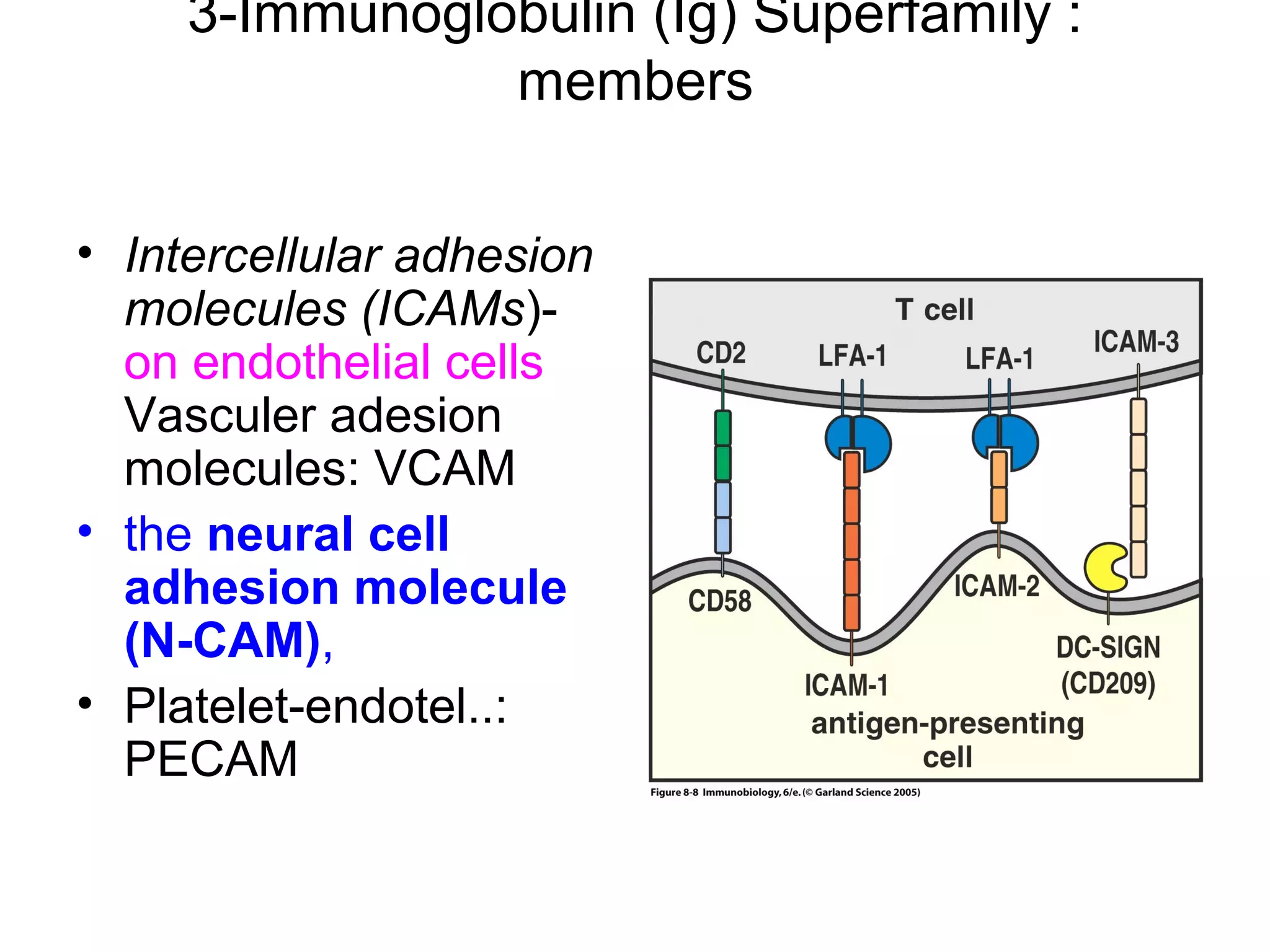
each other?
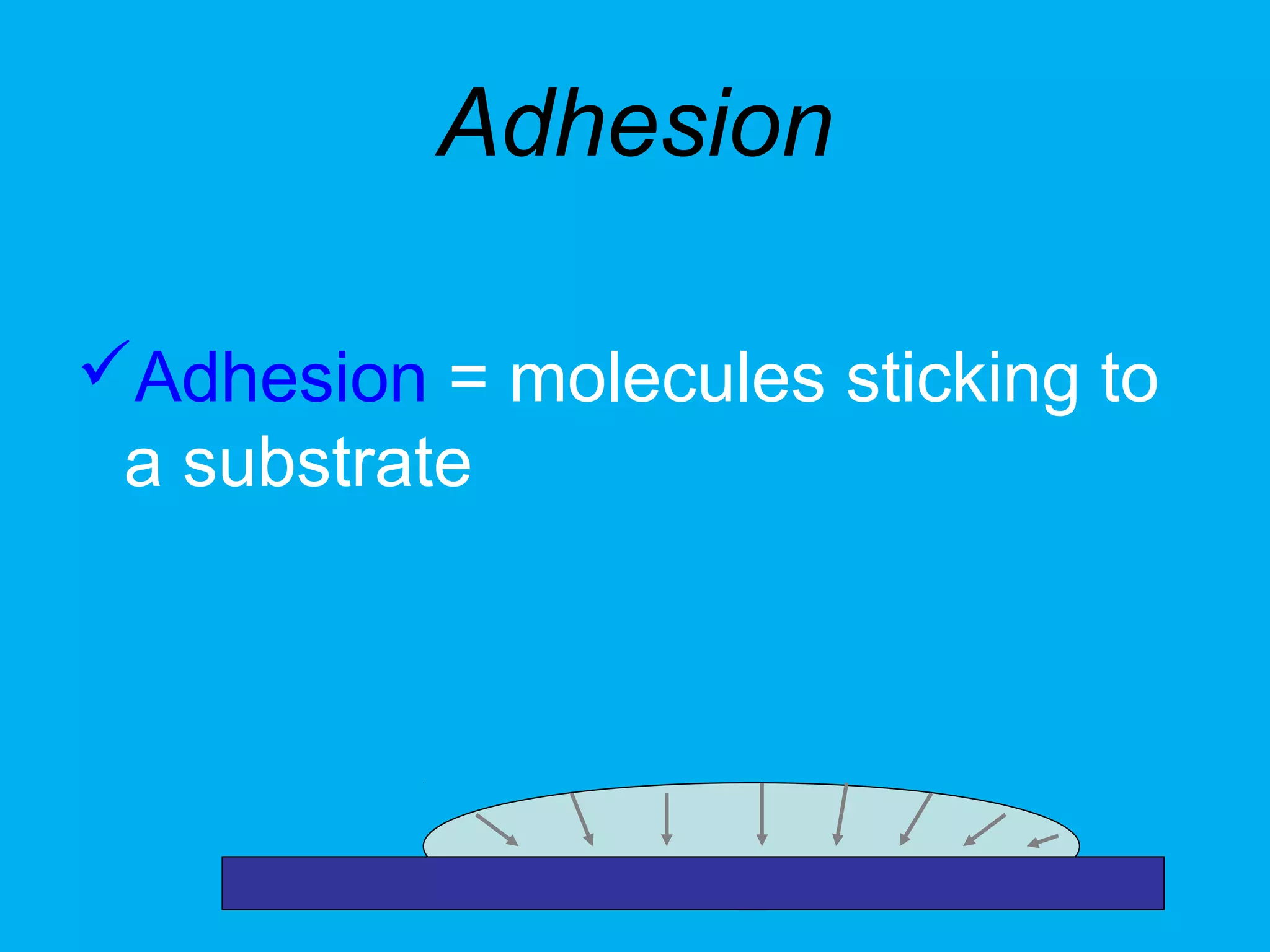
Adhesion
Adhesion = molecules sticking to
a substrate
CELL ADESİON MOLECULES
• Cell-cell interactions
• Embryogenesis
• Immunity(migration of immun cells to the
inflamation center)
• Cell tissue organ development
• wound healing
• Cancer metastasis
Cell adhesion molecules
• 1-Holding cells together
• 2-Cells detect their extracellular
environment through interaction
employing a variety of cell adhesion
molecules (CAMs)
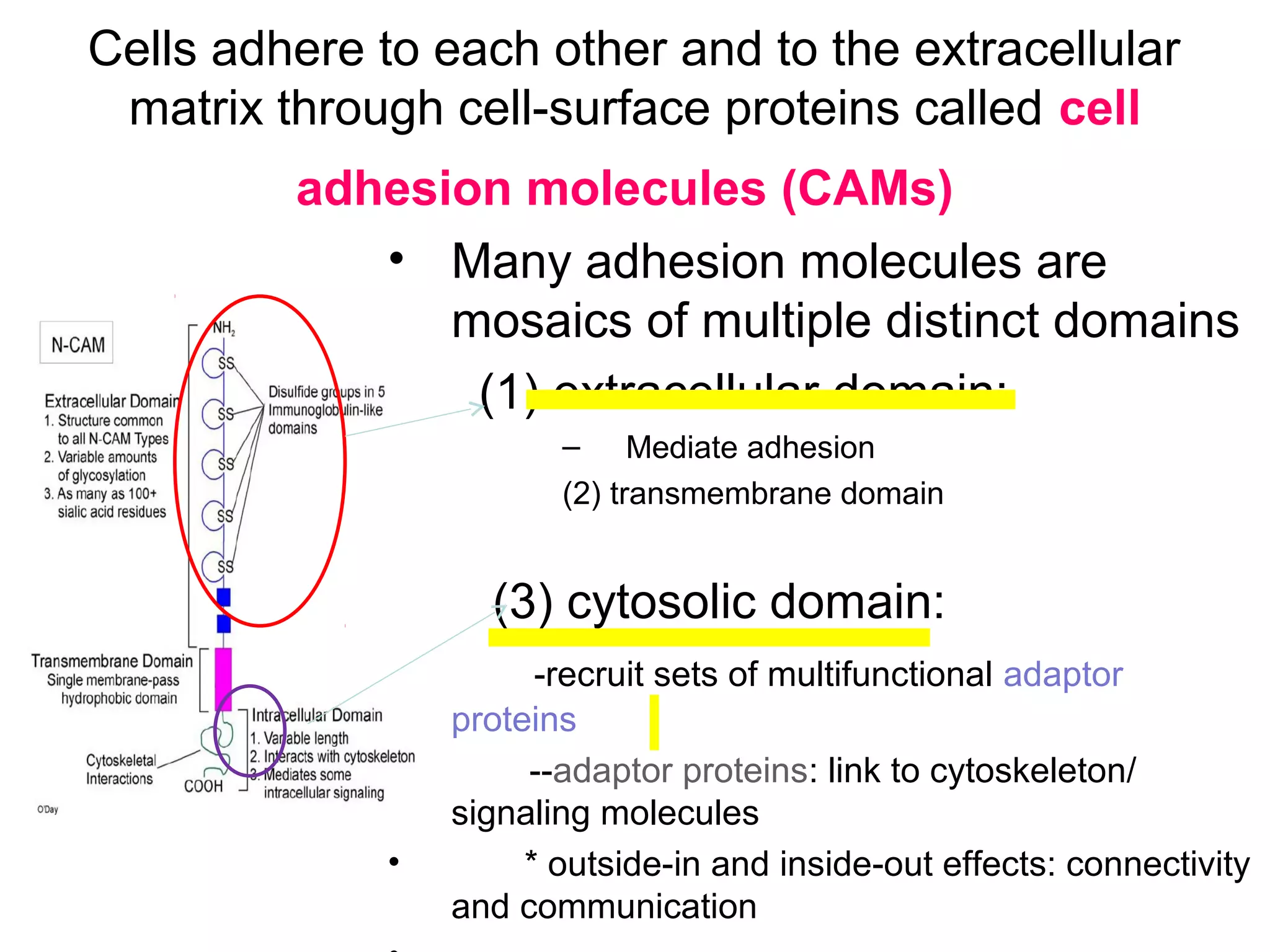
Cells adhere to each other and to the extracellular
matrix through cell-surface proteins called cell
adhesion molecules (CAMs)
• Many adhesion molecules are
mosaics of multiple distinct domains
• (1) extracellular domain:
– Mediate adhesion
(2) transmembrane domain

•
•
•
•

(3) cytosolic domain:
-recruit sets of multifunctional adaptor
proteins
--adaptor proteins: link to cytoskeleton/
signaling molecules
* outside-in and inside-out effects: connectivity
and communication
Cell adhesion molecules (CAM)

--Many adhesion molecules are mosaics of multiple distinct domains
(1) extracellular domain: mediate adhesion
*homotypic adhesion—adhesive interactions between cells of the same
type
*homophilic adhesion—a CAM on one cell can directly bind to the same
kind of CAM on an adjacent cell.
(2) cytosolic domain:
--recruit sets of multifunctional adaptor proteins
--adaptor proteins: link to cytoskeleton or signaling molecules
* outside-in and inside-out effects: connectivity and communication
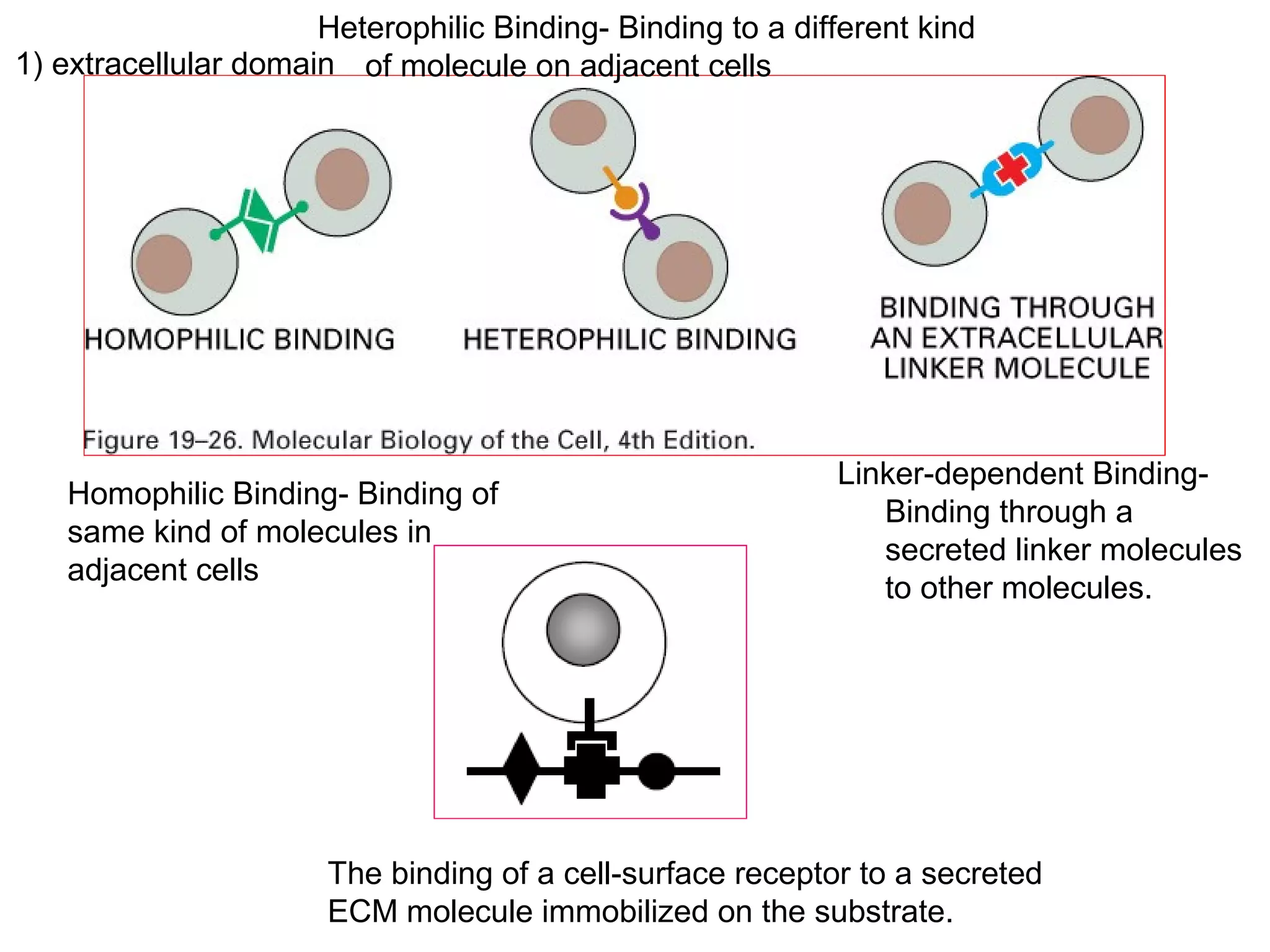
Heterophilic Binding- Binding to a different kind
1) extracellular domain of molecule on adjacent cells

Homophilic Binding- Binding of
same kind of molecules in
adjacent cells

Linker-dependent BindingBinding through a
secreted linker molecules
to other molecules.

The binding of a cell-surface receptor to a secreted
ECM molecule immobilized on the substrate.
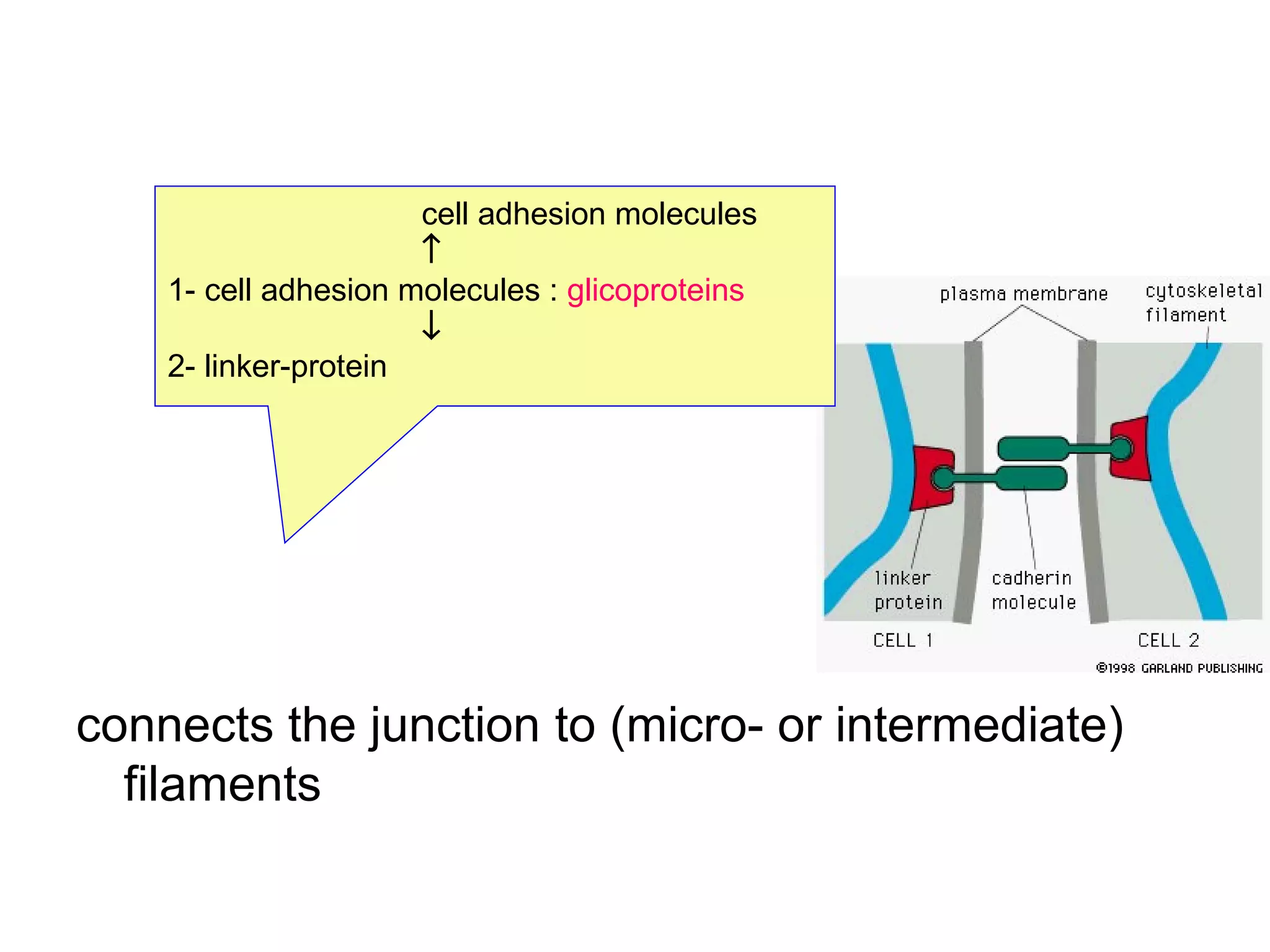
cell adhesion molecules
↑
1- cell adhesion molecules : glicoproteins
↓
2- linker-protein

connects the junction to (micro- or intermediate)
filaments
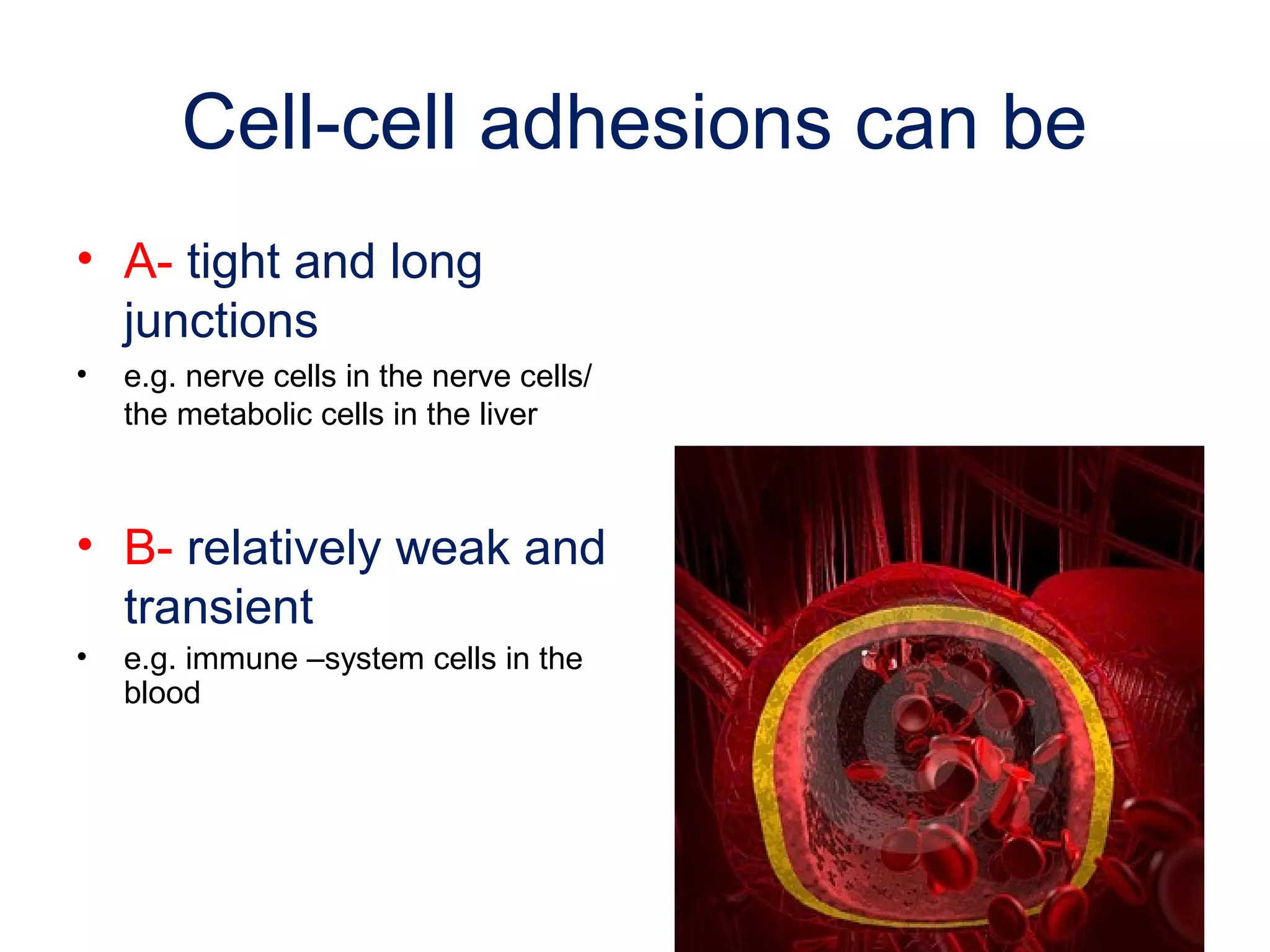
Cell-cell adhesions can be
• A- tight and long
junctions
•

e.g. nerve cells in the nerve cells/
the metabolic cells in the liver

• B- relatively weak and
transient
•

e.g. immune –system cells in the
blood
Cell Adhesion Molecules
What are they?
Cell adhesion molecules (CAMS) are cell surface proteins involved in
the binding of cells, usually leukocytes, to each other, to
endothelial cells, or to the extracellular matrix.

Most CAMS can be placed into one of four general families of proteins:

1) Cadherins
2) Integrins
3) Immunoglobulin (Ig) super family
4) Selectins
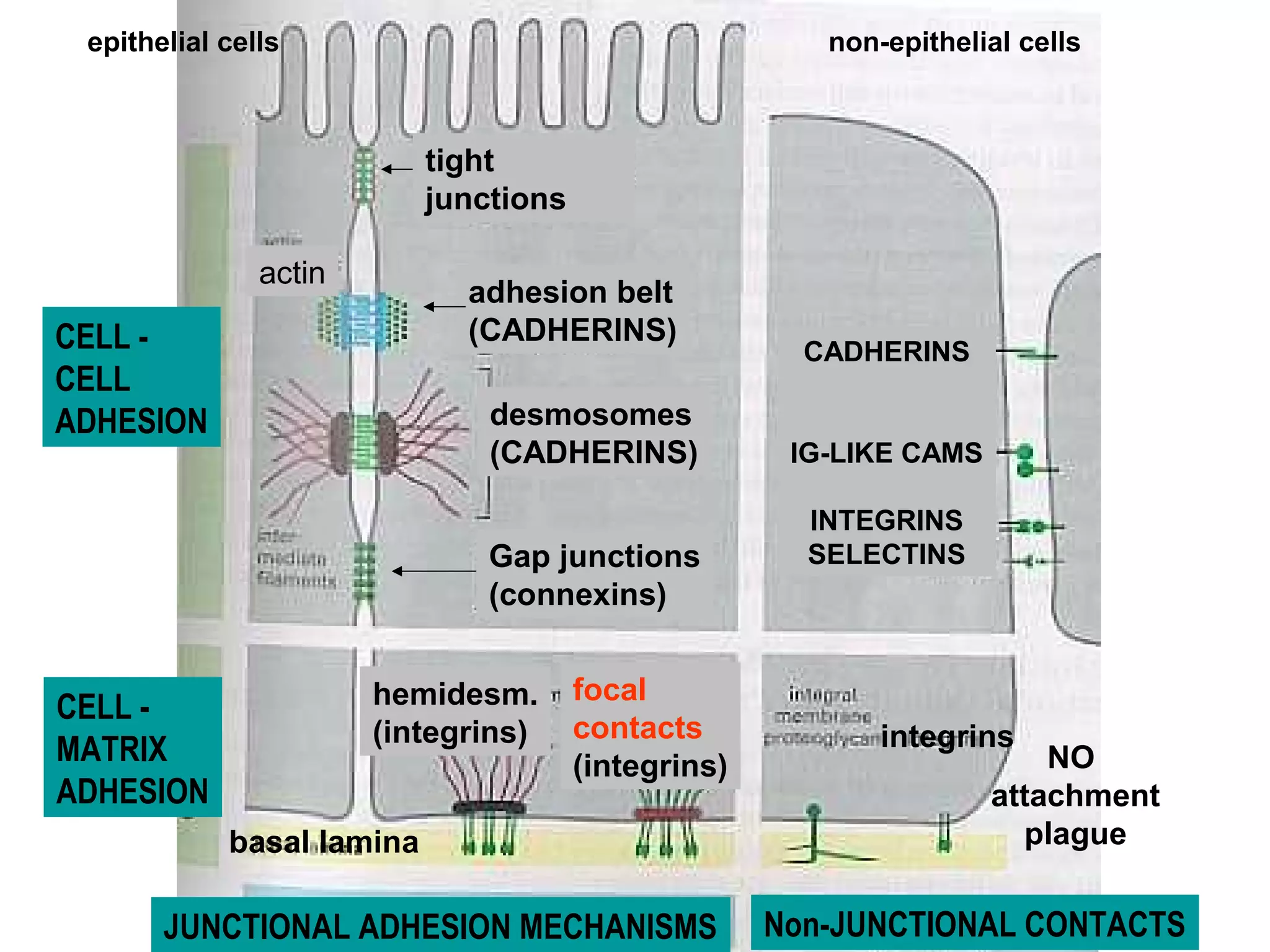
epithelial cells

non-epithelial cells

tight
junctions
actin

adhesion belt
(CADHERINS)

CELL CELL
ADHESION

desmosomes
(CADHERINS)
Gap junctions
(connexins)

CELL MATRIX
ADHESION

hemidesm.
(integrins)

focal
contacts
(integrins)

basal lamina

JUNCTIONAL ADHESION MECHANISMS

CADHERINS
IG-LIKE CAMS
INTEGRINS
SELECTINS

integrins

NO
attachment
plague

Non-JUNCTIONAL CONTACTS
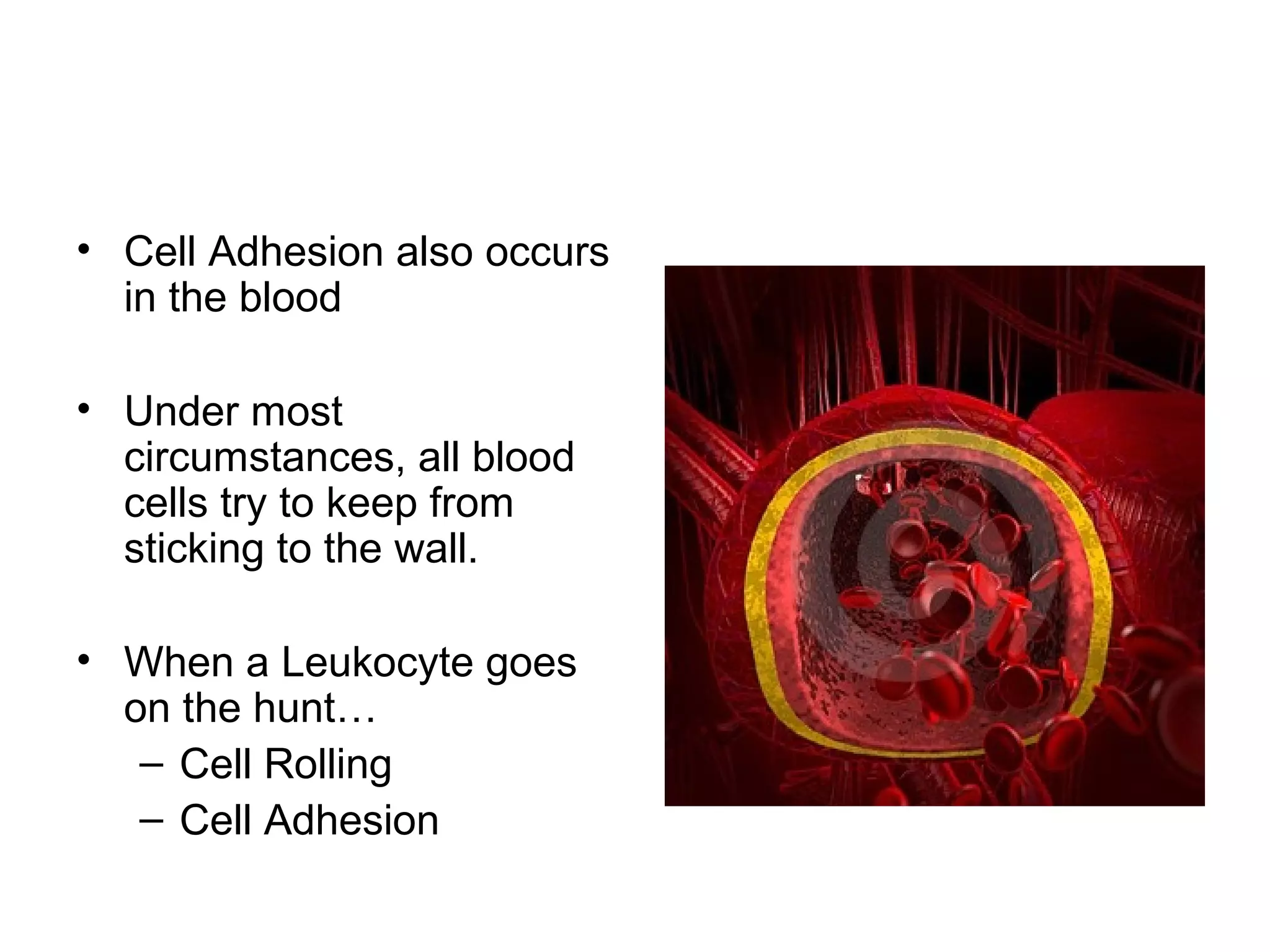
• Cell Adhesion also occurs
in the blood
• Under most
circumstances, all blood
cells try to keep from
sticking to the wall.
• When a Leukocyte goes
on the hunt…
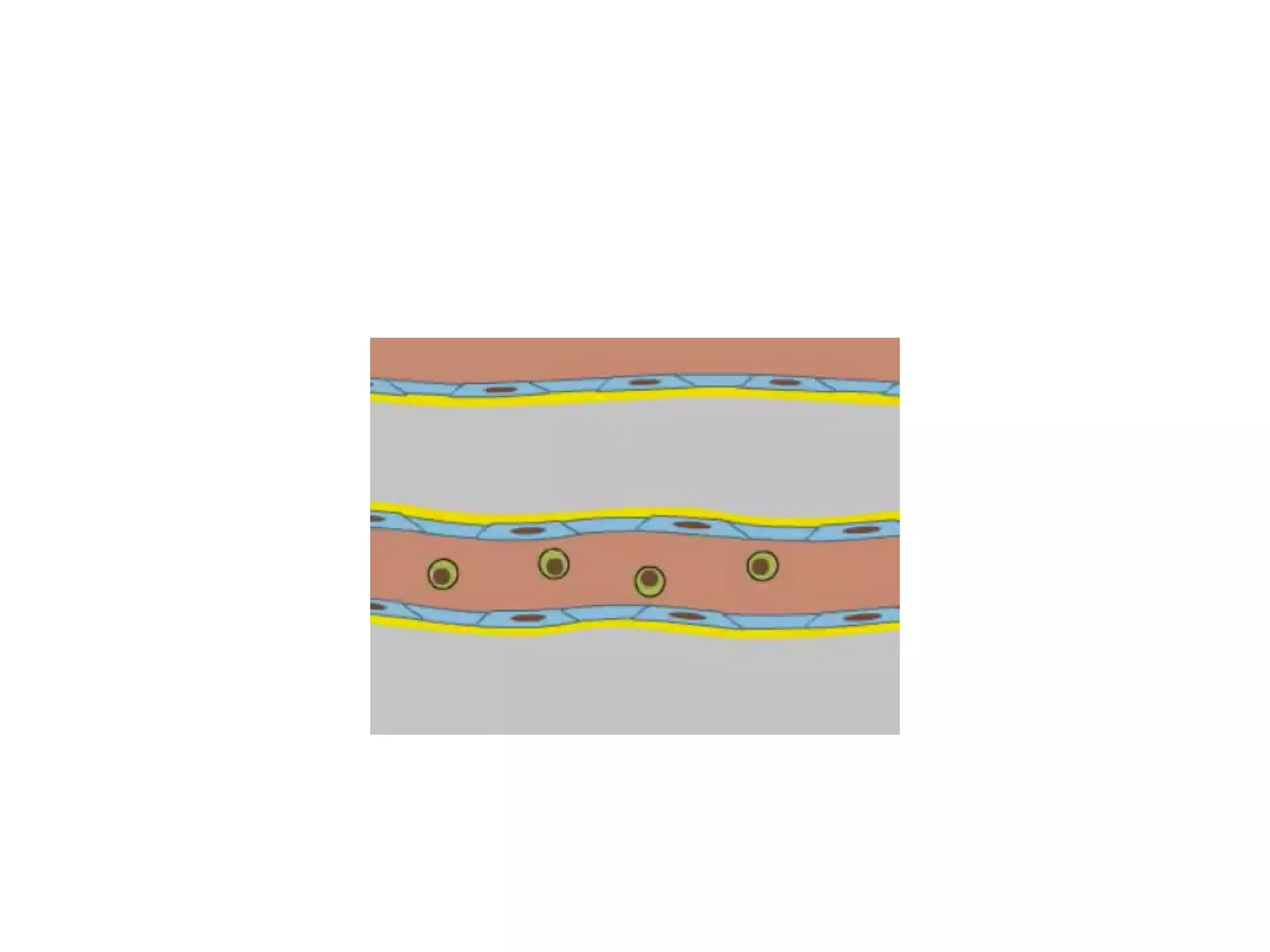
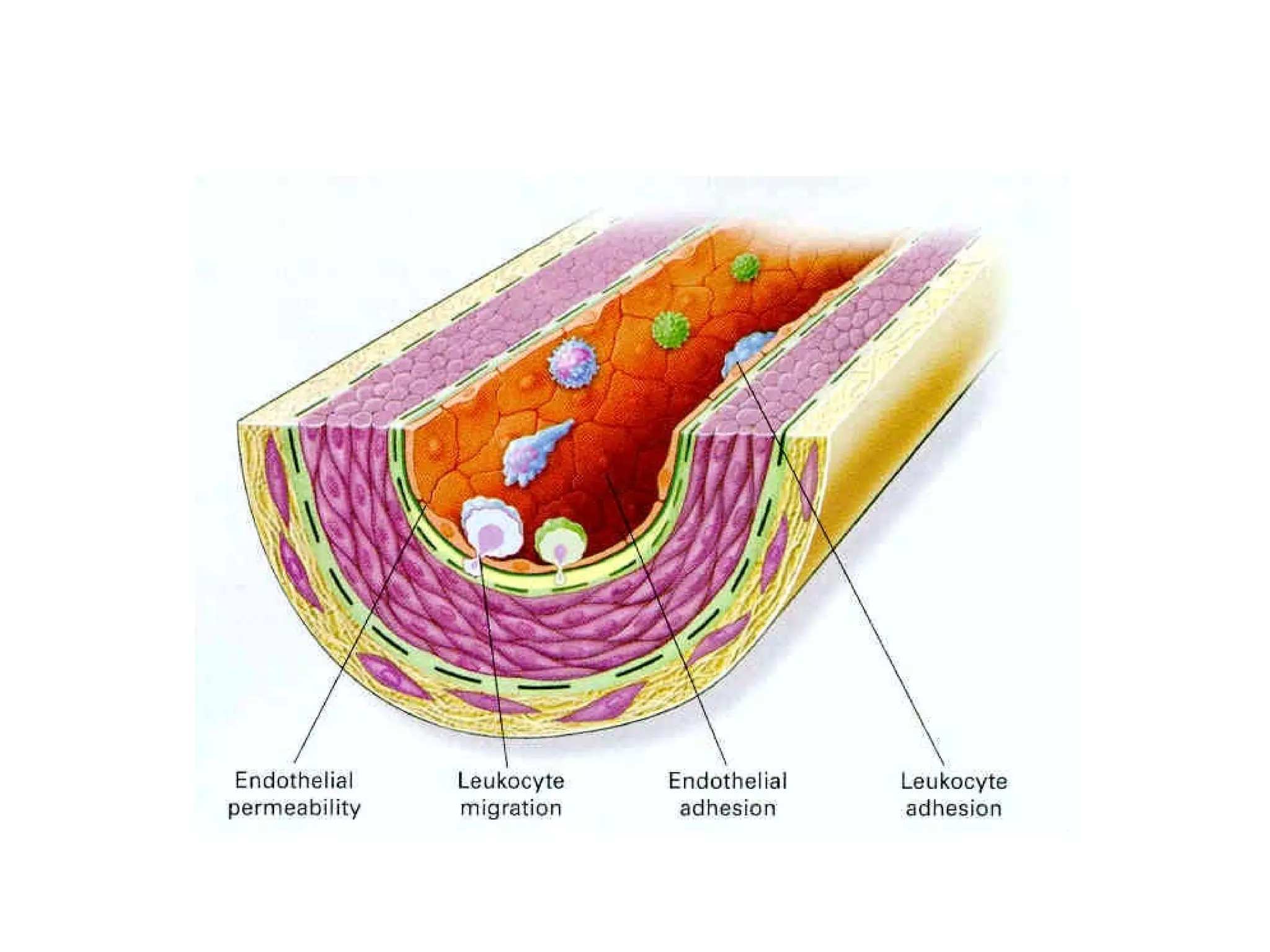
– Cell Rolling
– Cell Adhesion
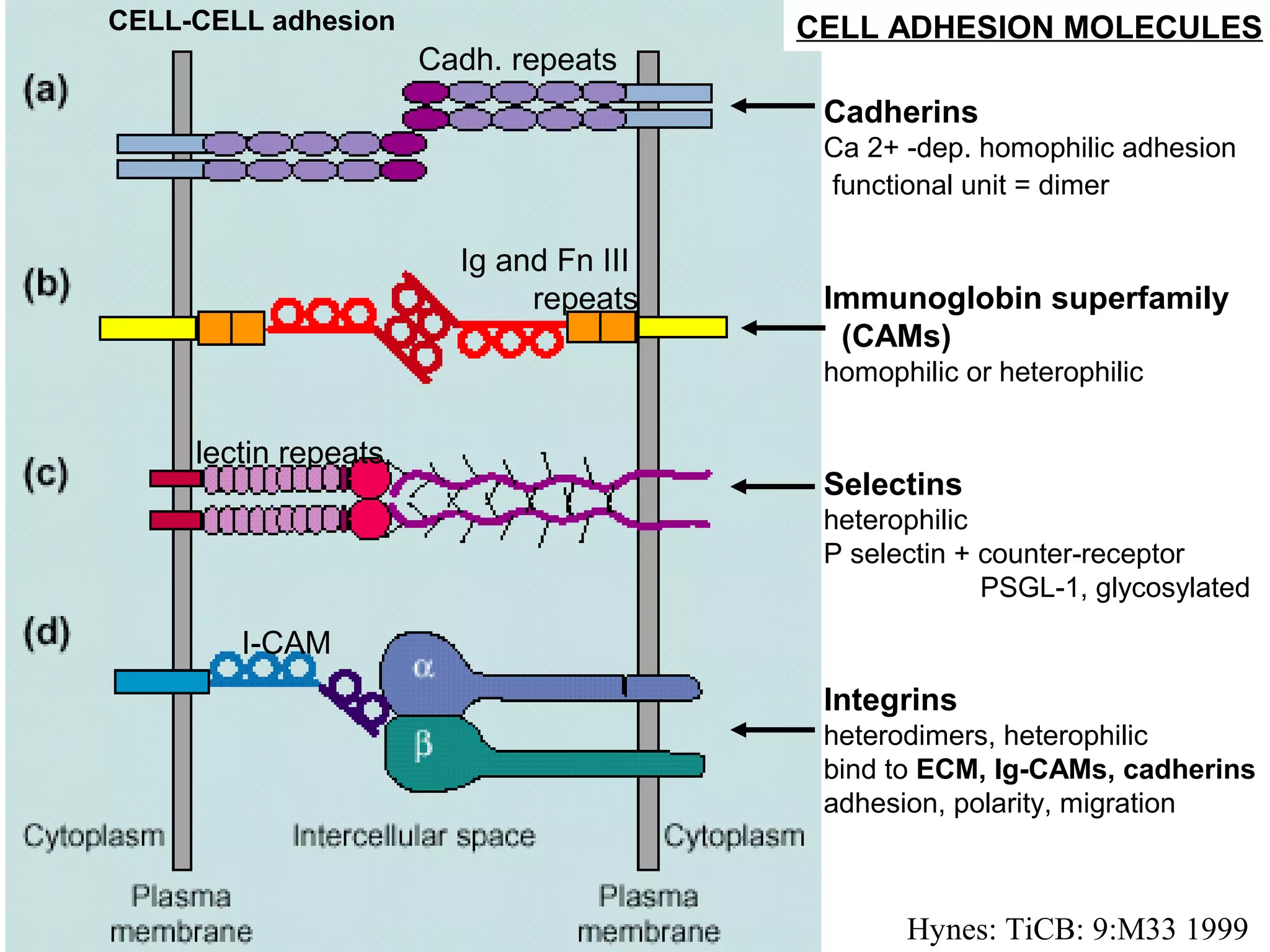
CELL-CELL adhesion

Cadh. repeats

CELL ADHESION MOLECULES
Cadherins
Ca 2+ -dep. homophilic adhesion
functional unit = dimer

Ig and Fn III
repeats

Immunoglobin superfamily
(CAMs)
homophilic or heterophilic

lectin repeats

Selectins
heterophilic
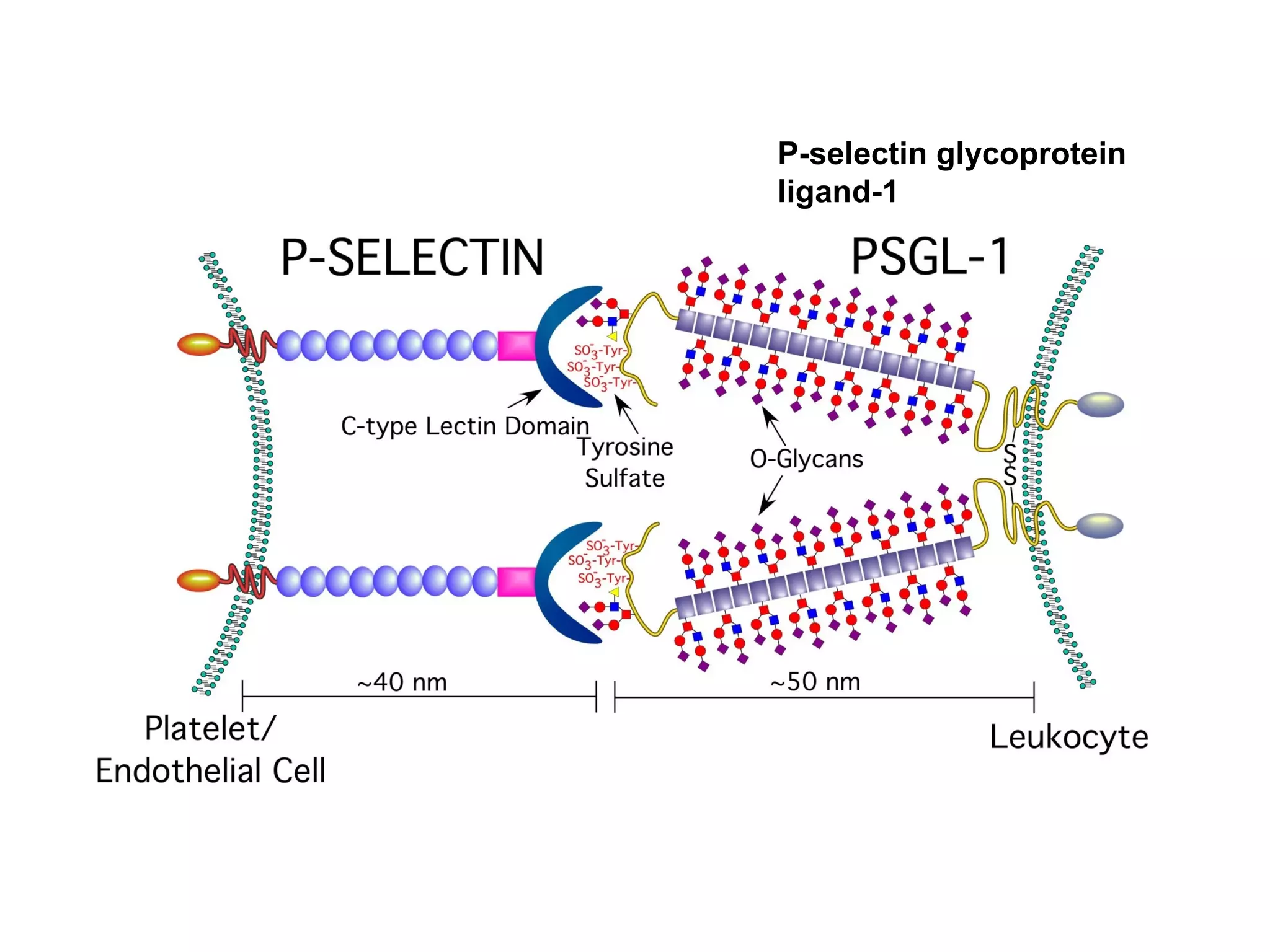
P selectin + counter-receptor
PSGL-1, glycosylated

I-CAM
Integrins
heterodimers, heterophilic
bind to ECM, Ig-CAMs, cadherins
adhesion, polarity, migration

Hynes: TiCB: 9:M33 1999
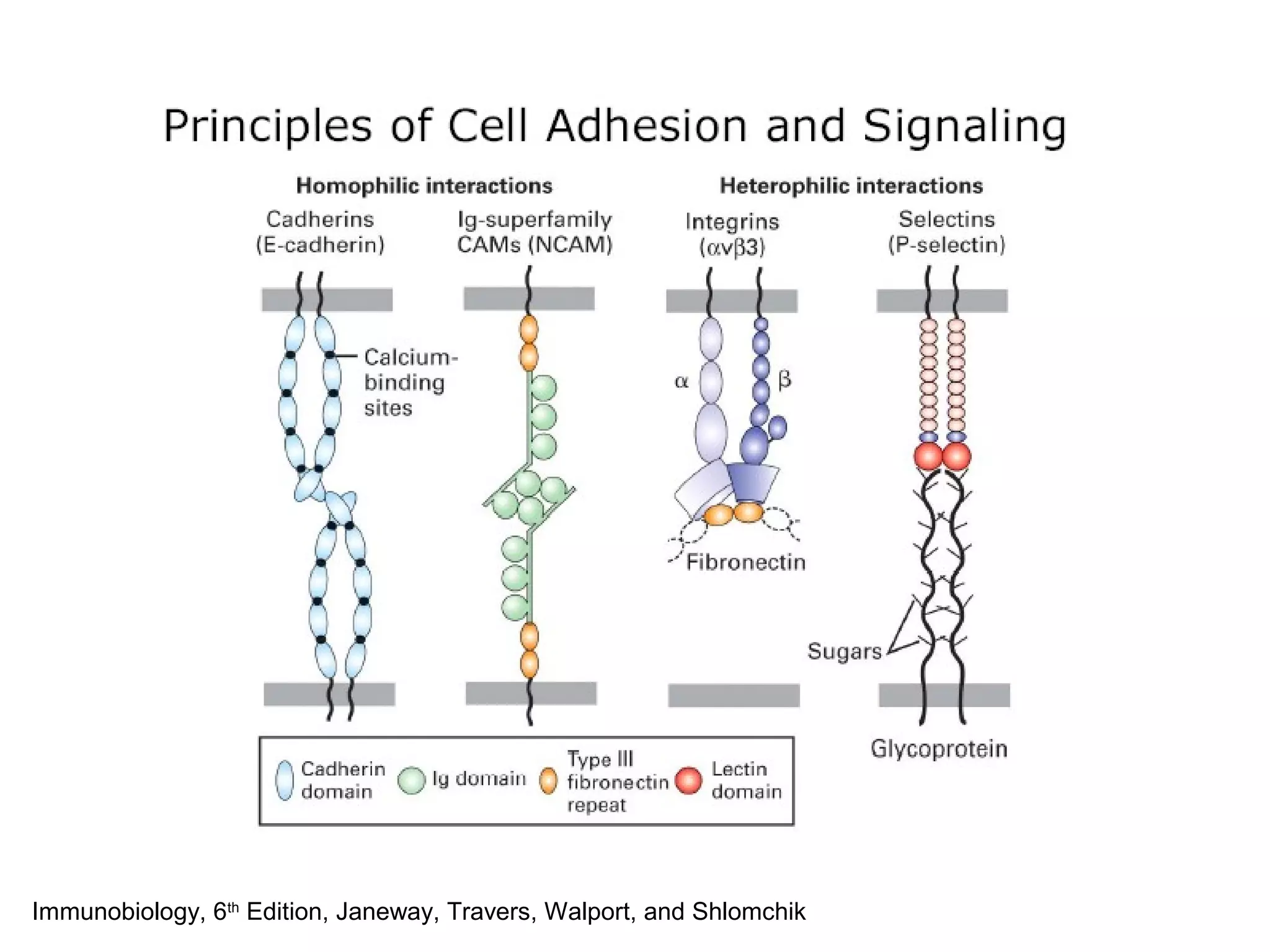
Immunobiology, 6th Edition, Janeway, Travers, Walport, and Shlomchik
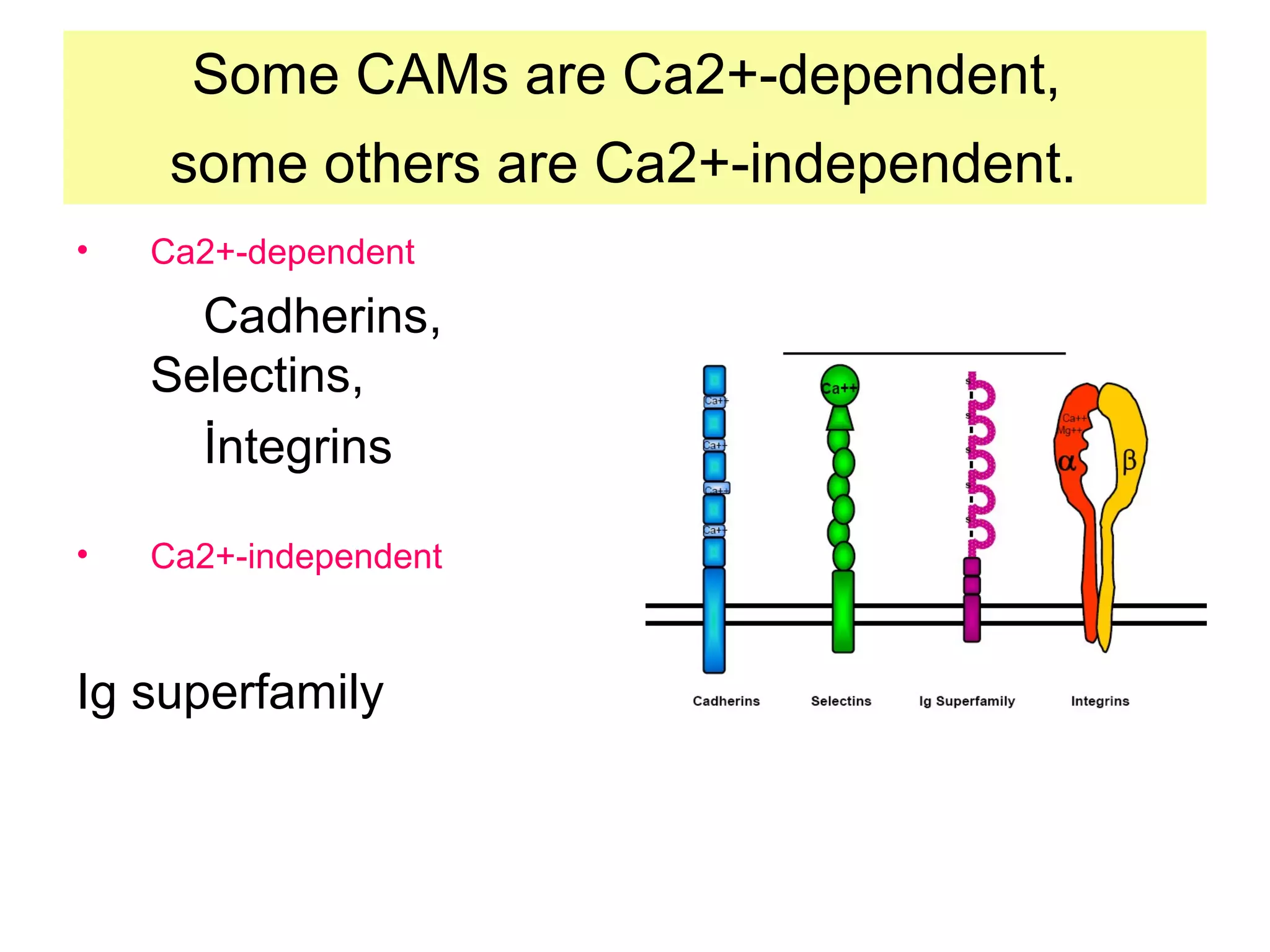
Some CAMs are Ca2+-dependent,
some others are Ca2+-independent.
•

Ca2+-dependent

Cadherins,
Selectins,
İntegrins
•

Ca2+-independent

Ig superfamily
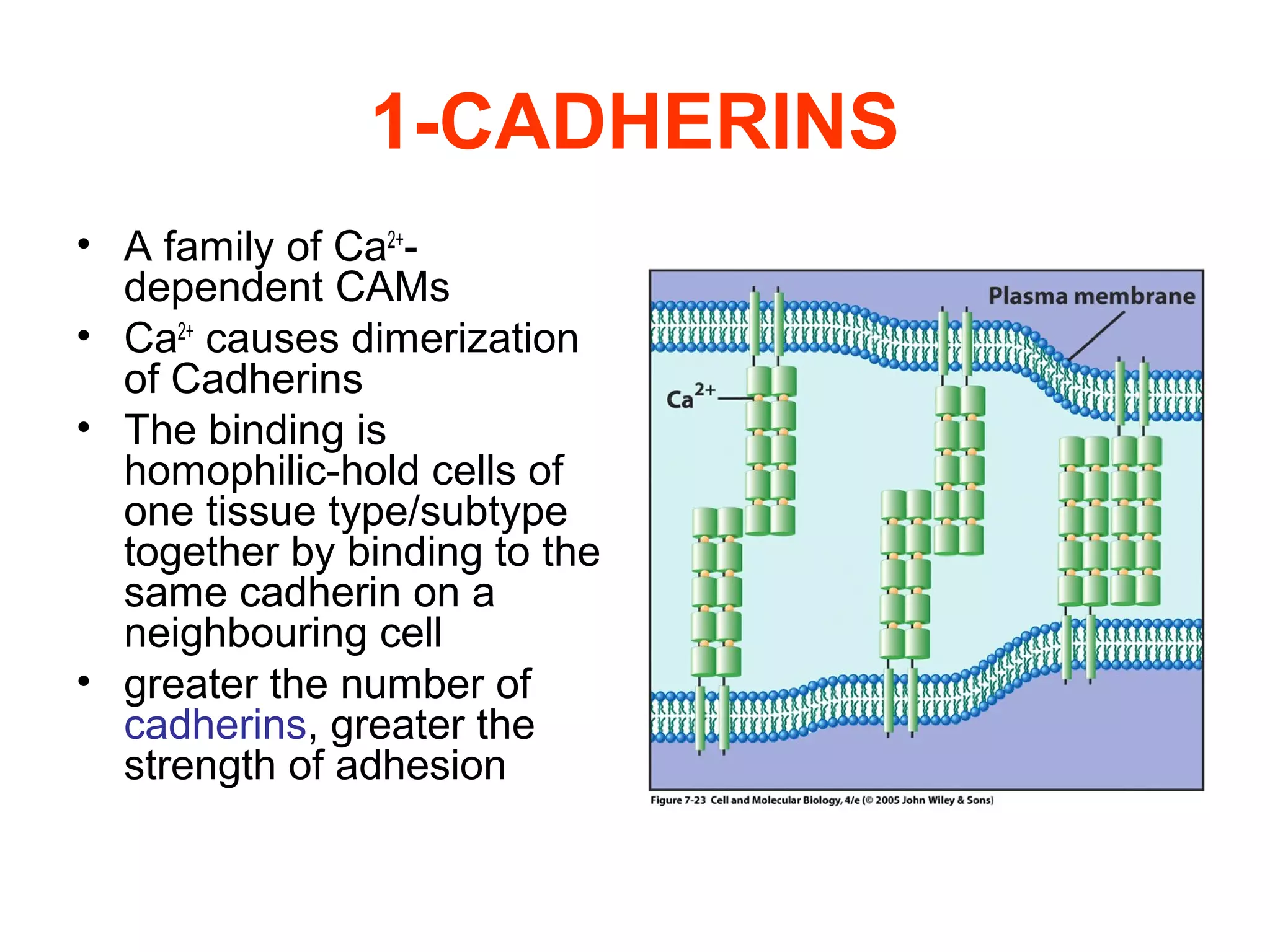
1-CADHERINS
• A family of Ca2+dependent CAMs
• Ca2+ causes dimerization
of Cadherins
• The binding is
homophilic-hold cells of
one tissue type/subtype
together by binding to the
same cadherin on a
neighbouring cell
• greater the number of
cadherins, greater the
strength of adhesion
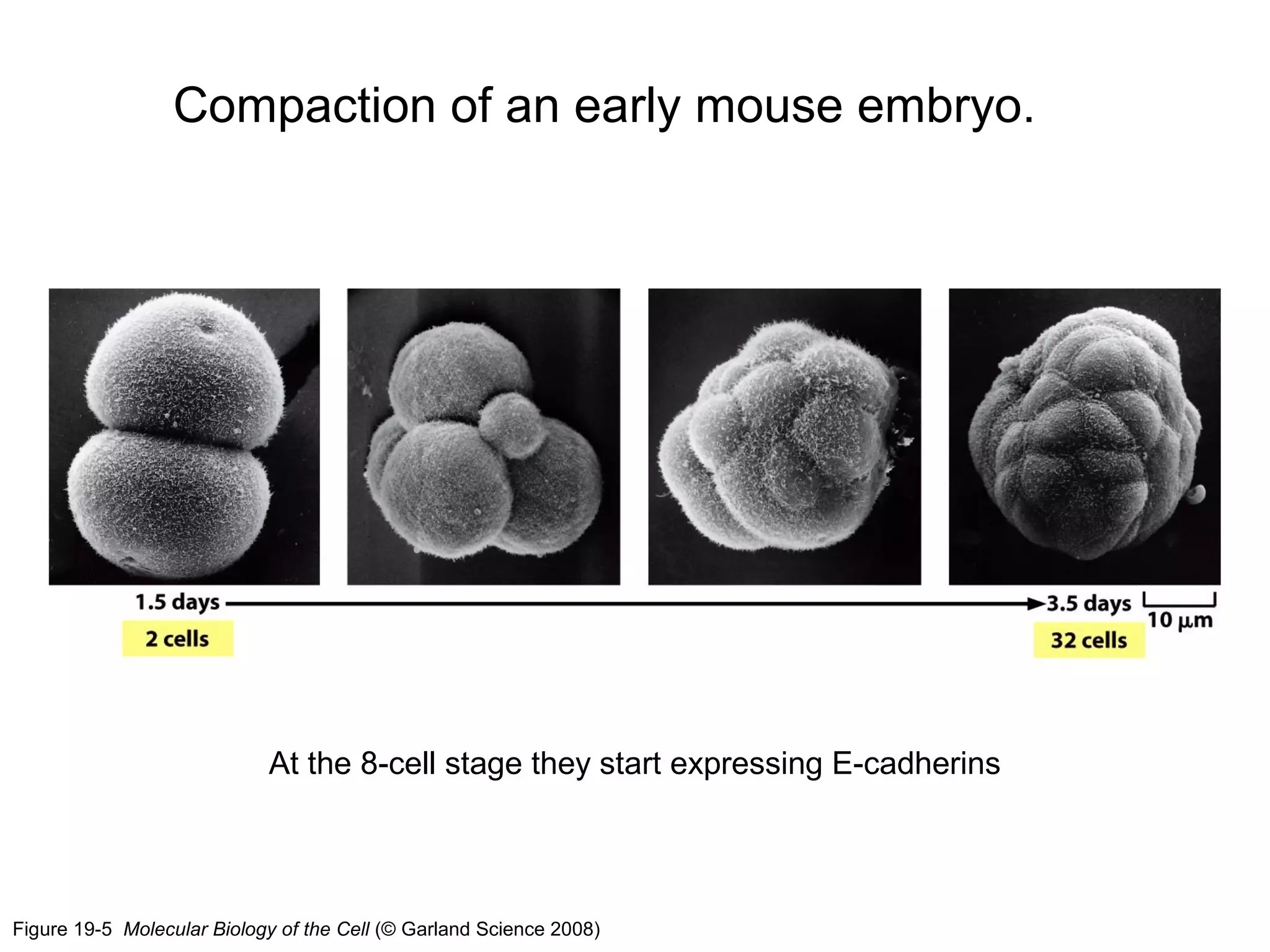
Compaction of an early mouse embryo.

At the 8-cell stage they start expressing E-cadherins

Figure 19-5 Molecular Biology of the Cell (© Garland Science 2008)
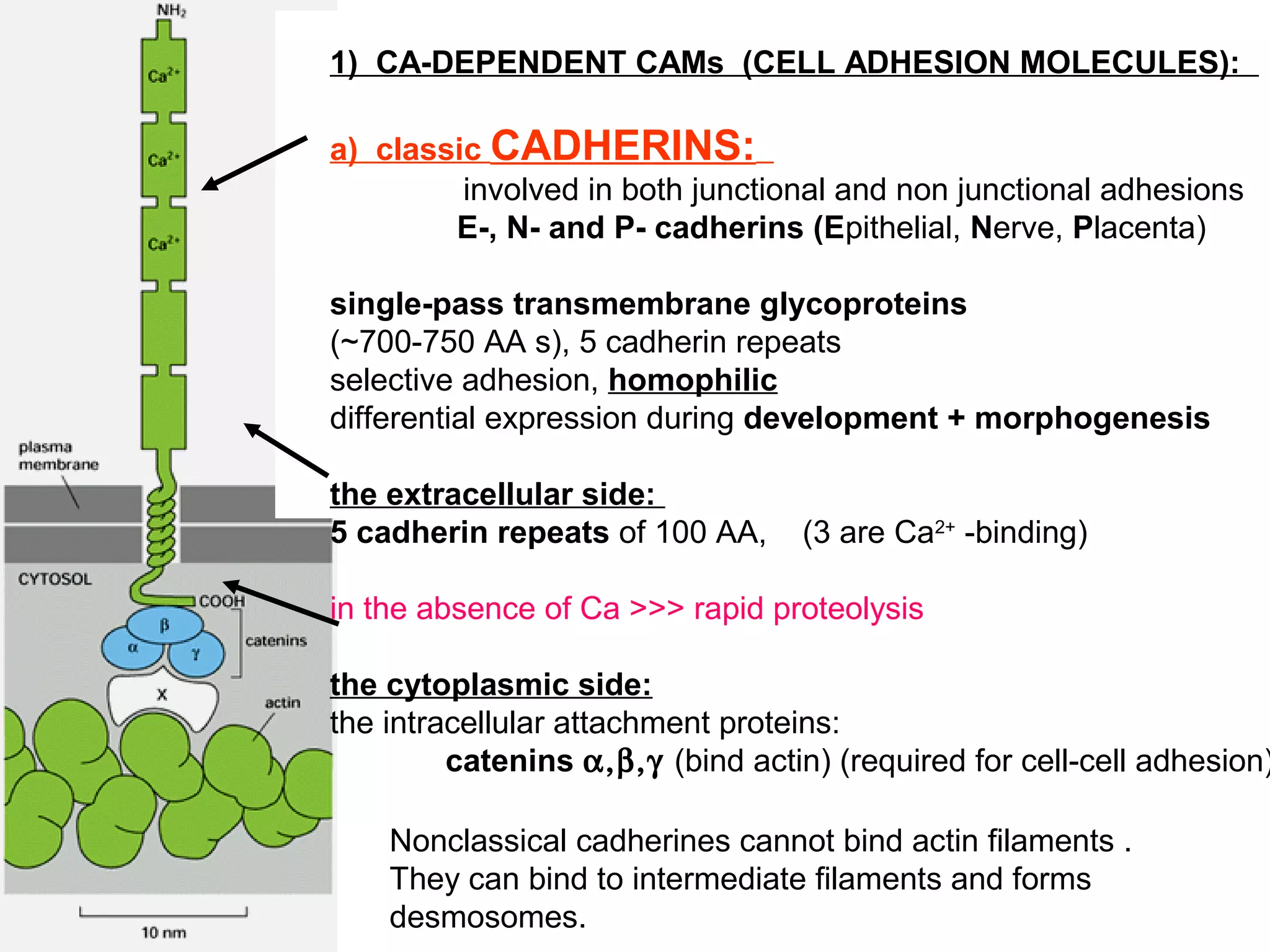
1) CA-DEPENDENT CAMs (CELL ADHESION MOLECULES):
a) classic CADHERINS:
involved in both junctional and non junctional adhesions
E-, N- and P- cadherins (Epithelial, Nerve, Placenta)
single-pass transmembrane glycoproteins
(~700-750 AA s), 5 cadherin repeats
selective adhesion, homophilic
differential expression during development + morphogenesis
the extracellular side:
5 cadherin repeats of 100 AA,

(3 are Ca2+ -binding)

in the absence of Ca >>> rapid proteolysis

the cytoplasmic side:
the intracellular attachment proteins:
catenins α,β,γ (bind actin) (required for cell-cell adhesion)
Nonclassical cadherines cannot bind actin filaments .
They can bind to intermediate filaments and forms
desmosomes.
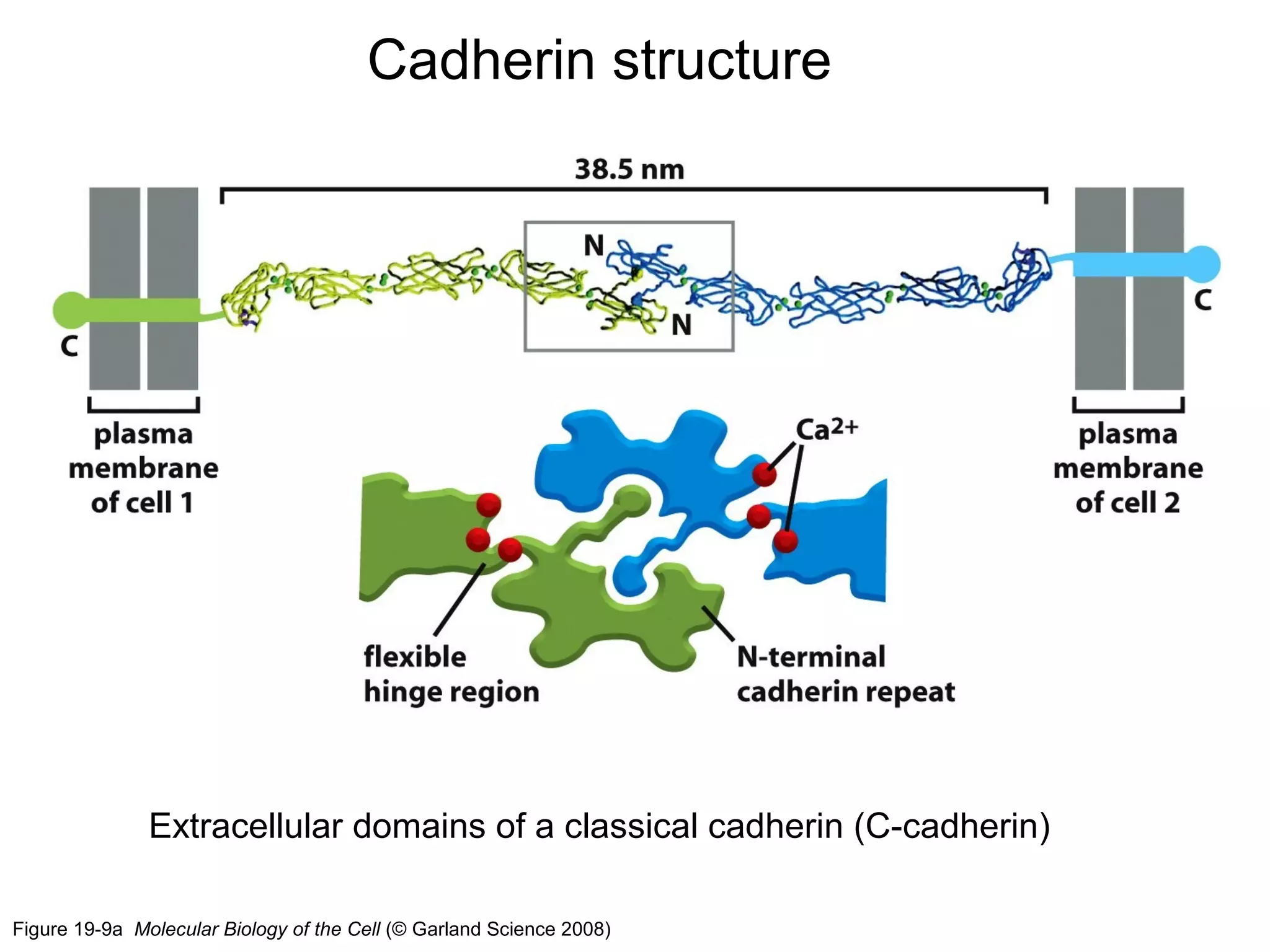
Cadherin structure

Extracellular domains of a classical cadherin (C-cadherin)
Figure 19-9a Molecular Biology of the Cell (© Garland Science 2008)
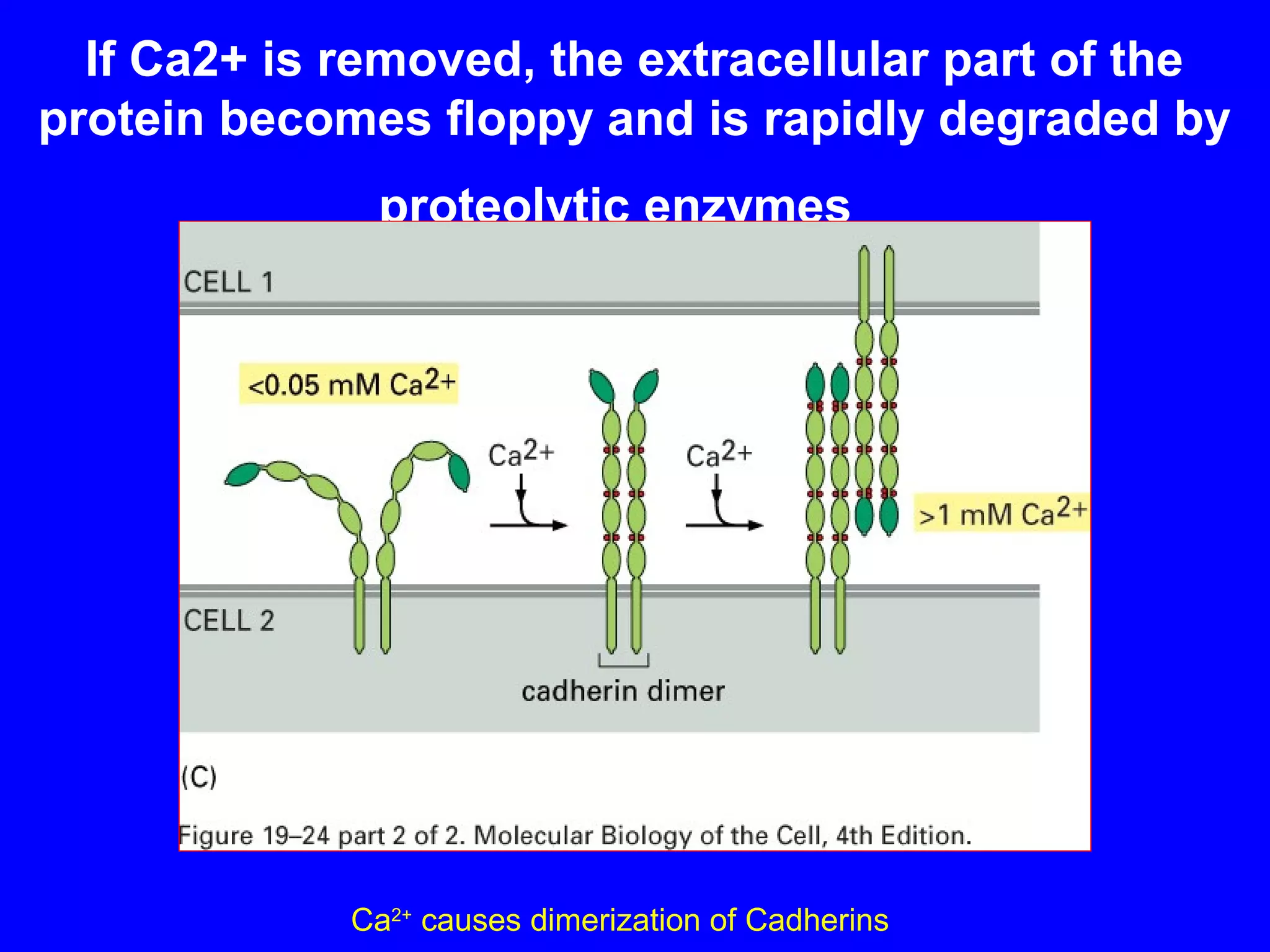
If Ca2+ is removed, the extracellular part of the
protein becomes floppy and is rapidly degraded by
proteolytic enzymes

Ca2+ causes dimerization of Cadherins
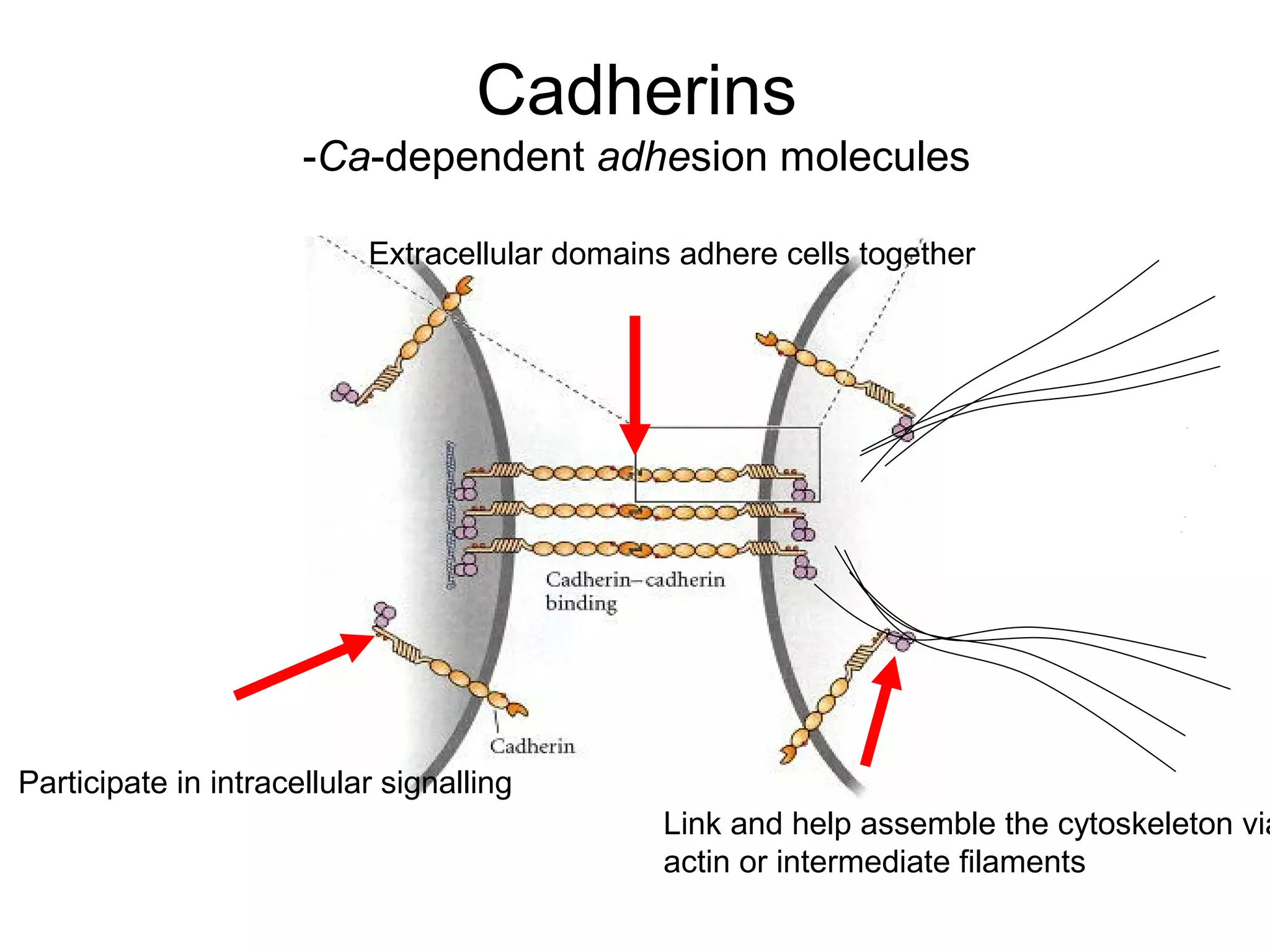
Cadherins
-Ca-dependent adhesion molecules
Extracellular domains adhere cells together

Participate in intracellular signalling

Link and help assemble the cytoskeleton via
actin or intermediate filaments
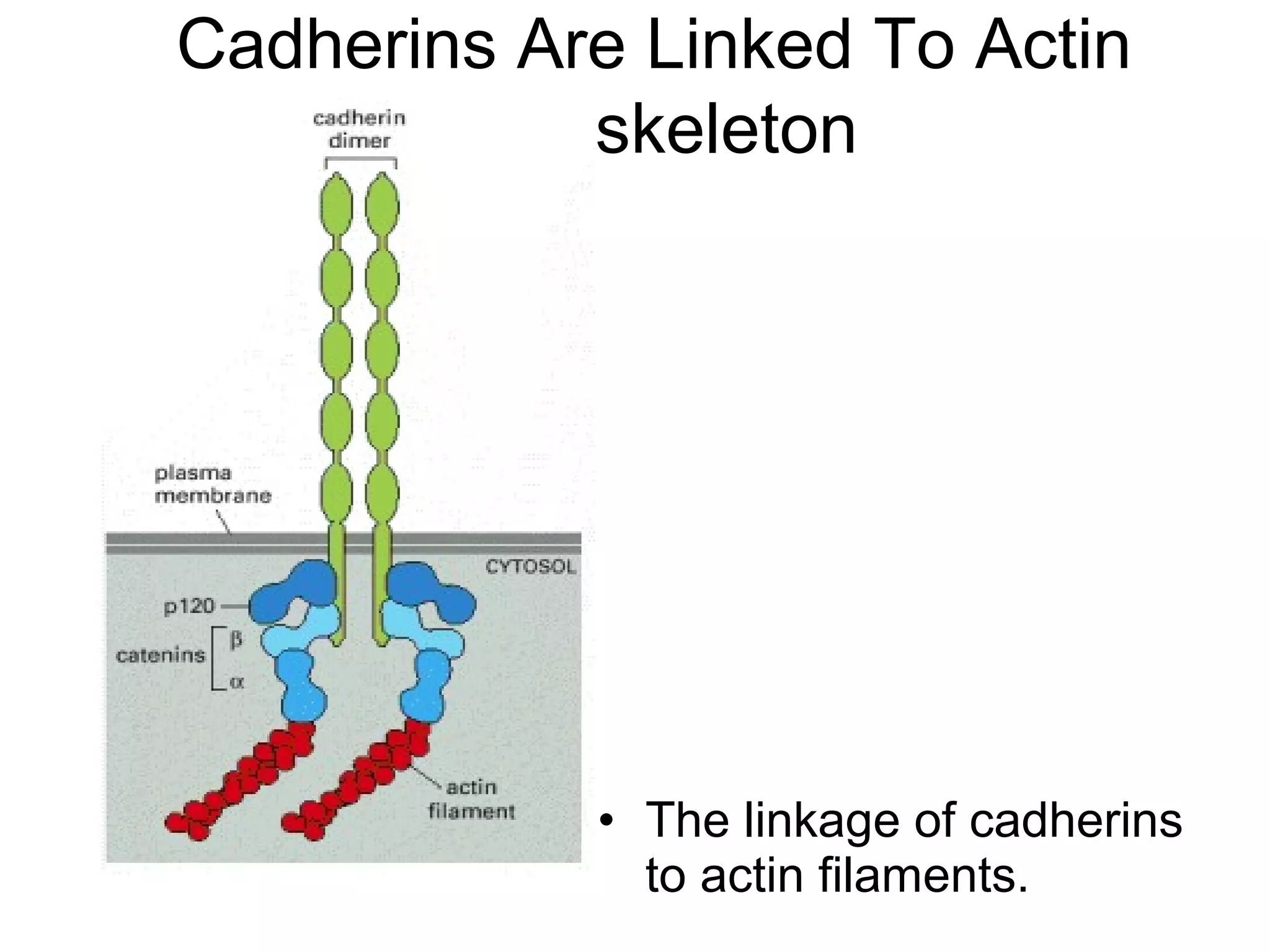
Cadherins Are Linked To Actin
Cytoskeleton

• The linkage of cadherins
to actin filaments.
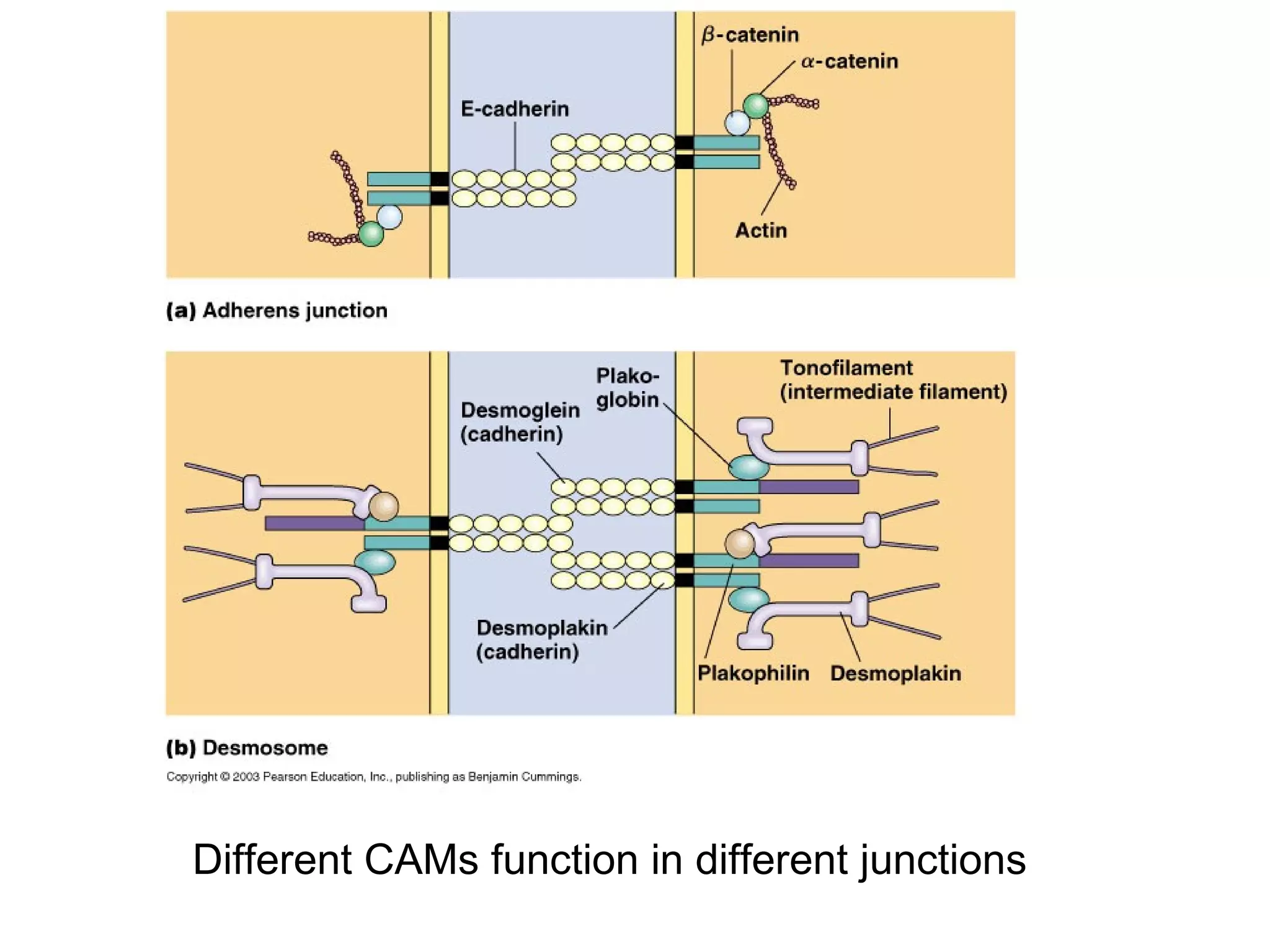
Different CAMs function in different junctions
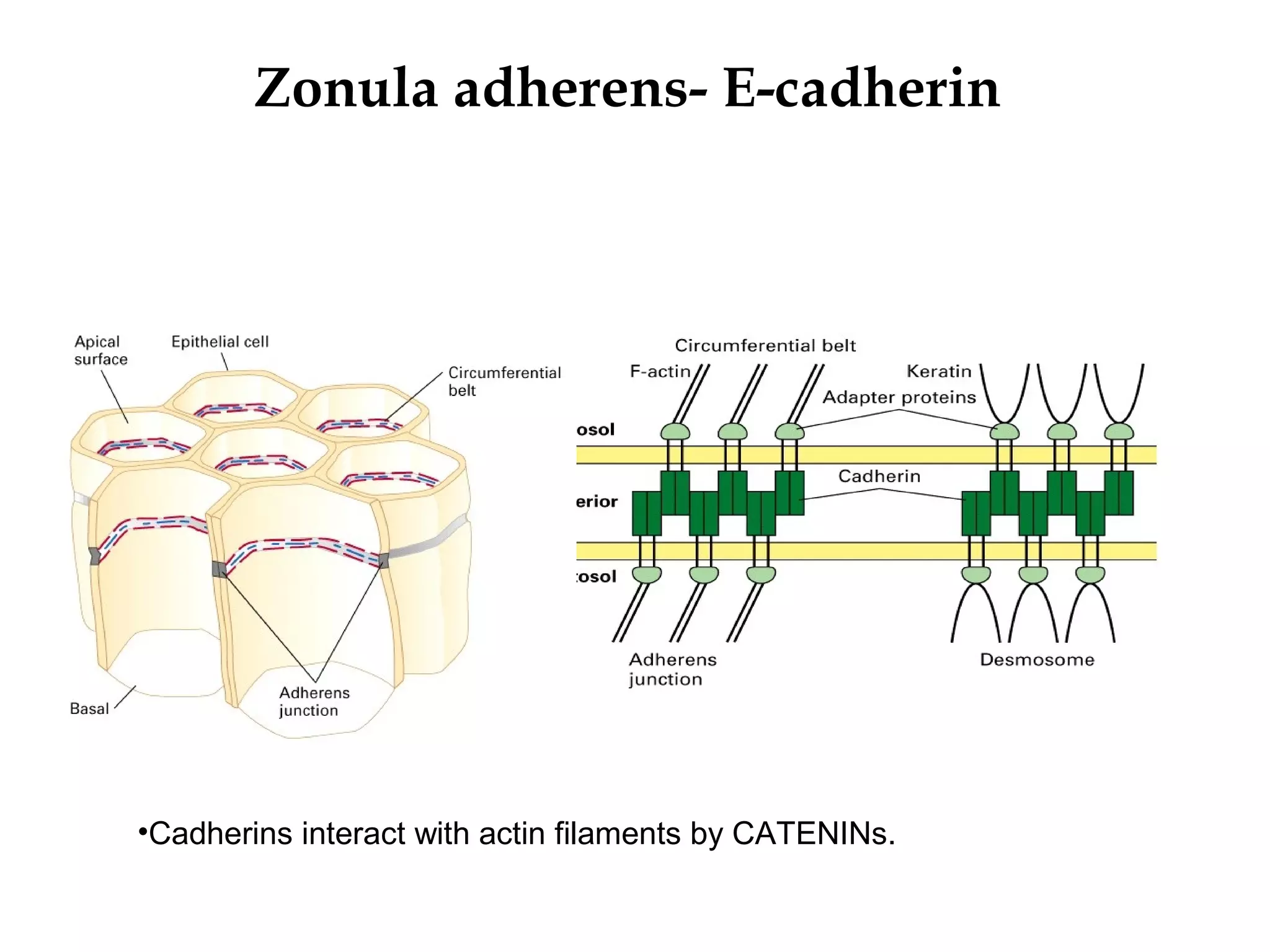
Zonula adherens- E-cadherin

•Cadherins interact with actin filaments by CATENINs.
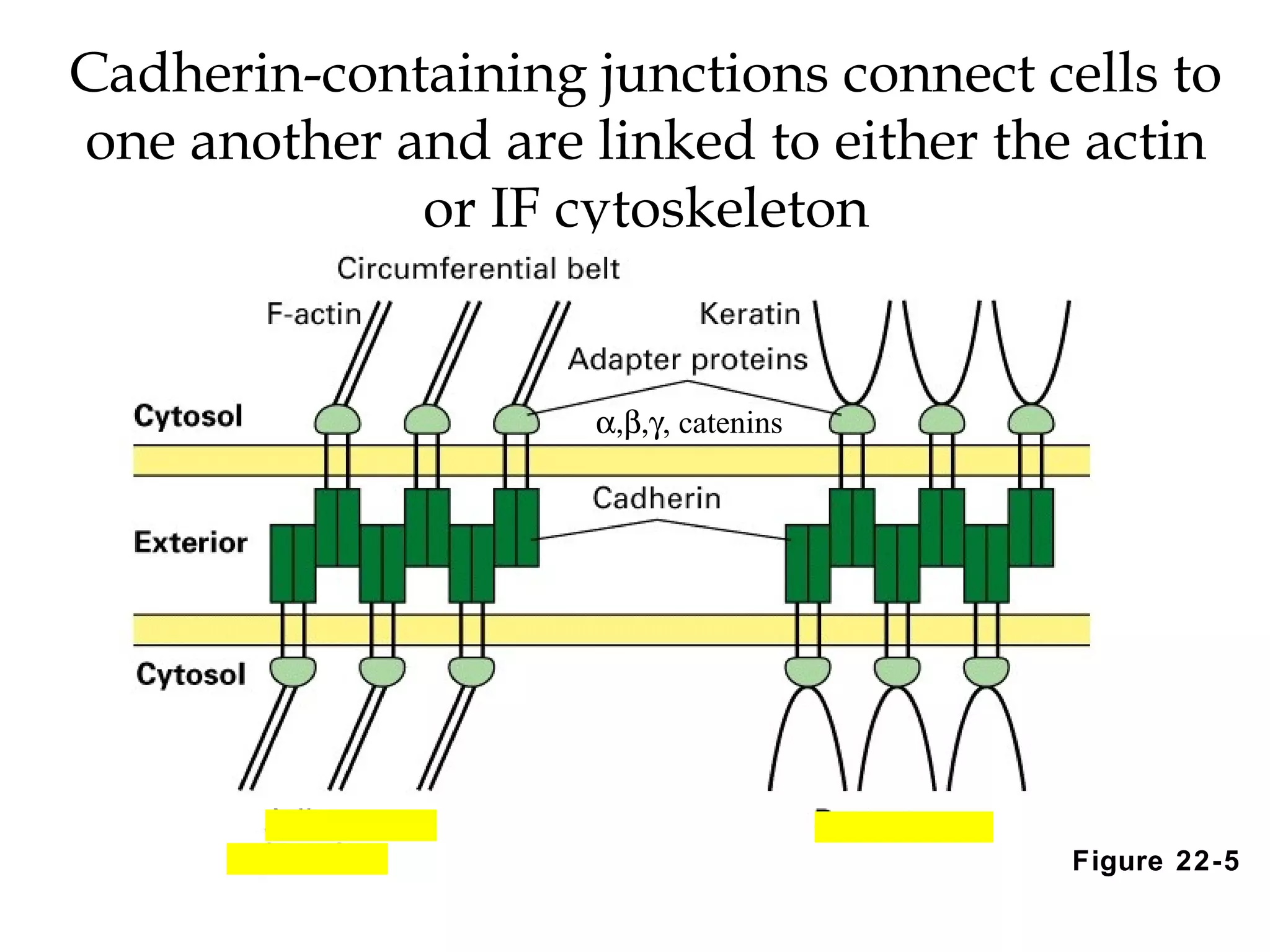
Cadherin-containing junctions connect cells to
one another and are linked to either the actin
or IF cytoskeleton

α,β,γ, catenins

Figure 22-5
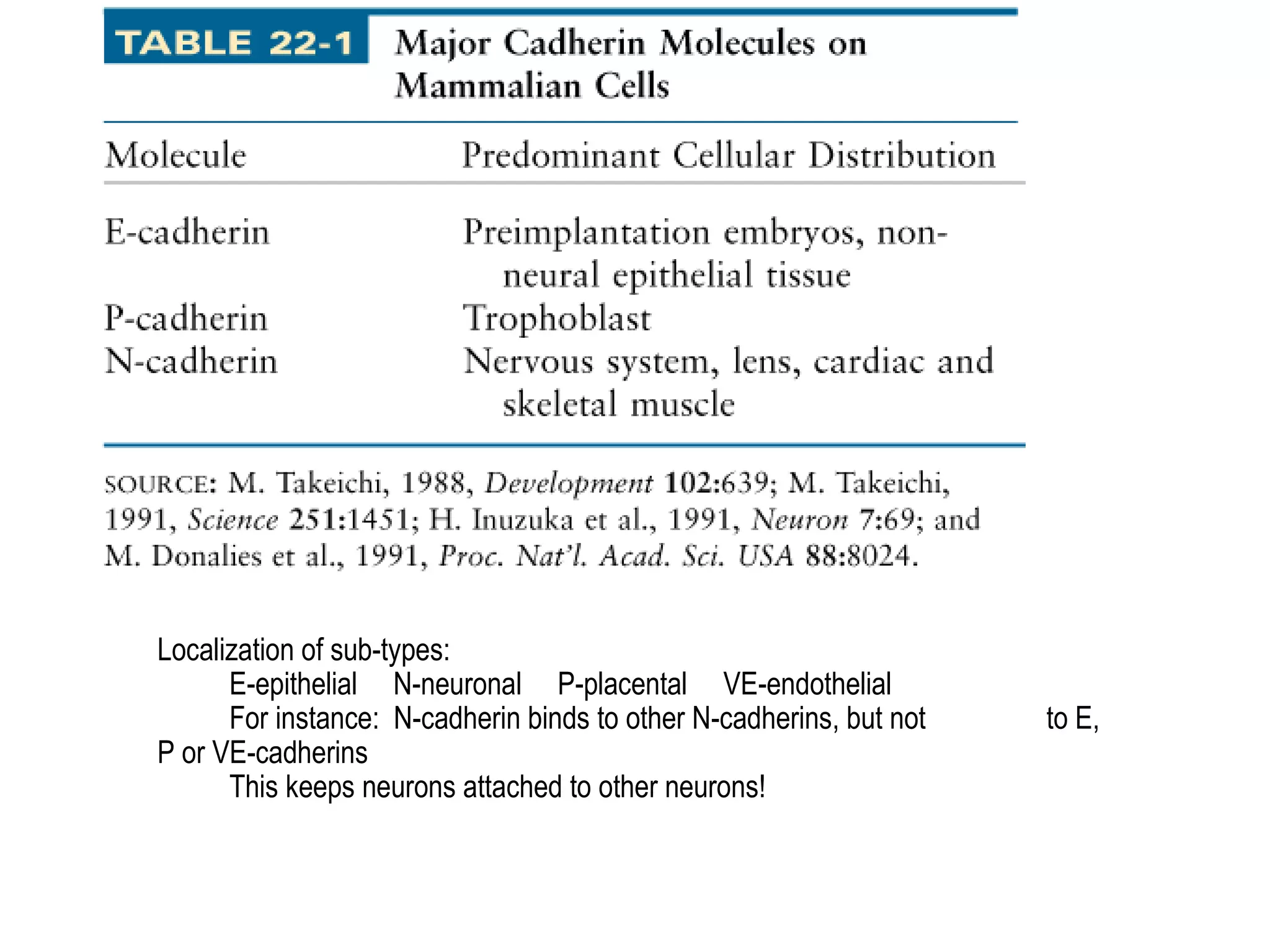
Localization of sub-types:
E-epithelial N-neuronal P-placental VE-endothelial
For instance: N-cadherin binds to other N-cadherins, but not
P or VE-cadherins
This keeps neurons attached to other neurons!

to E,
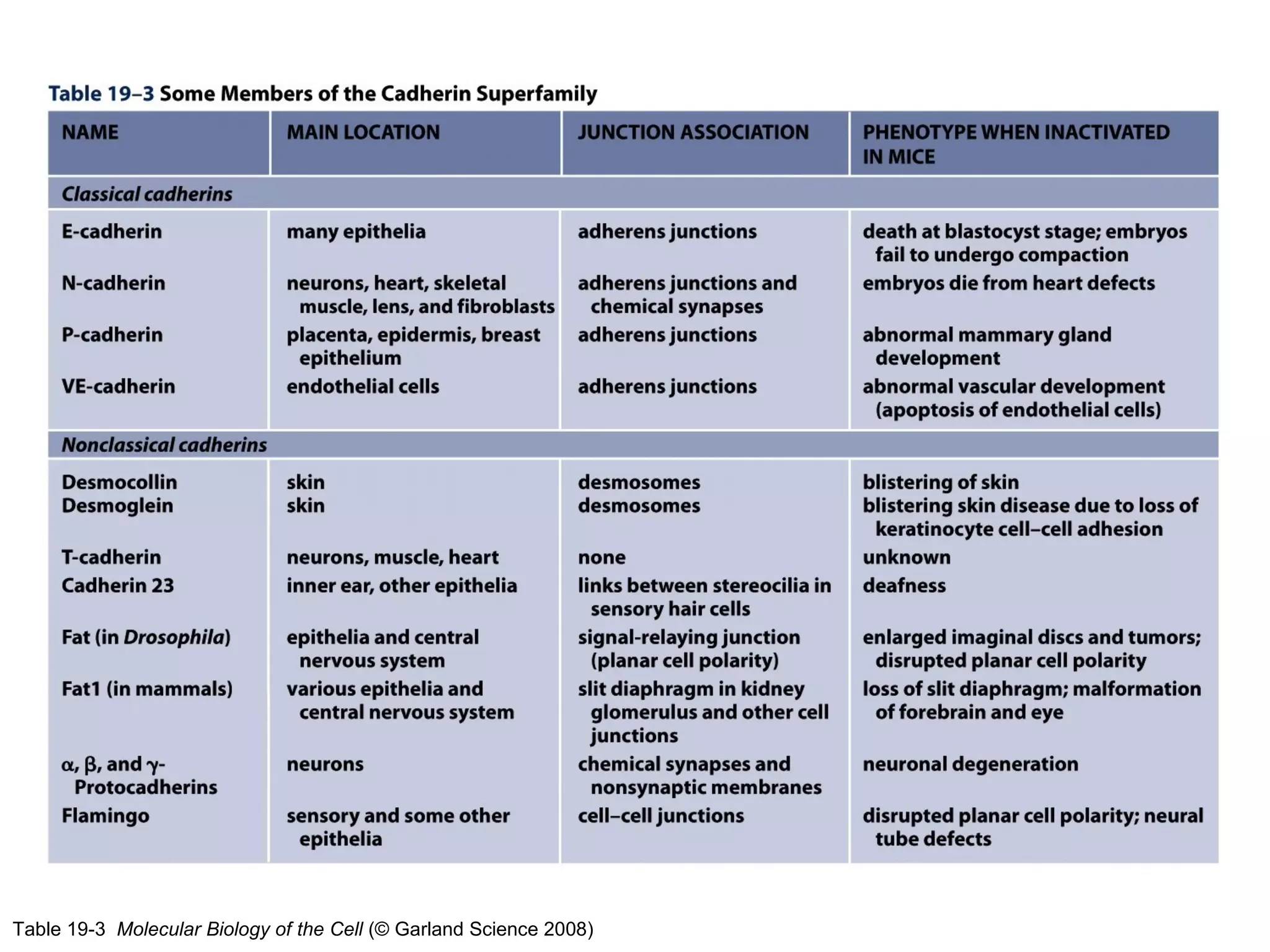
Table 19-3 Molecular Biology of the Cell (© Garland Science 2008)
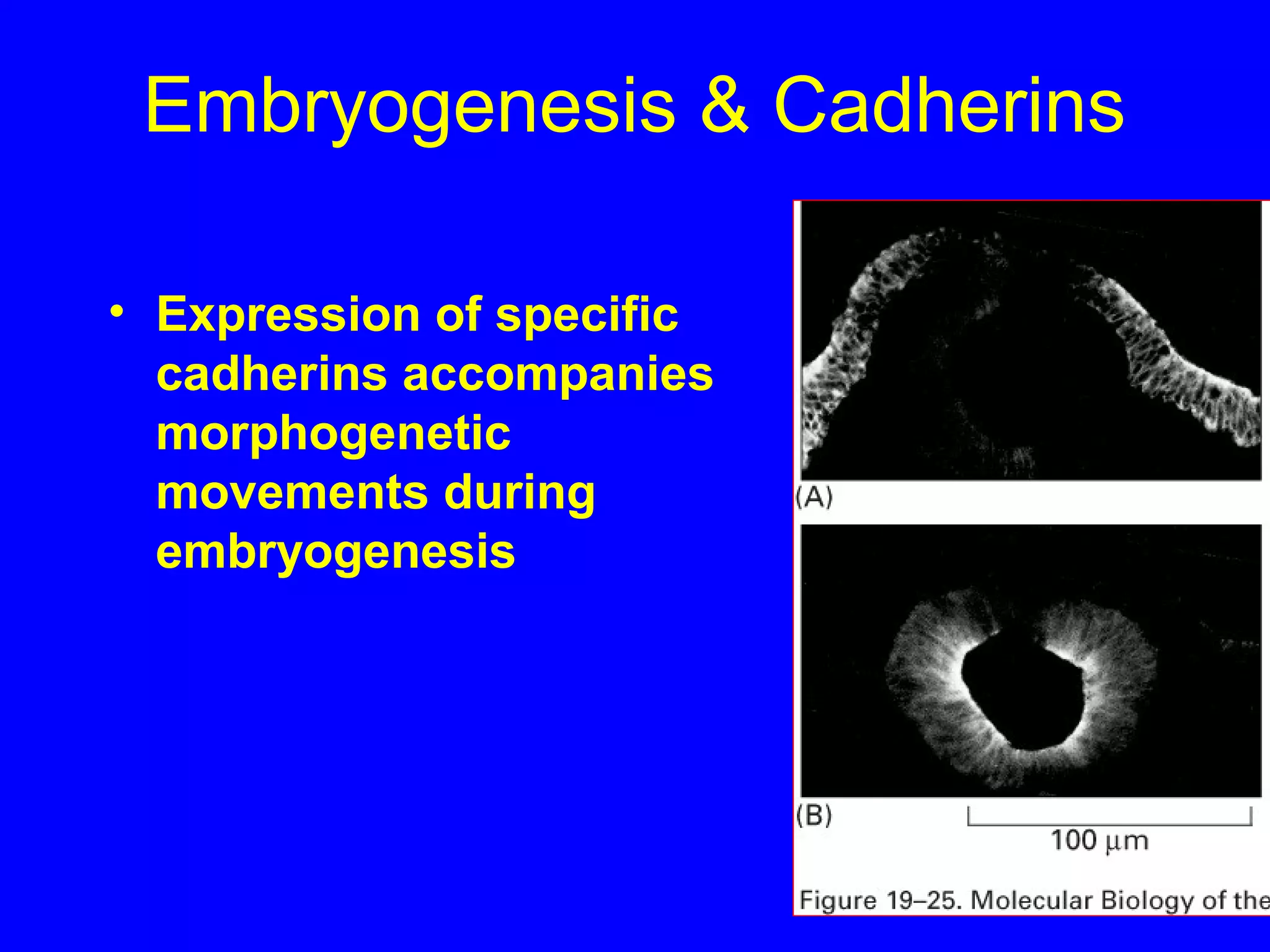
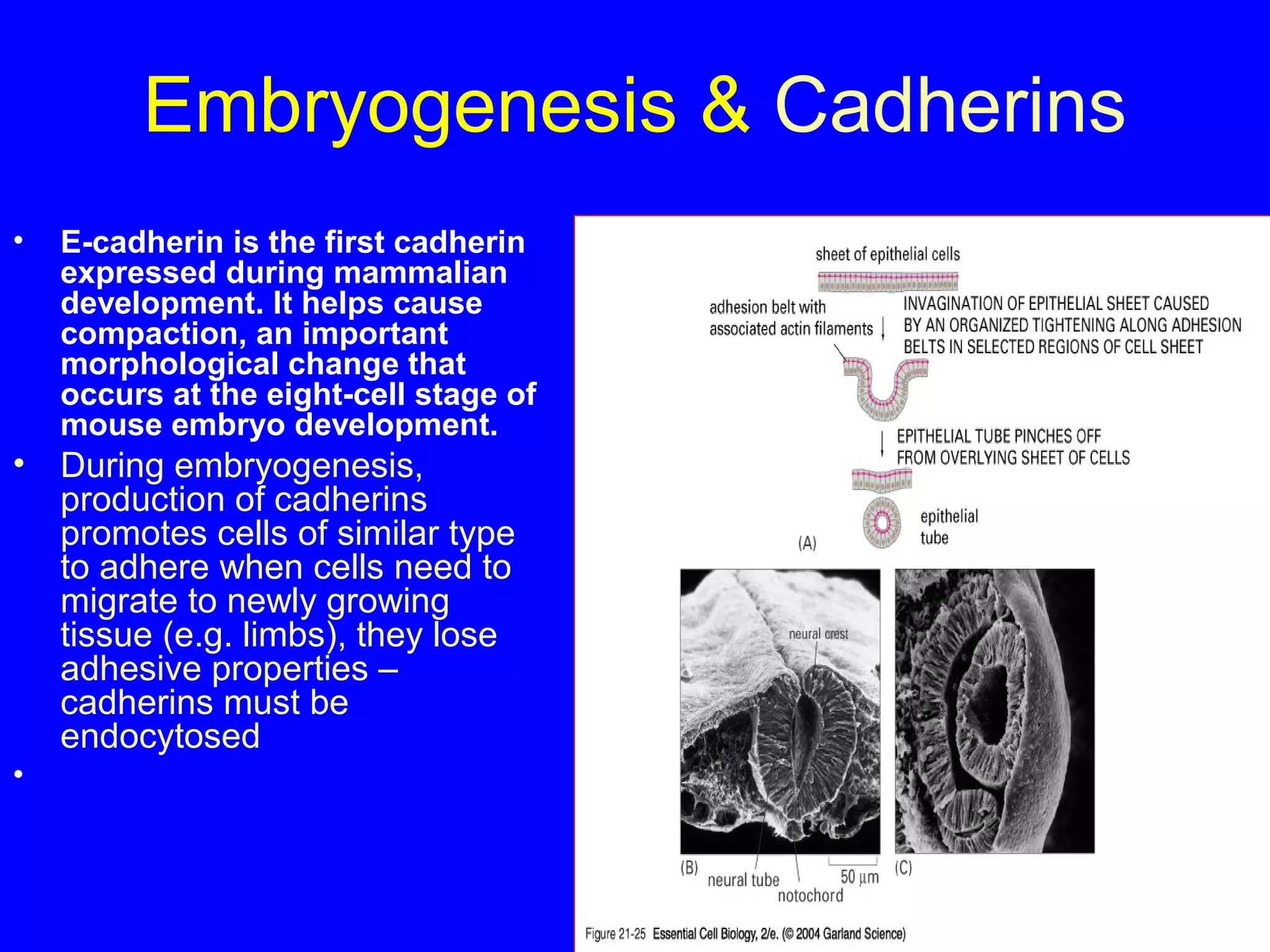
Embryogenesis & Cadherins
• Expression of specific
cadherins accompanies
morphogenetic
movements during
embryogenesis
Embryogenesis & Cadherins
•

E-cadherin is the first cadherin
expressed during mammalian
development. It helps cause
compaction, an important
morphological change that
occurs at the eight-cell stage of
mouse embryo development.

•

During embryogenesis,
production of cadherins
promotes cells of similar type
to adhere when cells need to
migrate to newly growing
tissue (e.g. limbs), they lose
adhesive properties –
cadherins must be
endocytosed

•
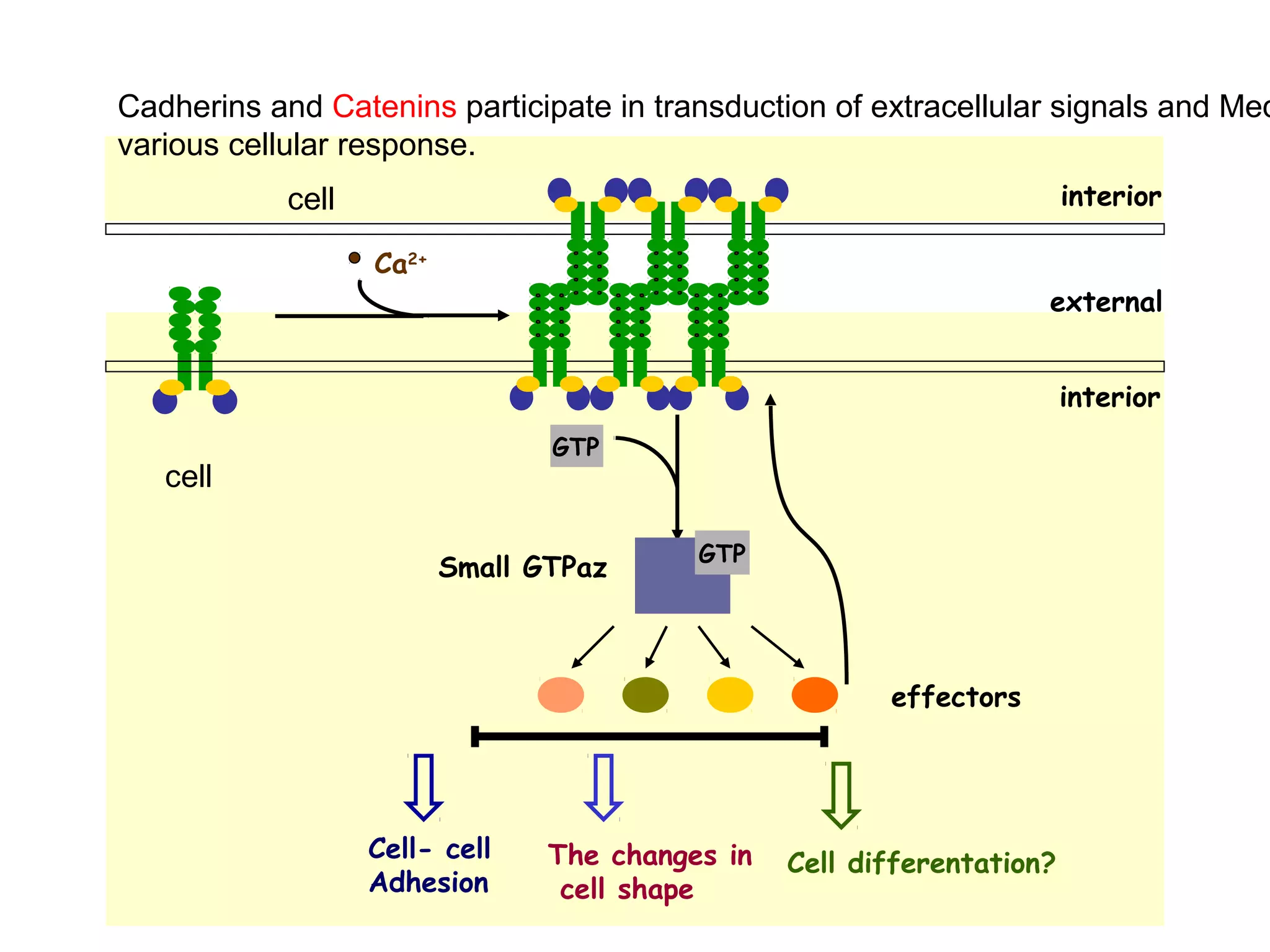
Cadherins and Catenins participate in transduction of extracellular signals and Med
various cellular response.
interior

cell
Ca2+

external
interior
GTP

cell

Small GTPaz

GTP

effectors

Cell- cell
Adhesion

The changes in
cell shape

Cell differentation?
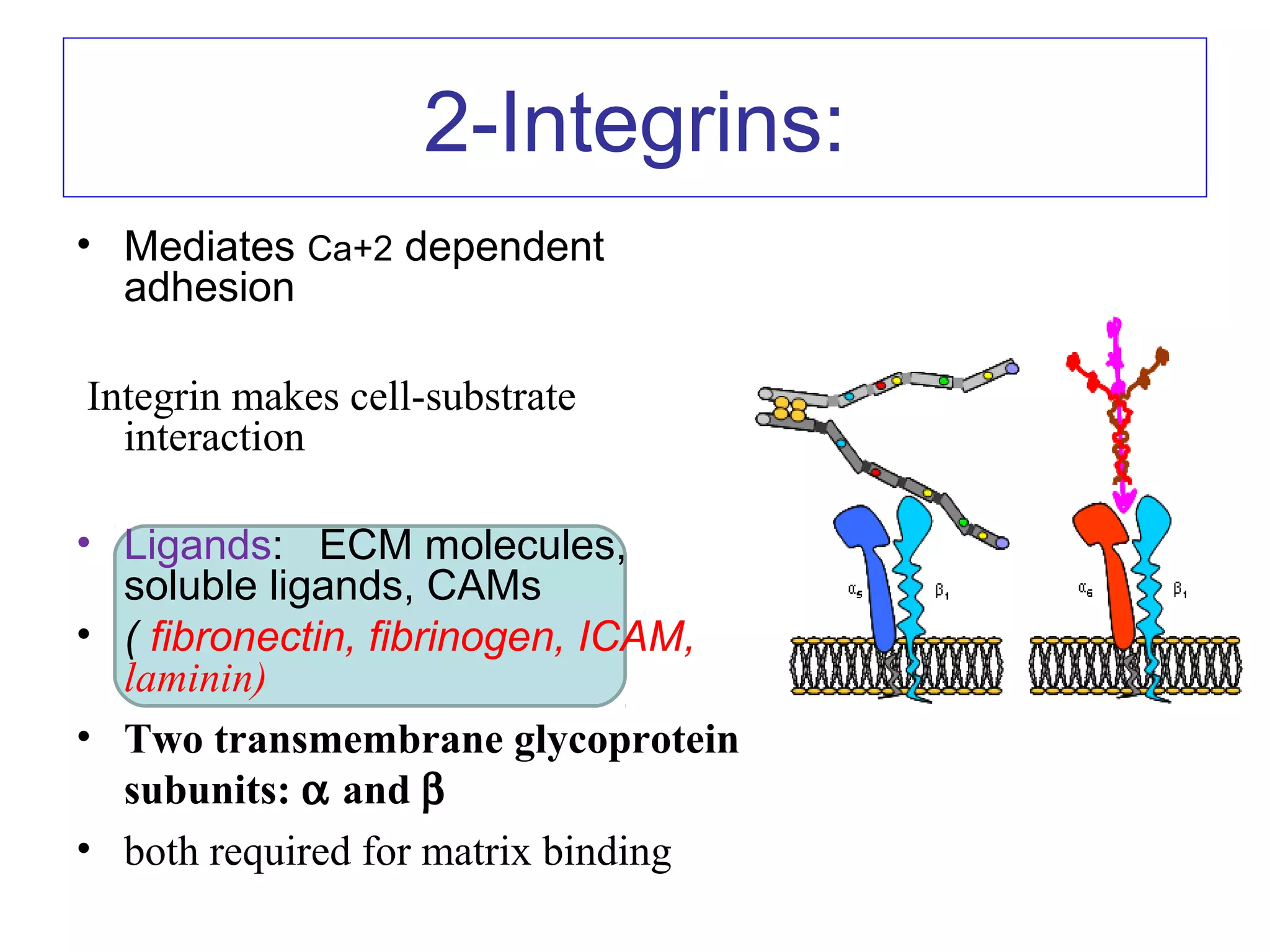
2-Integrins:
• Mediates Ca+2 dependent
adhesion
Integrin makes cell-substrate
interaction
• Ligands: ECM molecules,
soluble ligands, CAMs
• ( fibronectin, fibrinogen, ICAM,
laminin)
• Two transmembrane glycoprotein
subunits: α and β
• both required for matrix binding
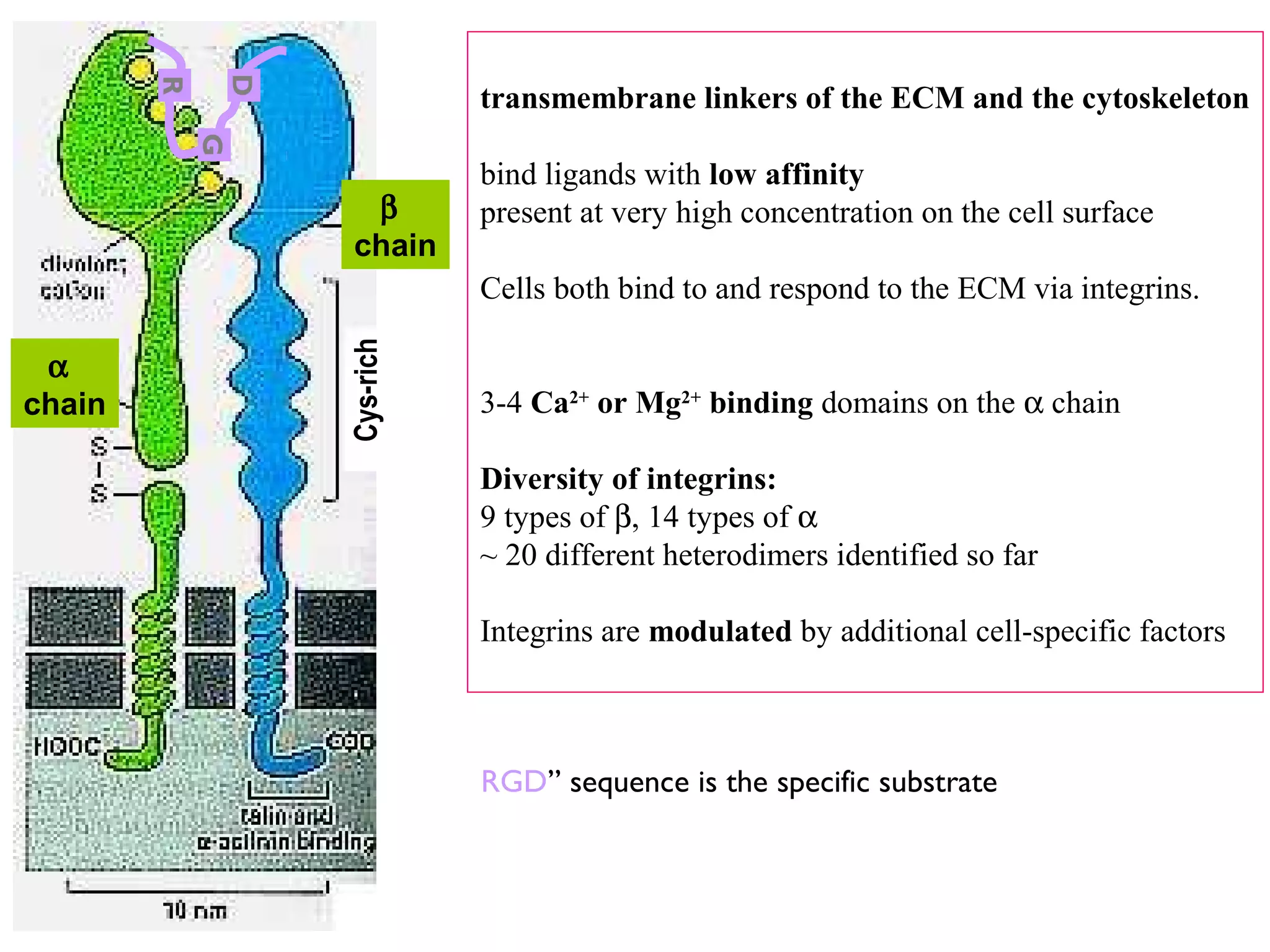
D

R

transmembrane linkers of the ECM and the cytoskeleton

G

β
chain

bind ligands with low affinity
present at very high concentration on the cell surface

α
chain

Cys-rich

Cells both bind to and respond to the ECM via integrins.
3-4 Ca2+ or Mg2+ binding domains on the α chain
Diversity of integrins:
9 types of β, 14 types of α
~ 20 different heterodimers identified so far
Integrins are modulated by additional cell-specific factors

RGD” sequence is the specific substrate
Integrins
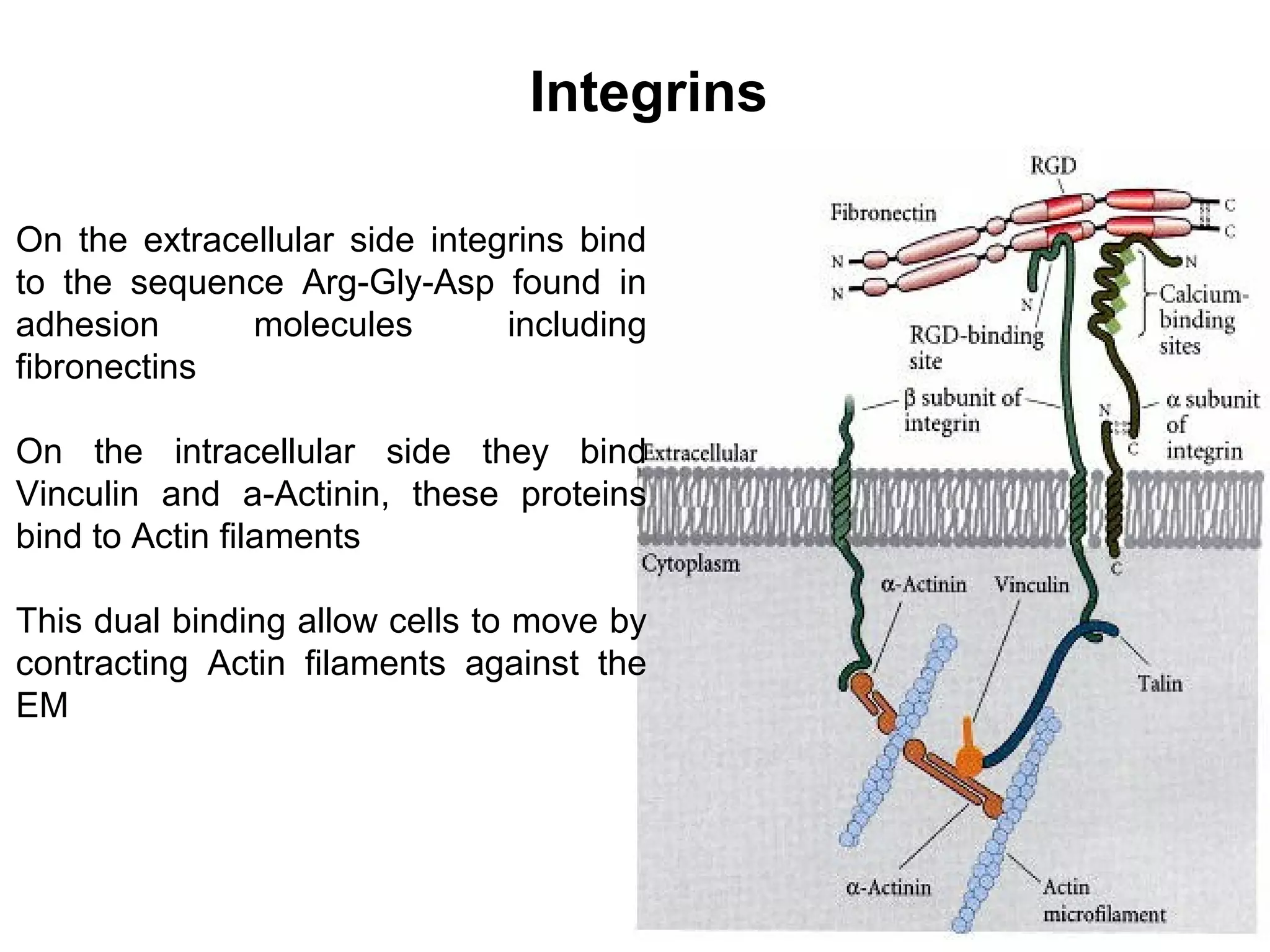
On the extracellular side integrins bind
to the sequence Arg-Gly-Asp found in
adhesion
molecules
including
fibronectins
On the intracellular side they bind
Vinculin and a-Actinin, these proteins
bind to Actin filaments
This dual binding allow cells to move by
contracting Actin filaments against the
EM
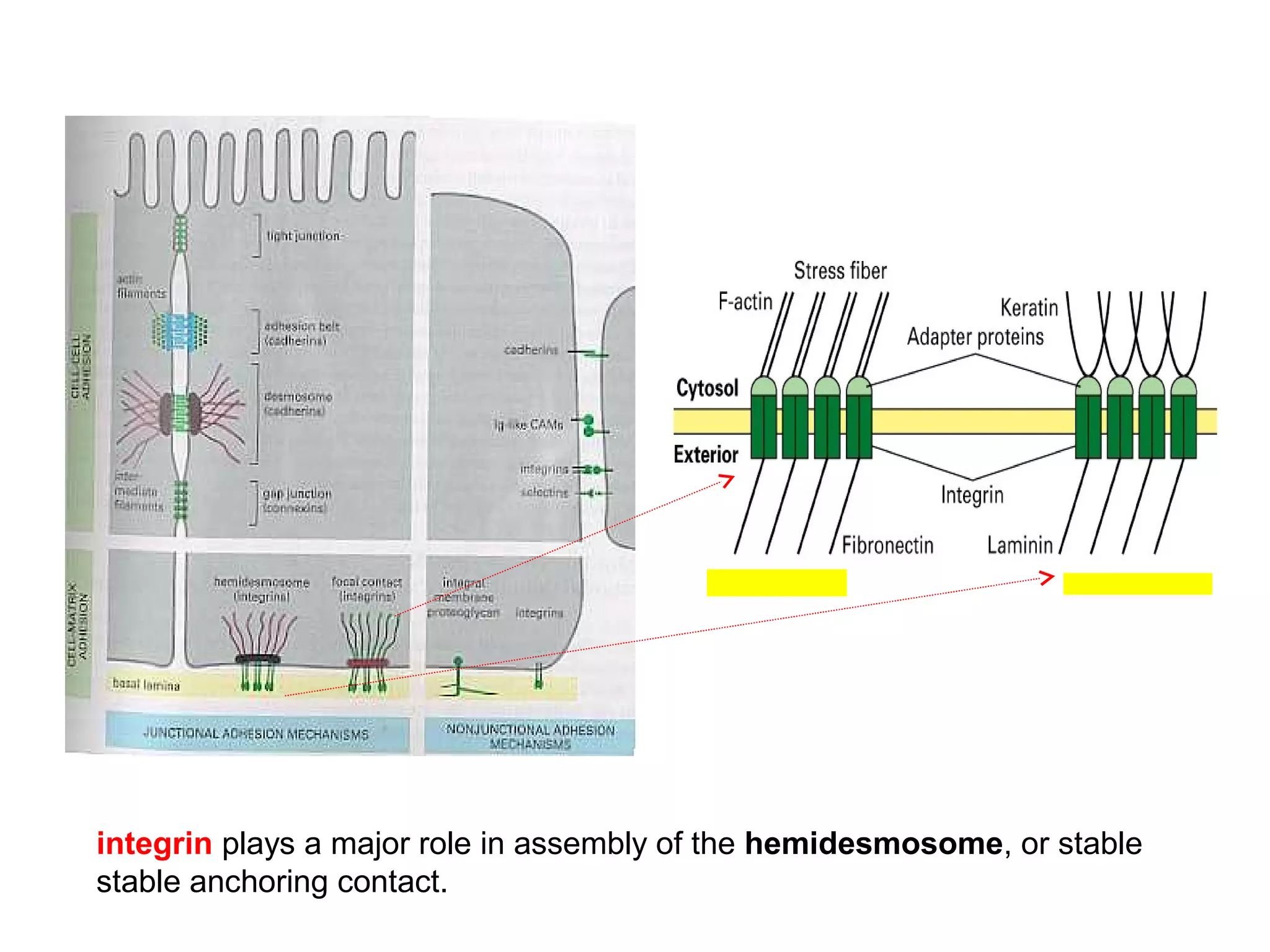
integrin plays a major role in assembly of the hemidesmosome, or stable
stable anchoring contact.
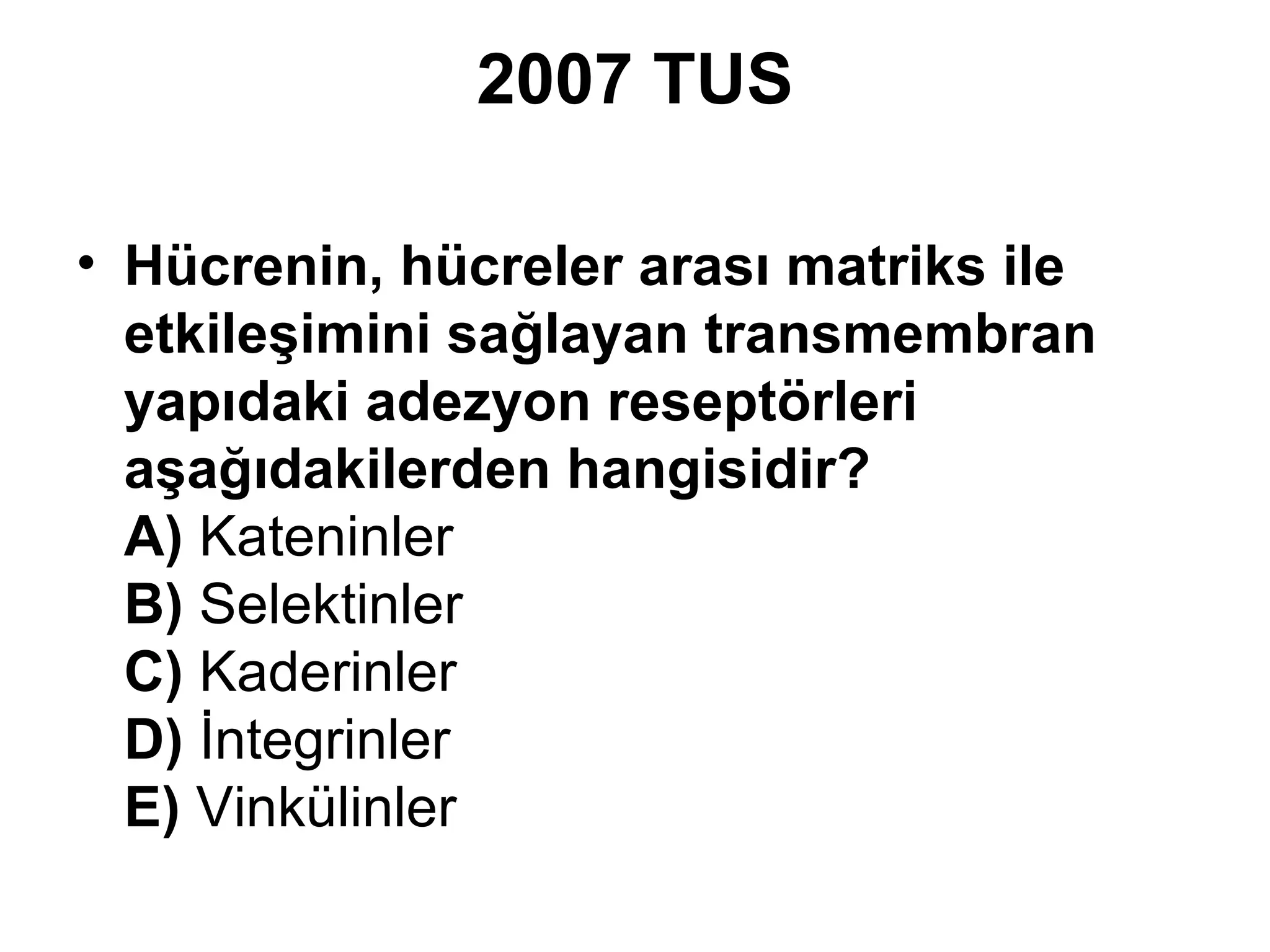
2007 TUS
• Hücrenin, hücreler arası matriks ile
etkileşimini sağlayan transmembran
yapıdaki adezyon reseptörleri
aşağıdakilerden hangisidir?
A) Kateninler
B) Selektinler
C) Kaderinler
D) İntegrinler
E) Vinkülinler
Aralık 2010
• Asagıdaki hücre baglantılarından
̧ ̆
̆
hangisinin yapısında hücre adezyon
molekülü olan integrin yogun olarak
̆
bulunur?
A) Zonula occludens
B) Zonula adherens
C) Macula adherens
D) Konnekson
E) Hemidesmozom
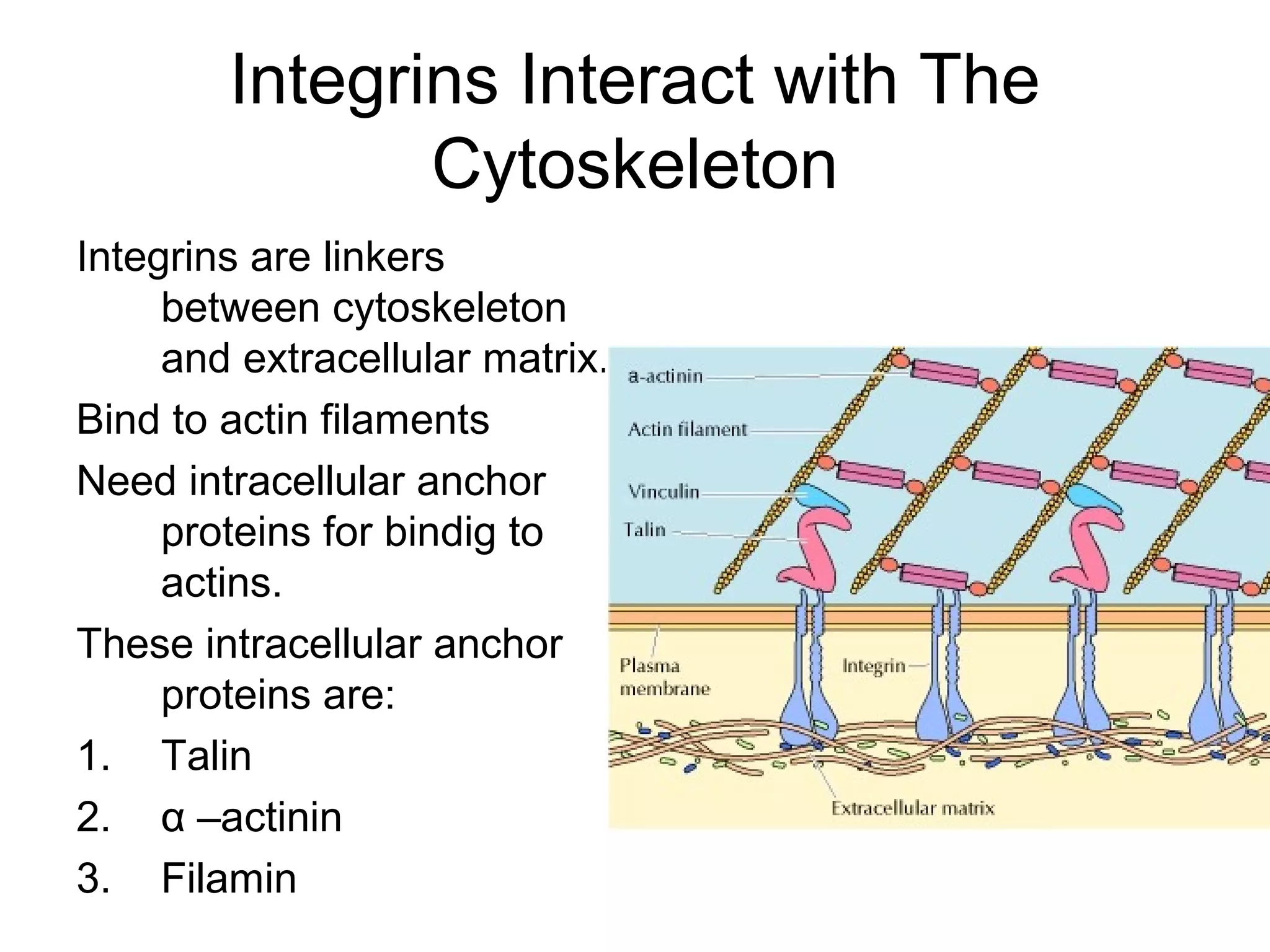
Integrins Interact with The
Cytoskeleton
Integrins are linkers
between cytoskeleton
and extracellular matrix.
Bind to actin filaments
Need intracellular anchor
proteins for bindig to
actins.
These intracellular anchor
proteins are:
1. Talin
2. α –actinin
3. Filamin
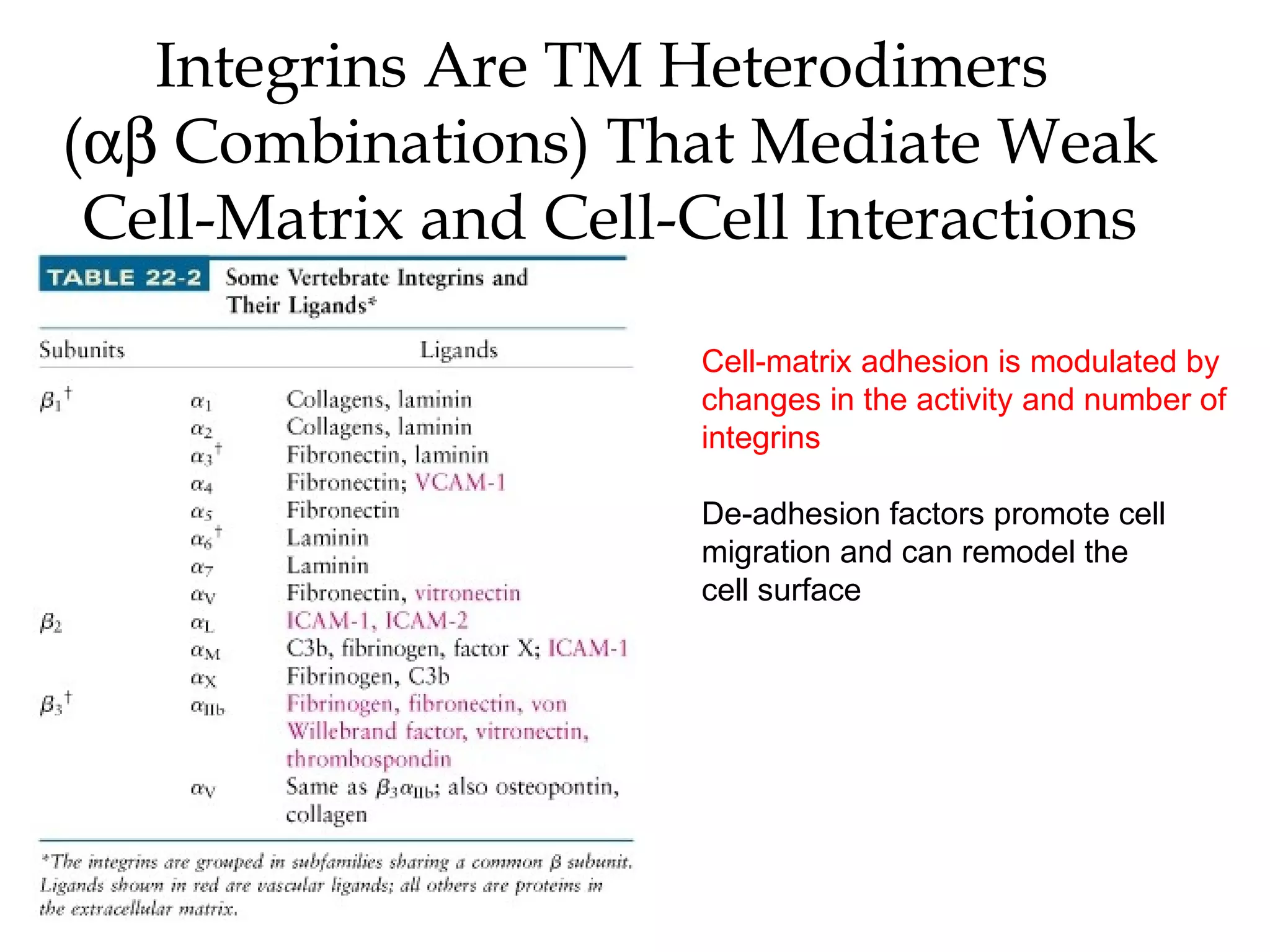
Integrins Are TM Heterodimers
(αβ Combinations) That Mediate Weak
Cell-Matrix and Cell-Cell Interactions
Cell-matrix adhesion is modulated by
changes in the activity and number of
integrins
De-adhesion factors promote cell
migration and can remodel the
cell surface
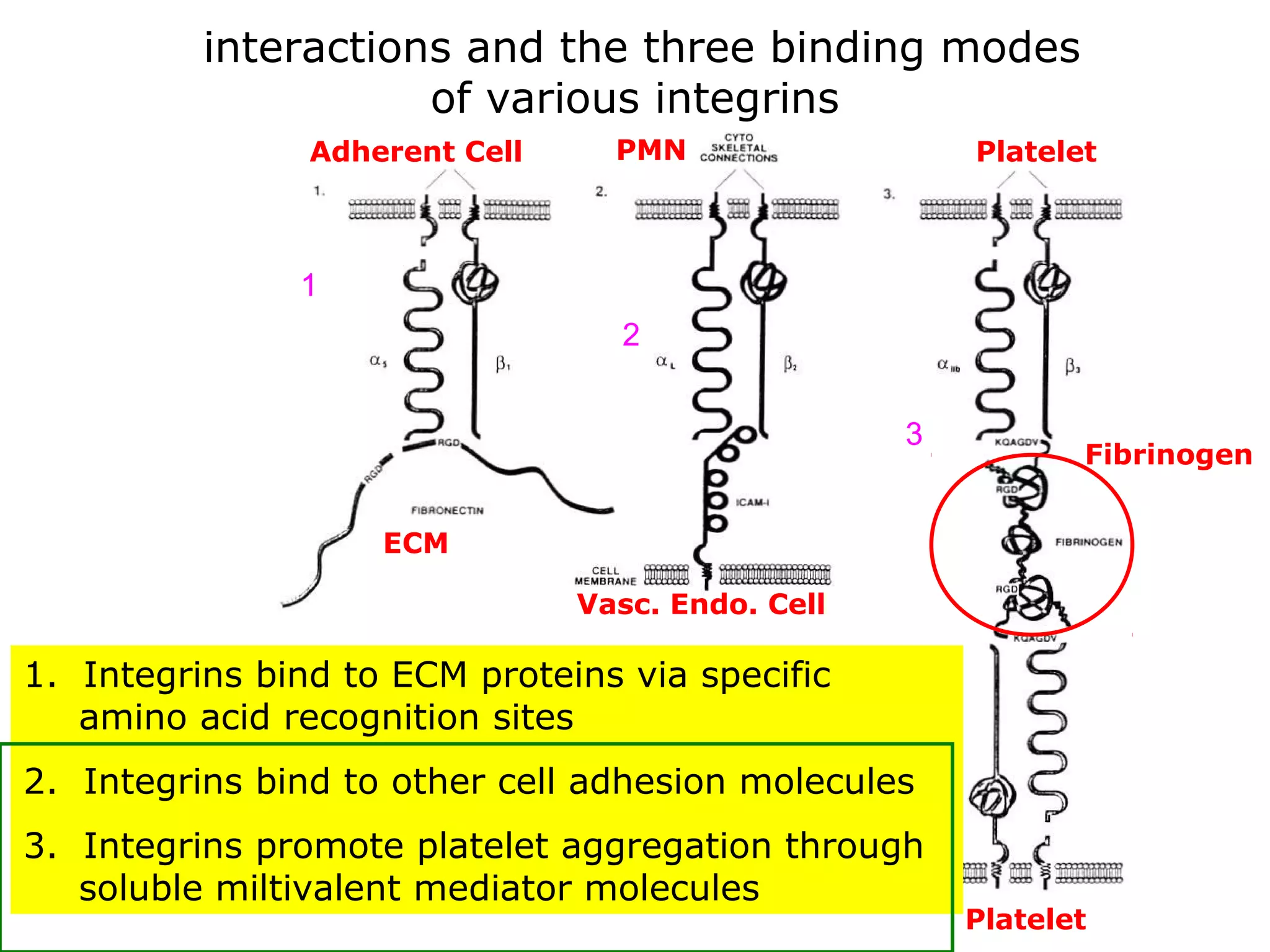
interactions and the three binding modes
of various integrins
Adherent Cell

PMN

Platelet

1
2
3

Fibrinogen

ECM
Vasc. Endo. Cell

1. Integrins bind to ECM proteins via specific
amino acid recognition sites
2. Integrins bind to other cell adhesion molecules
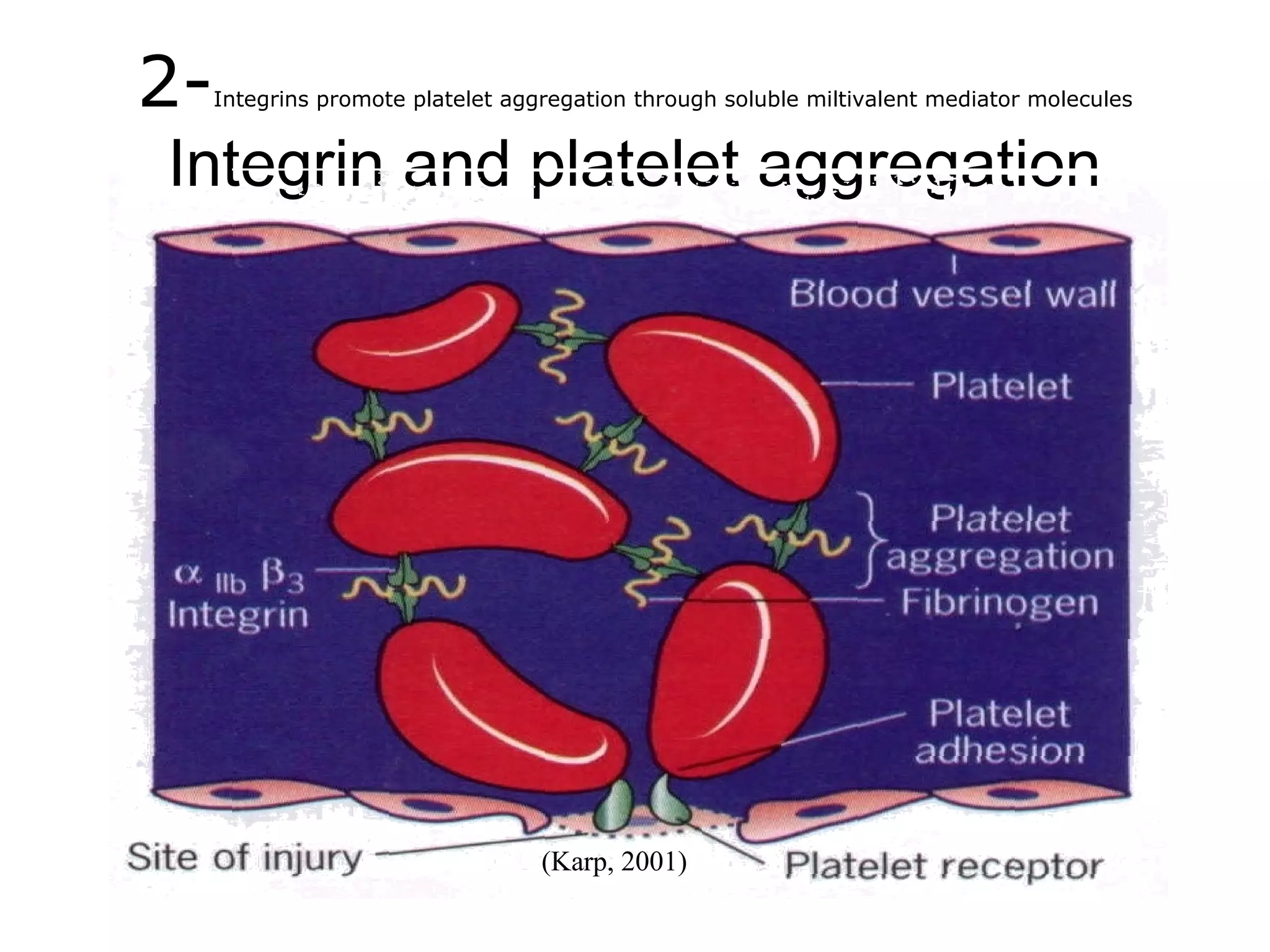
3. Integrins promote platelet aggregation through
soluble miltivalent mediator molecules

Platelet
2. Integrins bind to other cell adhesion molecules
2-

Integrins promote platelet aggregation through soluble miltivalent mediator molecules

Integrin and platelet aggregation

(Karp, 2001)
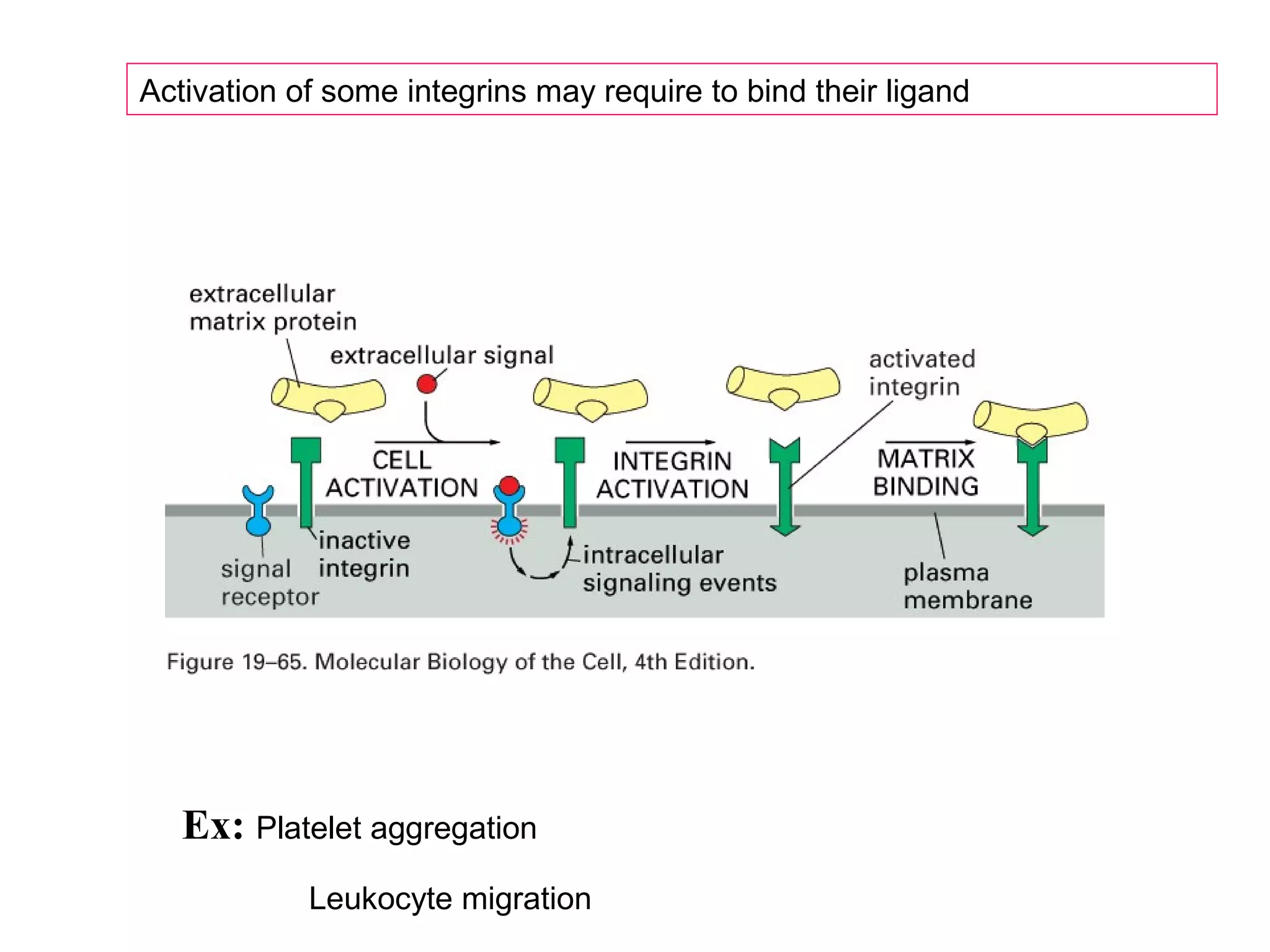
Activation of some integrins may require to bind their ligand

Ex: Platelet aggregation
Leukocyte migration
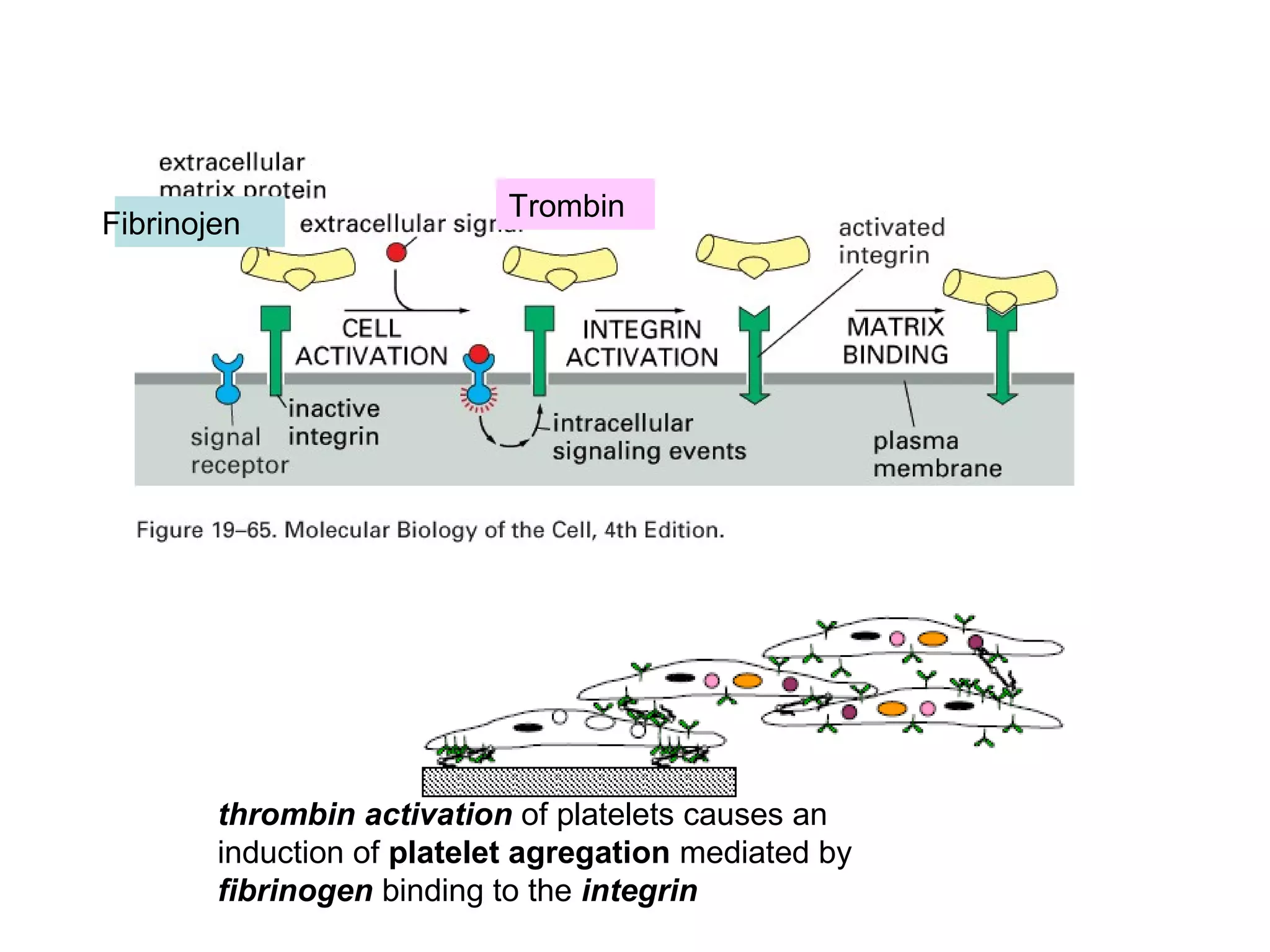
Fibrinojen

Trombin

thrombin activation of platelets causes an
induction of platelet agregation mediated by
fibrinogen binding to the integrin
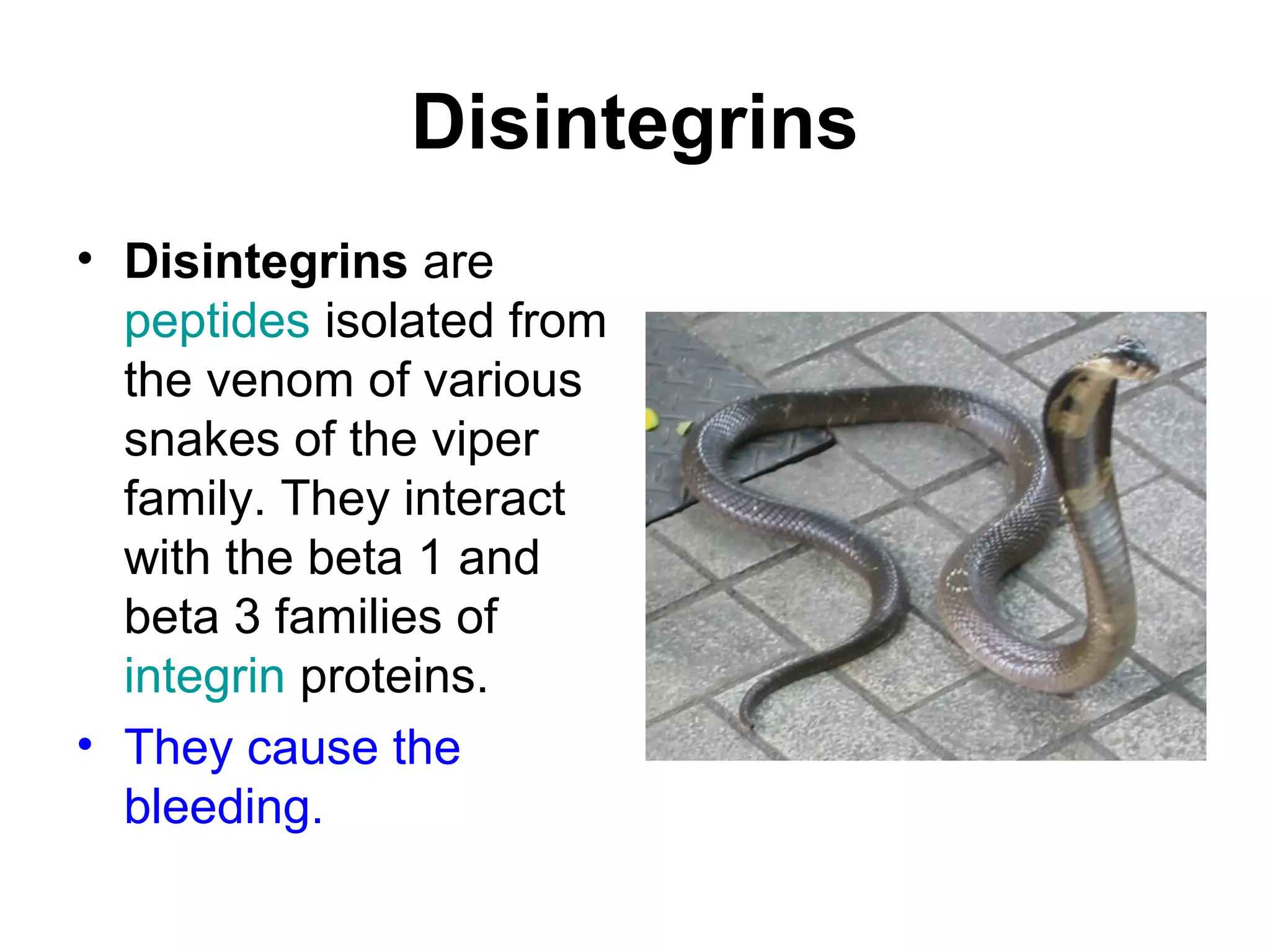
Disintegrins
• Disintegrins are
peptides isolated from
the venom of various
snakes of the viper
family. They interact
with the beta 1 and
beta 3 families of
integrin proteins.
• They cause the
bleeding.
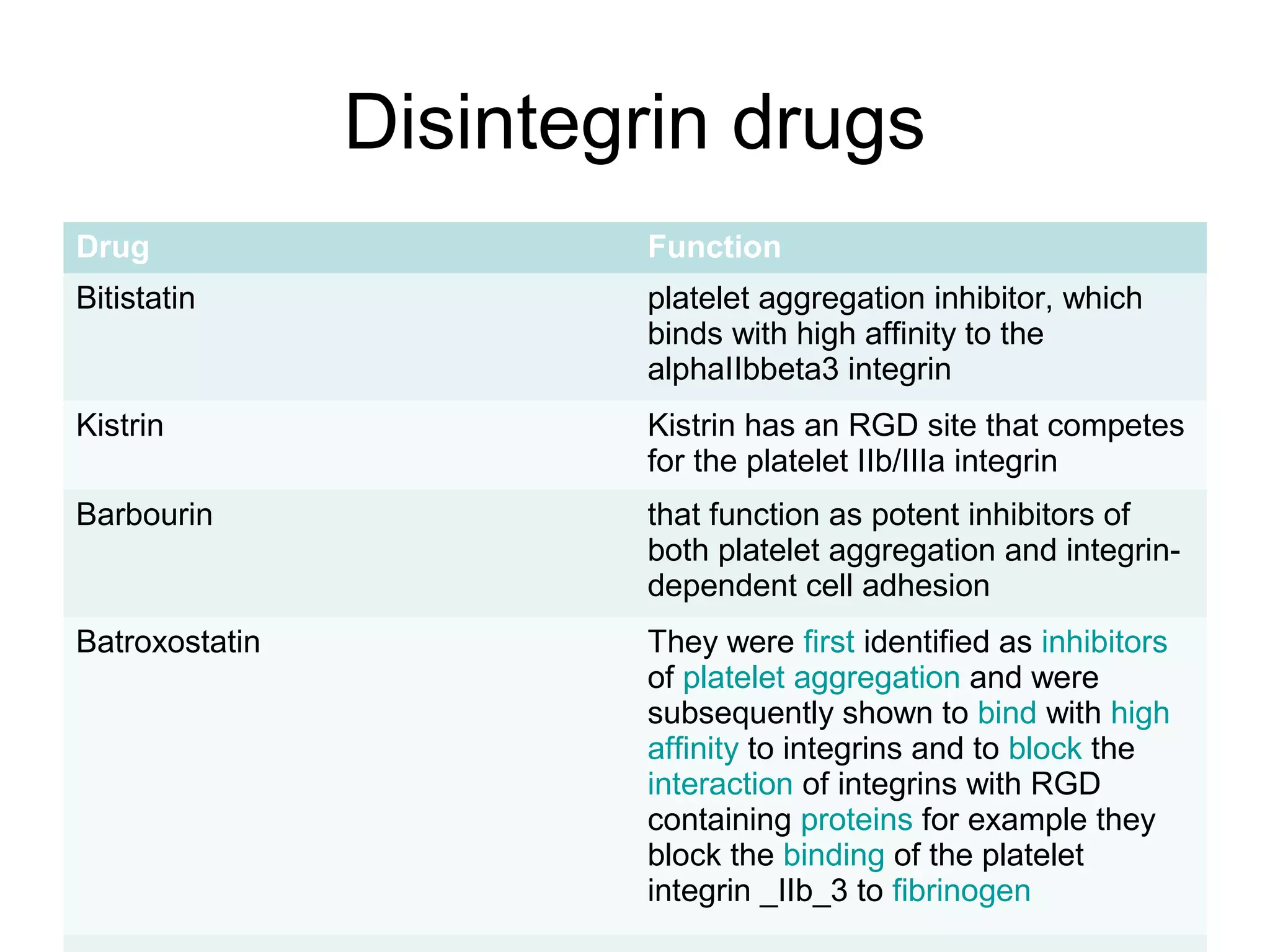
Disintegrin drugs
Drug

Function

Bitistatin

platelet aggregation inhibitor, which
binds with high affinity to the
alphaIIbbeta3 integrin

Kistrin

Kistrin has an RGD site that competes
for the platelet IIb/IIIa integrin

Barbourin

that function as potent inhibitors of
both platelet aggregation and integrindependent cell adhesion

Batroxostatin

They were first identified as inhibitors
of platelet aggregation and were
subsequently shown to bind with high
affinity to integrins and to block the
interaction of integrins with RGD
containing proteins for example they
block the binding of the platelet
integrin _IIb_3 to fibrinogen
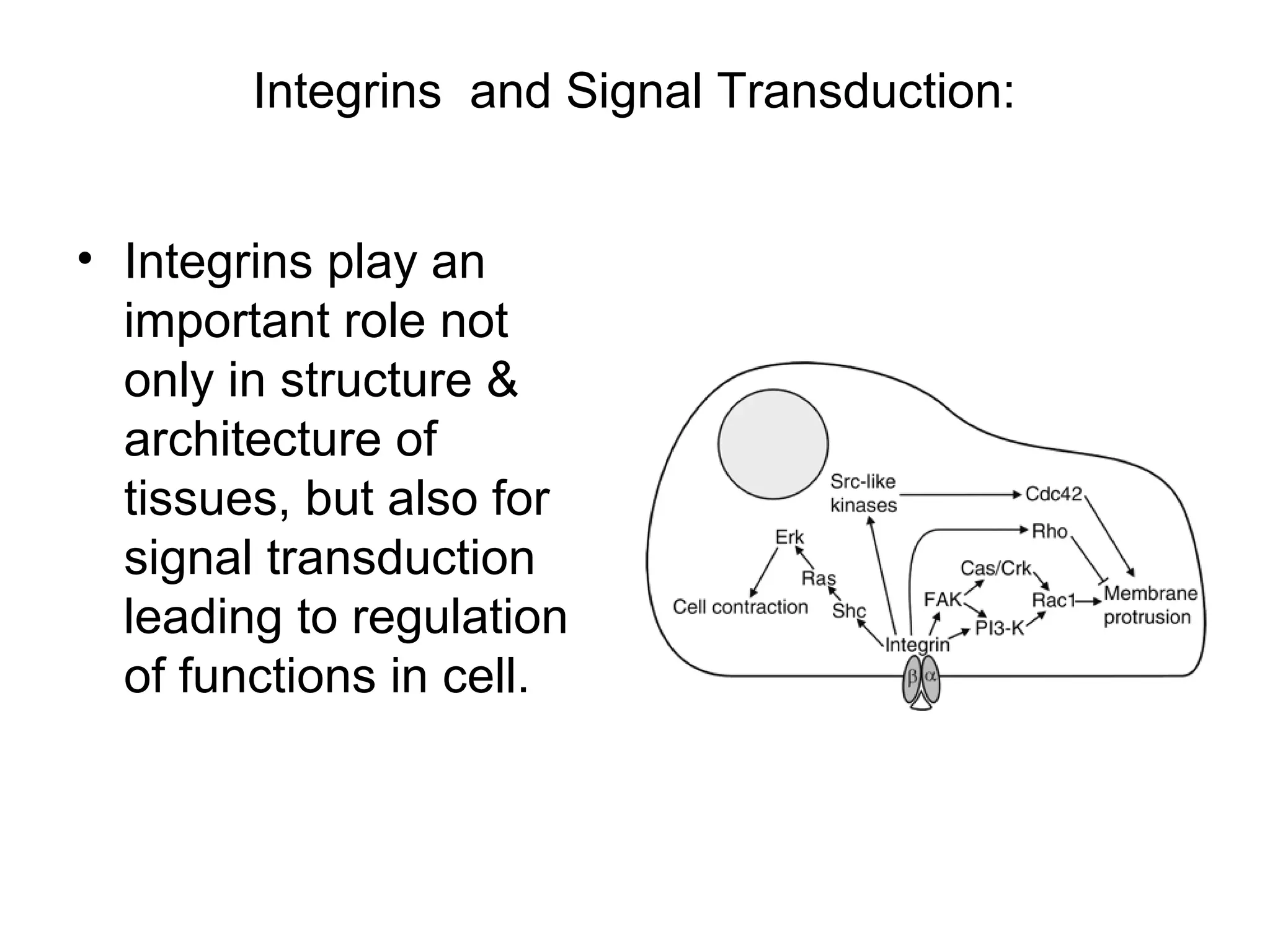
Integrins and Signal Transduction:
• Integrins play an
important role not
only in structure &
architecture of
tissues, but also for
signal transduction
leading to regulation
of functions in cell.
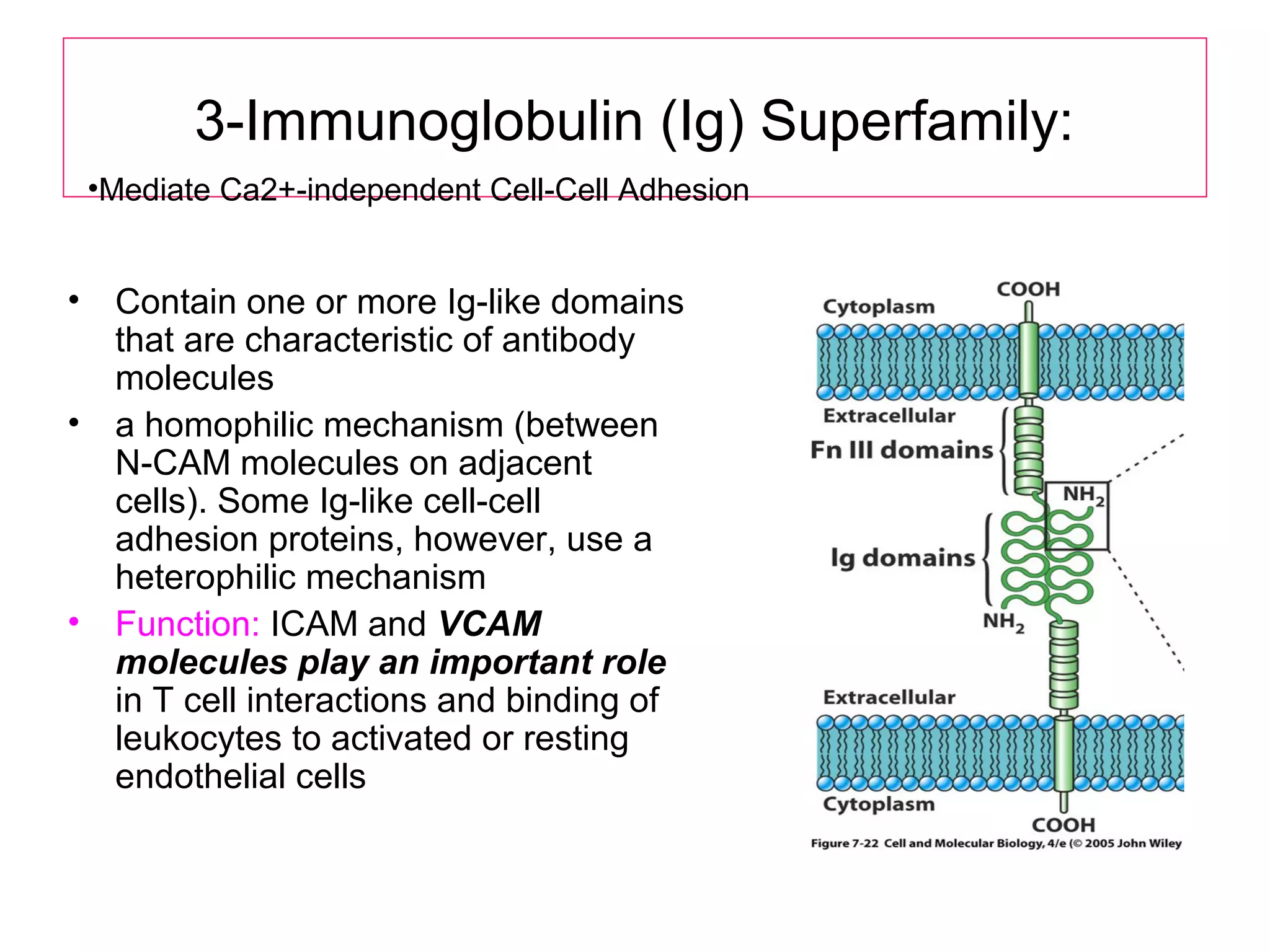
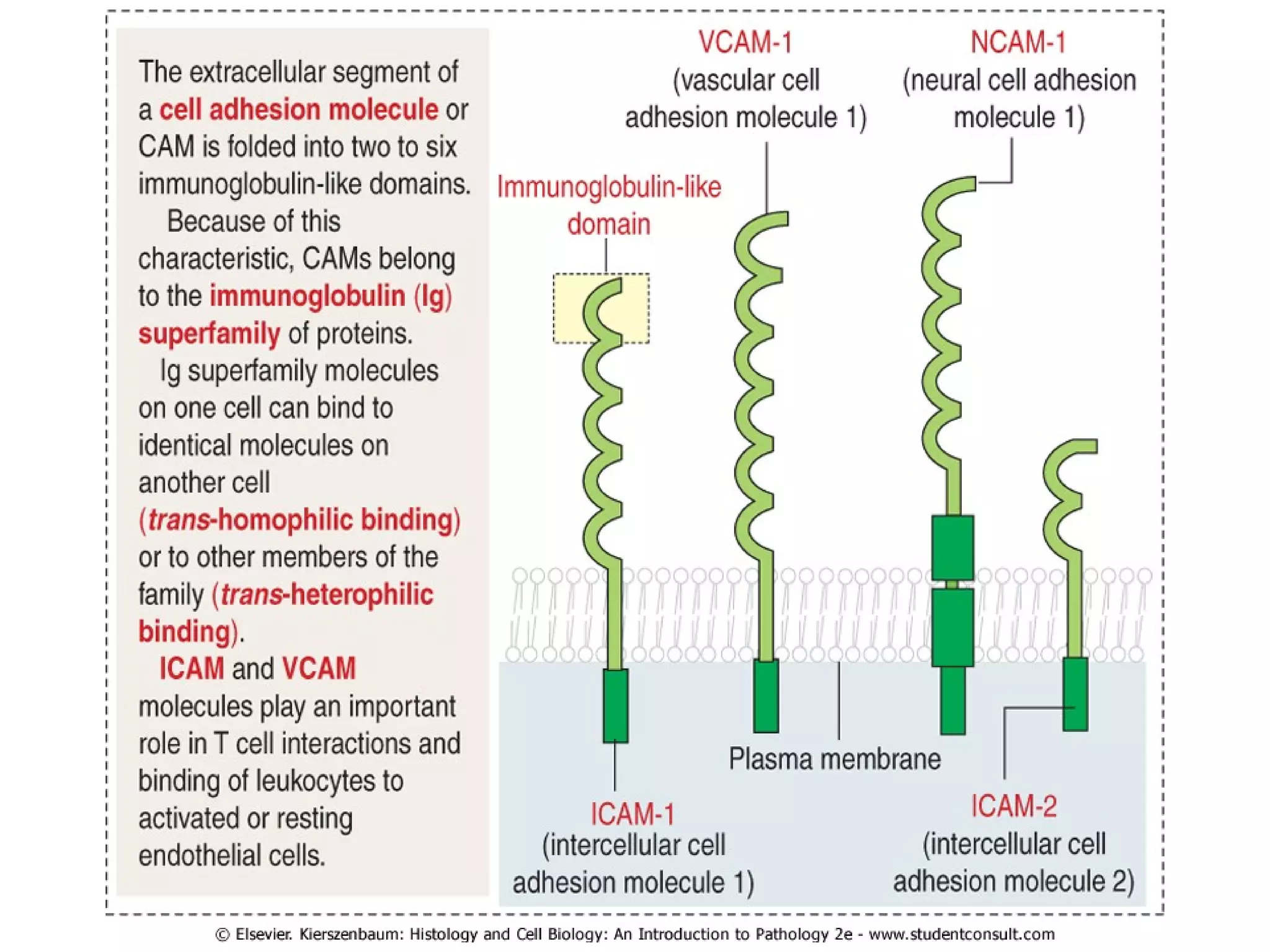
3-Immunoglobulin (Ig) Superfamily:
•Mediate Ca2+-independent Cell-Cell Adhesion

•
•

•

Contain one or more Ig-like domains
that are characteristic of antibody
molecules
a homophilic mechanism (between
N-CAM molecules on adjacent
cells). Some Ig-like cell-cell
adhesion proteins, however, use a
heterophilic mechanism
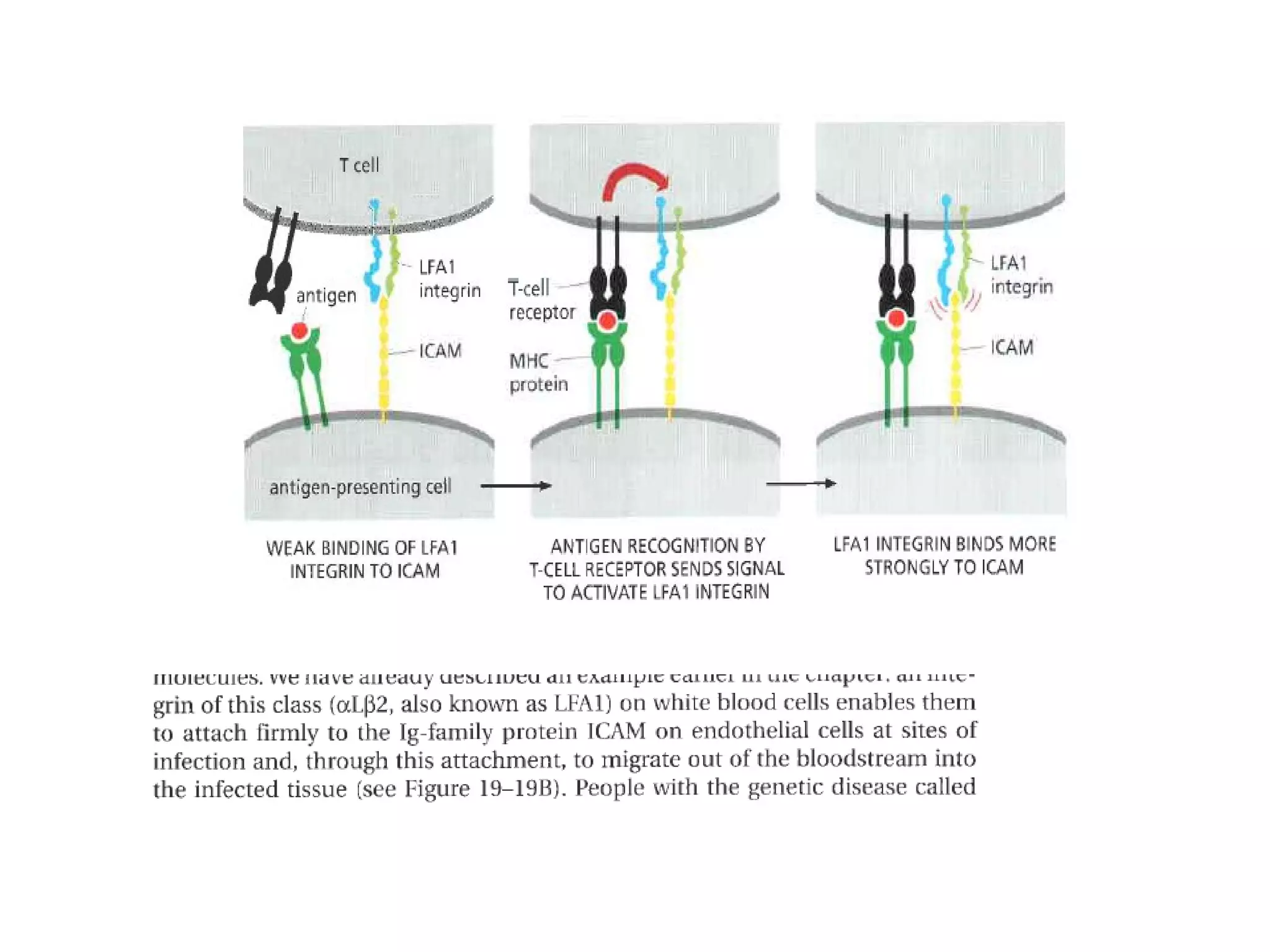
Function: ICAM and VCAM
molecules play an important role
in T cell interactions and binding of
leukocytes to activated or resting
endothelial cells
3-Immunoglobulin (Ig) Superfamily :
members
• Intercellular adhesion
molecules (ICAMs)on endothelial cells
Vasculer adesion
molecules: VCAM
• the neural cell
adhesion molecule
(N-CAM),
• Platelet-endotel..:
PECAM
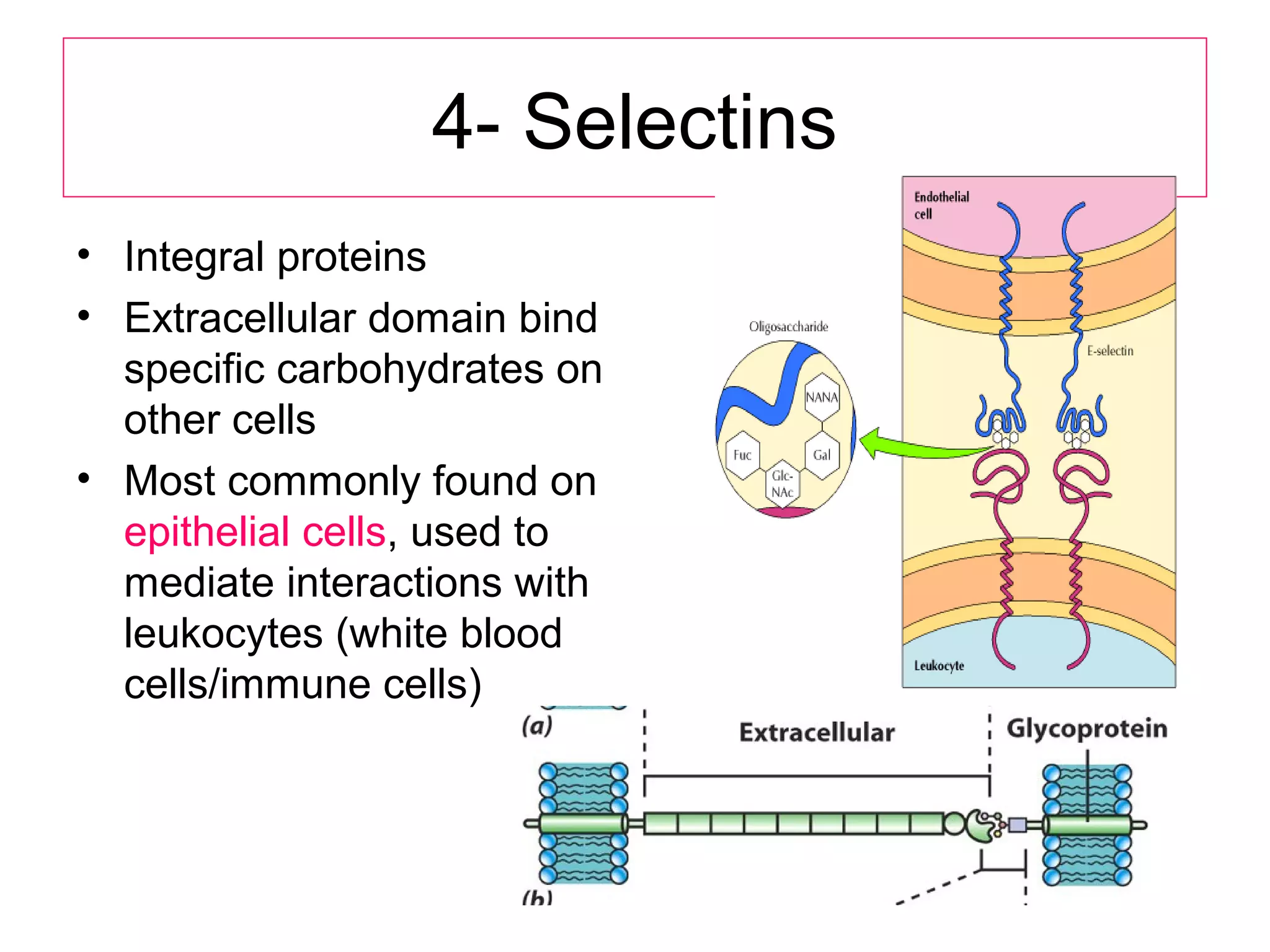
4- Selectins
• Integral proteins
• Extracellular domain bind
specific carbohydrates on
other cells
• Most commonly found on
epithelial cells, used to
mediate interactions with
leukocytes (white blood
cells/immune cells)
P-selectin glycoprotein
ligand-1
4- Selectins

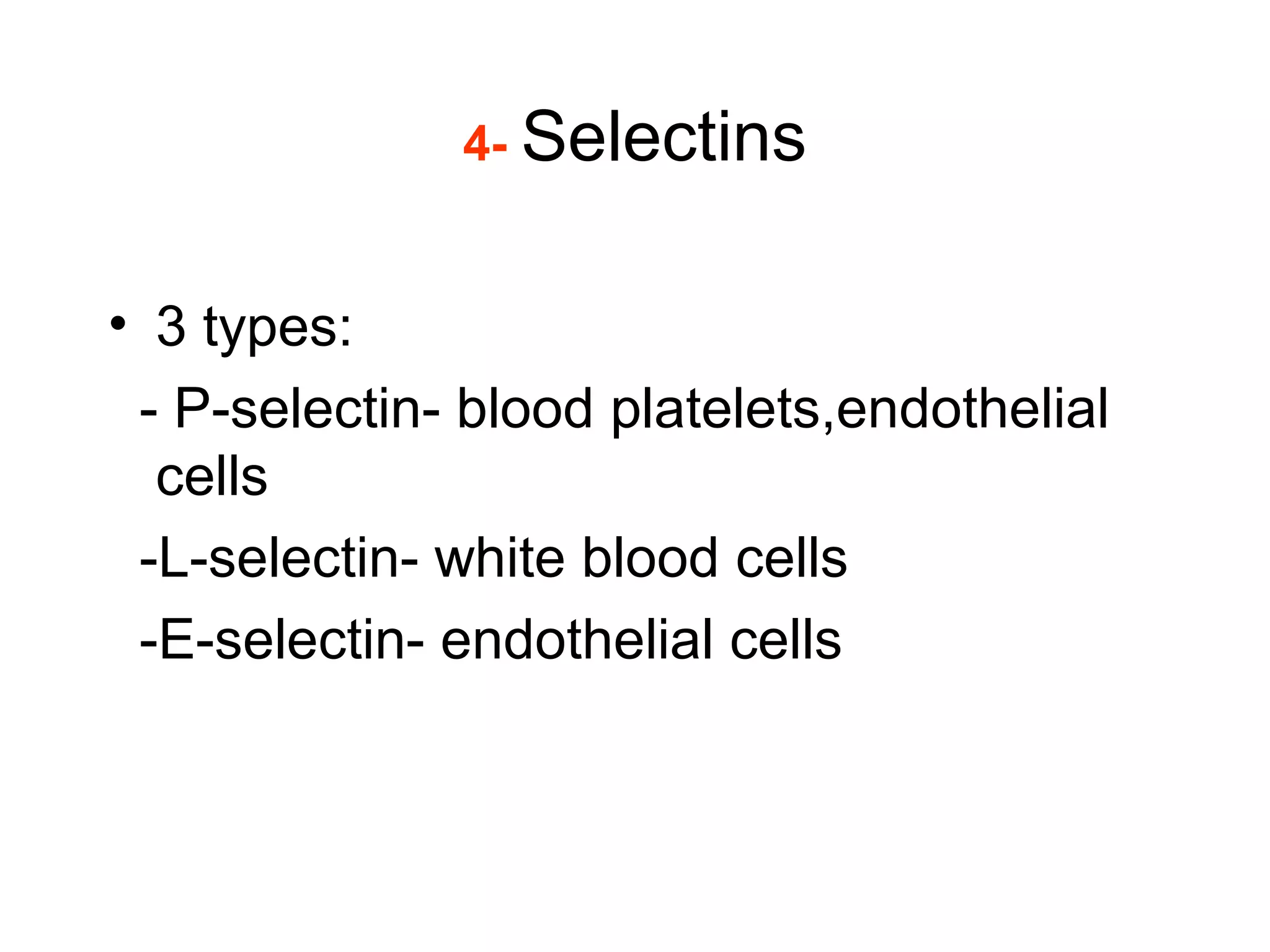
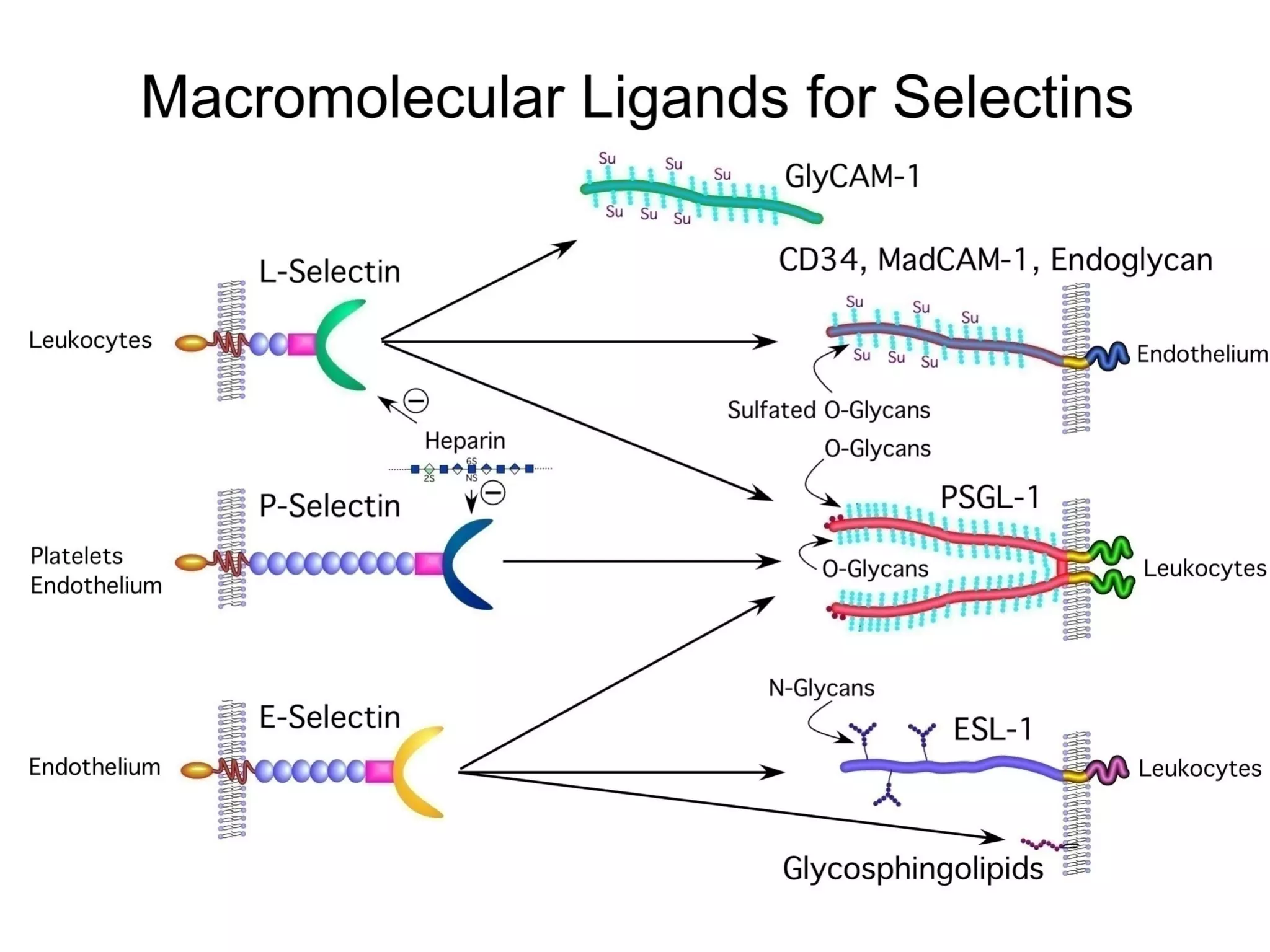
• 3 types:
- P-selectin- blood platelets,endothelial
cells
-L-selectin- white blood cells
-E-selectin- endothelial cells
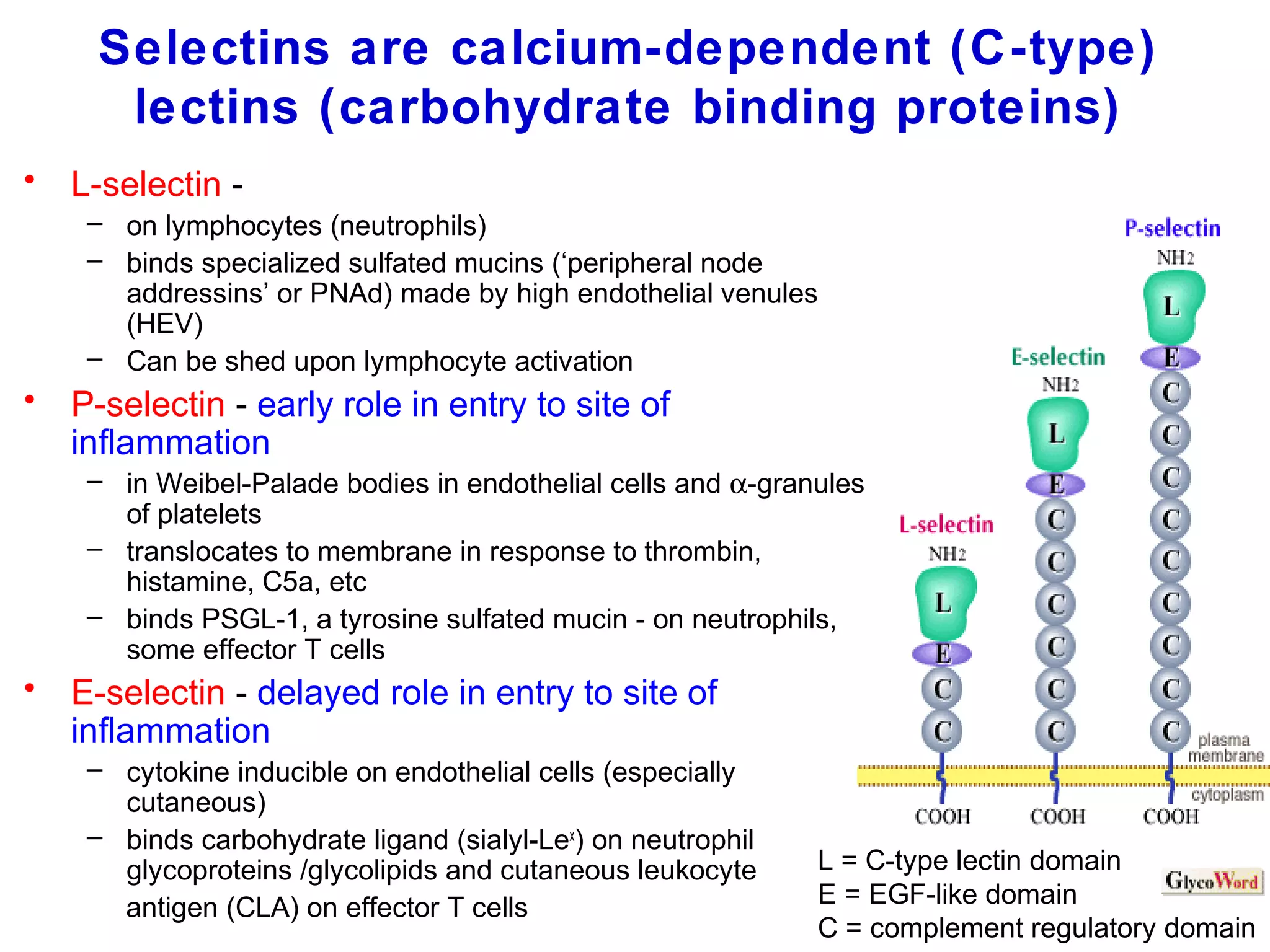
Selectins are calcium-dependent (C-type)
lectins (carbohydrate binding proteins)
•

L-selectin – on lymphocytes (neutrophils)
– binds specialized sulfated mucins (‘peripheral node
addressins’ or PNAd) made by high endothelial venules
(HEV)
– Can be shed upon lymphocyte activation

•

P-selectin - early role in entry to site of
inflammation
– in Weibel-Palade bodies in endothelial cells and α-granules
of platelets
– translocates to membrane in response to thrombin,
histamine, C5a, etc
– binds PSGL-1, a tyrosine sulfated mucin - on neutrophils,
some effector T cells

•

E-selectin - delayed role in entry to site of
inflammation
– cytokine inducible on endothelial cells (especially
cutaneous)
– binds carbohydrate ligand (sialyl-Lex) on neutrophil
glycoproteins /glycolipids and cutaneous leukocyte
antigen (CLA) on effector T cells

L = C-type lectin domain
E = EGF-like domain
C = complement regulatory domain
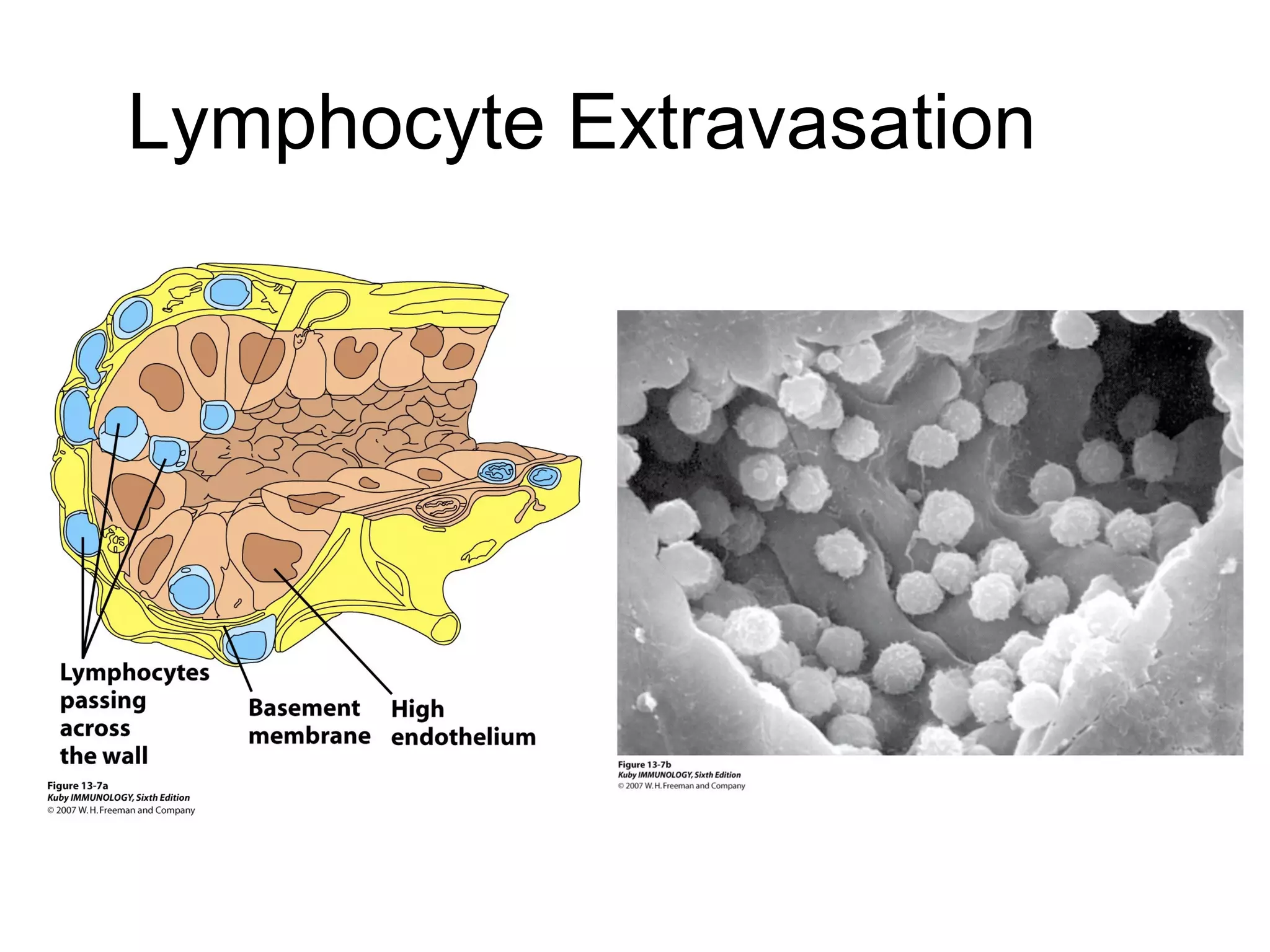
Lymphocyte Extravasation
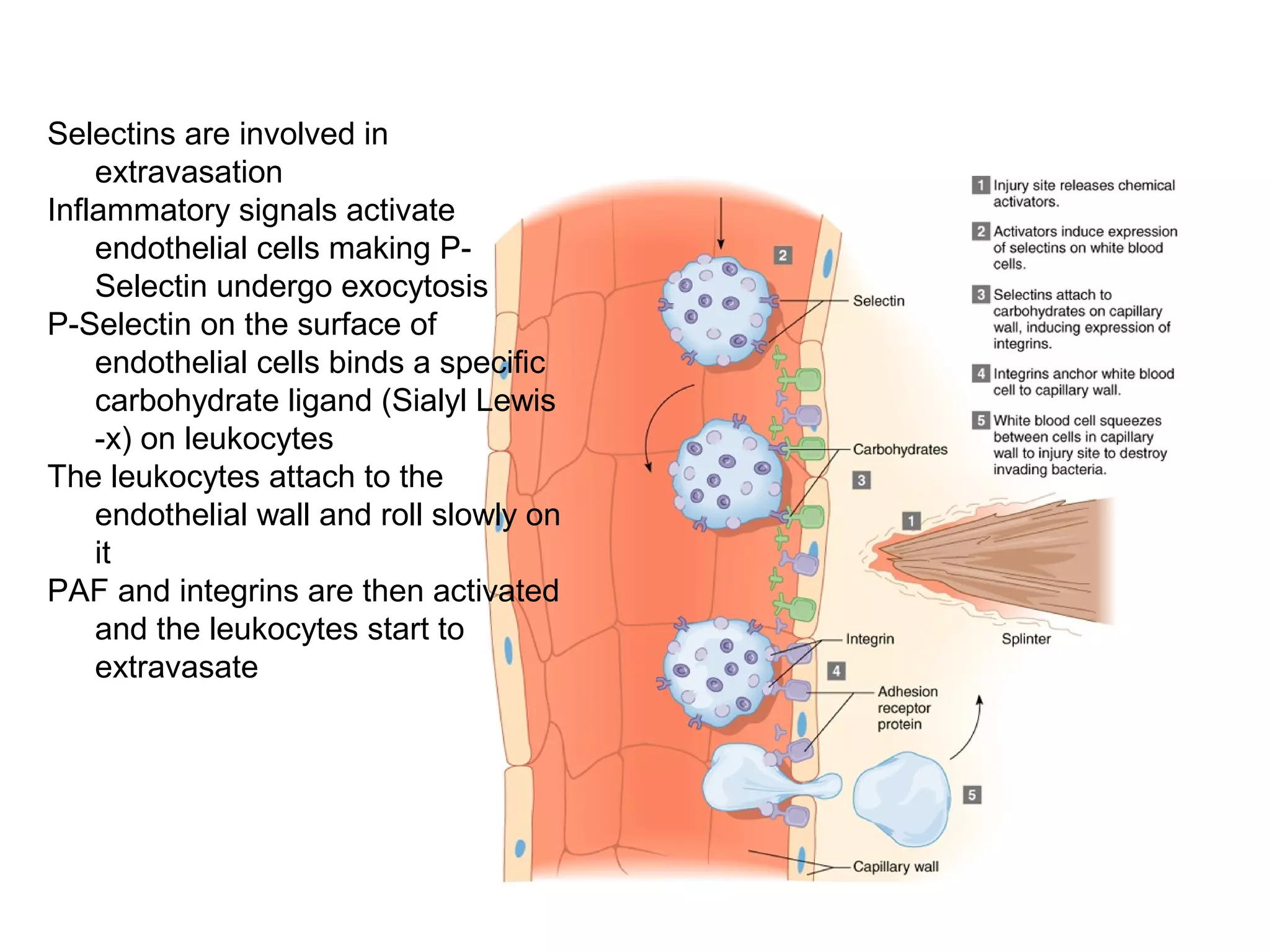
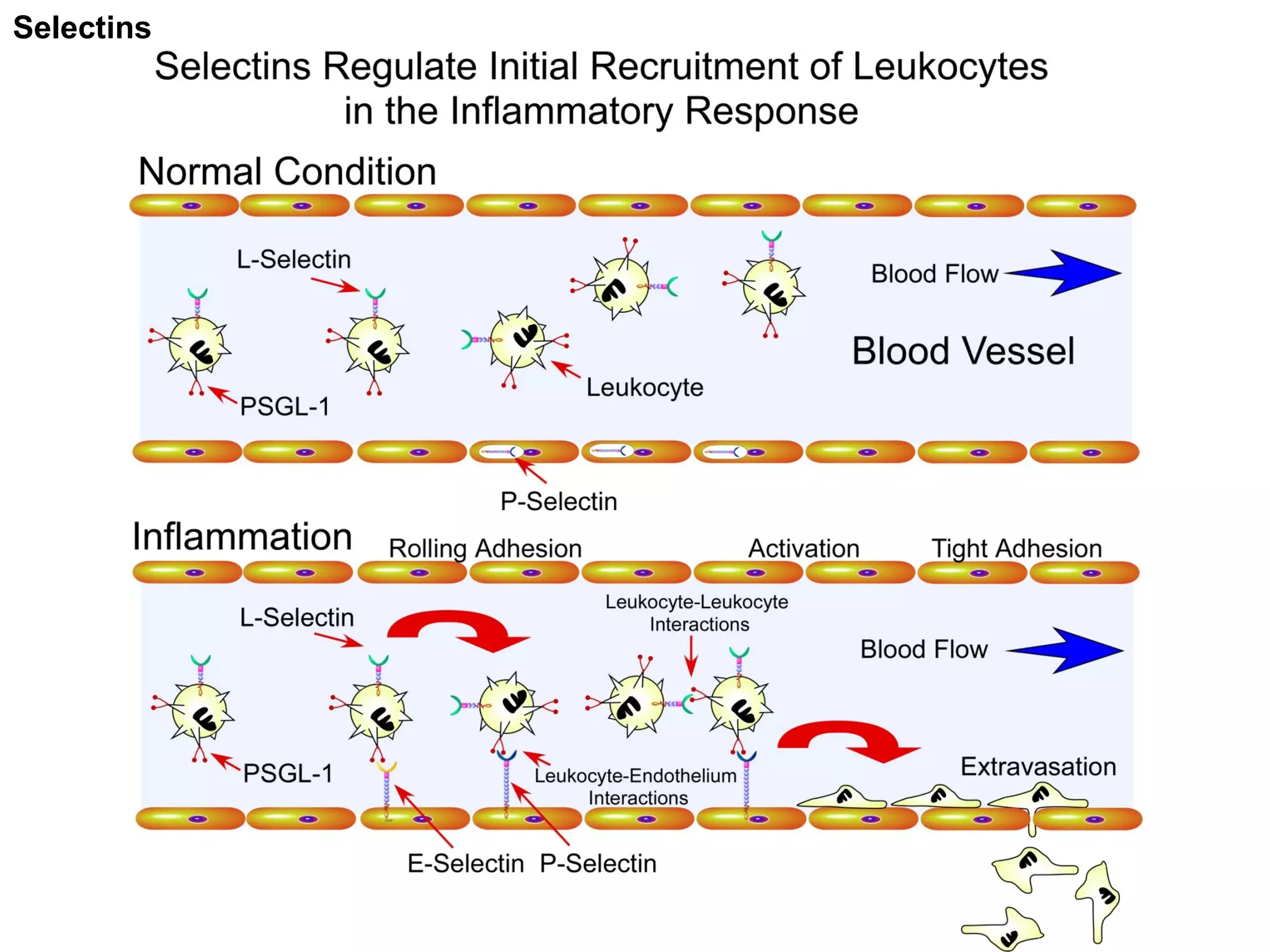
Selectins are involved in
extravasation
Inflammatory signals activate
endothelial cells making PSelectin undergo exocytosis
P-Selectin on the surface of
endothelial cells binds a specific
carbohydrate ligand (Sialyl Lewis
-x) on leukocytes
The leukocytes attach to the
endothelial wall and roll slowly on
it
PAF and integrins are then activated
and the leukocytes start to
extravasate
Selectins
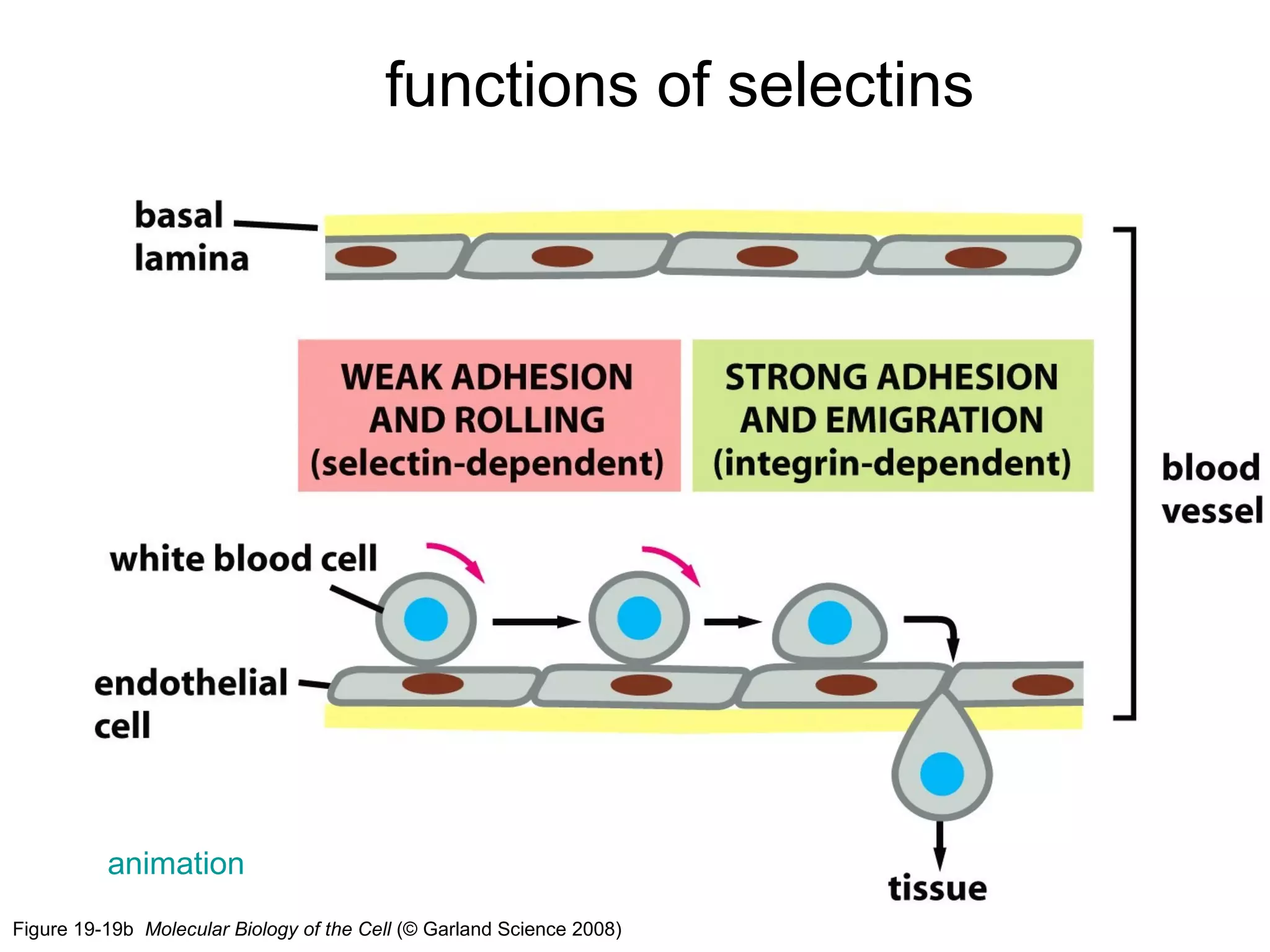
functions of selectins

animation
Figure 19-19b Molecular Biology of the Cell (© Garland Science 2008)
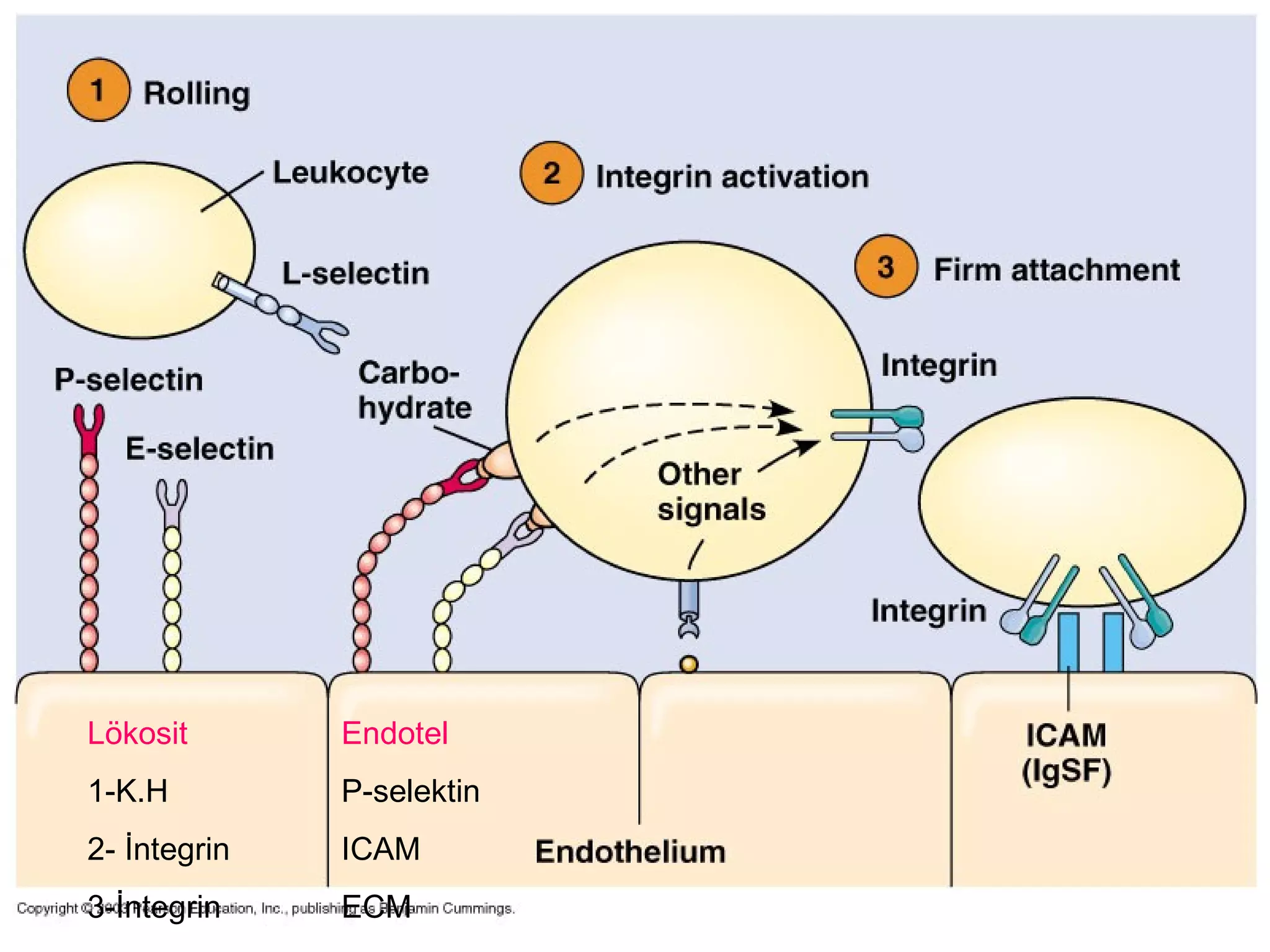
Lökosit

Endotel

1-K.H

P-selektin

2- İntegrin

ICAM

3-İntegrin

ECM
Diseases of cell adhesion
molecules
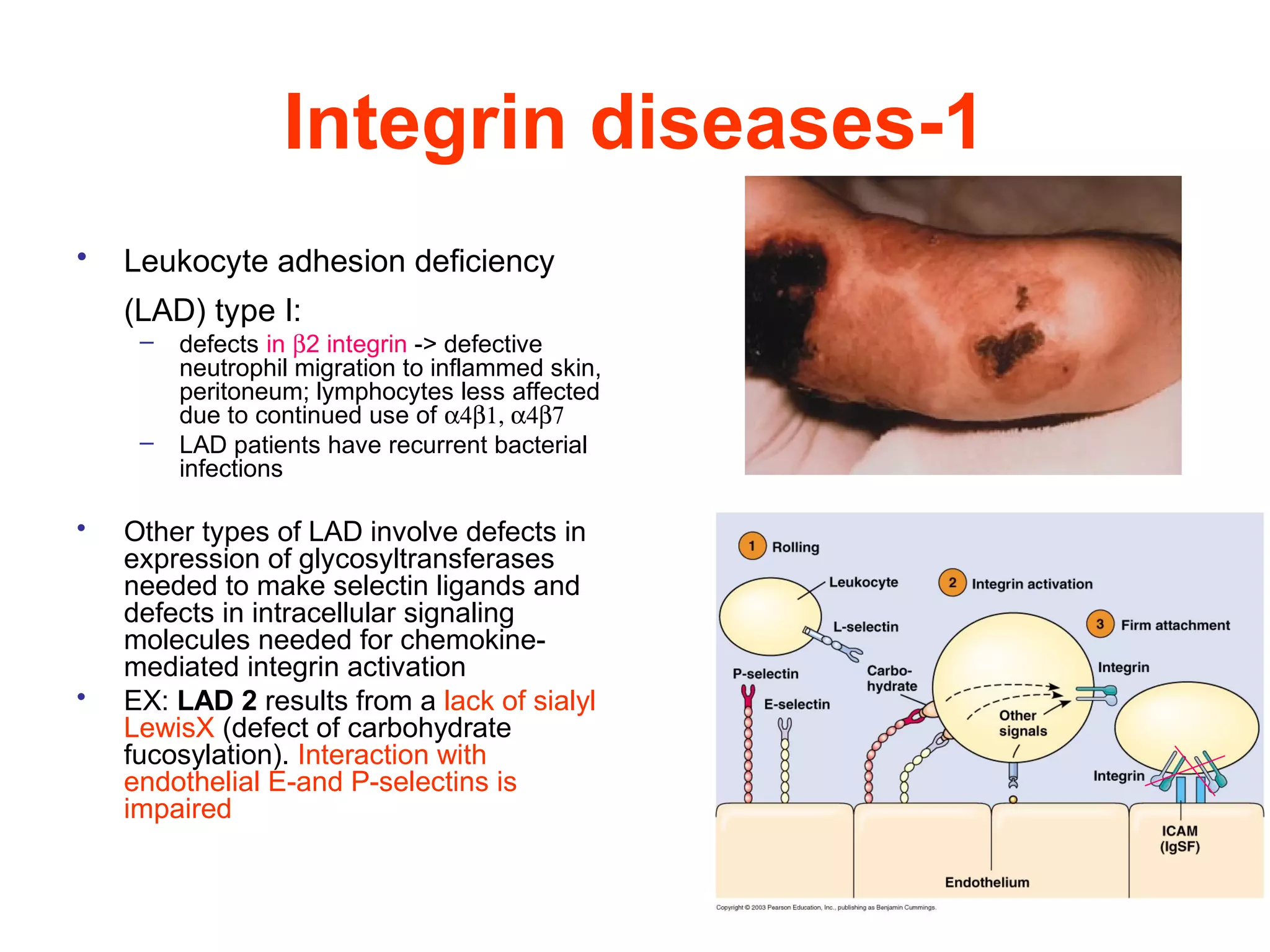
Integrin diseases-1
•

Leukocyte adhesion deficiency
(LAD) type I:
–

–

•

•

defects in β2 integrin -> defective
neutrophil migration to inflammed skin,
peritoneum; lymphocytes less affected
due to continued use of α4β1, α4β7
LAD patients have recurrent bacterial
infections

Other types of LAD involve defects in
expression of glycosyltransferases
needed to make selectin ligands and
defects in intracellular signaling
molecules needed for chemokinemediated integrin activation
EX: LAD 2 results from a lack of sialyl
LewisX (defect of carbohydrate
fucosylation). Interaction with
endothelial E-and P-selectins is
impaired
Integrin diseases-2

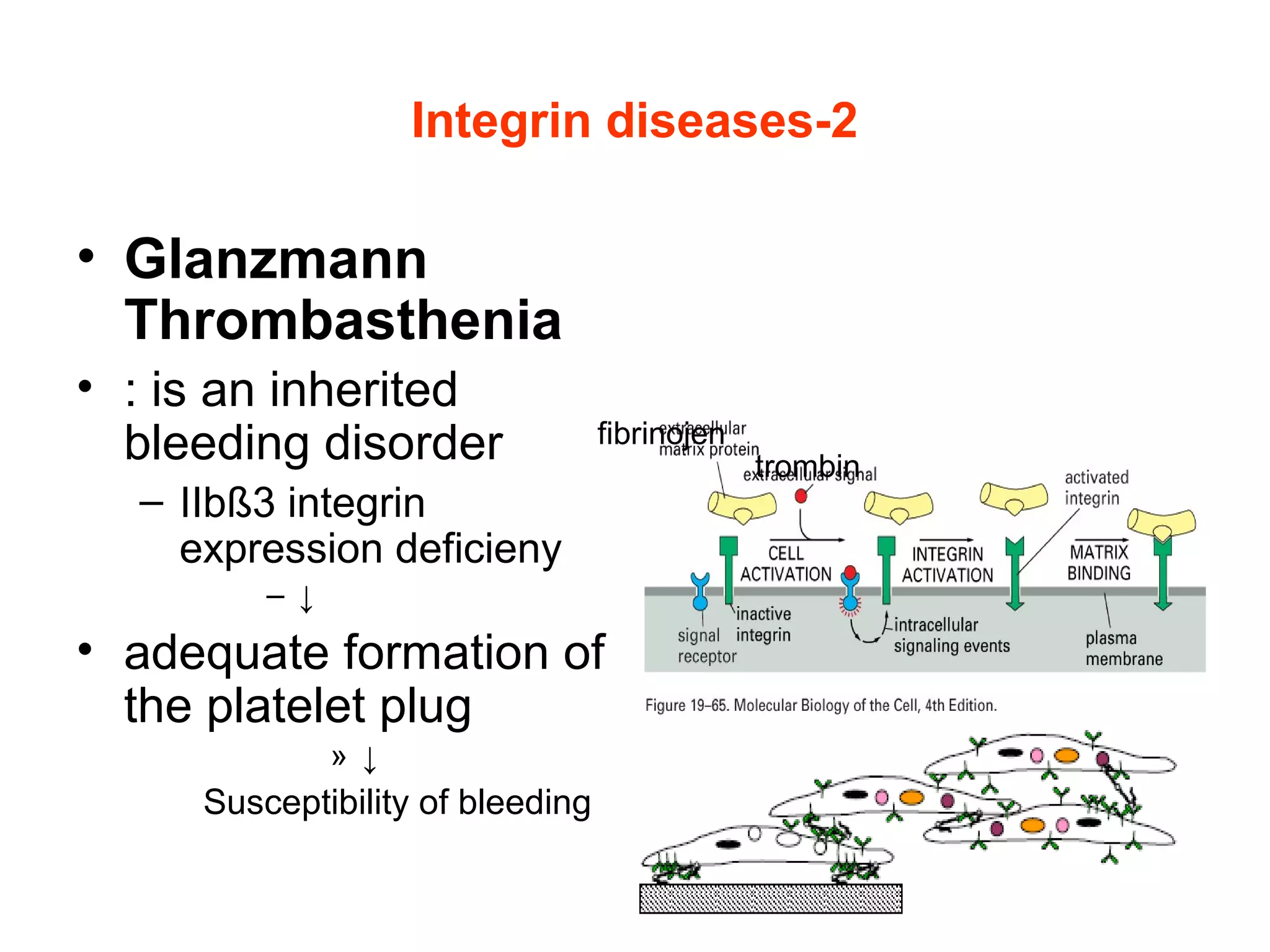
• Glanzmann
Thrombasthenia
• : is an inherited
bleeding disorder

fibrinojen

– IIbß3 integrin
expression deficieny
– ↓

• adequate formation of
the platelet plug
» ↓

Susceptibility of bleeding

trombin
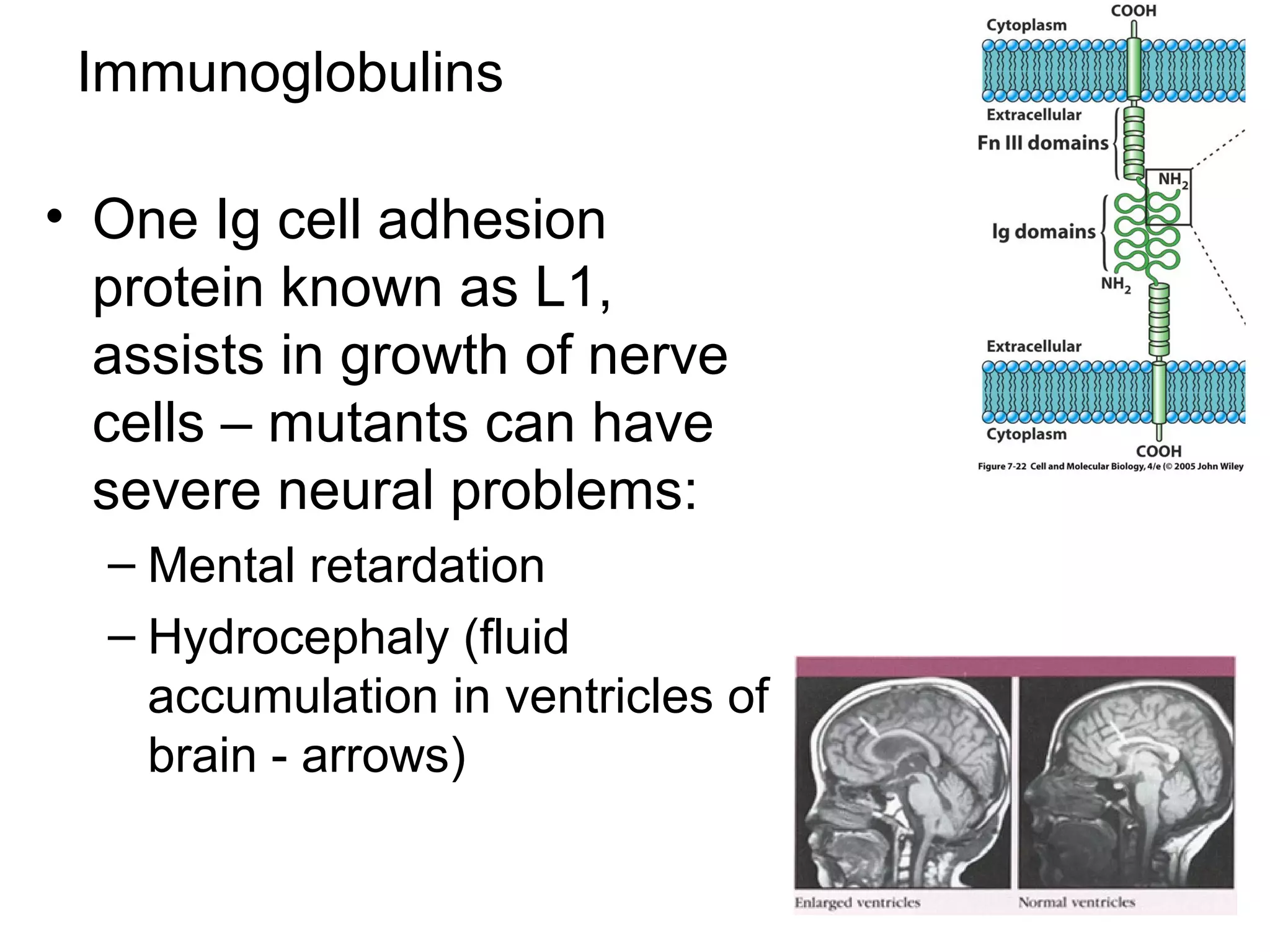
Immunoglobulins
• One Ig cell adhesion
protein known as L1,
assists in growth of nerve
cells – mutants can have
severe neural problems:
– Mental retardation
– Hydrocephaly (fluid
accumulation in ventricles of
brain - arrows)
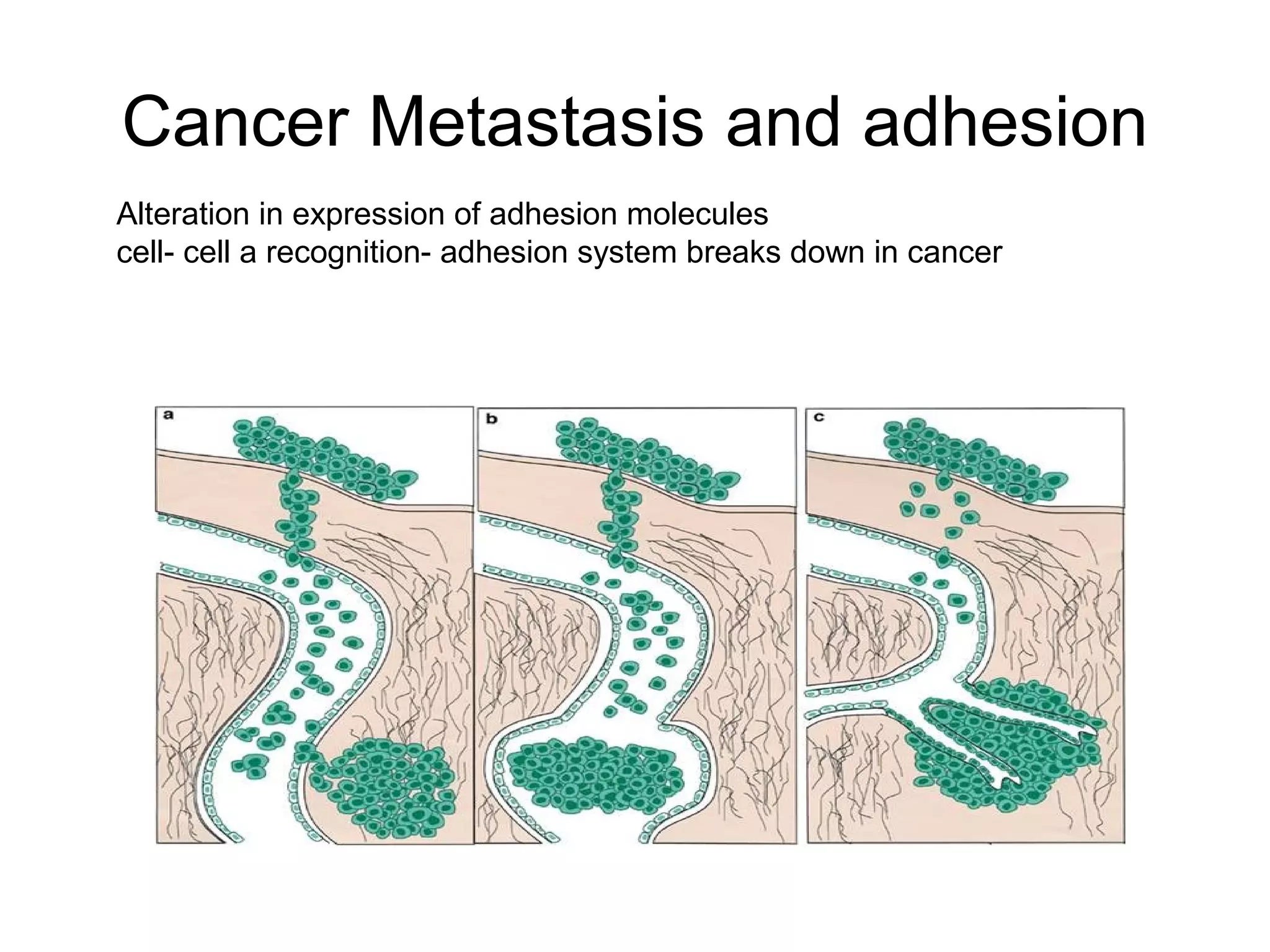
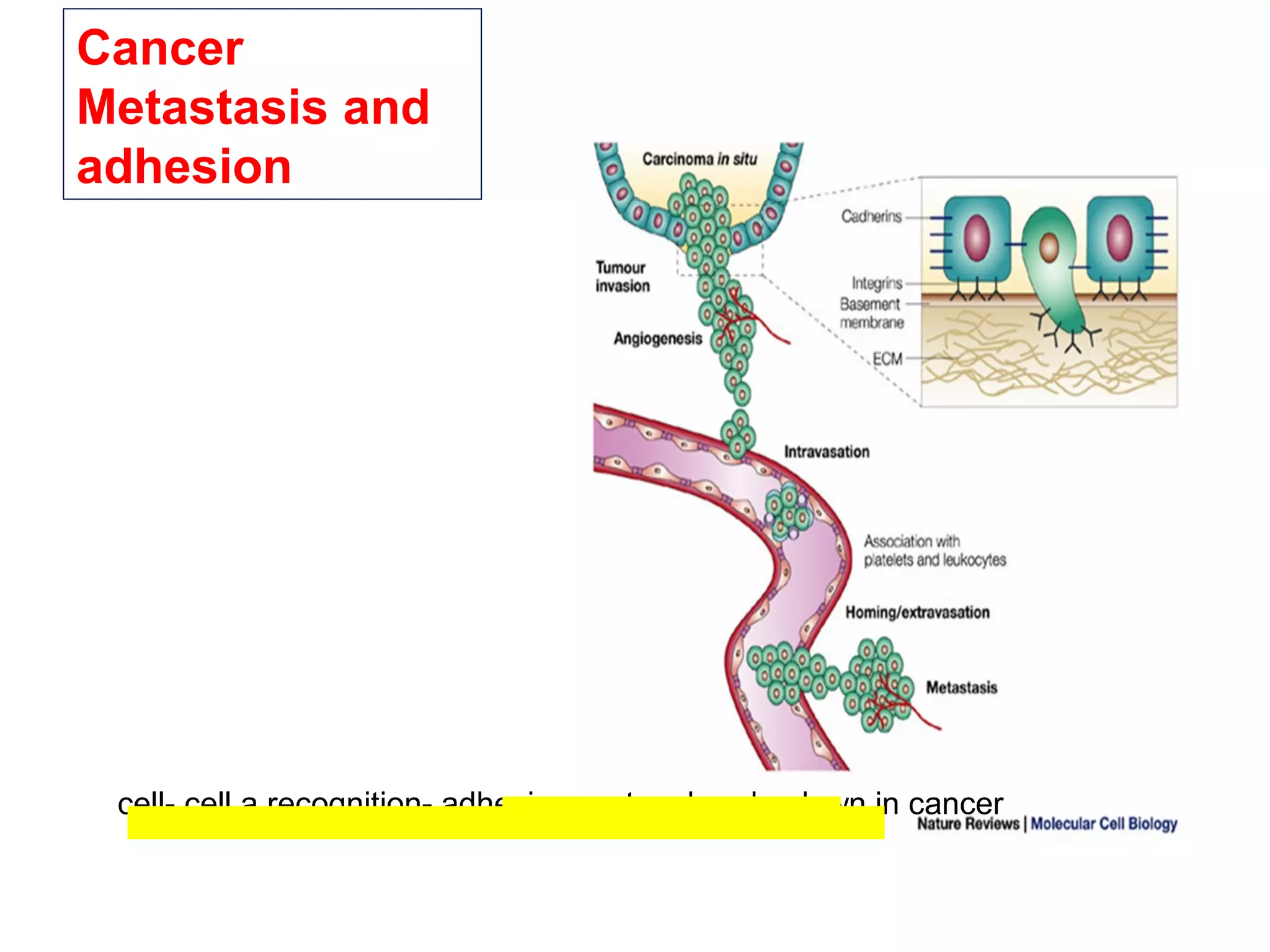
Cancer Metastasis and adhesion
Alteration in expression of adhesion molecules
cell- cell a recognition- adhesion system breaks down in cancer
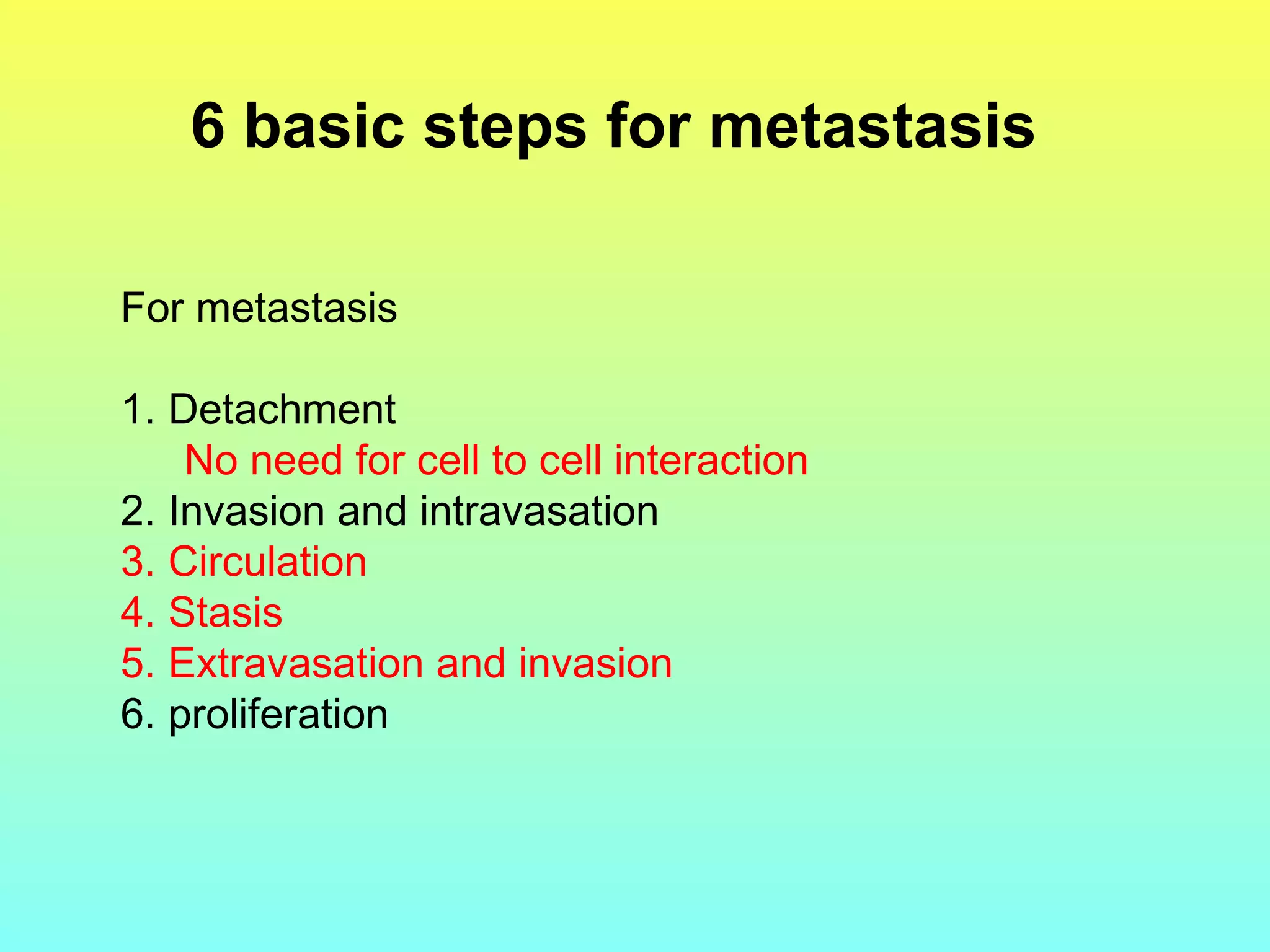
6 basic steps for metastasis
For metastasis
1. Detachment
No need for cell to cell interaction
2. Invasion and intravasation
3. Circulation
4. Stasis
5. Extravasation and invasion
6. proliferation
Cancer
Metastasis and
adhesion

cell- cell a recognition- adhesion system breaks down in cancer
•

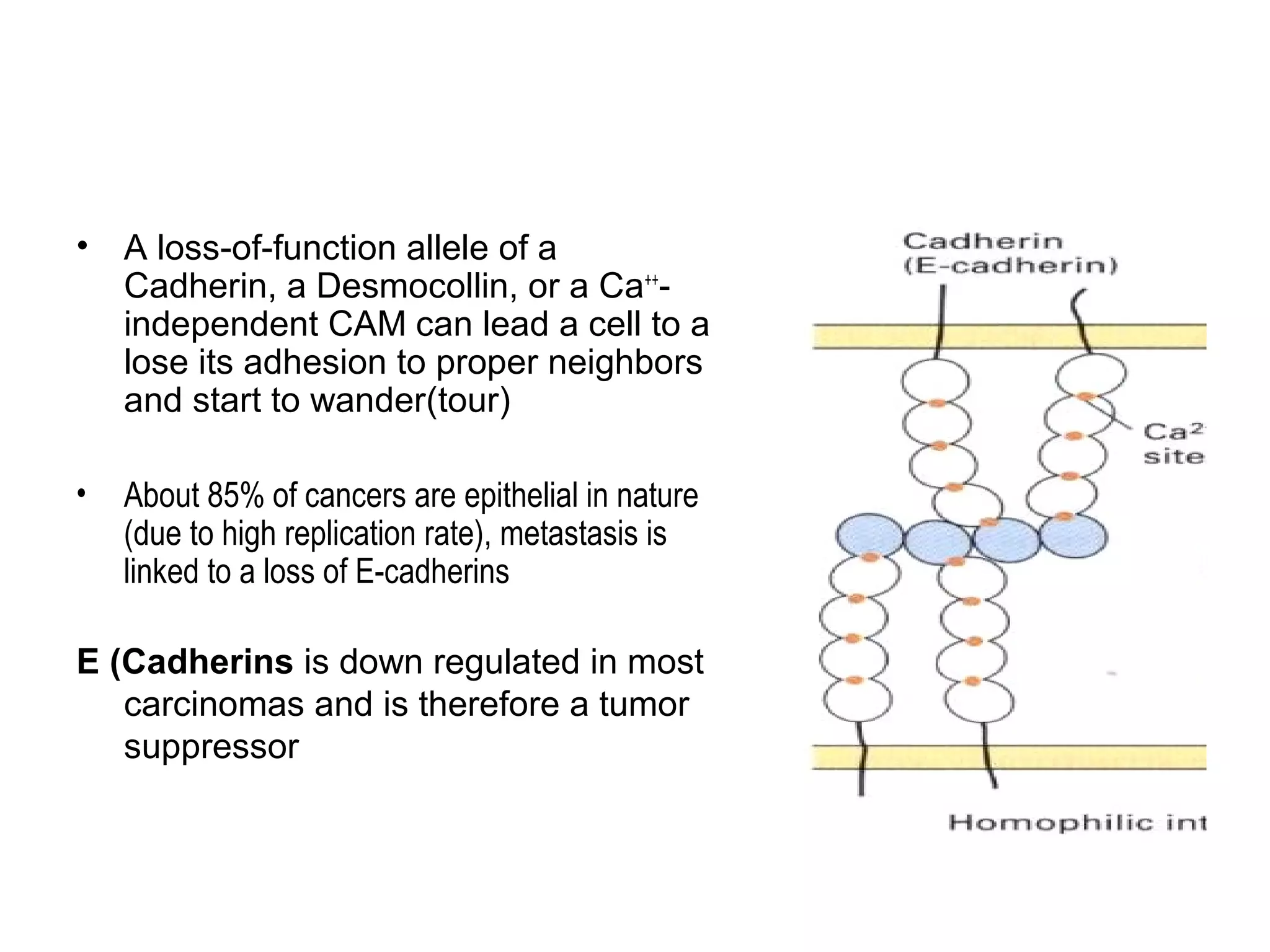
A loss-of-function allele of a
Cadherin, a Desmocollin, or a Ca++independent CAM can lead a cell to a
lose its adhesion to proper neighbors
and start to wander(tour)

•

About 85% of cancers are epithelial in nature
(due to high replication rate), metastasis is
linked to a loss of E-cadherins

E (Cadherins is down regulated in most
carcinomas and is therefore a tumor
suppressor
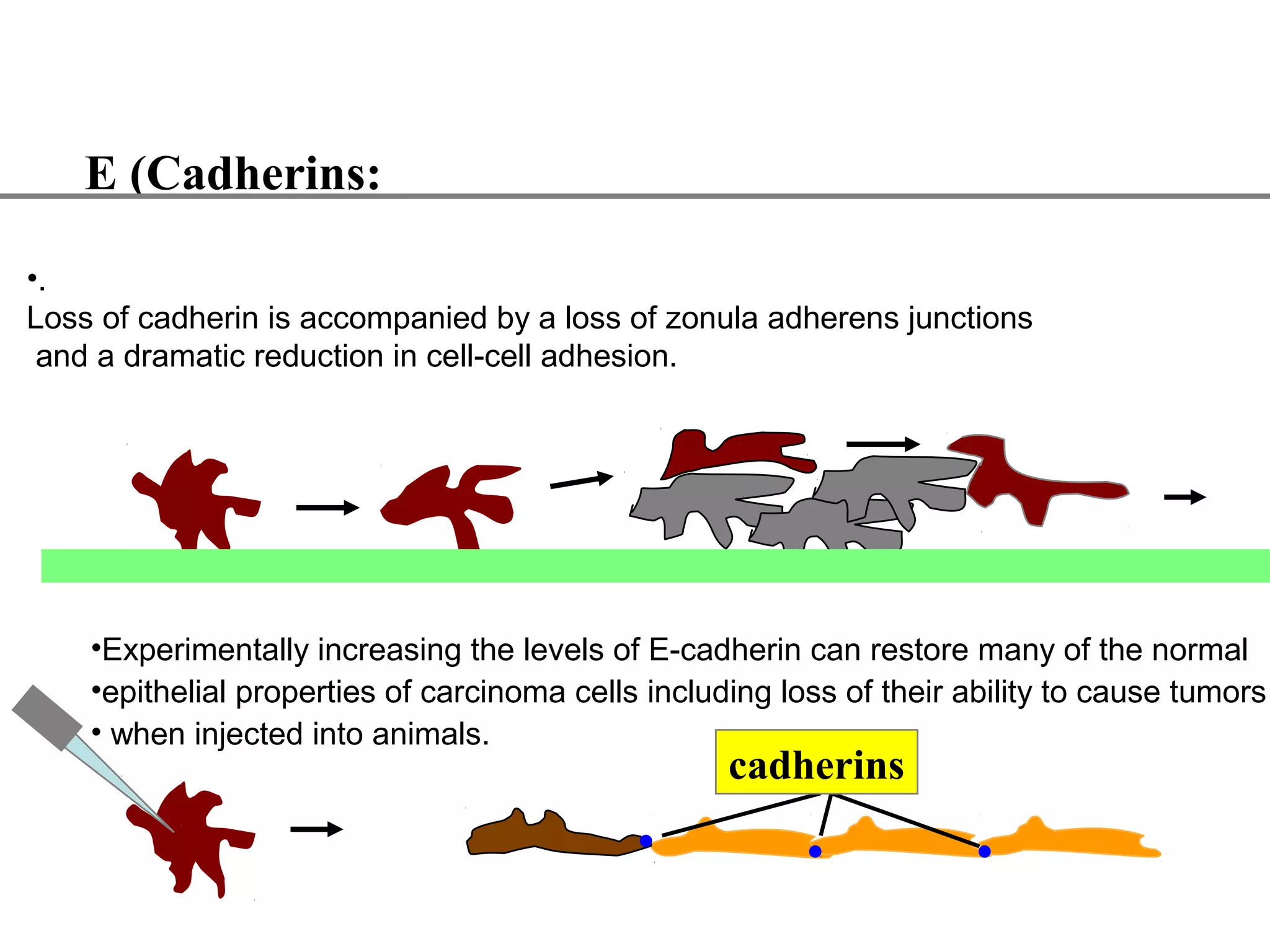
E (Cadherins:
•.
Loss of cadherin is accompanied by a loss of zonula adherens junctions
and a dramatic reduction in cell-cell adhesion.

•Experimentally increasing the levels of E-cadherin can restore many of the normal
•epithelial properties of carcinoma cells including loss of their ability to cause tumors
• when injected into animals.

cadherins
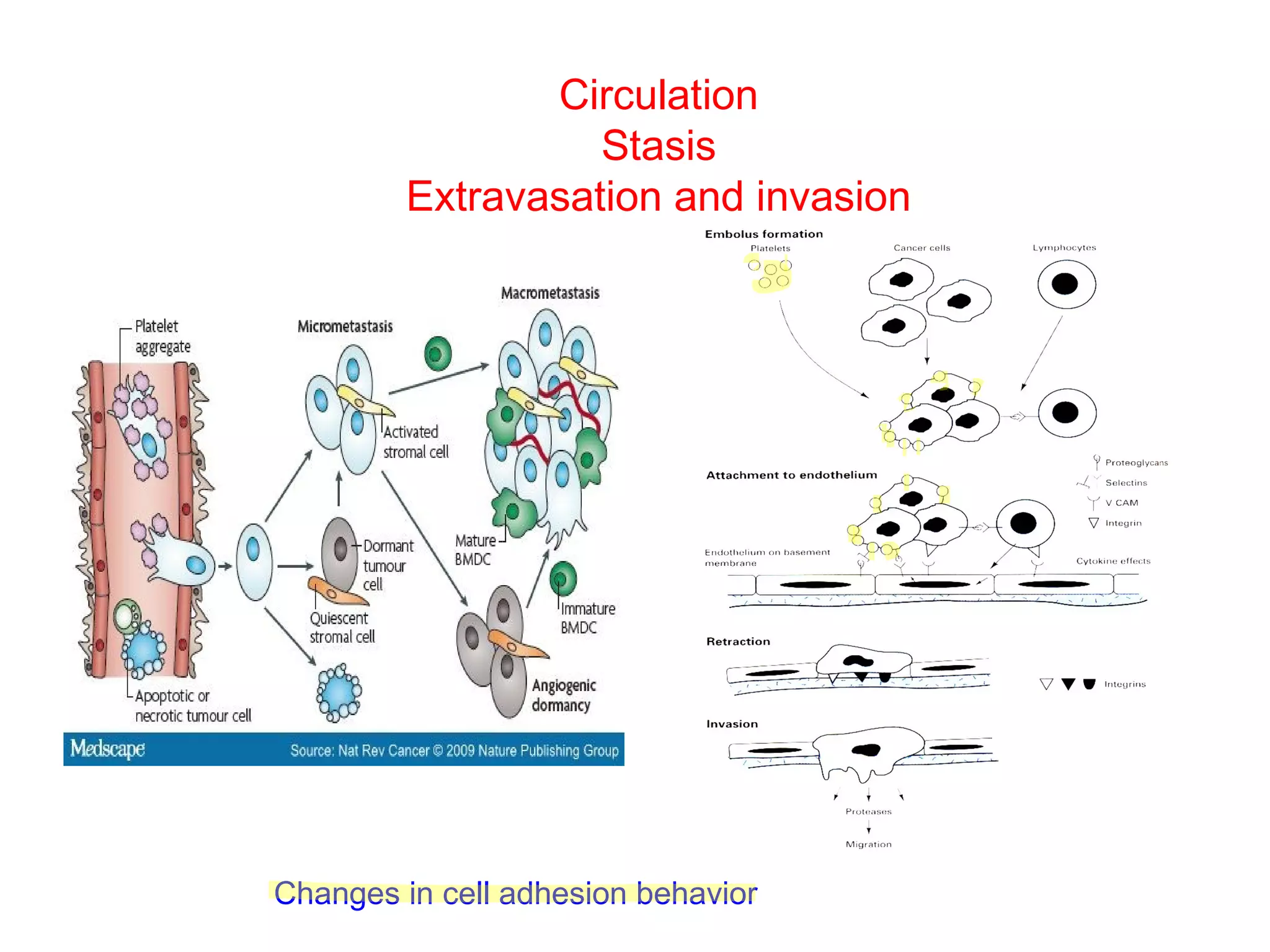
Circulation
Stasis
Extravasation and invasion

Changes in cell adhesion behavior
İng tip adezyonmoleküll

İng tip adezyonmoleküll

  • 1.
  • 2.
    Cellular Junctions andAdhesion • In multi-cellular cells have junctions that occur with: • 1- Other cells • 2- The Extra-Cellular Matrix (ECM): • a network of secreted macromolecular complexes
  • 3.
    Two main waysin which animal cells are bound together: •Connective tissue •Epithelial cells. Figure 19-1 Molecular Biology of the Cell (© Garland Science 2008)
  • 4.
    Selective Adhesion DeterminesSpecificity of Tissue and Cellular Associations • Townes & Holtfreter (1950) separated embryonic cells of frogs and combined them together again. To be able to identify the different cell types, they mixed together cells from normal (pigmented) frogs with cells from albino frogs Identification of CAM through experiment:
  • 5.
    Selective Adhesion DeterminesSpecificity of Tissue and Cellular Associations
  • 6.
    Identification of CAMthrough experiment: Antibodies were developed against specific types of CAM. Antibody treatment of the target cells was found to disturb the cell aggregation.
  • 7.
    • What arethe factors that keep the cells together? • how do the same type of cells recognize each other?
  • 8.
    Adhesion Adhesion = moleculessticking to a substrate
  • 9.
    CELL ADESİON MOLECULES •Cell-cell interactions • Embryogenesis • Immunity(migration of immun cells to the inflamation center) • Cell tissue organ development • wound healing • Cancer metastasis
  • 10.
    Cell adhesion molecules •1-Holding cells together • 2-Cells detect their extracellular environment through interaction employing a variety of cell adhesion molecules (CAMs)
  • 11.
    Cells adhere toeach other and to the extracellular matrix through cell-surface proteins called cell adhesion molecules (CAMs) • Many adhesion molecules are mosaics of multiple distinct domains • (1) extracellular domain: – Mediate adhesion (2) transmembrane domain • • • • (3) cytosolic domain: -recruit sets of multifunctional adaptor proteins --adaptor proteins: link to cytoskeleton/ signaling molecules * outside-in and inside-out effects: connectivity and communication
  • 12.
    Cell adhesion molecules(CAM) --Many adhesion molecules are mosaics of multiple distinct domains (1) extracellular domain: mediate adhesion *homotypic adhesion—adhesive interactions between cells of the same type *homophilic adhesion—a CAM on one cell can directly bind to the same kind of CAM on an adjacent cell. (2) cytosolic domain: --recruit sets of multifunctional adaptor proteins --adaptor proteins: link to cytoskeleton or signaling molecules * outside-in and inside-out effects: connectivity and communication
  • 13.
    Heterophilic Binding- Bindingto a different kind 1) extracellular domain of molecule on adjacent cells Homophilic Binding- Binding of same kind of molecules in adjacent cells Linker-dependent BindingBinding through a secreted linker molecules to other molecules. The binding of a cell-surface receptor to a secreted ECM molecule immobilized on the substrate.
  • 14.
    cell adhesion molecules ↑ 1-cell adhesion molecules : glicoproteins ↓ 2- linker-protein connects the junction to (micro- or intermediate) filaments
  • 15.
    Cell-cell adhesions canbe • A- tight and long junctions • e.g. nerve cells in the nerve cells/ the metabolic cells in the liver • B- relatively weak and transient • e.g. immune –system cells in the blood
  • 16.
    Cell Adhesion Molecules Whatare they? Cell adhesion molecules (CAMS) are cell surface proteins involved in the binding of cells, usually leukocytes, to each other, to endothelial cells, or to the extracellular matrix. Most CAMS can be placed into one of four general families of proteins: 1) Cadherins 2) Integrins 3) Immunoglobulin (Ig) super family 4) Selectins
  • 17.
    epithelial cells non-epithelial cells tight junctions actin adhesionbelt (CADHERINS) CELL CELL ADHESION desmosomes (CADHERINS) Gap junctions (connexins) CELL MATRIX ADHESION hemidesm. (integrins) focal contacts (integrins) basal lamina JUNCTIONAL ADHESION MECHANISMS CADHERINS IG-LIKE CAMS INTEGRINS SELECTINS integrins NO attachment plague Non-JUNCTIONAL CONTACTS
  • 18.
    • Cell Adhesionalso occurs in the blood • Under most circumstances, all blood cells try to keep from sticking to the wall. • When a Leukocyte goes on the hunt… – Cell Rolling – Cell Adhesion
  • 19.
    CELL-CELL adhesion Cadh. repeats CELLADHESION MOLECULES Cadherins Ca 2+ -dep. homophilic adhesion functional unit = dimer Ig and Fn III repeats Immunoglobin superfamily (CAMs) homophilic or heterophilic lectin repeats Selectins heterophilic P selectin + counter-receptor PSGL-1, glycosylated I-CAM Integrins heterodimers, heterophilic bind to ECM, Ig-CAMs, cadherins adhesion, polarity, migration Hynes: TiCB: 9:M33 1999
  • 20.
    Immunobiology, 6th Edition,Janeway, Travers, Walport, and Shlomchik
  • 21.
    Some CAMs areCa2+-dependent, some others are Ca2+-independent. • Ca2+-dependent Cadherins, Selectins, İntegrins • Ca2+-independent Ig superfamily
  • 22.
    1-CADHERINS • A familyof Ca2+dependent CAMs • Ca2+ causes dimerization of Cadherins • The binding is homophilic-hold cells of one tissue type/subtype together by binding to the same cadherin on a neighbouring cell • greater the number of cadherins, greater the strength of adhesion
  • 23.
    Compaction of anearly mouse embryo. At the 8-cell stage they start expressing E-cadherins Figure 19-5 Molecular Biology of the Cell (© Garland Science 2008)
  • 24.
    1) CA-DEPENDENT CAMs(CELL ADHESION MOLECULES): a) classic CADHERINS: involved in both junctional and non junctional adhesions E-, N- and P- cadherins (Epithelial, Nerve, Placenta) single-pass transmembrane glycoproteins (~700-750 AA s), 5 cadherin repeats selective adhesion, homophilic differential expression during development + morphogenesis the extracellular side: 5 cadherin repeats of 100 AA, (3 are Ca2+ -binding) in the absence of Ca >>> rapid proteolysis the cytoplasmic side: the intracellular attachment proteins: catenins α,β,γ (bind actin) (required for cell-cell adhesion) Nonclassical cadherines cannot bind actin filaments . They can bind to intermediate filaments and forms desmosomes.
  • 25.
    Cadherin structure Extracellular domainsof a classical cadherin (C-cadherin) Figure 19-9a Molecular Biology of the Cell (© Garland Science 2008)
  • 26.
    If Ca2+ isremoved, the extracellular part of the protein becomes floppy and is rapidly degraded by proteolytic enzymes Ca2+ causes dimerization of Cadherins
  • 27.
    Cadherins -Ca-dependent adhesion molecules Extracellulardomains adhere cells together Participate in intracellular signalling Link and help assemble the cytoskeleton via actin or intermediate filaments
  • 28.
    Cadherins Are LinkedTo Actin Cytoskeleton • The linkage of cadherins to actin filaments.
  • 29.
    Different CAMs functionin different junctions
  • 30.
    Zonula adherens- E-cadherin •Cadherinsinteract with actin filaments by CATENINs.
  • 31.
    Cadherin-containing junctions connectcells to one another and are linked to either the actin or IF cytoskeleton α,β,γ, catenins Figure 22-5
  • 32.
    Localization of sub-types: E-epithelialN-neuronal P-placental VE-endothelial For instance: N-cadherin binds to other N-cadherins, but not P or VE-cadherins This keeps neurons attached to other neurons! to E,
  • 33.
    Table 19-3 MolecularBiology of the Cell (© Garland Science 2008)
  • 34.
    Embryogenesis & Cadherins •Expression of specific cadherins accompanies morphogenetic movements during embryogenesis
  • 35.
    Embryogenesis & Cadherins • E-cadherinis the first cadherin expressed during mammalian development. It helps cause compaction, an important morphological change that occurs at the eight-cell stage of mouse embryo development. • During embryogenesis, production of cadherins promotes cells of similar type to adhere when cells need to migrate to newly growing tissue (e.g. limbs), they lose adhesive properties – cadherins must be endocytosed •
  • 36.
    Cadherins and Cateninsparticipate in transduction of extracellular signals and Med various cellular response. interior cell Ca2+ external interior GTP cell Small GTPaz GTP effectors Cell- cell Adhesion The changes in cell shape Cell differentation?
  • 37.
    2-Integrins: • Mediates Ca+2dependent adhesion Integrin makes cell-substrate interaction • Ligands: ECM molecules, soluble ligands, CAMs • ( fibronectin, fibrinogen, ICAM, laminin) • Two transmembrane glycoprotein subunits: α and β • both required for matrix binding
  • 38.
    D R transmembrane linkers ofthe ECM and the cytoskeleton G β chain bind ligands with low affinity present at very high concentration on the cell surface α chain Cys-rich Cells both bind to and respond to the ECM via integrins. 3-4 Ca2+ or Mg2+ binding domains on the α chain Diversity of integrins: 9 types of β, 14 types of α ~ 20 different heterodimers identified so far Integrins are modulated by additional cell-specific factors RGD” sequence is the specific substrate
  • 39.
    Integrins On the extracellularside integrins bind to the sequence Arg-Gly-Asp found in adhesion molecules including fibronectins On the intracellular side they bind Vinculin and a-Actinin, these proteins bind to Actin filaments This dual binding allow cells to move by contracting Actin filaments against the EM
  • 40.
    integrin plays amajor role in assembly of the hemidesmosome, or stable stable anchoring contact.
  • 41.
    2007 TUS • Hücrenin,hücreler arası matriks ile etkileşimini sağlayan transmembran yapıdaki adezyon reseptörleri aşağıdakilerden hangisidir? A) Kateninler B) Selektinler C) Kaderinler D) İntegrinler E) Vinkülinler
  • 42.
    Aralık 2010 • Asagıdakihücre baglantılarından ̧ ̆ ̆ hangisinin yapısında hücre adezyon molekülü olan integrin yogun olarak ̆ bulunur? A) Zonula occludens B) Zonula adherens C) Macula adherens D) Konnekson E) Hemidesmozom
  • 43.
    Integrins Interact withThe Cytoskeleton Integrins are linkers between cytoskeleton and extracellular matrix. Bind to actin filaments Need intracellular anchor proteins for bindig to actins. These intracellular anchor proteins are: 1. Talin 2. α –actinin 3. Filamin
  • 44.
    Integrins Are TMHeterodimers (αβ Combinations) That Mediate Weak Cell-Matrix and Cell-Cell Interactions Cell-matrix adhesion is modulated by changes in the activity and number of integrins De-adhesion factors promote cell migration and can remodel the cell surface
  • 45.
    interactions and thethree binding modes of various integrins Adherent Cell PMN Platelet 1 2 3 Fibrinogen ECM Vasc. Endo. Cell 1. Integrins bind to ECM proteins via specific amino acid recognition sites 2. Integrins bind to other cell adhesion molecules 3. Integrins promote platelet aggregation through soluble miltivalent mediator molecules Platelet
  • 46.
    2. Integrins bindto other cell adhesion molecules
  • 47.
    2- Integrins promote plateletaggregation through soluble miltivalent mediator molecules Integrin and platelet aggregation (Karp, 2001)
  • 48.
    Activation of someintegrins may require to bind their ligand Ex: Platelet aggregation Leukocyte migration
  • 49.
    Fibrinojen Trombin thrombin activation ofplatelets causes an induction of platelet agregation mediated by fibrinogen binding to the integrin
  • 50.
    Disintegrins • Disintegrins are peptidesisolated from the venom of various snakes of the viper family. They interact with the beta 1 and beta 3 families of integrin proteins. • They cause the bleeding.
  • 51.
    Disintegrin drugs Drug Function Bitistatin platelet aggregationinhibitor, which binds with high affinity to the alphaIIbbeta3 integrin Kistrin Kistrin has an RGD site that competes for the platelet IIb/IIIa integrin Barbourin that function as potent inhibitors of both platelet aggregation and integrindependent cell adhesion Batroxostatin They were first identified as inhibitors of platelet aggregation and were subsequently shown to bind with high affinity to integrins and to block the interaction of integrins with RGD containing proteins for example they block the binding of the platelet integrin _IIb_3 to fibrinogen
  • 52.
    Integrins and SignalTransduction: • Integrins play an important role not only in structure & architecture of tissues, but also for signal transduction leading to regulation of functions in cell.
  • 53.
    3-Immunoglobulin (Ig) Superfamily: •MediateCa2+-independent Cell-Cell Adhesion • • • Contain one or more Ig-like domains that are characteristic of antibody molecules a homophilic mechanism (between N-CAM molecules on adjacent cells). Some Ig-like cell-cell adhesion proteins, however, use a heterophilic mechanism Function: ICAM and VCAM molecules play an important role in T cell interactions and binding of leukocytes to activated or resting endothelial cells
  • 54.
    3-Immunoglobulin (Ig) Superfamily: members • Intercellular adhesion molecules (ICAMs)on endothelial cells Vasculer adesion molecules: VCAM • the neural cell adhesion molecule (N-CAM), • Platelet-endotel..: PECAM
  • 56.
    4- Selectins • Integralproteins • Extracellular domain bind specific carbohydrates on other cells • Most commonly found on epithelial cells, used to mediate interactions with leukocytes (white blood cells/immune cells)
  • 57.
  • 58.
    4- Selectins • 3types: - P-selectin- blood platelets,endothelial cells -L-selectin- white blood cells -E-selectin- endothelial cells
  • 60.
    Selectins are calcium-dependent(C-type) lectins (carbohydrate binding proteins) • L-selectin – on lymphocytes (neutrophils) – binds specialized sulfated mucins (‘peripheral node addressins’ or PNAd) made by high endothelial venules (HEV) – Can be shed upon lymphocyte activation • P-selectin - early role in entry to site of inflammation – in Weibel-Palade bodies in endothelial cells and α-granules of platelets – translocates to membrane in response to thrombin, histamine, C5a, etc – binds PSGL-1, a tyrosine sulfated mucin - on neutrophils, some effector T cells • E-selectin - delayed role in entry to site of inflammation – cytokine inducible on endothelial cells (especially cutaneous) – binds carbohydrate ligand (sialyl-Lex) on neutrophil glycoproteins /glycolipids and cutaneous leukocyte antigen (CLA) on effector T cells L = C-type lectin domain E = EGF-like domain C = complement regulatory domain
  • 61.
  • 62.
    Selectins are involvedin extravasation Inflammatory signals activate endothelial cells making PSelectin undergo exocytosis P-Selectin on the surface of endothelial cells binds a specific carbohydrate ligand (Sialyl Lewis -x) on leukocytes The leukocytes attach to the endothelial wall and roll slowly on it PAF and integrins are then activated and the leukocytes start to extravasate
  • 63.
  • 64.
    functions of selectins animation Figure19-19b Molecular Biology of the Cell (© Garland Science 2008)
  • 65.
  • 68.
    Diseases of celladhesion molecules
  • 69.
    Integrin diseases-1 • Leukocyte adhesiondeficiency (LAD) type I: – – • • defects in β2 integrin -> defective neutrophil migration to inflammed skin, peritoneum; lymphocytes less affected due to continued use of α4β1, α4β7 LAD patients have recurrent bacterial infections Other types of LAD involve defects in expression of glycosyltransferases needed to make selectin ligands and defects in intracellular signaling molecules needed for chemokinemediated integrin activation EX: LAD 2 results from a lack of sialyl LewisX (defect of carbohydrate fucosylation). Interaction with endothelial E-and P-selectins is impaired
  • 70.
    Integrin diseases-2 • Glanzmann Thrombasthenia •: is an inherited bleeding disorder fibrinojen – IIbß3 integrin expression deficieny – ↓ • adequate formation of the platelet plug » ↓ Susceptibility of bleeding trombin
  • 71.
    Immunoglobulins • One Igcell adhesion protein known as L1, assists in growth of nerve cells – mutants can have severe neural problems: – Mental retardation – Hydrocephaly (fluid accumulation in ventricles of brain - arrows)
  • 72.
    Cancer Metastasis andadhesion Alteration in expression of adhesion molecules cell- cell a recognition- adhesion system breaks down in cancer
  • 73.
    6 basic stepsfor metastasis For metastasis 1. Detachment No need for cell to cell interaction 2. Invasion and intravasation 3. Circulation 4. Stasis 5. Extravasation and invasion 6. proliferation
  • 74.
    Cancer Metastasis and adhesion cell- cella recognition- adhesion system breaks down in cancer
  • 75.
    • A loss-of-function alleleof a Cadherin, a Desmocollin, or a Ca++independent CAM can lead a cell to a lose its adhesion to proper neighbors and start to wander(tour) • About 85% of cancers are epithelial in nature (due to high replication rate), metastasis is linked to a loss of E-cadherins E (Cadherins is down regulated in most carcinomas and is therefore a tumor suppressor
  • 76.
    E (Cadherins: •. Loss ofcadherin is accompanied by a loss of zonula adherens junctions and a dramatic reduction in cell-cell adhesion. •Experimentally increasing the levels of E-cadherin can restore many of the normal •epithelial properties of carcinoma cells including loss of their ability to cause tumors • when injected into animals. cadherins
  • 77.

Editor's Notes

  • #5 Townes & Holtfreter (1950) separated embryonic cells of frogs and combined them together again. To be able to identify the different cell types, they mixed together cells from normal (pigmented) frogs with cells from albino frogs:      1.epidermis + mesoderm      2.mesoderm + endoderm     3.epidermis + mesoderm + endoderm     4.neural plate + epidermis     5.neural plate + epidermis + axial mesoderm Conclusions: The cells separated themselves into different layers  Their positions after separating reflected the normal embryonic positions. These selective cell affinities changed during development
  • #6 Townes & Holtfreter (1950) separated embryonic cells of frogs and combined them together again. To be able to identify the different cell types, they mixed together cells from normal (pigmented) frogs with cells from albino frogs:      1.epidermis + mesoderm      2.mesoderm + endoderm     3.epidermis + mesoderm + endoderm     4.neural plate + epidermis     5.neural plate + epidermis + axial mesoderm Conclusions: The cells separated themselves into different layers  Their positions after separating reflected the normal embryonic positions. These selective cell affinities changed during development
  • #28 You’ve already met paracrine signalling in a number of guises
  • #61 The initial step is rolling, which is mediated by selectins and their carbohydrate ligands and, additionally,α4 integrins. The rapid kon and koff of selectin–carbohydrate ligand interaction allows flowing leukocytes to tether and roll along endothelial cells under shear flow.Rolling slows down flowing leukocytes and places them in proximity to endothelial cells where chemokines are transported and expressed.