Dr. Kavita Meena
Cell Adaptation.
Cell adaptation refers to
changes taking place in a
cell in response to
environmental changes.
Normal functioning of cell is
always threatened by many
factors such as stress
chemical agents, diseases and
environmental hazards Still,
the cell survives and
continues functioning by
means of adaptation.
Only during extreme conditions, cell
fails to withstand hazardous factors
which results in destructionand
death of the cell. Cellular adaptation
occurs by any of six mechanisms■
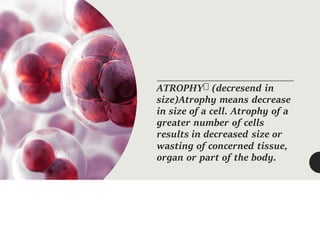
ATROPHY (decresend in
size)Atrophy means decrease
in size of a cell. Atrophy of a
greater number of cells
results in decreased size or
wasting of concerned tissue,
organ or part of the body.
Causes of Atrophy
i. Poor
nourishment
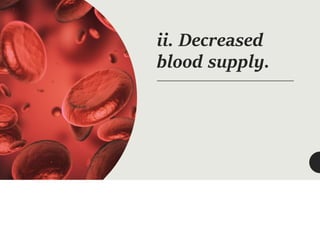
ii. Decreased
blood supply.
iii. Lack of workload
or exercise.
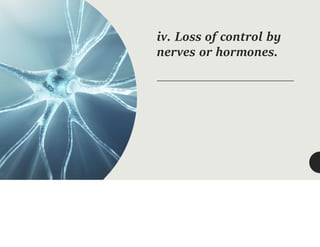
iv. Loss of control by
nerves or hormones.
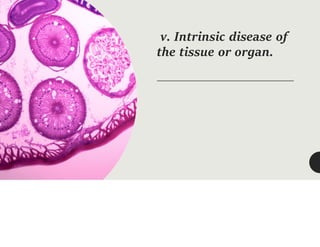
v. Intrinsic disease of
the tissue or organ.
Types of Atrophy
Atrophy is of two types
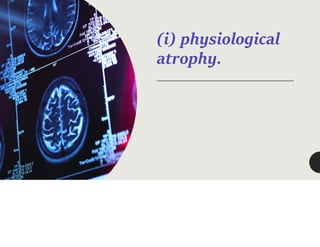
(i) physiological
atrophy.
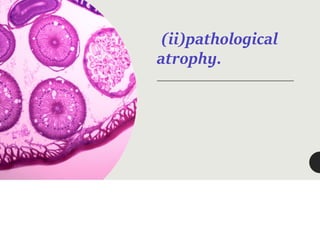
(ii)pathological
atrophy.
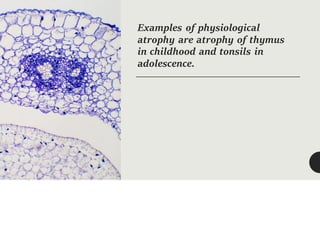
Examples of physiological
atrophy are atrophy of thymus
in childhood and tonsils in
adolescence.
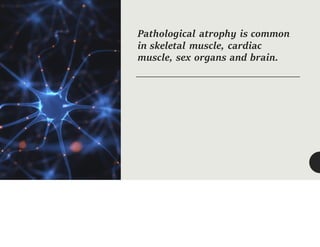
Pathological atrophy is common
in skeletal muscle, cardiac
muscle, sex organs and brain.
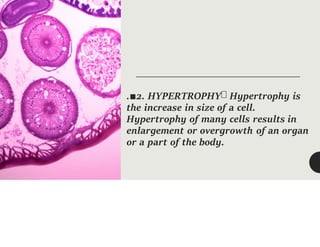
.■2. HYPERTROPHY Hypertrophy is
the increase in size of a cell.
Hypertrophy of many cells results in
enlargement or overgrowth of an organ
or a part of the body.
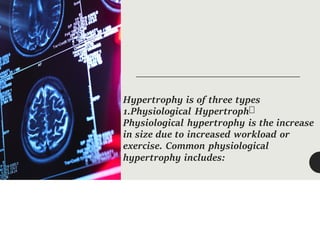
Hypertrophy is of three types
1.Physiological Hypertroph
Physiological hypertrophy is the increase
in size due to increased workload or
exercise. Common physiological
hypertrophy includes:
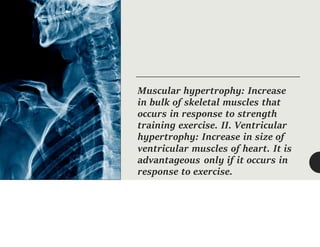
Muscular hypertrophy: Increase
in bulk of skeletal muscles that
occurs in response to strength
training exercise. II. Ventricular
hypertrophy: Increase in size of
ventricular muscles of heart. It is
advantageous only if it occurs in
response to exercise.
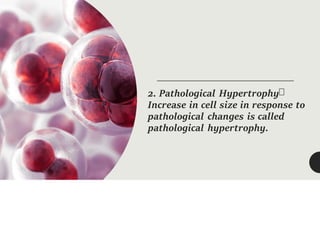
2. Pathological Hypertrophy
Increase in cell size in response to
pathological changes is called
pathological hypertrophy.
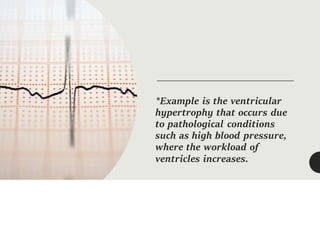
*Example is the ventricular
hypertrophy that occurs due
to pathological conditions
such as high blood pressure,
where the workload of
ventricles increases.
3. Compensatory Hypertroph
Compensatory hypertrophy is the
increase in size of cells of an organ
that occurs in order to compensate
the loss or dysfunction of another
organ of same type.
*Examples are hypertrophy of one
kidney when the other kidney
stops functioning and the increase
in muscular strength of an arm
when the other arm is
dysfunctional or lost.
3. HYPERPLASIA Hyperplasia is
the increase in number of cells due
to increased cell division
(mitosis). Hyperplasia results in
enlargement of the organ. It
involves increased division of
normal cells only.
Hyperplasia is of three types
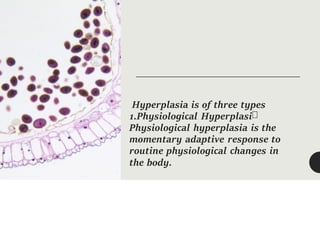
1.Physiological Hyperplasi
Physiological hyperplasia is the
momentary adaptive response to
routine physiological changes in
the body.
*Example, during proliferative phase
of each menstrual cycle, the
endometrial cells in uterus increase in
number.
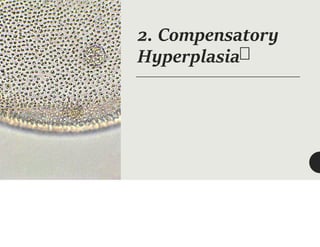
2. Compensatory
Hyperplasia
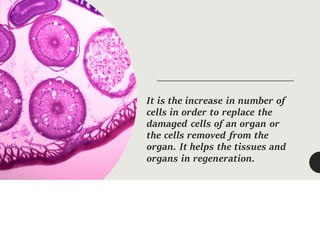
It is the increase in number of
cells in order to replace the
damaged cells of an organ or
the cells removed from the
organ. It helps the tissues and
organs in regeneration.
It is common in liver. After surgical
removal of damaged part of liver,
there is increase in number of liver
cells resulting in regeneration.
Compensatory hyperplasia is also
common in epithelial cells of
intestine and epidermis.
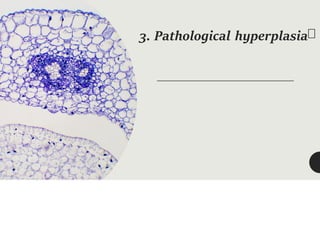
3. Pathological hyperplasia
It is the increase in number
of cells due to abnormal
increase in hormone
secretion.
It is also called
hormonal hyperplasia.
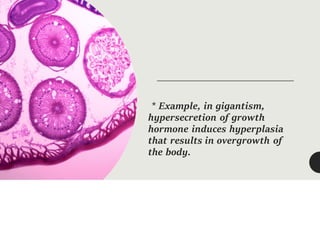
* Example, in gigantism,
hypersecretion of growth
hormone induces hyperplasia
that results in overgrowth of
the body.
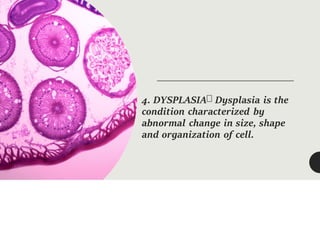
4. DYSPLASIA Dysplasia is the
condition characterized by
abnormal change in size, shape
and organization of cell.
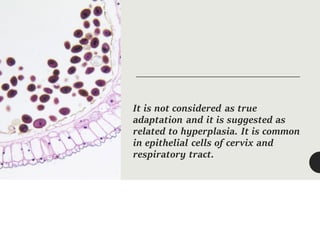
It is not considered as true
adaptation and it is suggested as
related to hyperplasia. It is common
in epithelial cells of cervix and
respiratory tract.
5.METAPLASIA
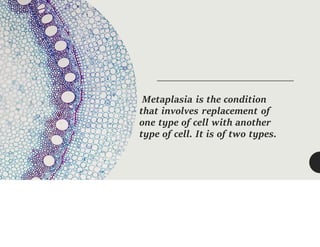
Metaplasia is the condition
that involves replacement of
one type of cell with another
type of cell. It is of two types.
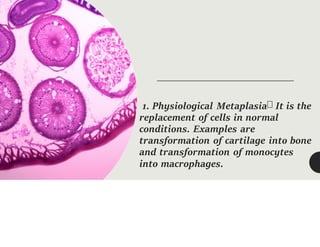
1. Physiological Metaplasia It is the
replacement of cells in normal
conditions. Examples are
transformation of cartilage into bone
and transformation of monocytes
into macrophages.
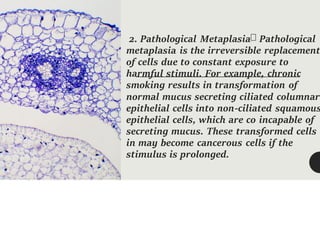
2. Pathological Metaplasia Pathological
metaplasia is the irreversible replacement
of cells due to constant exposure to
harmful stimuli. For example, chronic
smoking results in transformation of
normal mucus secreting ciliated columnar
epithelial cells into non-ciliated squamous
epithelial cells, which are co incapable of
secreting mucus. These transformed cells
in may become cancerous cells if the
stimulus is prolonged.
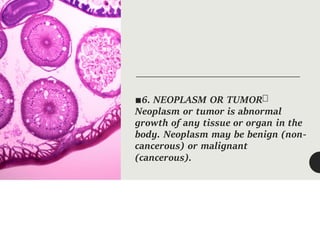
■6. NEOPLASM OR TUMOR
Neoplasm or tumor is abnormal
growth of any tissue or organ in the
body. Neoplasm may be benign (non-
cancerous) or malignant
(cancerous).
Thank you
*****************
Dr. Kavita Meena
Department of
physiotherapy

Cell Adaptation, physiology and pathology....pdf

  • 1.
  • 2.
    Cell adaptation refersto changes taking place in a cell in response to environmental changes.
  • 3.
    Normal functioning ofcell is always threatened by many factors such as stress chemical agents, diseases and environmental hazards Still, the cell survives and continues functioning by means of adaptation.
  • 4.
    Only during extremeconditions, cell fails to withstand hazardous factors which results in destructionand death of the cell. Cellular adaptation occurs by any of six mechanisms■
  • 5.
    ATROPHY (decresend in size)Atrophymeans decrease in size of a cell. Atrophy of a greater number of cells results in decreased size or wasting of concerned tissue, organ or part of the body.
  • 6.
  • 7.
  • 8.
  • 9.
    iii. Lack ofworkload or exercise.
  • 10.
    iv. Loss ofcontrol by nerves or hormones.
  • 11.
    v. Intrinsic diseaseof the tissue or organ.
  • 12.
  • 13.
    Atrophy is oftwo types
  • 14.
  • 15.
  • 16.
    Examples of physiological atrophyare atrophy of thymus in childhood and tonsils in adolescence.
  • 17.
    Pathological atrophy iscommon in skeletal muscle, cardiac muscle, sex organs and brain.
  • 18.
    .■2. HYPERTROPHY Hypertrophyis the increase in size of a cell. Hypertrophy of many cells results in enlargement or overgrowth of an organ or a part of the body.
  • 19.
    Hypertrophy is ofthree types 1.Physiological Hypertroph Physiological hypertrophy is the increase in size due to increased workload or exercise. Common physiological hypertrophy includes:
  • 20.
    Muscular hypertrophy: Increase inbulk of skeletal muscles that occurs in response to strength training exercise. II. Ventricular hypertrophy: Increase in size of ventricular muscles of heart. It is advantageous only if it occurs in response to exercise.
  • 21.
    2. Pathological Hypertrophy Increasein cell size in response to pathological changes is called pathological hypertrophy.
  • 22.
    *Example is theventricular hypertrophy that occurs due to pathological conditions such as high blood pressure, where the workload of ventricles increases.
  • 23.
    3. Compensatory Hypertroph Compensatoryhypertrophy is the increase in size of cells of an organ that occurs in order to compensate the loss or dysfunction of another organ of same type.
  • 24.
    *Examples are hypertrophyof one kidney when the other kidney stops functioning and the increase in muscular strength of an arm when the other arm is dysfunctional or lost.
  • 25.
    3. HYPERPLASIA Hyperplasiais the increase in number of cells due to increased cell division (mitosis). Hyperplasia results in enlargement of the organ. It involves increased division of normal cells only.
  • 26.
    Hyperplasia is ofthree types 1.Physiological Hyperplasi Physiological hyperplasia is the momentary adaptive response to routine physiological changes in the body.
  • 27.
    *Example, during proliferativephase of each menstrual cycle, the endometrial cells in uterus increase in number.
  • 28.
  • 29.
    It is theincrease in number of cells in order to replace the damaged cells of an organ or the cells removed from the organ. It helps the tissues and organs in regeneration.
  • 30.
    It is commonin liver. After surgical removal of damaged part of liver, there is increase in number of liver cells resulting in regeneration. Compensatory hyperplasia is also common in epithelial cells of intestine and epidermis.
  • 31.
  • 32.
    It is theincrease in number of cells due to abnormal increase in hormone secretion.
  • 33.
    It is alsocalled hormonal hyperplasia.
  • 34.
    * Example, ingigantism, hypersecretion of growth hormone induces hyperplasia that results in overgrowth of the body.
  • 35.
    4. DYSPLASIA Dysplasiais the condition characterized by abnormal change in size, shape and organization of cell.
  • 36.
    It is notconsidered as true adaptation and it is suggested as related to hyperplasia. It is common in epithelial cells of cervix and respiratory tract.
  • 37.
  • 38.
    Metaplasia is thecondition that involves replacement of one type of cell with another type of cell. It is of two types.
  • 39.
    1. Physiological MetaplasiaIt is the replacement of cells in normal conditions. Examples are transformation of cartilage into bone and transformation of monocytes into macrophages.
  • 40.
    2. Pathological MetaplasiaPathological metaplasia is the irreversible replacement of cells due to constant exposure to harmful stimuli. For example, chronic smoking results in transformation of normal mucus secreting ciliated columnar epithelial cells into non-ciliated squamous epithelial cells, which are co incapable of secreting mucus. These transformed cells in may become cancerous cells if the stimulus is prolonged.
  • 41.
    ■6. NEOPLASM ORTUMOR Neoplasm or tumor is abnormal growth of any tissue or organ in the body. Neoplasm may be benign (non- cancerous) or malignant (cancerous).
  • 42.
    Thank you ***************** Dr. KavitaMeena Department of physiotherapy