MS. PRIYANKA J SOLANKI
ASSISTANT PROFESSOR
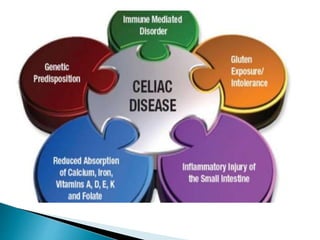
 Celiac disease, sometimes called celiac
sprue or gluten-sensitive enteropathy, is an
immune reaction to eating gluten, a protein
found in wheat, barley and rye.
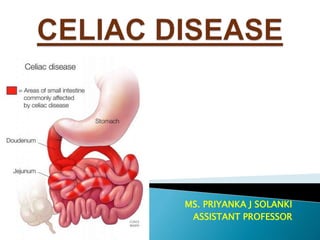
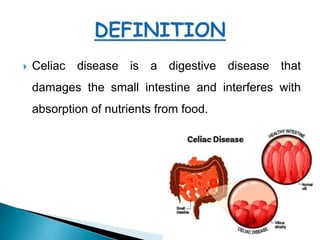
 Celiac disease is a digestive disease that
damages the small intestine and interferes with
absorption of nutrients from food.
 People who have celiac disease cannot tolerate gluten,
a protein in wheat, rye, barley.
 Gluten is found mainly in foods but may also be found
in everyday products such as medicines, vitamins, and
lip balms.
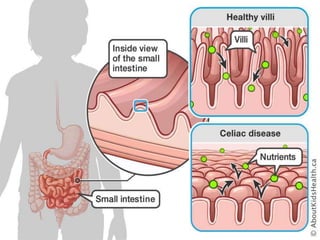
 It causes an immune reaction in the small intestine
that damages the lining and lowers the absorption
levels of nutrients.
 Abdominal bloating and pain
 Chronic diarrhea
 Vomiting
 Constipation
 Pale, foul-smelling, or fatty stool
 Weight loss
 Defects in the tooth enamel and change in tooth color
 Delayed puberty
 Irritable and fussy behaviour
 Poor weight gain
 Slowed growth and shorter than normal height for their age.
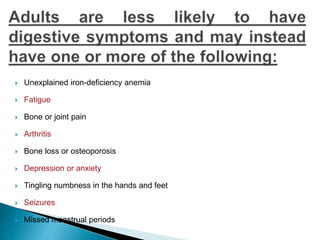
 Unexplained iron-deficiency anemia
 Fatigue
 Bone or joint pain
 Arthritis
 Bone loss or osteoporosis
 Depression or anxiety
 Tingling numbness in the hands and feet
 Seizures
 Missed menstrual periods
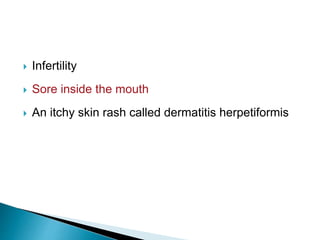
 Infertility
 Sore inside the mouth
 An itchy skin rash called dermatitis herpetiformis
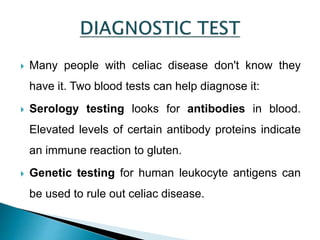
 Many people with celiac disease don't know they
have it. Two blood tests can help diagnose it:
 Serology testing looks for antibodies in blood.
Elevated levels of certain antibody proteins indicate
an immune reaction to gluten.
 Genetic testing for human leukocyte antigens can
be used to rule out celiac disease.
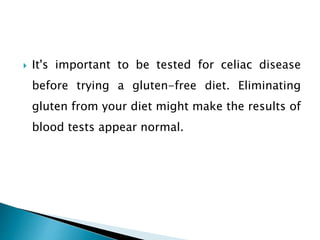
 It's important to be tested for celiac disease
before trying a gluten-free diet. Eliminating
gluten from your diet might make the results of
blood tests appear normal.
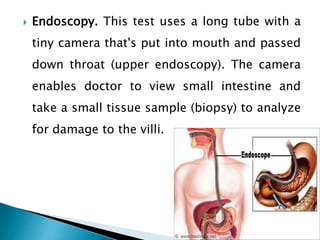
 Endoscopy. This test uses a long tube with a
tiny camera that's put into mouth and passed
down throat (upper endoscopy). The camera
enables doctor to view small intestine and
take a small tissue sample (biopsy) to analyze
for damage to the villi.
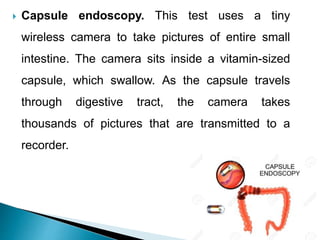
 Capsule endoscopy. This test uses a tiny
wireless camera to take pictures of entire small
intestine. The camera sits inside a vitamin-sized
capsule, which swallow. As the capsule travels
through digestive tract, the camera takes
thousands of pictures that are transmitted to a
recorder.
 A strict, lifelong gluten-free diet is the only way to
manage celiac disease.
 Removing gluten from diet will gradually reduce
inflammation in small intestine, causing to feel
better and eventually heal. Children tend to heal
more quickly than adults.
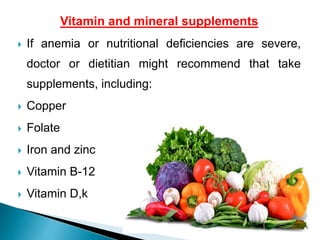
Vitamin and mineral supplements
 If anemia or nutritional deficiencies are severe,
doctor or dietitian might recommend that take
supplements, including:
 Copper
 Folate
 Iron and zinc
 Vitamin B-12
 Vitamin D,k
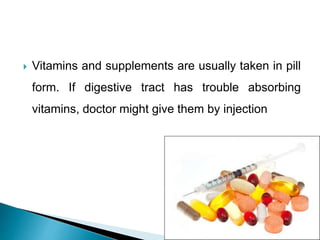
 Vitamins and supplements are usually taken in pill
form. If digestive tract has trouble absorbing
vitamins, doctor might give them by injection
Celiac disease

Celiac disease

  • 1.
    MS. PRIYANKA JSOLANKI ASSISTANT PROFESSOR
  • 3.
     Celiac disease,sometimes called celiac sprue or gluten-sensitive enteropathy, is an immune reaction to eating gluten, a protein found in wheat, barley and rye.
  • 4.
     Celiac diseaseis a digestive disease that damages the small intestine and interferes with absorption of nutrients from food.
  • 5.
     People whohave celiac disease cannot tolerate gluten, a protein in wheat, rye, barley.  Gluten is found mainly in foods but may also be found in everyday products such as medicines, vitamins, and lip balms.
  • 6.
     It causesan immune reaction in the small intestine that damages the lining and lowers the absorption levels of nutrients.
  • 10.
     Abdominal bloatingand pain  Chronic diarrhea  Vomiting  Constipation  Pale, foul-smelling, or fatty stool  Weight loss  Defects in the tooth enamel and change in tooth color  Delayed puberty  Irritable and fussy behaviour  Poor weight gain  Slowed growth and shorter than normal height for their age.
  • 11.
     Unexplained iron-deficiencyanemia  Fatigue  Bone or joint pain  Arthritis  Bone loss or osteoporosis  Depression or anxiety  Tingling numbness in the hands and feet  Seizures  Missed menstrual periods
  • 12.
     Infertility  Soreinside the mouth  An itchy skin rash called dermatitis herpetiformis
  • 13.
     Many peoplewith celiac disease don't know they have it. Two blood tests can help diagnose it:  Serology testing looks for antibodies in blood. Elevated levels of certain antibody proteins indicate an immune reaction to gluten.  Genetic testing for human leukocyte antigens can be used to rule out celiac disease.
  • 14.
     It's importantto be tested for celiac disease before trying a gluten-free diet. Eliminating gluten from your diet might make the results of blood tests appear normal.
  • 15.
     Endoscopy. Thistest uses a long tube with a tiny camera that's put into mouth and passed down throat (upper endoscopy). The camera enables doctor to view small intestine and take a small tissue sample (biopsy) to analyze for damage to the villi.
  • 16.
     Capsule endoscopy.This test uses a tiny wireless camera to take pictures of entire small intestine. The camera sits inside a vitamin-sized capsule, which swallow. As the capsule travels through digestive tract, the camera takes thousands of pictures that are transmitted to a recorder.
  • 17.
     A strict,lifelong gluten-free diet is the only way to manage celiac disease.  Removing gluten from diet will gradually reduce inflammation in small intestine, causing to feel better and eventually heal. Children tend to heal more quickly than adults.
  • 18.
    Vitamin and mineralsupplements  If anemia or nutritional deficiencies are severe, doctor or dietitian might recommend that take supplements, including:  Copper  Folate  Iron and zinc  Vitamin B-12  Vitamin D,k
  • 19.
     Vitamins andsupplements are usually taken in pill form. If digestive tract has trouble absorbing vitamins, doctor might give them by injection