PRESENTED BY
PRIYANKA SINGH
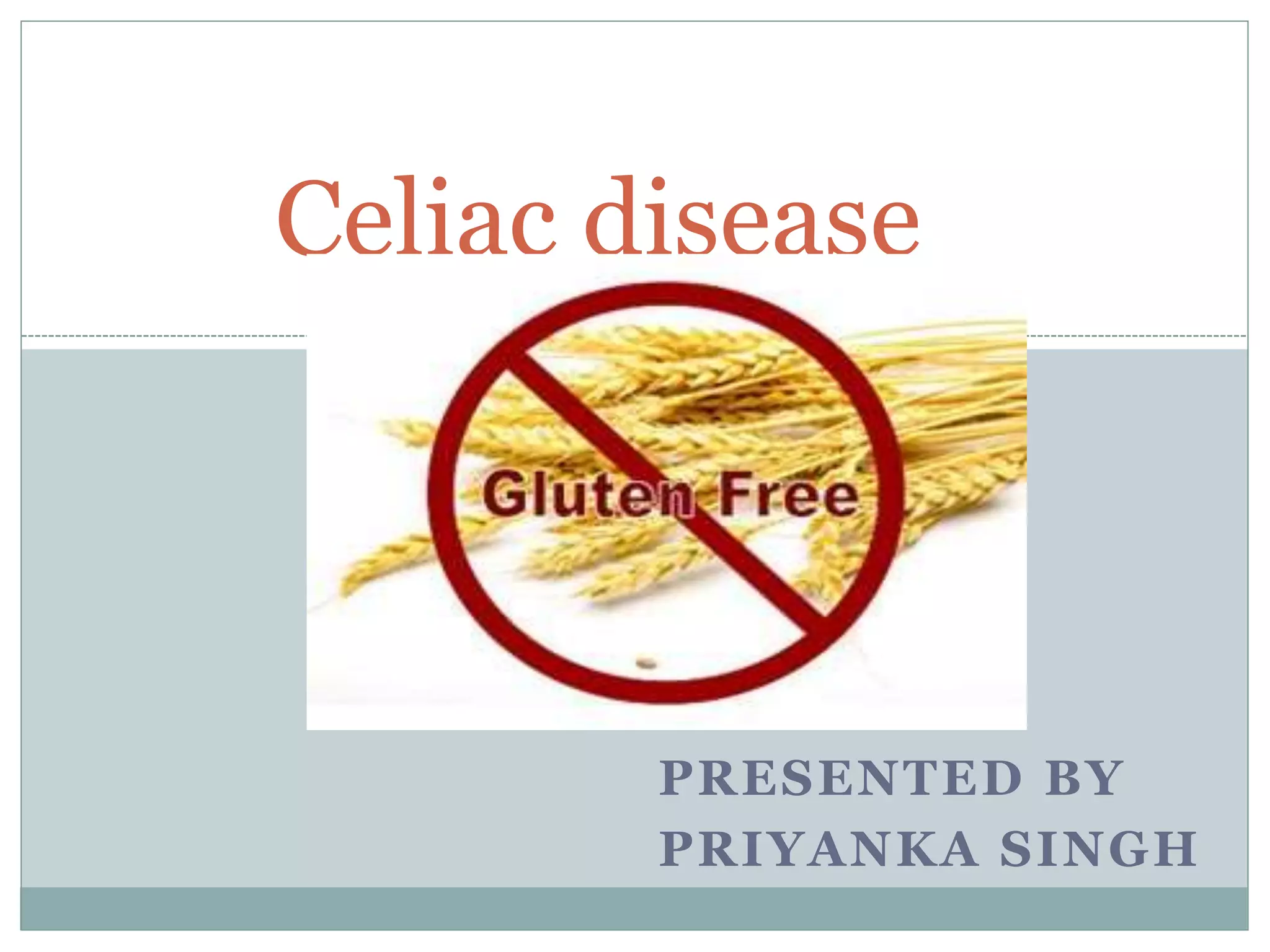
Celiac disease
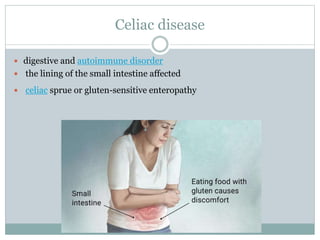
Celiac disease
 digestive and autoimmune disorder
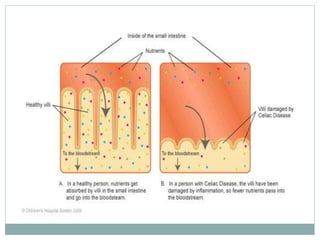
 the lining of the small intestine affected
 celiac sprue or gluten-sensitive enteropathy
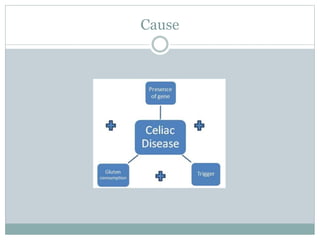
Cause
Prevalence
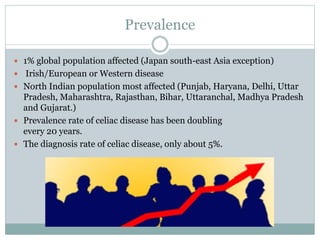
 1% global population affected (Japan south-east Asia exception)
 Irish/European or Western disease
 North Indian population most affected (Punjab, Haryana, Delhi, Uttar
Pradesh, Maharashtra, Rajasthan, Bihar, Uttaranchal, Madhya Pradesh
and Gujarat.)
 Prevalence rate of celiac disease has been doubling
every 20 years.
 The diagnosis rate of celiac disease, only about 5%.
People at risk
 RELATIVES OF INDIVIDUALS WITH CELIAC DISEASE
(first degree relative more affected)
 PEOPLE WITH OTHER AUTOIMMUNE CONDITION
(type 1 diabetes , thyroid disorders)
 PEOPLE WITH OTHER GENETIC CONDITIONS
(down syndrome , tuner syndrome)
Symptom
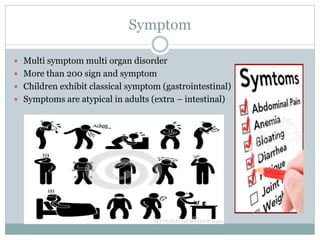
 Multi symptom multi organ disorder
 More than 200 sign and symptom
 Children exhibit classical symptom (gastrointestinal)
 Symptoms are atypical in adults (extra – intestinal)
Symptoms in children and infants
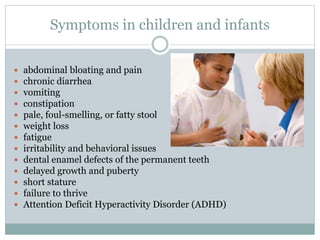
 abdominal bloating and pain
 chronic diarrhea
 vomiting
 constipation
 pale, foul-smelling, or fatty stool
 weight loss
 fatigue
 irritability and behavioral issues
 dental enamel defects of the permanent teeth
 delayed growth and puberty
 short stature
 failure to thrive
 Attention Deficit Hyperactivity Disorder (ADHD)
Symptoms in adults
 unexplained iron-deficiency anemia
 fatigue
 bone or joint pain
 arthritis
 osteoporosis or osteopenia (bone loss)
 liver and biliary tract disorders
 peripheral neuropathy ( tingling, numbness or pain in the
hands and feet)
 seizures or migraines
 missed menstrual periods
 infertility or recurrent miscarriage
 canker sores inside the mouth
 dermatitis herpetiformis (itchy skin rash)
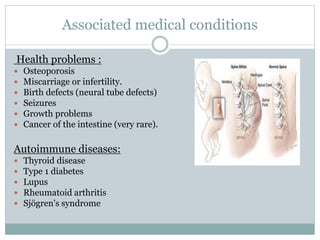
Associated medical conditions
Health problems :
 Osteoporosis
 Miscarriage or infertility.
 Birth defects (neural tube defects)
 Seizures
 Growth problems
 Cancer of the intestine (very rare).
Autoimmune diseases:
 Thyroid disease
 Type 1 diabetes
 Lupus
 Rheumatoid arthritis
 Sjögren's syndrome
Diagnosis
 Blood test
* tTG-IgA antibody (tissue transglutaminase antibody)
* total serum IgAt
* Anti-endomysial tests (EMA)
* Anti gliadin IgA and Anti- gliadin IgG antibody tests
* Genetic tests – Genetic tests determine the presence
of gene HLADQ2 or HLA DQ8 in an individual
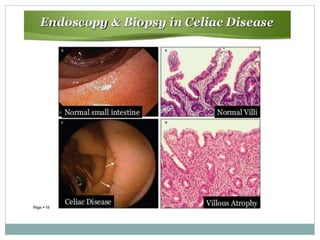
 Endoscopic biopsy
gluten intake 8-12 weeks prior to biopsy
 Confirmation by positive attitude to gluten free diet
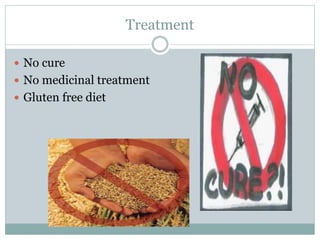
Treatment
 No cure
 No medicinal treatment
 Gluten free diet
Treatment and follow up
Treatment
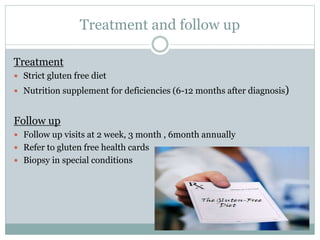
 Strict gluten free diet
 Nutrition supplement for deficiencies (6-12 months after diagnosis)
Follow up
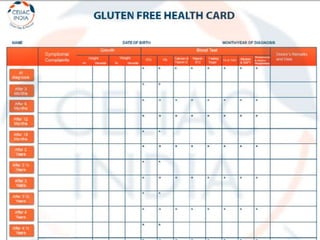
 Follow up visits at 2 week, 3 month , 6month annually
 Refer to gluten free health cards
 Biopsy in special conditions
LIVING GLUTEN FREE
WHAT IS GLUTEN ?
 storage protein
 three grains – wheat, barley and rye
 maintain shape, acting as a glue that holds food together
Going gluten free
 Gluten can be present in a food
product in many ways:
*As an ingredient
*As additives or as a processing aid
*Due to cross – contamination
 20 parts per million, i.e. 20 mg of gluten per kg of food, is the generally
accepted limit of gluten in ‘gluten free’ labeled food items
 In real life terms, approximately 1/10000th of a bread slice contains more
gluten than this safe limit
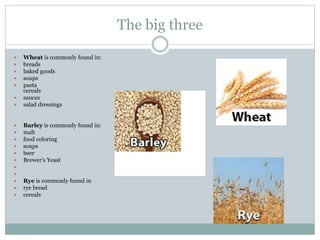
The big three
 Wheat is commonly found in:
 breads
 baked goods
 soups
 pasta
cereals
 sauces
 salad dressings
 Barley is commonly found in:
 malt
 food coloring
 soups
 beer
 Brewer’s Yeast


 Rye is commonly found in
 rye bread
 cereals
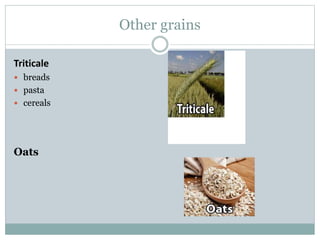
Other grains
Triticale
 breads
 pasta
 cereals
Oats
What can they eat?
 Fruits
 Vegetables
 Meat and poultryFish seafoods
 Dairy
 Beans, legumes, and nuts
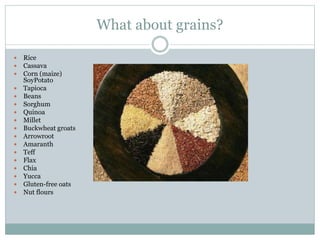
What about grains?
 Rice
 Cassava
 Corn (maize)
SoyPotato
 Tapioca
 Beans
 Sorghum
 Quinoa
 Millet
 Buckwheat groats
 Arrowroot
 Amaranth
 Teff
 Flax
 Chia
 Yucca
 Gluten-free oats
 Nut flours
REFERENCES
www.google.com
www.celiac.org
www.celiacindia.org.in
http://www.webmd.com/digestive-disorders/celiac-disease/celiac-
disease
Celiac disease

Celiac disease

  • 1.
  • 2.
    Celiac disease  digestiveand autoimmune disorder  the lining of the small intestine affected  celiac sprue or gluten-sensitive enteropathy
  • 3.
  • 5.
    Prevalence  1% globalpopulation affected (Japan south-east Asia exception)  Irish/European or Western disease  North Indian population most affected (Punjab, Haryana, Delhi, Uttar Pradesh, Maharashtra, Rajasthan, Bihar, Uttaranchal, Madhya Pradesh and Gujarat.)  Prevalence rate of celiac disease has been doubling every 20 years.  The diagnosis rate of celiac disease, only about 5%.
  • 6.
    People at risk RELATIVES OF INDIVIDUALS WITH CELIAC DISEASE (first degree relative more affected)  PEOPLE WITH OTHER AUTOIMMUNE CONDITION (type 1 diabetes , thyroid disorders)  PEOPLE WITH OTHER GENETIC CONDITIONS (down syndrome , tuner syndrome)
  • 7.
    Symptom  Multi symptommulti organ disorder  More than 200 sign and symptom  Children exhibit classical symptom (gastrointestinal)  Symptoms are atypical in adults (extra – intestinal)
  • 8.
    Symptoms in childrenand infants  abdominal bloating and pain  chronic diarrhea  vomiting  constipation  pale, foul-smelling, or fatty stool  weight loss  fatigue  irritability and behavioral issues  dental enamel defects of the permanent teeth  delayed growth and puberty  short stature  failure to thrive  Attention Deficit Hyperactivity Disorder (ADHD)
  • 9.
    Symptoms in adults unexplained iron-deficiency anemia  fatigue  bone or joint pain  arthritis  osteoporosis or osteopenia (bone loss)  liver and biliary tract disorders  peripheral neuropathy ( tingling, numbness or pain in the hands and feet)  seizures or migraines  missed menstrual periods  infertility or recurrent miscarriage  canker sores inside the mouth  dermatitis herpetiformis (itchy skin rash)
  • 10.
    Associated medical conditions Healthproblems :  Osteoporosis  Miscarriage or infertility.  Birth defects (neural tube defects)  Seizures  Growth problems  Cancer of the intestine (very rare). Autoimmune diseases:  Thyroid disease  Type 1 diabetes  Lupus  Rheumatoid arthritis  Sjögren's syndrome
  • 11.
    Diagnosis  Blood test *tTG-IgA antibody (tissue transglutaminase antibody) * total serum IgAt * Anti-endomysial tests (EMA) * Anti gliadin IgA and Anti- gliadin IgG antibody tests * Genetic tests – Genetic tests determine the presence of gene HLADQ2 or HLA DQ8 in an individual  Endoscopic biopsy gluten intake 8-12 weeks prior to biopsy  Confirmation by positive attitude to gluten free diet
  • 13.
    Treatment  No cure No medicinal treatment  Gluten free diet
  • 14.
    Treatment and followup Treatment  Strict gluten free diet  Nutrition supplement for deficiencies (6-12 months after diagnosis) Follow up  Follow up visits at 2 week, 3 month , 6month annually  Refer to gluten free health cards  Biopsy in special conditions
  • 16.
  • 17.
    WHAT IS GLUTEN?  storage protein  three grains – wheat, barley and rye  maintain shape, acting as a glue that holds food together
  • 18.
    Going gluten free Gluten can be present in a food product in many ways: *As an ingredient *As additives or as a processing aid *Due to cross – contamination  20 parts per million, i.e. 20 mg of gluten per kg of food, is the generally accepted limit of gluten in ‘gluten free’ labeled food items  In real life terms, approximately 1/10000th of a bread slice contains more gluten than this safe limit
  • 19.
    The big three Wheat is commonly found in:  breads  baked goods  soups  pasta cereals  sauces  salad dressings  Barley is commonly found in:  malt  food coloring  soups  beer  Brewer’s Yeast    Rye is commonly found in  rye bread  cereals
  • 20.
  • 21.
    What can theyeat?  Fruits  Vegetables  Meat and poultryFish seafoods  Dairy  Beans, legumes, and nuts
  • 22.
    What about grains? Rice  Cassava  Corn (maize) SoyPotato  Tapioca  Beans  Sorghum  Quinoa  Millet  Buckwheat groats  Arrowroot  Amaranth  Teff  Flax  Chia  Yucca  Gluten-free oats  Nut flours
  • 24.