PANCREATITIS
V.Nikhil
Pharm.D ,
Warangal. 16/26/2016
PANCREATITIS
2
DEFINITION
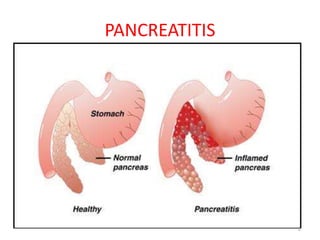
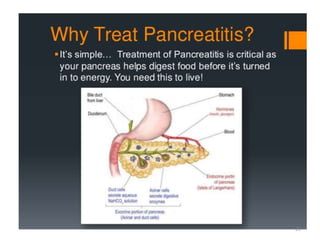
• Pancreatitis is an inflammation of the pancreas,
the organ located deep within the abdomen, about
six inches long, and surrounded by stomach, liver,
small intestine and spleen.
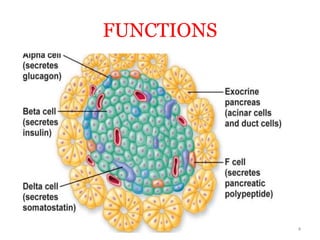
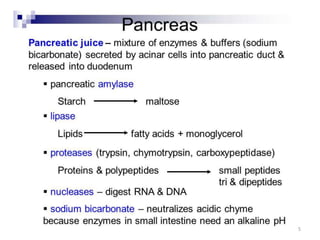
• Pancreas play a vital role in digestive and
endocrine systems and aids in digestion of food. It
also regulates the production of insulin hormone,
which controls the level of sugar in the blood.
3
FUNCTIONS
4
5
ETIOLOGY
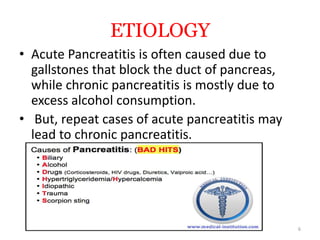
• Acute Pancreatitis is often caused due to
gallstones that block the duct of pancreas,
while chronic pancreatitis is mostly due to
excess alcohol consumption.
• But, repeat cases of acute pancreatitis may
lead to chronic pancreatitis.
6
7
CLINICAL FEATURES
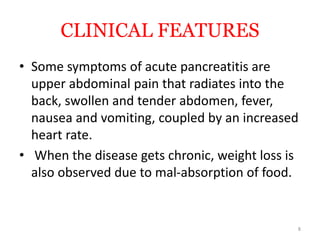
• Some symptoms of acute pancreatitis are
upper abdominal pain that radiates into the
back, swollen and tender abdomen, fever,
nausea and vomiting, coupled by an increased
heart rate.
• When the disease gets chronic, weight loss is
also observed due to mal-absorption of food.
8
LAB TESTS
• Two blood tests that measure enzymes are
used to diagnose an attack of pancreatitis.
These tests are:
• Serum amylase. An increase of amylase in the
blood usually indicates pancreatitis.
• Serum lipase. Sudden (acute) pancreatitis
almost always raises the level of lipase in the
blood.
9
• Other blood tests may be done, such as:
• A complete blood count (CBC). The number of
white blood cells rises during an attack of
pancreatitis, sometimes dramatically.
• Liver function tests. Increases in liver enzymes,
particularly of alanine aminotransferase and
alkaline phosphatase, can be a sign of sudden
pancreatitis caused by gallstones.
• Bilirubin. The level of bilirubin in the blood may
increase if the common bile duct is blocked.
10
11
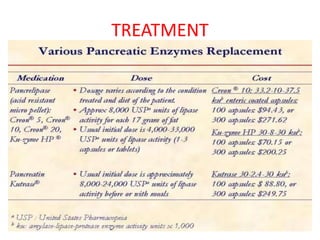
TREATMENT
12
TREATMENT
13
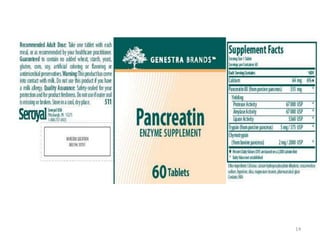
14
TREATMENT
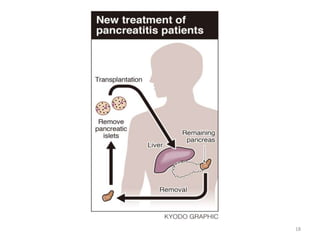
• Gallbladder surgery – If gallstones caused the damage
doctor recommends surgery to remove gallbladder.
• Pancreas surgery – Surgery may be necessary to drain
fluid from pancreas or to remove diseased tissue.
• Fasting – You will stop eating for a couple of days in the
hospital in order to give pancreas a chance to recover.
Once the inflammation in pancreas is controlled may
begin drinking clear liquids and eating bland foods and
can go back to normal diet.
15
TREATMENT
• Pain medications – It can cause severe pain.
health care team will give medications to help
control the pain.
• Intravenous fluids – As body devotes energy
and fluids to repairing your pancreas may
become dehydrated. For this reason receive
extra fluids through a vein in arm during your
hospital stay.
16
ALL PATIENTS SHOULD BE
• Drinking plenty of liquids
• Eating a low-fat diet
• Eating small, frequent meals (this helps reduce
digestive symptoms)
• Getting enough vitamins and calcium in the
diet, or as extra supplements
• Limiting caffeine
17
18
DIET AND LIFESTYLE
• One of the most important ways to tackle this
condition and maintain proper functioning of
pancreas are modification of diet and lifestyle.
Include foods rich in omega-3 fatty acids,
veggies, nuts, cereals, beans, and fruit, which
help protect against diseases and disorders of
pancreas.
19
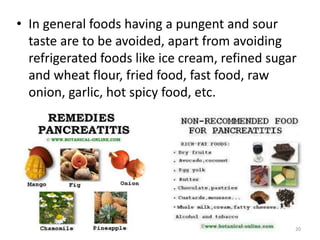
• In general foods having a pungent and sour
taste are to be avoided, apart from avoiding
refrigerated foods like ice cream, refined sugar
and wheat flour, fried food, fast food, raw
onion, garlic, hot spicy food, etc.
20
• As for lifestyle modifications, specific yoga
poses (particularly Vajrasana), practiced under
expert guidance may be helpful. Daytime
sleeping has to be avoided. Dinner should be
kept very light, and preferably stick to soups.
• Finally, it goes without saying that alcohol and
smoking has to be avoided at any cost.
21
22
23
24

PANCREATITIS

  • 1.
  • 2.
  • 3.
    DEFINITION • Pancreatitis isan inflammation of the pancreas, the organ located deep within the abdomen, about six inches long, and surrounded by stomach, liver, small intestine and spleen. • Pancreas play a vital role in digestive and endocrine systems and aids in digestion of food. It also regulates the production of insulin hormone, which controls the level of sugar in the blood. 3
  • 4.
  • 5.
  • 6.
    ETIOLOGY • Acute Pancreatitisis often caused due to gallstones that block the duct of pancreas, while chronic pancreatitis is mostly due to excess alcohol consumption. • But, repeat cases of acute pancreatitis may lead to chronic pancreatitis. 6
  • 7.
  • 8.
    CLINICAL FEATURES • Somesymptoms of acute pancreatitis are upper abdominal pain that radiates into the back, swollen and tender abdomen, fever, nausea and vomiting, coupled by an increased heart rate. • When the disease gets chronic, weight loss is also observed due to mal-absorption of food. 8
  • 9.
    LAB TESTS • Twoblood tests that measure enzymes are used to diagnose an attack of pancreatitis. These tests are: • Serum amylase. An increase of amylase in the blood usually indicates pancreatitis. • Serum lipase. Sudden (acute) pancreatitis almost always raises the level of lipase in the blood. 9
  • 10.
    • Other bloodtests may be done, such as: • A complete blood count (CBC). The number of white blood cells rises during an attack of pancreatitis, sometimes dramatically. • Liver function tests. Increases in liver enzymes, particularly of alanine aminotransferase and alkaline phosphatase, can be a sign of sudden pancreatitis caused by gallstones. • Bilirubin. The level of bilirubin in the blood may increase if the common bile duct is blocked. 10
  • 11.
  • 12.
  • 13.
  • 14.
  • 15.
    TREATMENT • Gallbladder surgery– If gallstones caused the damage doctor recommends surgery to remove gallbladder. • Pancreas surgery – Surgery may be necessary to drain fluid from pancreas or to remove diseased tissue. • Fasting – You will stop eating for a couple of days in the hospital in order to give pancreas a chance to recover. Once the inflammation in pancreas is controlled may begin drinking clear liquids and eating bland foods and can go back to normal diet. 15
  • 16.
    TREATMENT • Pain medications– It can cause severe pain. health care team will give medications to help control the pain. • Intravenous fluids – As body devotes energy and fluids to repairing your pancreas may become dehydrated. For this reason receive extra fluids through a vein in arm during your hospital stay. 16
  • 17.
    ALL PATIENTS SHOULDBE • Drinking plenty of liquids • Eating a low-fat diet • Eating small, frequent meals (this helps reduce digestive symptoms) • Getting enough vitamins and calcium in the diet, or as extra supplements • Limiting caffeine 17
  • 18.
  • 19.
    DIET AND LIFESTYLE •One of the most important ways to tackle this condition and maintain proper functioning of pancreas are modification of diet and lifestyle. Include foods rich in omega-3 fatty acids, veggies, nuts, cereals, beans, and fruit, which help protect against diseases and disorders of pancreas. 19
  • 20.
    • In generalfoods having a pungent and sour taste are to be avoided, apart from avoiding refrigerated foods like ice cream, refined sugar and wheat flour, fried food, fast food, raw onion, garlic, hot spicy food, etc. 20
  • 21.
    • As forlifestyle modifications, specific yoga poses (particularly Vajrasana), practiced under expert guidance may be helpful. Daytime sleeping has to be avoided. Dinner should be kept very light, and preferably stick to soups. • Finally, it goes without saying that alcohol and smoking has to be avoided at any cost. 21
  • 22.
  • 23.
  • 24.