MALABSORPTION
SYNDROME
By
Mr. Ravi Rai Dangi
Assistant Professor
Fellowship in Neonatal Nursing
MSc. Child Health Nursing
DEFINITION
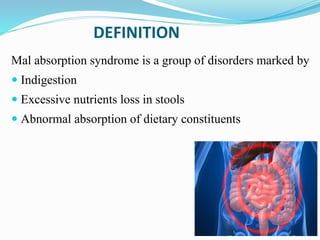
Mal absorption syndrome is a group of disorders marked by
 Indigestion
 Excessive nutrients loss in stools
 Abnormal absorption of dietary constituents
 It is a state arising from abnormality in absorption of food
nutrients across the gastrointestinal tract.
 Impairment can be of single or multiple nutrients
depending on the abnormality. This may lead to
malnutrition and a variety of anemia.
 Malabsorption constitutes the pathological interference
with the normal physiological sequence of body.
CAUSES:
 Bile salt insufficiency:
 Obstructive jaundice
 Bacterial overgrowth
 Infection
Acute infectious enteritis
Parasitic infections, such as giardia, or helminthiasis
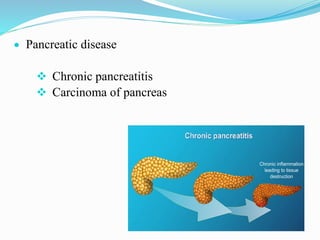
 Pancreatic disease
 Chronic pancreatitis
 Carcinoma of pancreas
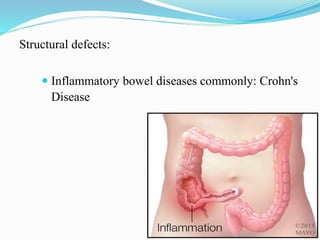
Structural defects:
 Inflammatory bowel diseases commonly: Crohn's
Disease
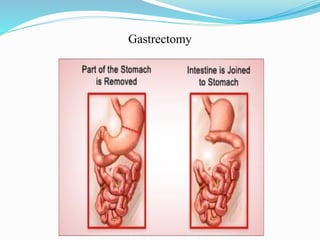
Gastrectomy
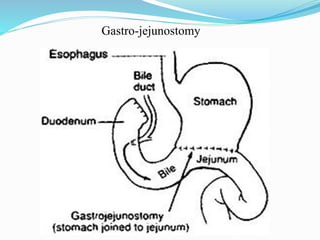
Gastro-jejunostomy
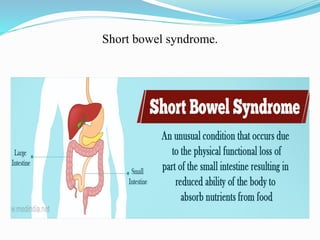
Short bowel syndrome.
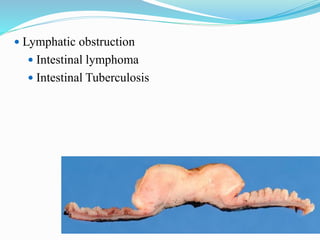
 Lymphatic obstruction
 Intestinal lymphoma
 Intestinal Tuberculosis
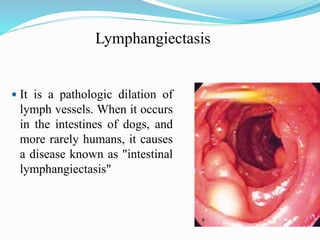
 It is a pathologic dilation of
lymph vessels. When it occurs
in the intestines of dogs, and
more rarely humans, it causes
a disease known as "intestinal
lymphangiectasis"
Lymphangiectasis
 PEM
 Iron deficiency anemia
 Severe Steatorrhea due to cystic fibrosis, celiac
disease
CLINICAL MANIFESTATION
 Chronic diarrhea
 Abdominal distension
 Failure to thrive
 Flatulence
 Anorexia
 Fatigue
 Weight loss
 Direct consequence of malabsorption which leads to
malnutrition and growth failure
 Malabsorption syndrome and chronic diarrhea is
manifested with three major categories, these are- impaired
digestion, intestinal malabsorption and carbohydrate
malabsorption.
Impaired Digestion
 It occurs due to exocrine pancreatic insufficiency also
results in chronic diarrhea and malabsorption.
 Due to cystic fibrosis, lipase deficiency and crohn’s
disease.
 It is manifested as frequent loose pasty, greasy stools with
undigested fat and offensive cheesy smell.
Intestinal Malabsorption
 presented with chronic diarrhea as loose or liquid stool.
 These patients have steatorrhea
 This condition is usually associated with celiac disease,
food protein sensitivity, giardiasis, immunodeficiency,
malnutrition and bacterial overgrowth
Carbohydrate Malabsorption
 It may be presented as chronic diarrhea due to
fermentation.
INVESTIGATION
 History of illness
 Physical examination
 Routine stool examination
 Fecal fat studies for steatorrhea
 D-Xylose test ( performed to diagnose conditions that present
with malabsorption of the proximal small intestine)
 Intestinal biopsy
 Radiology test- barium meal study to detect structural defect
Specific test- like
 Sweat chloride test for cystic fibrosis (sweat test
measures the concentration of chloride that is excreted
in sweat)
 Blood serology test for celiac disease,
 Hydrogen breath analysis for carbohydrate
malabsorption
 Lactose tolerance test
MANAGEMENT
 Replacement of electrolytes and fluid by parental
administration.
 Adequate nutrition intake considering the specific defect.
 Control the diarrhea
 Dietary modification is important in some conditions:
Gluten-free diet in coeliac disease.
Lactose avoidance in lactose intolerance.
 Antibiotic therapy will treat Small Bowel Bacterial
overgrowth.
 In cystic fibrosis, the diet should be planned with food
items rich in protein and sugar.
 For carbohydrate malabsorption give glucose and
galactose free diet.
 Pancreatic supplements, antacid and antihistamine are
essential.
NURSING MANAGEMENT
Assessment
 Daily intake output
 Daily weight
 Vital signs
 Serum electrolyte
 GI Function
 Characteristic of Stool
Nursing Diagnosis
 Diarrhea related to indigestion secondary to mal
absorption
 Imbalanced nutrition less than body requirement related
to indigestion secondary to diarrhea.
 Fluid and electrolyte imbalance related to indigestion
secondary to mal absorption
 Knowledge deficit related to hospitalization and mal
absorption disease
 Fear and anxiety related to hospitalization (in parents and
child)
Nursing Intervention
 Improvement of nutritional status by appropriate diet
planning and supplementation of deficient nutrition.
 Restoration of fluid and electrolyte balance by oral and
parenteral therapy
 Continuous monitoring and recording of patient’s
condition
 Relief of pain by medication and anti-diarrheal agents for
diarrhea as prescribed by doctor
 Maintenance of skin integrity specially perineal area
 Health education to parents about general cleanliness,
nutrition, hydration, danger sign, homecare and follow-up,
for necessary medical help.
 Relief of fear and anxiety about long term illness and
hospitalization by appropriate explanation, reassurance
and necessary support.
Bibliography
Books
 Wongs , Essentail Of Pediatric Nursing , Elsevier
Publisher, 10th Edition , Page no 732-733
 Parul data, Pediatric Nursing, 3rd edition, Jaypee
Publisher, page no 279-280
Reference
 https://www.healthline.com/health/malabsorption
 https://nurseslabs.com/diarrhea/#nursing-assessment
Mal absoprtion syndrome

Mal absoprtion syndrome

  • 1.
    MALABSORPTION SYNDROME By Mr. Ravi RaiDangi Assistant Professor Fellowship in Neonatal Nursing MSc. Child Health Nursing
  • 2.
    DEFINITION Mal absorption syndromeis a group of disorders marked by  Indigestion  Excessive nutrients loss in stools  Abnormal absorption of dietary constituents
  • 3.
     It isa state arising from abnormality in absorption of food nutrients across the gastrointestinal tract.  Impairment can be of single or multiple nutrients depending on the abnormality. This may lead to malnutrition and a variety of anemia.  Malabsorption constitutes the pathological interference with the normal physiological sequence of body.
  • 4.
    CAUSES:  Bile saltinsufficiency:  Obstructive jaundice  Bacterial overgrowth  Infection Acute infectious enteritis Parasitic infections, such as giardia, or helminthiasis
  • 5.
     Pancreatic disease Chronic pancreatitis  Carcinoma of pancreas
  • 6.
    Structural defects:  Inflammatorybowel diseases commonly: Crohn's Disease
  • 7.
  • 8.
  • 9.
  • 10.
     Lymphatic obstruction Intestinal lymphoma  Intestinal Tuberculosis
  • 11.
     It isa pathologic dilation of lymph vessels. When it occurs in the intestines of dogs, and more rarely humans, it causes a disease known as "intestinal lymphangiectasis" Lymphangiectasis
  • 12.
     PEM  Irondeficiency anemia  Severe Steatorrhea due to cystic fibrosis, celiac disease
  • 13.
    CLINICAL MANIFESTATION  Chronicdiarrhea  Abdominal distension  Failure to thrive  Flatulence  Anorexia
  • 14.
     Fatigue  Weightloss  Direct consequence of malabsorption which leads to malnutrition and growth failure  Malabsorption syndrome and chronic diarrhea is manifested with three major categories, these are- impaired digestion, intestinal malabsorption and carbohydrate malabsorption.
  • 15.
    Impaired Digestion  Itoccurs due to exocrine pancreatic insufficiency also results in chronic diarrhea and malabsorption.  Due to cystic fibrosis, lipase deficiency and crohn’s disease.  It is manifested as frequent loose pasty, greasy stools with undigested fat and offensive cheesy smell.
  • 16.
    Intestinal Malabsorption  presentedwith chronic diarrhea as loose or liquid stool.  These patients have steatorrhea  This condition is usually associated with celiac disease, food protein sensitivity, giardiasis, immunodeficiency, malnutrition and bacterial overgrowth
  • 17.
    Carbohydrate Malabsorption  Itmay be presented as chronic diarrhea due to fermentation.
  • 18.
    INVESTIGATION  History ofillness  Physical examination  Routine stool examination
  • 19.
     Fecal fatstudies for steatorrhea  D-Xylose test ( performed to diagnose conditions that present with malabsorption of the proximal small intestine)  Intestinal biopsy  Radiology test- barium meal study to detect structural defect
  • 20.
    Specific test- like Sweat chloride test for cystic fibrosis (sweat test measures the concentration of chloride that is excreted in sweat)  Blood serology test for celiac disease,  Hydrogen breath analysis for carbohydrate malabsorption  Lactose tolerance test
  • 21.
    MANAGEMENT  Replacement ofelectrolytes and fluid by parental administration.  Adequate nutrition intake considering the specific defect.  Control the diarrhea  Dietary modification is important in some conditions: Gluten-free diet in coeliac disease. Lactose avoidance in lactose intolerance.
  • 22.
     Antibiotic therapywill treat Small Bowel Bacterial overgrowth.  In cystic fibrosis, the diet should be planned with food items rich in protein and sugar.  For carbohydrate malabsorption give glucose and galactose free diet.  Pancreatic supplements, antacid and antihistamine are essential.
  • 23.
  • 24.
    Assessment  Daily intakeoutput  Daily weight  Vital signs  Serum electrolyte  GI Function  Characteristic of Stool
  • 25.
    Nursing Diagnosis  Diarrhearelated to indigestion secondary to mal absorption  Imbalanced nutrition less than body requirement related to indigestion secondary to diarrhea.  Fluid and electrolyte imbalance related to indigestion secondary to mal absorption
  • 26.
     Knowledge deficitrelated to hospitalization and mal absorption disease  Fear and anxiety related to hospitalization (in parents and child)
  • 27.
    Nursing Intervention  Improvementof nutritional status by appropriate diet planning and supplementation of deficient nutrition.  Restoration of fluid and electrolyte balance by oral and parenteral therapy  Continuous monitoring and recording of patient’s condition
  • 28.
     Relief ofpain by medication and anti-diarrheal agents for diarrhea as prescribed by doctor  Maintenance of skin integrity specially perineal area  Health education to parents about general cleanliness, nutrition, hydration, danger sign, homecare and follow-up, for necessary medical help.  Relief of fear and anxiety about long term illness and hospitalization by appropriate explanation, reassurance and necessary support.
  • 29.
    Bibliography Books  Wongs ,Essentail Of Pediatric Nursing , Elsevier Publisher, 10th Edition , Page no 732-733  Parul data, Pediatric Nursing, 3rd edition, Jaypee Publisher, page no 279-280 Reference  https://www.healthline.com/health/malabsorption  https://nurseslabs.com/diarrhea/#nursing-assessment