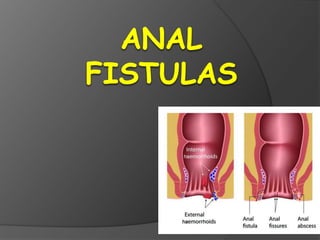
DEFINITION
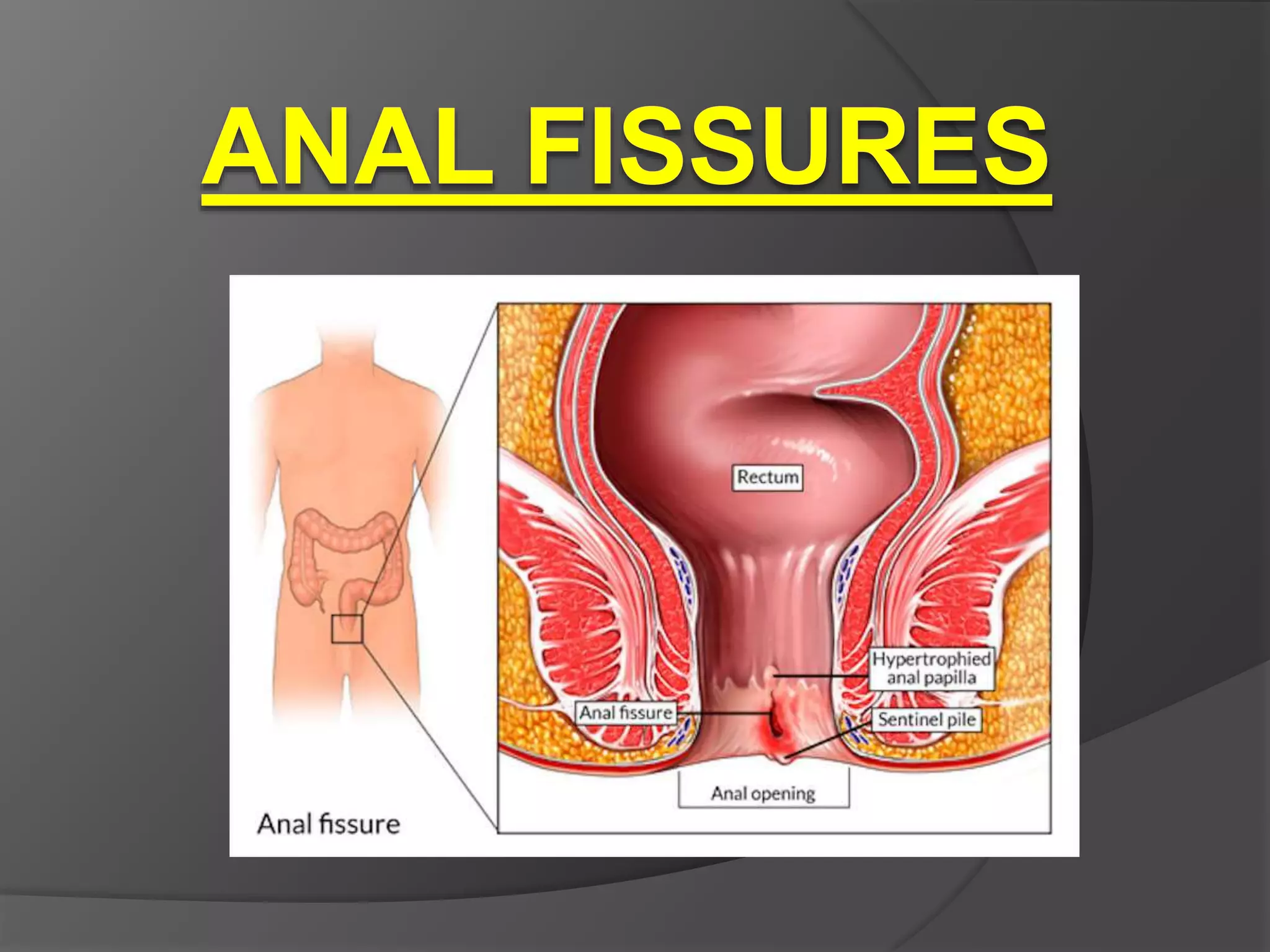
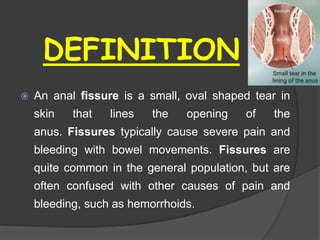
 An anal fissure is a small, oval shaped tear in
skin that lines the opening of the
anus. Fissures typically cause severe pain and
bleeding with bowel movements. Fissures are
quite common in the general population, but are
often confused with other causes of pain and
bleeding, such as hemorrhoids.
CAUSES
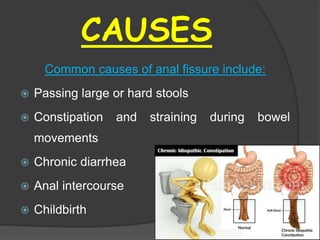
Common causes of anal fissure include:
 Passing large or hard stools
 Constipation and straining during bowel
movements
 Chronic diarrhea
 Anal intercourse
 Childbirth
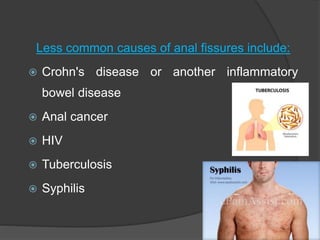
Less common causes of anal fissures include:
 Crohn's disease or another inflammatory
bowel disease
 Anal cancer
 HIV
 Tuberculosis
 Syphilis
RISK FACTORS
 Constipation. Straining during bowel
movements and passing hard stools
increase the risk of tearing.
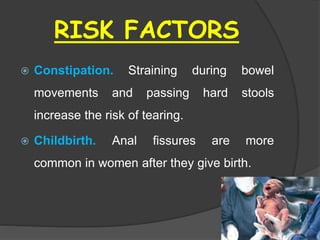
 Childbirth. Anal fissures are more
common in women after they give birth.
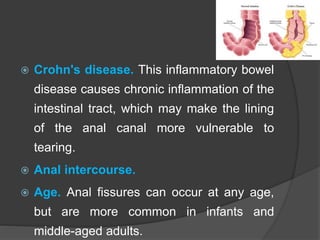
 Crohn's disease. This inflammatory bowel
disease causes chronic inflammation of the
intestinal tract, which may make the lining
of the anal canal more vulnerable to
tearing.
 Anal intercourse.
 Age. Anal fissures can occur at any age,
but are more common in infants and
middle-aged adults.
SIGNS AND SYMPTOMS
OF AN ANAL FISSURE
 Pain, sometimes severe, during bowel
movements
 Pain after bowel movements that can last
up to several hours
 Bright red blood on the stool or toilet paper
after a bowel movement
 A visible crack in the skin around the anus
 A small lump or skin tag on the skin near
the anal fissure
DIAGNOSIS
 Medical history and perform a physical exam,
including a gentle inspection of the anal region. Often
the tear is visible.
 An acute anal fissure looks like a fresh tear,
somewhat like a paper cut. A chronic anal fissure
likely has a deeper tear, and may have internal or
external fleshy growths. A fissure is considered
chronic if it lasts more than eight weeks.
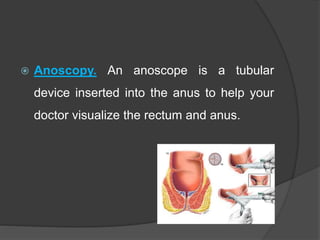
 Anoscopy. An anoscope is a tubular
device inserted into the anus to help your
doctor visualize the rectum and anus.
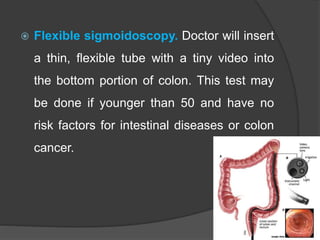
 Flexible sigmoidoscopy. Doctor will insert
a thin, flexible tube with a tiny video into
the bottom portion of colon. This test may
be done if younger than 50 and have no
risk factors for intestinal diseases or colon
cancer.
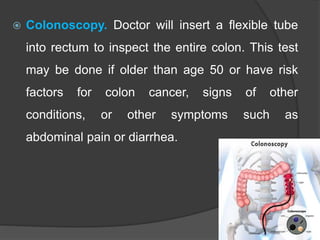
 Colonoscopy. Doctor will insert a flexible tube
into rectum to inspect the entire colon. This test
may be done if older than age 50 or have risk
factors for colon cancer, signs of other
conditions, or other symptoms such as
abdominal pain or diarrhea.
NONSURGICAL TREATMENTS
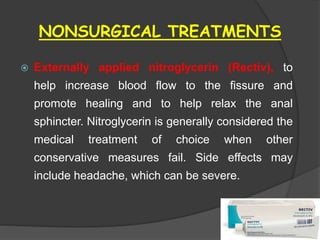
 Externally applied nitroglycerin (Rectiv), to
help increase blood flow to the fissure and
promote healing and to help relax the anal
sphincter. Nitroglycerin is generally considered the
medical treatment of choice when other
conservative measures fail. Side effects may
include headache, which can be severe.
 Topical anesthetic creams such as
lidocaine hydrochloride may be helpful for
pain relief.
 Botulinum toxin type A (Botox)
injection, to paralyze the anal sphincter
muscle and relax spasms.
 Blood pressure medications, such as oral
nifedipine can help relax the anal sphincter.
These medications may be taken by mouth
or applied externally and may be used when
nitroglycerin is not effective or causes
significant side effects.
DIETARY CHANGES
 Eat high fiber diet: high-fiber foods likes
these:
 FRUITS. Fiber-rich fruits include: bananas,
oranges, apples, mangoes, strawberries,
raspberries.
 VEGETABLES. Generally, the darker the
color, the higher the fiber content.
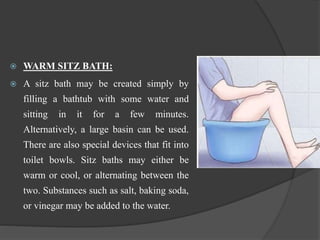
 WARM SITZ BATH:
 A sitz bath may be created simply by
filling a bathtub with some water and
sitting in it for a few minutes.
Alternatively, a large basin can be used.
There are also special devices that fit into
toilet bowls. Sitz baths may either be
warm or cool, or alternating between the
two. Substances such as salt, baking soda,
or vinegar may be added to the water.
SURGICAL MANAGEMENT
 internal sphincterotomy (LIS), which
involves cutting a small portion of the anal
sphincter muscle to reduce spasm and
pain, and promote healing.
COMPLICATIONS
 Failure to heal. An anal fissure that fails to
heal within eight weeks is considered
chronic and may need further treatment.
 Recurrence. Once you've experienced
an anal fissure, you are prone to having
another one.
 A tear that extends to surrounding muscles. An
anal fissure may extend into the ring of muscle
that holds anus closed (internal anal sphincter),
making it more difficult for anal fissure to heal. An
unhealed fissure can trigger a cycle of discomfort
that may require medications or surgery to reduce
the pain and to repair or remove the fissure.
DEFINITION
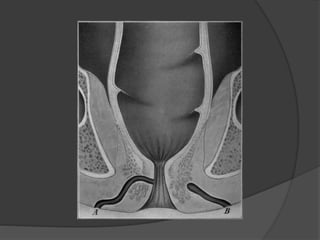
 An ANAL FISTULA is a small tunnel that
connects an infected gland inside the anus to
an opening on the skin around the anus.
Symptoms include pain and swelling around
the anus.
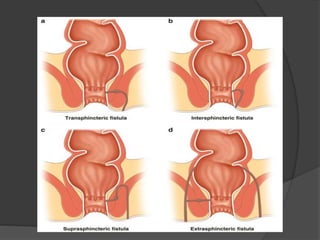
 Fistula may be:
 Blind (open at one end only but
connects two structures)
Anal fissures

Anal fissures

  • 2.
    DEFINITION  An analfissure is a small, oval shaped tear in skin that lines the opening of the anus. Fissures typically cause severe pain and bleeding with bowel movements. Fissures are quite common in the general population, but are often confused with other causes of pain and bleeding, such as hemorrhoids.
  • 3.
    CAUSES Common causes ofanal fissure include:  Passing large or hard stools  Constipation and straining during bowel movements  Chronic diarrhea  Anal intercourse  Childbirth
  • 4.
    Less common causesof anal fissures include:  Crohn's disease or another inflammatory bowel disease  Anal cancer  HIV  Tuberculosis  Syphilis
  • 5.
    RISK FACTORS  Constipation.Straining during bowel movements and passing hard stools increase the risk of tearing.  Childbirth. Anal fissures are more common in women after they give birth.
  • 6.
     Crohn's disease.This inflammatory bowel disease causes chronic inflammation of the intestinal tract, which may make the lining of the anal canal more vulnerable to tearing.  Anal intercourse.  Age. Anal fissures can occur at any age, but are more common in infants and middle-aged adults.
  • 7.
    SIGNS AND SYMPTOMS OFAN ANAL FISSURE  Pain, sometimes severe, during bowel movements  Pain after bowel movements that can last up to several hours  Bright red blood on the stool or toilet paper after a bowel movement
  • 8.
     A visiblecrack in the skin around the anus  A small lump or skin tag on the skin near the anal fissure
  • 9.
    DIAGNOSIS  Medical historyand perform a physical exam, including a gentle inspection of the anal region. Often the tear is visible.  An acute anal fissure looks like a fresh tear, somewhat like a paper cut. A chronic anal fissure likely has a deeper tear, and may have internal or external fleshy growths. A fissure is considered chronic if it lasts more than eight weeks.
  • 10.
     Anoscopy. Ananoscope is a tubular device inserted into the anus to help your doctor visualize the rectum and anus.
  • 11.
     Flexible sigmoidoscopy.Doctor will insert a thin, flexible tube with a tiny video into the bottom portion of colon. This test may be done if younger than 50 and have no risk factors for intestinal diseases or colon cancer.
  • 12.
     Colonoscopy. Doctorwill insert a flexible tube into rectum to inspect the entire colon. This test may be done if older than age 50 or have risk factors for colon cancer, signs of other conditions, or other symptoms such as abdominal pain or diarrhea.
  • 13.
    NONSURGICAL TREATMENTS  Externallyapplied nitroglycerin (Rectiv), to help increase blood flow to the fissure and promote healing and to help relax the anal sphincter. Nitroglycerin is generally considered the medical treatment of choice when other conservative measures fail. Side effects may include headache, which can be severe.
  • 14.
     Topical anestheticcreams such as lidocaine hydrochloride may be helpful for pain relief.  Botulinum toxin type A (Botox) injection, to paralyze the anal sphincter muscle and relax spasms.
  • 15.
     Blood pressuremedications, such as oral nifedipine can help relax the anal sphincter. These medications may be taken by mouth or applied externally and may be used when nitroglycerin is not effective or causes significant side effects.
  • 16.
    DIETARY CHANGES  Eathigh fiber diet: high-fiber foods likes these:  FRUITS. Fiber-rich fruits include: bananas, oranges, apples, mangoes, strawberries, raspberries.  VEGETABLES. Generally, the darker the color, the higher the fiber content.
  • 17.
     WARM SITZBATH:  A sitz bath may be created simply by filling a bathtub with some water and sitting in it for a few minutes. Alternatively, a large basin can be used. There are also special devices that fit into toilet bowls. Sitz baths may either be warm or cool, or alternating between the two. Substances such as salt, baking soda, or vinegar may be added to the water.
  • 18.
    SURGICAL MANAGEMENT  internalsphincterotomy (LIS), which involves cutting a small portion of the anal sphincter muscle to reduce spasm and pain, and promote healing.
  • 19.
    COMPLICATIONS  Failure toheal. An anal fissure that fails to heal within eight weeks is considered chronic and may need further treatment.
  • 20.
     Recurrence. Onceyou've experienced an anal fissure, you are prone to having another one.
  • 21.
     A tearthat extends to surrounding muscles. An anal fissure may extend into the ring of muscle that holds anus closed (internal anal sphincter), making it more difficult for anal fissure to heal. An unhealed fissure can trigger a cycle of discomfort that may require medications or surgery to reduce the pain and to repair or remove the fissure.
  • 23.
    DEFINITION  An ANALFISTULA is a small tunnel that connects an infected gland inside the anus to an opening on the skin around the anus. Symptoms include pain and swelling around the anus.
  • 26.
     Fistula maybe:  Blind (open at one end only but connects two structures)