HOMOGENOUS CATALYSIS
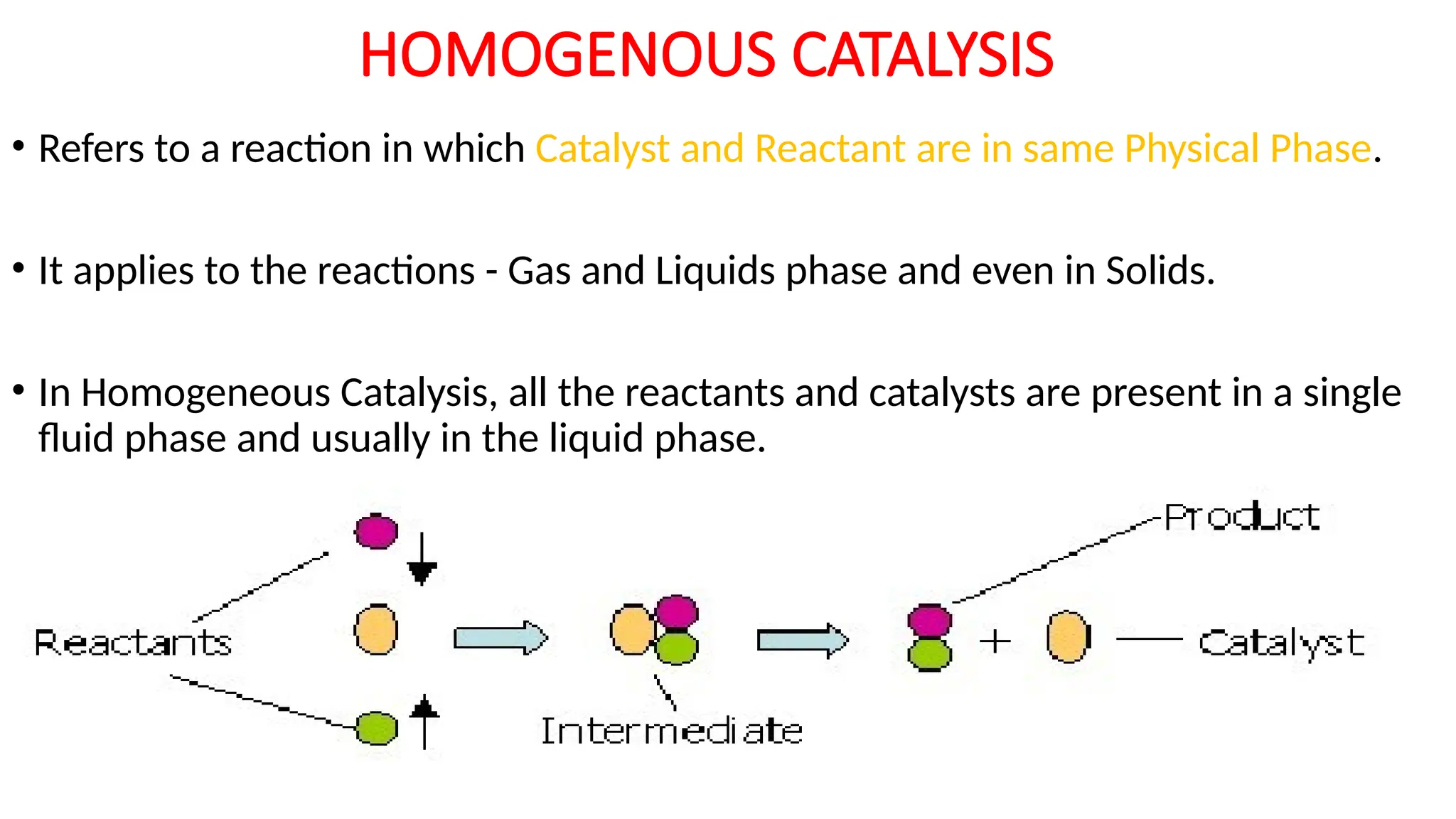
• Refers to a reaction in which Catalyst and Reactant are in same Physical Phase.
• It applies to the reactions - Gas and Liquids phase and even in Solids.
• In Homogeneous Catalysis, all the reactants and catalysts are present in a single
fluid phase and usually in the liquid phase.
Cont.
VALUE IN PHARMACEUTICALS
Feature Benefit in Drug Synthesis
High selectivity Reduces by-products, simplifies purification
Enantioselectivity Enables synthesis of single-enantiomer drugs
Mild reaction conditions Protects sensitive functional groups
Tunable ligand design Allows customization for specific transformations
Compatibility Works well in complex molecular frameworks
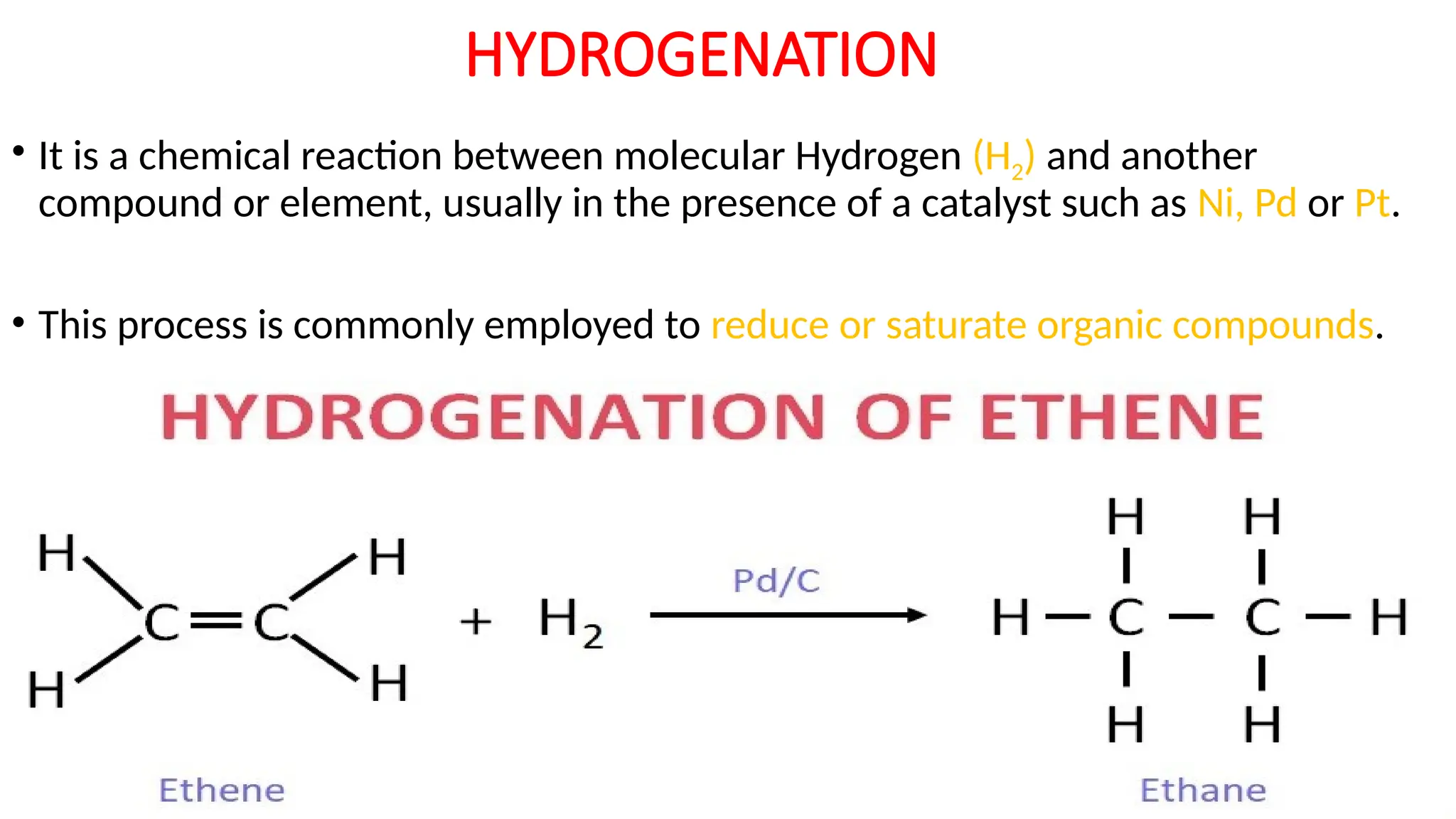
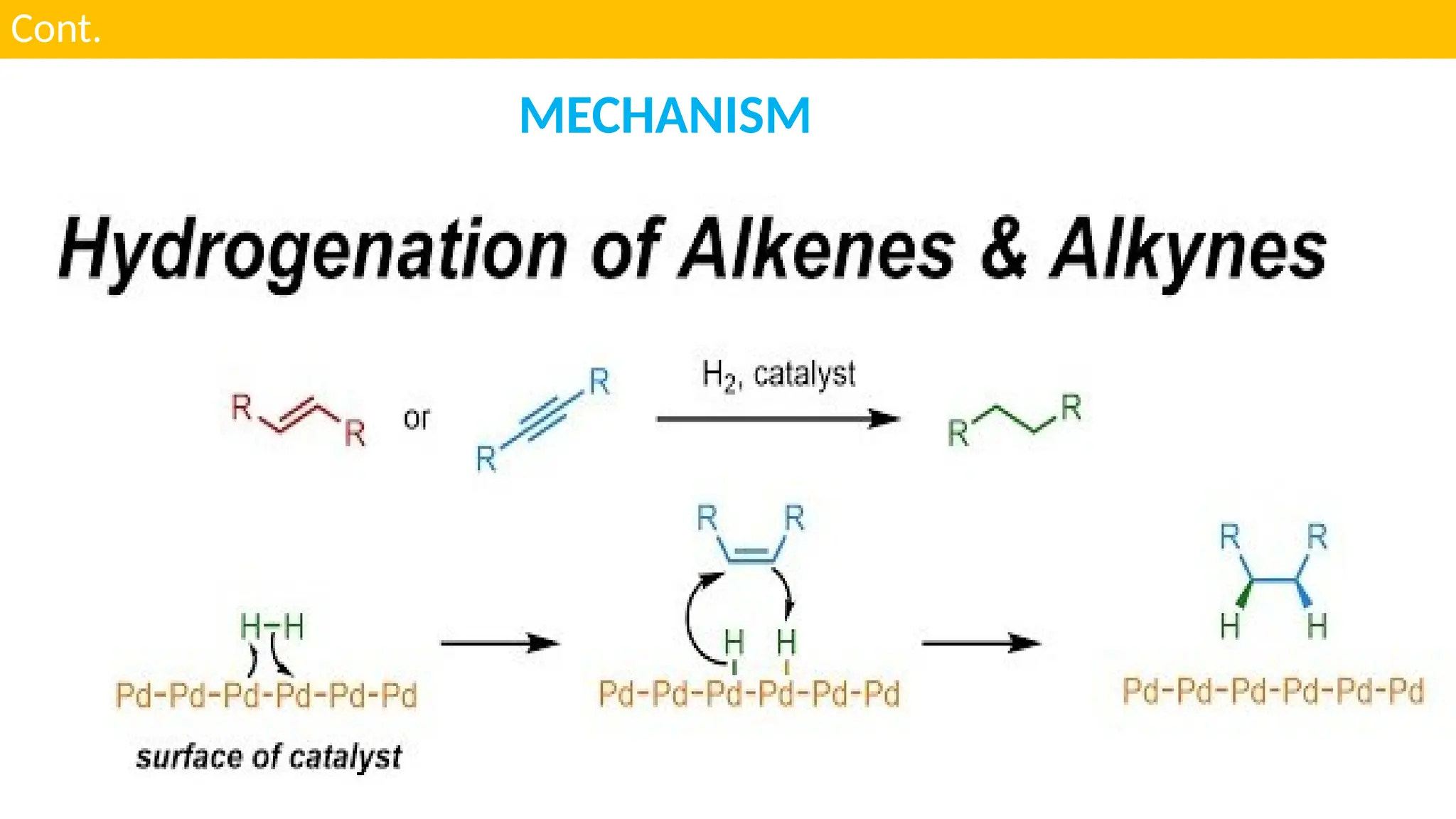
• It is a chemical reaction between molecular Hydrogen (H2) and another
compound or element, usually in the presence of a catalyst such as Ni, Pd or Pt.
• This process is commonly employed to reduce or saturate organic compounds.
HYDROGENATION
Cont.
MECHANISM
Cont.
APPLICATION
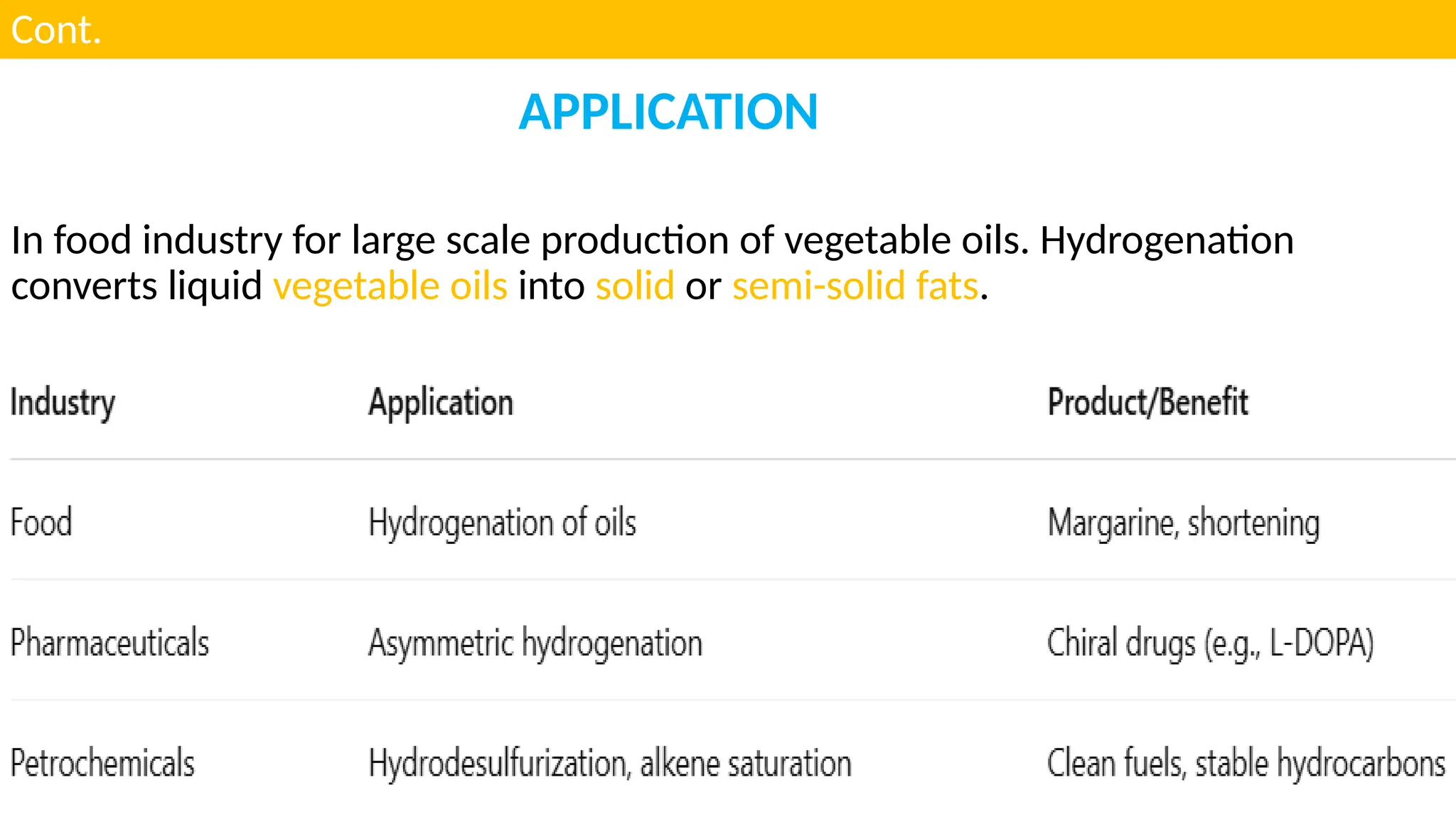
In food industry for large scale production of vegetable oils. Hydrogenation
converts liquid vegetable oils into solid or semi-solid fats.
HYDROFORMYLATION
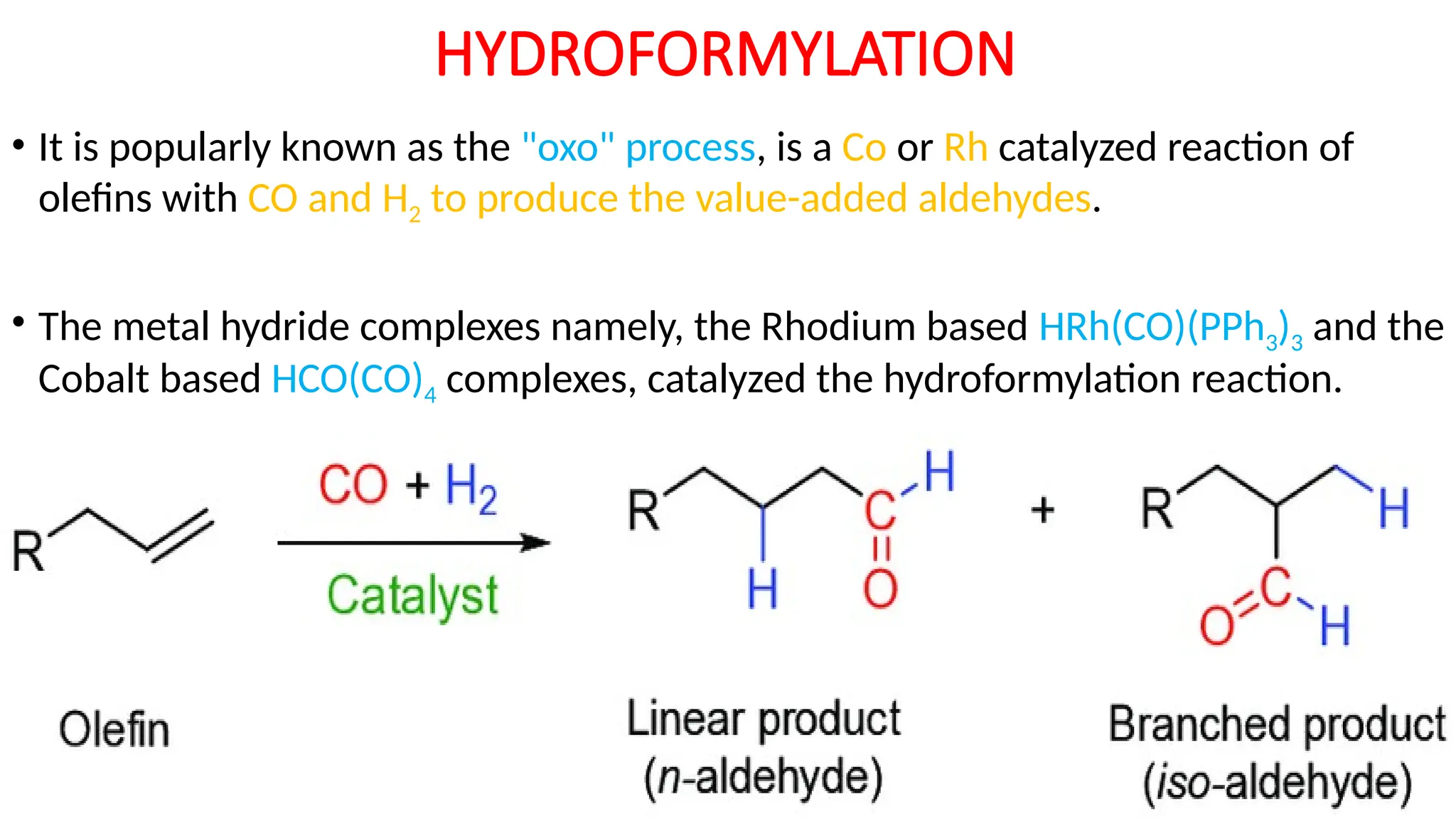
• It is popularly known as the "oxo" process, is a Co or Rh catalyzed reaction of
olefins with CO and H2 to produce the value-added aldehydes.
• The metal hydride complexes namely, the Rhodium based HRh(CO)(PPh3)3 and the
Cobalt based HCO(CO)4 complexes, catalyzed the hydroformylation reaction.
Cont.
MECHANISM
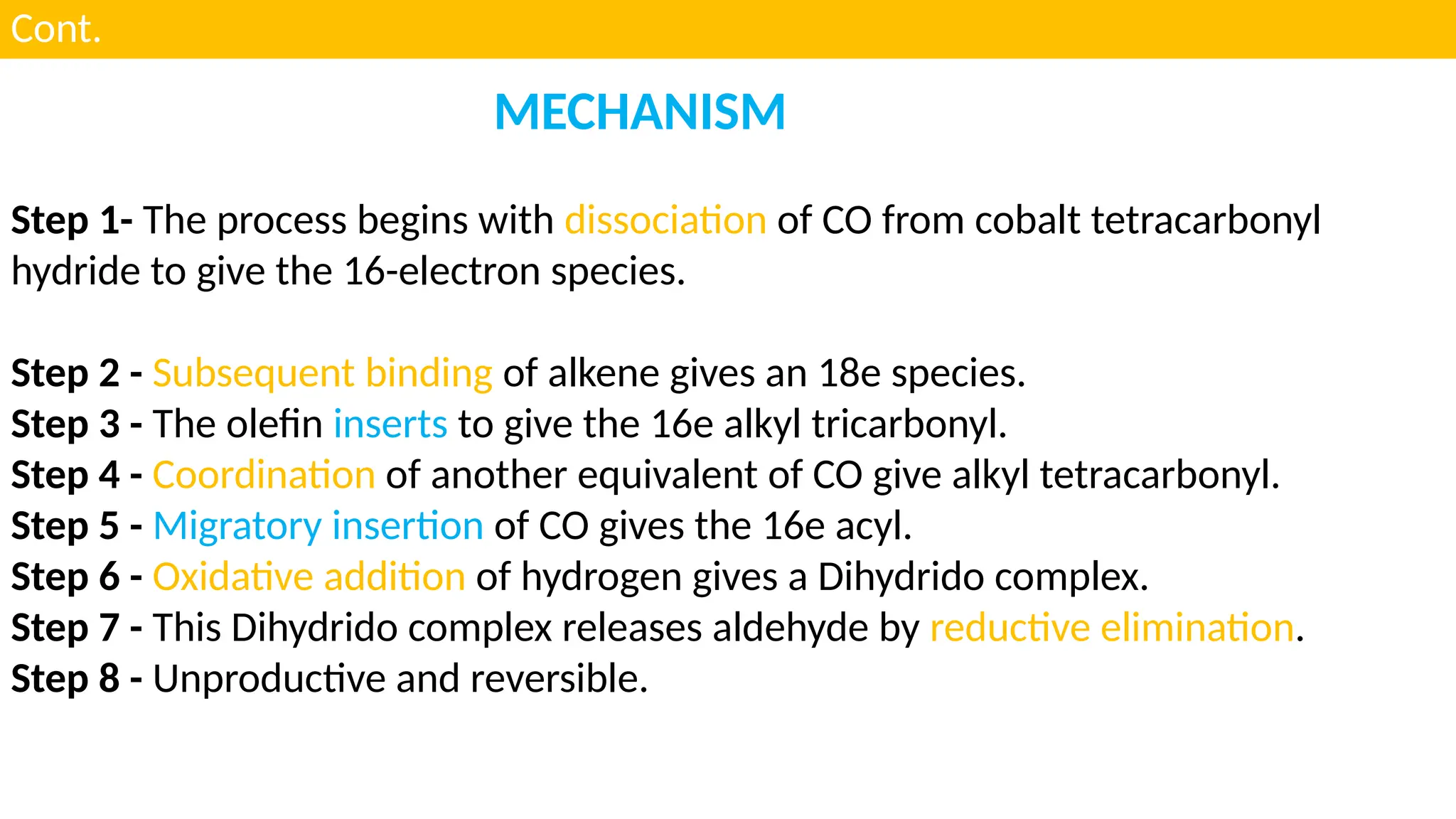
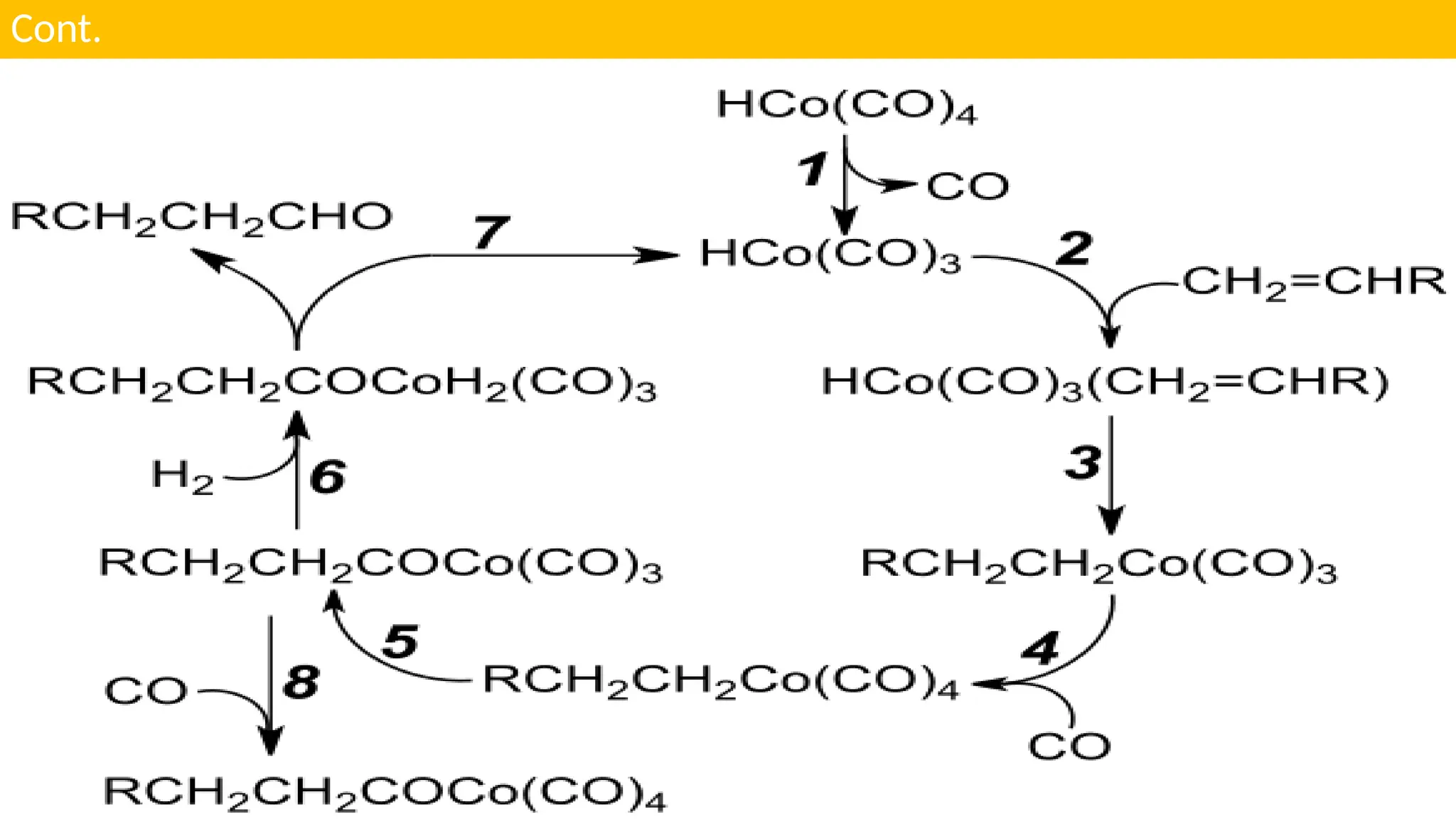
Step 1- The process begins with dissociation of CO from cobalt tetracarbonyl
hydride to give the 16-electron species.
Step 2 - Subsequent binding of alkene gives an 18e species.
Step 3 - The olefin inserts to give the 16e alkyl tricarbonyl.
Step 4 - Coordination of another equivalent of CO give alkyl tetracarbonyl.
Step 5 - Migratory insertion of CO gives the 16e acyl.
Step 6 - Oxidative addition of hydrogen gives a Dihydrido complex.
Step 7 - This Dihydrido complex releases aldehyde by reductive elimination.
Step 8 - Unproductive and reversible.
Cont.
Cont.
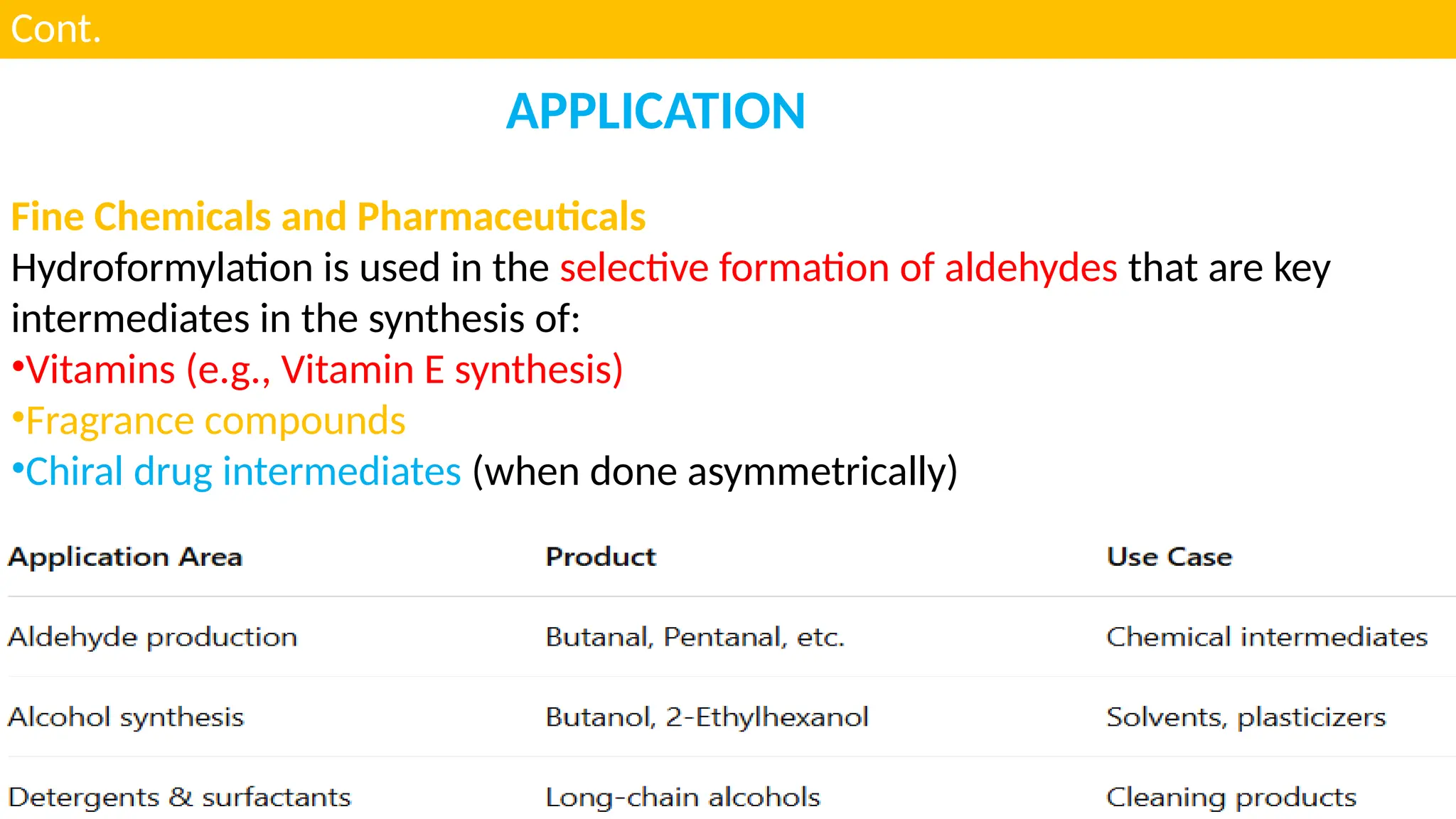
Fine Chemicals and Pharmaceuticals
Hydroformylation is used in the selective formation of aldehydes that are key
intermediates in the synthesis of:
•Vitamins (e.g., Vitamin E synthesis)
•Fragrance compounds
•Chiral drug intermediates (when done asymmetrically)
APPLICATION
HYDROCYANATION
• It is a process whereby H+
and CN-
ions are added to a molecular substrate.
• Usually, the substrate is an alkene and the product is a nitrile.
• A key step in Hydrocyanation is the oxidative addition of hydrogen cyanide to
low–valent metal complexes.
• Hydrocyanation is commonly performed on alkenes catalyzed by nickel complexes
of phosphite (P(OR)3) ligands.
• It is basically used in steroids synthesis.
Cont.
MECHANISM
• The reaction proceeds via the oxidative addition of HCN to Ni(0) to give a
Hydrido nickel(II) cyanide complex, abbreviated Ni(H)(CN).
• Subsequent binding of the alkene gives the intermediate Ni(H)(CN)(alkene),
which then undergoes migratory insertion to give an alkyl nickel(II) cyanide
Ni(R)(CN).
• The cycle is completed by the reductive elimination of the nitrile.
Cont.
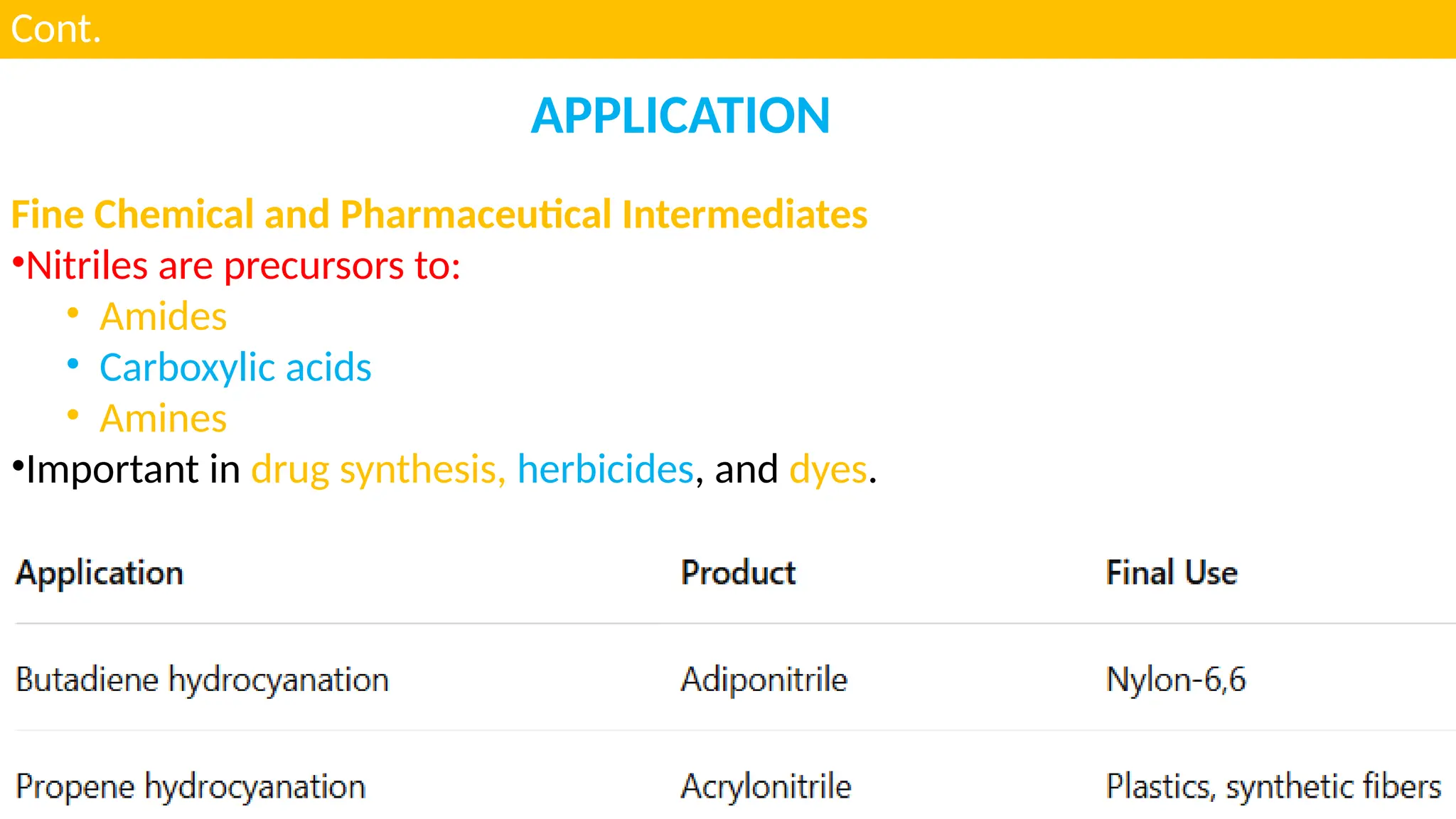
APPLICATION
Fine Chemical and Pharmaceutical Intermediates
•Nitriles are precursors to:
• Amides
• Carboxylic acids
• Amines
•Important in drug synthesis, herbicides, and dyes.
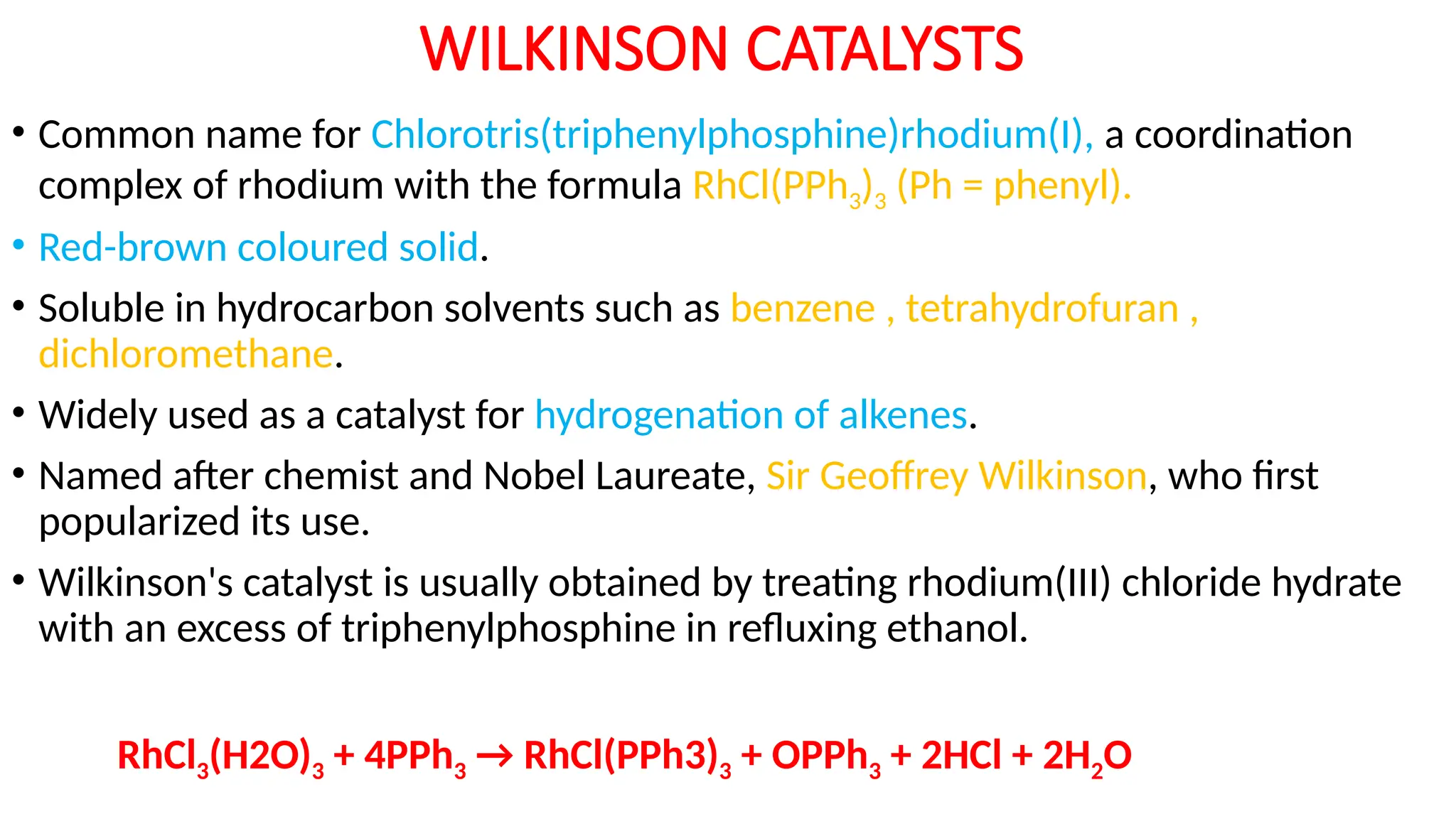
WILKINSON CATALYSTS
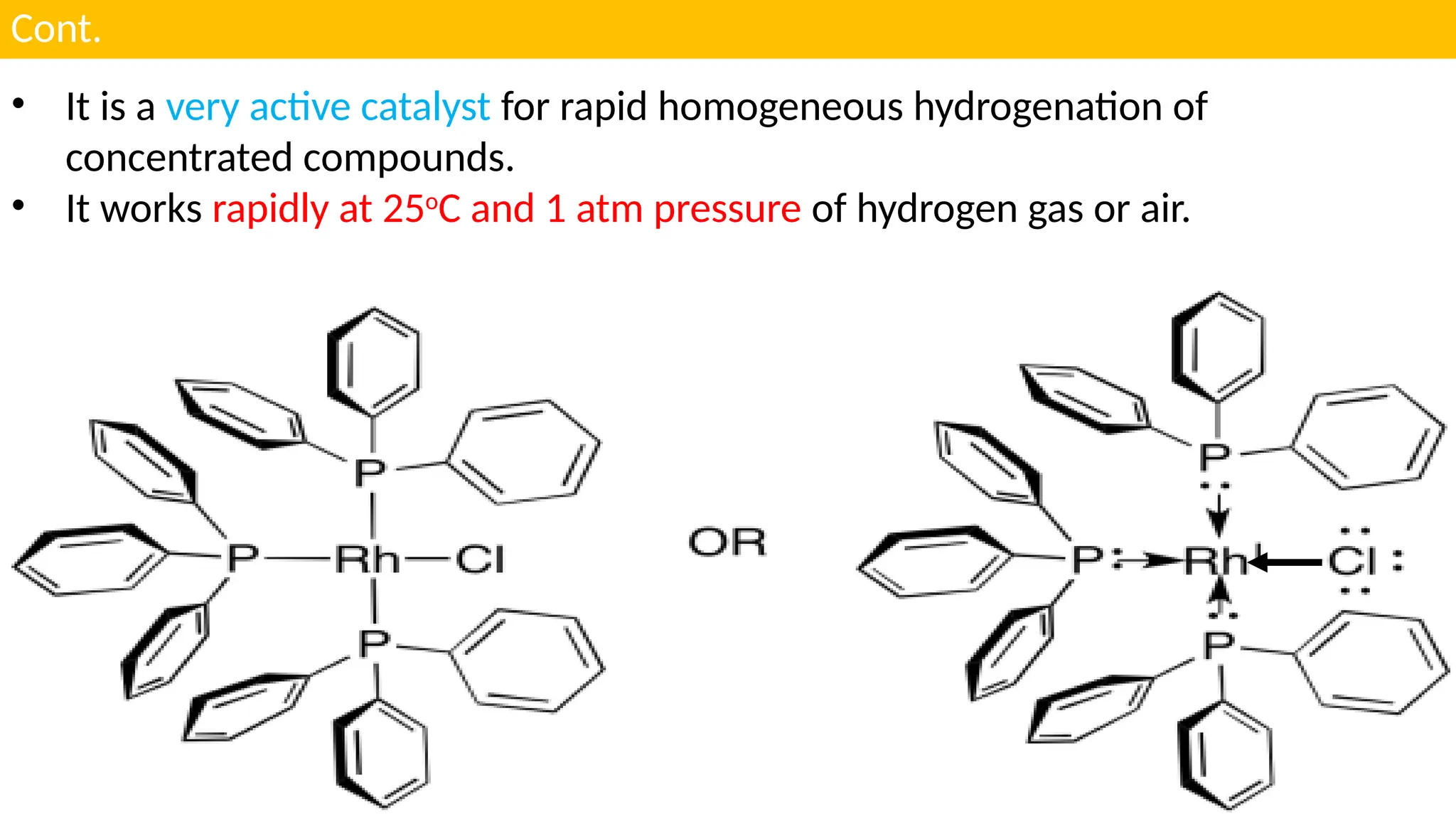
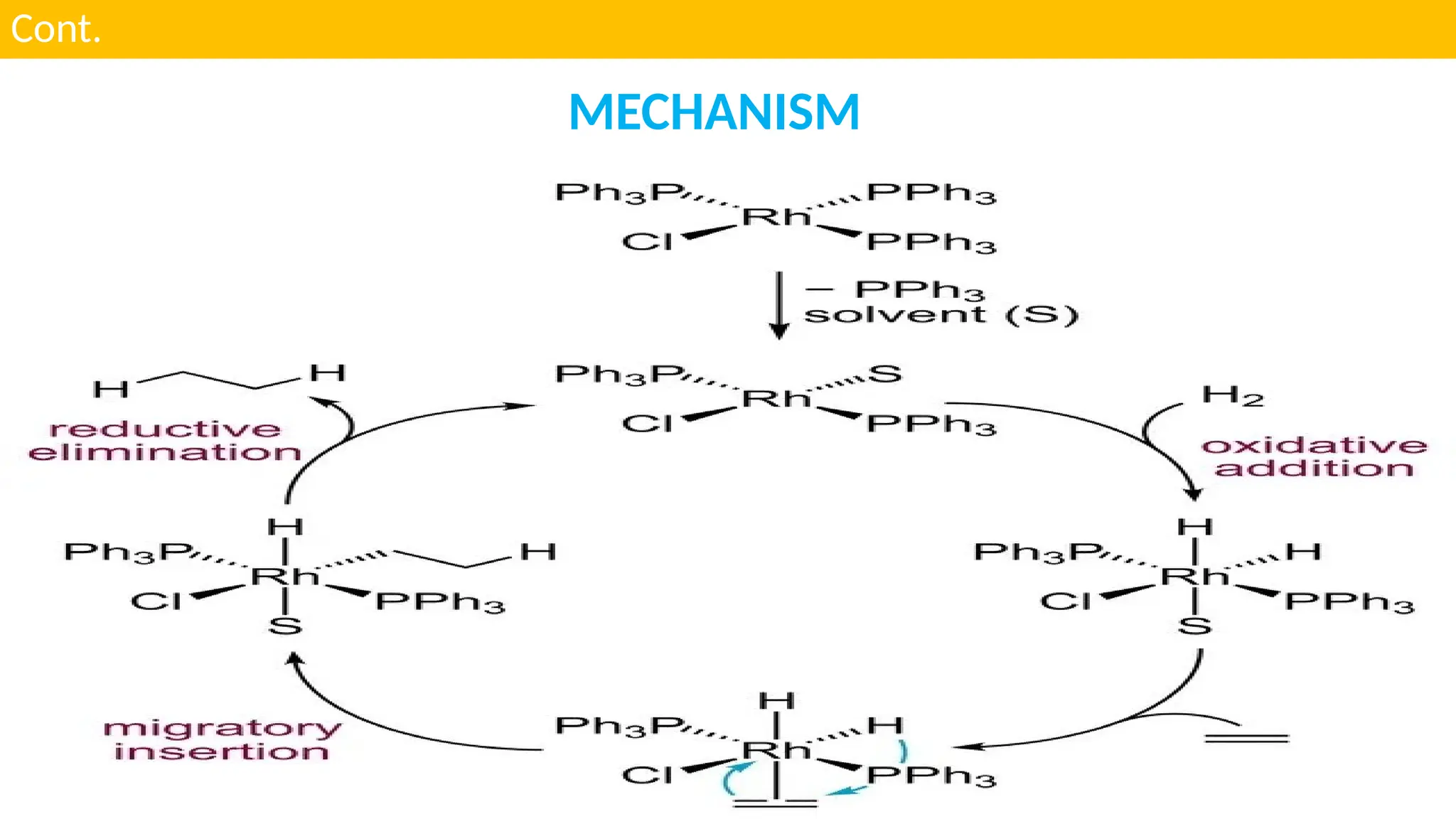
• Common name for Chlorotris(triphenylphosphine)rhodium(I), a coordination
complex of rhodium with the formula RhCl(PPh3)3 (Ph = phenyl).
• Red-brown coloured solid.
• Soluble in hydrocarbon solvents such as benzene , tetrahydrofuran ,
dichloromethane.
• Widely used as a catalyst for hydrogenation of alkenes.
• Named after chemist and Nobel Laureate, Sir Geoffrey Wilkinson, who first
popularized its use.
• Wilkinson's catalyst is usually obtained by treating rhodium(III) chloride hydrate
with an excess of triphenylphosphine in refluxing ethanol.
RhCl3(H2O)3 + 4PPh3 → RhCl(PPh3)3 + OPPh3 + 2HCl + 2H2O
Cont.
• It is a very active catalyst for rapid homogeneous hydrogenation of
concentrated compounds.
• It works rapidly at 25o
C and 1 atm pressure of hydrogen gas or air.
Cont.
MECHANISM
Cont.
APPLICATION
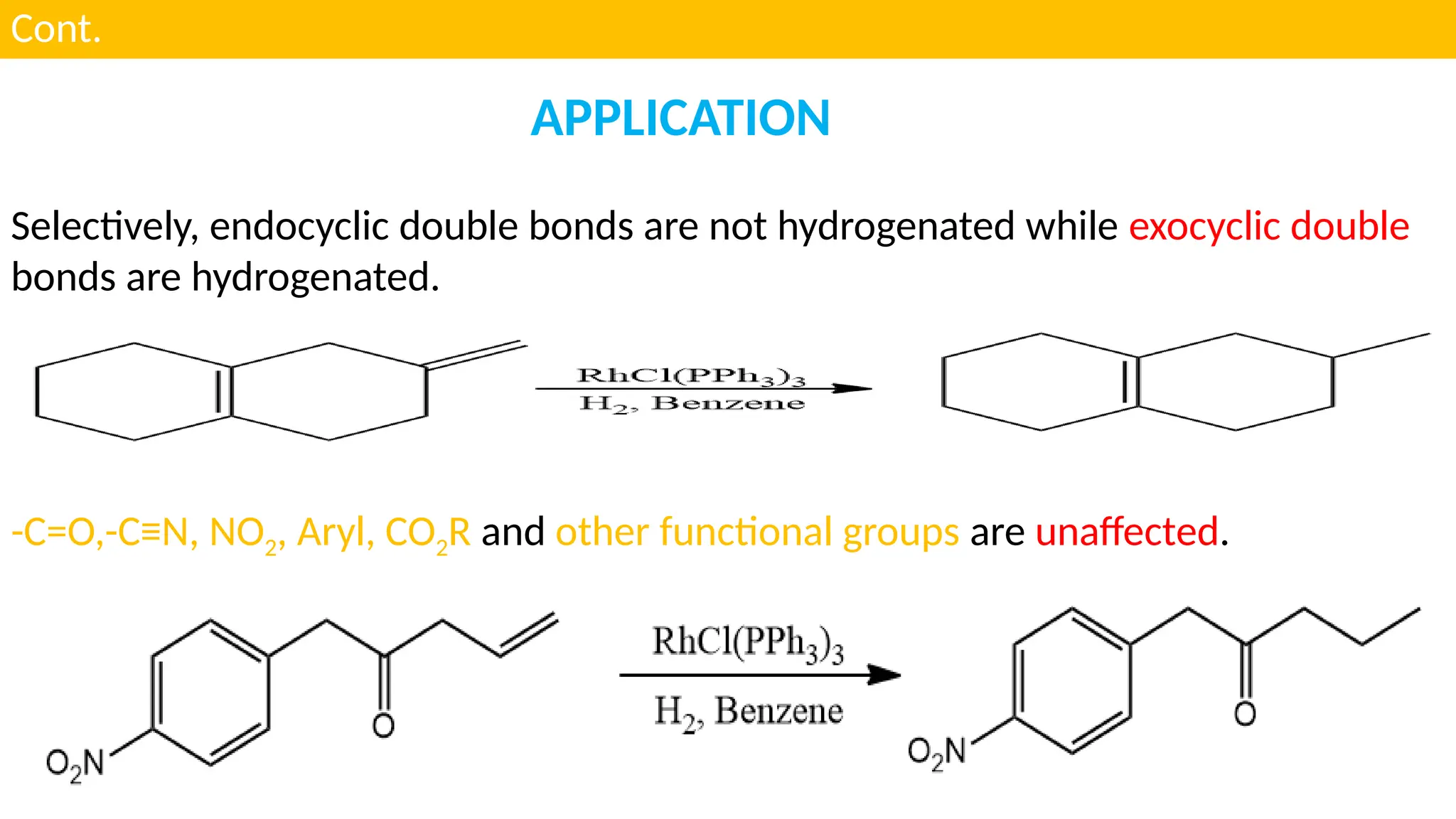
Selectively, endocyclic double bonds are not hydrogenated while exocyclic double
bonds are hydrogenated.
-C=O,-C≡N, NO2, Aryl, CO2R and other functional groups are unaffected.
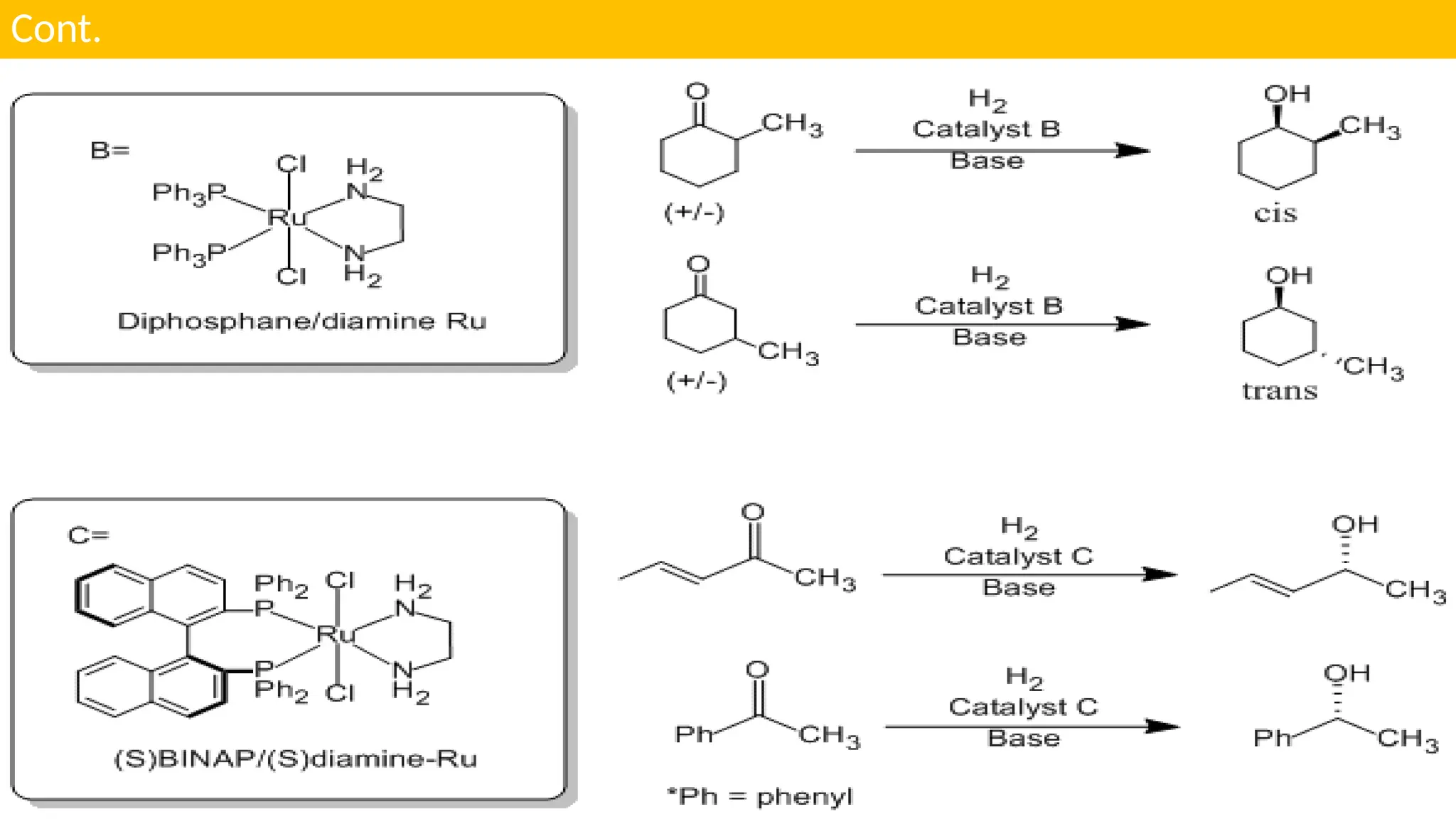
CHIRAL LIGANDS
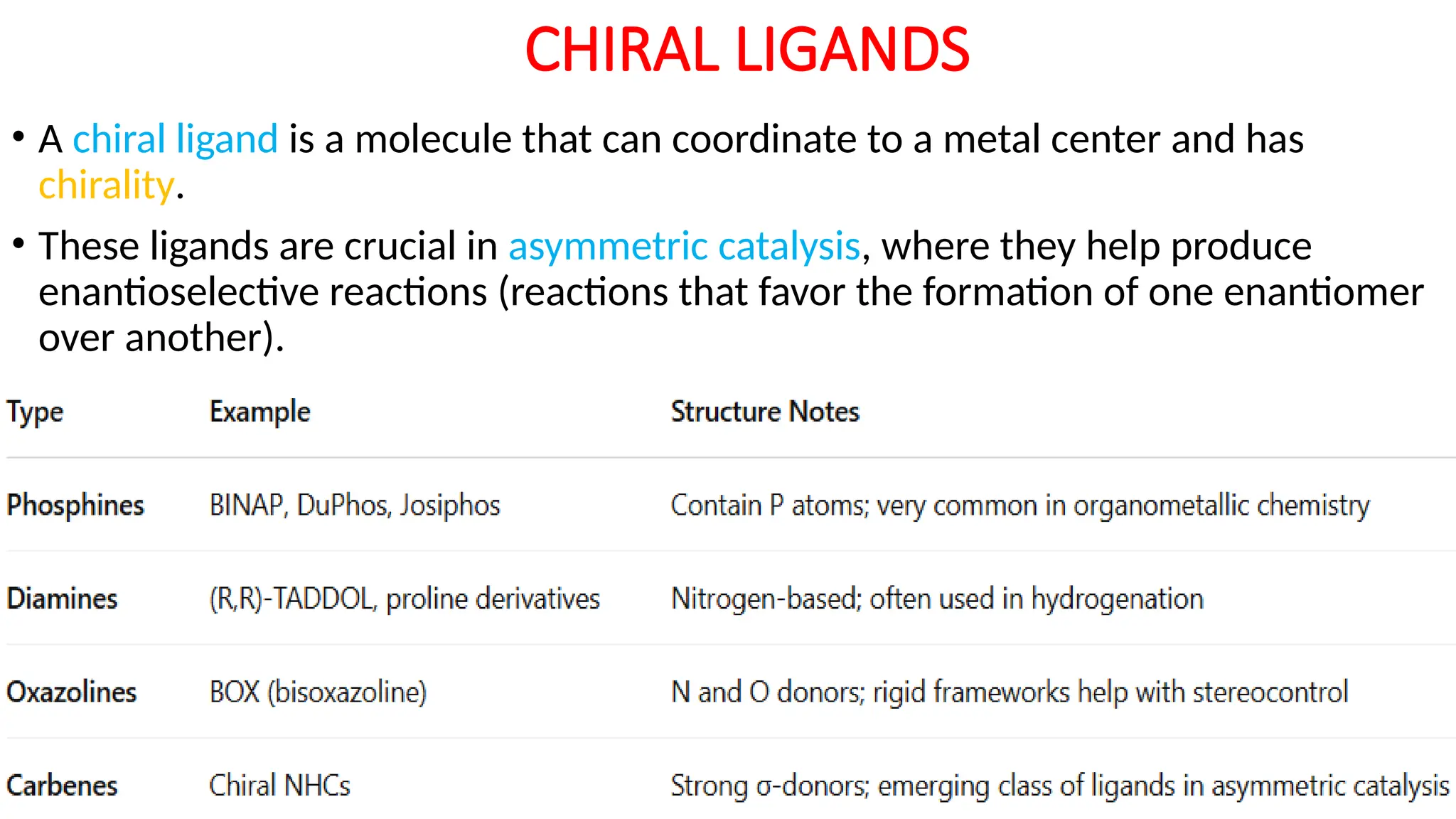
• A chiral ligand is a molecule that can coordinate to a metal center and has
chirality.
• These ligands are crucial in asymmetric catalysis, where they help produce
enantioselective reactions (reactions that favor the formation of one enantiomer
over another).
CHIRAL INDUCTION
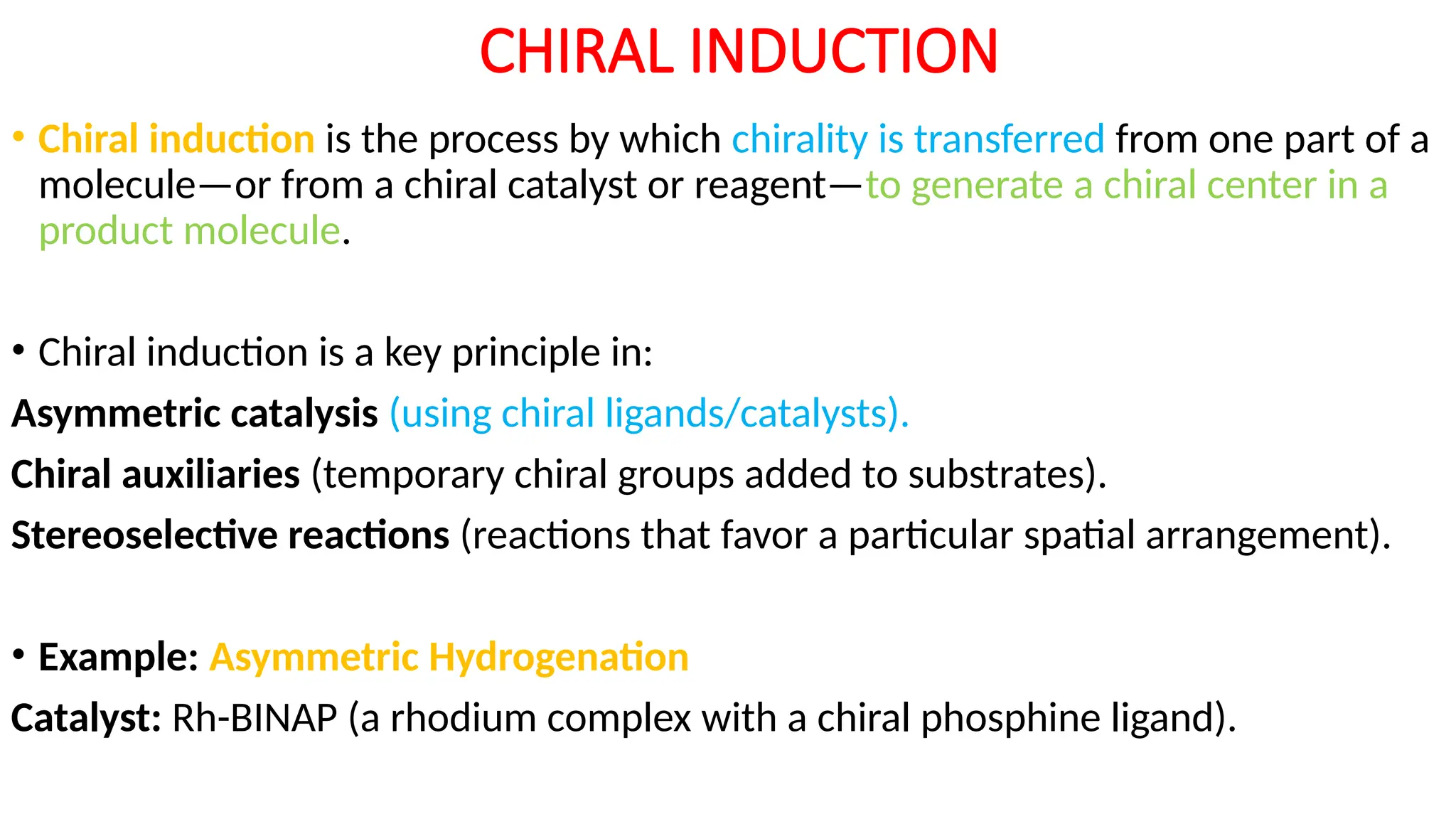
• Chiral induction is the process by which chirality is transferred from one part of a
molecule—or from a chiral catalyst or reagent—to generate a chiral center in a
product molecule.
• Chiral induction is a key principle in:
Asymmetric catalysis (using chiral ligands/catalysts).
Chiral auxiliaries (temporary chiral groups added to substrates).
Stereoselective reactions (reactions that favor a particular spatial arrangement).
• Example: Asymmetric Hydrogenation
Catalyst: Rh-BINAP (a rhodium complex with a chiral phosphine ligand).
Cont.
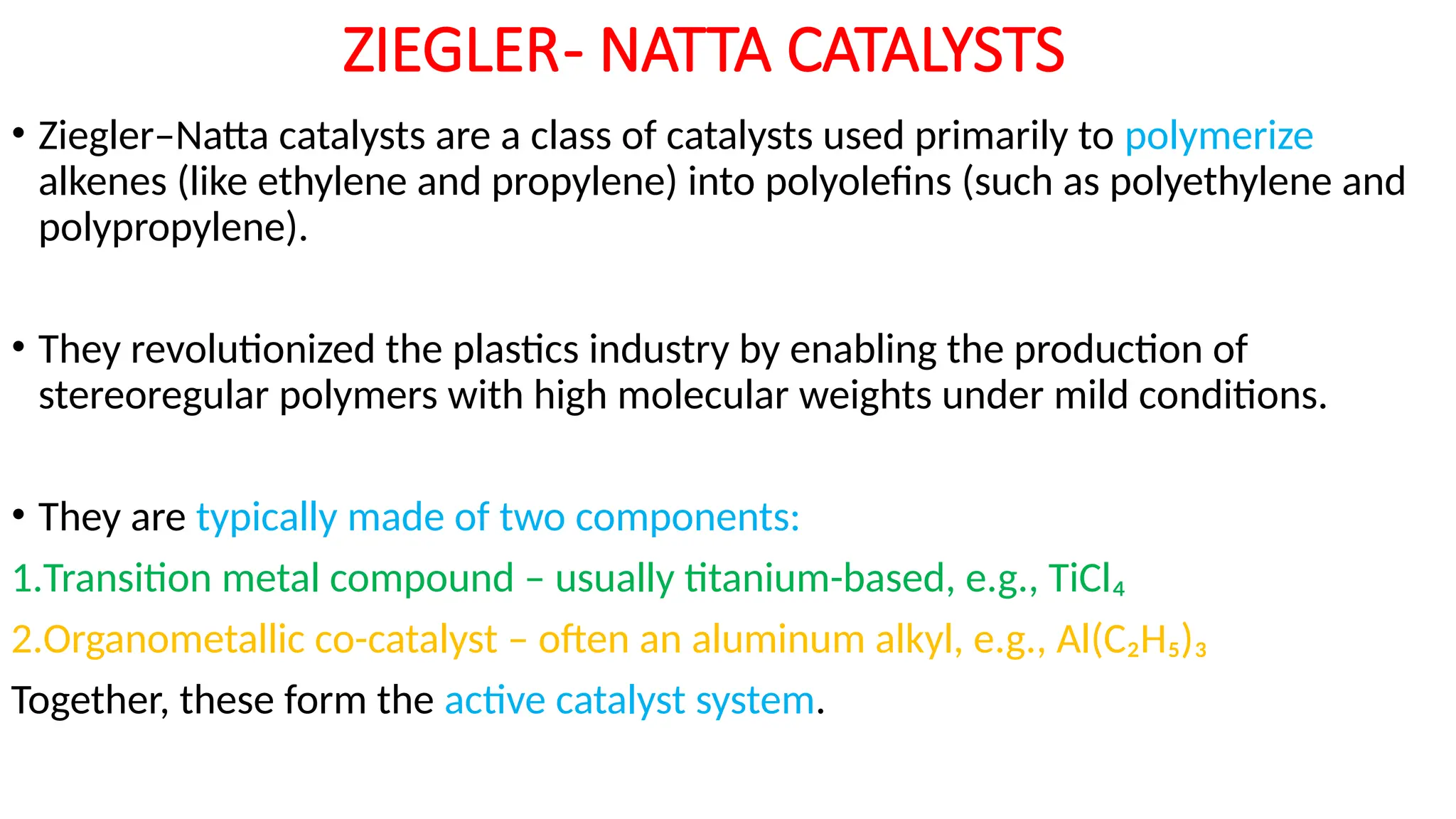
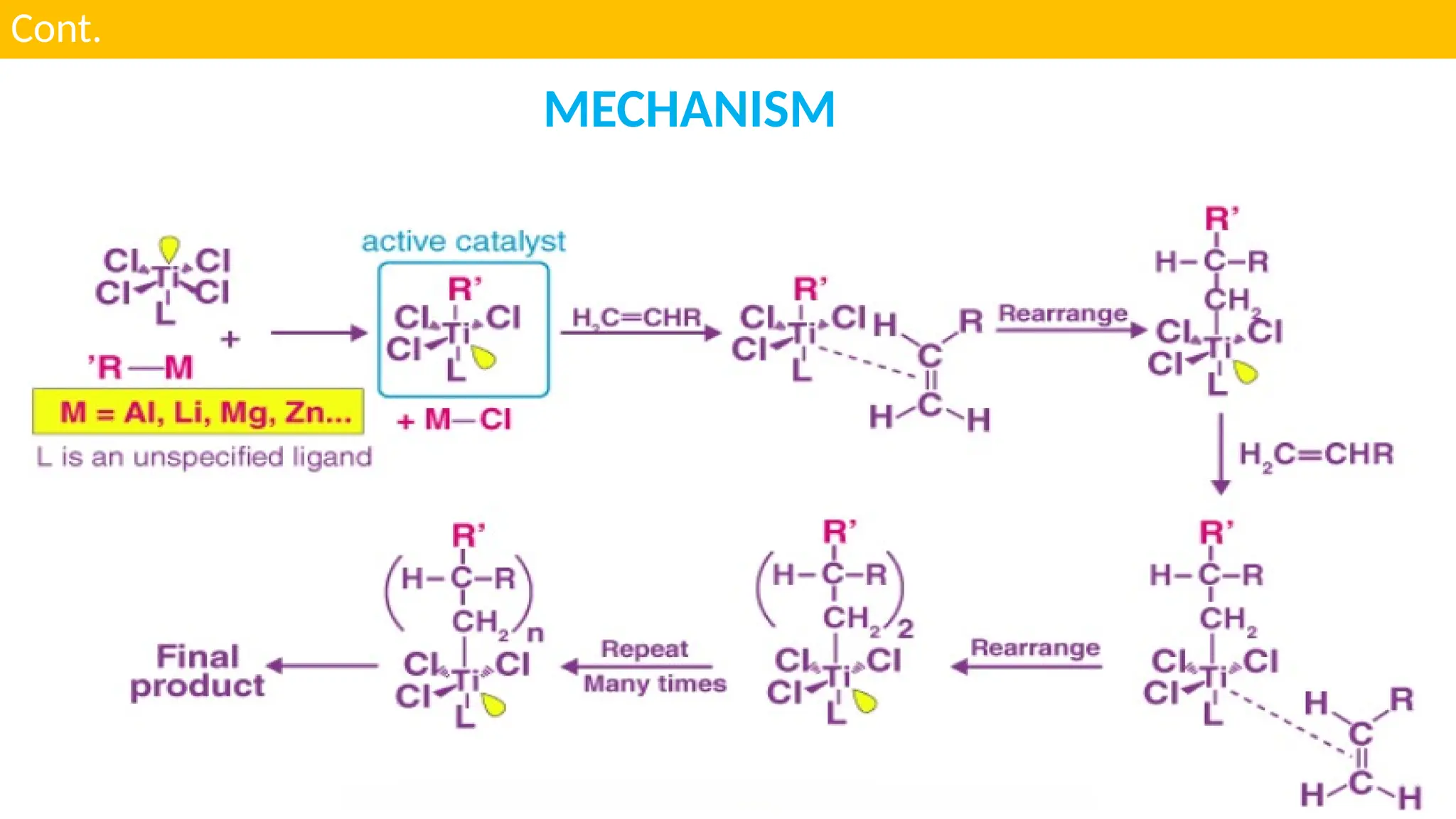
ZIEGLER- NATTA CATALYSTS
• Ziegler–Natta catalysts are a class of catalysts used primarily to polymerize
alkenes (like ethylene and propylene) into polyolefins (such as polyethylene and
polypropylene).
• They revolutionized the plastics industry by enabling the production of
stereoregular polymers with high molecular weights under mild conditions.
• They are typically made of two components:
1.Transition metal compound – usually titanium-based, e.g., TiCl₄
2.Organometallic co-catalyst – often an aluminum alkyl, e.g., Al(C₂H₅)₃
Together, these form the active catalyst system.
Cont.
MECHANISM
Cont.
APPLICATION
•Polyethylene (PE): Low-density (LDPE), high-density (HDPE).
•Polypropylene (PP): Packaging, fibers.
•Other olefin copolymers: Like ethylene–propylene rubber.
•Other polymers: Polymethyl pentene, Polybutadiene, Polyisoprene, Polyacetylene,
etc.
IN SYNTHESIS OF ,
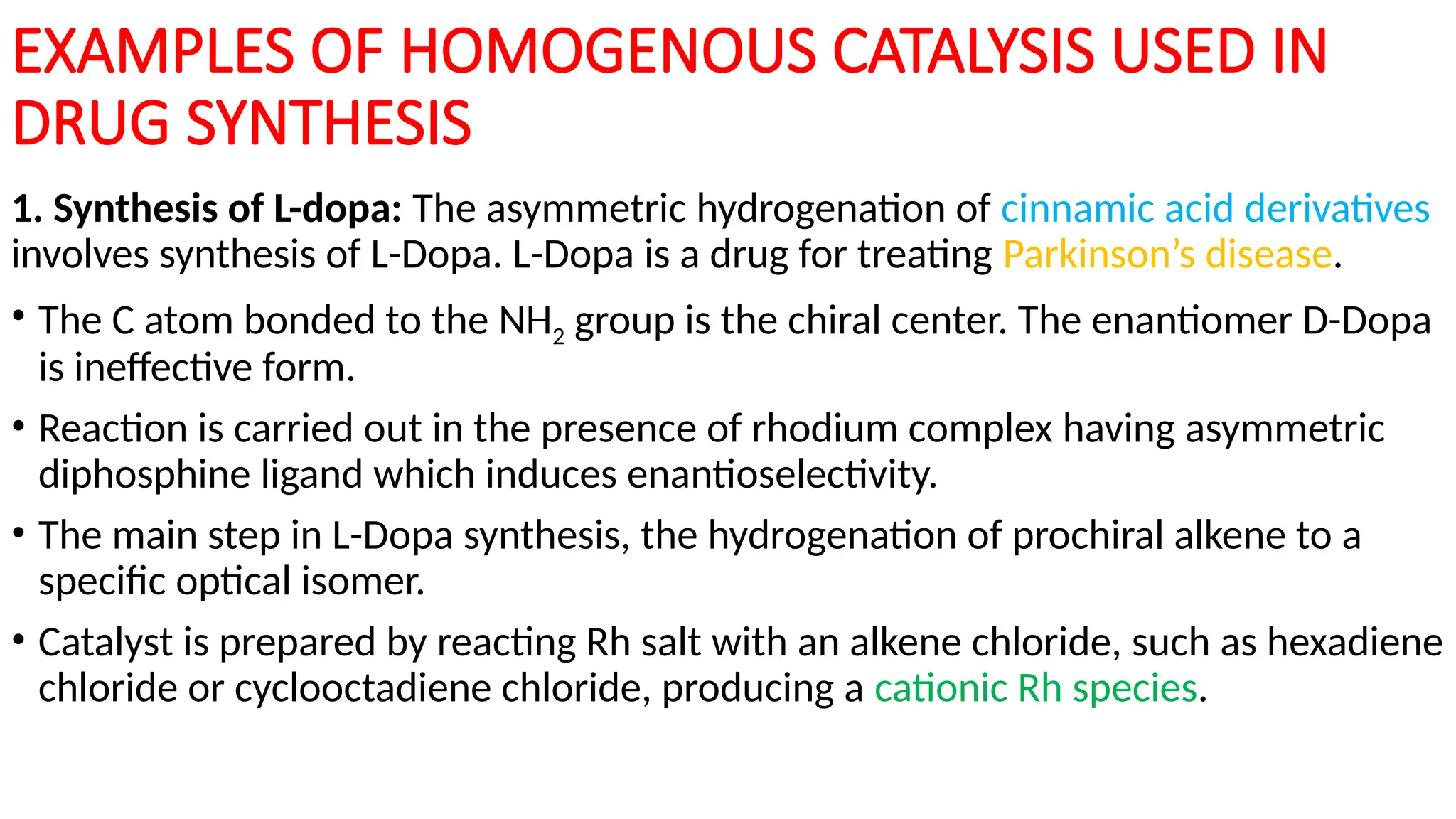
EXAMPLES OF HOMOGENOUS CATALYSIS USED IN
DRUG SYNTHESIS
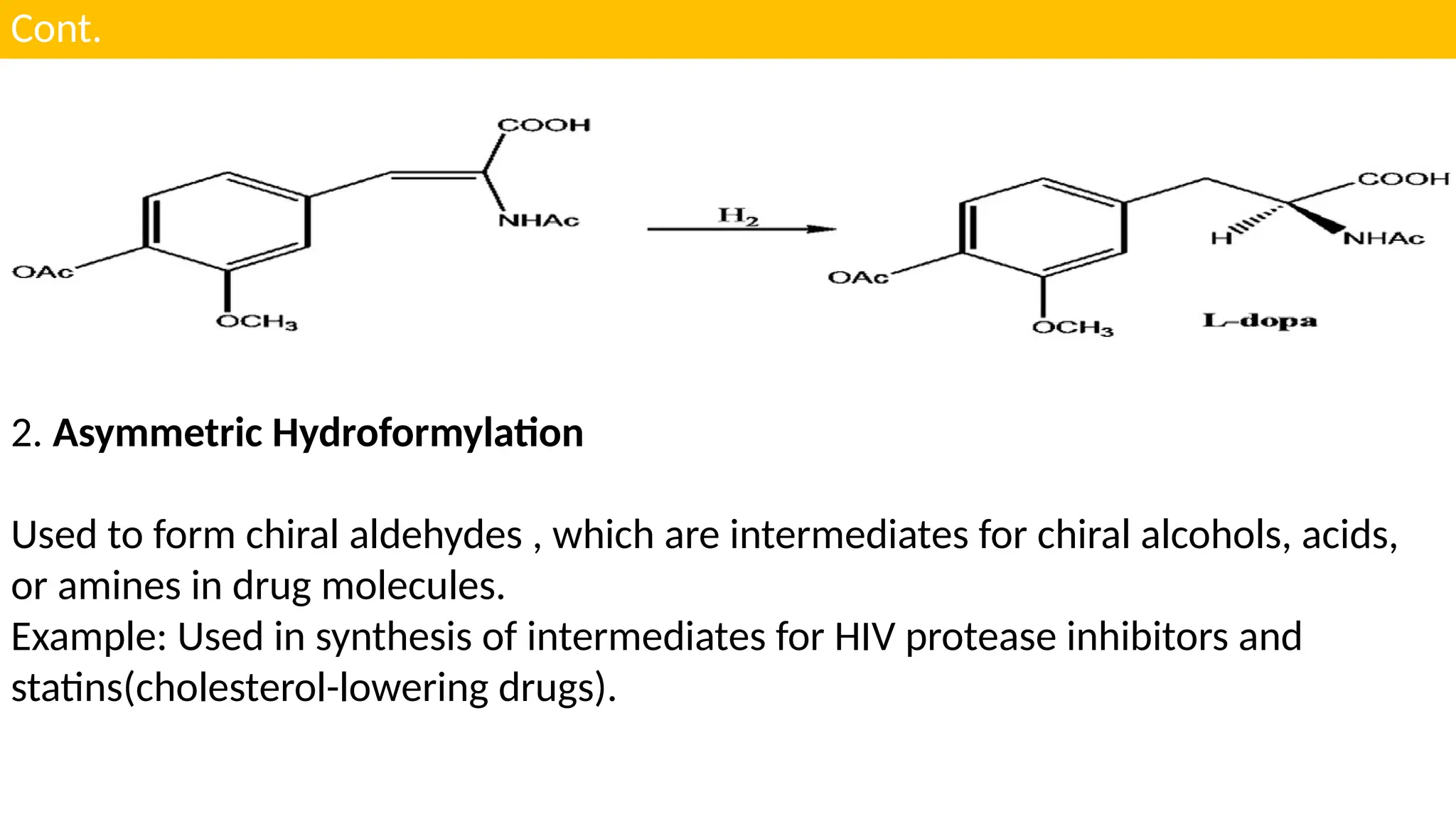
1. Synthesis of L-dopa: The asymmetric hydrogenation of cinnamic acid derivatives
involves synthesis of L-Dopa. L-Dopa is a drug for treating Parkinson’s disease.
• The C atom bonded to the NH2 group is the chiral center. The enantiomer D-Dopa
is ineffective form.
• Reaction is carried out in the presence of rhodium complex having asymmetric
diphosphine ligand which induces enantioselectivity.
• The main step in L-Dopa synthesis, the hydrogenation of prochiral alkene to a
specific optical isomer.
• Catalyst is prepared by reacting Rh salt with an alkene chloride, such as hexadiene
chloride or cyclooctadiene chloride, producing a cationic Rh species.
Cont.
2. Asymmetric Hydroformylation
Used to form chiral aldehydes , which are intermediates for chiral alcohols, acids,
or amines in drug molecules.
Example: Used in synthesis of intermediates for HIV protease inhibitors and
statins(cholesterol-lowering drugs).
Cont.
3. C–C Coupling Reactions
Homogeneous palladium-catalyzed coupling reactions are essential in forming
aromatic/heteroaromatic drug scaffolds.
Example: Losartan
Key Step: Pd-catalyzed Suzuki coupling to build the biphenyl core.
Example: Imatinib
Use: Cancer treatment
Synthesis involves Pd-catalyzed cross-couplings to form the drug’s core.
Cont.
SUMMARY
Drug Use Homogenous Catalysis Role
L-DOPA Parkinson’s Asymmetric hydrogenation
Losartan Blood pressure Pd-catalyzed Suzuki coupling
Imatinib Cancer Pd-catalyzed C–C coupling
Sitagliptin Diabetes (Type 2) Asymmetric hydrogenation
Atorvastatin Cholesterol lowering Asymmetric reactions
UNIT - 4 CATALYSIS : (C) HOMOGENOUS CATALYSIS , HYDROGENATION , HYDROFORMYLATION ,  HYDROCYANATION , WILKINSON CATALYSTS , CHIRAL LIGANDS & CHIRAL INDUCTION , ZIEGLER-NATTA CATALYSTS , SOME EXAMPLES OF  HOMOGENOUS CATALYSIS USED IN SYNTHESIS OF DRUGS.pptx

UNIT - 4 CATALYSIS : (C) HOMOGENOUS CATALYSIS , HYDROGENATION , HYDROFORMYLATION , HYDROCYANATION , WILKINSON CATALYSTS , CHIRAL LIGANDS & CHIRAL INDUCTION , ZIEGLER-NATTA CATALYSTS , SOME EXAMPLES OF HOMOGENOUS CATALYSIS USED IN SYNTHESIS OF DRUGS.pptx

  • 2.
    HOMOGENOUS CATALYSIS • Refersto a reaction in which Catalyst and Reactant are in same Physical Phase. • It applies to the reactions - Gas and Liquids phase and even in Solids. • In Homogeneous Catalysis, all the reactants and catalysts are present in a single fluid phase and usually in the liquid phase.
  • 3.
    Cont. VALUE IN PHARMACEUTICALS FeatureBenefit in Drug Synthesis High selectivity Reduces by-products, simplifies purification Enantioselectivity Enables synthesis of single-enantiomer drugs Mild reaction conditions Protects sensitive functional groups Tunable ligand design Allows customization for specific transformations Compatibility Works well in complex molecular frameworks
  • 4.
    • It isa chemical reaction between molecular Hydrogen (H2) and another compound or element, usually in the presence of a catalyst such as Ni, Pd or Pt. • This process is commonly employed to reduce or saturate organic compounds. HYDROGENATION
  • 5.
  • 6.
    Cont. APPLICATION In food industryfor large scale production of vegetable oils. Hydrogenation converts liquid vegetable oils into solid or semi-solid fats.
  • 7.
    HYDROFORMYLATION • It ispopularly known as the "oxo" process, is a Co or Rh catalyzed reaction of olefins with CO and H2 to produce the value-added aldehydes. • The metal hydride complexes namely, the Rhodium based HRh(CO)(PPh3)3 and the Cobalt based HCO(CO)4 complexes, catalyzed the hydroformylation reaction.
  • 8.
    Cont. MECHANISM Step 1- Theprocess begins with dissociation of CO from cobalt tetracarbonyl hydride to give the 16-electron species. Step 2 - Subsequent binding of alkene gives an 18e species. Step 3 - The olefin inserts to give the 16e alkyl tricarbonyl. Step 4 - Coordination of another equivalent of CO give alkyl tetracarbonyl. Step 5 - Migratory insertion of CO gives the 16e acyl. Step 6 - Oxidative addition of hydrogen gives a Dihydrido complex. Step 7 - This Dihydrido complex releases aldehyde by reductive elimination. Step 8 - Unproductive and reversible.
  • 9.
  • 10.
    Cont. Fine Chemicals andPharmaceuticals Hydroformylation is used in the selective formation of aldehydes that are key intermediates in the synthesis of: •Vitamins (e.g., Vitamin E synthesis) •Fragrance compounds •Chiral drug intermediates (when done asymmetrically) APPLICATION
  • 11.
    HYDROCYANATION • It isa process whereby H+ and CN- ions are added to a molecular substrate. • Usually, the substrate is an alkene and the product is a nitrile. • A key step in Hydrocyanation is the oxidative addition of hydrogen cyanide to low–valent metal complexes. • Hydrocyanation is commonly performed on alkenes catalyzed by nickel complexes of phosphite (P(OR)3) ligands. • It is basically used in steroids synthesis.
  • 12.
    Cont. MECHANISM • The reactionproceeds via the oxidative addition of HCN to Ni(0) to give a Hydrido nickel(II) cyanide complex, abbreviated Ni(H)(CN). • Subsequent binding of the alkene gives the intermediate Ni(H)(CN)(alkene), which then undergoes migratory insertion to give an alkyl nickel(II) cyanide Ni(R)(CN). • The cycle is completed by the reductive elimination of the nitrile.
  • 13.
    Cont. APPLICATION Fine Chemical andPharmaceutical Intermediates •Nitriles are precursors to: • Amides • Carboxylic acids • Amines •Important in drug synthesis, herbicides, and dyes.
  • 14.
    WILKINSON CATALYSTS • Commonname for Chlorotris(triphenylphosphine)rhodium(I), a coordination complex of rhodium with the formula RhCl(PPh3)3 (Ph = phenyl). • Red-brown coloured solid. • Soluble in hydrocarbon solvents such as benzene , tetrahydrofuran , dichloromethane. • Widely used as a catalyst for hydrogenation of alkenes. • Named after chemist and Nobel Laureate, Sir Geoffrey Wilkinson, who first popularized its use. • Wilkinson's catalyst is usually obtained by treating rhodium(III) chloride hydrate with an excess of triphenylphosphine in refluxing ethanol. RhCl3(H2O)3 + 4PPh3 → RhCl(PPh3)3 + OPPh3 + 2HCl + 2H2O
  • 15.
    Cont. • It isa very active catalyst for rapid homogeneous hydrogenation of concentrated compounds. • It works rapidly at 25o C and 1 atm pressure of hydrogen gas or air.
  • 16.
  • 17.
    Cont. APPLICATION Selectively, endocyclic doublebonds are not hydrogenated while exocyclic double bonds are hydrogenated. -C=O,-C≡N, NO2, Aryl, CO2R and other functional groups are unaffected.
  • 18.
    CHIRAL LIGANDS • Achiral ligand is a molecule that can coordinate to a metal center and has chirality. • These ligands are crucial in asymmetric catalysis, where they help produce enantioselective reactions (reactions that favor the formation of one enantiomer over another).
  • 19.
    CHIRAL INDUCTION • Chiralinduction is the process by which chirality is transferred from one part of a molecule—or from a chiral catalyst or reagent—to generate a chiral center in a product molecule. • Chiral induction is a key principle in: Asymmetric catalysis (using chiral ligands/catalysts). Chiral auxiliaries (temporary chiral groups added to substrates). Stereoselective reactions (reactions that favor a particular spatial arrangement). • Example: Asymmetric Hydrogenation Catalyst: Rh-BINAP (a rhodium complex with a chiral phosphine ligand).
  • 20.
  • 21.
    ZIEGLER- NATTA CATALYSTS •Ziegler–Natta catalysts are a class of catalysts used primarily to polymerize alkenes (like ethylene and propylene) into polyolefins (such as polyethylene and polypropylene). • They revolutionized the plastics industry by enabling the production of stereoregular polymers with high molecular weights under mild conditions. • They are typically made of two components: 1.Transition metal compound – usually titanium-based, e.g., TiCl₄ 2.Organometallic co-catalyst – often an aluminum alkyl, e.g., Al(C₂H₅)₃ Together, these form the active catalyst system.
  • 22.
  • 23.
    Cont. APPLICATION •Polyethylene (PE): Low-density(LDPE), high-density (HDPE). •Polypropylene (PP): Packaging, fibers. •Other olefin copolymers: Like ethylene–propylene rubber. •Other polymers: Polymethyl pentene, Polybutadiene, Polyisoprene, Polyacetylene, etc. IN SYNTHESIS OF ,
  • 24.
    EXAMPLES OF HOMOGENOUSCATALYSIS USED IN DRUG SYNTHESIS 1. Synthesis of L-dopa: The asymmetric hydrogenation of cinnamic acid derivatives involves synthesis of L-Dopa. L-Dopa is a drug for treating Parkinson’s disease. • The C atom bonded to the NH2 group is the chiral center. The enantiomer D-Dopa is ineffective form. • Reaction is carried out in the presence of rhodium complex having asymmetric diphosphine ligand which induces enantioselectivity. • The main step in L-Dopa synthesis, the hydrogenation of prochiral alkene to a specific optical isomer. • Catalyst is prepared by reacting Rh salt with an alkene chloride, such as hexadiene chloride or cyclooctadiene chloride, producing a cationic Rh species.
  • 25.
    Cont. 2. Asymmetric Hydroformylation Usedto form chiral aldehydes , which are intermediates for chiral alcohols, acids, or amines in drug molecules. Example: Used in synthesis of intermediates for HIV protease inhibitors and statins(cholesterol-lowering drugs).
  • 26.
    Cont. 3. C–C CouplingReactions Homogeneous palladium-catalyzed coupling reactions are essential in forming aromatic/heteroaromatic drug scaffolds. Example: Losartan Key Step: Pd-catalyzed Suzuki coupling to build the biphenyl core. Example: Imatinib Use: Cancer treatment Synthesis involves Pd-catalyzed cross-couplings to form the drug’s core.
  • 27.
    Cont. SUMMARY Drug Use HomogenousCatalysis Role L-DOPA Parkinson’s Asymmetric hydrogenation Losartan Blood pressure Pd-catalyzed Suzuki coupling Imatinib Cancer Pd-catalyzed C–C coupling Sitagliptin Diabetes (Type 2) Asymmetric hydrogenation Atorvastatin Cholesterol lowering Asymmetric reactions