By- PRAVEEN KUMAR
ROLL NO. - 67/11
MANUFACTURING ENGINEERING
B.TECH (2011 – 2015)
NIFFT - RANCHI
Types of pattern and its application
Contents
 Introduction of pattern
 Use of pattern
 Types of pattern
Introduction of pattern
 Pattern is a mirror image or replica of the
component that has to be manufactured by
casting process.
 It may be also defined as a model around which
sand is packed to give rise to a cavity called mold
cavity.
 A pattern is required even if one object has to be
cast.
 The materials generally used for pattern are
wood, metal or plastics.
Use of pattern
 To form a cavity of proper shape and size in the
moulding material so that required casting is
obtained by molten metal.
 Providing seating surface for the core that are
used for making cavity i.e. core prints.
 Indirectly checks the dimensions and
measurements of the casting.
 Reduces casting defects
 Minimizes the cost of casting
Types of pattern
 Solid or single piece pattern
 Split pattern or two piece pattern
 Multi piece pattern
 Match plate pattern
 Gated pattern
 Skeleton pattern
 Sweep pattern
 Pattern with lose pieces
 Cope and drag pattern
 Follow board pattern
 Segmental pattern
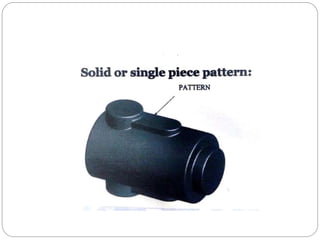
Solid or single piece pattern
 Simplest pattern
 Made in one piece
 Cheapest pattern
APPLICATION:
 Soil tamper
 Stuffing box
 Gland of steam engines
Two piece or split pattern
 Pattern is split into two piece
 One part is in cope and other is in drag
 Easy withdrawal of pattern
APPLICATIONS:
 Spindles
 Steam valve bodies
 AK-47 rifle stock
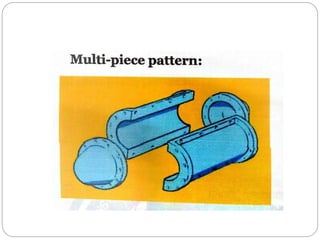
Multi-piece pattern
 Pattern is split into more than two parts.
 Facilitates an easy moulding and withdrawal of
pattern.
 Pattern may consists 3,4 or more numbers
depending on designs
APPLICATIONS:
 Lap joint
 Dowel joint
 Mitre joint
Match plate pattern
 Patterns are made in two pieces one piece
mounted on one side and the other on other side
of plate called match plate.
 Plate may carry one or group of patterns mounted
on match plate.
 Along with pattern gates and runners are also
attached.
 Produces accurate castings at faster rates.
APPLICATIONS:
Generally used for small castings such as piston
rings of I.C. engines and rotor hub.
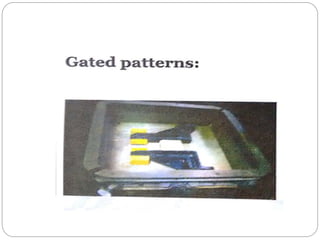
Gated pattern
 In this the pattern are usually made of metals.
 In this multi-cavity moulds are produced & the
sections connecting different pattern serves as
gate and runner. This facilitates filling the mold in
better manner.
 Can produce many castings at one time and
hence saves time as well as cost.
APPLICATIONS:
Used for small castings such as corner bracket.
Skeleton pattern
 Pattern is the Skeleton of desired shape,
generally mounted on the metal base.
 Skeleton is made from wooden strips and is filled
with loam sand and rammed. Extra sand is
removed by stickle.
 Cores are required if necessary.
 Applicable for large castings and is very
economical as less material costs.
APPLICATION:
Large castings such as turbines, water pipes, L-
bends etc.
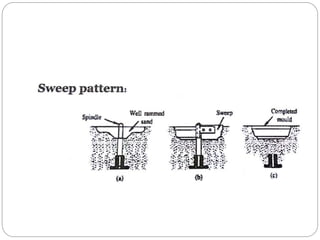
Sweep pattern
 It is generally used for preparing large
symmetrical castings.
 It is made on wooden board and its sweeps the
sand in casting shape all around the
circumference.
 Hence it saves lot of labour and time.
 It is used for production of large circular sections
and symmetrical shapes.
APPLICATIONS:
Symmetrical shapes such as wheels, rims, large
kettles of cast irons & bell shapes
Pattern with loose pieces
 Patterns consists of loose pieces for easy
withdrawal.
 These loose pieces form integral part of pattern
during molding.
 After mold is complete pattern is withdrawn
leaving this loose pieces.
APPLICATIONS:
 Pattern having projections or hanging parts.
 Rotor hub.
 Axel pin.
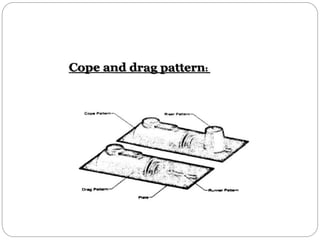
Cope and drag pattern
 In this pattern is made into two halves and both
are molded in different boxes.
 After completion of mold two boxes are
assembled to make a cavity.
 It is also known as two piece or split pattern.
APPLICATIONS:
 Flange pipe.
 Water Jacket of JCB head.
 Hose pipe coupling head.
Follow board pattern
 It is a wooden board used to support during
moulding.
 Acts like a base seat for pattern.
 Follow board are used for those patterns which
has odd shapes.
 It supports weak pattern and also acts like natural
parting line.
APPLICATION:
It is used for casting master patterns for many
appliacations.
Segmental pattern
 It is used for preparing circular castings.
 In this type it does not revolve continuously like
sweep pattern, instead prepares the mould by
parts.
 It completes one portion of the mold and then
moves to next position to make the next part of
the mold and so on till the mold is completed.
APPLICATIONS:
Used for circular work like rings, gears, wheels,
rims, pulleys etc.
THANK YOU

TYPES OF PATTERN AND ITS APPLICATION

  • 1.
    By- PRAVEEN KUMAR ROLLNO. - 67/11 MANUFACTURING ENGINEERING B.TECH (2011 – 2015) NIFFT - RANCHI Types of pattern and its application
  • 2.
    Contents  Introduction ofpattern  Use of pattern  Types of pattern
  • 3.
    Introduction of pattern Pattern is a mirror image or replica of the component that has to be manufactured by casting process.  It may be also defined as a model around which sand is packed to give rise to a cavity called mold cavity.  A pattern is required even if one object has to be cast.  The materials generally used for pattern are wood, metal or plastics.
  • 4.
    Use of pattern To form a cavity of proper shape and size in the moulding material so that required casting is obtained by molten metal.  Providing seating surface for the core that are used for making cavity i.e. core prints.  Indirectly checks the dimensions and measurements of the casting.  Reduces casting defects  Minimizes the cost of casting
  • 5.
    Types of pattern Solid or single piece pattern  Split pattern or two piece pattern  Multi piece pattern  Match plate pattern  Gated pattern  Skeleton pattern  Sweep pattern  Pattern with lose pieces  Cope and drag pattern  Follow board pattern  Segmental pattern
  • 6.
    Solid or singlepiece pattern  Simplest pattern  Made in one piece  Cheapest pattern APPLICATION:  Soil tamper  Stuffing box  Gland of steam engines
  • 8.
    Two piece orsplit pattern  Pattern is split into two piece  One part is in cope and other is in drag  Easy withdrawal of pattern APPLICATIONS:  Spindles  Steam valve bodies  AK-47 rifle stock
  • 10.
    Multi-piece pattern  Patternis split into more than two parts.  Facilitates an easy moulding and withdrawal of pattern.  Pattern may consists 3,4 or more numbers depending on designs APPLICATIONS:  Lap joint  Dowel joint  Mitre joint
  • 12.
    Match plate pattern Patterns are made in two pieces one piece mounted on one side and the other on other side of plate called match plate.  Plate may carry one or group of patterns mounted on match plate.  Along with pattern gates and runners are also attached.  Produces accurate castings at faster rates. APPLICATIONS: Generally used for small castings such as piston rings of I.C. engines and rotor hub.
  • 14.
    Gated pattern  Inthis the pattern are usually made of metals.  In this multi-cavity moulds are produced & the sections connecting different pattern serves as gate and runner. This facilitates filling the mold in better manner.  Can produce many castings at one time and hence saves time as well as cost. APPLICATIONS: Used for small castings such as corner bracket.
  • 16.
    Skeleton pattern  Patternis the Skeleton of desired shape, generally mounted on the metal base.  Skeleton is made from wooden strips and is filled with loam sand and rammed. Extra sand is removed by stickle.  Cores are required if necessary.  Applicable for large castings and is very economical as less material costs. APPLICATION: Large castings such as turbines, water pipes, L- bends etc.
  • 18.
    Sweep pattern  Itis generally used for preparing large symmetrical castings.  It is made on wooden board and its sweeps the sand in casting shape all around the circumference.  Hence it saves lot of labour and time.  It is used for production of large circular sections and symmetrical shapes. APPLICATIONS: Symmetrical shapes such as wheels, rims, large kettles of cast irons & bell shapes
  • 20.
    Pattern with loosepieces  Patterns consists of loose pieces for easy withdrawal.  These loose pieces form integral part of pattern during molding.  After mold is complete pattern is withdrawn leaving this loose pieces. APPLICATIONS:  Pattern having projections or hanging parts.  Rotor hub.  Axel pin.
  • 22.
    Cope and dragpattern  In this pattern is made into two halves and both are molded in different boxes.  After completion of mold two boxes are assembled to make a cavity.  It is also known as two piece or split pattern. APPLICATIONS:  Flange pipe.  Water Jacket of JCB head.  Hose pipe coupling head.
  • 24.
    Follow board pattern It is a wooden board used to support during moulding.  Acts like a base seat for pattern.  Follow board are used for those patterns which has odd shapes.  It supports weak pattern and also acts like natural parting line. APPLICATION: It is used for casting master patterns for many appliacations.
  • 26.
    Segmental pattern  Itis used for preparing circular castings.  In this type it does not revolve continuously like sweep pattern, instead prepares the mould by parts.  It completes one portion of the mold and then moves to next position to make the next part of the mold and so on till the mold is completed. APPLICATIONS: Used for circular work like rings, gears, wheels, rims, pulleys etc.
  • 28.