CASE PRESENTATAION
AND
DISCUSSION
馬偕紀念醫院
心臟內科
A2 祁栢慶
CASE 1
 51 y/o female
 suffered from retrosternal pain, palpitation, and
  dizziness for 1 hour and she visited 中興 hospital
  five months ago,
 PSVT was diagnosed (with HR 180/min) and
  corrected after adenosine injection. She then visited
  our CV clinic. Thyroid function tests were normal.
 Holter EKG: infrequent PVCs
 Heart echo: mild TR

 EP study on 101/2/24
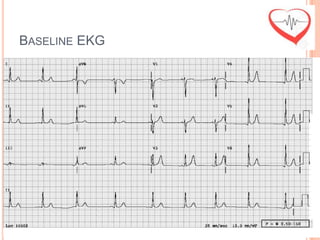
BASELINE EKG
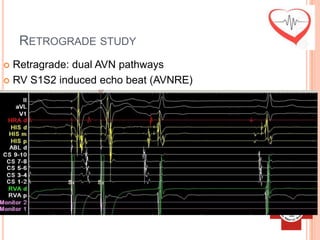
RETROGRADE STUDY
 Retragrade: dual AVN pathways
 RV S1S2 induced echo beat (AVNRE)
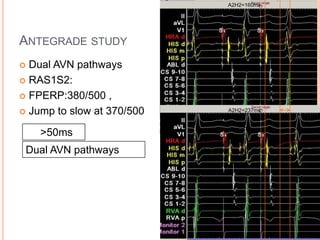
A2H2=160ms


ANTEGRADE STUDY
 Dual AVN pathways
 RAS1S2:

 FPERP:380/500 ,

 Jump to slow at 370/500   A2H2=237ms


    >50ms
 Dual AVN pathways
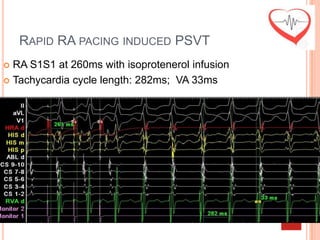
RAPID RA PACING INDUCED PSVT
 RA S1S1 at 260ms with isoprotenerol infusion
 Tachycardia cycle length: 282ms; VA 33ms
ENTRAINMENT STUDY
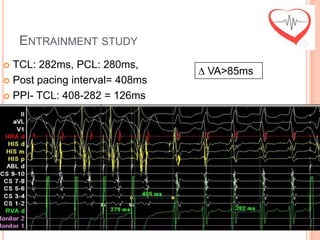
 TCL: 282ms, PCL: 280ms,
                                ∆ VA>85ms
 Post pacing interval= 408ms

 PPI- TCL: 408-282 = 126ms
ENTRAINMENT STUDY
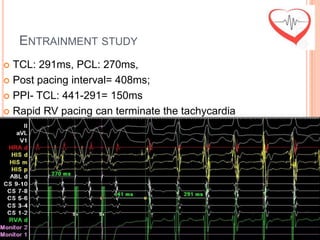
 TCL: 291ms, PCL: 270ms,
 Post pacing interval= 408ms;

 PPI- TCL: 441-291= 150ms

 Rapid RV pacing can terminate the tachycardia
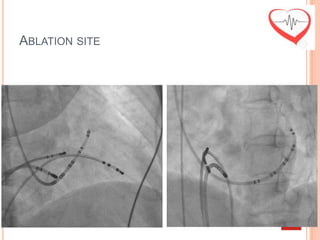
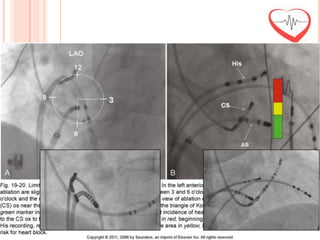
ABLATION SITE
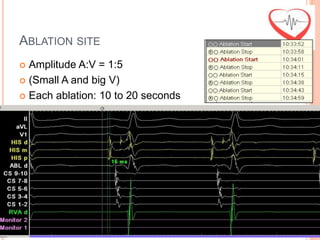
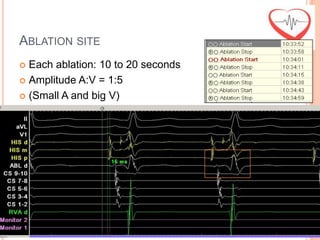
ABLATION SITE
 Amplitude A:V = 1:5
 (Small A and big V)

 Each ablation: 10 to 20 seconds
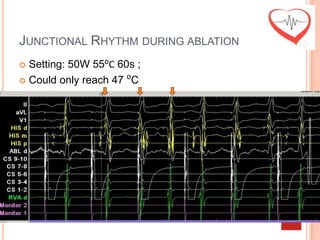
JUNCTIONAL RHYTHM DURING ABLATION
 Setting: 50W 55⁰C 60s ;
 Could only reach 47 ⁰C
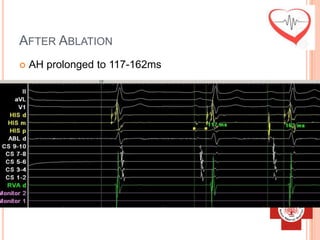
AFTER ABLATION
   AH prolonged to 117-162ms
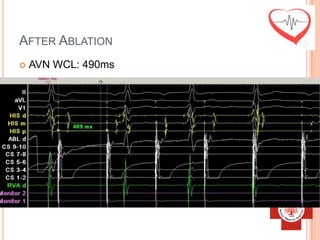
AFTER ABLATION
   AVN WCL: 490ms
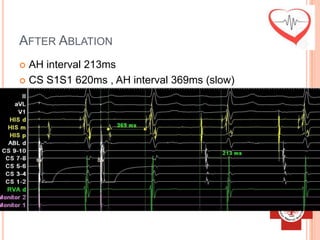
AFTER ABLATION
 AH interval 213ms
 CS S1S1 620ms , AH interval 369ms (slow)
POST ABLATION STUDY
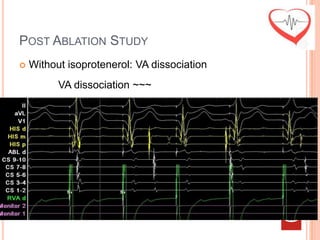
   Without isoprotenerol: VA dissociation
          VA dissociation ~~~
POST ABLATION STUDY
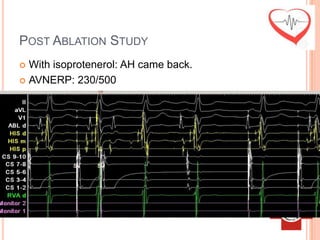
 With isoprotenerol: AH came back.
 AVNERP: 230/500
AFTER ABLATION
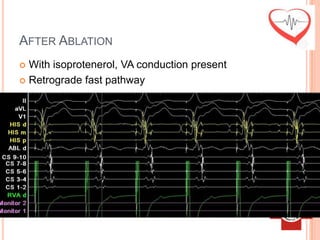
 With isoprotenerol, VA conduction present
 Retrograde fast pathway
AFTER ABLATION-
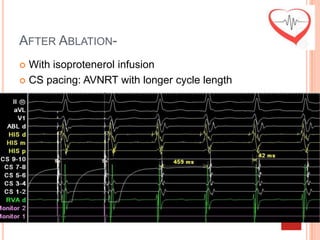
 With isoprotenerol infusion
 CS pacing: AVNRT with longer cycle length
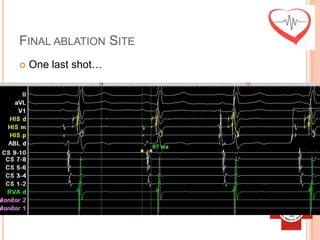
FINAL ABLATION SITE
   One last shot…
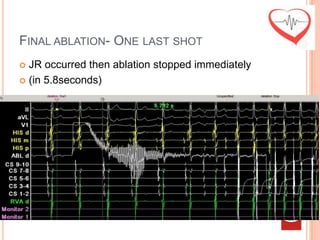
FINAL ABLATION- ONE LAST SHOT
 JR occurred then ablation stopped immediately
 (in 5.8seconds)
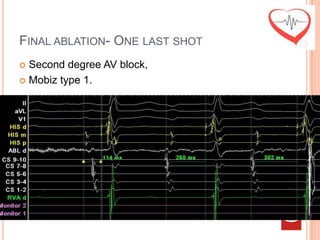
FINAL ABLATION- ONE LAST SHOT
 Second degree AV block,
 Mobiz type 1.
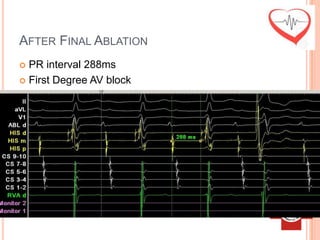
AFTER FINAL ABLATION
 PR interval 288ms
 First Degree AV block
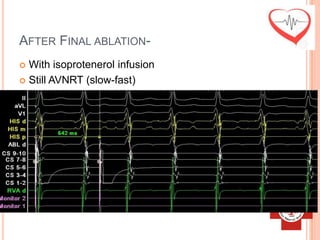
AFTER FINAL ABLATION-
 With isoprotenerol infusion
 Still AVNRT (slow-fast)
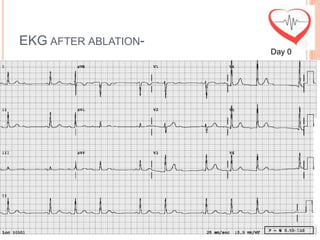
EKG AFTER ABLATION-
                      Day 0
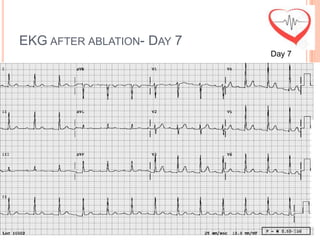
EKG AFTER ABLATION- DAY 7
                            Day 7
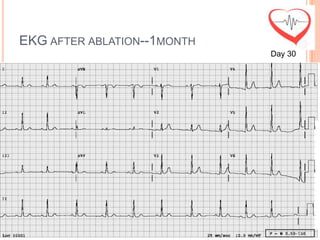
EKG AFTER ABLATION--1MONTH
                             Day 30
DISCUSSION
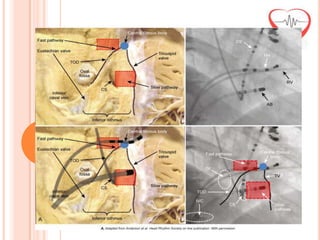
ABLATION SITE
 Each ablation: 10 to 20 seconds
 Amplitude A:V = 1:5

 (Small A and big V)
END POINTS FOR RADIOFREQUENCY
DELIVERY
   Tachycardia rendered noninducible with and without
    isoproterenol challenge
   Elimination or modification of slow pathway function
     Elimination of atrium–His bundle (AH) interval jumps
     Elimination of 1:1 antegrade conduction over the slow
      atrioventricular (AV) nodal pathway
     Retrograde ventricular-atrial block through the slow AV nodal
      pathway (fast-slow and slow-slow)
   AH interval jump with single echoes only (previously
    inducible)
   Fast pathway injury
   PR interval prolongation (persistent)
   Transient antegrade AV block after radiofrequency
    (caution warranted for further ablation)
PREVENTING ATRIOVENTRICULAR BLOCK
Method                                          Description                                  Comment


Ablation sites below triangle of Koch           Inferior to level of CS roof                 Standard practice

                                                Discontinue RF for loss of 1:1 retrograde
Monitor retrograde junctional conduction                                                     Standard practice
                                                conduction
                                                Discontinue RF for junctional rhythm <
Monitor for rapid junctional rhythm[87]                                                      Not prospectively tested
                                                350msec
                                                Difference timing between AEGM His and
Δ A-A timing His and ablation recordings[112]                                                Not prospectively tested
                                                AEGM ablation site > 20msec
                                                Identify site on septum producing shortest
Pace mapping triangle of Koch[113]                                                            Not prospectively tested
                                                stimulus to His time and avoid ablation there
                                                Pace atrium faster than junctional rate to
Overdrive atrial pacing                                                                      Not prospectively tested
                                                monitor antegrade conduction
                                                Start at 5W and increase power by 5W
Gradual power titration[114]                    every 5sec until junctional rhythm, then  Not prospectively tested
                                                increase power by 10W for total RF 120sec

Cryoablation                                    6 or 4mm tip
   Thank You Very Much

Case Presentataion-psvt

  • 1.
  • 2.
    CASE 1  51y/o female  suffered from retrosternal pain, palpitation, and dizziness for 1 hour and she visited 中興 hospital five months ago,  PSVT was diagnosed (with HR 180/min) and corrected after adenosine injection. She then visited our CV clinic. Thyroid function tests were normal.
  • 3.
     Holter EKG:infrequent PVCs  Heart echo: mild TR  EP study on 101/2/24
  • 4.
  • 5.
    RETROGRADE STUDY  Retragrade:dual AVN pathways  RV S1S2 induced echo beat (AVNRE)
  • 6.
    A2H2=160ms ANTEGRADE STUDY  DualAVN pathways  RAS1S2:  FPERP:380/500 ,  Jump to slow at 370/500 A2H2=237ms >50ms Dual AVN pathways
  • 7.
    RAPID RA PACINGINDUCED PSVT  RA S1S1 at 260ms with isoprotenerol infusion  Tachycardia cycle length: 282ms; VA 33ms
  • 8.
    ENTRAINMENT STUDY  TCL:282ms, PCL: 280ms, ∆ VA>85ms  Post pacing interval= 408ms  PPI- TCL: 408-282 = 126ms
  • 9.
    ENTRAINMENT STUDY  TCL:291ms, PCL: 270ms,  Post pacing interval= 408ms;  PPI- TCL: 441-291= 150ms  Rapid RV pacing can terminate the tachycardia
  • 10.
  • 11.
    ABLATION SITE  AmplitudeA:V = 1:5  (Small A and big V)  Each ablation: 10 to 20 seconds
  • 12.
    JUNCTIONAL RHYTHM DURINGABLATION  Setting: 50W 55⁰C 60s ;  Could only reach 47 ⁰C
  • 13.
    AFTER ABLATION  AH prolonged to 117-162ms
  • 14.
    AFTER ABLATION  AVN WCL: 490ms
  • 15.
    AFTER ABLATION  AHinterval 213ms  CS S1S1 620ms , AH interval 369ms (slow)
  • 16.
    POST ABLATION STUDY  Without isoprotenerol: VA dissociation VA dissociation ~~~
  • 17.
    POST ABLATION STUDY With isoprotenerol: AH came back.  AVNERP: 230/500
  • 18.
    AFTER ABLATION  Withisoprotenerol, VA conduction present  Retrograde fast pathway
  • 19.
    AFTER ABLATION-  Withisoprotenerol infusion  CS pacing: AVNRT with longer cycle length
  • 20.
    FINAL ABLATION SITE  One last shot…
  • 21.
    FINAL ABLATION- ONELAST SHOT  JR occurred then ablation stopped immediately  (in 5.8seconds)
  • 22.
    FINAL ABLATION- ONELAST SHOT  Second degree AV block,  Mobiz type 1.
  • 23.
    AFTER FINAL ABLATION PR interval 288ms  First Degree AV block
  • 24.
    AFTER FINAL ABLATION- With isoprotenerol infusion  Still AVNRT (slow-fast)
  • 25.
  • 26.
  • 27.
  • 28.
  • 30.
    ABLATION SITE  Eachablation: 10 to 20 seconds  Amplitude A:V = 1:5  (Small A and big V)
  • 31.
    END POINTS FORRADIOFREQUENCY DELIVERY  Tachycardia rendered noninducible with and without isoproterenol challenge  Elimination or modification of slow pathway function  Elimination of atrium–His bundle (AH) interval jumps  Elimination of 1:1 antegrade conduction over the slow atrioventricular (AV) nodal pathway  Retrograde ventricular-atrial block through the slow AV nodal pathway (fast-slow and slow-slow)  AH interval jump with single echoes only (previously inducible)  Fast pathway injury  PR interval prolongation (persistent)  Transient antegrade AV block after radiofrequency (caution warranted for further ablation)
  • 32.
    PREVENTING ATRIOVENTRICULAR BLOCK Method Description Comment Ablation sites below triangle of Koch Inferior to level of CS roof Standard practice Discontinue RF for loss of 1:1 retrograde Monitor retrograde junctional conduction Standard practice conduction Discontinue RF for junctional rhythm < Monitor for rapid junctional rhythm[87] Not prospectively tested 350msec Difference timing between AEGM His and Δ A-A timing His and ablation recordings[112] Not prospectively tested AEGM ablation site > 20msec Identify site on septum producing shortest Pace mapping triangle of Koch[113] Not prospectively tested stimulus to His time and avoid ablation there Pace atrium faster than junctional rate to Overdrive atrial pacing Not prospectively tested monitor antegrade conduction Start at 5W and increase power by 5W Gradual power titration[114] every 5sec until junctional rhythm, then Not prospectively tested increase power by 10W for total RF 120sec Cryoablation 6 or 4mm tip
  • 33.
    Thank You Very Much