Presented by : Amit Kumar(MB72)
Anil Mishra(MB06)
Animesh(MB69)
Anirudh Kumar(MB77)1
 Progress or general course of action of a person in

some profession.
 Specific jobs that a person performs, the kinds of

responsibilities and activities that comprise those jobs,
movements and transitions between jobs.

2
 A formal approach used by the firms to ensure that

people with proper qualifications and experience are
available when needed.
 Career development benefits both employees as well

as organizations.
 Organization needs to have career development

programme and integrate the function with HR
activities.

3
 Roles of two parties are crucial in in career

development: employer, employee.
 Employer’s Role-

1) Proactive
2) Encourage

3) Reward
4) Enlighten
4
Employee’s Role

1) Assessing one’s own KSA’s.
2) Seek out information about career options.

3) Make use of development opportunities provided in
organization
4)Establish goals and plans.

5) Accepts that career planning and developments are
one’s own responsibility
5
 Career Planning Workshops
 Career Counselling
 Mentoring
 Sabbaticals

 Personal Development plans
 Career workbooks

6
 Explain Integration of Individual and Organizational

Needs
 Describe Conditions leading to success
 Discuss Matching Jobs with Individual’s Desires
 Describe Methods used in C.D.

7
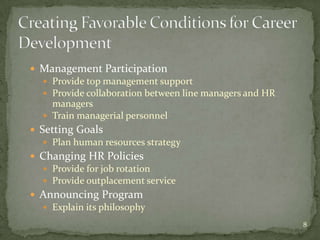
 Management Participation
 Provide top management support
 Provide collaboration between line managers and HR
managers
 Train managerial personnel
 Setting Goals
 Plan human resources strategy
 Changing HR Policies
 Provide for job rotation
 Provide outplacement service

 Announcing Program
 Explain its philosophy
8
 Career Planning Workbooks
 Stimulate thinking about careers, strengths/limitations,
development needs
 Career Planning Workshops
 Discuss and compare attitudes, concerns, plans

 Career Counseling
 Discuss job, career interests, goals
 Web-based Career Development
 Products, services, and confidentiality

9
 Performance
 Exposure
 Networking
 Leveraging
 Loyalty to career

 Mentors
 Key subordinates
 Expandability

10
 Self assessment
 Individual counselling
 Information services
 Employee assessment programs
 Employee development programs

11
Servicing the Career Development Needs
 Career Planning Workshops
 Career Planning Workbooks
 Career Counseling
 Development Testing for Employees
 Extensive Web-Based Products/Services

12
 Transfers

 Promotions and Demotions/Termination
 Relocation Services
 Outplacement Services
 Development Opportunity Announcements

13
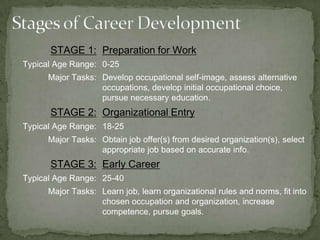
STAGE 1: Preparation for Work
Typical Age Range: 0-25
Major Tasks: Develop occupational self-image, assess alternative
occupations, develop initial occupational choice,
pursue necessary education.

STAGE 2: Organizational Entry
Typical Age Range: 18-25
Major Tasks: Obtain job offer(s) from desired organization(s), select
appropriate job based on accurate info.

STAGE 3: Early Career
Typical Age Range: 25-40
Major Tasks: Learn job, learn organizational rules and norms, fit into
chosen occupation and organization, increase
competence, pursue goals.
STAGE 4: Mid-career
Typical Age Range: 40-55
Major Tasks: Reappraise early career and early adulthood, reaffirm
or modify goals, make choices appropriate to middle
adult years, remain productive in work.

STAGE 5: Late Career
Typical Age Range: 55-retirement
Major Tasks: Remain productive in work, maintain self-esteem,
prepare for effective retirement.
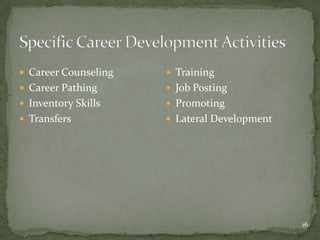
 Career Counseling

 Training

 Career Pathing

 Job Posting

 Inventory Skills

 Promoting

 Transfers

 Lateral Development

16
17

Career development ppt

  • 1.
    Presented by :Amit Kumar(MB72) Anil Mishra(MB06) Animesh(MB69) Anirudh Kumar(MB77)1
  • 2.
     Progress orgeneral course of action of a person in some profession.  Specific jobs that a person performs, the kinds of responsibilities and activities that comprise those jobs, movements and transitions between jobs. 2
  • 3.
     A formalapproach used by the firms to ensure that people with proper qualifications and experience are available when needed.  Career development benefits both employees as well as organizations.  Organization needs to have career development programme and integrate the function with HR activities. 3
  • 4.
     Roles oftwo parties are crucial in in career development: employer, employee.  Employer’s Role- 1) Proactive 2) Encourage 3) Reward 4) Enlighten 4
  • 5.
    Employee’s Role 1) Assessingone’s own KSA’s. 2) Seek out information about career options. 3) Make use of development opportunities provided in organization 4)Establish goals and plans. 5) Accepts that career planning and developments are one’s own responsibility 5
  • 6.
     Career PlanningWorkshops  Career Counselling  Mentoring  Sabbaticals  Personal Development plans  Career workbooks 6
  • 7.
     Explain Integrationof Individual and Organizational Needs  Describe Conditions leading to success  Discuss Matching Jobs with Individual’s Desires  Describe Methods used in C.D. 7
  • 8.
     Management Participation Provide top management support  Provide collaboration between line managers and HR managers  Train managerial personnel  Setting Goals  Plan human resources strategy  Changing HR Policies  Provide for job rotation  Provide outplacement service  Announcing Program  Explain its philosophy 8
  • 9.
     Career PlanningWorkbooks  Stimulate thinking about careers, strengths/limitations, development needs  Career Planning Workshops  Discuss and compare attitudes, concerns, plans  Career Counseling  Discuss job, career interests, goals  Web-based Career Development  Products, services, and confidentiality 9
  • 10.
     Performance  Exposure Networking  Leveraging  Loyalty to career  Mentors  Key subordinates  Expandability 10
  • 11.
     Self assessment Individual counselling  Information services  Employee assessment programs  Employee development programs 11
  • 12.
    Servicing the CareerDevelopment Needs  Career Planning Workshops  Career Planning Workbooks  Career Counseling  Development Testing for Employees  Extensive Web-Based Products/Services 12
  • 13.
     Transfers  Promotionsand Demotions/Termination  Relocation Services  Outplacement Services  Development Opportunity Announcements 13
  • 14.
    STAGE 1: Preparationfor Work Typical Age Range: 0-25 Major Tasks: Develop occupational self-image, assess alternative occupations, develop initial occupational choice, pursue necessary education. STAGE 2: Organizational Entry Typical Age Range: 18-25 Major Tasks: Obtain job offer(s) from desired organization(s), select appropriate job based on accurate info. STAGE 3: Early Career Typical Age Range: 25-40 Major Tasks: Learn job, learn organizational rules and norms, fit into chosen occupation and organization, increase competence, pursue goals.
  • 15.
    STAGE 4: Mid-career TypicalAge Range: 40-55 Major Tasks: Reappraise early career and early adulthood, reaffirm or modify goals, make choices appropriate to middle adult years, remain productive in work. STAGE 5: Late Career Typical Age Range: 55-retirement Major Tasks: Remain productive in work, maintain self-esteem, prepare for effective retirement.
  • 16.
     Career Counseling Training  Career Pathing  Job Posting  Inventory Skills  Promoting  Transfers  Lateral Development 16
  • 17.

Editor's Notes

  • #4 2.as properly developed employees are better equipped to add value to themselves and to the company.3.Integrating career development with other HR programs creates synergies in which all aspects of HR reinforce one another.