Welcome to 
Supervisor 101 
Career Planning and Development
Course Expectations 
Share your: 
• Name 
• Job title or office 
• Length of time in position 
• Learning goals or expectations for the 
course 
• First job 
Career Planning and 
Development 2
Course Objectives 
 Recognize the benefits of developing talent 
 Identify common steps in career planning and 
development 
 Assist employees in developing career goals 
and individual development plans (IDPs) 
 Prepare for and conduct career development 
discussions 
 Plan for career development in your 
organization 
Career Planning and 
Development 3
Course Roadmap 
 What is career planning and 
development? 
 What role do I play? 
 What is the role of the employee? 
 What are the benefits? 
 How can I overcome barriers? 
 How will I implement the process? 
Career Planning and 
Development 4
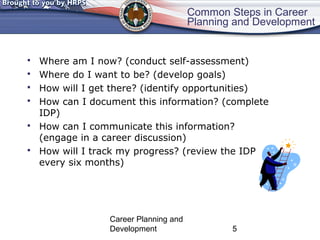
Common Steps in Career 
Planning and Development 
 Where am I now? (conduct self-assessment) 
 Where do I want to be? (develop goals) 
 How will I get there? (identify opportunities) 
 How can I document this information? (complete 
Career Planning and 
Development 5 
IDP) 
 How can I communicate this information? 
(engage in a career discussion) 
 How will I track my progress? (review the IDP 
every six months)
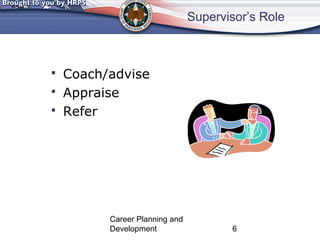
Supervisor’s Role 
 Coach/advise 
 Appraise 
 Refer 
Career Planning and 
Development 6
Employee’s Role 
 Be accountable for career planning 
and development efforts 
 Assess one’s own knowledge, skills, 
interests, and abilities 
 Identify opportunities 
Career Planning and 
Development 7
Benefits of Career 
Development and Planning 
For the organization: 
 Develop and retain qualified employees 
 Identify candidates for succession planning 
 Accomplish organizational objectives through 
improved employee performance 
For the supervisor: 
 Leverage staff talent 
 Retain talented and ambitious people 
 Focus on strategic issues 
 Improve morale, job satisfaction, and work 
performance 
Career Planning and 
Development 8
Benefits of Career 
Development and Planning 
(continued) 
For the employee: 
 Increases self-confidence 
 Realizes his or her potential and feel valued 
 Gains ability to evaluate needs 
 Develops means to build and shape career 
 Adopts a systematic approach to meet 
career goals 
 Identifies career development resources 
Career Planning and 
Development 9
Exercise: Overcoming 
Barriers 
 List three possible barriers to 
implementing the career 
development process 
 List ideas for preventing or 
overcoming these barriers 
 Present your ideas to the class 
Career Planning and 
Development 10
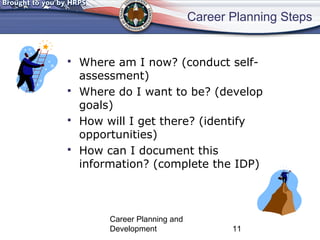
Career Planning Steps 
 Where am I now? (conduct self-assessment) 
 Where do I want to be? (develop 
goals) 
 How will I get there? (identify 
opportunities) 
 How can I document this 
information? (complete the IDP) 
Career Planning and 
Development 11
Step 1: Conduct Self- 
Assessment 
Evaluate your current skills, 
knowledge, interests, and 
abilities 
Career Planning and 
Development 12
Step 2: Develop Goals 
 Short-term and long-term 
 SMART goals 
• Specific 
• Measurable 
• Achievable 
• Relevant 
• Time-bound 
Career Planning and 
Development 13
Step 3: Identify 
Opportunities 
Development opportunities include: 
 Mentoring 
 Taking on temporary projects or 
assignments 
 Participating in self-study or 
independent reading 
 Attending conferences 
 Joining professional organizations 
Career Planning and 
Development 14
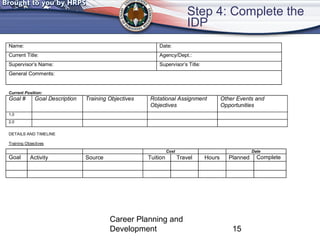
Step 4: Complete the 
IDP 
Name: Date: 
Current Title: Agency/Dept.: 
Supervisor’s Name: Supervisor’s Title: 
General Comments: 
Current Position: 
Goal # Goal Description Training Objectives Rotational Assignment 
Objectives 
Other Events and 
Opportunities 
Career Planning and 
Development 15 
1.0 
2.0 
DETAILS AND TIMELINE 
Training Objectives 
Cost Date 
Goal 
# 
Activity Source Tuition Travel Hours Planned Complete 
d
Exercise: Developing 
an IDP 
 Review the IDP form in your 
participant guide 
 Fill out the form for yourself 
Career Planning and 
Development 16
Career Development 
Discussions 
Purpose: 
 Clarify the career planning and 
development process 
 Assist employees with the process as 
needed 
 Review the IDP 
 Modify employee goals and objectives 
as needed 
Career Planning and 
Development 17
Career Development 
Discussions (continued) 
 Before the discussion: 
• Review the employee’s records 
• Identify strengths and developmental needs 
• Identify developmental opportunities 
• Review the Career Development Discussion 
Questions and Dos and Don’ts job aids 
 During the discussion: 
• Establish trust 
• Ask questions that encourage discussion 
• Listen 
• Summarize, clarify, and identify follow-up 
activities 
Career Planning and 
Development 18
Discussion Questions 
 What skills are not used? 
 How can they be integrated into your 
current job? 
 How do your goals fit into OPM’s goals? 
 How can I help to support your goals? 
 What would you like to be doing in the 
future? 
 Do these ambitions require further 
training? 
Career Planning and 
Development 19
Discussion Questions 
(continued) 
 How does your current job relate to 
career goals? 
 What do you enjoy most about your 
current assignment? 
 What do you find most challenging? 
 Is there a development opportunity 
available to help overcome this 
challenge? 
Career Planning and 
Development 20
Career Discussion 
Do: 
 Review information prior to meeting 
 Confirm time and place of meeting 
 Greet the employee 
 Practice good listening skills 
 Allow time for the employee to pause and 
reflect 
 Ask open-ended questions 
 Schedule a follow-up meeting 
Career Planning and 
Development 21
Career Discussion 
(continued) 
Don’t 
 Search for information during the meeting 
 Call the meeting on short notice 
 End the meeting abruptly 
 Leave the employee wondering 
 Wait until the meeting starts to decide what 
should be accomplished 
 Rush through the meeting 
 Talk about yourself 
 Dominate the discussion 
 Ask “yes” or “no” questions 
 End the meeting without scheduling a follow-up 
Career Planning and 
Development 22
Exercise: IDP Review 
 Observe the role-play 
 Be prepared to answer the questions 
in the workbook 
 Give additional feedback 
Career Planning and 
Development 23
IDP Review 
When reviewing IDPs, consider the 
following: 
• Is the budget sufficient? 
• Are resources available? 
• Are goals tied to organizational objectives? 
Career Planning and 
Development 24
Exercise: Career 
Discussion 
 Work in groups of three 
 Alternate roles of supervisor, 
employee, and observer 
 Choose one scenario per person 
 Role-play a career discussion based 
on the scenario 
Career Planning and 
Development 25
Planning for Career 
Development 
How will you 
budget for career 
planning and 
development? 
How will you 
budget for career 
planning and 
development? 
How will you 
manage other 
resources, 
including time and 
new opportunities, 
How will you 
manage other 
resources, 
including time and 
new opportunities, 
to support 
employee 
development? 
to support 
employee 
development? 
Career Planning and 
Development 26
Course Summary 
Can you: 
 Discuss the benefits of career planning and 
development? 
 Identify common steps in career planning 
and development? 
 Assist employees in developing career goals 
and IDPs? 
 Prepare for and conduct career 
development discussions with employees? 
 Plan for career development in your 
organization? 
Career Planning and 
Development 27

Career Planning and Development class

  • 1.
    Welcome to Supervisor101 Career Planning and Development
  • 2.
    Course Expectations Shareyour: • Name • Job title or office • Length of time in position • Learning goals or expectations for the course • First job Career Planning and Development 2
  • 3.
    Course Objectives Recognize the benefits of developing talent  Identify common steps in career planning and development  Assist employees in developing career goals and individual development plans (IDPs)  Prepare for and conduct career development discussions  Plan for career development in your organization Career Planning and Development 3
  • 4.
    Course Roadmap What is career planning and development?  What role do I play?  What is the role of the employee?  What are the benefits?  How can I overcome barriers?  How will I implement the process? Career Planning and Development 4
  • 5.
    Common Steps inCareer Planning and Development  Where am I now? (conduct self-assessment)  Where do I want to be? (develop goals)  How will I get there? (identify opportunities)  How can I document this information? (complete Career Planning and Development 5 IDP)  How can I communicate this information? (engage in a career discussion)  How will I track my progress? (review the IDP every six months)
  • 6.
    Supervisor’s Role Coach/advise  Appraise  Refer Career Planning and Development 6
  • 7.
    Employee’s Role Be accountable for career planning and development efforts  Assess one’s own knowledge, skills, interests, and abilities  Identify opportunities Career Planning and Development 7
  • 8.
    Benefits of Career Development and Planning For the organization:  Develop and retain qualified employees  Identify candidates for succession planning  Accomplish organizational objectives through improved employee performance For the supervisor:  Leverage staff talent  Retain talented and ambitious people  Focus on strategic issues  Improve morale, job satisfaction, and work performance Career Planning and Development 8
  • 9.
    Benefits of Career Development and Planning (continued) For the employee:  Increases self-confidence  Realizes his or her potential and feel valued  Gains ability to evaluate needs  Develops means to build and shape career  Adopts a systematic approach to meet career goals  Identifies career development resources Career Planning and Development 9
  • 10.
    Exercise: Overcoming Barriers  List three possible barriers to implementing the career development process  List ideas for preventing or overcoming these barriers  Present your ideas to the class Career Planning and Development 10
  • 11.
    Career Planning Steps  Where am I now? (conduct self-assessment)  Where do I want to be? (develop goals)  How will I get there? (identify opportunities)  How can I document this information? (complete the IDP) Career Planning and Development 11
  • 12.
    Step 1: ConductSelf- Assessment Evaluate your current skills, knowledge, interests, and abilities Career Planning and Development 12
  • 13.
    Step 2: DevelopGoals  Short-term and long-term  SMART goals • Specific • Measurable • Achievable • Relevant • Time-bound Career Planning and Development 13
  • 14.
    Step 3: Identify Opportunities Development opportunities include:  Mentoring  Taking on temporary projects or assignments  Participating in self-study or independent reading  Attending conferences  Joining professional organizations Career Planning and Development 14
  • 15.
    Step 4: Completethe IDP Name: Date: Current Title: Agency/Dept.: Supervisor’s Name: Supervisor’s Title: General Comments: Current Position: Goal # Goal Description Training Objectives Rotational Assignment Objectives Other Events and Opportunities Career Planning and Development 15 1.0 2.0 DETAILS AND TIMELINE Training Objectives Cost Date Goal # Activity Source Tuition Travel Hours Planned Complete d
  • 16.
    Exercise: Developing anIDP  Review the IDP form in your participant guide  Fill out the form for yourself Career Planning and Development 16
  • 17.
    Career Development Discussions Purpose:  Clarify the career planning and development process  Assist employees with the process as needed  Review the IDP  Modify employee goals and objectives as needed Career Planning and Development 17
  • 18.
    Career Development Discussions(continued)  Before the discussion: • Review the employee’s records • Identify strengths and developmental needs • Identify developmental opportunities • Review the Career Development Discussion Questions and Dos and Don’ts job aids  During the discussion: • Establish trust • Ask questions that encourage discussion • Listen • Summarize, clarify, and identify follow-up activities Career Planning and Development 18
  • 19.
    Discussion Questions What skills are not used?  How can they be integrated into your current job?  How do your goals fit into OPM’s goals?  How can I help to support your goals?  What would you like to be doing in the future?  Do these ambitions require further training? Career Planning and Development 19
  • 20.
    Discussion Questions (continued)  How does your current job relate to career goals?  What do you enjoy most about your current assignment?  What do you find most challenging?  Is there a development opportunity available to help overcome this challenge? Career Planning and Development 20
  • 21.
    Career Discussion Do:  Review information prior to meeting  Confirm time and place of meeting  Greet the employee  Practice good listening skills  Allow time for the employee to pause and reflect  Ask open-ended questions  Schedule a follow-up meeting Career Planning and Development 21
  • 22.
    Career Discussion (continued) Don’t  Search for information during the meeting  Call the meeting on short notice  End the meeting abruptly  Leave the employee wondering  Wait until the meeting starts to decide what should be accomplished  Rush through the meeting  Talk about yourself  Dominate the discussion  Ask “yes” or “no” questions  End the meeting without scheduling a follow-up Career Planning and Development 22
  • 23.
    Exercise: IDP Review  Observe the role-play  Be prepared to answer the questions in the workbook  Give additional feedback Career Planning and Development 23
  • 24.
    IDP Review Whenreviewing IDPs, consider the following: • Is the budget sufficient? • Are resources available? • Are goals tied to organizational objectives? Career Planning and Development 24
  • 25.
    Exercise: Career Discussion  Work in groups of three  Alternate roles of supervisor, employee, and observer  Choose one scenario per person  Role-play a career discussion based on the scenario Career Planning and Development 25
  • 26.
    Planning for Career Development How will you budget for career planning and development? How will you budget for career planning and development? How will you manage other resources, including time and new opportunities, How will you manage other resources, including time and new opportunities, to support employee development? to support employee development? Career Planning and Development 26
  • 27.
    Course Summary Canyou:  Discuss the benefits of career planning and development?  Identify common steps in career planning and development?  Assist employees in developing career goals and IDPs?  Prepare for and conduct career development discussions with employees?  Plan for career development in your organization? Career Planning and Development 27