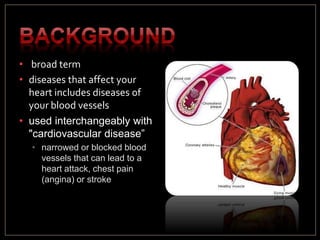
• broad term
• diseases that affect your
heart includes diseases of
your blood vessels
• used interchangeably with
"cardiovascular disease”
• narrowed or blocked blood
vessels that can lead to a
heart attack, chest pain
(angina) or stroke
• Chest pain (angina)
• Shortness of breath
• Pain, numbness,
weakness or coldness
in your legs or arms, if
the blood vessels in
those parts of your
body are narrowed
Cardio vascular
disease
• caused by narrowed,
blocked or stiffened
blood vessels
Heart
arrhythmias (abnormal
heartbeats)
• fluttering in your chest
• racing heartbeat
(tachycardia)
• Slow heartbeat
(bradycardia)
• Chest pain
• Shortness of breath
• Lightheadedness
• Dizziness
• Fainting (syncope) or
near fainting
• Breathlessness with
exertion or even at rest
• Swelling of the legs, ankles
and feet
• Bloating (distention) of the
abdomen with fluid
• Fatigue
• Irregular heartbeats that
feel rapid, pounding or
fluttering
• Dizziness, lightheadedness
and fainting
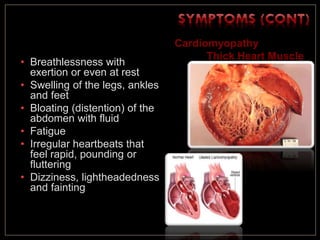
Cardiomyopathy
Thick Heart Muscle
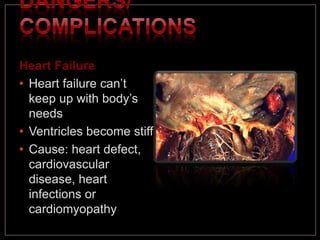
Heart Failure
• Heart failure can’t
keep up with body’s
needs
• Ventricles become stiff
• Cause: heart defect,
cardiovascular
disease, heart
infections or
cardiomyopathy
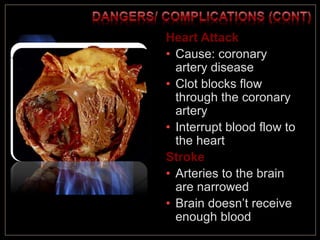
Heart Attack
• Cause: coronary
artery disease
• Clot blocks flow
through the coronary
artery
• Interrupt blood flow to
the heart
Stroke
• Arteries to the brain
are narrowed
• Brain doesn’t receive
enough blood
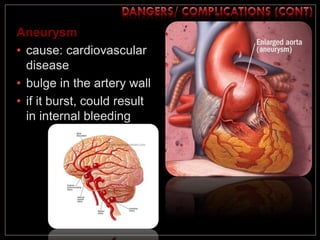
Aneurysm
• cause: cardiovascular
disease
• bulge in the artery wall
• if it burst, could result
in internal bleeding
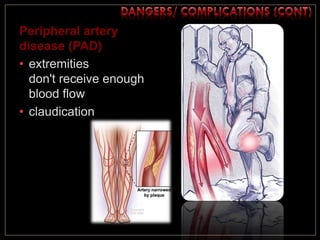
Peripheral artery
disease (PAD)
• extremities
don't receive enough
blood flow
• claudication
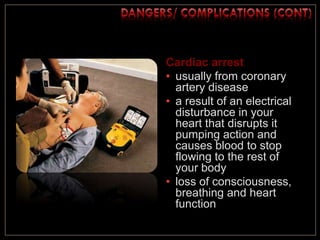
Cardiac arrest
• usually from coronary
artery disease
• a result of an electrical
disturbance in your
heart that disrupts it
pumping action and
causes blood to stop
flowing to the rest of
your body
• loss of consciousness,
breathing and heart
function
• Stay healthy
• Diet, healthy foods,
exercise
• See doctor
• Write down any
symptoms you’ve
experienced
• Note key personal
information
• Family history
“Ubiquinol Coenzyme.” COQ10 benefits for Heart Health. 20 Feb.2012
<http://coq10wellness.com/coq10-benefits/>
“CDC: GIS Map Gallery.” Centers for Disease Control and Prevention. 20
Feb. 2012 <http://www.cdc.gov/gis/mg_heartdisease_stroke.htm>
“Archive for the 'Heart disease' category.” Saravana Kidney Stone Care. 20
Feb. 2012 <http://blog.saravanakidneystonecare.com/category/heart-
disease/
>
“Heart Disparities Among Seniors.” Missouri Senior Report. 20 Feb. 2012
<http://oseda.missouri.edu/senior_report/health_disparities_2009.shtml>
“Heart Disease.” MayoClinic. 20 Feb.2012
<http://www.mayoclinic.com/health/heart-disease/DS01120>

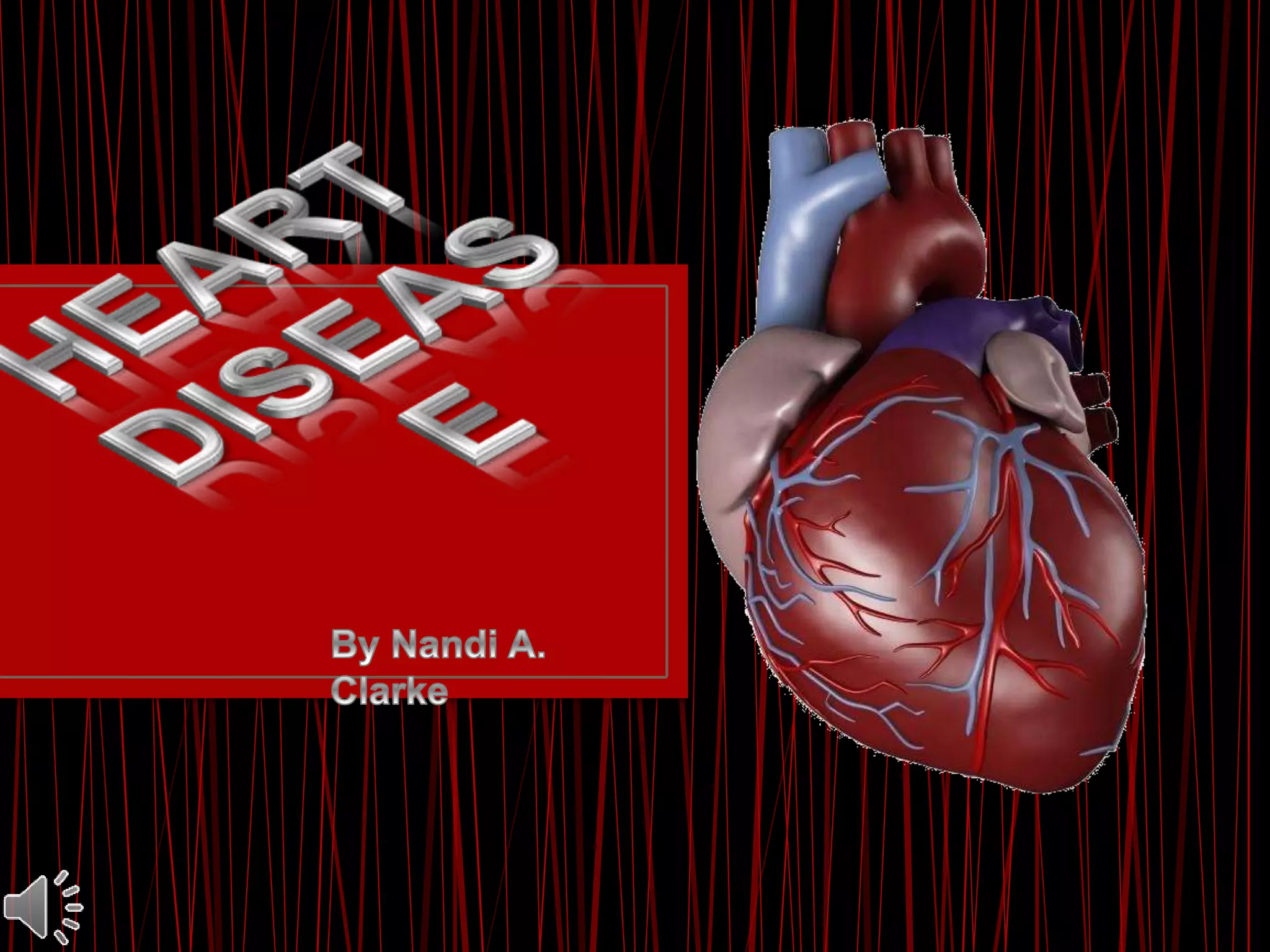
HEART DISEASE

  • 2.
    • broad term •diseases that affect your heart includes diseases of your blood vessels • used interchangeably with "cardiovascular disease” • narrowed or blocked blood vessels that can lead to a heart attack, chest pain (angina) or stroke
  • 3.
    • Chest pain(angina) • Shortness of breath • Pain, numbness, weakness or coldness in your legs or arms, if the blood vessels in those parts of your body are narrowed Cardio vascular disease • caused by narrowed, blocked or stiffened blood vessels
  • 4.
    Heart arrhythmias (abnormal heartbeats) • flutteringin your chest • racing heartbeat (tachycardia) • Slow heartbeat (bradycardia) • Chest pain • Shortness of breath • Lightheadedness • Dizziness • Fainting (syncope) or near fainting
  • 5.
    • Breathlessness with exertionor even at rest • Swelling of the legs, ankles and feet • Bloating (distention) of the abdomen with fluid • Fatigue • Irregular heartbeats that feel rapid, pounding or fluttering • Dizziness, lightheadedness and fainting Cardiomyopathy Thick Heart Muscle
  • 6.
    Heart Failure • Heartfailure can’t keep up with body’s needs • Ventricles become stiff • Cause: heart defect, cardiovascular disease, heart infections or cardiomyopathy
  • 7.
    Heart Attack • Cause:coronary artery disease • Clot blocks flow through the coronary artery • Interrupt blood flow to the heart Stroke • Arteries to the brain are narrowed • Brain doesn’t receive enough blood
  • 8.
    Aneurysm • cause: cardiovascular disease •bulge in the artery wall • if it burst, could result in internal bleeding
  • 9.
    Peripheral artery disease (PAD) •extremities don't receive enough blood flow • claudication
  • 10.
    Cardiac arrest • usuallyfrom coronary artery disease • a result of an electrical disturbance in your heart that disrupts it pumping action and causes blood to stop flowing to the rest of your body • loss of consciousness, breathing and heart function
  • 12.
    • Stay healthy •Diet, healthy foods, exercise • See doctor • Write down any symptoms you’ve experienced • Note key personal information • Family history
  • 13.
    “Ubiquinol Coenzyme.” COQ10benefits for Heart Health. 20 Feb.2012 <http://coq10wellness.com/coq10-benefits/> “CDC: GIS Map Gallery.” Centers for Disease Control and Prevention. 20 Feb. 2012 <http://www.cdc.gov/gis/mg_heartdisease_stroke.htm> “Archive for the 'Heart disease' category.” Saravana Kidney Stone Care. 20 Feb. 2012 <http://blog.saravanakidneystonecare.com/category/heart- disease/ > “Heart Disparities Among Seniors.” Missouri Senior Report. 20 Feb. 2012 <http://oseda.missouri.edu/senior_report/health_disparities_2009.shtml> “Heart Disease.” MayoClinic. 20 Feb.2012 <http://www.mayoclinic.com/health/heart-disease/DS01120>