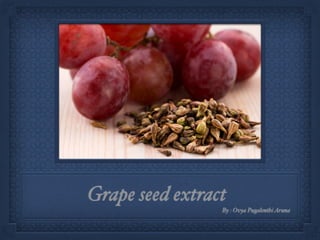
Grape seed extract
By : Ovya PugalenthiAruna
Structure
The structure of grape berry is divided into 3
divisions : 1. Tissue type ; skin
2. Flesh
3. Seeds
Seeds : composed of ;
1. outer seed coat =contain high concentration of tannins
and also phenols
2. Endosperm = nourish the embryo during early growth
3. Embryo
* all seeds produce growth regulators that influence in the
size of the fruit.
GRAPE SEED EXTRACTS
Grape seed extract is an industrial derivative of whole grape seeds.
The extract contains proanthocyanidins.
Grape seed extract quality is measured by the content of procyanidins which are formed
from proanthocyanidins.
Grape seed extract quality contains 95% procyanidins, but potency varies among
products.
Grape seed extract quality contains 95% procyanidins, but potency varies among
products.
Eating foods or beverages high in procyanidin results in the sensation of the mouth
puckering and dehydration
PROANTHOCYANIDIN
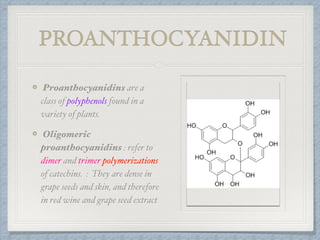
Proanthocyanidins are a
class of polyphenols found in a
variety of plants.
Oligomeric
proanthocyanidins : refer to
dimer and trimer polymerizations
of catechins. : They are dense in
grape seeds and skin, and therefore
in red wine and grape seed extract
EXTRACTION METHODS
The classic method incorporates extraction with organic
solvents such as acetone, acetonitrile, ethyl acetate, and
methanol.
Using hot water = not as effective in maximising in
extract production in both quantity and efficiency.
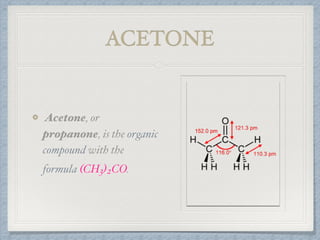
ACETONE
Acetone, or
propanone, is the organic
compound with the
formula (CH3)2CO.
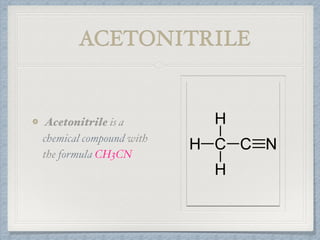
ACETONITRILE
Acetonitrile is a
chemical compound with
the formula CH3CN
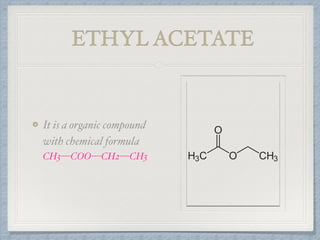
ETHYL ACETATE
It is a organic compound
with chemical formula
CH3—COO—CH2—CH3
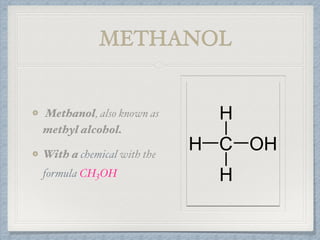
METHANOL
Methanol, also known as
methyl alcohol.
With a chemical with the
formula CH3OH
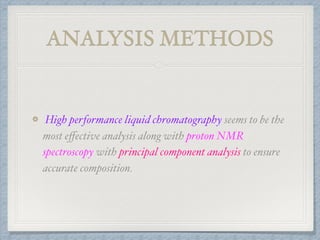
ANALYSIS METHODS
High performance liquid chromatography seems to be the
most effective analysis along with proton NMR
spectroscopy with principal component analysis to ensure
accurate composition.
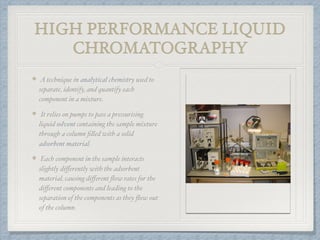
HIGH PERFORMANCE LIQUID
CHROMATOGRAPHY
A technique in analytical chemistry used to
separate, identify, and quantify each
component in a mixture.
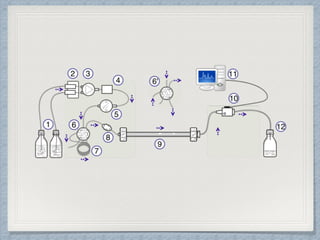
It relies on pumps to pass a pressurising
liquid solvent containing the sample mixture
through a column filled with a solid
adsorbent material.
Each component in the sample interacts
slightly differently with the adsorbent
material, causing different flow rates for the
different components and leading to the
separation of the components as they flow out
of the column.
PROTON NUCLEAR
MAGNETIC RESONANCE
The application of nuclear magnetic resonance in NMR
spectroscopy with respect to hydrogen-1 nuclei within the
molecules of a substance, in order to determine the structure
of its molecules.
PRINCIPAL COMPONENT
ANALYSIS
A statistical procedure that uses an orthogonal transformation to convert a set of
observations of possibly correlated variables (entities each of which takes on
various numerical values) into a set of values of linearly uncorrelated variables
called principal components.
This transformation is defined in such a way that the first principal component
has the largest possible variance, and each succeeding component in turn has the
highest variance possible under the constraint that it is orthogonal to the
preceding components.
The resulting vectors are an uncorrelated orthogonal basis set. PCA is sensitive to
the relative scaling of the original variables.
BENEFITS OF GRAPE-SEED OIL
Enhances wound healing and appearance
May reduce cancer risk
Can inhibit infectious growth
Improve kidney function
Can reduce blood pressure and improve blood flow
Improve collagen levels and bone strength
SIDE EFFECTS
Bleeding
Hemorrhagic Stroke
Allergic Reactions
Unsuitable For PregnantAnd Nursing Women
Other Minor Side Effects : itchy scalp, dizziness, and
nausea
RESEARCH
A meta-analysis of 16 randomised controlled trials
concluded that grape seed extract, in a dose of under 800
milligrams per day over at least 8 weeks, significantly
lowered systolic and diastolic blood pressure.
ANTIOXIDENT
Antioxidants are substances that can prevent or slow
damage to cells caused by free radicals, unstable molecules
that the body produces as a reaction to environmental and
other pressures.
Examples of antioxidants that come from outside the
body include: VitaminA, Vitamin C, Vitamin E,
Beta- carotene, Manganese, Selenium, Lycopene,
Comparison ofAntioxidantActivity of Grape Seed Extract
and Fruits Containing High β-Carotene, Vitamin C, and a
Antioxidant activity of a potent antioxidant, grape seed extract, and fruits
containing high β-carotene, vitamin C, and vitamin E was measured and
compared by 2,2-diphengl-1-picrylhydrazyl radical and ferric reducing
antioxidant power assay.
Grape seed proanthocyanidins extract is a significantly more potent
scavenger of oxygen free radicals as compared to vitamin C and vitamin E
succinate.
The results showed that antioxidant activity of a 20-mg capsule of grape seed
extract was approximately 10 to 20 times greater than 1 g of tomato, banana.
MATERIALS AND METHODS
The grape seed extract product (Vitis vinifera) was purchased from the local
pharmacy store.
Each capsule contains 20 mg of grape seed extract.
The content was dissolved in distilled water and the volume adjusted to 25 mL
(800 μg/mL). F
ruits included in this study were purchased from local markets. There were tomato
(Solanum lycopersicum var. cerasiforme), ripe banana (MusaAA group).
These fruits were reported to contain a high level of β-carotene, vitamin C, and
vitamin E according to the study of the Bureau of Nutrition, Department of
Health, Ministry of Public Health.
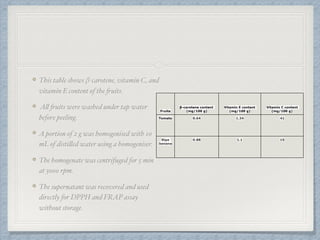
This table shows β-carotene, vitamin C, and
vitamin E content of the fruits.
All fruits were washed under tap water
before peeling.
A portion of 2 g was homogenised with 10
mL of distilled water using a homogeniser.
The homogenate was centrifuged for 5 min
at 3000 rpm.
The supernatant was recovered and used
directly for DPPH and FRAP assay
without storage.
Fruits
β-carotene content
(mg/100 g)
Vitamin E content
(mg/100 g)
Vitamin C content
(mg/100 g)
Tomato 0.64 1.34 41
Ripe
banana
0.88 1.1 15
DPPH Assay
The DPPH assay was performed according to the method of Brand-Williams, with some modifications.
An amount of 0.24 g/mL of DPPH in methanol was used as a stock solution.
The working solution was prepared by diluting 2.5 mL of stock solution with 25 mL of methanol.
An aliquot of 20 μL of grape seed extract solution or fruit sample supernatant were mixed with 180 μL of
DPPH solution in a 96-well plate.
After 1 h of incubation, the absorbance was measured at 490 nm by a microplate reader.
Results were expressed in μmol Trolox (6-hydroxy-2,5,7,8-tetramethylchroman-2-carboxylic acid) equivalents
(TE)/capsule of grape seed extract and μmol TE/g fresh mass of fruit sample.
Additional dilution was required if the measured value was over the linearity range of the standard curve
(50–600 μM Trolox). The comparison was based on the amount of fruit people eat in daily life.
For example, fresh fruit is consumed more than ten gram weight rather than in milligram weight. For the
grape seed extract, results were expressed per capsule.
FRAP Assay
The FRAP assay was performed according to the method of Benzie and Strain with some modifications.
The stock solutions used in this study were 300 mM acetate buffer pH 3.6, 10 mM 2,4,6-tripyridyl-s-
triazine (TPTZ) solution in 40 mM HCl and 20 mM FeCl3.6H2O solution.
FRAP reagent (25 mL acetate buffer, 2.5 mL TPTZ, and 2.5 mL FeCl3.6H2O) was freshly prepared before
use.
An aliquot of 20 μL of grape seed extract solution or fruit sample supernatant was mixed with 180 μL of
FRAP reagent in a 96-well plate.
After 6 min of incubation, the absorbance was measured at 595 nm by a microplate reader (model 680 Bio-
Rad). Results were expressed in μmol TE/capsule of grape seed extract and μmol TE/g fresh mass of fruit
sample.
Additional dilution was required if the measured value was over the linearity range of the standard curve
(25–800 μM Trolox).
Statistical Analysis
Each antioxidant assay was done six times. The values
were shown as mean ± standard deviation (SD). The
difference in antioxidant activities among samples were
analysed by analysis of variance. Correlations among data
were calculated as coefficient of determination (R 2).
Comparison of TE of Fruits in
DPPH and FRAP Assay
A large diversity of in vitro methods for determination of antioxidant capacity is
available as reviewed by Magalhaes .
DPPH and FRAP assay have similar basic principles to determine antioxidant
activity (the ability of antioxidant to reduce DPPH• radical in the case of DPPH assay
and reduce [Fe(III)-(TPTZ)2]3+ in the case of FRAP assay).
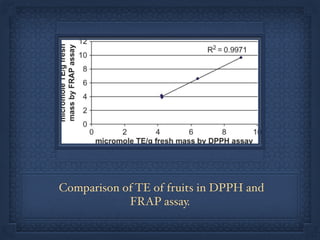
Therefore, a high correlation of determined values can be expected. In this study, DPPH
and FRAP assay showed a strong linear correlation (R 2 = 0.9971) can be seen.
The two models are comparable to determine free radical-scavenging activity. Either
DPPH or FRAP can be employed as a model for antioxidant activity determination.
Both can be applied to a 96-well plate for high throughput and minimising the use of
reagents.
Comparison of TE of fruits in DPPH and
FRAP assay.
Antioxidant Activity of Grape Seed
Extract and Fruits
On the basis of wet weight of fruits (peeled), tomato
shows the highest antioxidant activity, followed by banana.
Antioxidant activity of one capsule of grape seed extract
was shown to be 10 to 20 times greater than 1 g of the fruit.
However, if antioxidant activity was calculated per fruit
or piece of fruit, the values were comparable between grape
seed extract and the fruits (tomato and banana).
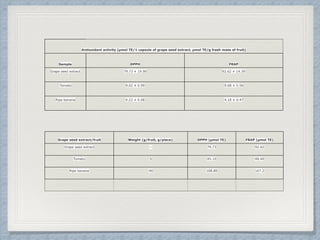
Antioxidant activity (µmol TE/1 capsule of grape seed extract, µmol TE/g fresh mass of fruit)
Sample DPPH FRAP
Grape seed extract 79.73 ± 19.90 92.62 ± 14.39
Tomato 9.02 ± 0.99 9.68 ± 0.56
Ripe banana 4.22 ± 0.68 4.18 ± 0.47
Grape seed extract/fruit Weight (g/fruit, g/piece) DPPH (µmol TE) FRAP (µmol TE)
Grape seed extract — 79.73 92.62
Tomato 5 45.10 48.40
Ripe banana 40 168.80 167.2
CONCLUSIONS
Antioxidant activity of grape seed extract and fruits containing
high β-carotene, vitamin C and E was measured and compared by
DPPH and FRAP assay.
The results demonstrated that an adequate amount of fruits showed
comparable antioxidant activity with a potent antioxidant, grape
seed extract.
As a variety of compounds contributes to antioxidant activity in
fruits, it is difficult to pinpoint which substance is the most
important.
Thank you ☺

Grape seed extract

  • 1.
    Grape seed extract By: Ovya PugalenthiAruna
  • 2.
    Structure The structure ofgrape berry is divided into 3 divisions : 1. Tissue type ; skin 2. Flesh 3. Seeds Seeds : composed of ; 1. outer seed coat =contain high concentration of tannins and also phenols 2. Endosperm = nourish the embryo during early growth 3. Embryo * all seeds produce growth regulators that influence in the size of the fruit.
  • 3.
    GRAPE SEED EXTRACTS Grapeseed extract is an industrial derivative of whole grape seeds. The extract contains proanthocyanidins. Grape seed extract quality is measured by the content of procyanidins which are formed from proanthocyanidins. Grape seed extract quality contains 95% procyanidins, but potency varies among products. Grape seed extract quality contains 95% procyanidins, but potency varies among products. Eating foods or beverages high in procyanidin results in the sensation of the mouth puckering and dehydration
  • 4.
    PROANTHOCYANIDIN Proanthocyanidins are a classof polyphenols found in a variety of plants. Oligomeric proanthocyanidins : refer to dimer and trimer polymerizations of catechins. : They are dense in grape seeds and skin, and therefore in red wine and grape seed extract
  • 5.
    EXTRACTION METHODS The classicmethod incorporates extraction with organic solvents such as acetone, acetonitrile, ethyl acetate, and methanol. Using hot water = not as effective in maximising in extract production in both quantity and efficiency.
  • 6.
    ACETONE Acetone, or propanone, isthe organic compound with the formula (CH3)2CO.
  • 7.
    ACETONITRILE Acetonitrile is a chemicalcompound with the formula CH3CN
  • 8.
    ETHYL ACETATE It isa organic compound with chemical formula CH3—COO—CH2—CH3
  • 9.
    METHANOL Methanol, also knownas methyl alcohol. With a chemical with the formula CH3OH
  • 10.
    ANALYSIS METHODS High performanceliquid chromatography seems to be the most effective analysis along with proton NMR spectroscopy with principal component analysis to ensure accurate composition.
  • 11.
    HIGH PERFORMANCE LIQUID CHROMATOGRAPHY Atechnique in analytical chemistry used to separate, identify, and quantify each component in a mixture. It relies on pumps to pass a pressurising liquid solvent containing the sample mixture through a column filled with a solid adsorbent material. Each component in the sample interacts slightly differently with the adsorbent material, causing different flow rates for the different components and leading to the separation of the components as they flow out of the column.
  • 13.
    PROTON NUCLEAR MAGNETIC RESONANCE Theapplication of nuclear magnetic resonance in NMR spectroscopy with respect to hydrogen-1 nuclei within the molecules of a substance, in order to determine the structure of its molecules.
  • 14.
    PRINCIPAL COMPONENT ANALYSIS A statisticalprocedure that uses an orthogonal transformation to convert a set of observations of possibly correlated variables (entities each of which takes on various numerical values) into a set of values of linearly uncorrelated variables called principal components. This transformation is defined in such a way that the first principal component has the largest possible variance, and each succeeding component in turn has the highest variance possible under the constraint that it is orthogonal to the preceding components. The resulting vectors are an uncorrelated orthogonal basis set. PCA is sensitive to the relative scaling of the original variables.
  • 15.
    BENEFITS OF GRAPE-SEEDOIL Enhances wound healing and appearance May reduce cancer risk Can inhibit infectious growth Improve kidney function Can reduce blood pressure and improve blood flow Improve collagen levels and bone strength
  • 16.
    SIDE EFFECTS Bleeding Hemorrhagic Stroke AllergicReactions Unsuitable For PregnantAnd Nursing Women Other Minor Side Effects : itchy scalp, dizziness, and nausea
  • 17.
    RESEARCH A meta-analysis of16 randomised controlled trials concluded that grape seed extract, in a dose of under 800 milligrams per day over at least 8 weeks, significantly lowered systolic and diastolic blood pressure.
  • 18.
    ANTIOXIDENT Antioxidants are substancesthat can prevent or slow damage to cells caused by free radicals, unstable molecules that the body produces as a reaction to environmental and other pressures. Examples of antioxidants that come from outside the body include: VitaminA, Vitamin C, Vitamin E, Beta- carotene, Manganese, Selenium, Lycopene,
  • 19.
    Comparison ofAntioxidantActivity ofGrape Seed Extract and Fruits Containing High β-Carotene, Vitamin C, and a Antioxidant activity of a potent antioxidant, grape seed extract, and fruits containing high β-carotene, vitamin C, and vitamin E was measured and compared by 2,2-diphengl-1-picrylhydrazyl radical and ferric reducing antioxidant power assay. Grape seed proanthocyanidins extract is a significantly more potent scavenger of oxygen free radicals as compared to vitamin C and vitamin E succinate. The results showed that antioxidant activity of a 20-mg capsule of grape seed extract was approximately 10 to 20 times greater than 1 g of tomato, banana.
  • 20.
    MATERIALS AND METHODS Thegrape seed extract product (Vitis vinifera) was purchased from the local pharmacy store. Each capsule contains 20 mg of grape seed extract. The content was dissolved in distilled water and the volume adjusted to 25 mL (800 μg/mL). F ruits included in this study were purchased from local markets. There were tomato (Solanum lycopersicum var. cerasiforme), ripe banana (MusaAA group). These fruits were reported to contain a high level of β-carotene, vitamin C, and vitamin E according to the study of the Bureau of Nutrition, Department of Health, Ministry of Public Health.
  • 21.
    This table showsβ-carotene, vitamin C, and vitamin E content of the fruits. All fruits were washed under tap water before peeling. A portion of 2 g was homogenised with 10 mL of distilled water using a homogeniser. The homogenate was centrifuged for 5 min at 3000 rpm. The supernatant was recovered and used directly for DPPH and FRAP assay without storage. Fruits β-carotene content (mg/100 g) Vitamin E content (mg/100 g) Vitamin C content (mg/100 g) Tomato 0.64 1.34 41 Ripe banana 0.88 1.1 15
  • 22.
    DPPH Assay The DPPHassay was performed according to the method of Brand-Williams, with some modifications. An amount of 0.24 g/mL of DPPH in methanol was used as a stock solution. The working solution was prepared by diluting 2.5 mL of stock solution with 25 mL of methanol. An aliquot of 20 μL of grape seed extract solution or fruit sample supernatant were mixed with 180 μL of DPPH solution in a 96-well plate. After 1 h of incubation, the absorbance was measured at 490 nm by a microplate reader. Results were expressed in μmol Trolox (6-hydroxy-2,5,7,8-tetramethylchroman-2-carboxylic acid) equivalents (TE)/capsule of grape seed extract and μmol TE/g fresh mass of fruit sample. Additional dilution was required if the measured value was over the linearity range of the standard curve (50–600 μM Trolox). The comparison was based on the amount of fruit people eat in daily life. For example, fresh fruit is consumed more than ten gram weight rather than in milligram weight. For the grape seed extract, results were expressed per capsule.
  • 23.
    FRAP Assay The FRAPassay was performed according to the method of Benzie and Strain with some modifications. The stock solutions used in this study were 300 mM acetate buffer pH 3.6, 10 mM 2,4,6-tripyridyl-s- triazine (TPTZ) solution in 40 mM HCl and 20 mM FeCl3.6H2O solution. FRAP reagent (25 mL acetate buffer, 2.5 mL TPTZ, and 2.5 mL FeCl3.6H2O) was freshly prepared before use. An aliquot of 20 μL of grape seed extract solution or fruit sample supernatant was mixed with 180 μL of FRAP reagent in a 96-well plate. After 6 min of incubation, the absorbance was measured at 595 nm by a microplate reader (model 680 Bio- Rad). Results were expressed in μmol TE/capsule of grape seed extract and μmol TE/g fresh mass of fruit sample. Additional dilution was required if the measured value was over the linearity range of the standard curve (25–800 μM Trolox).
  • 24.
    Statistical Analysis Each antioxidantassay was done six times. The values were shown as mean ± standard deviation (SD). The difference in antioxidant activities among samples were analysed by analysis of variance. Correlations among data were calculated as coefficient of determination (R 2).
  • 25.
    Comparison of TEof Fruits in DPPH and FRAP Assay A large diversity of in vitro methods for determination of antioxidant capacity is available as reviewed by Magalhaes . DPPH and FRAP assay have similar basic principles to determine antioxidant activity (the ability of antioxidant to reduce DPPH• radical in the case of DPPH assay and reduce [Fe(III)-(TPTZ)2]3+ in the case of FRAP assay). Therefore, a high correlation of determined values can be expected. In this study, DPPH and FRAP assay showed a strong linear correlation (R 2 = 0.9971) can be seen. The two models are comparable to determine free radical-scavenging activity. Either DPPH or FRAP can be employed as a model for antioxidant activity determination. Both can be applied to a 96-well plate for high throughput and minimising the use of reagents.
  • 26.
    Comparison of TEof fruits in DPPH and FRAP assay.
  • 27.
    Antioxidant Activity ofGrape Seed Extract and Fruits On the basis of wet weight of fruits (peeled), tomato shows the highest antioxidant activity, followed by banana. Antioxidant activity of one capsule of grape seed extract was shown to be 10 to 20 times greater than 1 g of the fruit. However, if antioxidant activity was calculated per fruit or piece of fruit, the values were comparable between grape seed extract and the fruits (tomato and banana).
  • 28.
    Antioxidant activity (µmolTE/1 capsule of grape seed extract, µmol TE/g fresh mass of fruit) Sample DPPH FRAP Grape seed extract 79.73 ± 19.90 92.62 ± 14.39 Tomato 9.02 ± 0.99 9.68 ± 0.56 Ripe banana 4.22 ± 0.68 4.18 ± 0.47 Grape seed extract/fruit Weight (g/fruit, g/piece) DPPH (µmol TE) FRAP (µmol TE) Grape seed extract — 79.73 92.62 Tomato 5 45.10 48.40 Ripe banana 40 168.80 167.2
  • 29.
    CONCLUSIONS Antioxidant activity ofgrape seed extract and fruits containing high β-carotene, vitamin C and E was measured and compared by DPPH and FRAP assay. The results demonstrated that an adequate amount of fruits showed comparable antioxidant activity with a potent antioxidant, grape seed extract. As a variety of compounds contributes to antioxidant activity in fruits, it is difficult to pinpoint which substance is the most important.
  • 30.