AND HUMAN HEALTH
What is indoor air quality ?
What causes indoor air pollution ?
Impact on health.
Interventions to reduce the burden of disease
from SFU
INDOOR AIR QUALITY
Indoor air quality (IAQ) is
the air quality within and around
buildings and structures.
IAQ is known to affect the
health, comfort and well-being of
building occupants.
Poor indoor air quality has been
linked to sick building syndrome,
reduced productivity and
impaired learning in schools.
Main source of indoor air
pollution
Solid fuels burned in inefficient and highly
polluting stoves for cooking and heating.
Solid fuels: wood, animal dung, charcoal, crop
wastes and coal.
The resulting household air pollution led to more
than 4 million premature deaths among children
and adults in 2012.
Tobacco smoke.
Impact on health
3.8 million people a year die prematurely from illness
attributable to the household air pollution caused by the
inefficient use of solid fuels and kerosene for cooking.
27% are due to pneumonia,
27% from ischaemic heart disease,
20% from chronic obstructive pulmonary disease (COPD),
18% from stroke,
8% from lung cancer.
Other outcomes such as tuberculosis, asthma,
cataracts, still birth, low birth weight, perinatal
death and also aero-digestive tract cancer.
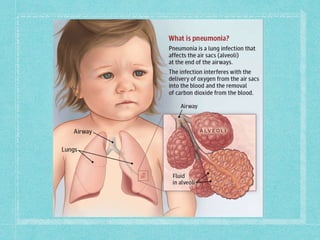
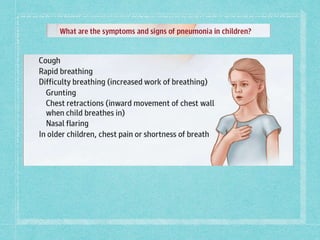
Pneumonia
Exposure to household air pollution almost
doubles the risk for childhood pneumonia and is
responsible for 45% of all pneumonia deaths in
children less than 5 years old.
Household air pollution is also risk for acute
lower respiratory infections (pneumonia) in
adults, and contributes to 28% of all adult deaths
to pneumonia.
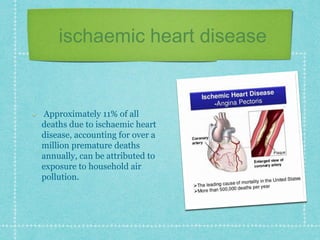
ischaemic heart disease
Approximately 11% of all
deaths due to ischaemic heart
disease, accounting for over a
million premature deaths
annually, can be attributed to
exposure to household air
pollution.
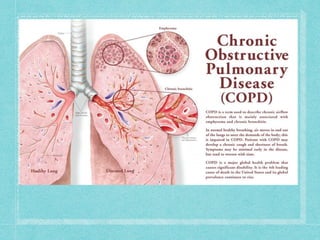
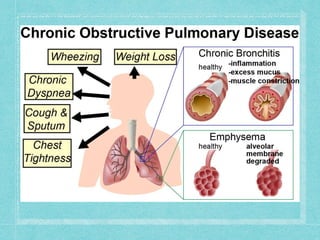
chronic obstructive
pulmonary disease (COPD)
Women exposed to high levels of indoor smoke
are more than twice as likely to suffer from
COPD than women who use cleaner fuels and
technologies.
Among men (who already have a heightened risk
of COPD due to their higher rates of smoking),
exposure to household air pollution nearly
doubles that risk.
Stroke
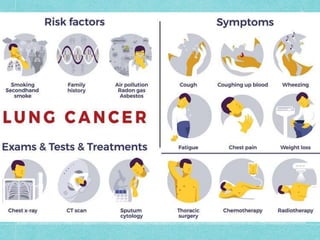
Lung cancer
The risk for women is higher, due to their role in food prep
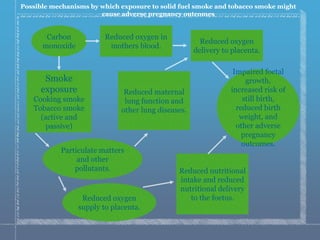
Carbon
monoxide
Reduced oxygen in
mothers blood.
Smoke
exposure
Cooking smoke
Tobacco smoke
(active and
passive)
Reduced oxygen
delivery to placenta.
Particulate matters
and other
pollutants.
Reduced maternal
lung function and
other lung diseases.
Reduced oxygen
supply to placenta.
Reduced nutritional
intake and reduced
nutritional delivery
to the foetus.
Impaired foetal
growth,
increased risk of
still birth,
reduced birth
weight, and
other adverse
pregnancy
outcomes.
Possible mechanisms by which exposure to solid fuel smoke and tobacco smoke might
cause adverse pregnancy outcomes
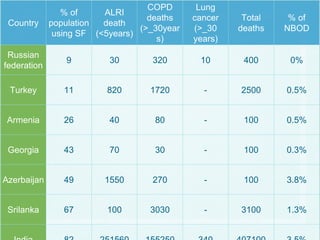
Country
% of
population
using SF
ALRI
death
(<5years)
COPD
deaths
(>_30year
s)
Lung
cancer
(>_30
years)
Total
deaths
% of
NBOD
Russian
federation
9 30 320 10 400 0%
Turkey 11 820 1720 - 2500 0.5%
Armenia 26 40 80 - 100 0.5%
Georgia 43 70 30 - 100 0.3%
Azerbaijan 49 1550 270 - 100 3.8%
Srilanka 67 100 3030 - 3100 1.3%
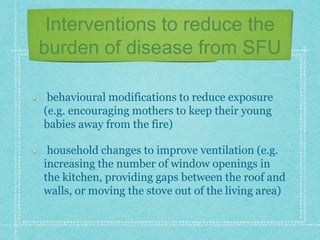
Interventions to reduce the
burden of disease from SFU
behavioural modifications to reduce exposure
(e.g. encouraging mothers to keep their young
babies away from the fire)
household changes to improve ventilation (e.g.
increasing the number of window openings in
the kitchen, providing gaps between the roof and
walls, or moving the stove out of the living area)
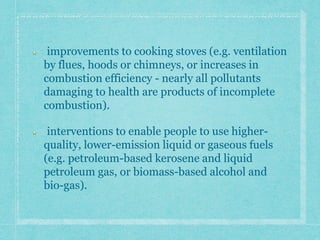
improvements to cooking stoves (e.g. ventilation
by flues, hoods or chimneys, or increases in
combustion efficiency - nearly all pollutants
damaging to health are products of incomplete
combustion).
interventions to enable people to use higher-
quality, lower-emission liquid or gaseous fuels
(e.g. petroleum-based kerosene and liquid
petroleum gas, or biomass-based alcohol and
bio-gas).
Bibliography
https://www.who.int
Thank you
Done by: Ovya pugalenthi Aruna

Indoor air pollution

  • 1.
  • 2.
    What is indoorair quality ? What causes indoor air pollution ? Impact on health. Interventions to reduce the burden of disease from SFU
  • 3.
    INDOOR AIR QUALITY Indoorair quality (IAQ) is the air quality within and around buildings and structures. IAQ is known to affect the health, comfort and well-being of building occupants. Poor indoor air quality has been linked to sick building syndrome, reduced productivity and impaired learning in schools.
  • 4.
    Main source ofindoor air pollution Solid fuels burned in inefficient and highly polluting stoves for cooking and heating. Solid fuels: wood, animal dung, charcoal, crop wastes and coal. The resulting household air pollution led to more than 4 million premature deaths among children and adults in 2012. Tobacco smoke.
  • 5.
    Impact on health 3.8million people a year die prematurely from illness attributable to the household air pollution caused by the inefficient use of solid fuels and kerosene for cooking. 27% are due to pneumonia, 27% from ischaemic heart disease, 20% from chronic obstructive pulmonary disease (COPD), 18% from stroke, 8% from lung cancer.
  • 6.
    Other outcomes suchas tuberculosis, asthma, cataracts, still birth, low birth weight, perinatal death and also aero-digestive tract cancer.
  • 7.
    Pneumonia Exposure to householdair pollution almost doubles the risk for childhood pneumonia and is responsible for 45% of all pneumonia deaths in children less than 5 years old. Household air pollution is also risk for acute lower respiratory infections (pneumonia) in adults, and contributes to 28% of all adult deaths to pneumonia.
  • 10.
    ischaemic heart disease Approximately11% of all deaths due to ischaemic heart disease, accounting for over a million premature deaths annually, can be attributed to exposure to household air pollution.
  • 11.
    chronic obstructive pulmonary disease(COPD) Women exposed to high levels of indoor smoke are more than twice as likely to suffer from COPD than women who use cleaner fuels and technologies. Among men (who already have a heightened risk of COPD due to their higher rates of smoking), exposure to household air pollution nearly doubles that risk.
  • 14.
  • 15.
    Lung cancer The riskfor women is higher, due to their role in food prep
  • 17.
    Carbon monoxide Reduced oxygen in mothersblood. Smoke exposure Cooking smoke Tobacco smoke (active and passive) Reduced oxygen delivery to placenta. Particulate matters and other pollutants. Reduced maternal lung function and other lung diseases. Reduced oxygen supply to placenta. Reduced nutritional intake and reduced nutritional delivery to the foetus. Impaired foetal growth, increased risk of still birth, reduced birth weight, and other adverse pregnancy outcomes. Possible mechanisms by which exposure to solid fuel smoke and tobacco smoke might cause adverse pregnancy outcomes
  • 18.
    Country % of population using SF ALRI death (<5years) COPD deaths (>_30year s) Lung cancer (>_30 years) Total deaths %of NBOD Russian federation 9 30 320 10 400 0% Turkey 11 820 1720 - 2500 0.5% Armenia 26 40 80 - 100 0.5% Georgia 43 70 30 - 100 0.3% Azerbaijan 49 1550 270 - 100 3.8% Srilanka 67 100 3030 - 3100 1.3%
  • 19.
    Interventions to reducethe burden of disease from SFU behavioural modifications to reduce exposure (e.g. encouraging mothers to keep their young babies away from the fire) household changes to improve ventilation (e.g. increasing the number of window openings in the kitchen, providing gaps between the roof and walls, or moving the stove out of the living area)
  • 20.
    improvements to cookingstoves (e.g. ventilation by flues, hoods or chimneys, or increases in combustion efficiency - nearly all pollutants damaging to health are products of incomplete combustion). interventions to enable people to use higher- quality, lower-emission liquid or gaseous fuels (e.g. petroleum-based kerosene and liquid petroleum gas, or biomass-based alcohol and bio-gas).
  • 21.
  • 22.
    Thank you Done by:Ovya pugalenthi Aruna