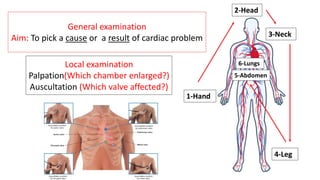
This document provides guidance on performing a cardiac examination, including examination of:
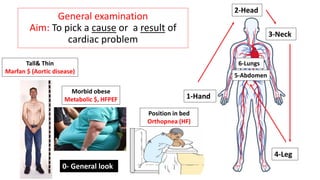
1. The general patient (e.g. build, position)
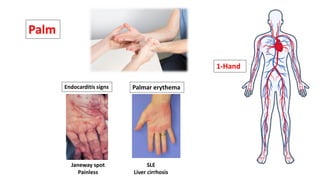
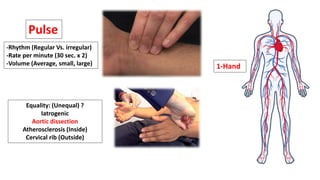
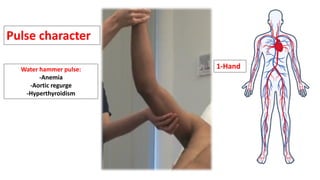
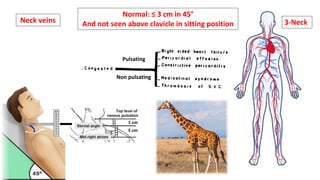
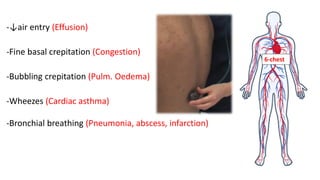
2. Specific areas (hands, head, neck, legs, abdomen, lungs) to examine signs like clubbing, edema, jugular vein distension
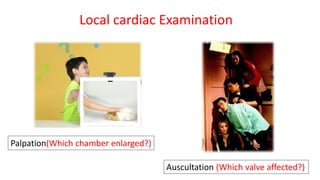
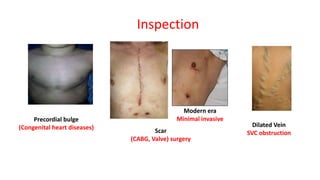
3. The local heart (palpation for enlarged chambers or thrills, auscultation to identify affected valves or sounds like murmurs, clicks)
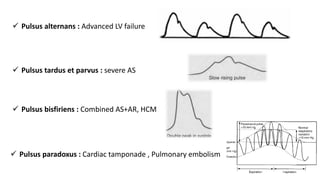
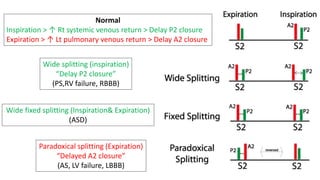
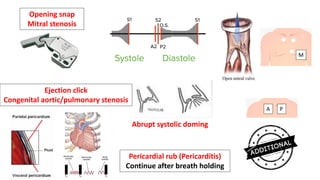
It describes what to listen for at different auscultation sites and how heart sounds and splits may indicate different cardiac issues. Additional signs like S3 and S4 gallops or pericardial rubs are also covered.