My exam experience…
AhmedElborae,MD,PhD,MRCP(UK)London,EECC&EAPCIcertified
Lecturerofcardiology,CairoUniversity
2023
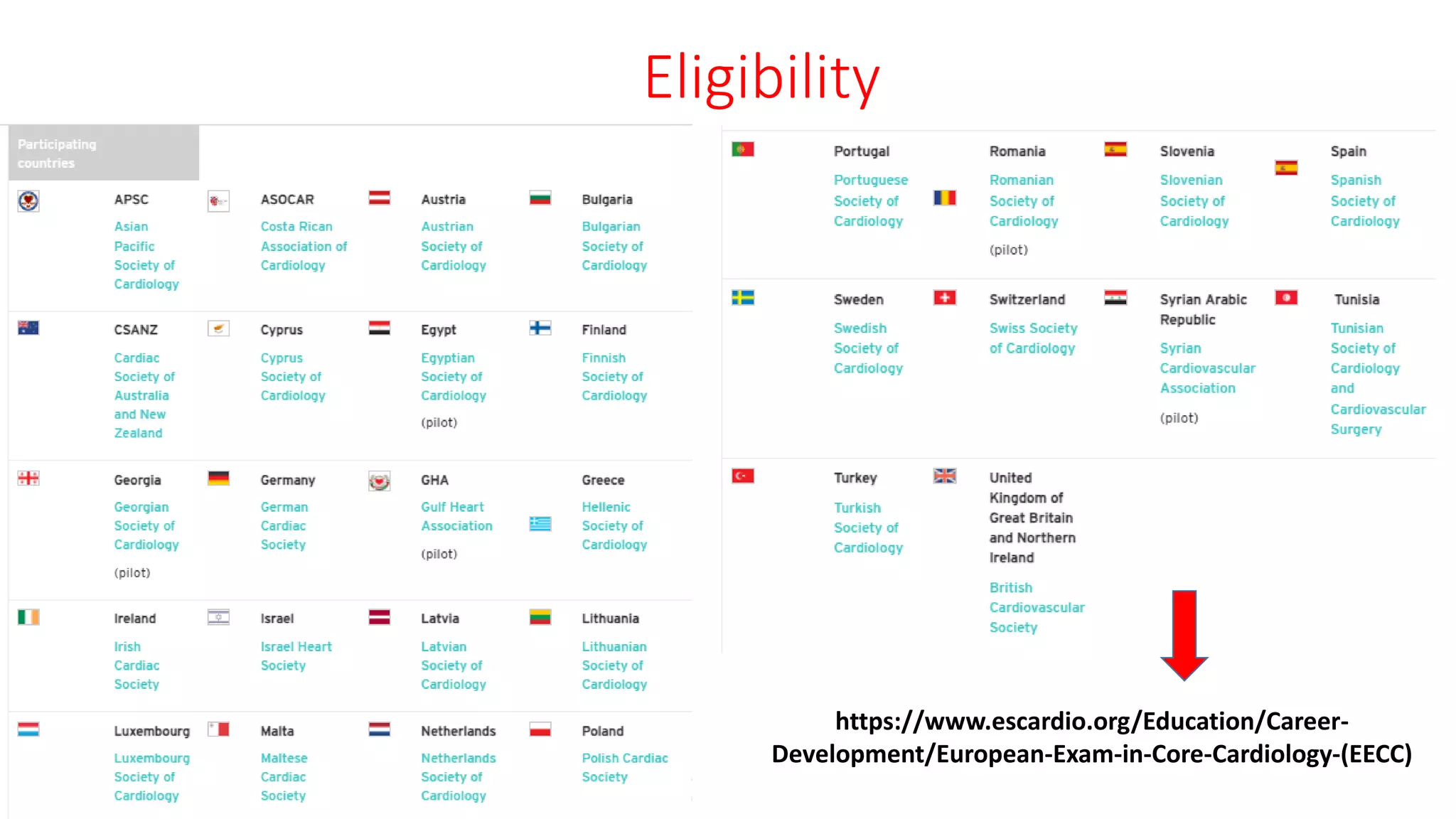
Eligibility
https://www.escardio.org/Education/Career-
Development/European-Exam-in-Core-Cardiology-(EECC)
Exam format
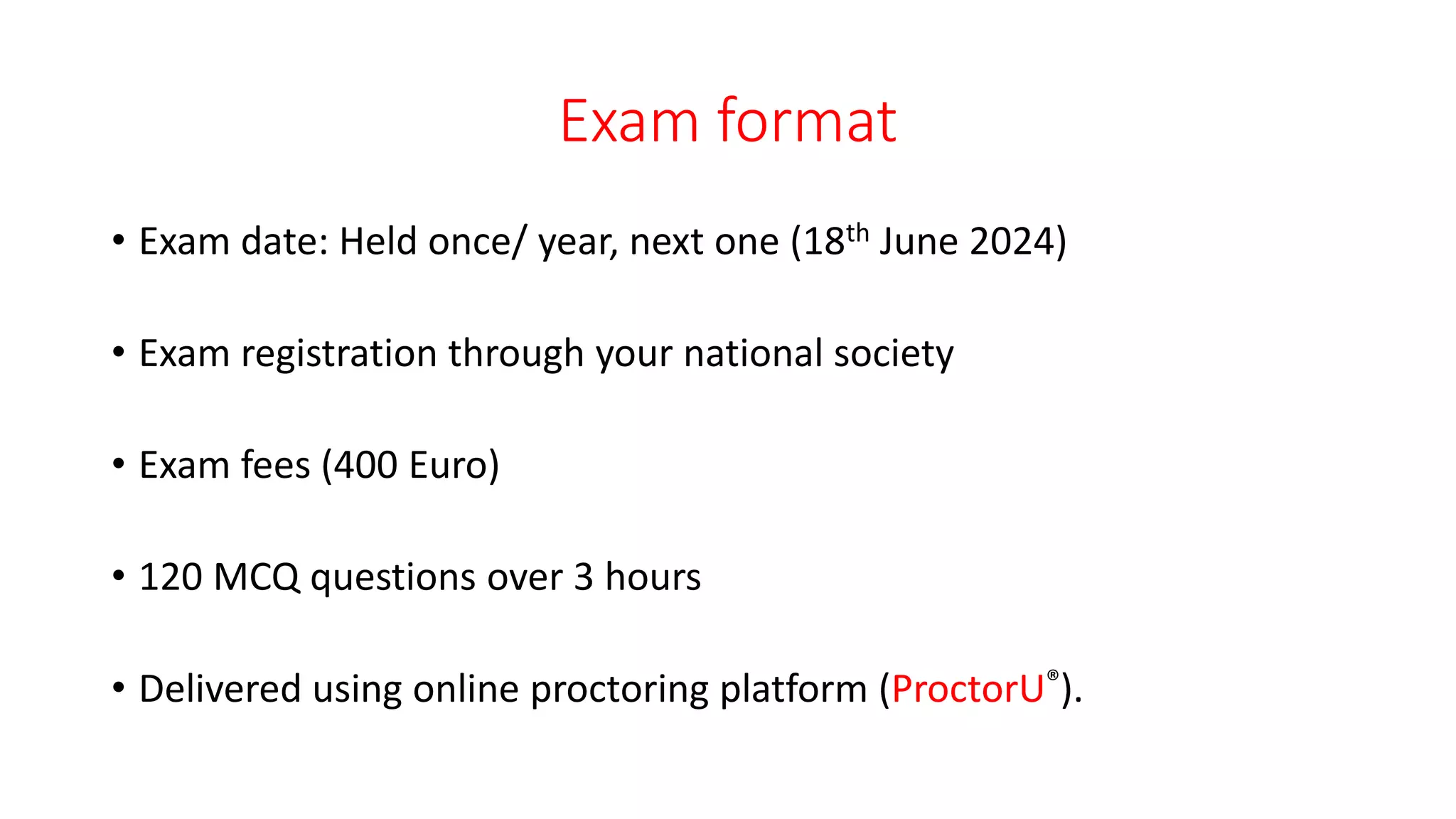
• Exam date: Held once/ year, next one (18th June 2024)
• Exam registration through your national society
• Exam fees (400 Euro)
• 120 MCQ questions over 3 hours
• Delivered using online proctoring platform (ProctorU®).
Exam resources
1- ESC Guidelines
https://www.escardio.org/Guidelines/Clinical-Practice-Guidelines
Focus on:
> Start with PowerPoint slides
> Diagnostic and management
algorithms
> Guidelines full text reading if
you have time
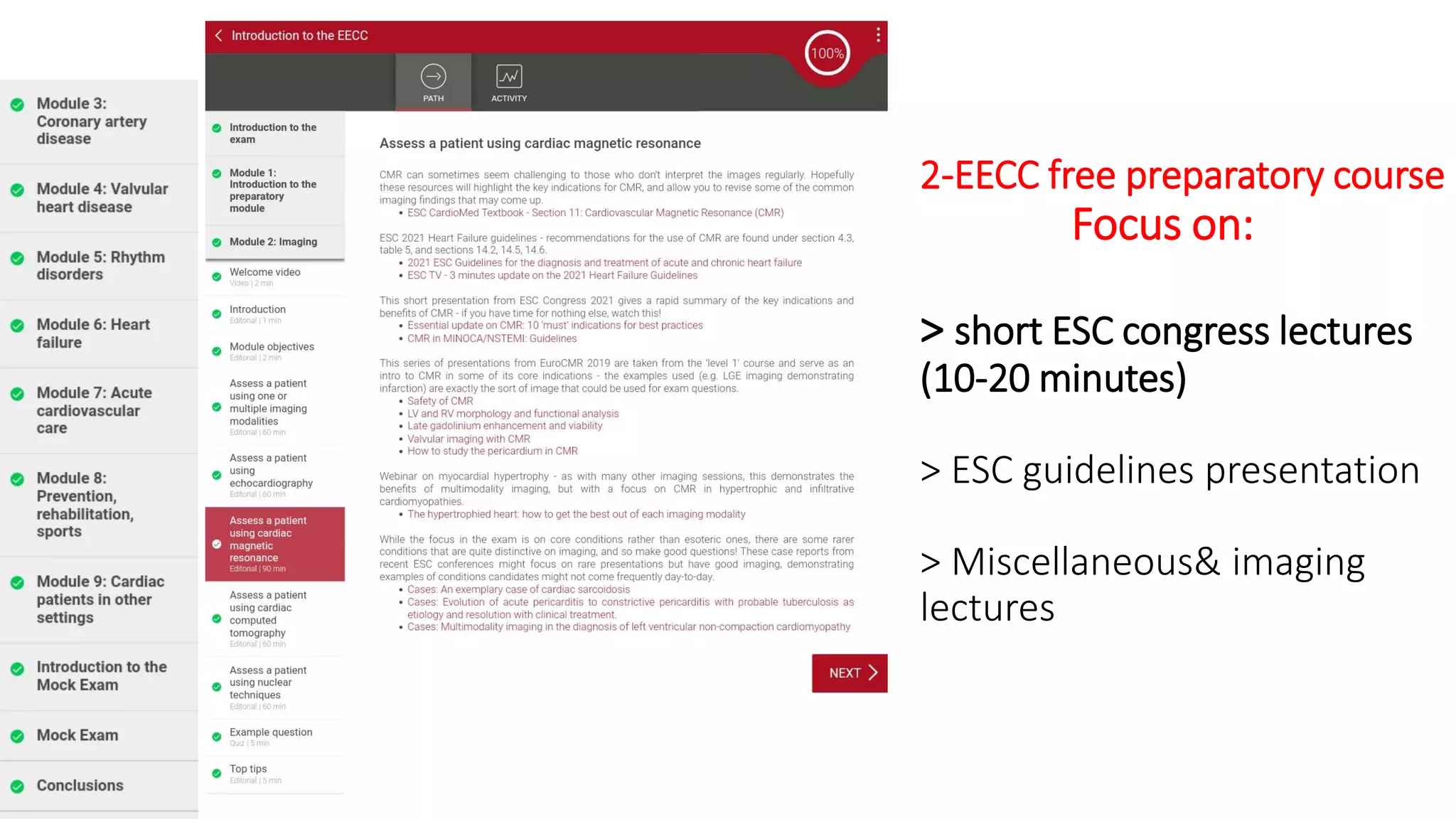
2-EECC free preparatory course
Focus on:
> short ESC congress lectures
(10-20 minutes)
> ESC guidelines presentation
> Miscellaneous& imaging
lectures
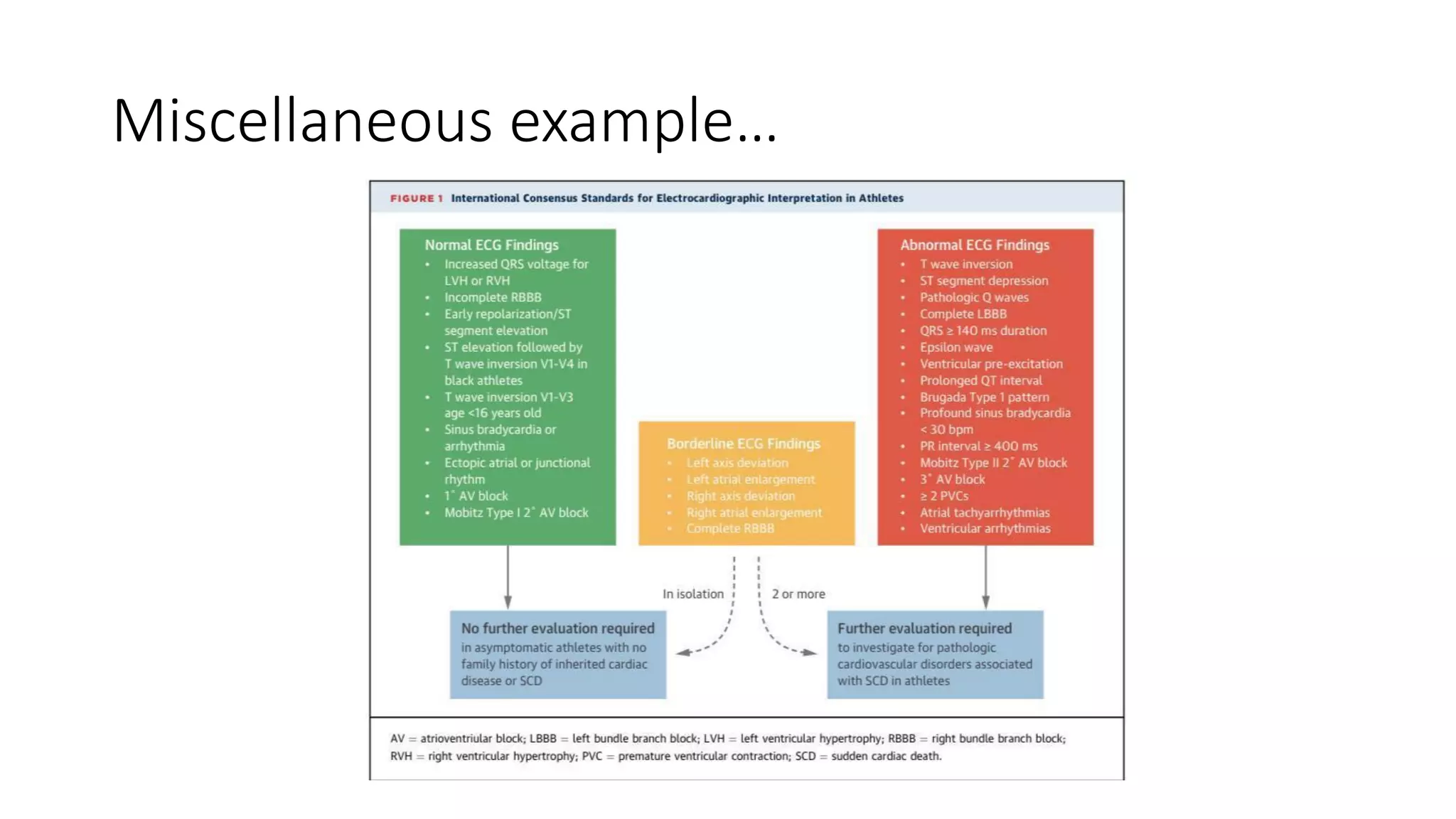
Miscellaneous example…
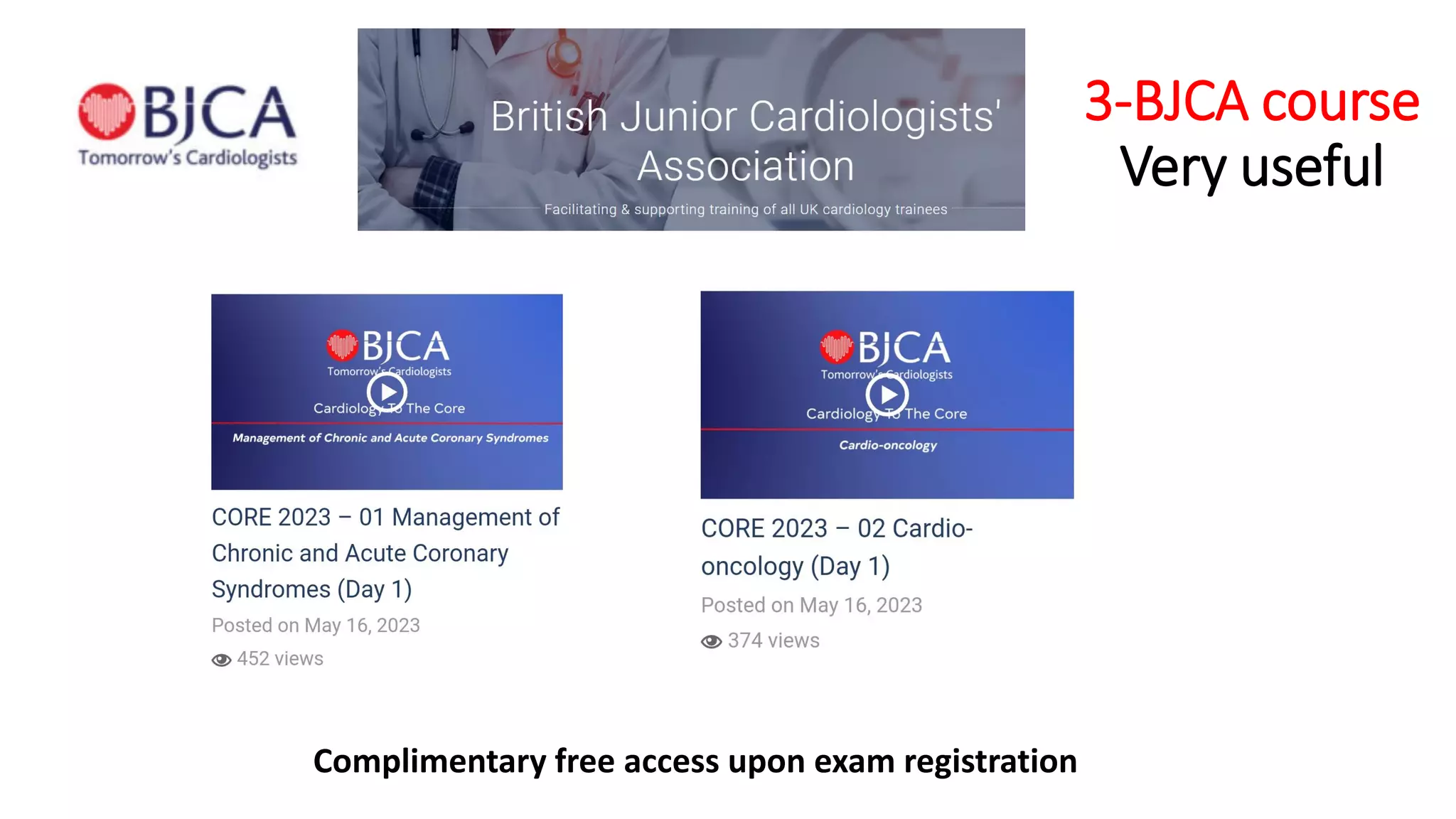
3-BJCA course
Very useful
Complimentary free access upon exam registration
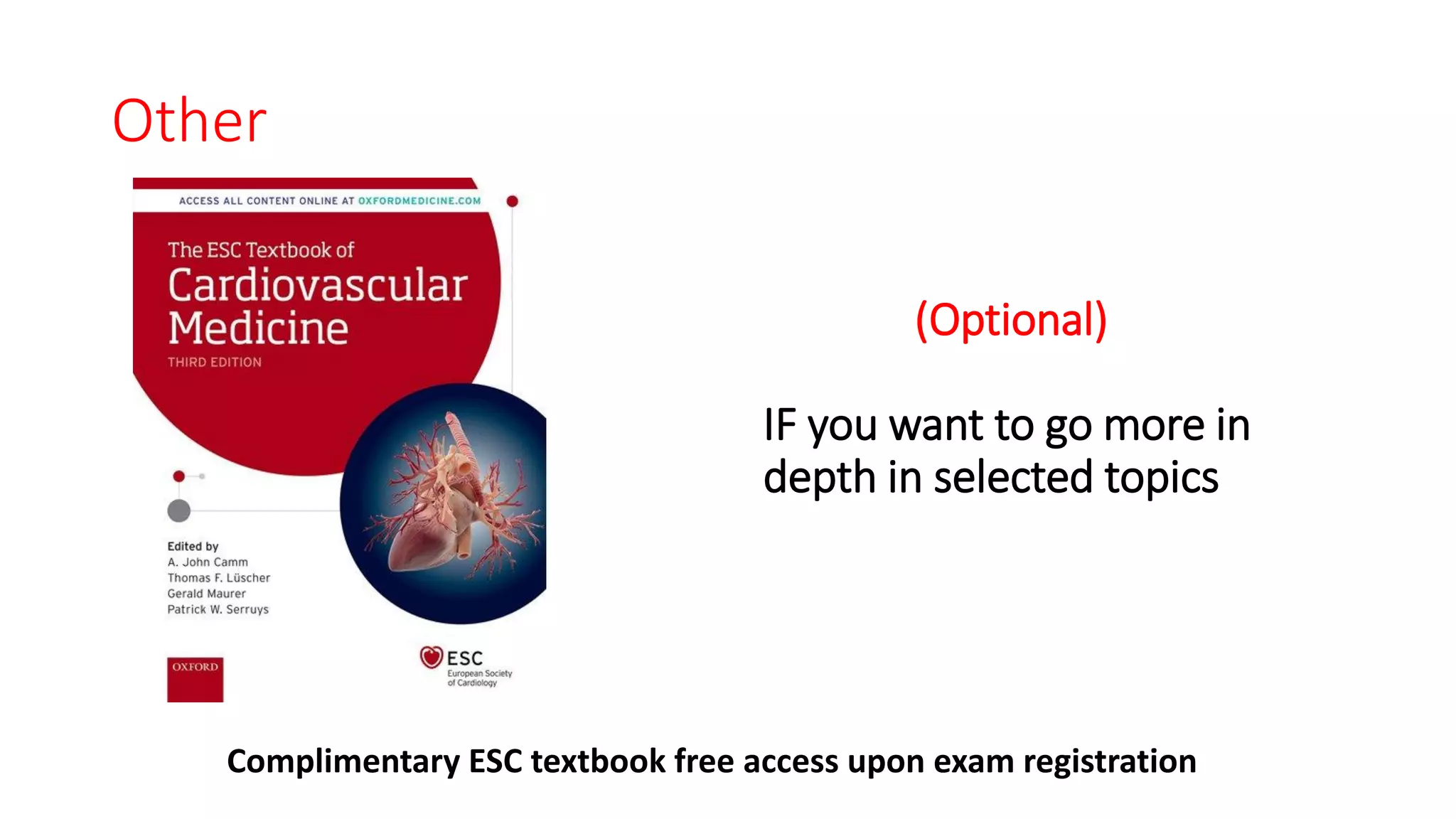
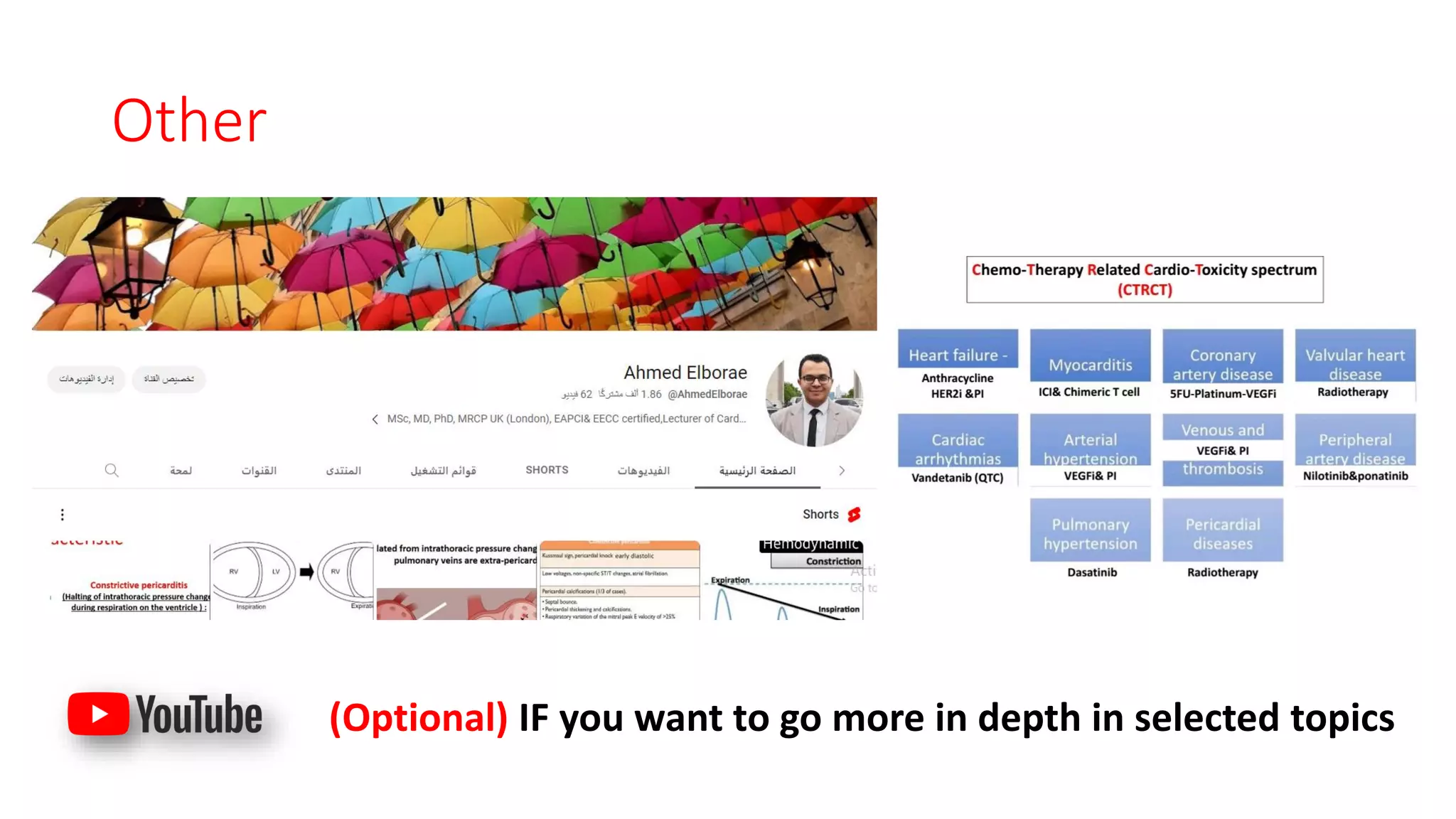
Other
Complimentary ESC textbook free access upon exam registration
(Optional)
IF you want to go more in
depth in selected topics
Other
(Optional) IF you want to go more in depth in selected topics
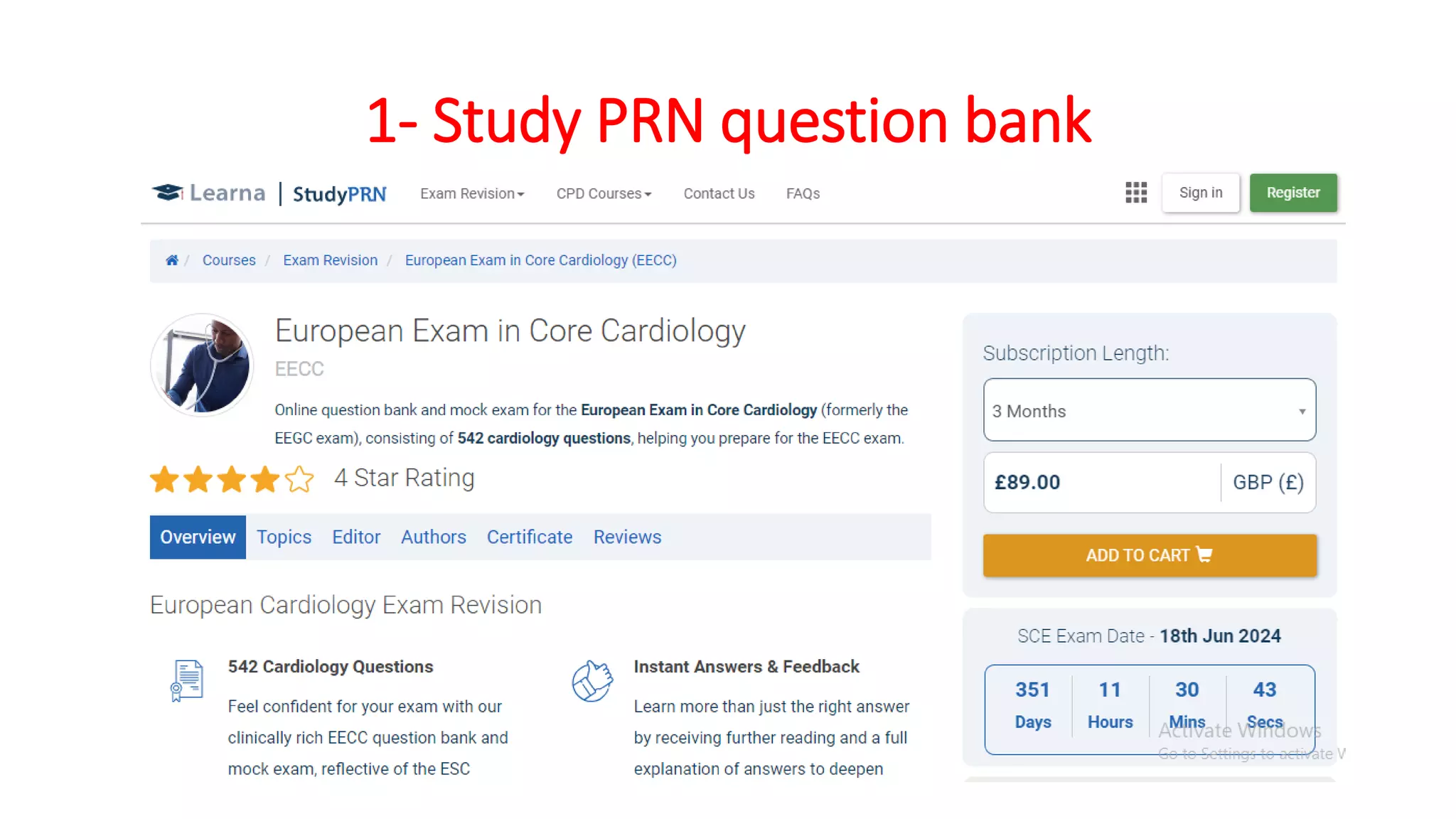
MCQ practicing
1- Study PRN question bank
1- Study PRN question bank sample
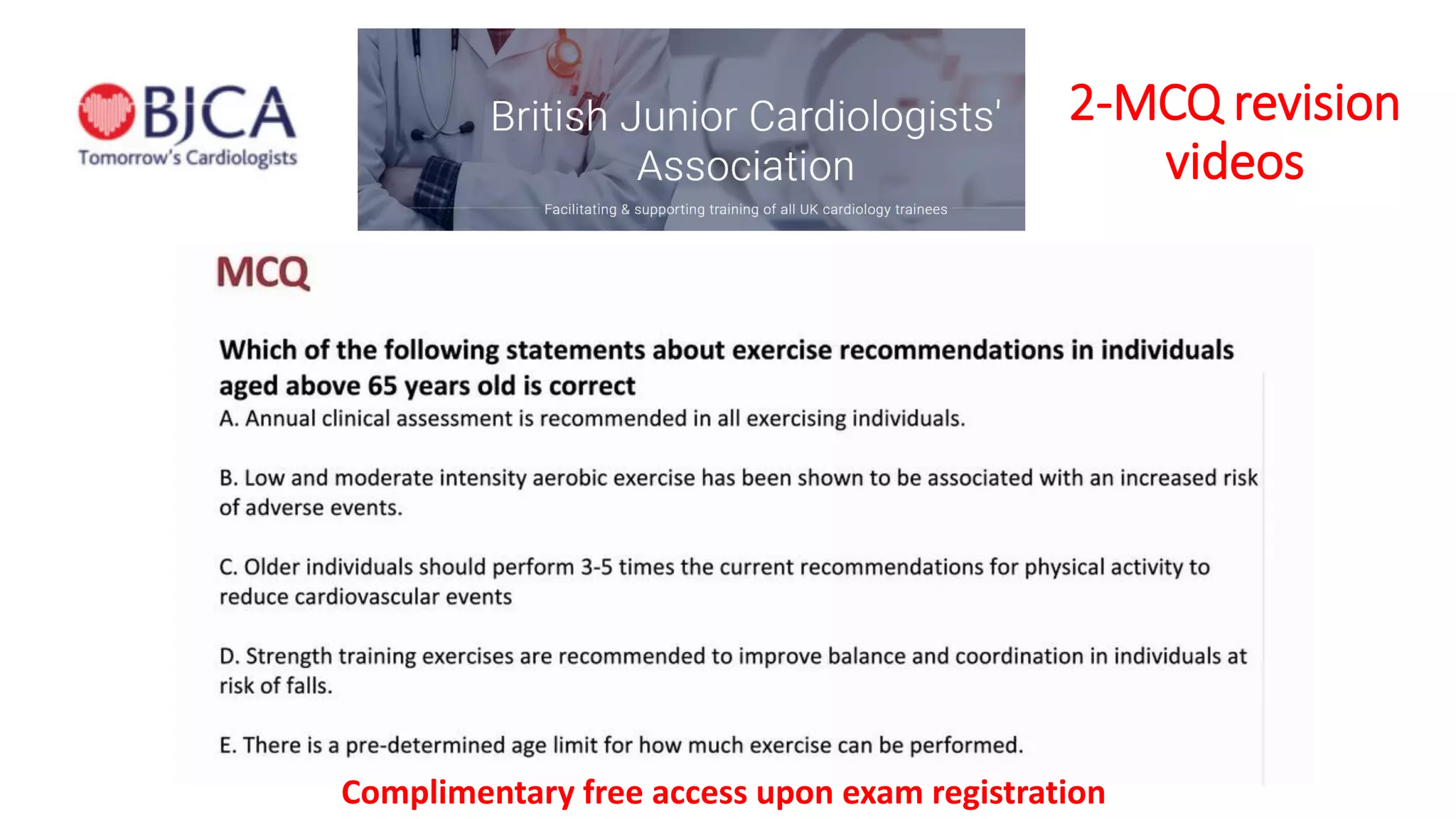
2-MCQ revision
videos
Complimentary free access upon exam registration
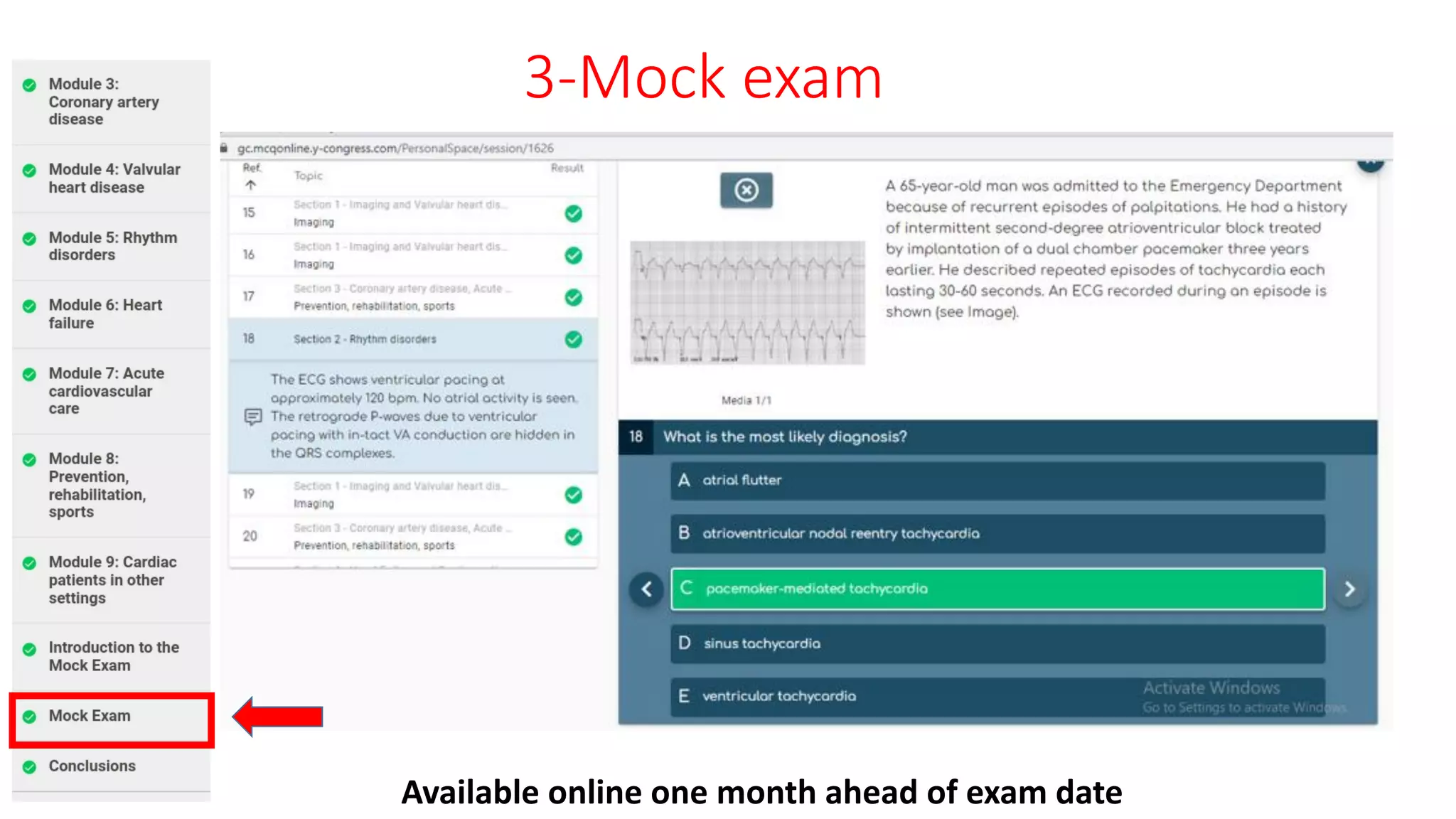
3-Mock exam
Available online one month ahead of exam date
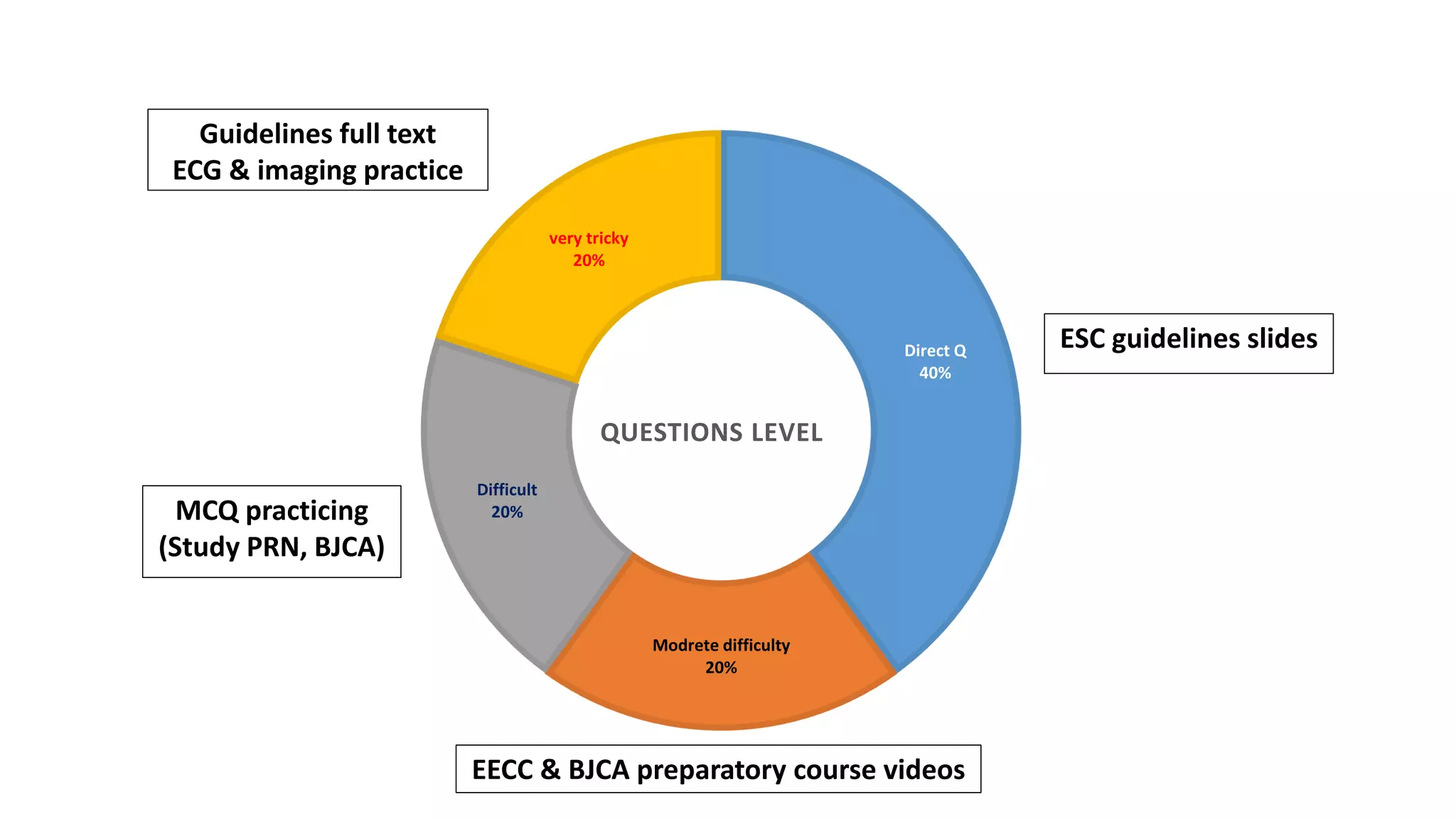
Direct Q
40%
Modrete difficulty
20%
Difficult
20%
very tricky
20%
QUESTIONS LEVEL
ESC guidelines slides
EECC & BJCA preparatory course videos
MCQ practicing
(Study PRN, BJCA)
Guidelines full text
ECG & imaging practice
Heart failure
10%
Valvular& endocarditis
10%
CCS
10%
ACS
10%
VT&SCD
10%
SVT& AF
5%
Pacing& syncope
5%
GUCH& pregnancy
5%
PHTN& embolism
5%
Pericardial& HTN
5%
HCM& sports
5%
Aorta& peripheral
5%
Dyslipid&DM&Prevention
5%
Perioperative
5%
Cardio-oncology
5%
TOPICS %
What to focus on in guidelines?
“According to my exam questions”
Heart failure guidelines
• HF diagnosis (Most specific, sensitive signs?), algorithm (BNP before ECHO)
• BNP DD (What ↑ or ↓ )
• HF TTT sequencing in different scenarios , indications for iron TTT, CRT,ICD
• Acute heart failure work up and TTT according to hemodynamics
• Hyperkalemia in HF
• HF recovered EF management
• HFpEF diagnosis , role of exercise and TTT (Cutoff point ARNI EF < 57%)
• Heart transplantation/ LVAD indications/ contraindication and complications
• Temporary mechanical support choice (IABP vs ECMO)
• Myocarditis diagnosis (CMR imaging), management
• Amyloidosis types &diagnosis (GLS, CMR), management
Valvular guidelines
• Timing of surgery in asymptomatic patients (AS, MS, AR, MR, TR)
• Role of exercise in asymptomatic AS and MS
• Low-gradient AS different scenarios, role of dobutamine/Ca score and management
• TAVR vs. SAVR
• Mitral clip indications
• Multivalvular heart disease (Assessment of severity, limitations of different
parameters)
• Prosthetic valve choice, INR targets, imaging (TTE,TEE,3D)
• Prosthetic dysfunction , and thrombosis management
• Tricuspid valve intervention indications
• Calcific mitral stenosis assessment
• Rheumatic fever diagnosis , prophylaxis and management
Endocarditis guidelines
• Which patient need prophylaxis
• Diagnostic criteria (Imaging TTE,TEE) and empirical regimens
• Timing and indications of surgery
• Culture negative endocarditis
• Prognostic factors
• Implantable devices endocarditis
• Special scenarios (CVS, cerebral hge)
• Mimics of endocarditis ( Marantic , libman sac imaging)
Aorta & Peripheral guidelines
• Timing of intervention (TAA, AAA) in normal, bicuspid and marfan in
details ( > or ≥ is tricky )
• Aortic dissection diagnosis
• Rupture coronary sinus of Valsalva presentation
• Vasculitis (Takayasu)
• Antiplatelet in TIA, PAD
• Indications for carotid intervention , surgery vs. stent
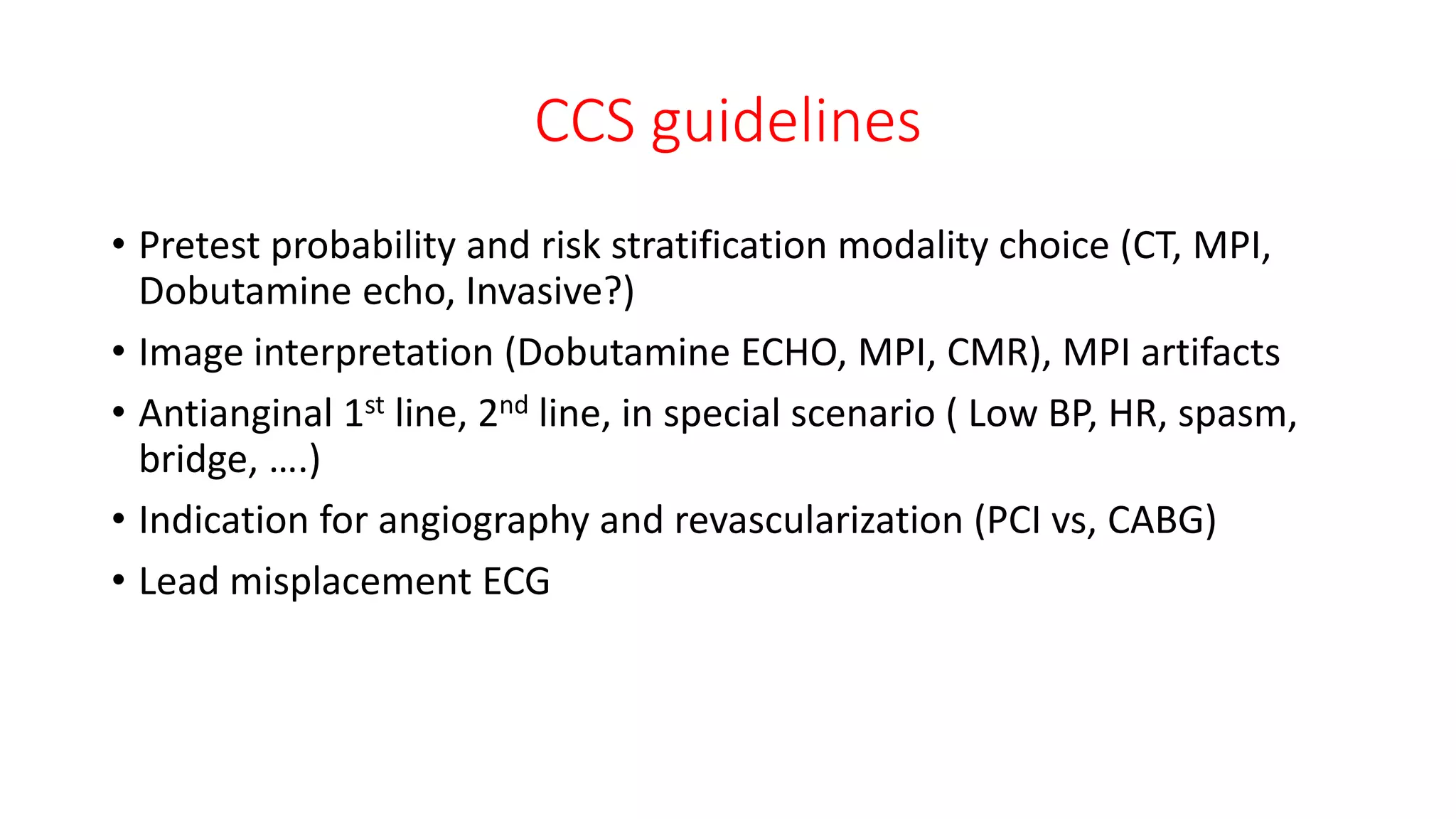
CCS guidelines
• Pretest probability and risk stratification modality choice (CT, MPI,
Dobutamine echo, Invasive?)
• Image interpretation (Dobutamine ECHO, MPI, CMR), MPI artifacts
• Antianginal 1st line, 2nd line, in special scenario ( Low BP, HR, spasm,
bridge, ….)
• Indication for angiography and revascularization (PCI vs, CABG)
• Lead misplacement ECG
ACS guidelines
• STEMI equivilant diagnosis (ECGs e.g. wellen , LBBB sgarbossa ,
Dewinter, LM ECG,…..)
• Antiplatelet management in different scenario (High bleeding risk,
perioperative, duration, OAC patints)
• MI complications ( VSR, rupture, arrhythmia ) management
• Time frames for choice of TTT strategy ( PPCI vs pharmacoinvasive)
• MINOCA workup (CMR imaging), Mimics (e.g. Taktsubo diagnosis)
• SCAD imaging (Angio) and management
• Timing and indications of ICD
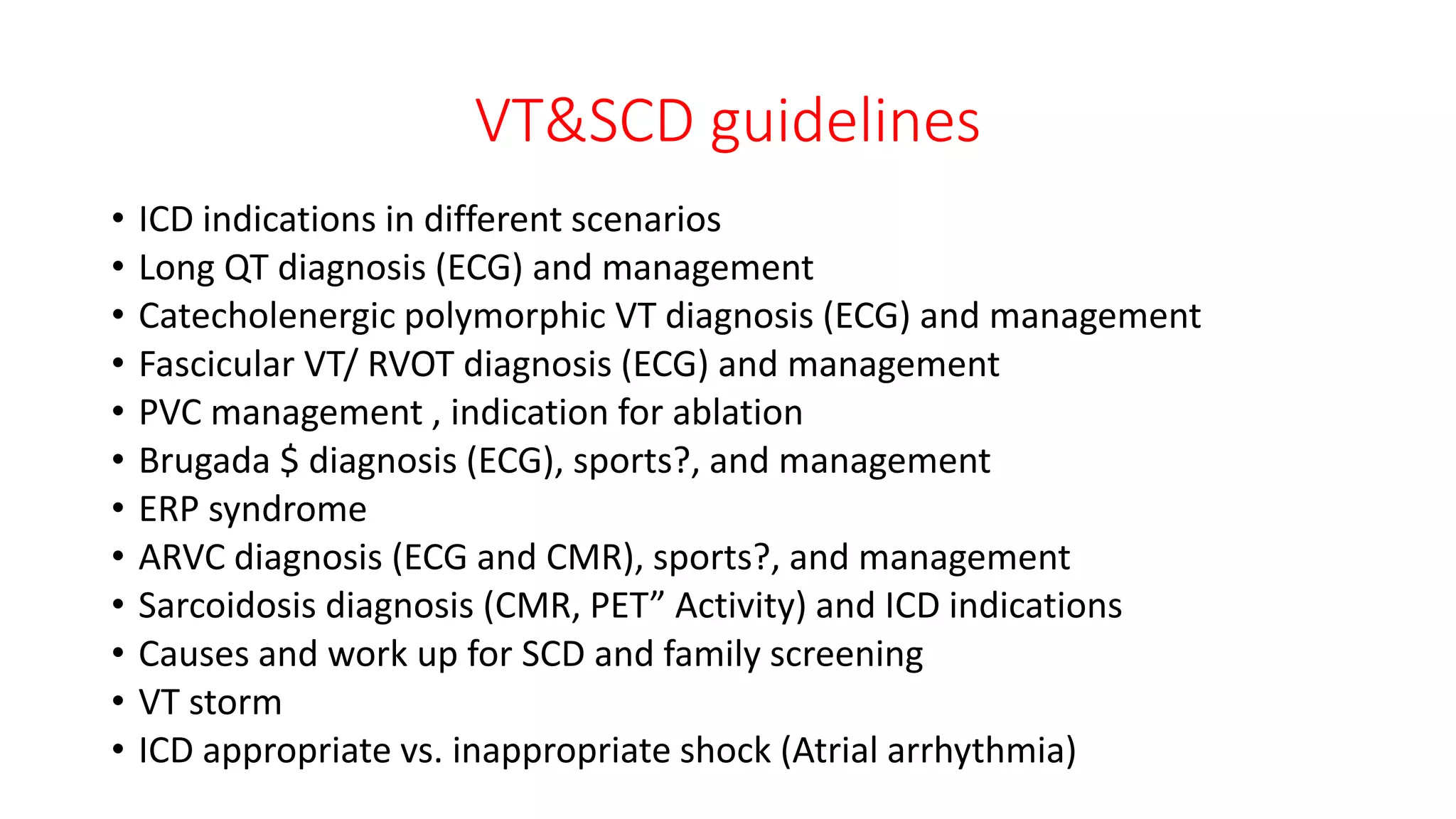
VT&SCD guidelines
• ICD indications in different scenarios
• Long QT diagnosis (ECG) and management
• Catecholenergic polymorphic VT diagnosis (ECG) and management
• Fascicular VT/ RVOT diagnosis (ECG) and management
• PVC management , indication for ablation
• Brugada $ diagnosis (ECG), sports?, and management
• ERP syndrome
• ARVC diagnosis (ECG and CMR), sports?, and management
• Sarcoidosis diagnosis (CMR, PET” Activity) and ICD indications
• Causes and work up for SCD and family screening
• VT storm
• ICD appropriate vs. inappropriate shock (Atrial arrhythmia)
SVT & AF guidelines
• 1st option in TTT of….. (Read guidelines algorithms carefully)
• POTS diagnosis and management
• WPW risk stratification and management
• Preexcited AF diagnosis (ECG) and management
• Intracardiac tracing of SVT!
• Proper choice of rhythm control drug in different scenarios
• Indications for AF ablation and complications of PVI
• AF in HF and CRT patients
• Anticoagulation indications (Scores), bleeding management, antidotes
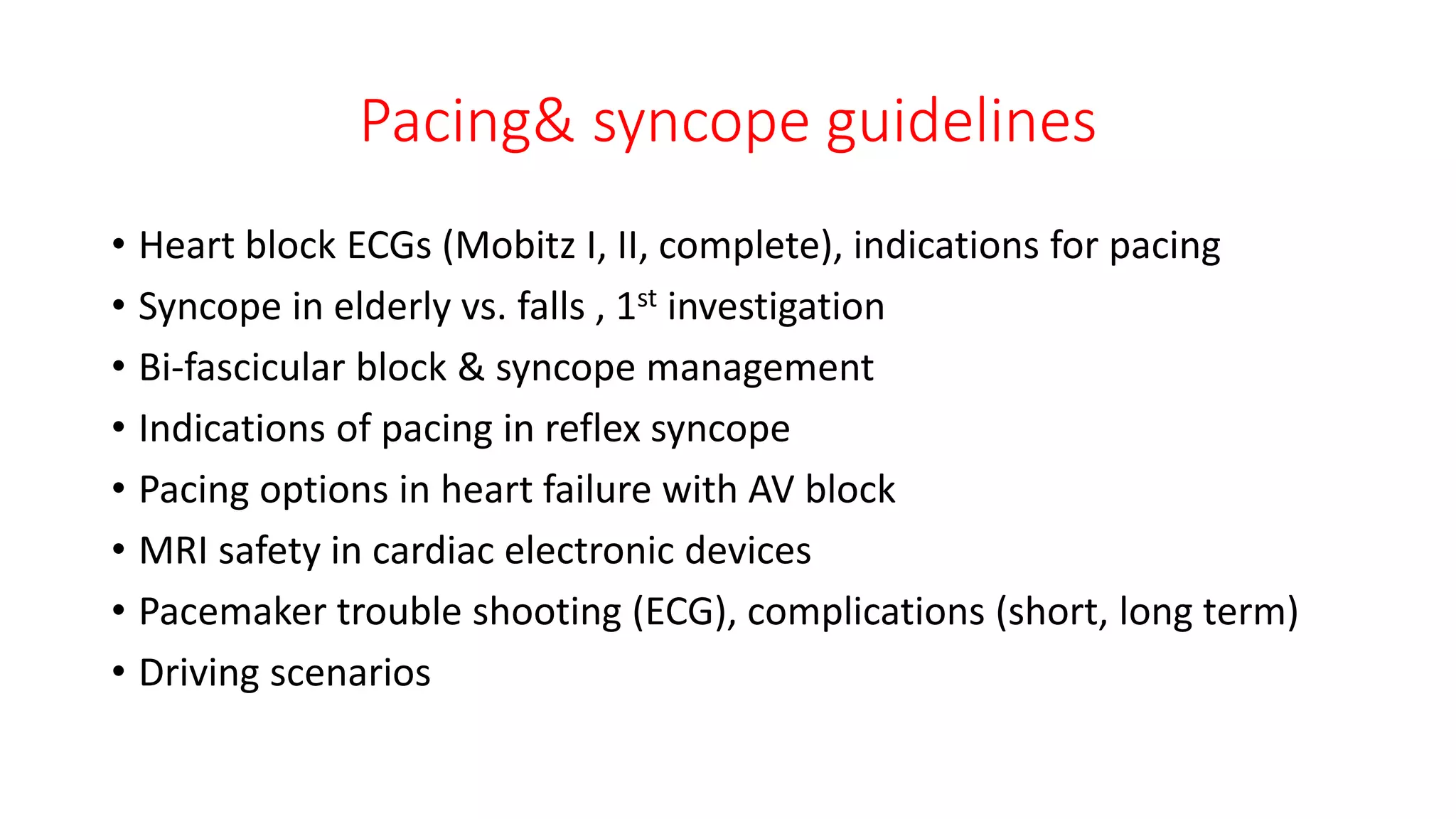
Pacing& syncope guidelines
• Heart block ECGs (Mobitz I, II, complete), indications for pacing
• Syncope in elderly vs. falls , 1st investigation
• Bi-fascicular block & syncope management
• Indications of pacing in reflex syncope
• Pacing options in heart failure with AV block
• MRI safety in cardiac electronic devices
• Pacemaker trouble shooting (ECG), complications (short, long term)
• Driving scenarios
PHTN &Pulmonary embolism guidelines
• Indications of lytic therapy and percutaneous intervention
• Choice of anticoagulation and regimens
• Indications of IVC filter
• Screening algorithm for CTEPH, risk factors
• PHTN types and defintions (Pre vs. post capillary ) , hemodynamic
tracing
• Risk stratification strata and management of PH (Drug sequencing)
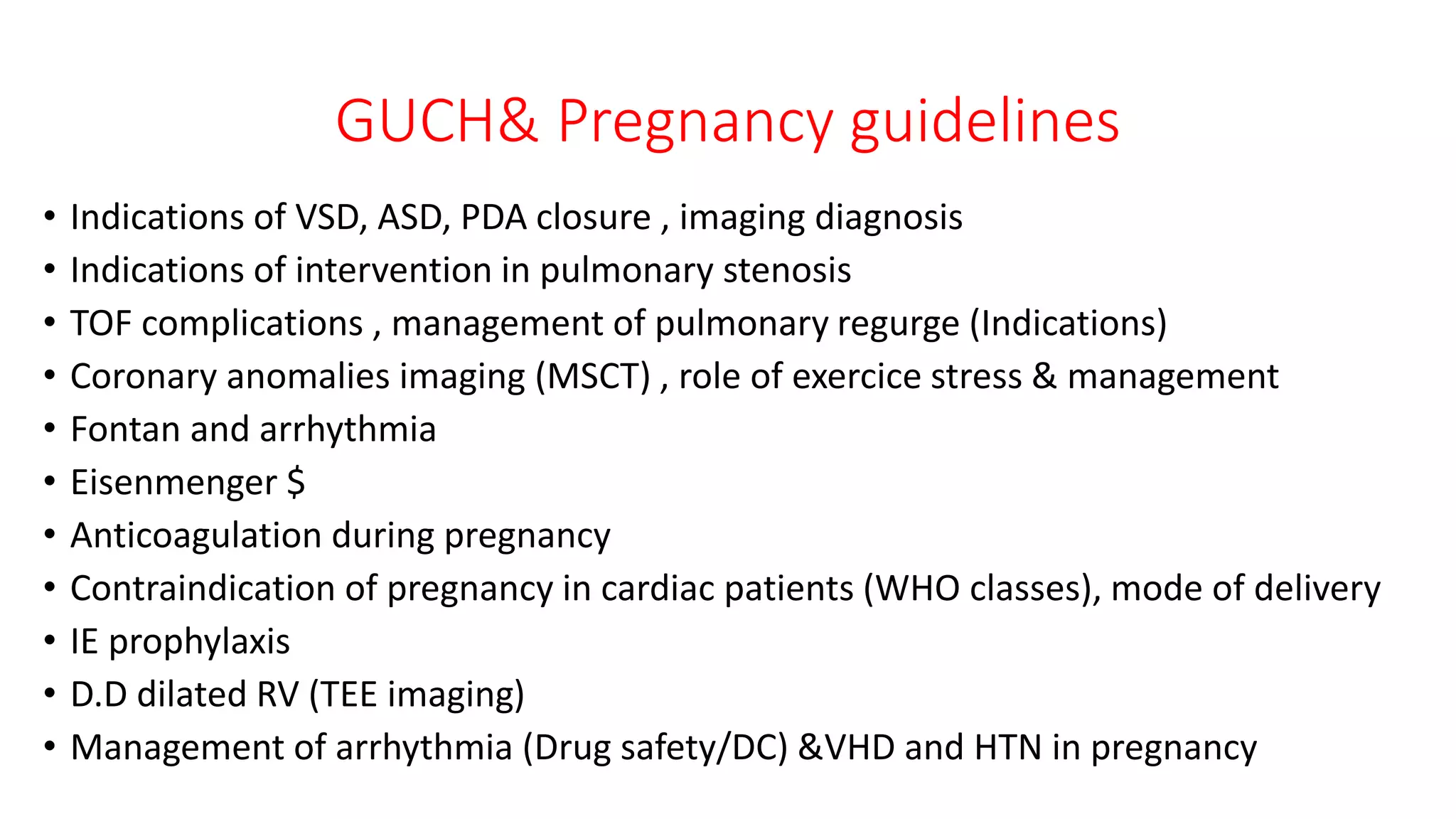
GUCH& Pregnancy guidelines
• Indications of VSD, ASD, PDA closure , imaging diagnosis
• Indications of intervention in pulmonary stenosis
• TOF complications , management of pulmonary regurge (Indications)
• Coronary anomalies imaging (MSCT) , role of exercice stress & management
• Fontan and arrhythmia
• Eisenmenger $
• Anticoagulation during pregnancy
• Contraindication of pregnancy in cardiac patients (WHO classes), mode of delivery
• IE prophylaxis
• D.D dilated RV (TEE imaging)
• Management of arrhythmia (Drug safety/DC) &VHD and HTN in pregnancy
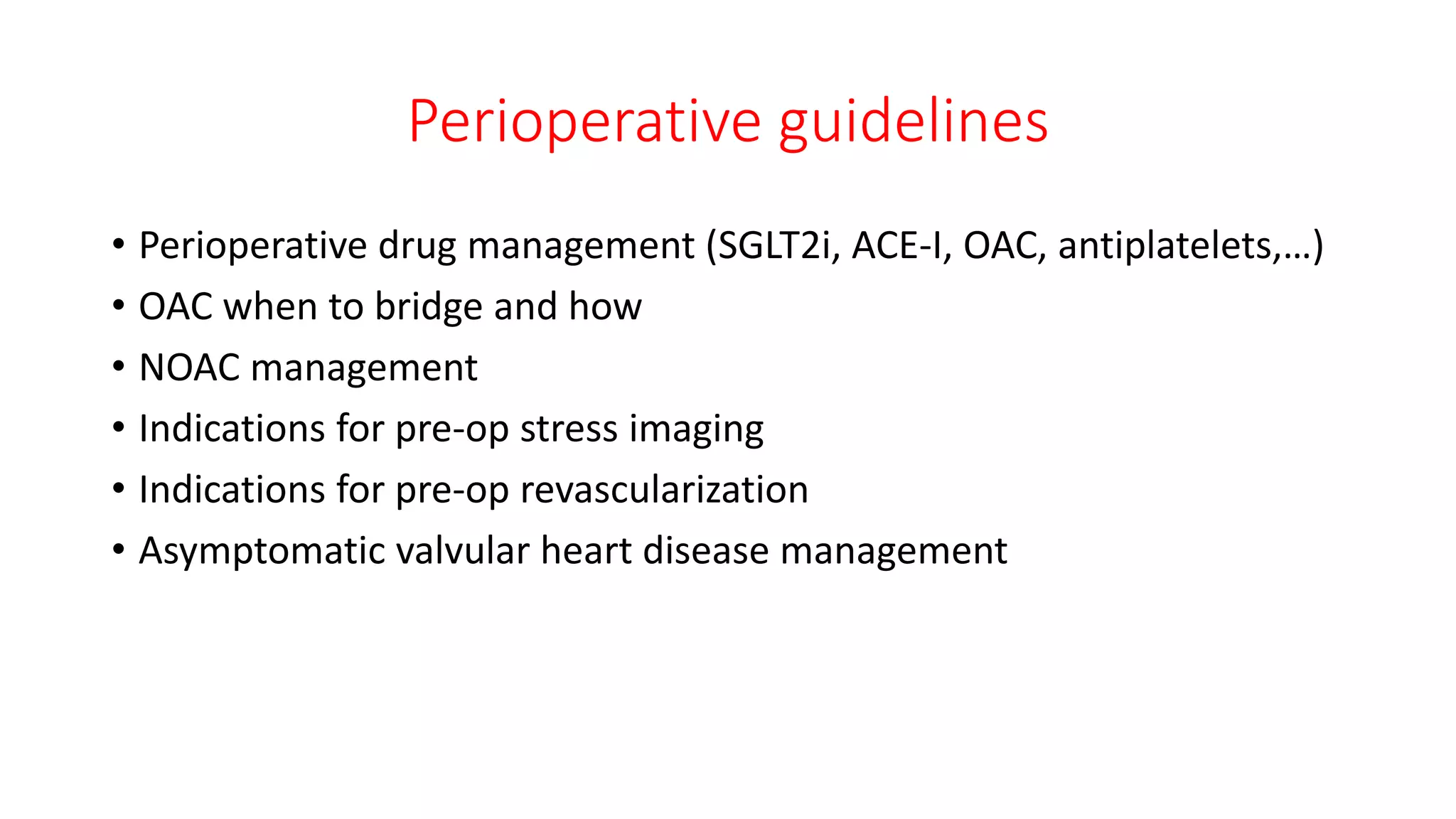
Perioperative guidelines
• Perioperative drug management (SGLT2i, ACE-I, OAC, antiplatelets,…)
• OAC when to bridge and how
• NOAC management
• Indications for pre-op stress imaging
• Indications for pre-op revascularization
• Asymptomatic valvular heart disease management
Cardio-oncology guidelines
• Cardiotoxicity prevention, surveillance , When to hold TTT ?
• Long term FU plan
• ICI & T-CART myocarditis
• Arrhythmia side effects od ibrutinib (AF)
• 5FU coronary spasm
• Radiotherapy
• Cardiac tumors
• Role of PET, CMR in cardiac masses
Dyslipidemia& DM& Prevention guidelines
• LDL targets in different subsets
• Non-statin therapy indications
• Statin intolerance management
• Statin in heart failure and hemodialysis patients
• Familial hypercholesterolemia diagnosis, genetic screening
• Lipoprotein a
• Risk stratification SCORE, when to calculate
• Role of ACE-I, aspirin , SGLT2i , Colchicine for 1ry prevention
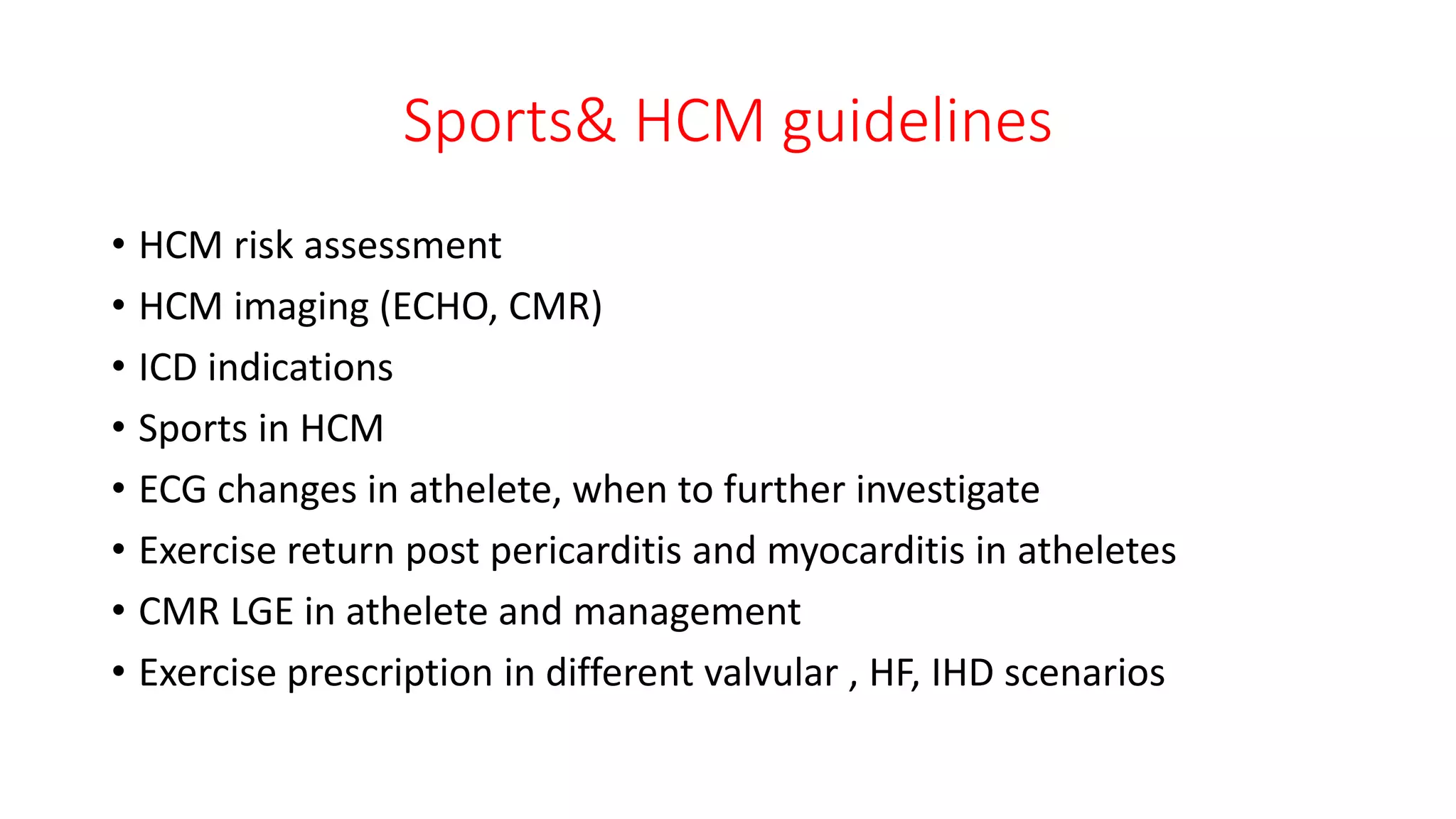
Sports& HCM guidelines
• HCM risk assessment
• HCM imaging (ECHO, CMR)
• ICD indications
• Sports in HCM
• ECG changes in athelete, when to further investigate
• Exercise return post pericarditis and myocarditis in atheletes
• CMR LGE in athelete and management
• Exercise prescription in different valvular , HF, IHD scenarios
Pericardial & HTN guidelines
• Pericarditis diagnosis (CMR imaging), TTT regimens and duration
• Chronic, refractory pericarditis
• Pericardial effusion management and timing of FU
• Constrictive pericarditis diagnosis (CMR, hemodynamic tracing),
management
• Cardiac tamponade diagnosis (ECHO, hemodynamic tracing)
• HTN definition, stages, when to treat, combination therapy
• Resistant hypertension workup and management
• Secondary hypertension causes and workup
• HTN emergency workup and management
Final tips
• Try to make your own summary for important guidelines
recommendations and tips from EECC & BJCA preparatory courses
• Try to make MCQ key points as bullets in your notebook
• At least 50% of questions contains imaging (TTE,TEE,CMR,CT,PET,MPI),
or ECG which may contains a clue for MCQ, so try to focus on EECC &
BJCA imaging and ECG section
Best of luck for every one…
Aswan, Egypt…

EECC.pdf

  • 1.
  • 2.
  • 3.
    Exam format • Examdate: Held once/ year, next one (18th June 2024) • Exam registration through your national society • Exam fees (400 Euro) • 120 MCQ questions over 3 hours • Delivered using online proctoring platform (ProctorU®).
  • 5.
  • 6.
    1- ESC Guidelines https://www.escardio.org/Guidelines/Clinical-Practice-Guidelines Focuson: > Start with PowerPoint slides > Diagnostic and management algorithms > Guidelines full text reading if you have time
  • 7.
    2-EECC free preparatorycourse Focus on: > short ESC congress lectures (10-20 minutes) > ESC guidelines presentation > Miscellaneous& imaging lectures
  • 8.
  • 9.
    3-BJCA course Very useful Complimentaryfree access upon exam registration
  • 10.
    Other Complimentary ESC textbookfree access upon exam registration (Optional) IF you want to go more in depth in selected topics
  • 11.
    Other (Optional) IF youwant to go more in depth in selected topics
  • 12.
  • 13.
    1- Study PRNquestion bank
  • 14.
    1- Study PRNquestion bank sample
  • 15.
    2-MCQ revision videos Complimentary freeaccess upon exam registration
  • 16.
    3-Mock exam Available onlineone month ahead of exam date
  • 17.
    Direct Q 40% Modrete difficulty 20% Difficult 20% verytricky 20% QUESTIONS LEVEL ESC guidelines slides EECC & BJCA preparatory course videos MCQ practicing (Study PRN, BJCA) Guidelines full text ECG & imaging practice
  • 18.
    Heart failure 10% Valvular& endocarditis 10% CCS 10% ACS 10% VT&SCD 10% SVT&AF 5% Pacing& syncope 5% GUCH& pregnancy 5% PHTN& embolism 5% Pericardial& HTN 5% HCM& sports 5% Aorta& peripheral 5% Dyslipid&DM&Prevention 5% Perioperative 5% Cardio-oncology 5% TOPICS %
  • 19.
    What to focuson in guidelines? “According to my exam questions”
  • 20.
    Heart failure guidelines •HF diagnosis (Most specific, sensitive signs?), algorithm (BNP before ECHO) • BNP DD (What ↑ or ↓ ) • HF TTT sequencing in different scenarios , indications for iron TTT, CRT,ICD • Acute heart failure work up and TTT according to hemodynamics • Hyperkalemia in HF • HF recovered EF management • HFpEF diagnosis , role of exercise and TTT (Cutoff point ARNI EF < 57%) • Heart transplantation/ LVAD indications/ contraindication and complications • Temporary mechanical support choice (IABP vs ECMO) • Myocarditis diagnosis (CMR imaging), management • Amyloidosis types &diagnosis (GLS, CMR), management
  • 21.
    Valvular guidelines • Timingof surgery in asymptomatic patients (AS, MS, AR, MR, TR) • Role of exercise in asymptomatic AS and MS • Low-gradient AS different scenarios, role of dobutamine/Ca score and management • TAVR vs. SAVR • Mitral clip indications • Multivalvular heart disease (Assessment of severity, limitations of different parameters) • Prosthetic valve choice, INR targets, imaging (TTE,TEE,3D) • Prosthetic dysfunction , and thrombosis management • Tricuspid valve intervention indications • Calcific mitral stenosis assessment • Rheumatic fever diagnosis , prophylaxis and management
  • 22.
    Endocarditis guidelines • Whichpatient need prophylaxis • Diagnostic criteria (Imaging TTE,TEE) and empirical regimens • Timing and indications of surgery • Culture negative endocarditis • Prognostic factors • Implantable devices endocarditis • Special scenarios (CVS, cerebral hge) • Mimics of endocarditis ( Marantic , libman sac imaging)
  • 23.
    Aorta & Peripheralguidelines • Timing of intervention (TAA, AAA) in normal, bicuspid and marfan in details ( > or ≥ is tricky ) • Aortic dissection diagnosis • Rupture coronary sinus of Valsalva presentation • Vasculitis (Takayasu) • Antiplatelet in TIA, PAD • Indications for carotid intervention , surgery vs. stent
  • 24.
    CCS guidelines • Pretestprobability and risk stratification modality choice (CT, MPI, Dobutamine echo, Invasive?) • Image interpretation (Dobutamine ECHO, MPI, CMR), MPI artifacts • Antianginal 1st line, 2nd line, in special scenario ( Low BP, HR, spasm, bridge, ….) • Indication for angiography and revascularization (PCI vs, CABG) • Lead misplacement ECG
  • 25.
    ACS guidelines • STEMIequivilant diagnosis (ECGs e.g. wellen , LBBB sgarbossa , Dewinter, LM ECG,…..) • Antiplatelet management in different scenario (High bleeding risk, perioperative, duration, OAC patints) • MI complications ( VSR, rupture, arrhythmia ) management • Time frames for choice of TTT strategy ( PPCI vs pharmacoinvasive) • MINOCA workup (CMR imaging), Mimics (e.g. Taktsubo diagnosis) • SCAD imaging (Angio) and management • Timing and indications of ICD
  • 26.
    VT&SCD guidelines • ICDindications in different scenarios • Long QT diagnosis (ECG) and management • Catecholenergic polymorphic VT diagnosis (ECG) and management • Fascicular VT/ RVOT diagnosis (ECG) and management • PVC management , indication for ablation • Brugada $ diagnosis (ECG), sports?, and management • ERP syndrome • ARVC diagnosis (ECG and CMR), sports?, and management • Sarcoidosis diagnosis (CMR, PET” Activity) and ICD indications • Causes and work up for SCD and family screening • VT storm • ICD appropriate vs. inappropriate shock (Atrial arrhythmia)
  • 27.
    SVT & AFguidelines • 1st option in TTT of….. (Read guidelines algorithms carefully) • POTS diagnosis and management • WPW risk stratification and management • Preexcited AF diagnosis (ECG) and management • Intracardiac tracing of SVT! • Proper choice of rhythm control drug in different scenarios • Indications for AF ablation and complications of PVI • AF in HF and CRT patients • Anticoagulation indications (Scores), bleeding management, antidotes
  • 28.
    Pacing& syncope guidelines •Heart block ECGs (Mobitz I, II, complete), indications for pacing • Syncope in elderly vs. falls , 1st investigation • Bi-fascicular block & syncope management • Indications of pacing in reflex syncope • Pacing options in heart failure with AV block • MRI safety in cardiac electronic devices • Pacemaker trouble shooting (ECG), complications (short, long term) • Driving scenarios
  • 29.
    PHTN &Pulmonary embolismguidelines • Indications of lytic therapy and percutaneous intervention • Choice of anticoagulation and regimens • Indications of IVC filter • Screening algorithm for CTEPH, risk factors • PHTN types and defintions (Pre vs. post capillary ) , hemodynamic tracing • Risk stratification strata and management of PH (Drug sequencing)
  • 30.
    GUCH& Pregnancy guidelines •Indications of VSD, ASD, PDA closure , imaging diagnosis • Indications of intervention in pulmonary stenosis • TOF complications , management of pulmonary regurge (Indications) • Coronary anomalies imaging (MSCT) , role of exercice stress & management • Fontan and arrhythmia • Eisenmenger $ • Anticoagulation during pregnancy • Contraindication of pregnancy in cardiac patients (WHO classes), mode of delivery • IE prophylaxis • D.D dilated RV (TEE imaging) • Management of arrhythmia (Drug safety/DC) &VHD and HTN in pregnancy
  • 31.
    Perioperative guidelines • Perioperativedrug management (SGLT2i, ACE-I, OAC, antiplatelets,…) • OAC when to bridge and how • NOAC management • Indications for pre-op stress imaging • Indications for pre-op revascularization • Asymptomatic valvular heart disease management
  • 32.
    Cardio-oncology guidelines • Cardiotoxicityprevention, surveillance , When to hold TTT ? • Long term FU plan • ICI & T-CART myocarditis • Arrhythmia side effects od ibrutinib (AF) • 5FU coronary spasm • Radiotherapy • Cardiac tumors • Role of PET, CMR in cardiac masses
  • 33.
    Dyslipidemia& DM& Preventionguidelines • LDL targets in different subsets • Non-statin therapy indications • Statin intolerance management • Statin in heart failure and hemodialysis patients • Familial hypercholesterolemia diagnosis, genetic screening • Lipoprotein a • Risk stratification SCORE, when to calculate • Role of ACE-I, aspirin , SGLT2i , Colchicine for 1ry prevention
  • 34.
    Sports& HCM guidelines •HCM risk assessment • HCM imaging (ECHO, CMR) • ICD indications • Sports in HCM • ECG changes in athelete, when to further investigate • Exercise return post pericarditis and myocarditis in atheletes • CMR LGE in athelete and management • Exercise prescription in different valvular , HF, IHD scenarios
  • 35.
    Pericardial & HTNguidelines • Pericarditis diagnosis (CMR imaging), TTT regimens and duration • Chronic, refractory pericarditis • Pericardial effusion management and timing of FU • Constrictive pericarditis diagnosis (CMR, hemodynamic tracing), management • Cardiac tamponade diagnosis (ECHO, hemodynamic tracing) • HTN definition, stages, when to treat, combination therapy • Resistant hypertension workup and management • Secondary hypertension causes and workup • HTN emergency workup and management
  • 36.
    Final tips • Tryto make your own summary for important guidelines recommendations and tips from EECC & BJCA preparatory courses • Try to make MCQ key points as bullets in your notebook • At least 50% of questions contains imaging (TTE,TEE,CMR,CT,PET,MPI), or ECG which may contains a clue for MCQ, so try to focus on EECC & BJCA imaging and ECG section
  • 37.
    Best of luckfor every one… Aswan, Egypt…