
Capacity Planning
    in Brief


  ANTHONY DEHNASHI
        2012
Overview

 Overview:
   Obviously we can’t encapsulate all capacity planning details in
    a couple of slides
   Very high-level briefing.

   Models and suggested model outlined.

   Overall process to do capacity planning.
What is capacity planning

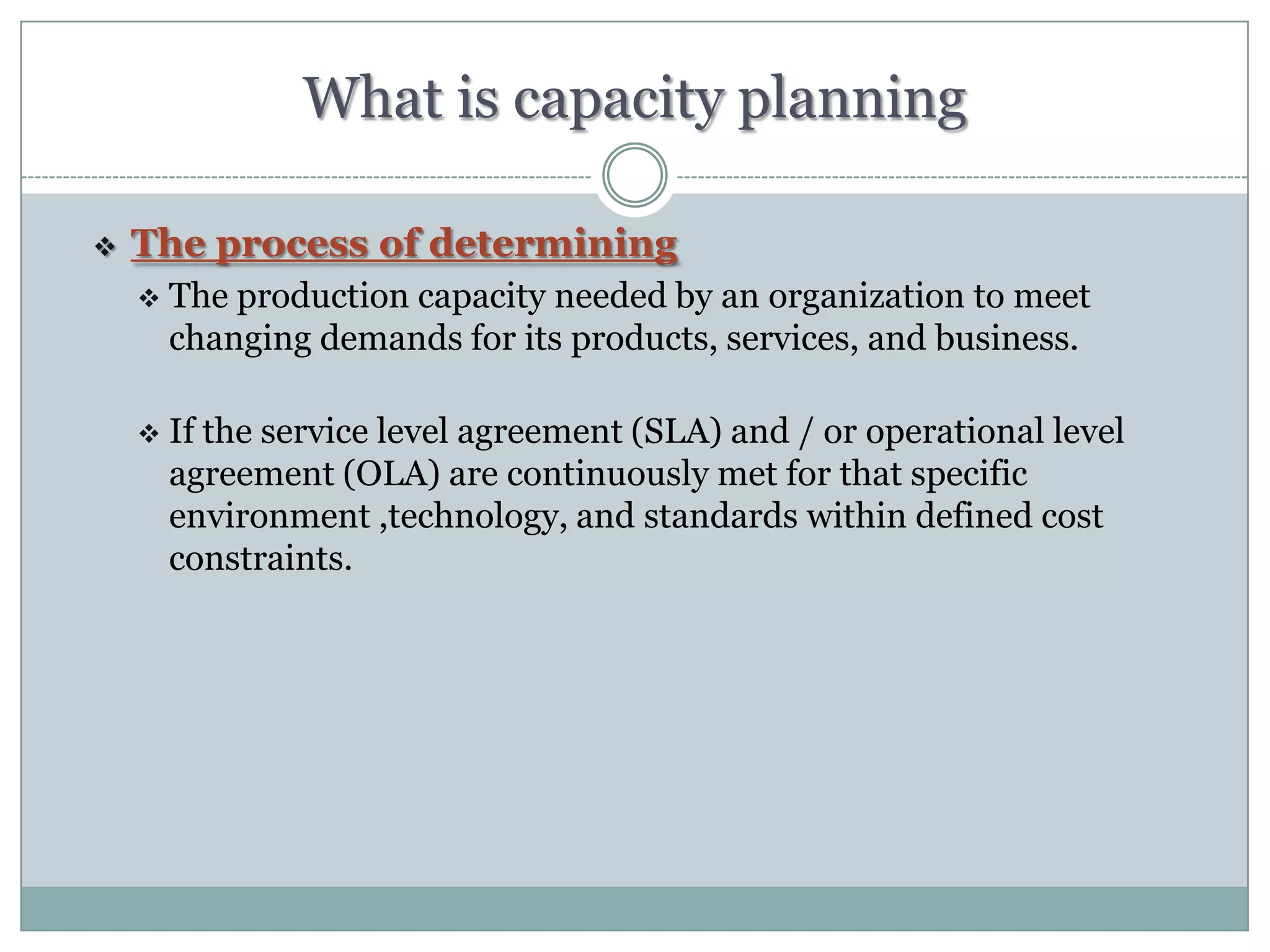
   The process of determining
       The production capacity needed by an organization to meet
        changing demands for its products, services, and business.

       If the service level agreement (SLA) and / or operational level
        agreement (OLA) are continuously met for that specific
        environment ,technology, and standards within defined cost
        constraints.
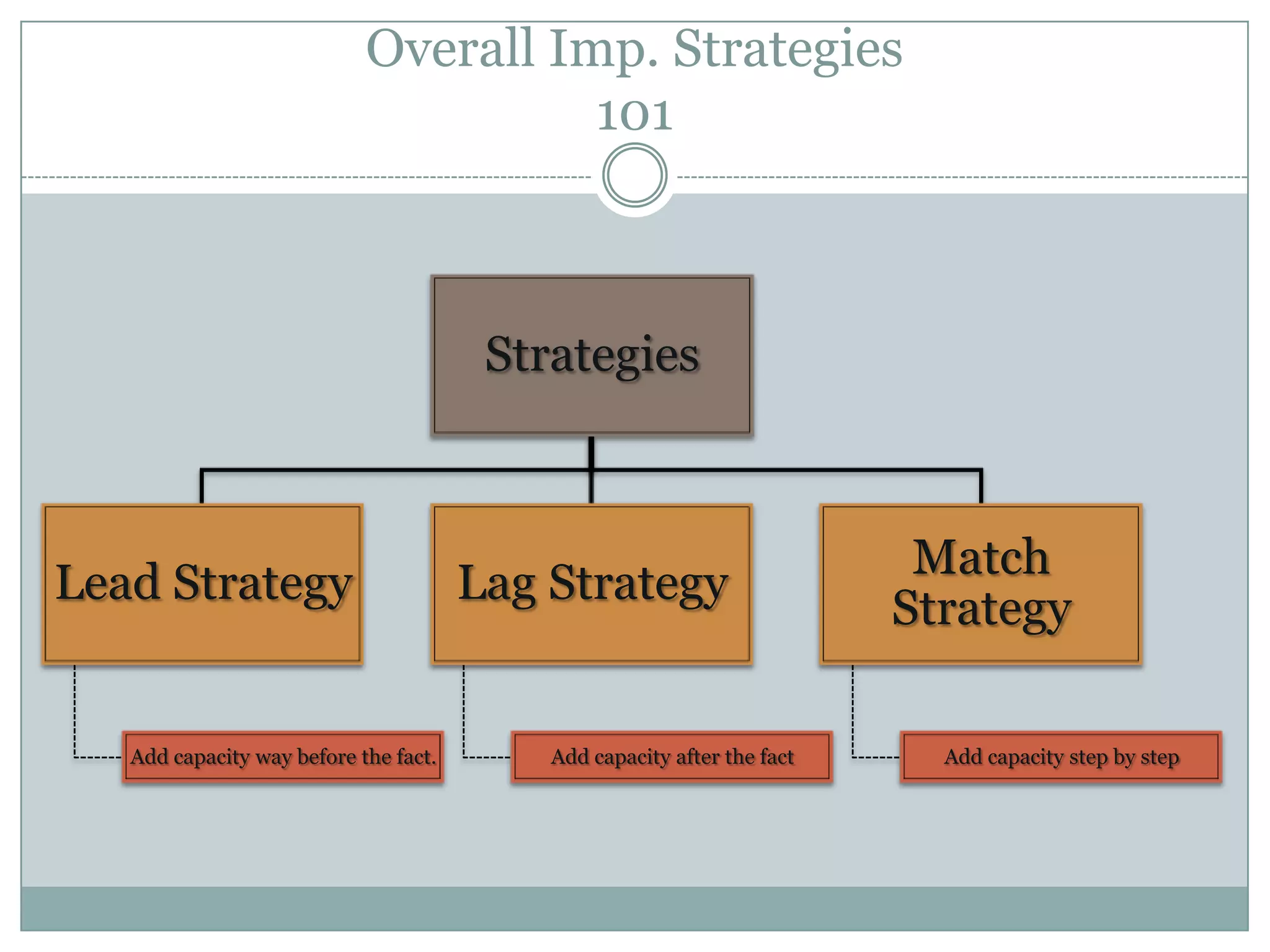
Overall Imp. Strategies
                                      101


                                        Strategies


                                                                          Match
Lead Strategy                          Lag Strategy
                                                                         Strategy

   Add capacity way before the fact.       Add capacity after the fact     Add capacity step by step
Match Strategy


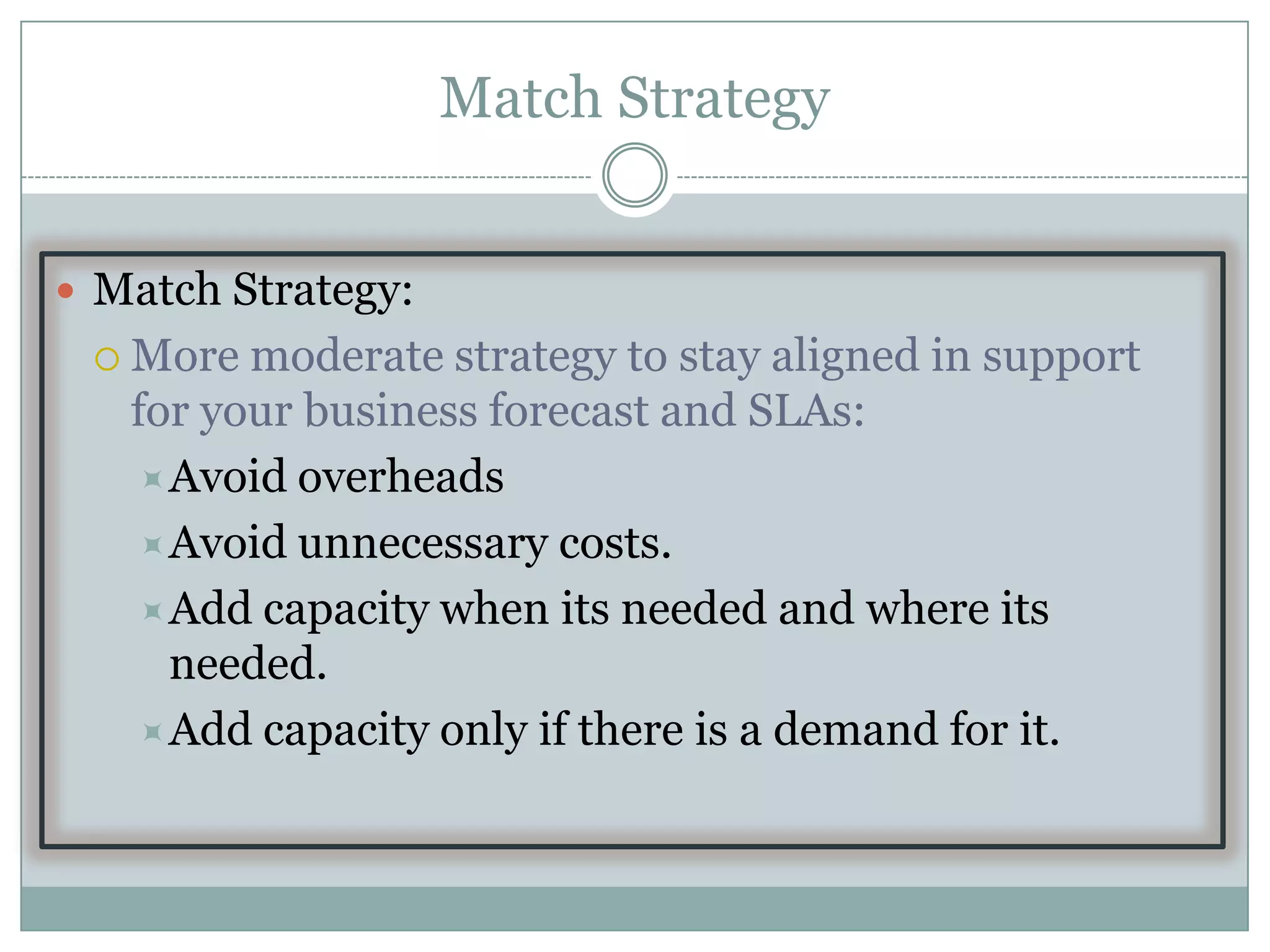
 Match Strategy:
  More  moderate strategy to stay aligned in support
   for your business forecast and SLAs:
    Avoid overheads
    Avoid unnecessary costs.
    Add capacity when its needed and where its
     needed.
    Add capacity only if there is a demand for it.
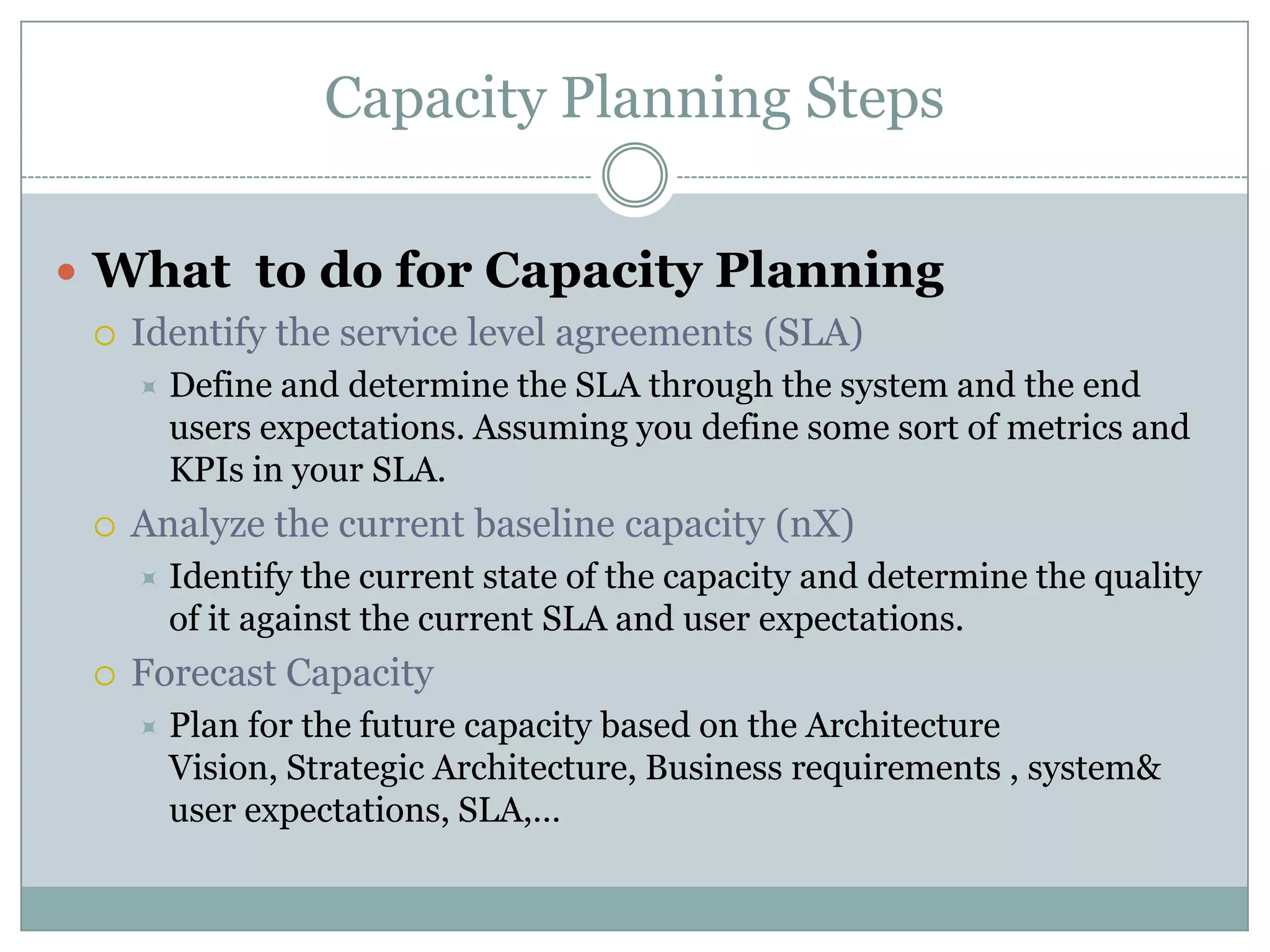
Capacity Planning Steps

 What to do for Capacity Planning
    Identify the service level agreements (SLA)
        Define and determine the SLA through the system and the end
         users expectations. Assuming you define some sort of metrics and
         KPIs in your SLA.
    Analyze the current baseline capacity (nX)
        Identify the current state of the capacity and determine the quality
         of it against the current SLA and user expectations.
    Forecast Capacity
        Plan for the future capacity based on the Architecture
         Vision, Strategic Architecture, Business requirements , system&
         user expectations, SLA,…
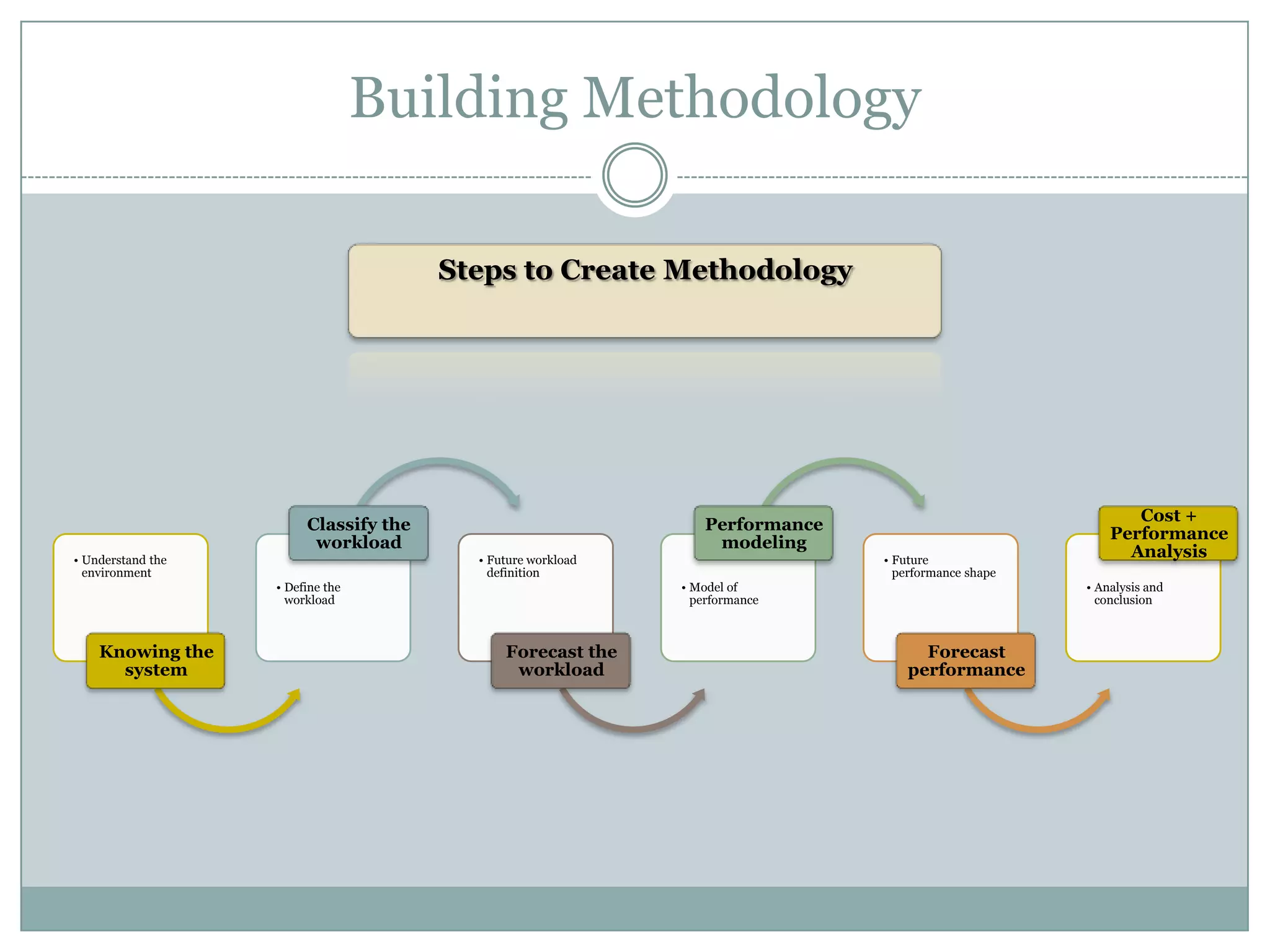
Building Methodology

                                       Steps to Create Methodology


                                                                                                           Cost +
                        Classify the                            Performance
                                                                                                        Performance
                         workload                                modeling
• Understand the                         • Future workload                    • Future
                                                                                                          Analysis
  environment                              definition                           performance shape
                   • Define the                              • Model of                             • Analysis and
                     workload                                  performance                            conclusion


    Knowing the                              Forecast the                           Forecast
      system                                  workload                            performance
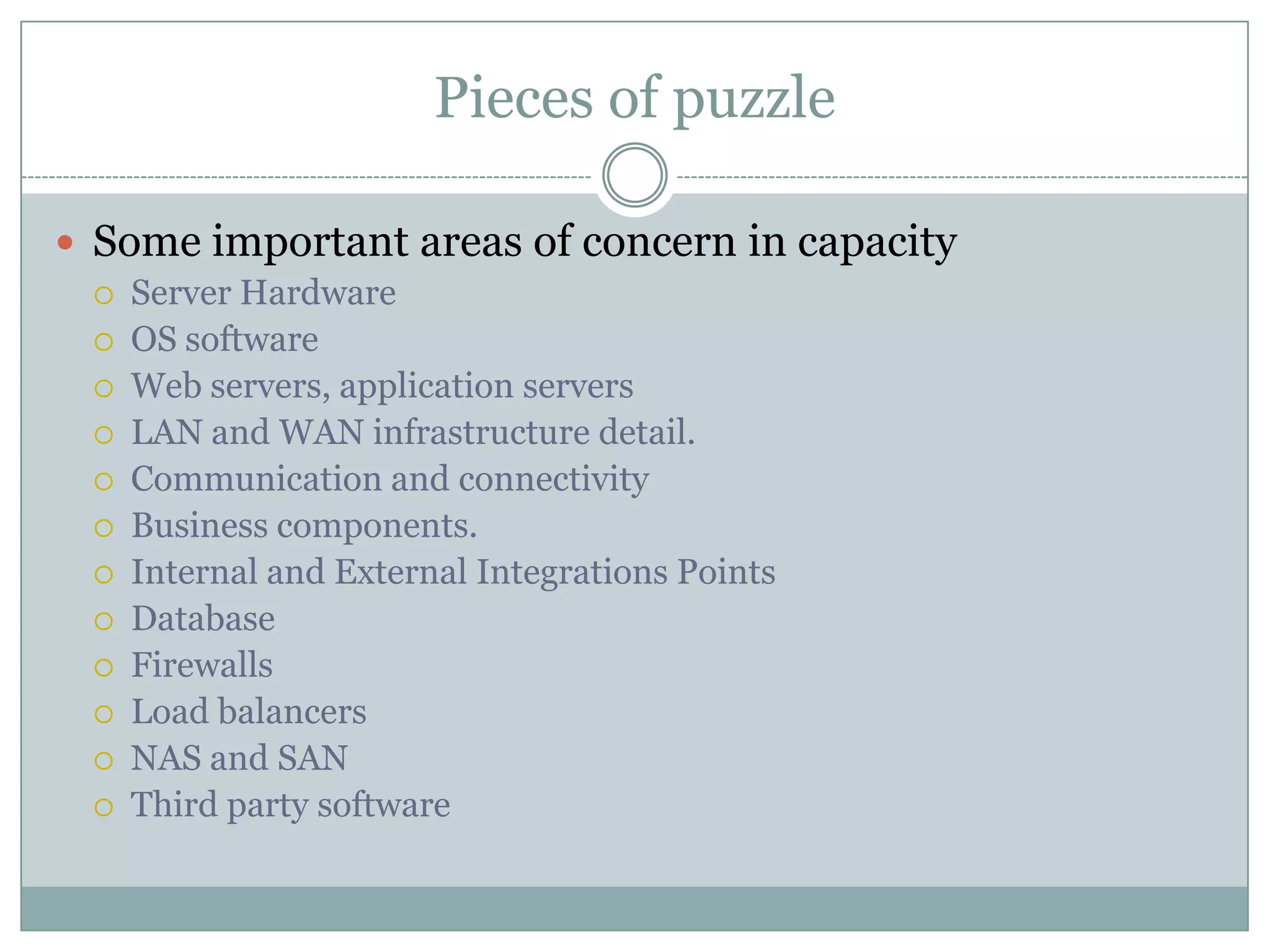
Pieces of puzzle

 Some important areas of concern in capacity
    Server Hardware
    OS software
    Web servers, application servers
    LAN and WAN infrastructure detail.
    Communication and connectivity
    Business components.
    Internal and External Integrations Points
    Database
    Firewalls
    Load balancers
    NAS and SAN
    Third party software
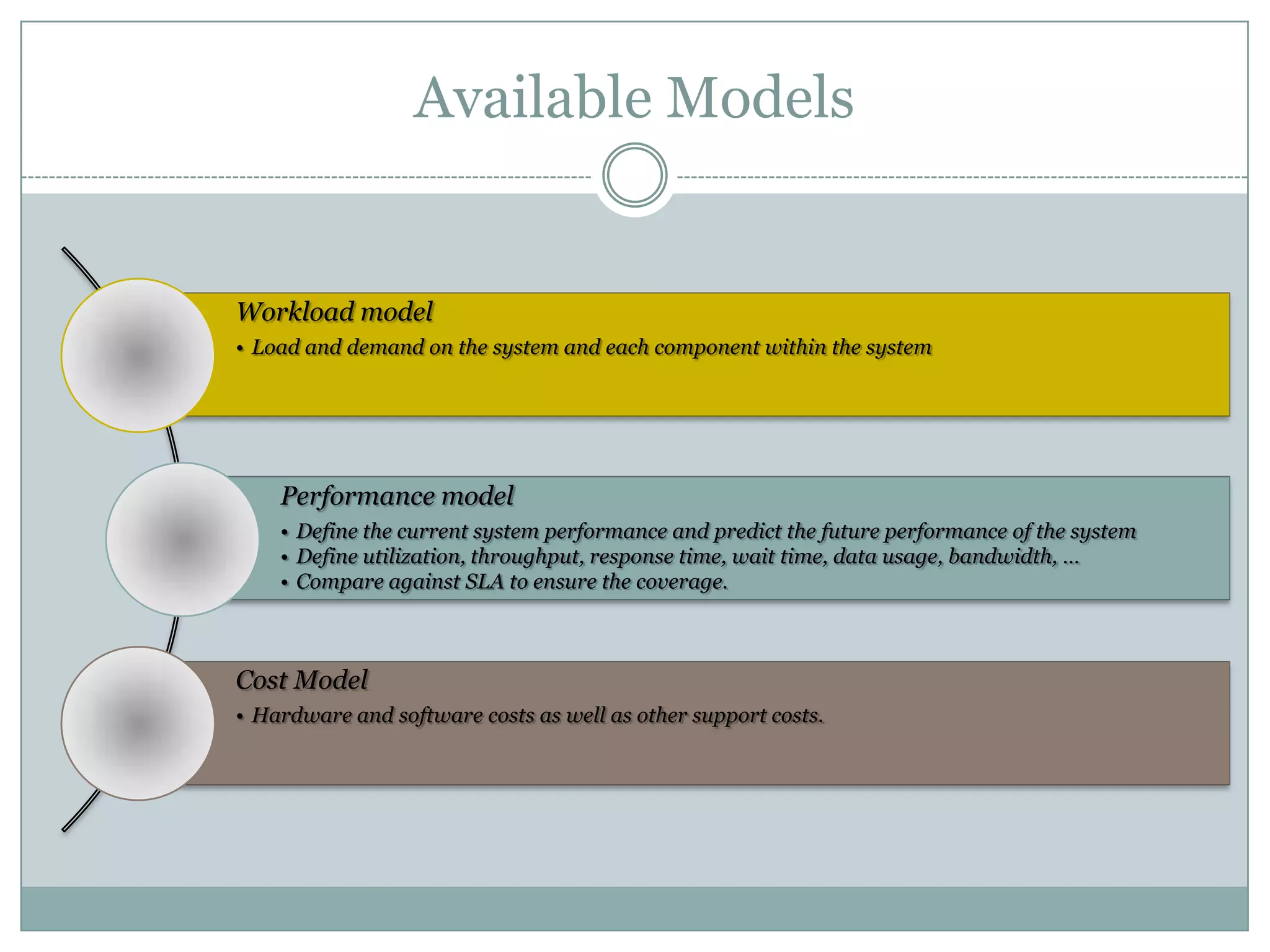
Available Models


Workload model
• Load and demand on the system and each component within the system


    Performance model
    • Define the current system performance and predict the future performance of the system
    • Define utilization, throughput, response time, wait time, data usage, bandwidth, …
    • Compare against SLA to ensure the coverage.


Cost Model
• Hardware and software costs as well as other support costs.
What Strategy & Model


 You need to use Strategies and models depending on
  your scenario, environment, system, and situation.
 You need to carefully look at your system before
  deciding what model and / or strategy you are going
  to use.
 Make sure to pick an strategy before getting into
  choosing a model.
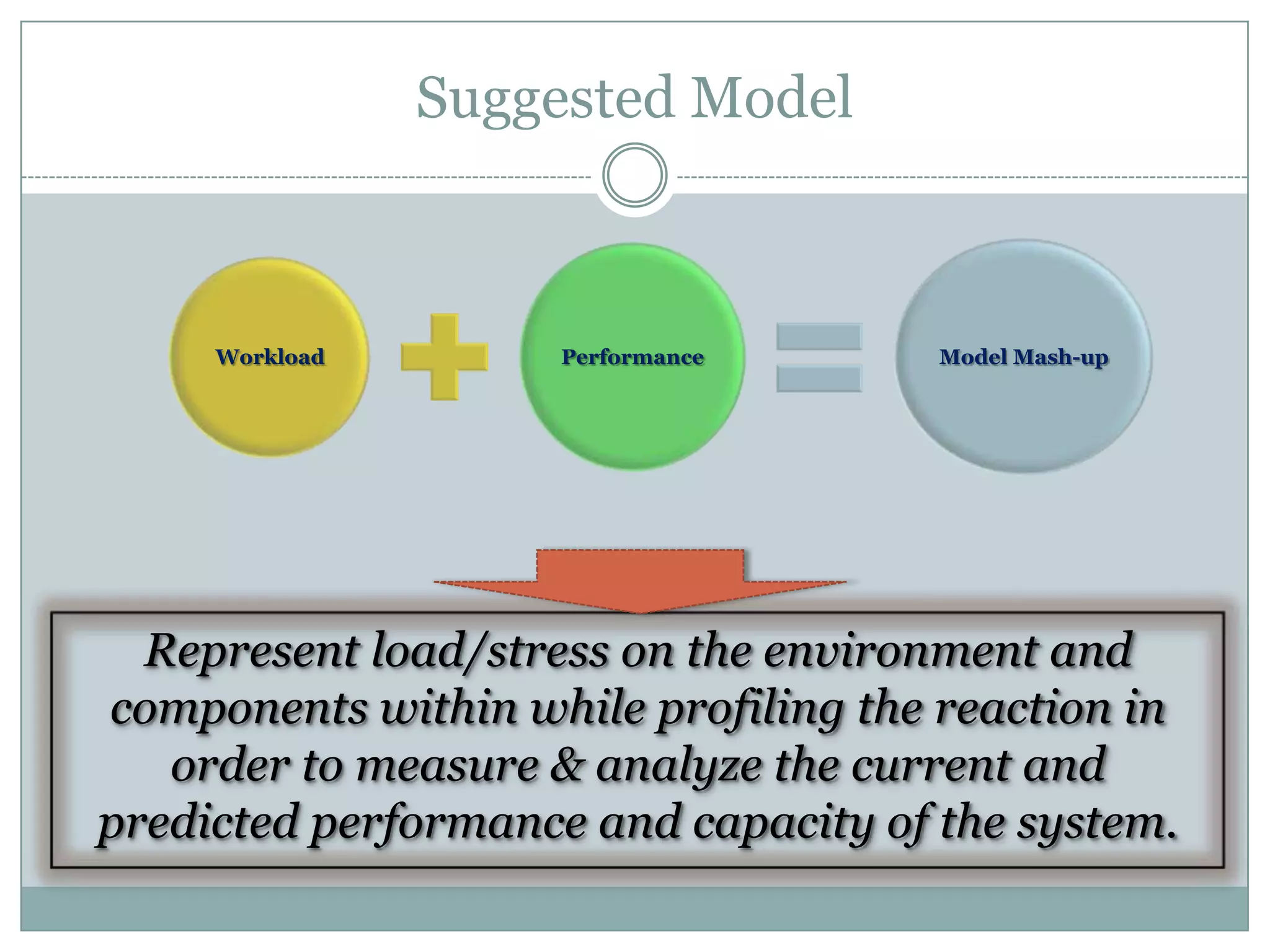
Suggested Model


     Workload        Performance      Model Mash-up


  Represent load/stress on the environment and
components within while profiling the reaction in
   order to measure & analyze the current and
predicted performance and capacity of the system.

Capacity Planning and Modelling

  • 1.
    Capacity Planning in Brief ANTHONY DEHNASHI 2012
  • 2.
    Overview  Overview:  Obviously we can’t encapsulate all capacity planning details in a couple of slides  Very high-level briefing.  Models and suggested model outlined.  Overall process to do capacity planning.
  • 3.
    What is capacityplanning  The process of determining  The production capacity needed by an organization to meet changing demands for its products, services, and business.  If the service level agreement (SLA) and / or operational level agreement (OLA) are continuously met for that specific environment ,technology, and standards within defined cost constraints.
  • 4.
    Overall Imp. Strategies 101 Strategies Match Lead Strategy Lag Strategy Strategy Add capacity way before the fact. Add capacity after the fact Add capacity step by step
  • 5.
    Match Strategy  MatchStrategy:  More moderate strategy to stay aligned in support for your business forecast and SLAs:  Avoid overheads  Avoid unnecessary costs.  Add capacity when its needed and where its needed.  Add capacity only if there is a demand for it.
  • 6.
    Capacity Planning Steps What to do for Capacity Planning  Identify the service level agreements (SLA)  Define and determine the SLA through the system and the end users expectations. Assuming you define some sort of metrics and KPIs in your SLA.  Analyze the current baseline capacity (nX)  Identify the current state of the capacity and determine the quality of it against the current SLA and user expectations.  Forecast Capacity  Plan for the future capacity based on the Architecture Vision, Strategic Architecture, Business requirements , system& user expectations, SLA,…
  • 7.
    Building Methodology Steps to Create Methodology Cost + Classify the Performance Performance workload modeling • Understand the • Future workload • Future Analysis environment definition performance shape • Define the • Model of • Analysis and workload performance conclusion Knowing the Forecast the Forecast system workload performance
  • 8.
    Pieces of puzzle Some important areas of concern in capacity  Server Hardware  OS software  Web servers, application servers  LAN and WAN infrastructure detail.  Communication and connectivity  Business components.  Internal and External Integrations Points  Database  Firewalls  Load balancers  NAS and SAN  Third party software
  • 9.
    Available Models Workload model •Load and demand on the system and each component within the system Performance model • Define the current system performance and predict the future performance of the system • Define utilization, throughput, response time, wait time, data usage, bandwidth, … • Compare against SLA to ensure the coverage. Cost Model • Hardware and software costs as well as other support costs.
  • 10.
    What Strategy &Model  You need to use Strategies and models depending on your scenario, environment, system, and situation.  You need to carefully look at your system before deciding what model and / or strategy you are going to use.  Make sure to pick an strategy before getting into choosing a model.
  • 11.
    Suggested Model Workload Performance Model Mash-up Represent load/stress on the environment and components within while profiling the reaction in order to measure & analyze the current and predicted performance and capacity of the system.