FUNDAMENTALS OF AGRICULTURAL
EXTENSION EDUCATION (2+1)
Capacity building of extension personnel-
Training- definition, need for training
BY TO
BASKAR S Dr.SIVARAJ P
BATCH-’A’ Asst.Prof.
CB.AG.U4AGR19018 19AEX112
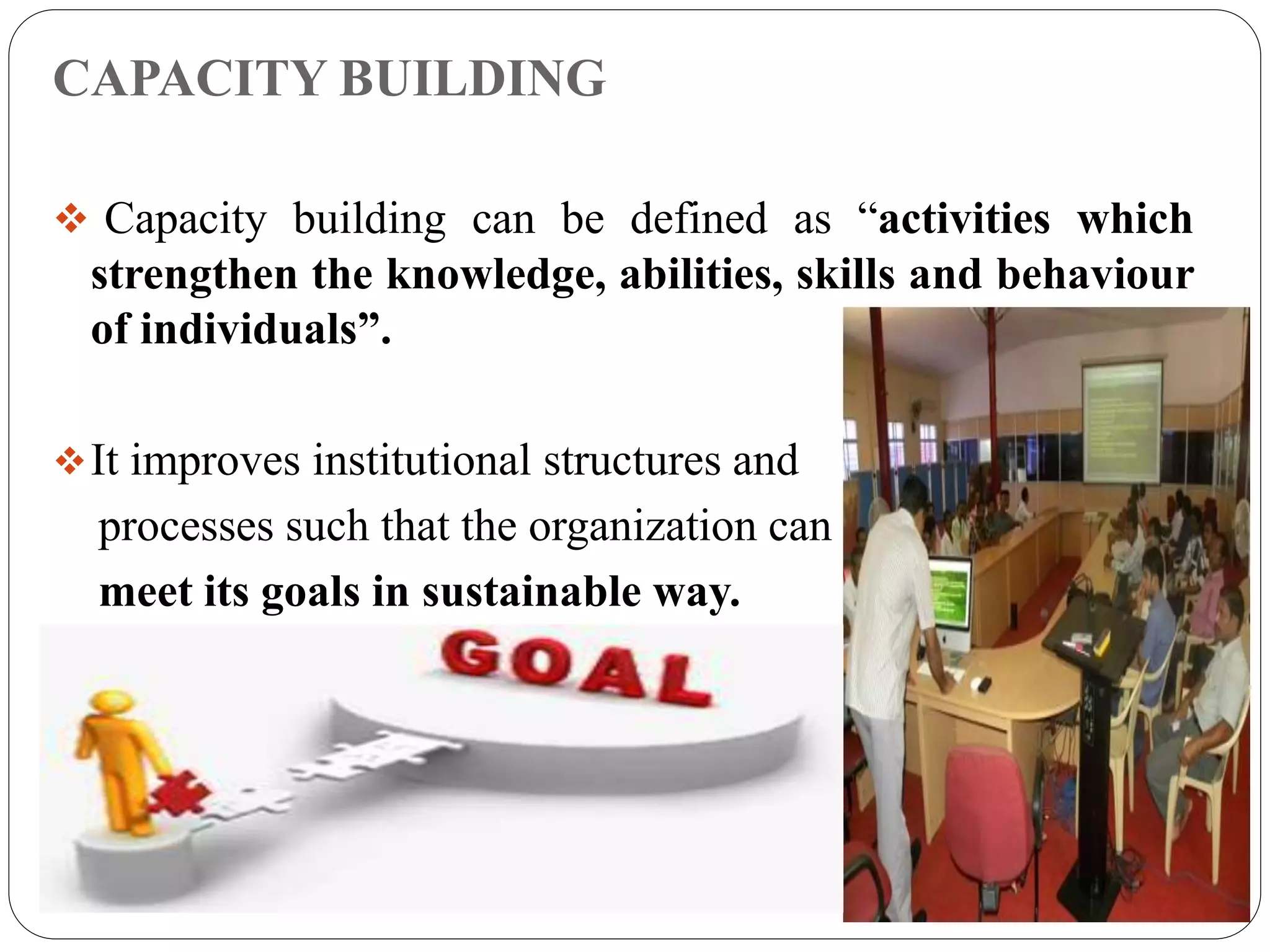
CAPACITY BUILDING
 Capacity building can be defined as “activities which
strengthen the knowledge, abilities, skills and behaviour
of individuals”.
It improves institutional structures and
processes such that the organization can
meet its goals in sustainable way.
IMPORTANCE OF CAPACITY BUILDING
OF EXTENSION PERSONNEL
Extension personnel should builds his capacity in social &
technical aspects to
1. indentify and solve farmer’s
problem
2. transfer new technical
knowledge
3. access market systems and
new plans
4. exchange knowledge and
experience with farmers.
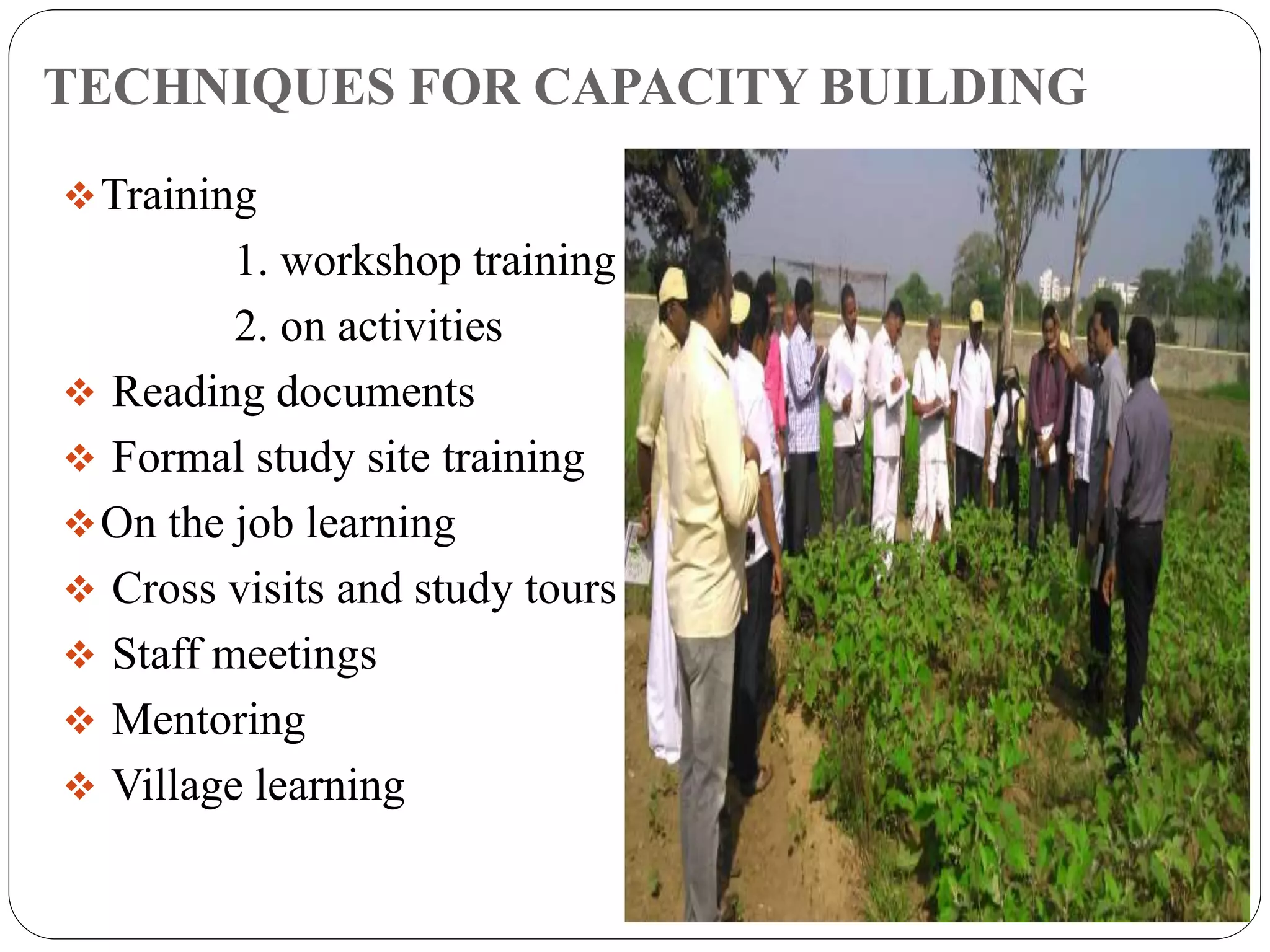
TECHNIQUES FOR CAPACITY BUILDING
Training
1. workshop training
2. on activities
 Reading documents
 Formal study site training
On the job learning
 Cross visits and study tours
 Staff meetings
 Mentoring
 Village learning
TRAINING
Training is one of the major components of capacity building
which becomes an inseparable part of HRD.
It is a systematic learning process which increases our
knowledge, skill and attitude.
TRAINING - DEFINITIONS
 Training is a well organized opportunity for participants to
acquire the necessary understanding and skills.
- Lynton & Pareek,1967
Training is the process of changing employee behaviour,
attitudes, or opinion through some type of guided
experience.
- Krietner,1989
NEED FOR TRAINING
 Rapid changes in technologies
 Enhancing skills of farmers and extension personnel
 Effective transfer of technology
 Competition and market pressure for improvement of
product and services (better production).
REFERENCES
 S V Supe – A Textbook of Extension Education
 http://agriodisha.nic.in/content/pdf/Capacity%20Buildi
ng.pdf
 https://files.eric.ed.gov/fulltext/ED492440.pdf
 https://www.managementstudyguide.com/training-
and-development.htm
Capacity building, Training & need for training

Capacity building, Training & need for training

  • 1.
    FUNDAMENTALS OF AGRICULTURAL EXTENSIONEDUCATION (2+1) Capacity building of extension personnel- Training- definition, need for training BY TO BASKAR S Dr.SIVARAJ P BATCH-’A’ Asst.Prof. CB.AG.U4AGR19018 19AEX112
  • 2.
    CAPACITY BUILDING  Capacitybuilding can be defined as “activities which strengthen the knowledge, abilities, skills and behaviour of individuals”. It improves institutional structures and processes such that the organization can meet its goals in sustainable way.
  • 3.
    IMPORTANCE OF CAPACITYBUILDING OF EXTENSION PERSONNEL Extension personnel should builds his capacity in social & technical aspects to 1. indentify and solve farmer’s problem 2. transfer new technical knowledge 3. access market systems and new plans 4. exchange knowledge and experience with farmers.
  • 4.
    TECHNIQUES FOR CAPACITYBUILDING Training 1. workshop training 2. on activities  Reading documents  Formal study site training On the job learning  Cross visits and study tours  Staff meetings  Mentoring  Village learning
  • 5.
    TRAINING Training is oneof the major components of capacity building which becomes an inseparable part of HRD. It is a systematic learning process which increases our knowledge, skill and attitude.
  • 6.
    TRAINING - DEFINITIONS Training is a well organized opportunity for participants to acquire the necessary understanding and skills. - Lynton & Pareek,1967 Training is the process of changing employee behaviour, attitudes, or opinion through some type of guided experience. - Krietner,1989
  • 7.
    NEED FOR TRAINING Rapid changes in technologies  Enhancing skills of farmers and extension personnel  Effective transfer of technology  Competition and market pressure for improvement of product and services (better production).
  • 8.
    REFERENCES  S VSupe – A Textbook of Extension Education  http://agriodisha.nic.in/content/pdf/Capacity%20Buildi ng.pdf  https://files.eric.ed.gov/fulltext/ED492440.pdf  https://www.managementstudyguide.com/training- and-development.htm