AMRITA SCHOOL OF
AGRICULTURAL SCIENCES
SENSATION AND ATTENTION
BY TO
BASKAR S DR.SIVARAJ P
HANS THOMAS GEORGE 19AEX-101
SENSATION
• Sensation refers to awareness of stimulus.
• Sensation is derived from the latin word
“sensus” which means sensing something.
• Sensation is a process that allows our brain to
take information from environment through our
five senses.
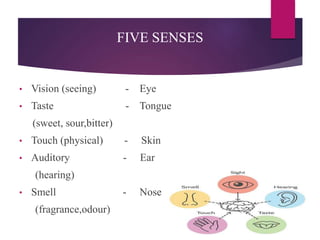
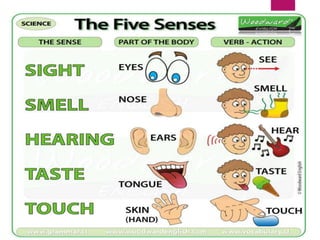
FIVE SENSES
• Vision (seeing) - Eye
• Taste - Tongue
(sweet, sour,bitter)
• Touch (physical) - Skin
• Auditory - Ear
(hearing)
• Smell - Nose
(fragrance,odour)
ATTRIBUTES OF SENSATION
• Quality : distinguishes one sensation from
other.It is generic (light and
sound)and specific (red,blue).
• Localization : sensing pressure over different
areas over skin
ATTRIBUTES
 Intensity :differentiation in quality of sensation.
 Duration :sensing time.
 Extensity : quality which permits the
perception of space or size.
 Changes :stimulation(shifts our sensation)
MECHANISM OF SENSATION
Transmission of information from sense organs
to nervous system.
 Energy senses
(energy gather in the form of light, sound
waves)
Visual (eye)
Auditory (ear)
Tactual (skin)
 Chemical senses
Chemical substances in the form liquid and gas.
Olfactory (nose)
Coustatory (tongue)
Organic (stomach and the back of throat)
 Balance & Position senses
Vestibular (semicircular canals and otoliths)
Kinesthetic (muscles and joints)
SENSORY THRESHOLD
 Sensory threshold is the level of strength a
stimulus must reach to be detected.
 Three types of sensory threshold
 Absolute threshold ( the lowest level of
strength necessary for detection)
 Terminal threshold (the highest level of strength in which
individual is not able to detect it)
 Difference threshold (the level where in individual is able to
make a difference in magnitude of two stimuli)
Attention
 Ross (1951)
Attention is the process of getting an object clearly
in mind
 Ability to focus on a selected stimuli, sustaining that
focus, shifting it at will and ability to concentrate.
Meaning
 Attention is active part of consciousness.
 Attention is not possible in the absence of consciousness, but
attention and consciousness are not one.
 The field of consciousness is vast and attention one of its parts.
For example I am reading at this time. Book , note , table, chair
etc., all this can be under my consciousness, but my attention is
on the words being read on the paper.
.
NATURE
 Attention is focusing of consciousness on a
particular object.
 Attention is constantly shifting or changeable.
 Attention is selective.
 Attention is a mental process.
 Attention is a state of preparedness or alertness.
 Attention has narrow range or span.
Types Of Attention
1. Selective attention-it takes place when we block out certain
features of our environment and focus one particular feature.
2. Divided attention- it takes place when we are paying attention
to two things at once.
3. Sustained attention-it takes place when one can concentrate on
one task for a prolonged period of time.
4. Executive attention-it is the ability of one to focus and to
monitor his progress towards a particular goal of his.
Factors Related To Attention
 Attention depends upon several factors. It is of
two types:
1. External
2. Internal
Internal Factors
 Interest: we are interested in some things and disinterested
in other things obviously our attention is drawn to our
interested things
 Desire: a person desires becomes a cause of paying
attention to a thing
 Habit: it is also a vital determinant of attention.
External Factors
 Size: Size has effect on attention. It is natural that a very big
object or very small size attracts our attention compared with
our normal size.
 Intensity: loud sounds, strong smells and deep colour are
attractive in nature
 Movement: moving things draws our attention more than
stationary one.
 Repetition: if a thing or person or event is repeated several
times, then our attention is drawn to it.
Shifting of attention
 Attention shifts from one thing to another very
rapidly
 Example: Average time of attention 10-20 min
then continue
Span Of Attention
 How many numbers or digits we could see at a glance .
 At an a single attention (focus), our ability to memorise
or remember.
 For example, two wheeler numbers are in 4 digits
TN 48 CF 2345.
REFERENCES
 ddroylec.blogspot.com
 www.alleydog.com
 Advanced educational psychology-S.K.Mangal
 www.study.com
Thank you
FOR
YOUR
SENSATION
AND
ATTENTION

Sensation and attention

  • 1.
    AMRITA SCHOOL OF AGRICULTURALSCIENCES SENSATION AND ATTENTION BY TO BASKAR S DR.SIVARAJ P HANS THOMAS GEORGE 19AEX-101
  • 2.
    SENSATION • Sensation refersto awareness of stimulus. • Sensation is derived from the latin word “sensus” which means sensing something. • Sensation is a process that allows our brain to take information from environment through our five senses.
  • 3.
    FIVE SENSES • Vision(seeing) - Eye • Taste - Tongue (sweet, sour,bitter) • Touch (physical) - Skin • Auditory - Ear (hearing) • Smell - Nose (fragrance,odour)
  • 5.
    ATTRIBUTES OF SENSATION •Quality : distinguishes one sensation from other.It is generic (light and sound)and specific (red,blue). • Localization : sensing pressure over different areas over skin
  • 6.
    ATTRIBUTES  Intensity :differentiationin quality of sensation.  Duration :sensing time.  Extensity : quality which permits the perception of space or size.  Changes :stimulation(shifts our sensation)
  • 7.
    MECHANISM OF SENSATION Transmissionof information from sense organs to nervous system.  Energy senses (energy gather in the form of light, sound waves) Visual (eye) Auditory (ear) Tactual (skin)
  • 8.
     Chemical senses Chemicalsubstances in the form liquid and gas. Olfactory (nose) Coustatory (tongue) Organic (stomach and the back of throat)  Balance & Position senses Vestibular (semicircular canals and otoliths) Kinesthetic (muscles and joints)
  • 9.
    SENSORY THRESHOLD  Sensorythreshold is the level of strength a stimulus must reach to be detected.  Three types of sensory threshold  Absolute threshold ( the lowest level of strength necessary for detection)
  • 10.
     Terminal threshold(the highest level of strength in which individual is not able to detect it)  Difference threshold (the level where in individual is able to make a difference in magnitude of two stimuli)
  • 11.
    Attention  Ross (1951) Attentionis the process of getting an object clearly in mind  Ability to focus on a selected stimuli, sustaining that focus, shifting it at will and ability to concentrate.
  • 12.
    Meaning  Attention isactive part of consciousness.  Attention is not possible in the absence of consciousness, but attention and consciousness are not one.  The field of consciousness is vast and attention one of its parts. For example I am reading at this time. Book , note , table, chair etc., all this can be under my consciousness, but my attention is on the words being read on the paper.
  • 13.
    . NATURE  Attention isfocusing of consciousness on a particular object.  Attention is constantly shifting or changeable.  Attention is selective.  Attention is a mental process.  Attention is a state of preparedness or alertness.  Attention has narrow range or span.
  • 14.
    Types Of Attention 1.Selective attention-it takes place when we block out certain features of our environment and focus one particular feature. 2. Divided attention- it takes place when we are paying attention to two things at once. 3. Sustained attention-it takes place when one can concentrate on one task for a prolonged period of time. 4. Executive attention-it is the ability of one to focus and to monitor his progress towards a particular goal of his.
  • 15.
    Factors Related ToAttention  Attention depends upon several factors. It is of two types: 1. External 2. Internal
  • 16.
    Internal Factors  Interest:we are interested in some things and disinterested in other things obviously our attention is drawn to our interested things  Desire: a person desires becomes a cause of paying attention to a thing  Habit: it is also a vital determinant of attention.
  • 17.
    External Factors  Size:Size has effect on attention. It is natural that a very big object or very small size attracts our attention compared with our normal size.  Intensity: loud sounds, strong smells and deep colour are attractive in nature  Movement: moving things draws our attention more than stationary one.  Repetition: if a thing or person or event is repeated several times, then our attention is drawn to it.
  • 18.
    Shifting of attention Attention shifts from one thing to another very rapidly  Example: Average time of attention 10-20 min then continue
  • 19.
    Span Of Attention How many numbers or digits we could see at a glance .  At an a single attention (focus), our ability to memorise or remember.  For example, two wheeler numbers are in 4 digits TN 48 CF 2345.
  • 20.
    REFERENCES  ddroylec.blogspot.com  www.alleydog.com Advanced educational psychology-S.K.Mangal  www.study.com
  • 21.