B.SC -
AGRICULTURE
SECTION -C
 TOPIC-EXTENSION PROGRAM PLANNING
,PROCESSES, MEANING
 An extension programme is a statement of
situation, objectives, problems and solutions.
 It is a set of clearly defined, consciously
conceived objectives or ends derived from an
adequate analysis of the situation, which are to
be achieved through extension teaching
activities
 The situation in which the people are
located.
 The problem that are a part of the
local situation
 The objective and goal of the local
people in relation to these problems.
 The recommendations or solutions
to reach these objectives on along
time basis or on a short time basis.
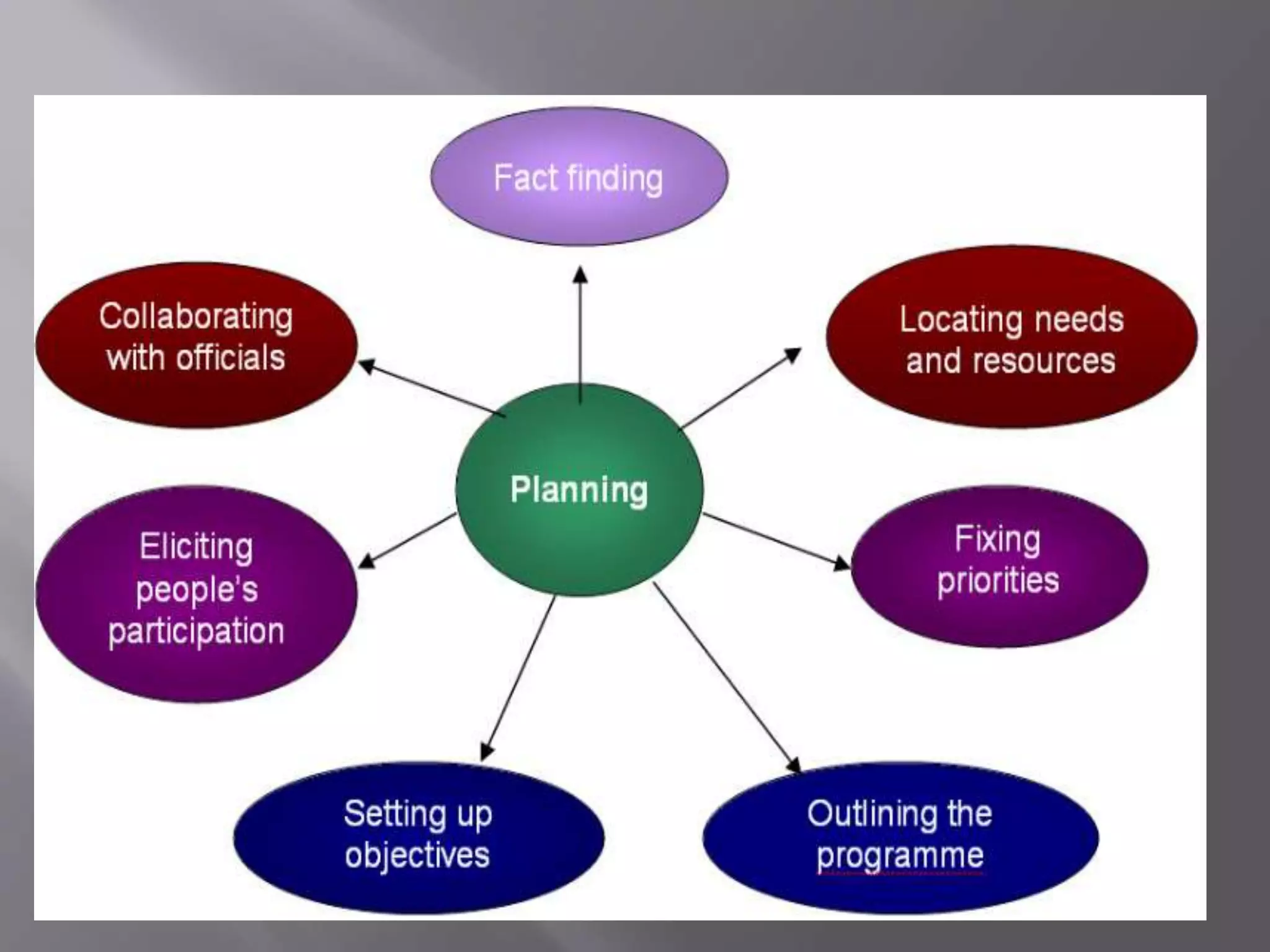
 Planning is designing course of action to
achieve end .
 Planning is a progressive step by step process,
it is never completed.
 Social planning has been defined as a
conscious, collaborative, interactional process
combining investigation, discussion, agreement
and action in order to achieve the conditions,
relationship and regarded as desirable.
 The concept of extension planning is based on
a number of assumptions. Boyle (1965) has
listed the following assumptions in this regards;
 Planning is a necessary prerequisite for social
progress of people and communities.
 The most desirable change is predetermined
and democratically achieved.
 Programme planning is viewed as a process
through which repesentatives or the people are
intensively involved with extension personnel
and other professional people in four activites
(Boyle,1965).
 Studying facts and trends.
 Identifying problems and opportunities based
on these facts and trends.
 Making decisions about problems and
opportunities that should be given priority
 Extension programme planning is a process.
 Extension programme planning is a decision
making process.
 Extension programme planning requires
advance thinking.
 Extension programme planning requires skill
and ability on the part of planners.
 Extension programme planning is social
process.
 Extension programme planning is collaborative
efforts, system.
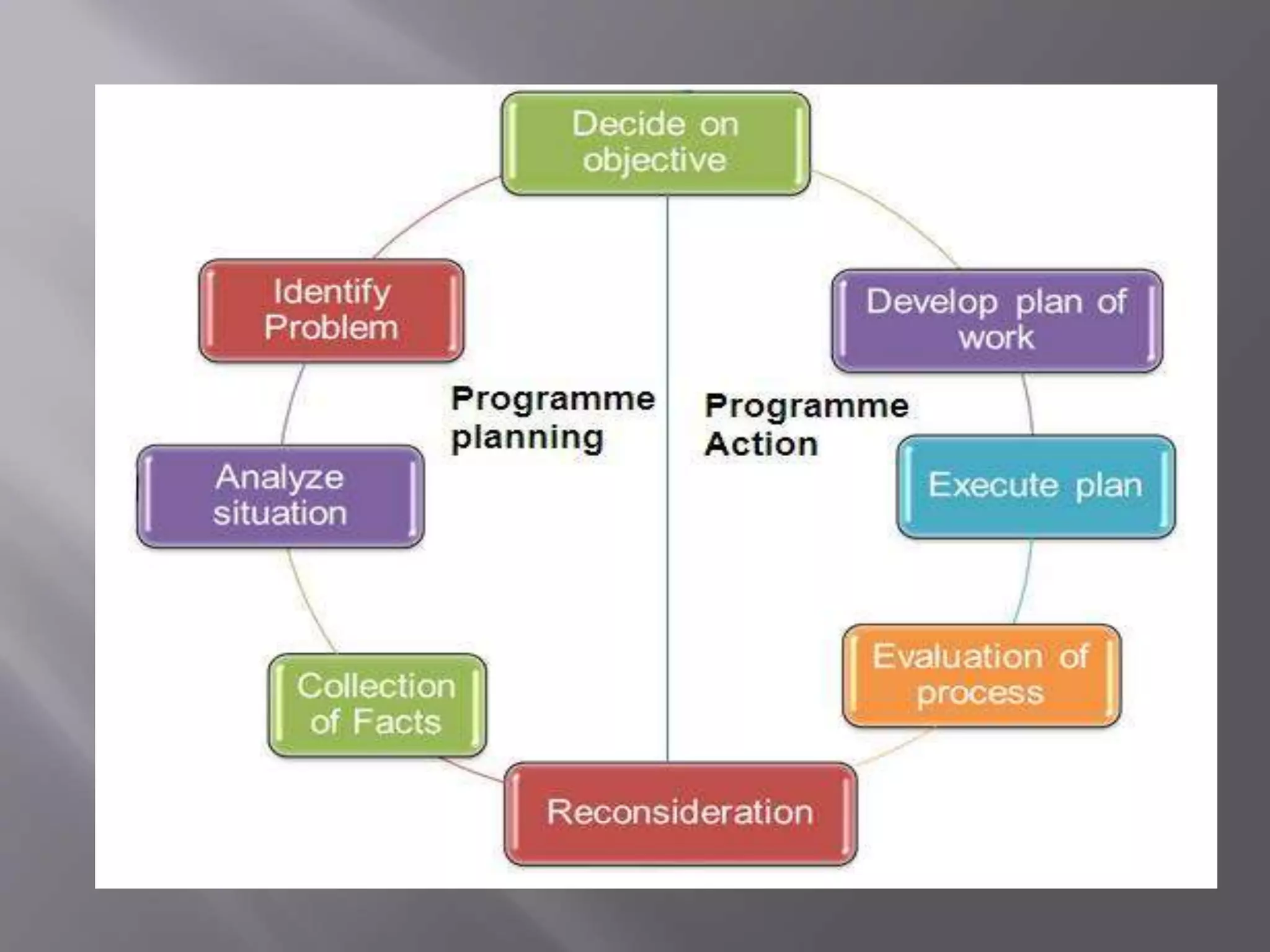
1. Collection of facts
2. Analysis of situation
3. Identification of problems
4. Determination of objectives and goals
5. Development plan of work and calendar of
operations.
6. Follow through plan of work and calendar of
operations.
7. Evaluation of progress.
8. Reconsideration and revision of the programme
extension program planning ,meaning ,concept

extension program planning ,meaning ,concept

  • 1.
    B.SC - AGRICULTURE SECTION -C TOPIC-EXTENSION PROGRAM PLANNING ,PROCESSES, MEANING
  • 2.
     An extensionprogramme is a statement of situation, objectives, problems and solutions.  It is a set of clearly defined, consciously conceived objectives or ends derived from an adequate analysis of the situation, which are to be achieved through extension teaching activities
  • 3.
     The situationin which the people are located.  The problem that are a part of the local situation  The objective and goal of the local people in relation to these problems.  The recommendations or solutions to reach these objectives on along time basis or on a short time basis.
  • 4.
     Planning isdesigning course of action to achieve end .  Planning is a progressive step by step process, it is never completed.  Social planning has been defined as a conscious, collaborative, interactional process combining investigation, discussion, agreement and action in order to achieve the conditions, relationship and regarded as desirable.
  • 5.
     The conceptof extension planning is based on a number of assumptions. Boyle (1965) has listed the following assumptions in this regards;  Planning is a necessary prerequisite for social progress of people and communities.  The most desirable change is predetermined and democratically achieved.
  • 6.
     Programme planningis viewed as a process through which repesentatives or the people are intensively involved with extension personnel and other professional people in four activites (Boyle,1965).  Studying facts and trends.  Identifying problems and opportunities based on these facts and trends.  Making decisions about problems and opportunities that should be given priority
  • 7.
     Extension programmeplanning is a process.  Extension programme planning is a decision making process.  Extension programme planning requires advance thinking.  Extension programme planning requires skill and ability on the part of planners.  Extension programme planning is social process.  Extension programme planning is collaborative efforts, system.
  • 8.
    1. Collection offacts 2. Analysis of situation 3. Identification of problems 4. Determination of objectives and goals 5. Development plan of work and calendar of operations. 6. Follow through plan of work and calendar of operations. 7. Evaluation of progress. 8. Reconsideration and revision of the programme