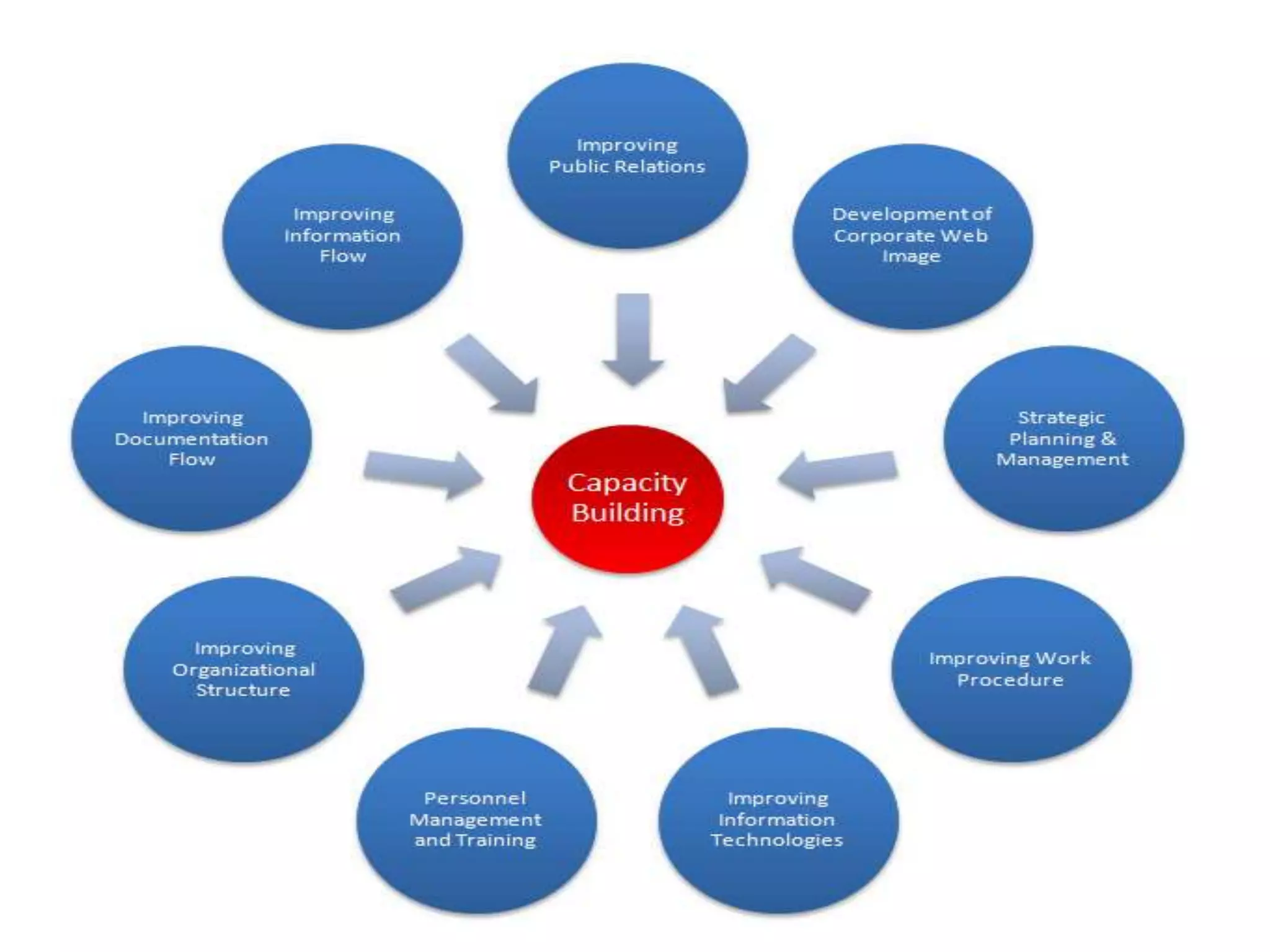
CAPACITY BUILDING IN
DISASTER MANAGEMANT
Defination
• Capacity is the combination of all the strengths
and resources available within a community,
society or organization that can reduce the level
of risk or the effects of a disaster.
• These actions can include: resource development,
financial management (diversification of funding
sources), organizational learning, leadership
development and other activities.
Need for capacity building
• Comprehensive formulation of objectives.
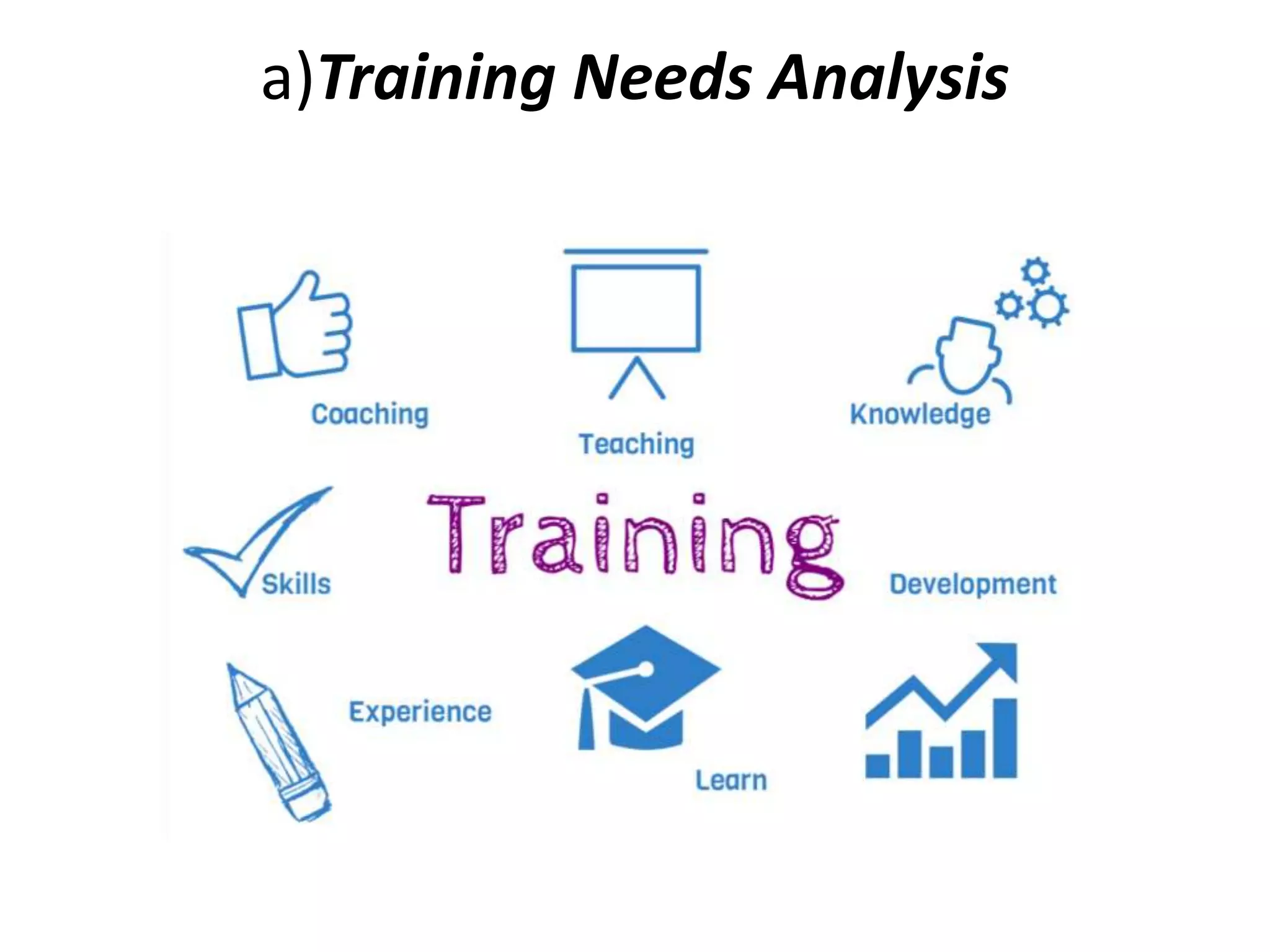
• Conduct of Training Needs Analysis
• Preparation of Knowledge, Skills and Attitude
• Administration of Face-to-Face Training
Programme (FFTP)
various elements of capacity building
• Education on disaster prevention and response
• Training to vulnerable communities
• Collaboration with relief agencies
• Mock drill
• Household preparation
• Understanding warning/de-warning messages
• First aid preparedness
Education on disaster prevention and response
• It includes educating the vulnerable communities as
well as the population of state to the possible
hazards and their impacts in their area. It also covers
the preventive measures and response strategies in
case of a disaster strike to the surface.
Training to vulnerable communities
• It includes imparting the basic training of
disaster management to the volunteers and
local people. It aims to teach the people that
how they can survive and help others.
Collaboration with relief agencies
• It includes the collaboration between different
government as well as non-government
agencies involved in the relief work through
the state for all kind of disasters
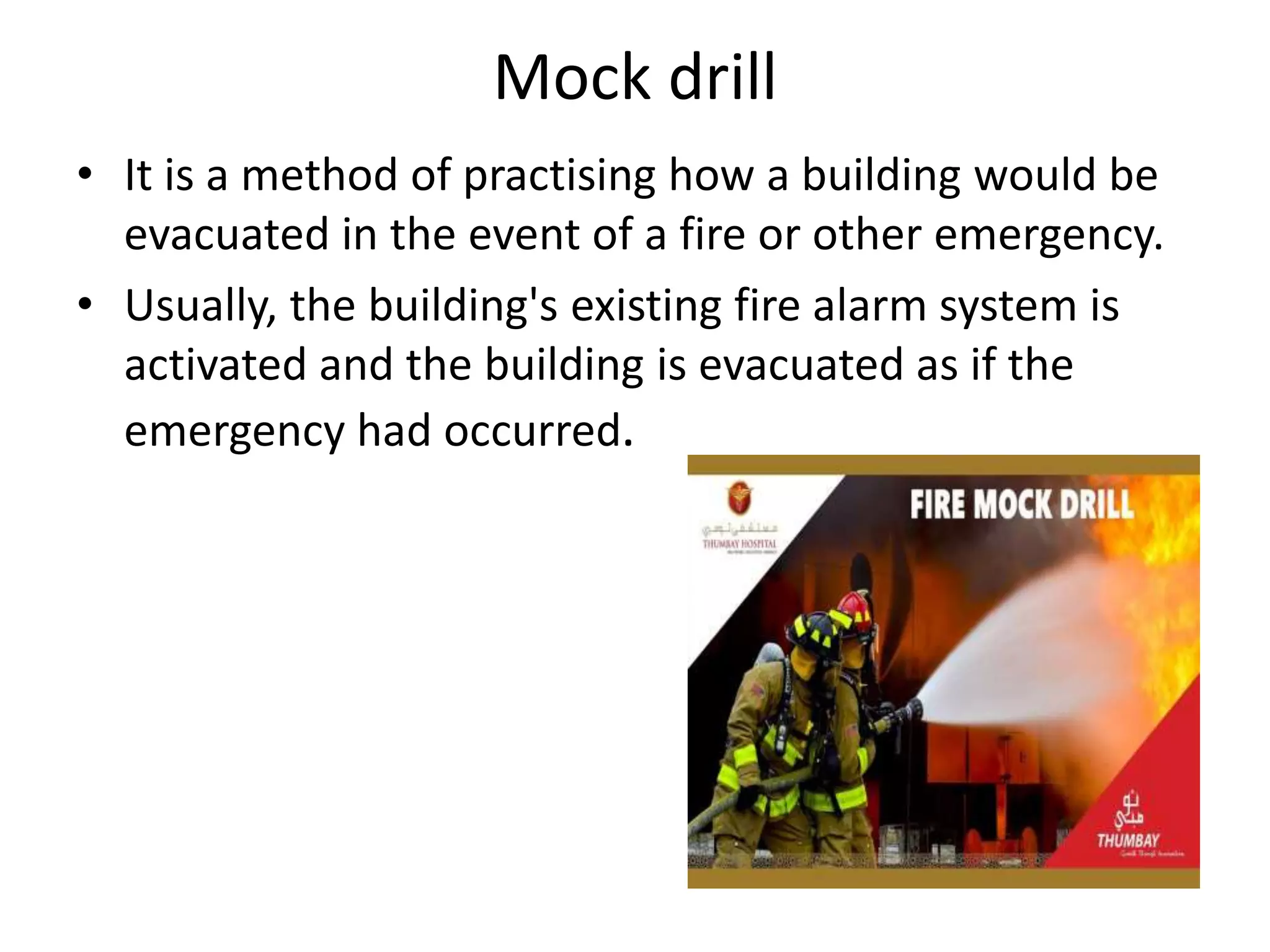
Mock drill
• It is a method of practising how a building would be
evacuated in the event of a fire or other emergency.
• Usually, the building's existing fire alarm system is
activated and the building is evacuated as if the
emergency had occurred.
Household preparation
• it covers the preparation of keeping all valuable
items in waterproof bags, keeping minimum
clothing, and being ready with a plan for evacuation
Understanding warning/de-warning messages
• Dissemination of early warning message to the
vulnerable communities is the next task which
can be achieved through better training and
involvement of all stakeholders
First aid preparedness
• Along with all necessary things it’s important
to have a well-stocked first aid kit to deal with
minor accidents and injuries.
Factor of capacity building
1.Connect between Disasters and Development
2.Sustainable Development and Traditional Wisdom
3.Participation of all Stakeholders
4.Mainstreaming Disaster Risk Reduction (DRR)
5.Gender Mainstreaming
6. Psycho-social Support in Disaster Aftermath
7.Preparation of Training Manual
8.Unique Training Approach
1.Connect between Disasters and Development
The “backward” and “forward” linkages between
political, developmental, relief and rehabilitation
operations constitute a complex network of
relationships.
TRAINING METHODOLOGY
• a)Training Needs Analysis
• b)Knowledge Skills and Attitudes (KSAs)
• c)The Role of capacity building Functionaries
Towards Effective Conduct of FFTPs
a)Training Needs Analysis
b)Knowledge Skills and Attitudes (KSAs)
c)The Role of capacity building Functionaries Towards
Effective Conduct of FFTPs
• Training Tools
• The made use of many tools in its conduct of Workshops and
FFTPs.
• Conventional Lectures.
• Simulations.
• Graphics, Pictures and Charts, Case Studies
• Hazard, Vulnerability, Risk and Capacity (HVRC) . A Situational
Analysis
Importance of Capacity Building to Future Success
• These entities provide needed
social services, education, health
care and the arts that improve
the well being of the community
and on which many people
depend
Conclusion
• The process through which individuals, organizations
and societies obtain, strengthen and maintain the
capabilities to set and achieve their own
development objectives over time.”
• capacity building is important because the evaluation
process coupled with the implementation
component help ensure organizational success and
sustainability.
THANK YOU..

CAPACITY BUILDING IN DISASTER MANAGEMENT

  • 1.
  • 3.
    Defination • Capacity isthe combination of all the strengths and resources available within a community, society or organization that can reduce the level of risk or the effects of a disaster. • These actions can include: resource development, financial management (diversification of funding sources), organizational learning, leadership development and other activities.
  • 4.
    Need for capacitybuilding • Comprehensive formulation of objectives. • Conduct of Training Needs Analysis • Preparation of Knowledge, Skills and Attitude • Administration of Face-to-Face Training Programme (FFTP)
  • 5.
    various elements ofcapacity building • Education on disaster prevention and response • Training to vulnerable communities • Collaboration with relief agencies • Mock drill • Household preparation • Understanding warning/de-warning messages • First aid preparedness
  • 6.
    Education on disasterprevention and response • It includes educating the vulnerable communities as well as the population of state to the possible hazards and their impacts in their area. It also covers the preventive measures and response strategies in case of a disaster strike to the surface.
  • 7.
    Training to vulnerablecommunities • It includes imparting the basic training of disaster management to the volunteers and local people. It aims to teach the people that how they can survive and help others.
  • 8.
    Collaboration with reliefagencies • It includes the collaboration between different government as well as non-government agencies involved in the relief work through the state for all kind of disasters
  • 9.
    Mock drill • Itis a method of practising how a building would be evacuated in the event of a fire or other emergency. • Usually, the building's existing fire alarm system is activated and the building is evacuated as if the emergency had occurred.
  • 10.
    Household preparation • itcovers the preparation of keeping all valuable items in waterproof bags, keeping minimum clothing, and being ready with a plan for evacuation
  • 11.
    Understanding warning/de-warning messages •Dissemination of early warning message to the vulnerable communities is the next task which can be achieved through better training and involvement of all stakeholders
  • 12.
    First aid preparedness •Along with all necessary things it’s important to have a well-stocked first aid kit to deal with minor accidents and injuries.
  • 13.
    Factor of capacitybuilding 1.Connect between Disasters and Development 2.Sustainable Development and Traditional Wisdom 3.Participation of all Stakeholders 4.Mainstreaming Disaster Risk Reduction (DRR) 5.Gender Mainstreaming 6. Psycho-social Support in Disaster Aftermath 7.Preparation of Training Manual 8.Unique Training Approach
  • 14.
    1.Connect between Disastersand Development The “backward” and “forward” linkages between political, developmental, relief and rehabilitation operations constitute a complex network of relationships.
  • 17.
    TRAINING METHODOLOGY • a)TrainingNeeds Analysis • b)Knowledge Skills and Attitudes (KSAs) • c)The Role of capacity building Functionaries Towards Effective Conduct of FFTPs
  • 18.
  • 19.
    b)Knowledge Skills andAttitudes (KSAs)
  • 20.
    c)The Role ofcapacity building Functionaries Towards Effective Conduct of FFTPs • Training Tools • The made use of many tools in its conduct of Workshops and FFTPs. • Conventional Lectures. • Simulations. • Graphics, Pictures and Charts, Case Studies • Hazard, Vulnerability, Risk and Capacity (HVRC) . A Situational Analysis
  • 21.
    Importance of CapacityBuilding to Future Success • These entities provide needed social services, education, health care and the arts that improve the well being of the community and on which many people depend
  • 23.
    Conclusion • The processthrough which individuals, organizations and societies obtain, strengthen and maintain the capabilities to set and achieve their own development objectives over time.” • capacity building is important because the evaluation process coupled with the implementation component help ensure organizational success and sustainability.
  • 24.