In the name of God
CALCIUM
HOMEOSTASIS
INTRODUCTION
• Total plasma [Ca++] = 2.5mmol/L
• Range is 2.0 to 2.5 mmol/L
• Very tightly controlled
Body
content
Bone intracellular extracellular
Calcium 1300 gms 99% 1% 0.1%
• Within cells, Ca++ is sequestered in the
endoplasmic reticulum and mitochondria, or it is
bound to proteins.
• Approximately 50% of the Ca++ in plasma is
ionized, 45% is bound to plasma proteins (mainly
albumin), and 5% is complexed to several anions,
including HCO3
-, citrate, Pi, and SO4
2-.
INTRODUCTION
FACTORS AFFECTING CALCIUM
CONCENTRATION
• the plasma albumin
concentration
• pH of plasma
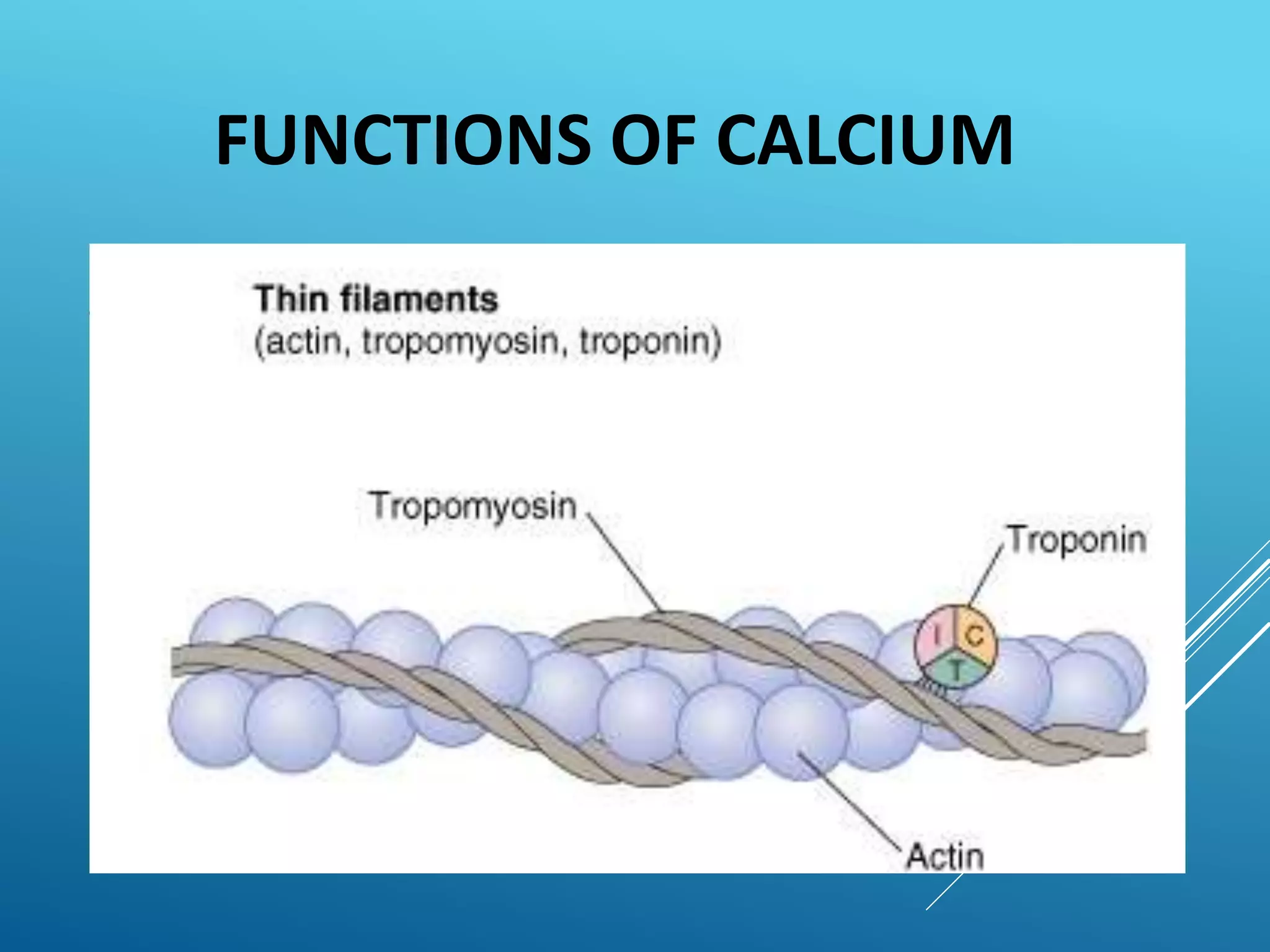
FUNCTIONS OF CALCIUM
• Nerve and muscle functions
Hypocalcemia
Hypercalcemia
• Neurotransmitter release
• Preserving bone and density
• important cofactor in many enzymatic
reactions
• cell division and growth
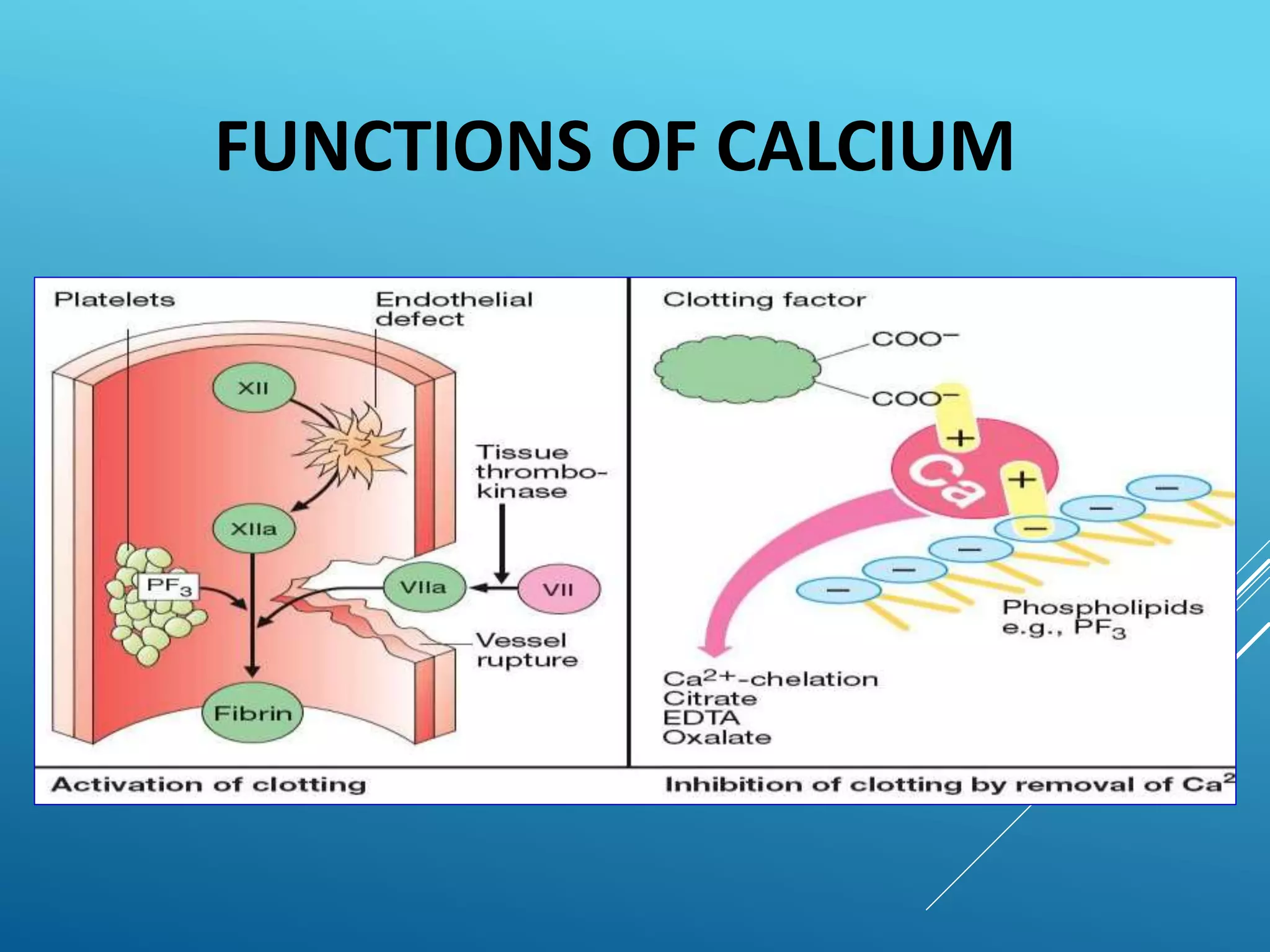
• Hemostasis
FUNCTIONS OF CALCIUM
CALCIUM HOMEOSTASIS
Ca++ homeostasis depends on two factors:
1.the total amount of Ca++ in the body
Total body [Ca++] is determined by the relative amounts of Ca++ absorbed
by the gastrointestinal tract and excreted by the kidneys
2.the distribution of Ca++ between bone and ECF
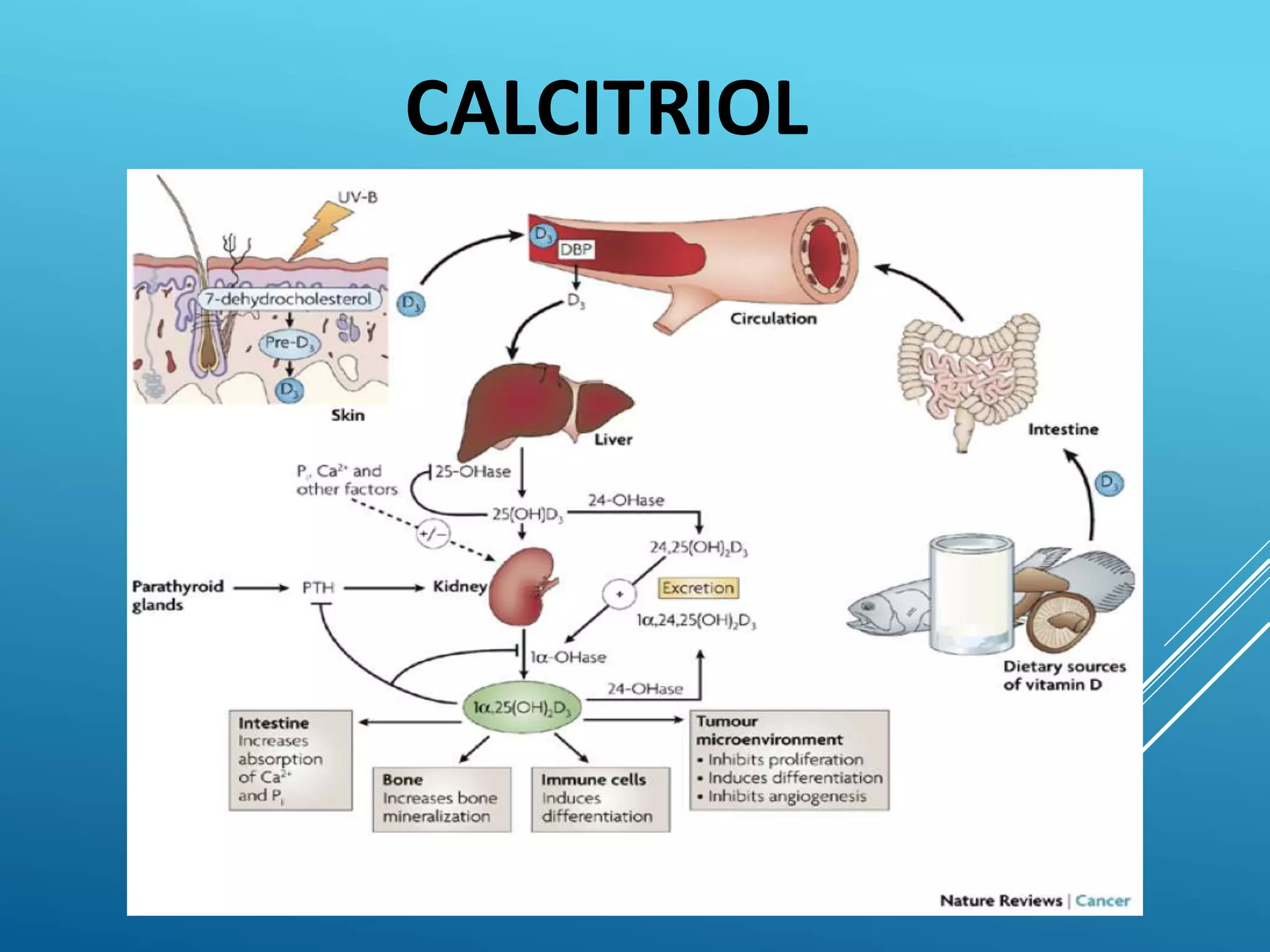
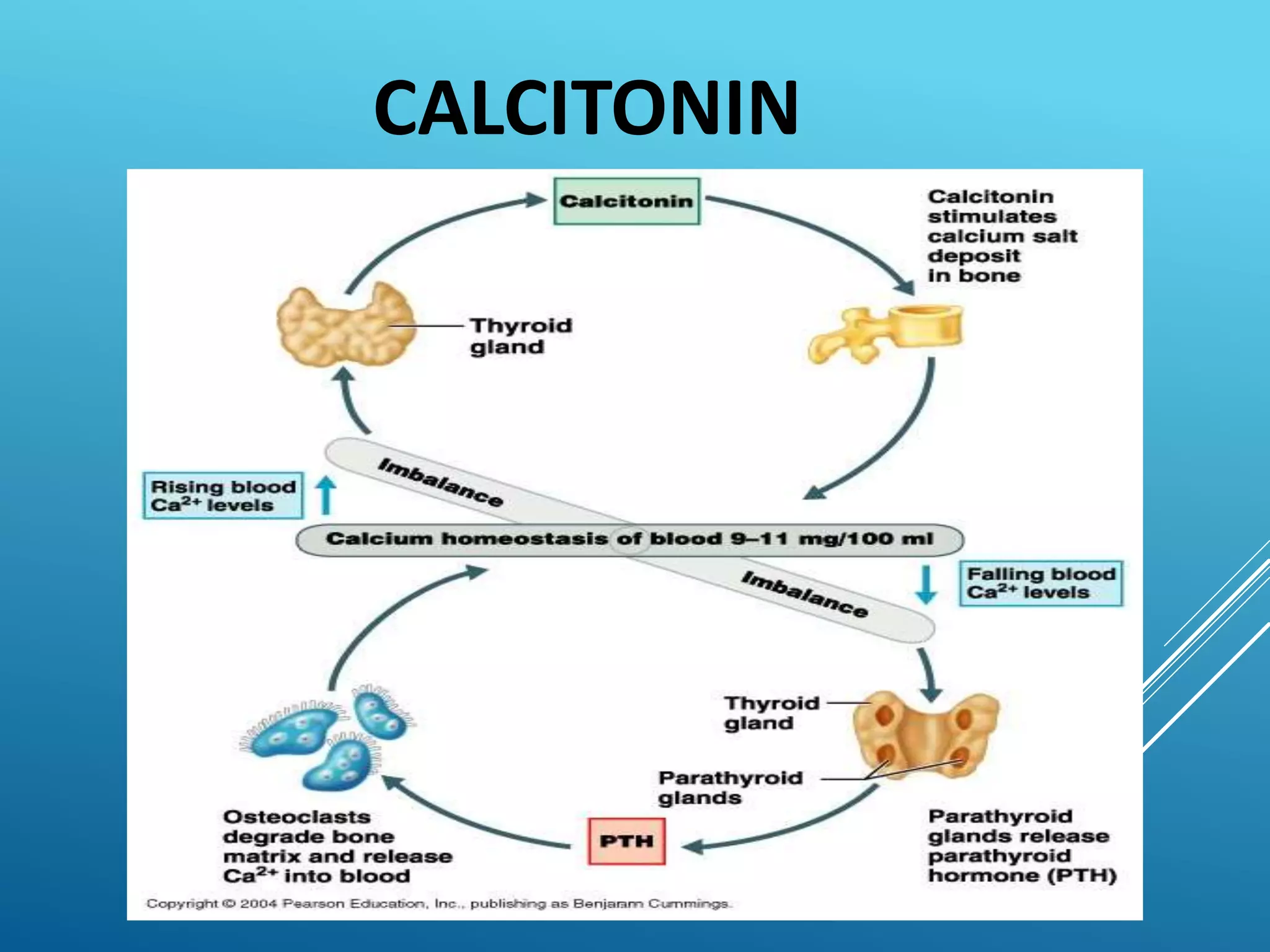
Three hormones ( [PTH], calcitriol, and calcitonin) regulate the distribution
of Ca++ between bone and ECF and thereby regulate plasma [Ca++].
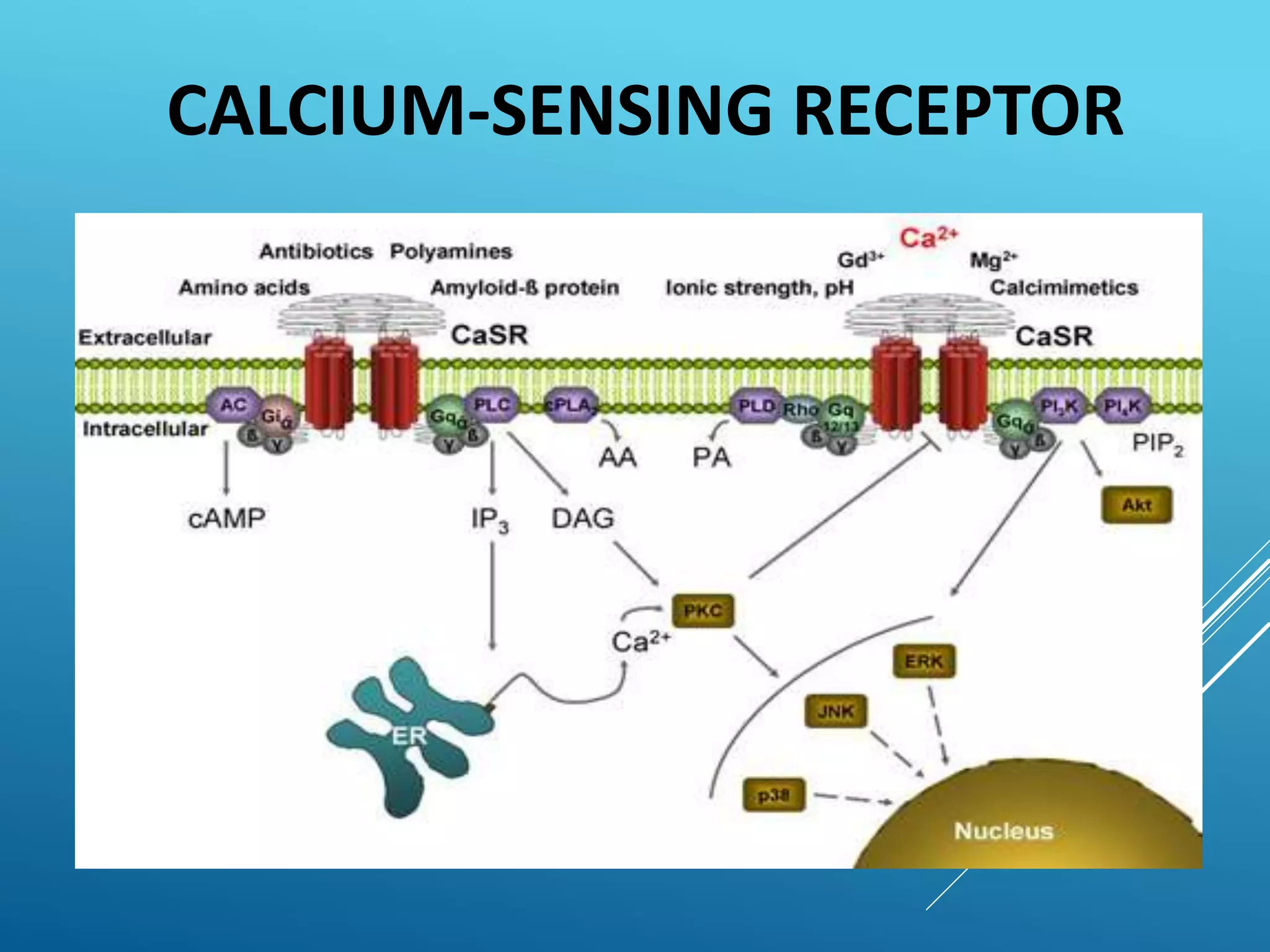
• The CaSR is a receptor expressed in the plasma
membrane of cells involved in regulating Ca++
homeostasis.
• Activation of the receptor results in inhibition of PTH
secretion and calcitriol production and stimulation of
calcitonin secretion.
CALCIUM-SENSING RECEPTOR
PARATHYROID HORMONE (PTH)
CALCITRIOL
CALCITONIN
EFFECT OF PLASMA [CA++] ON PLASMA LEVELS OF PTH AND CALCITONIN
CALCIUM HANDLING IN
THE NEPHRON
PROXIMAL TUBULAR CALCIUM REABSORPTION
• approximately 80% of Ca++ reabsorption is paracellular, and
approximately 20% is transcellular in the proximal tubule.
• In the proximal tubule, calcium reabsorption usually
parallels sodium and water reabsorption and is independent
of PTH
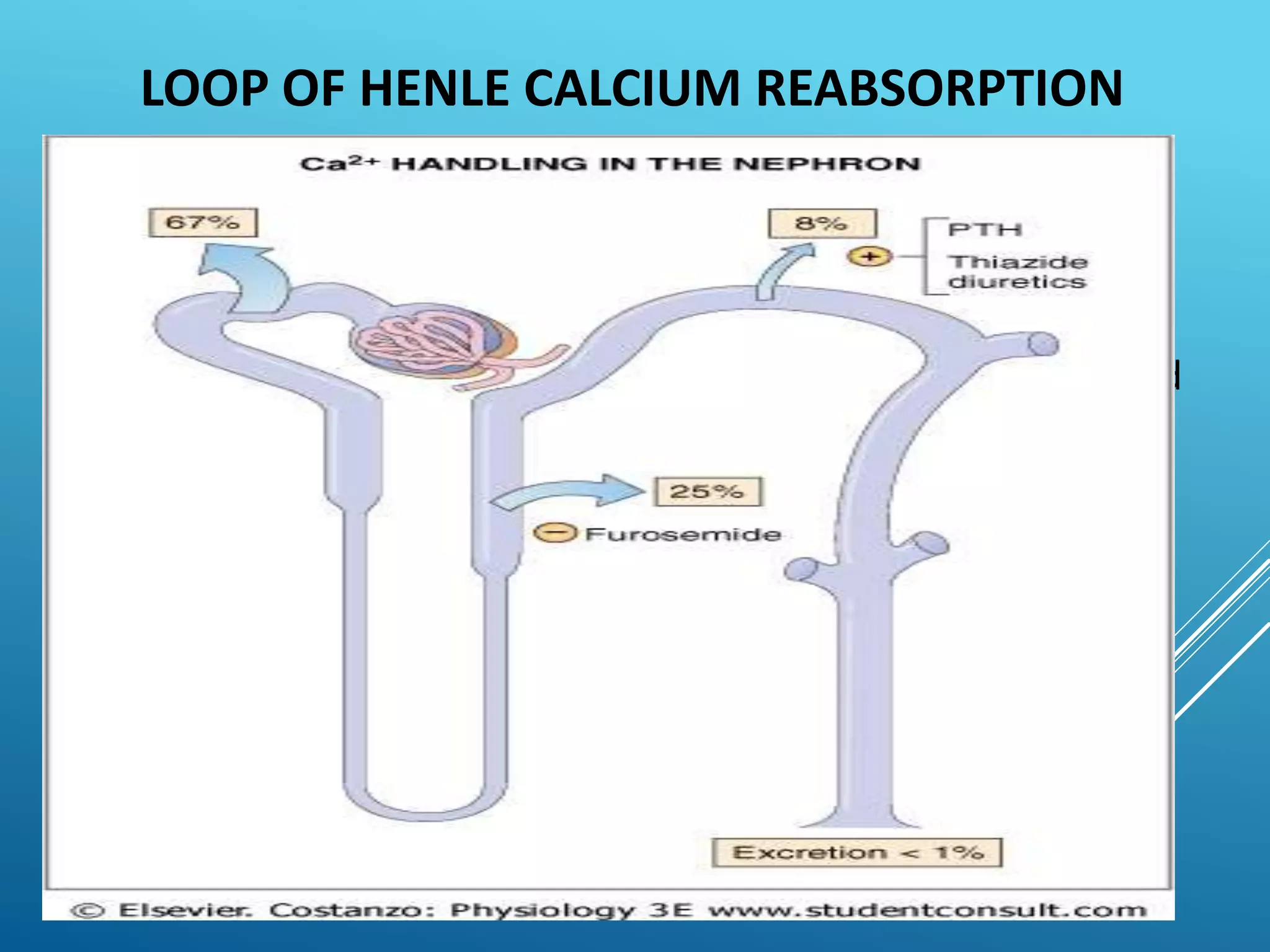
LOOP OF HENLE CALCIUM REABSORPTION
• In the loop of Henle, calcium reabsorption is
restricted to the thick ascending limb.
• approximately 50% of Ca++ reabsorption is paracellular, and
approximately 50% is transcellular in the proximal tubule.
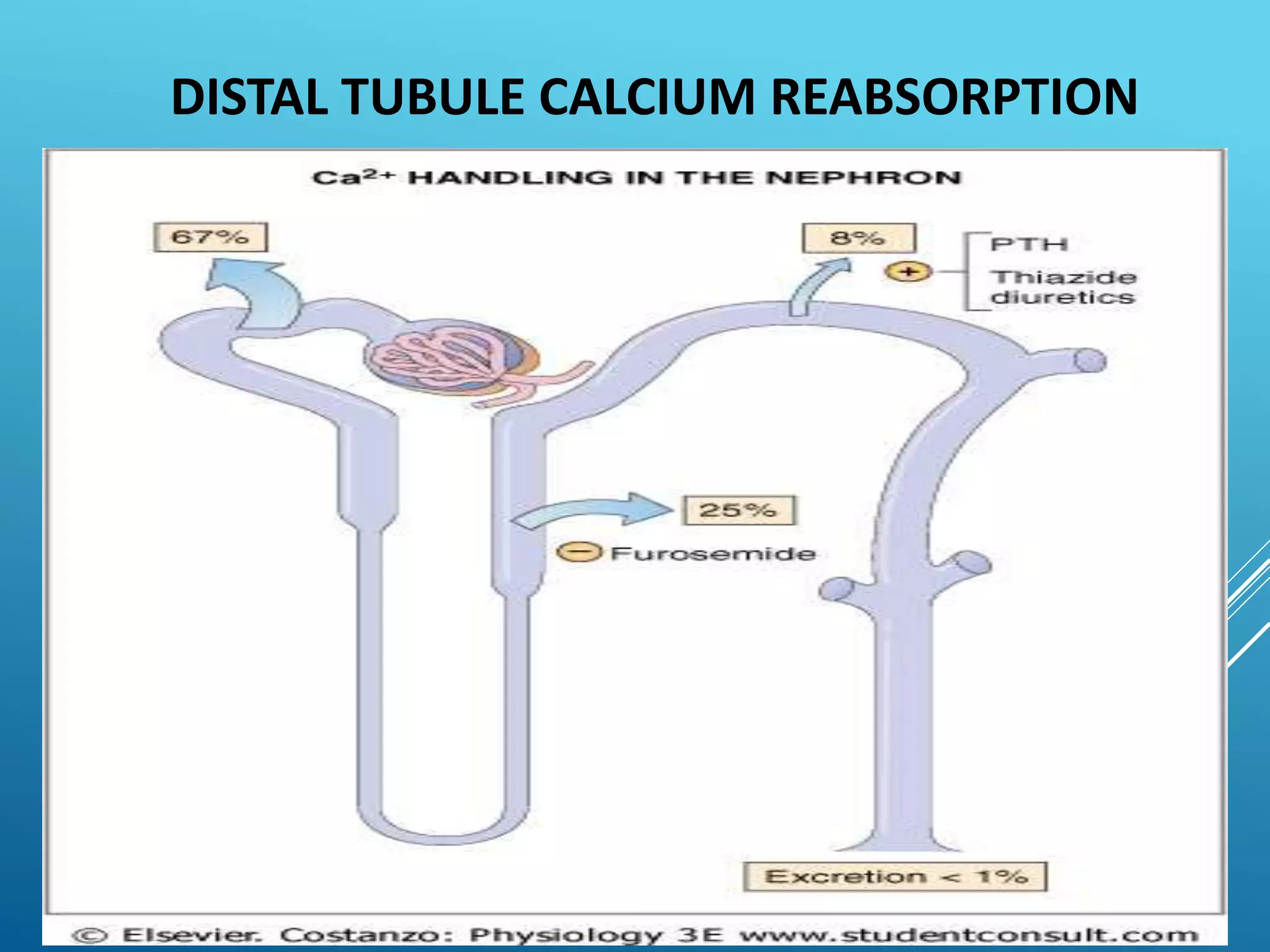
DISTAL TUBULE CALCIUM REABSORPTION
• Reabsorption of Ca++ by the distal tubule is exclusively
transcellular.
• In the distal tubule, where the voltage in the tubule lumen
is electrically negative with respect to blood, reabsorption
of Ca++ is entirely active
REGULATION OF URINARY CALCIUM EXCRETION
• PTH
• Calcitriol
• Calcitonin
• [Ca++] in ECF
• [Pi] in ECF
• Changes in ECF volume
• PH
REFERENCE
• Berne & Levy Physiology
• Guyton and Hall Textbook of Medical Physiology
• Physiology by Linda S. Costanzo
Thank you for your attention

Calcium homeostasis

  • 1.
  • 2.
  • 3.
    INTRODUCTION • Total plasma[Ca++] = 2.5mmol/L • Range is 2.0 to 2.5 mmol/L • Very tightly controlled Body content Bone intracellular extracellular Calcium 1300 gms 99% 1% 0.1%
  • 4.
    • Within cells,Ca++ is sequestered in the endoplasmic reticulum and mitochondria, or it is bound to proteins. • Approximately 50% of the Ca++ in plasma is ionized, 45% is bound to plasma proteins (mainly albumin), and 5% is complexed to several anions, including HCO3 -, citrate, Pi, and SO4 2-. INTRODUCTION
  • 5.
    FACTORS AFFECTING CALCIUM CONCENTRATION •the plasma albumin concentration • pH of plasma
  • 6.
    FUNCTIONS OF CALCIUM •Nerve and muscle functions Hypocalcemia Hypercalcemia
  • 7.
    • Neurotransmitter release •Preserving bone and density • important cofactor in many enzymatic reactions • cell division and growth • Hemostasis FUNCTIONS OF CALCIUM
  • 8.
    CALCIUM HOMEOSTASIS Ca++ homeostasisdepends on two factors: 1.the total amount of Ca++ in the body Total body [Ca++] is determined by the relative amounts of Ca++ absorbed by the gastrointestinal tract and excreted by the kidneys 2.the distribution of Ca++ between bone and ECF Three hormones ( [PTH], calcitriol, and calcitonin) regulate the distribution of Ca++ between bone and ECF and thereby regulate plasma [Ca++].
  • 9.
    • The CaSRis a receptor expressed in the plasma membrane of cells involved in regulating Ca++ homeostasis. • Activation of the receptor results in inhibition of PTH secretion and calcitriol production and stimulation of calcitonin secretion. CALCIUM-SENSING RECEPTOR
  • 10.
  • 11.
  • 12.
  • 13.
    EFFECT OF PLASMA[CA++] ON PLASMA LEVELS OF PTH AND CALCITONIN
  • 14.
  • 15.
    PROXIMAL TUBULAR CALCIUMREABSORPTION • approximately 80% of Ca++ reabsorption is paracellular, and approximately 20% is transcellular in the proximal tubule. • In the proximal tubule, calcium reabsorption usually parallels sodium and water reabsorption and is independent of PTH
  • 16.
    LOOP OF HENLECALCIUM REABSORPTION • In the loop of Henle, calcium reabsorption is restricted to the thick ascending limb. • approximately 50% of Ca++ reabsorption is paracellular, and approximately 50% is transcellular in the proximal tubule.
  • 17.
    DISTAL TUBULE CALCIUMREABSORPTION • Reabsorption of Ca++ by the distal tubule is exclusively transcellular. • In the distal tubule, where the voltage in the tubule lumen is electrically negative with respect to blood, reabsorption of Ca++ is entirely active
  • 18.
    REGULATION OF URINARYCALCIUM EXCRETION • PTH • Calcitriol • Calcitonin • [Ca++] in ECF • [Pi] in ECF • Changes in ECF volume • PH
  • 19.
    REFERENCE • Berne &Levy Physiology • Guyton and Hall Textbook of Medical Physiology • Physiology by Linda S. Costanzo
  • 20.
    Thank you foryour attention