Caesarean Section 
Indications and types 
VISHNU AMBAREESH M S 
2007 BATCH
• According to legend, Julius Caesar was born by 
this operation and hence the origin of the term 
caesarean. ???? 
• Used to be 
invariably fatal 
• Most important modification was the lower 
segment transverse incision. First done by kehrer 
and popularized by Munro Kerr
DEFINITION 
• CAESAREAN SECTION is the removal of a child 
through an incision in the abdominal wall of an 
intact uterus. 
• Term not applied to removal of a child from the 
abdomen after rupture of the uterus with or 
without protrusion of the whole or part of the child 
into the peritoneal cavity, nor to an operation for 
abdominal pregnancy.
INCIDENCE 
• It is the most commonest operation performed 
worldwide. 
• Ideal CS rate is 10 to 15 % (WHO) 
• Increased incidence worldwide during last 25 
years.
Why has the incidence increased? 
• Mainly due to 3 factors 
1. Repeat caesarean 
2. Dystocia 
3. Fetal distress 
• Increased safety of the surgery 
• Increased demand
INDICATIONS 
• Divided into 
1. Maternal indicators 
2. Fetal indicators 
3. Fetomaternal indicators- coexist
MATERNAL INDICATORS 
PREVIOUS CS 
DYSTOCIA due to 
1. -CPD 
2. -tumours complicating pregnancy 
3. -non progressive labour 
4. -threatened rupture and obstructed labour 
5. -failed forceps or vacuum 
6. -deep transverse arrest
Antepartum hemorrhage 
1. -placenta praevia 
2. -abruptio placenta 
3. -vasa praevia 
4. -carcinoma cervix 
Medical disorders 
1. -pre-eclampsia and eclampsia 
2. -coarctation of aorta
Maternal obstetric problem 
1. -elderly nullipara 
2. -prolonged period of infertility or 
pregnancy following IVF 
3. -bad obstetric history 
4. -previous repair of nulliparous prolapse 
5. -stress incontinence or fistula 
6. -failed induction
FETAL INDICATION 
• Fetal distress and cord prolapse 
• Breech presentation –[footling, knee presentation, 
complicated breech] 
• Malpresentation [ brow, transverse lie persistent 
mentoposterior ] 
• Sever IUGR 
• Macrosomia 
• Multiple pregnancy[first twin non -vertex and 
monoamniotic twin] 
• HIV complicating
CAESARIAN SECTION - TYPES
CAESARAEAN SECTION -TYPES 
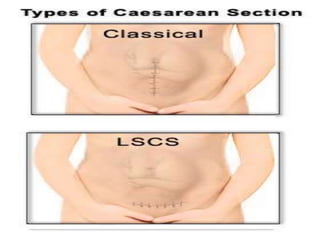
• Lower Segment Caeserean Section(LSCS) 
• Lower segment vertical incision 
• Classical CS 
• Extraperitoneal caeserean 
• Caeserean hysterectomy
LSCS 
• Most commonly employed type 
• Involves lower segment transverse incision
LOWER SEGMENT VERTICAL INCISION 
Indications: 
• Constriction ring 
• Lower segment not formed as in transverse lie 
Disadvantages: 
• Extension downwards may involve the 
cervix,vagina and even the bladder 
• Extension into the upper segment increases the 
chance of rupture in next pregnancy
Classical Caesarean section 
• Lower segment is not approachable 
• Uterine incision –on the anterior uterine wall in the 
upper segment above the reflection of the UV fold 
of peritoneum 
• Fetal foot grasped and baby delivered as breech
Classical CS - Indications 
• Lower segment is unapproachable due to severe 
adhesions or myomas 
• Ca cervix 
• Some cases of anterior placenta praevia with a 
previous caeserean 
• Some cases of transverse lie with ruptured 
membranes 
• Conjoined twins
Classical CS - Disadvantages 
• Chance of scar rupture more 
• General peritonitis ,if infection occurs
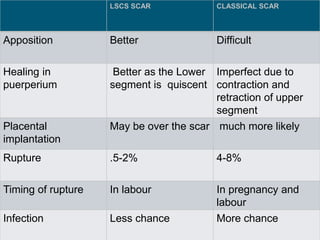
LSCS SCAR CLASSICAL SCAR 
Apposition Better Difficult 
Healing in 
puerperium 
Better as the Lower 
segment is quiscent 
Imperfect due to 
contraction and 
retraction of upper 
segment 
Placental 
implantation 
May be over the scar much more likely 
Rupture .5-2% 4-8% 
Timing of rupture In labour In pregnancy and 
labour 
Infection Less chance More chance
Extraperitoneal Caesarean section 
• In severe infection 
• Uterus opened through an extraperitoneal 
approach 
• Through the space of Retzius beneath the 
bladder
Caesarean Hysterectomy 
• Life saving measure for severe atonic PPH 
Indications 
• Severe atonic PPH 
• Placenta accreta , increta, percreta 
• Severe sepsis 
• Multiple large myomas 
• Carcinoma in situ of the cervix
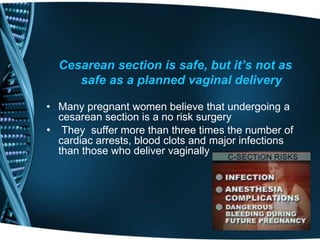
Cesarean section is safe, but it’s not as 
safe as a planned vaginal delivery 
• Many pregnant women believe that undergoing a 
cesarean section is a no risk surgery 
• They suffer more than three times the number of 
cardiac arrests, blood clots and major infections 
than those who deliver vaginally
Caesarean section -  indications and types

Caesarean section - indications and types

  • 1.
    Caesarean Section Indicationsand types VISHNU AMBAREESH M S 2007 BATCH
  • 2.
    • According tolegend, Julius Caesar was born by this operation and hence the origin of the term caesarean. ???? • Used to be invariably fatal • Most important modification was the lower segment transverse incision. First done by kehrer and popularized by Munro Kerr
  • 3.
    DEFINITION • CAESAREANSECTION is the removal of a child through an incision in the abdominal wall of an intact uterus. • Term not applied to removal of a child from the abdomen after rupture of the uterus with or without protrusion of the whole or part of the child into the peritoneal cavity, nor to an operation for abdominal pregnancy.
  • 4.
    INCIDENCE • Itis the most commonest operation performed worldwide. • Ideal CS rate is 10 to 15 % (WHO) • Increased incidence worldwide during last 25 years.
  • 5.
    Why has theincidence increased? • Mainly due to 3 factors 1. Repeat caesarean 2. Dystocia 3. Fetal distress • Increased safety of the surgery • Increased demand
  • 6.
    INDICATIONS • Dividedinto 1. Maternal indicators 2. Fetal indicators 3. Fetomaternal indicators- coexist
  • 7.
    MATERNAL INDICATORS PREVIOUSCS DYSTOCIA due to 1. -CPD 2. -tumours complicating pregnancy 3. -non progressive labour 4. -threatened rupture and obstructed labour 5. -failed forceps or vacuum 6. -deep transverse arrest
  • 8.
    Antepartum hemorrhage 1.-placenta praevia 2. -abruptio placenta 3. -vasa praevia 4. -carcinoma cervix Medical disorders 1. -pre-eclampsia and eclampsia 2. -coarctation of aorta
  • 9.
    Maternal obstetric problem 1. -elderly nullipara 2. -prolonged period of infertility or pregnancy following IVF 3. -bad obstetric history 4. -previous repair of nulliparous prolapse 5. -stress incontinence or fistula 6. -failed induction
  • 10.
    FETAL INDICATION •Fetal distress and cord prolapse • Breech presentation –[footling, knee presentation, complicated breech] • Malpresentation [ brow, transverse lie persistent mentoposterior ] • Sever IUGR • Macrosomia • Multiple pregnancy[first twin non -vertex and monoamniotic twin] • HIV complicating
  • 11.
  • 12.
    CAESARAEAN SECTION -TYPES • Lower Segment Caeserean Section(LSCS) • Lower segment vertical incision • Classical CS • Extraperitoneal caeserean • Caeserean hysterectomy
  • 13.
    LSCS • Mostcommonly employed type • Involves lower segment transverse incision
  • 14.
    LOWER SEGMENT VERTICALINCISION Indications: • Constriction ring • Lower segment not formed as in transverse lie Disadvantages: • Extension downwards may involve the cervix,vagina and even the bladder • Extension into the upper segment increases the chance of rupture in next pregnancy
  • 15.
    Classical Caesarean section • Lower segment is not approachable • Uterine incision –on the anterior uterine wall in the upper segment above the reflection of the UV fold of peritoneum • Fetal foot grasped and baby delivered as breech
  • 16.
    Classical CS -Indications • Lower segment is unapproachable due to severe adhesions or myomas • Ca cervix • Some cases of anterior placenta praevia with a previous caeserean • Some cases of transverse lie with ruptured membranes • Conjoined twins
  • 17.
    Classical CS -Disadvantages • Chance of scar rupture more • General peritonitis ,if infection occurs
  • 18.
    LSCS SCAR CLASSICALSCAR Apposition Better Difficult Healing in puerperium Better as the Lower segment is quiscent Imperfect due to contraction and retraction of upper segment Placental implantation May be over the scar much more likely Rupture .5-2% 4-8% Timing of rupture In labour In pregnancy and labour Infection Less chance More chance
  • 19.
    Extraperitoneal Caesarean section • In severe infection • Uterus opened through an extraperitoneal approach • Through the space of Retzius beneath the bladder
  • 20.
    Caesarean Hysterectomy •Life saving measure for severe atonic PPH Indications • Severe atonic PPH • Placenta accreta , increta, percreta • Severe sepsis • Multiple large myomas • Carcinoma in situ of the cervix
  • 21.
    Cesarean section issafe, but it’s not as safe as a planned vaginal delivery • Many pregnant women believe that undergoing a cesarean section is a no risk surgery • They suffer more than three times the number of cardiac arrests, blood clots and major infections than those who deliver vaginally