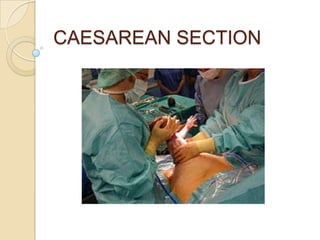
CAESAREAN SECTION
INTRODUCTIONAn operative procedure that is carried out under anesthesia whereby the fetus, placenta and membranes are delivered through an incision in abdominal wall amd the uterusUsually carried out after viability has been reached i.e. 24-48 weeks of gestation onwards.
The first operation performed on a women is referred to as a primary caesarean section. When operation is performed in subsequent pregnancies,it is called repeat caesarean section.(C/S)
INCIDENCE:The incidence of caesarean is steadly raising.During the last decade there has been two-three folds rise in the inciddence from the initial rate of about 10%.Factors responsible are increased safety of operation due to improved anesthesia, availability of blood transfusion and antibiotics. Increased awareness of fetal well being and idenification of risk factors have caused reduction of difficult operation or manipulative vaginal deliveries.
Indication for Caesarean section1. Absolute:Vaginal AtresiaAdvanced carcinoma of cervixCervical or broad of contracted pelvis.Severe degree of contracted pelvis.2. Relatives:Cephalopelvic disproportonPrevious uterine scarFetal distress.MalpresentationsAntepartum hemorrhageElderly primigravidaeChronic hypertensionDiabetesPelvis atresia
3.Fetal indicaton:Fetal distressUmbilical cord prolapseMacrosomiaPlacental insufficiencyMultiple pregnancy
Contraindication:Dead fetusBaby is too much prematurePresence of blood coagulation disorder
Time of operation:Elective caesarean section:The term elective indicates that the decision to deliver the baby by caesarean has beenmade during the pregnancy anh before the onset of labour. It means pre-planning for doing caesarean section.Indication:CPD
Placenta previa
Bad obstetric historyEmergency caesarean delivery:When the operation is performed due to unforseen complication arising either during pregnancy or labour without wasting time following the decision.Indication:Cord prolapse
Uterine rupture
Eclampsia
Prolonged first stage of labour
Abnormal uterine contraction
Placenta previa diagnosed in labour.Types of operation:Lower segment caesarean section:Is lesser muscular than the upper segment of the uterus.Transverse incision is made in the lower segment this heals faster and sucessfully than an incision in the upper segment of the uterus. There is less muscle and more fibrous tissue in lower segment which reduces the risk of rupture in a subsequent pregnancy. Also known as “pfannensiel or bikini line incision.”
Classical caesarean section:In this baby is extracted through an incision made in upper segment of uterus. Is rarely performed.Operation is done only under forced circumstances, such as:carcinoma of cervix
Big fibroid on lower segment
constriction ring
lower segment is difficult or risky example:placenta previa, adhesion due to previous abdominal operation.Supplies/ EquipmentExtra drape sheet Towels Receiving pack for baby C-section tray Delivery forceps Cord clamp Basin set Blades Neonatal receiving unit Self-contained oxygen I.D bands Suction Bulb syringe Solutions Suture
Operation procedure:The non gravid uterus is a pelvic organ closely covered by a layer of pelvic peritoneum. As pregnancy advances, the uterus grows up into the abdomen and this peritoneum rises up with the uterus and comes into contact with the abdominal peritoneum. Each of these layers must be incision and repaired.The abdominal peritoneum is situated below the abdominal muscles layer.The anatominal layers are:SkinFatRectus sheath Rectus abdominisAbdominal peritoneumpelvic peritoneumUterine muscles
The operation most commonly carried out is the lower segment caesarean section.The lower segment incision is in the less muscular and active part of the uterus and heals better.The main reason for preferring the lower uterine segment technique is the reduced incidence of dehiscent pregnancy.The abdomen is opened and the loose folds of the peritoneum over the anterior aspect of the lower uterine segment and above the bladder is incised. The operator continues so incise this further to visualize the fundus of bladder which is then pushed down and away from the surgeon.

Caesarean section

  • 1.
  • 2.
    INTRODUCTIONAn operative procedurethat is carried out under anesthesia whereby the fetus, placenta and membranes are delivered through an incision in abdominal wall amd the uterusUsually carried out after viability has been reached i.e. 24-48 weeks of gestation onwards.
  • 3.
    The first operationperformed on a women is referred to as a primary caesarean section. When operation is performed in subsequent pregnancies,it is called repeat caesarean section.(C/S)
  • 4.
    INCIDENCE:The incidence ofcaesarean is steadly raising.During the last decade there has been two-three folds rise in the inciddence from the initial rate of about 10%.Factors responsible are increased safety of operation due to improved anesthesia, availability of blood transfusion and antibiotics. Increased awareness of fetal well being and idenification of risk factors have caused reduction of difficult operation or manipulative vaginal deliveries.
  • 5.
    Indication for Caesareansection1. Absolute:Vaginal AtresiaAdvanced carcinoma of cervixCervical or broad of contracted pelvis.Severe degree of contracted pelvis.2. Relatives:Cephalopelvic disproportonPrevious uterine scarFetal distress.MalpresentationsAntepartum hemorrhageElderly primigravidaeChronic hypertensionDiabetesPelvis atresia
  • 6.
    3.Fetal indicaton:Fetal distressUmbilicalcord prolapseMacrosomiaPlacental insufficiencyMultiple pregnancy
  • 7.
    Contraindication:Dead fetusBaby istoo much prematurePresence of blood coagulation disorder
  • 8.
    Time of operation:Electivecaesarean section:The term elective indicates that the decision to deliver the baby by caesarean has beenmade during the pregnancy anh before the onset of labour. It means pre-planning for doing caesarean section.Indication:CPD
  • 9.
  • 10.
    Bad obstetric historyEmergencycaesarean delivery:When the operation is performed due to unforseen complication arising either during pregnancy or labour without wasting time following the decision.Indication:Cord prolapse
  • 11.
  • 12.
  • 13.
  • 14.
  • 15.
    Placenta previa diagnosedin labour.Types of operation:Lower segment caesarean section:Is lesser muscular than the upper segment of the uterus.Transverse incision is made in the lower segment this heals faster and sucessfully than an incision in the upper segment of the uterus. There is less muscle and more fibrous tissue in lower segment which reduces the risk of rupture in a subsequent pregnancy. Also known as “pfannensiel or bikini line incision.”
  • 16.
    Classical caesarean section:Inthis baby is extracted through an incision made in upper segment of uterus. Is rarely performed.Operation is done only under forced circumstances, such as:carcinoma of cervix
  • 17.
    Big fibroid onlower segment
  • 18.
  • 19.
    lower segment isdifficult or risky example:placenta previa, adhesion due to previous abdominal operation.Supplies/ EquipmentExtra drape sheet Towels Receiving pack for baby C-section tray Delivery forceps Cord clamp Basin set Blades Neonatal receiving unit Self-contained oxygen I.D bands Suction Bulb syringe Solutions Suture
  • 20.
    Operation procedure:The nongravid uterus is a pelvic organ closely covered by a layer of pelvic peritoneum. As pregnancy advances, the uterus grows up into the abdomen and this peritoneum rises up with the uterus and comes into contact with the abdominal peritoneum. Each of these layers must be incision and repaired.The abdominal peritoneum is situated below the abdominal muscles layer.The anatominal layers are:SkinFatRectus sheath Rectus abdominisAbdominal peritoneumpelvic peritoneumUterine muscles
  • 21.
    The operation mostcommonly carried out is the lower segment caesarean section.The lower segment incision is in the less muscular and active part of the uterus and heals better.The main reason for preferring the lower uterine segment technique is the reduced incidence of dehiscent pregnancy.The abdomen is opened and the loose folds of the peritoneum over the anterior aspect of the lower uterine segment and above the bladder is incised. The operator continues so incise this further to visualize the fundus of bladder which is then pushed down and away from the surgeon.