POST CESAREAN PREGNANCY
Dr Nilam Dixit
POST CESAREAN PREGNANCY
• Pregnancy with history of previous caesarean
section
• Caesarean section rate – 8 to 25%
[Increase in the incidence of CS rate is
because of liberal and expanded
indications]
Cesarean Section [CS] - Indications
1) Labour dystocia – Arrest of cervical dilatation or
arrest of foetal descent
2) Breech presentation – Malpresentation
3) Foetal distress – Foetal heart abnormalities,
Hypoxia/ Acidosis and Meconium stained
liquor [MSL]
4) Previous caesarean pregnancy
5) Others – APH [Accidental haemorrhage and
Placenta praevia], Severe PIH and IUGR
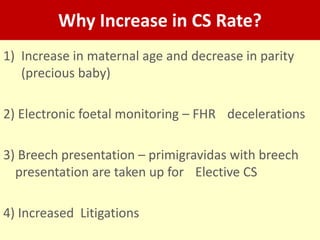
Why Increase in CS Rate?
1) Increase in maternal age and decrease in parity
(precious baby)
2) Electronic foetal monitoring – FHR decelerations
3) Breech presentation – primigravidas with breech
presentation are taken up for Elective CS
4) Increased Litigations
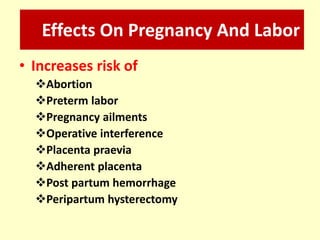
Effects On Pregnancy And Labor
• Increases risk of
Abortion
Preterm labor
Pregnancy ailments
Operative interference
Placenta praevia
Adherent placenta
Post partum hemorrhage
Peripartum hysterectomy
Effects On The Scar
• Increased risk of scar rupture
• More risk in classical/ hysterotomy scar
than lower segment scar
• Lower segment scar rupture during labor
• Classical/ hysterotomy scar ruptures
during late pregnancy and labor
• Impairment of healing can cause early scar
rupture
6/7/2015 hcb 7
Type and Incidence of Scar Rupture
S.No Type of Scar Incidence of scar
rupture
1 Upper segment –[Classical] 4 – 9 %
2 Lower segment:-
a Low vertical 1 – 7 %
b* Low Transverse [LSCS] 0.2 – 1.5 %
3 T – shape scar 4 – 9 %
6/7/2015 hcb 8
Previous Uterine Scar Behavior
LSCS [Lower segment
Transverse Scar] –
1.Thin margins – better
apposition
2.Suture line undisturbed –
passive segment [stretch
and relax]
Classical [Upper segment
Vertical Scar] –
1.Thick margins - apposition
unsatifactory
2. Loosening of sutures – active
segment [contract and
retract]
6/7/2015 hcb 9
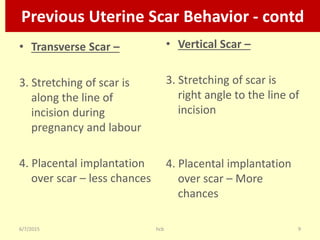
Previous Uterine Scar Behavior - contd
• Transverse Scar –
3. Stretching of scar is
along the line of
incision during
pregnancy and labour
4. Placental implantation
over scar – less chances
• Vertical Scar –
3. Stretching of scar is
right angle to the line of
incision
4. Placental implantation
over scar – More
chances
6/7/2015 hcb 10
Previous Uterine Scar Behavior - contd
• Transverse Scar –
5. Scar rupture rate:- 0.2 to
1.5% [Sound scar, scar
ruptures during labour and
less incidence of maternal
& foetal mortality]
• Vertical Scar –
5. Scar rupture rate: 4 to 9%
[Weak Scar, scar ruptures
during pregnancy and
labour; more incidence of
maternal & foetal
mortality]
PREVIOUS SCAR
 Dehiscence-
separation along the
line of the previous
scar
 Rupture –
when the unscarred
tissue is also involved in
separation
1. Elective caesarean section
2. VBAC trial of labor (trial of scar)
Management
6/7/2015 hcb 14
Vaginal Birth After Cesarean [VBAC]
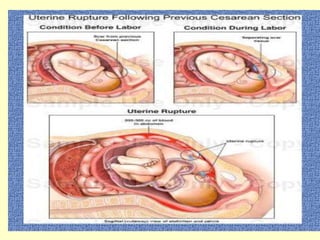
• Rupture of uterus during pregnancy or labour
can be catastrophic, therefore VBAC should
be attempted in a well equipped institution
only
• Where services of Obstetrician,
Anaesthesiologist, Neonatologist are available
and safe blood can be transfused to the
patient if required
6/7/2015 hcb 15
VBAC – Selection Criteria
1. H/O one previous lower segment transverse
caesarean section
2. Maternal pelvis is clinically adequate
3. No H/O previous rupture of uterine scar
4. Facilities for continuous and strict labour
monitoring available
5. Availability of USG, operating team, operation
theatre and compatible safe blood
– Previous classical incision
– Previous two LSCS
– Pelvis contracted or suspected CPD
– Previous inverted T/ extension of incision
– Malpresentations
– Suspicion of CPD
– Medical /obstetric complication
– Multiple pregnancy
– Patient’s refusal to undergo trial
Contraindications
6/7/2015 hcb 17
Uterine Scar rupture - Symptoms
1. Supra pubic pain – in between uterine
contractions
2. Unexplained vaginal bleed
3. Frequent urge to pass urine
4. Presence of hematuria
6/7/2015 hcb 18
Uterine Scar Rupture - Signs
1. Maternal tachycardia and hypotension
2. Foetal heart variability [decelerations]
3. Uterine scar tenderness
4. Failure of progress of labour [arrest of descent
of foetal parts]
6/7/2015 hcb 19
Controversies in VBAC
1. Use of oxytocin for induction or
augmentation of labour – increase incidence
of uterine scar rupture
2. Use of epidural anaesthesia – masks the
pain of uterine rupture and can cause FHR
decelerations
3. Examination of uterine scar after VBAC
 If VBAC is contraindicated / if patient refuses
Timing
• if fetal maturity is sure  39wks
• if not  spontaneous labor awaited
• previous classical CS  38 wks
Elective cesarean section
THANK YOU

Post lscs pregnancy

  • 1.
  • 2.
    POST CESAREAN PREGNANCY •Pregnancy with history of previous caesarean section • Caesarean section rate – 8 to 25% [Increase in the incidence of CS rate is because of liberal and expanded indications]
  • 3.
    Cesarean Section [CS]- Indications 1) Labour dystocia – Arrest of cervical dilatation or arrest of foetal descent 2) Breech presentation – Malpresentation 3) Foetal distress – Foetal heart abnormalities, Hypoxia/ Acidosis and Meconium stained liquor [MSL] 4) Previous caesarean pregnancy 5) Others – APH [Accidental haemorrhage and Placenta praevia], Severe PIH and IUGR
  • 4.
    Why Increase inCS Rate? 1) Increase in maternal age and decrease in parity (precious baby) 2) Electronic foetal monitoring – FHR decelerations 3) Breech presentation – primigravidas with breech presentation are taken up for Elective CS 4) Increased Litigations
  • 5.
    Effects On PregnancyAnd Labor • Increases risk of Abortion Preterm labor Pregnancy ailments Operative interference Placenta praevia Adherent placenta Post partum hemorrhage Peripartum hysterectomy
  • 6.
    Effects On TheScar • Increased risk of scar rupture • More risk in classical/ hysterotomy scar than lower segment scar • Lower segment scar rupture during labor • Classical/ hysterotomy scar ruptures during late pregnancy and labor • Impairment of healing can cause early scar rupture
  • 7.
    6/7/2015 hcb 7 Typeand Incidence of Scar Rupture S.No Type of Scar Incidence of scar rupture 1 Upper segment –[Classical] 4 – 9 % 2 Lower segment:- a Low vertical 1 – 7 % b* Low Transverse [LSCS] 0.2 – 1.5 % 3 T – shape scar 4 – 9 %
  • 8.
    6/7/2015 hcb 8 PreviousUterine Scar Behavior LSCS [Lower segment Transverse Scar] – 1.Thin margins – better apposition 2.Suture line undisturbed – passive segment [stretch and relax] Classical [Upper segment Vertical Scar] – 1.Thick margins - apposition unsatifactory 2. Loosening of sutures – active segment [contract and retract]
  • 9.
    6/7/2015 hcb 9 PreviousUterine Scar Behavior - contd • Transverse Scar – 3. Stretching of scar is along the line of incision during pregnancy and labour 4. Placental implantation over scar – less chances • Vertical Scar – 3. Stretching of scar is right angle to the line of incision 4. Placental implantation over scar – More chances
  • 10.
    6/7/2015 hcb 10 PreviousUterine Scar Behavior - contd • Transverse Scar – 5. Scar rupture rate:- 0.2 to 1.5% [Sound scar, scar ruptures during labour and less incidence of maternal & foetal mortality] • Vertical Scar – 5. Scar rupture rate: 4 to 9% [Weak Scar, scar ruptures during pregnancy and labour; more incidence of maternal & foetal mortality]
  • 11.
    PREVIOUS SCAR  Dehiscence- separationalong the line of the previous scar  Rupture – when the unscarred tissue is also involved in separation
  • 13.
    1. Elective caesareansection 2. VBAC trial of labor (trial of scar) Management
  • 14.
    6/7/2015 hcb 14 VaginalBirth After Cesarean [VBAC] • Rupture of uterus during pregnancy or labour can be catastrophic, therefore VBAC should be attempted in a well equipped institution only • Where services of Obstetrician, Anaesthesiologist, Neonatologist are available and safe blood can be transfused to the patient if required
  • 15.
    6/7/2015 hcb 15 VBAC– Selection Criteria 1. H/O one previous lower segment transverse caesarean section 2. Maternal pelvis is clinically adequate 3. No H/O previous rupture of uterine scar 4. Facilities for continuous and strict labour monitoring available 5. Availability of USG, operating team, operation theatre and compatible safe blood
  • 16.
    – Previous classicalincision – Previous two LSCS – Pelvis contracted or suspected CPD – Previous inverted T/ extension of incision – Malpresentations – Suspicion of CPD – Medical /obstetric complication – Multiple pregnancy – Patient’s refusal to undergo trial Contraindications
  • 17.
    6/7/2015 hcb 17 UterineScar rupture - Symptoms 1. Supra pubic pain – in between uterine contractions 2. Unexplained vaginal bleed 3. Frequent urge to pass urine 4. Presence of hematuria
  • 18.
    6/7/2015 hcb 18 UterineScar Rupture - Signs 1. Maternal tachycardia and hypotension 2. Foetal heart variability [decelerations] 3. Uterine scar tenderness 4. Failure of progress of labour [arrest of descent of foetal parts]
  • 19.
    6/7/2015 hcb 19 Controversiesin VBAC 1. Use of oxytocin for induction or augmentation of labour – increase incidence of uterine scar rupture 2. Use of epidural anaesthesia – masks the pain of uterine rupture and can cause FHR decelerations 3. Examination of uterine scar after VBAC
  • 20.
     If VBACis contraindicated / if patient refuses Timing • if fetal maturity is sure  39wks • if not  spontaneous labor awaited • previous classical CS  38 wks Elective cesarean section
  • 21.