Breech
Presentation

     Lucy Pettit
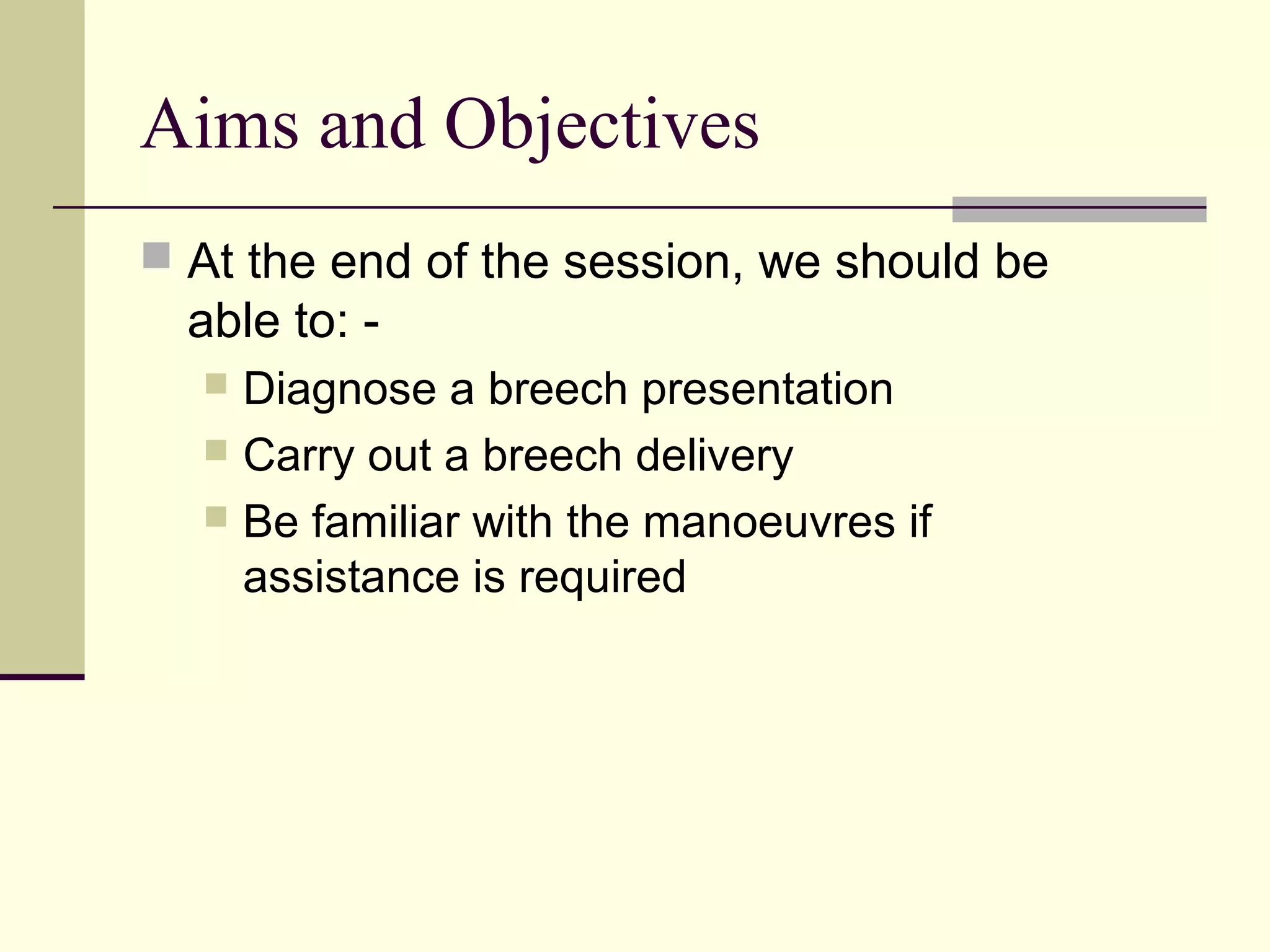
Aims and Objectives
 At the end of the session, we should be
  able to: -
   Diagnose a breech presentation
   Carry out a breech delivery
   Be familiar with the manoeuvres if
    assistance is required
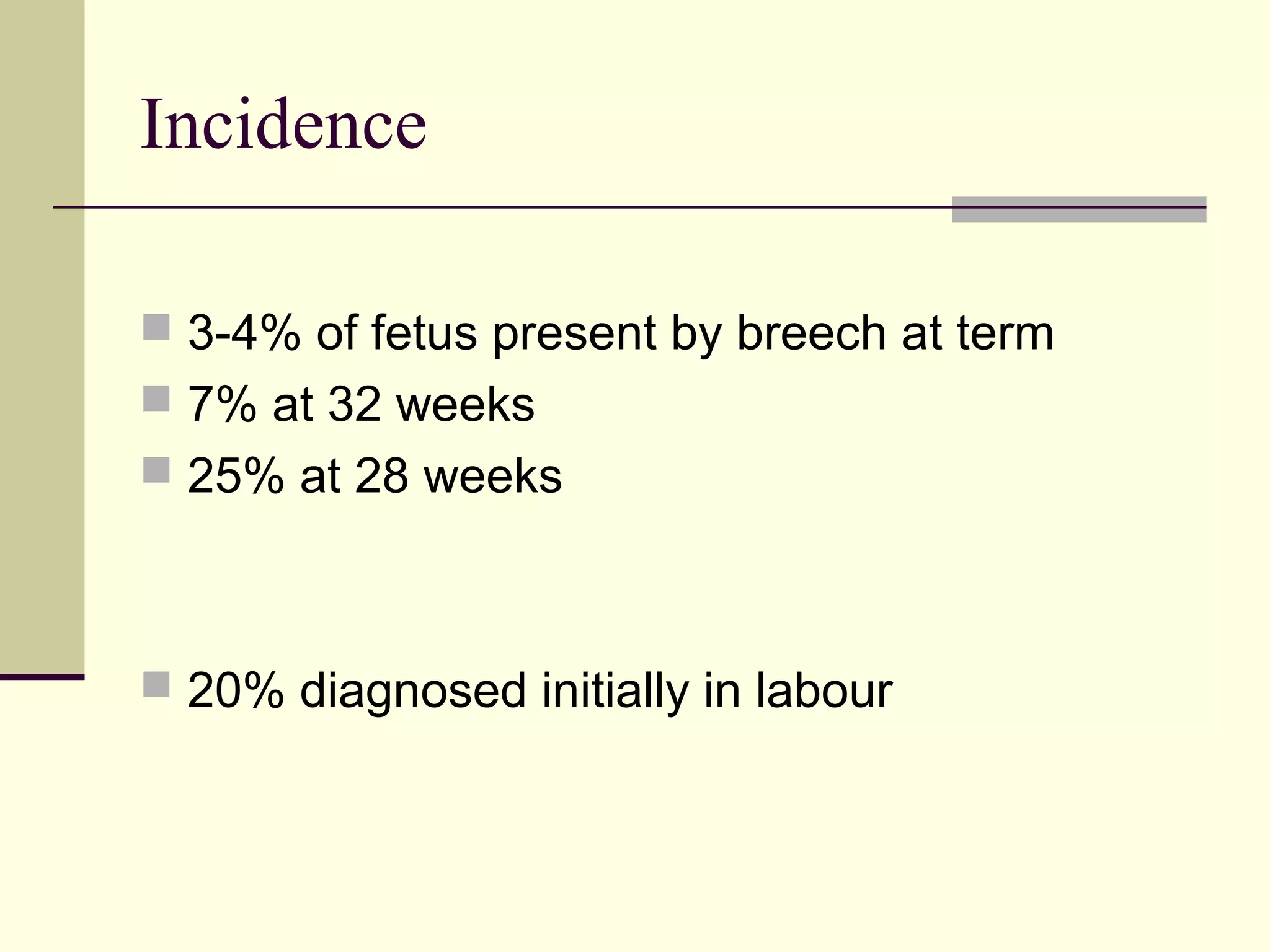
Incidence

 3-4% of fetus present by breech at term
 7% at 32 weeks
 25% at 28 weeks


 20% diagnosed initially in labour
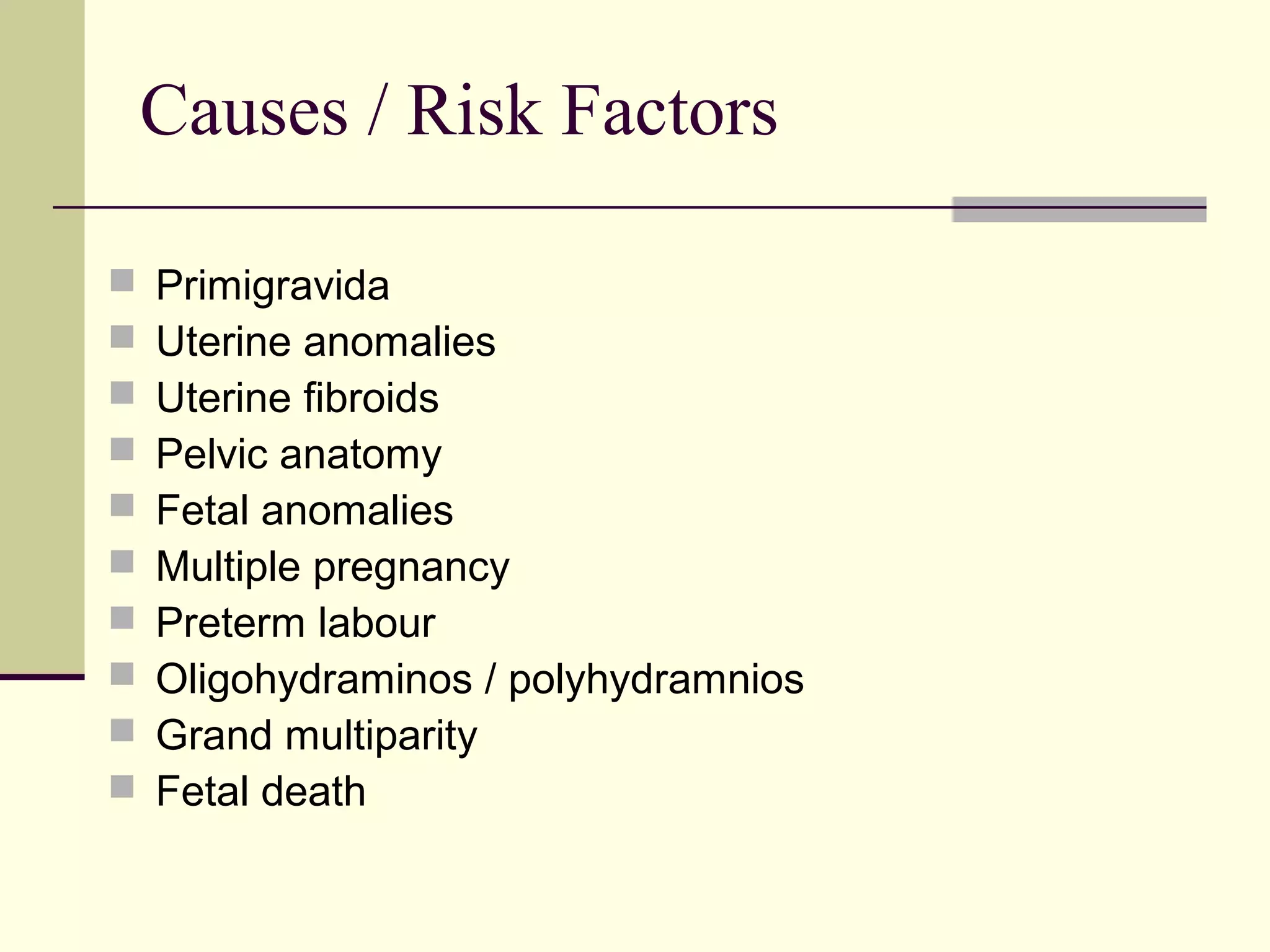
Causes / Risk Factors

   Primigravida
   Uterine anomalies
   Uterine fibroids
   Pelvic anatomy
   Fetal anomalies
   Multiple pregnancy
   Preterm labour
   Oligohydraminos / polyhydramnios
   Grand multiparity
   Fetal death
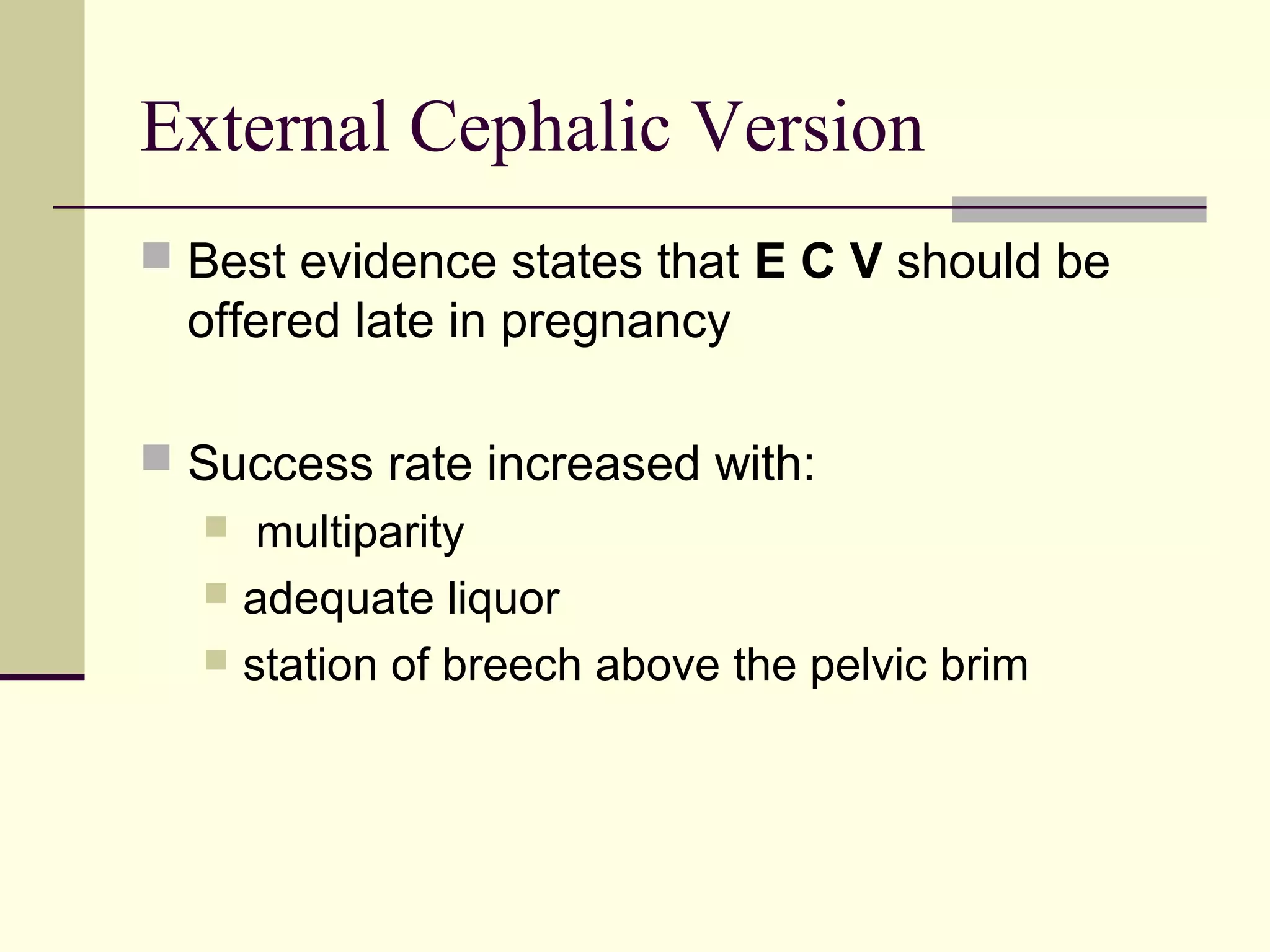
External Cephalic Version
 Best evidence states that E C V should be
  offered late in pregnancy

 Success rate increased with:
    multiparity
   adequate liquor
   station of breech above the pelvic brim
Diagnosing a Breech
 Palpation:
     The fetal head can be palpated at uterine
      fundus

 Auscultation:
     The fetal heart sounds may be heard above
      umbilicus
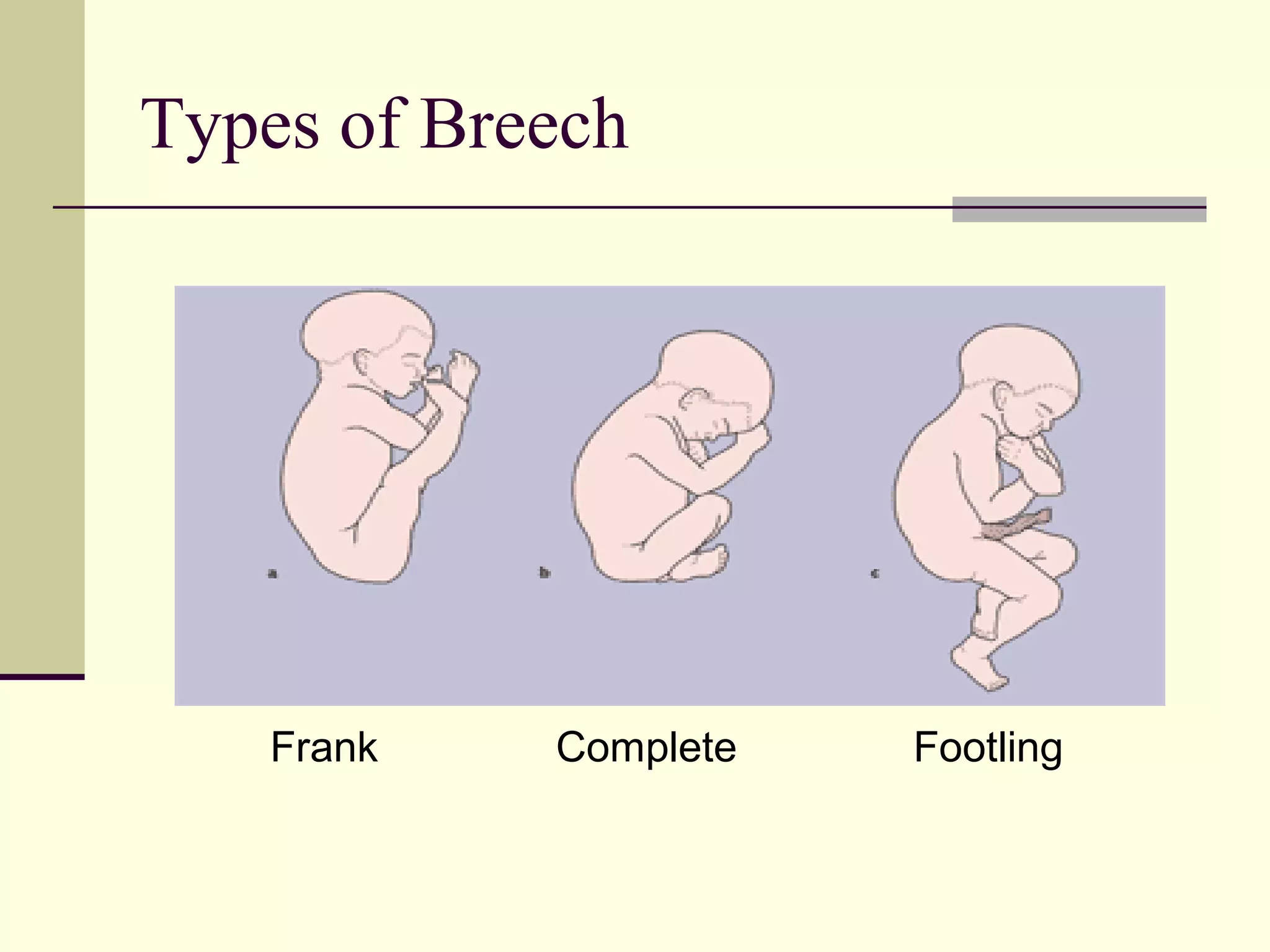
Types of Breech


    Frank   Complete   Footling
Vaginal Examination
 extended (frank) presentation:
    The ischial tuberosities, sacrum anus and/or
     genitals may be palpated. In addition, there
     may be meconium staining of the examiner’s
     fingers

 complete presentation:
    The feet of the fetus may be palpated with the
     buttocks
Emergency Care
 Call for help – midwifery colleagues/8000
 Support & explanations for parents
 Take blood for group/hold, FBC
 Monitor fetal heart
 Monitor maternal vital signs
 Prepare IV Normal Saline – cannulation 16g
 Transfer to theatre – if not 
 Prepare for vaginal delivery
Vaginal Breech Birth in Hospital
 Explain procedure to patient
 Legs in lithotomy
 Empty bladder
 Confirm full dilatation/presentation/station
 Infiltrate perineum with 10mls Lignocaine1%
 Consider episiotomy when presenting part is
  on the perineum
 Perform necessary manoeuvres for the
  delivery of breech
 Record times of procedures / manoeuvres,
  designate a scribe
Breech Delivery

 The essence of the vaginal breech delivery is allowing as
      much spontaneous delivery by uterine action and
                maternal effort as possible


    Operator intervention should be limited to the
                     manoeuvres.


    Nuchal arms are present in 0-5% of vaginal breech
        deliveries and in 9% of breech extractions.
Breech Delivery
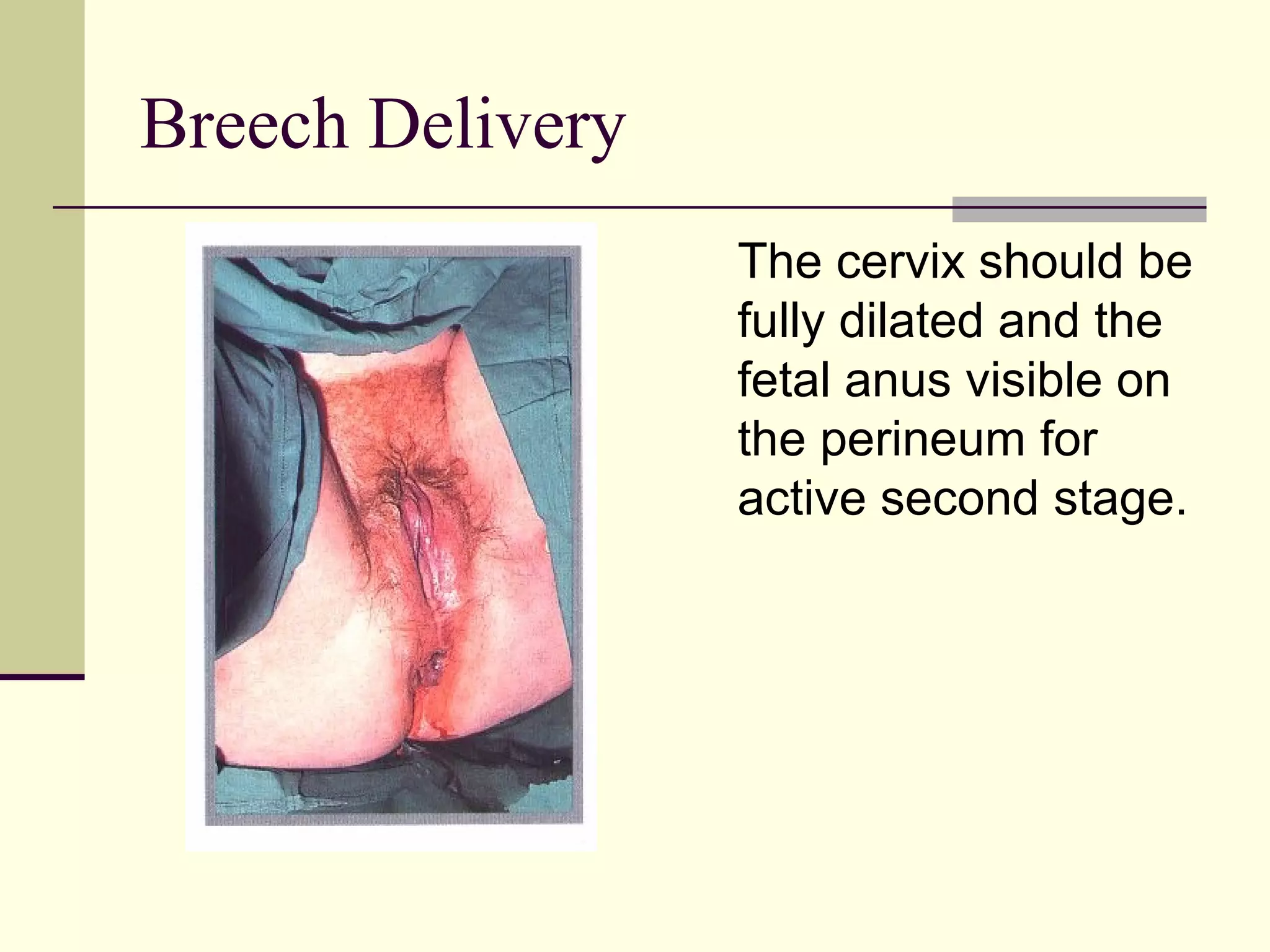
                  The cervix should be
                  fully dilated and the
                  fetal anus visible on
                  the perineum for
                  active second stage.
Breech Delivery


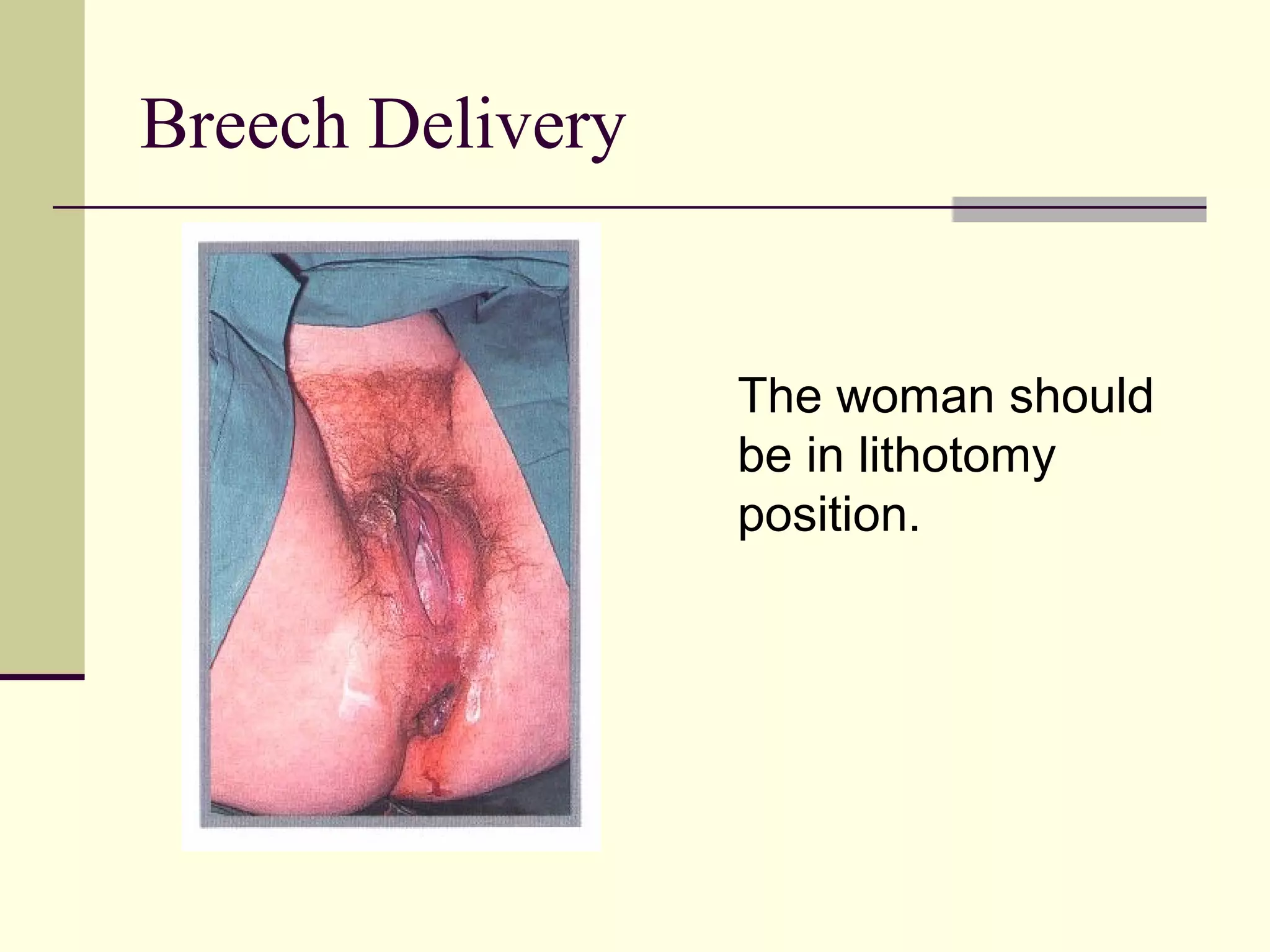
                  The woman should
                  be in lithotomy
                  position.
Breech Delivery
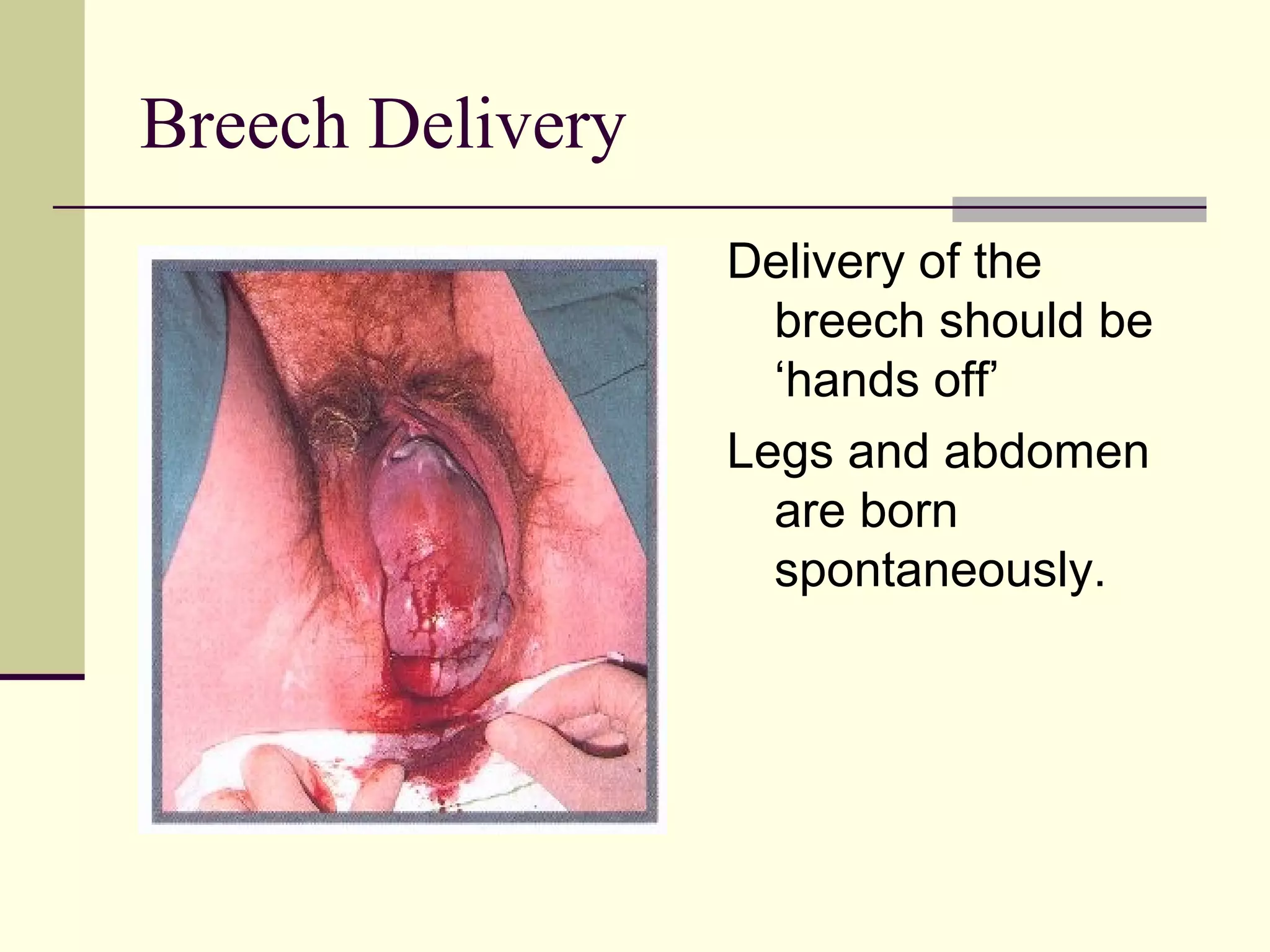
                  Delivery of the
                    breech should be
                    ‘hands off’
                  Legs and abdomen
                    are born
                    spontaneously.
Breech Delivery

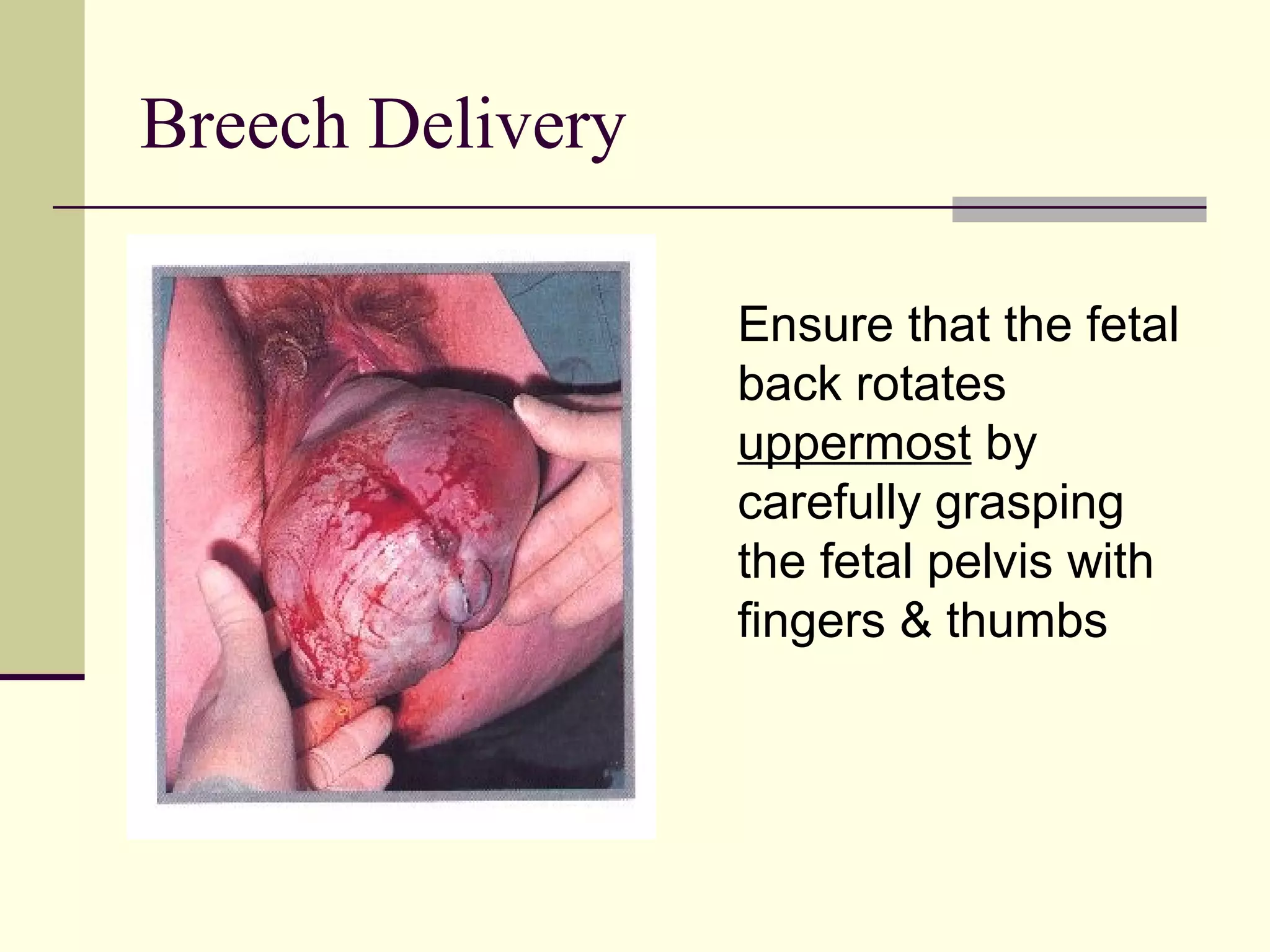
                  Ensure that the fetal
                  back rotates
                  uppermost by
                  carefully grasping
                  the fetal pelvis with
                  fingers & thumbs
Breech Delivery
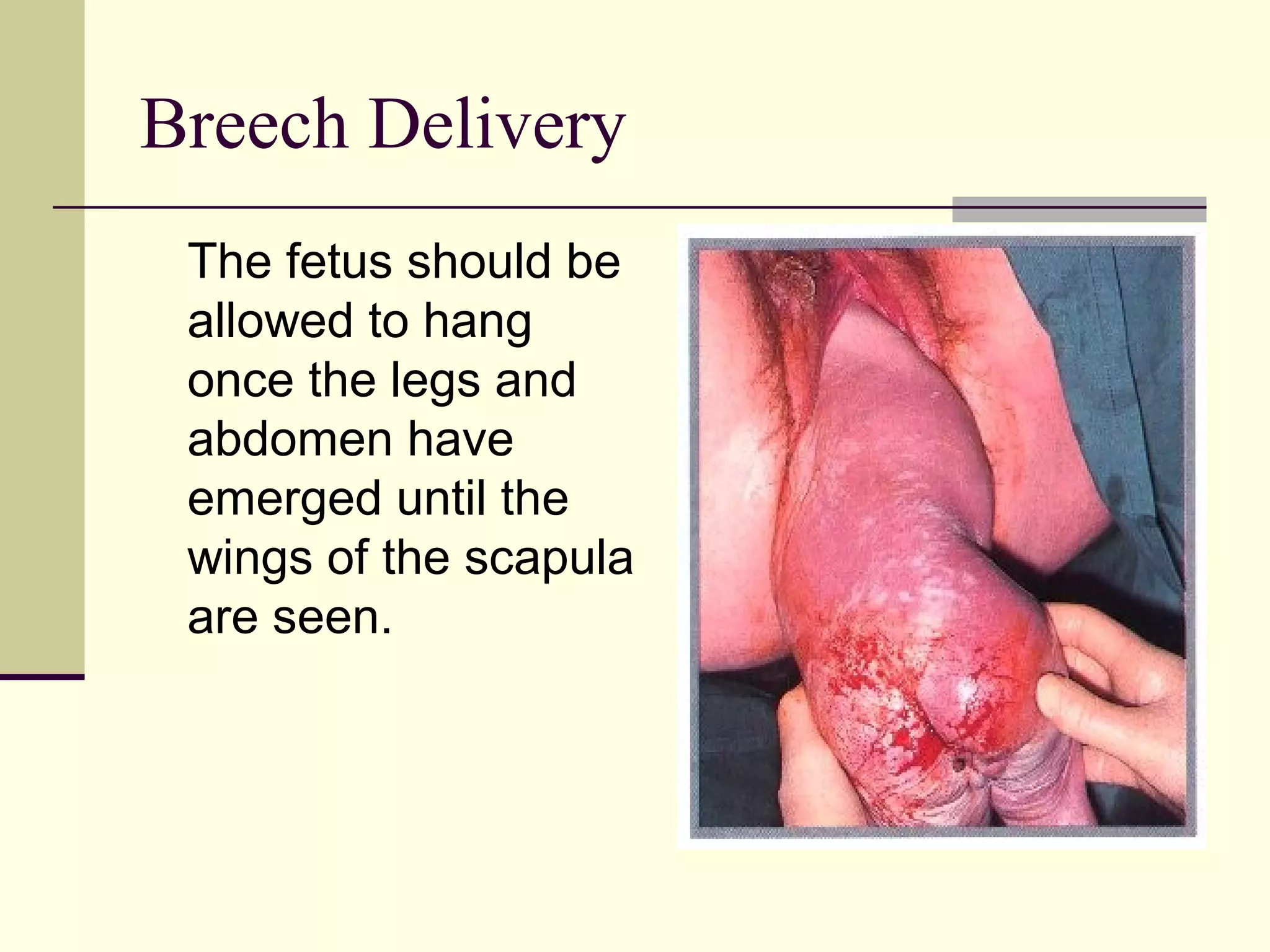
 The fetus should be
 allowed to hang
 once the legs and
 abdomen have
 emerged until the
 wings of the scapula
 are seen.
Lovset’s Manoeuvre

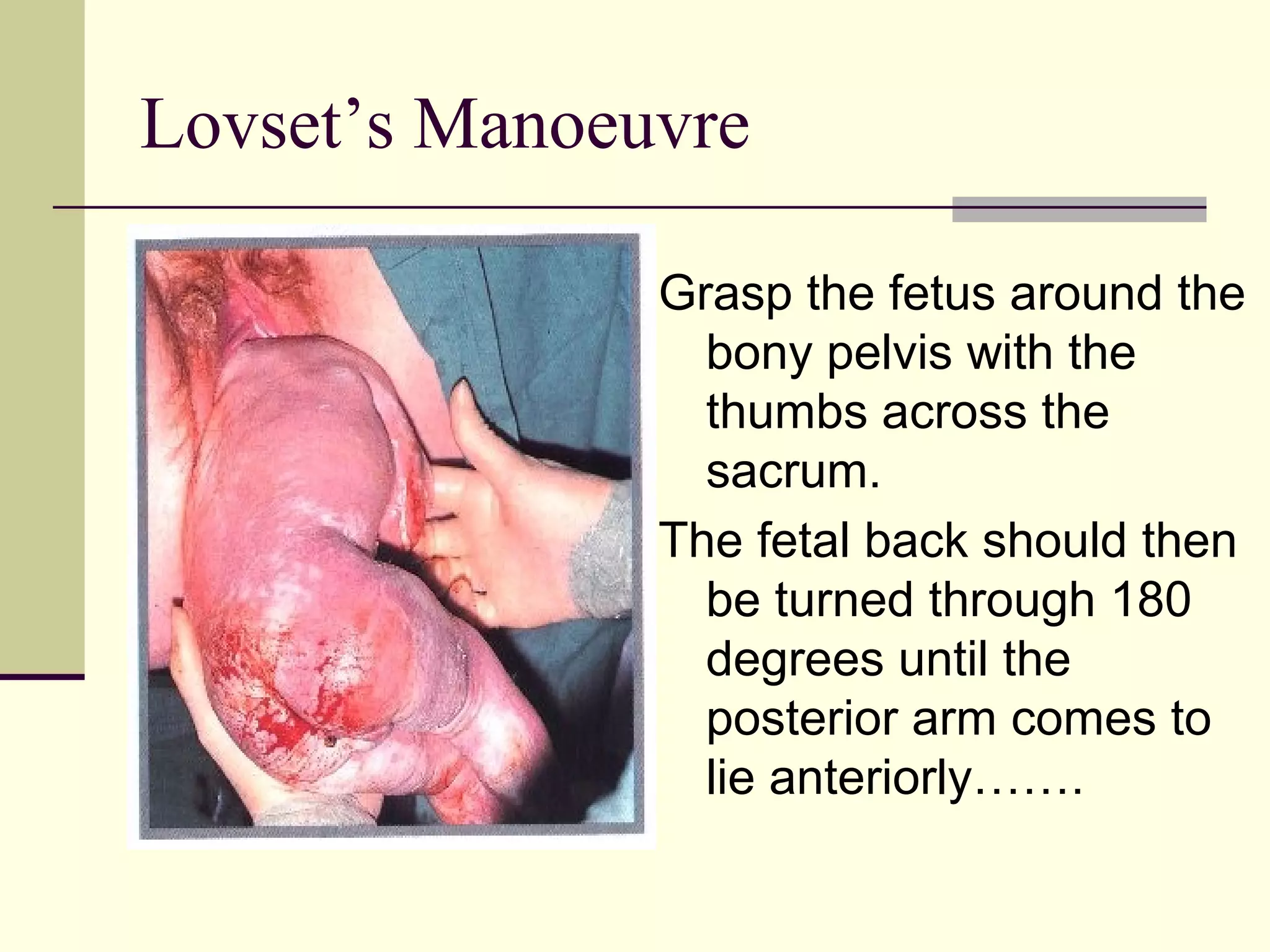
               Grasp the fetus around the
                 bony pelvis with the
                 thumbs across the
                 sacrum.
               The fetal back should then
                 be turned through 180
                 degrees until the
                 posterior arm comes to
                 lie anteriorly…….
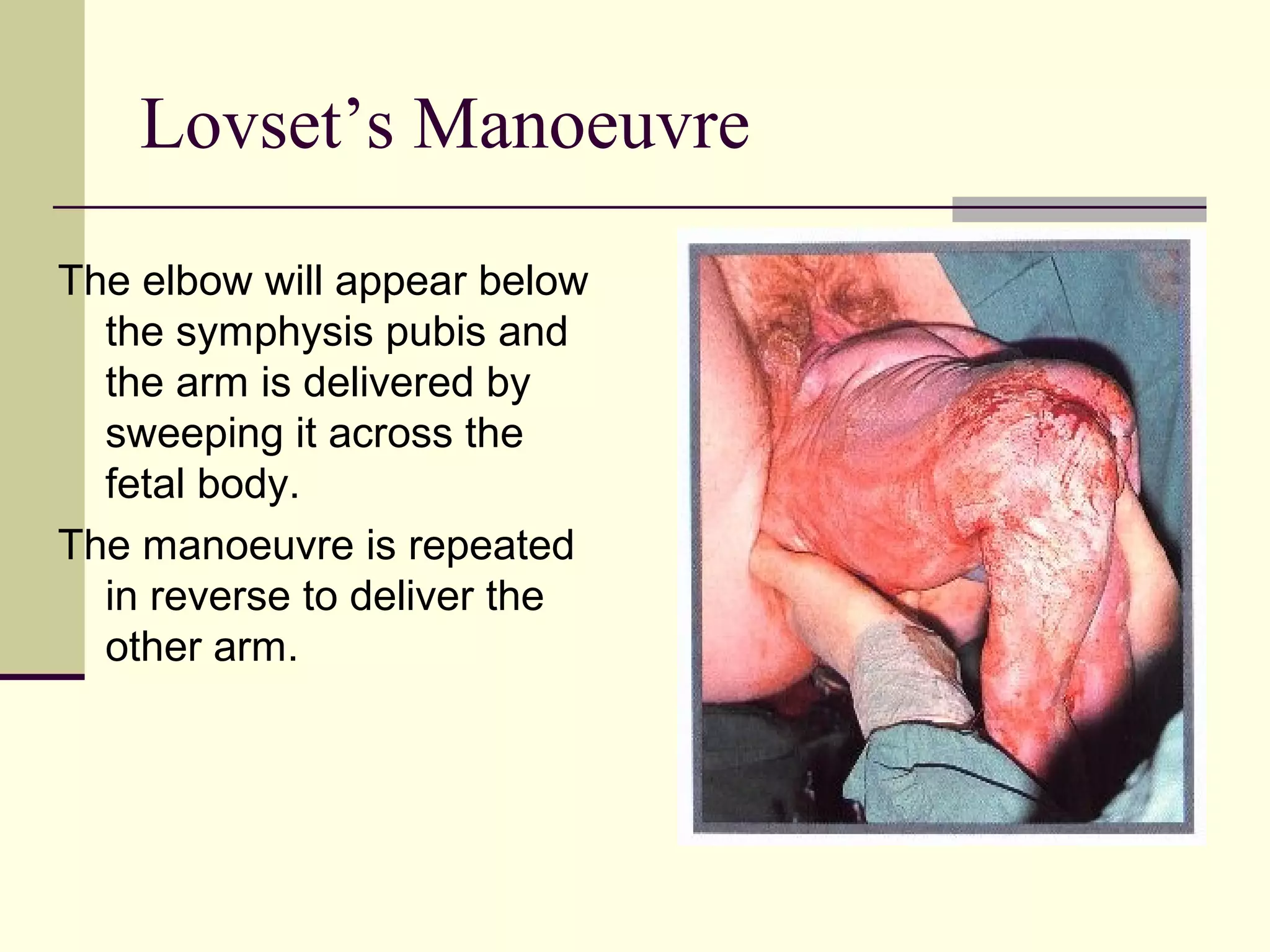
Lovset’s Manoeuvre
The elbow will appear below
  the symphysis pubis and
  the arm is delivered by
  sweeping it across the
  fetal body.
The manoeuvre is repeated
  in reverse to deliver the
  other arm.
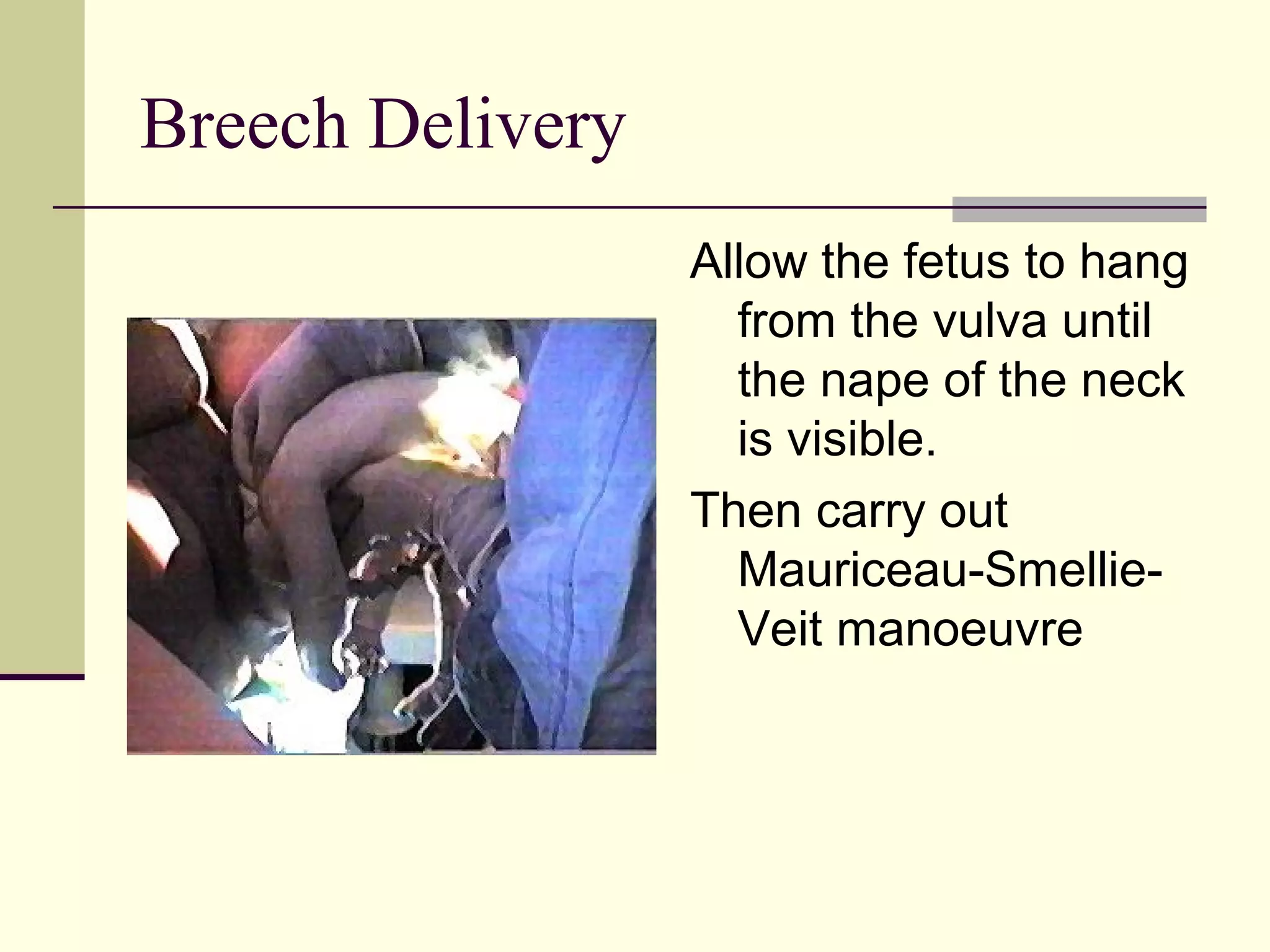
Breech Delivery
                  Allow the fetus to hang
                    from the vulva until
                    the nape of the neck
                    is visible.
                  Then carry out
                    Mauriceau-Smellie-
                    Veit manoeuvre
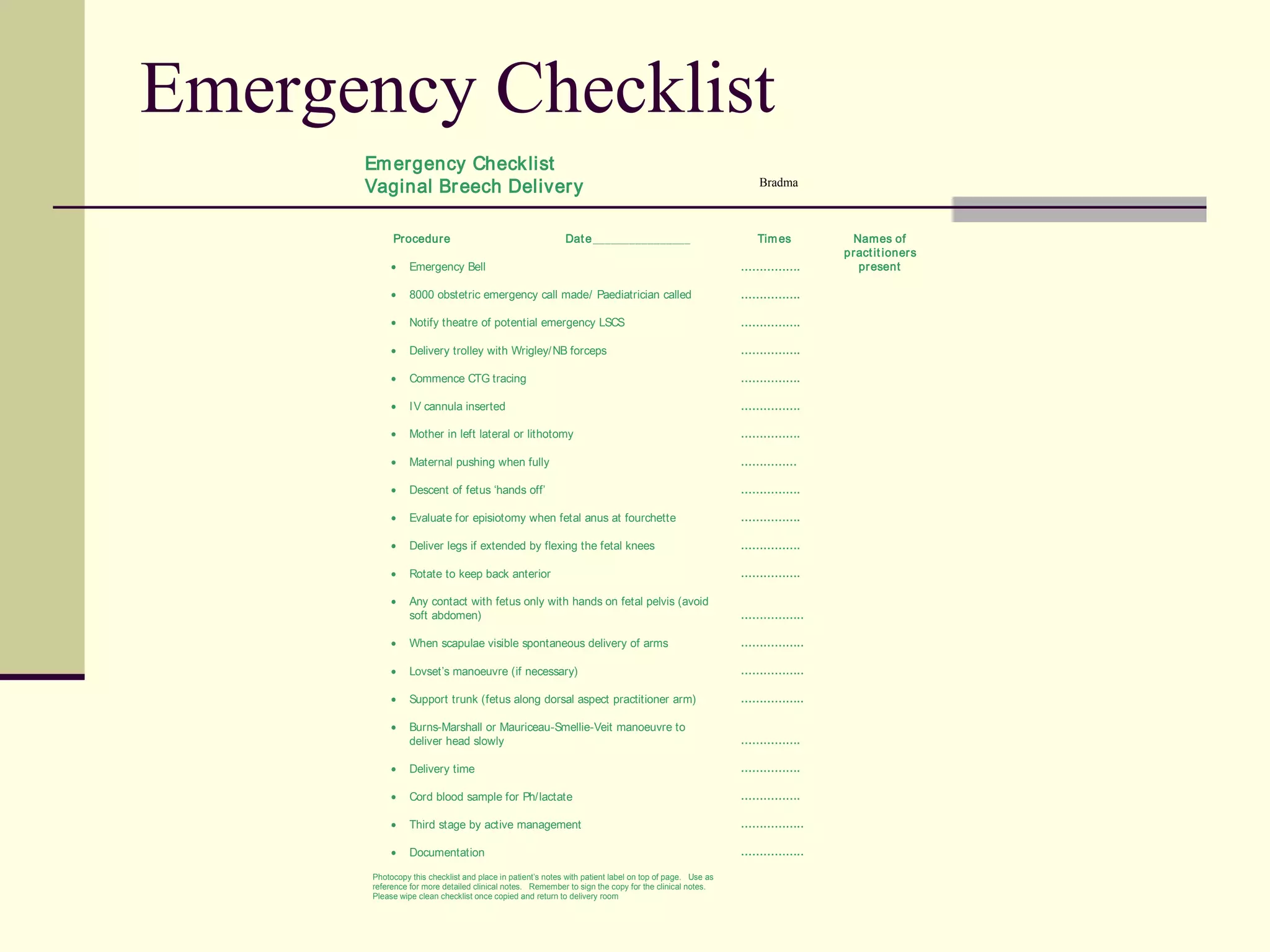
Emergency Checklist
      Em ergency Check list
      Vaginal Br eech Deliver y                                                                           Bradma


           Procedure                                       Dat e ________________                        Tim es     Names of
                                                                                                                   pract it ioner s
           •    Emergency Bell                                                                          …………….       pr esent

           •    8000 obstetric emergency call made/ Paediatrician called                                …………….

           •    Notify theatre of potential emergency LSCS                                              …………….

           •    Delivery trolley with Wrigley/NB forceps                                                …………….

           •    Commence CTG tracing                                                                    …………….

           •    IV cannula inserted                                                                     …………….

           •    Mother in left lateral or lithotomy                                                     …………….

           •    Maternal pushing when fully                                                             ……………

           •    Descent of fetus ‘hands off’                                                            …………….

           •    Evaluate for episiotomy when fetal anus at fourchette                                   …………….

           •    Deliver legs if extended by flexing the fetal knees                                     …………….

           •    Rotate to keep back anterior                                                            …………….

           •    Any contact with fetus only with hands on fetal pelvis (avoid
                soft abdomen)                                                                           ……………..

           •    When scapulae visible spontaneous delivery of arms                                      ……………..

           •    Lovset’s manoeuvre (if necessary)                                                       ……………..

           •    Support trunk (fetus along dorsal aspect practitioner arm)                              ……………..

           •    Burns-Marshall or Mauriceau-Smellie-Veit manoeuvre to
                deliver head slowly                                                                     …………….

           •    Delivery time                                                                           …………….

           •    Cord blood sample for Ph/lactate                                                        …………….

           •    Third stage by active management                                                        ……………..

           •    Documentation                                                                           ……………..

      Photocopy this checklist and place in patient’s notes with patient label on top of page. Use as
      reference for more detailed clinical notes. Remember to sign the copy for the clinical notes.
      Please wipe clean checklist once copied and return to delivery room

Breech presentation

  • 1.
  • 2.
    Aims and Objectives At the end of the session, we should be able to: -  Diagnose a breech presentation  Carry out a breech delivery  Be familiar with the manoeuvres if assistance is required
  • 3.
    Incidence  3-4% offetus present by breech at term  7% at 32 weeks  25% at 28 weeks  20% diagnosed initially in labour
  • 4.
    Causes / RiskFactors  Primigravida  Uterine anomalies  Uterine fibroids  Pelvic anatomy  Fetal anomalies  Multiple pregnancy  Preterm labour  Oligohydraminos / polyhydramnios  Grand multiparity  Fetal death
  • 5.
    External Cephalic Version Best evidence states that E C V should be offered late in pregnancy  Success rate increased with:  multiparity  adequate liquor  station of breech above the pelvic brim
  • 6.
    Diagnosing a Breech Palpation:  The fetal head can be palpated at uterine fundus  Auscultation:  The fetal heart sounds may be heard above umbilicus
  • 7.
    Types of Breech Frank Complete Footling
  • 8.
    Vaginal Examination  extended(frank) presentation:  The ischial tuberosities, sacrum anus and/or genitals may be palpated. In addition, there may be meconium staining of the examiner’s fingers  complete presentation:  The feet of the fetus may be palpated with the buttocks
  • 9.
    Emergency Care  Callfor help – midwifery colleagues/8000  Support & explanations for parents  Take blood for group/hold, FBC  Monitor fetal heart  Monitor maternal vital signs  Prepare IV Normal Saline – cannulation 16g  Transfer to theatre – if not   Prepare for vaginal delivery
  • 10.
    Vaginal Breech Birthin Hospital  Explain procedure to patient  Legs in lithotomy  Empty bladder  Confirm full dilatation/presentation/station  Infiltrate perineum with 10mls Lignocaine1%  Consider episiotomy when presenting part is on the perineum  Perform necessary manoeuvres for the delivery of breech  Record times of procedures / manoeuvres, designate a scribe
  • 11.
    Breech Delivery Theessence of the vaginal breech delivery is allowing as much spontaneous delivery by uterine action and maternal effort as possible Operator intervention should be limited to the manoeuvres. Nuchal arms are present in 0-5% of vaginal breech deliveries and in 9% of breech extractions.
  • 12.
    Breech Delivery The cervix should be fully dilated and the fetal anus visible on the perineum for active second stage.
  • 13.
    Breech Delivery The woman should be in lithotomy position.
  • 14.
    Breech Delivery Delivery of the breech should be ‘hands off’ Legs and abdomen are born spontaneously.
  • 15.
    Breech Delivery Ensure that the fetal back rotates uppermost by carefully grasping the fetal pelvis with fingers & thumbs
  • 16.
    Breech Delivery Thefetus should be allowed to hang once the legs and abdomen have emerged until the wings of the scapula are seen.
  • 17.
    Lovset’s Manoeuvre Grasp the fetus around the bony pelvis with the thumbs across the sacrum. The fetal back should then be turned through 180 degrees until the posterior arm comes to lie anteriorly…….
  • 18.
    Lovset’s Manoeuvre The elbowwill appear below the symphysis pubis and the arm is delivered by sweeping it across the fetal body. The manoeuvre is repeated in reverse to deliver the other arm.
  • 19.
    Breech Delivery Allow the fetus to hang from the vulva until the nape of the neck is visible. Then carry out Mauriceau-Smellie- Veit manoeuvre
  • 20.
    Emergency Checklist Em ergency Check list Vaginal Br eech Deliver y Bradma Procedure Dat e ________________ Tim es Names of pract it ioner s • Emergency Bell ……………. pr esent • 8000 obstetric emergency call made/ Paediatrician called ……………. • Notify theatre of potential emergency LSCS ……………. • Delivery trolley with Wrigley/NB forceps ……………. • Commence CTG tracing ……………. • IV cannula inserted ……………. • Mother in left lateral or lithotomy ……………. • Maternal pushing when fully …………… • Descent of fetus ‘hands off’ ……………. • Evaluate for episiotomy when fetal anus at fourchette ……………. • Deliver legs if extended by flexing the fetal knees ……………. • Rotate to keep back anterior ……………. • Any contact with fetus only with hands on fetal pelvis (avoid soft abdomen) …………….. • When scapulae visible spontaneous delivery of arms …………….. • Lovset’s manoeuvre (if necessary) …………….. • Support trunk (fetus along dorsal aspect practitioner arm) …………….. • Burns-Marshall or Mauriceau-Smellie-Veit manoeuvre to deliver head slowly ……………. • Delivery time ……………. • Cord blood sample for Ph/lactate ……………. • Third stage by active management …………….. • Documentation …………….. Photocopy this checklist and place in patient’s notes with patient label on top of page. Use as reference for more detailed clinical notes. Remember to sign the copy for the clinical notes. Please wipe clean checklist once copied and return to delivery room

Editor's Notes

  • #5 NOT an exhaustive list