Bronchogenic Carcinoma
( Lung Cancer )
DR GORDHAN DAS
Outline
 Epidemiology/Classification
 Clinical manifestations
 Symptoms
 Signs
 Diagnostic workup & Differential Diagnosis
 Diagnosis
 Differential Diagnosis
 Treatment & Prevention
 Summary
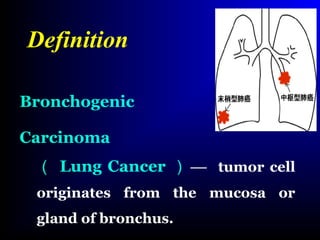
Bronchogenic
Carcinoma
( Lung Cancer ) — tumor cell
originates from the mucosa or
gland of bronchus.
Definition
Epidemiology
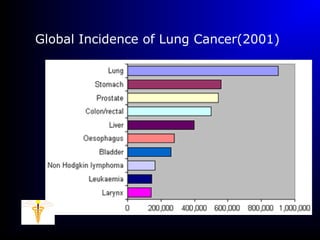
Global Incidence of Lung Cancer(2001)
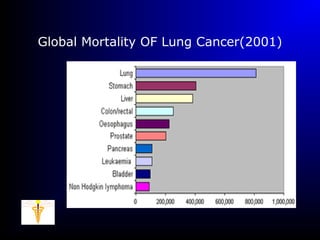
Global Mortality OF Lung Cancer(2001)
Anatomy and
Pathology
Thyroid cartilage
Cricothyroid ligament
Cricoid cartilage
Connectivetissue
sheath (cut away)
Intercartilaginous
ligaments
Mucosashowing
longitudual folds formed
by densecollections
of elastic fibres
Tracheal cartilages
To
upper
lobe
Eparterial
bronchus
To
middle
lobe
To
lower
lobe
R. main
bronchus
L. main
bronchus
Intrapulmonary Extrapulmonary Intrapulmonary
To
lower
lobe
To
lingula
To
upper
lobe
Trachealismuscle
Oesophageal muscle
Epithelium
Lymph vesselsElastic fibres
Gland
Small arteries
Nerve
Posterior wall
Crosssection
through trachea
Anterior wall
Epithelium
Nerve
Lymph vessels
Small artery
Gland
Elastic fibres
Cartilage
Connectivetissuesheath
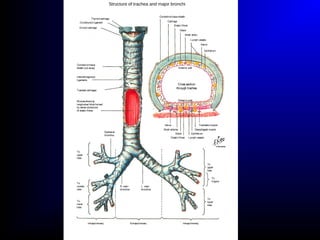
Structure of trachea and major bronchi
© Novartis
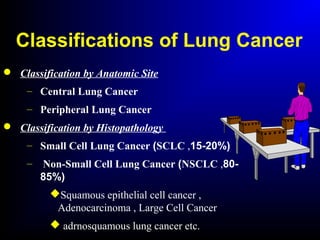
Classifications of Lung Cancer
 Classification by Anatomic Site
– Central Lung Cancer
– Peripheral Lung Cancer
 Classification by Histopathology
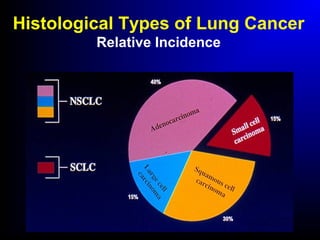
– Small Cell Lung Cancer (SCLC ,15-20%)
– Non-Small Cell Lung Cancer (NSCLC ,80-
85%)
Squamous epithelial cell cancer ,
Adenocarcinoma , Large Cell Cancer
 adrnosquamous lung cancer etc.
Histological Types of Lung Cancer
Relative Incidence
Symptoms and Signs
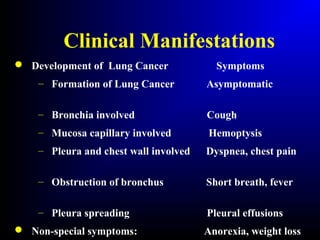
Clinical Manifestations
 Development of Lung Cancer Symptoms
– Formation of Lung Cancer Asymptomatic
– Bronchia involved Cough
– Mucosa capillary involved Hemoptysis
– Pleura and chest wall involved Dyspnea, chest pain
– Obstruction of bronchus Short breath, fever
– Pleura spreading Pleural effusions
 Non-special symptoms: Anorexia, weight loss
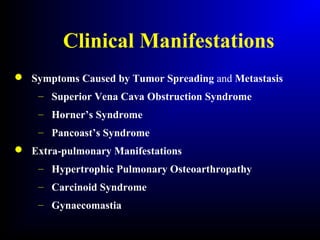
Clinical Manifestations
 Symptoms Caused by Tumor Spreading and Metastasis
– Superior Vena Cava Obstruction Syndrome
– Horner’s Syndrome
– Pancoast’s Syndrome
 Extra-pulmonary Manifestations
– Hypertrophic Pulmonary Osteoarthropathy
– Carcinoid Syndrome
– Gynaecomastia
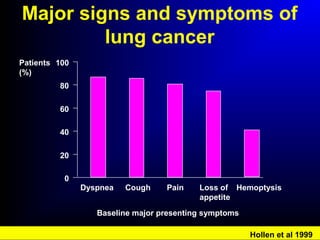
Major signs and symptoms of
lung cancer
Baseline major presenting symptoms
0
20
40
60
80
100
HemoptysisLoss of
appetite
PainCoughDyspnea
Patients
(%)
Hollen et al 1999
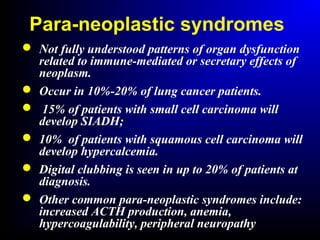
Para-neoplastic syndromes
 Not fully understood patterns of organ dysfunction
related to immune-mediated or secretary effects of
neoplasm.
 Occur in 10%-20% of lung cancer patients.
 15% of patients with small cell carcinoma will
develop SIADH;
 10% of patients with squamous cell carcinoma will
develop hypercalcemia.
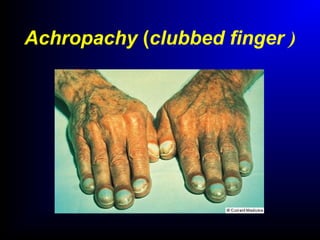
 Digital clubbing is seen in up to 20% of patients at
diagnosis.
 Other common para-neoplastic syndromes include:
increased ACTH production, anemia,
hypercoagulability, peripheral neuropathy
Achropachy (clubbed finger )
Laboratory Findings
 Cytology (tissue samples, Sputum, pleural effusions)
 Thoracoscopy
 Fine needle aspiration of palpable lymph nodes
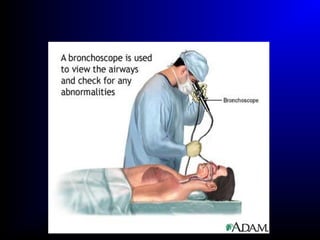
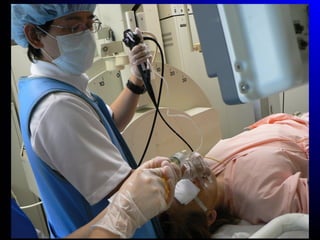
 Fibrotic bronchoscopy
- fluorescence bronchoscopy
- endoscopic ultrasound
- eBUS-TBNA
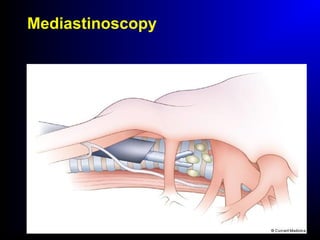
 Mediastinoscopy, video-assisled thoracoscopic surgery
(VATS), and thoracotomy
 Serum tumor markers are neither sensitive nor specific
enough to aid in diagnosis
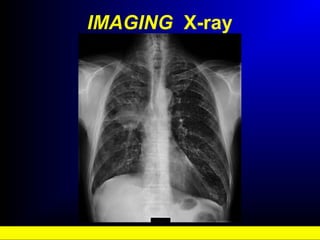
IMAGING X-ray
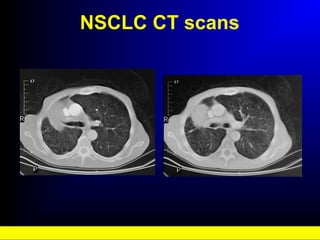
NSCLC CT scans
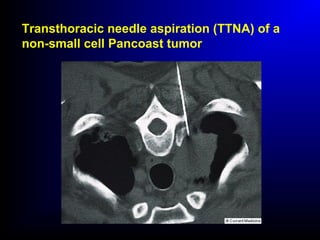
Transthoracic needle aspiration (TTNA) of a
non-small cell Pancoast tumor
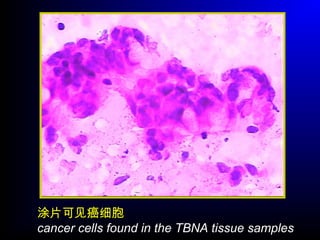
涂片可见癌细胞
cancer cells found in the TBNA tissue samples
Mediastinoscopy
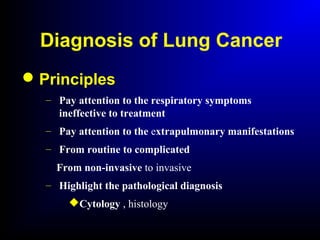
Diagnosis of Lung Cancer
Principles
– Pay attention to the respiratory symptoms
ineffective to treatment
– Pay attention to the extrapulmonary manifestations
– From routine to complicated
From non-invasive to invasive
– Highlight the pathological diagnosis
Cytology , histology
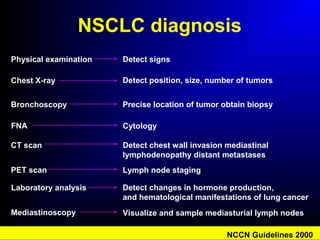
NSCLC diagnosis
Physical examination Detect signs
Visualize and sample mediasturial lymph nodes
Detect position, size, number of tumors
Detect chest wall invasion mediastinal
lymphodenopathy distant metastases
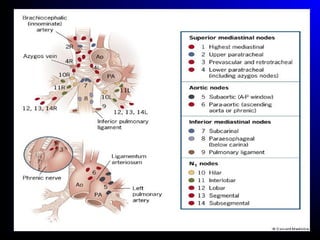
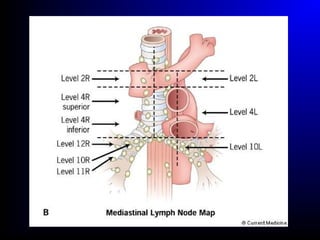
Lymph node staging
Detect changes in hormone production,
and hematological manifestations of lung cancer
Precise location of tumor obtain biopsy
Chest X-ray
CT scan
PET scan
Laboratory analysis
Bronchoscopy
Mediastinoscopy
FNA Cytology
NCCN Guidelines 2000
Staging and
Prognostication
Mountain 1997
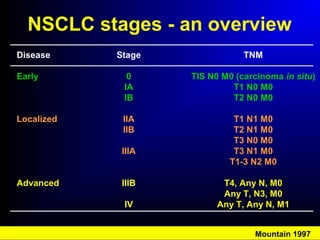
NSCLC stages - an overview
Disease
Early
Localized
Advanced
Stage
0
IA
IB
IIA
IIB
IIIA
IIIB
IV
TNM
TIS N0 M0 (carcinoma in situ)
T1 N0 M0
T2 N0 M0
T1 N1 M0
T2 N1 M0
T3 N0 M0
T3 N1 M0
T1-3 N2 M0
T4, Any N, M0
Any T, N3, M0
Any T, Any N, M1
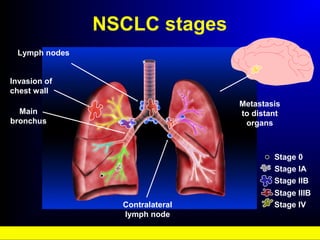
NSCLC stages
Stage 0
Stage IA
Stage IIB
Stage IIIB
Stage IV
Lymph nodes
Main
bronchus
Contralateral
lymph node
Metastasis
to distant
organs
Invasion of
chest wall
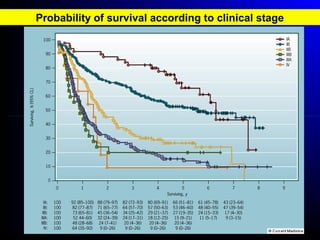
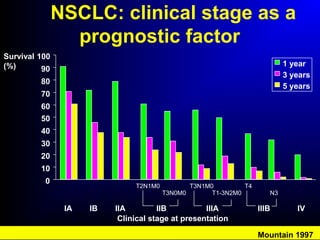
NSCLC: clinical stage as a
prognostic factor
1 year
3 years
5 years
0
10
20
30
40
50
60
70
80
90
100
IA IB IIA
T2N1M0
IVIIB IIIA IIIB
Clinical stage at presentation
Survival
(%)
Mountain 1997
T3N0M0
T3N1M0
T1-3N2M0
T4
N3
Probability of survival according to clinical stage
Treatment
Strategy of Lung Cancer
Treatment
 According to the pathological type
– Small Cell Lung Cancer (SCLC)
– Non-Small Cell Lung Cancer (NSCLC)
 According to the TNM Clinical Stage
 Choose the optimal therapeutic protocols
 Follow-up regularly
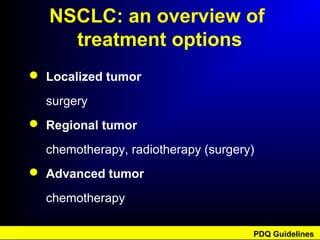
NSCLC: an overview of
treatment options
 Localized tumor
surgery
 Regional tumor
chemotherapy, radiotherapy (surgery)
 Advanced tumor
chemotherapy
PDQ Guidelines
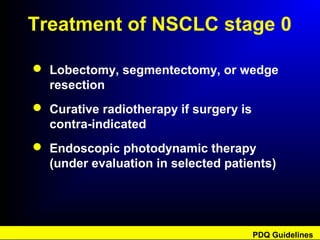
Treatment of NSCLC stage 0
 Lobectomy, segmentectomy, or wedge
resection
 Curative radiotherapy if surgery is
contra-indicated
 Endoscopic photodynamic therapy
(under evaluation in selected patients)
PDQ Guidelines
Treatment of NSCLC
stage I and stage II
 Lobectomy or pneumonectomy
 Curative radiotherapy if surgery is contra-
indicated
 Adjuvant chemotherapy
 Adjuvant radiotherapy
 Neoadjuvant chemotherapy
PDQ Guidelines
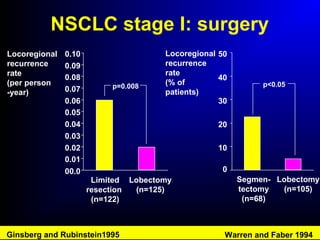
NSCLC stage I: surgery
Locoregional
recurrence
rate
(per person
-year)
Locoregional
recurrence
rate
(% of
patients)
0
10
20
30
40
50
Segmen-
tectomy
(n=68)
Lobectomy
(n=105)
00.0
0.01
0.02
0.03
0.04
0.05
0.06
0.07
0.08
0.09
0.10
Limited
resection
(n=122)
Lobectomy
(n=125)
p=0.008
Warren and Faber 1994Ginsberg and Rubinstein1995
p<0.05
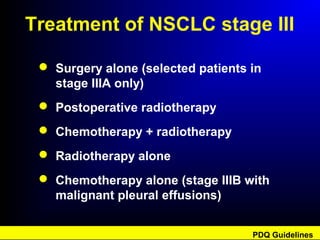
Treatment of NSCLC stage III
 Surgery alone (selected patients in
stage IIIA only)
 Postoperative radiotherapy
 Chemotherapy + radiotherapy
 Radiotherapy alone
 Chemotherapy alone (stage IIIB with
malignant pleural effusions)
PDQ Guidelines
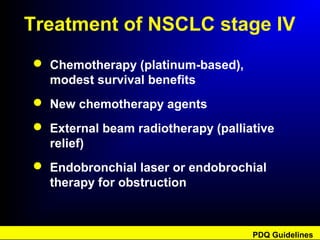
Treatment of NSCLC stage IV
 Chemotherapy (platinum-based),
modest survival benefits
 New chemotherapy agents
 External beam radiotherapy (palliative
relief)
 Endobronchial laser or endobrochial
therapy for obstruction
PDQ Guidelines
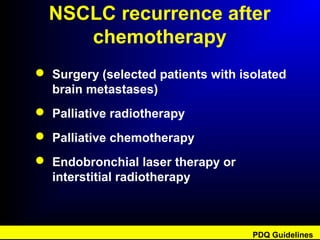
NSCLC recurrence after
chemotherapy
 Surgery (selected patients with isolated
brain metastases)
 Palliative radiotherapy
 Palliative chemotherapy
 Endobronchial laser therapy or
interstitial radiotherapy
PDQ Guidelines
Future Developments
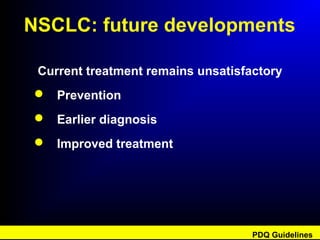
NSCLC: future developments
Current treatment remains unsatisfactory
 Prevention
 Earlier diagnosis
 Improved treatment
PDQ Guidelines
Prevention
 Education
– avoidance of environmental
carcinogens such as tobacco smoke
 Chemoprevention?
– vitamin A
– isotretinoin
Earlier diagnosis
 Obstructive lung disease
 Genetic risk factors
 Sputum cytology
 Molecular tumor markers
 Computed tomography
 Positron emission tomography (PET)
Edell 1997
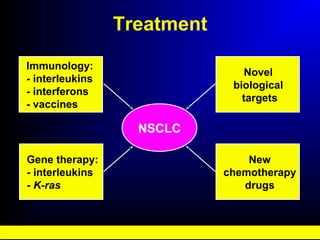
Treatment
NSCLC
Novel
biological
targets
Immunology:
- interleukins
- interferons
- vaccines
New
chemotherapy
drugs
Gene therapy:
- interleukins
- K-ras
Novel biological approaches
- molecular target therapy
 Epidermal growth factor (EGF) tyrosine
kinase inhibitors (TKI)
 Anti-vascular therapy
 Metalloproteinase inhibitors
Immunotherapy and gene therapy
 Immunomodulators
– interferons, interleukins
 Vaccination
– passive immunisation
– active immunisation
 Gene therapy?
– oncogenes eg K-ras
– immunomodulators eg interleukins
Thank You!

Ca lung

  • 1.
    Bronchogenic Carcinoma ( LungCancer ) DR GORDHAN DAS
  • 2.
    Outline  Epidemiology/Classification  Clinicalmanifestations  Symptoms  Signs  Diagnostic workup & Differential Diagnosis  Diagnosis  Differential Diagnosis  Treatment & Prevention  Summary
  • 3.
    Bronchogenic Carcinoma ( Lung Cancer) — tumor cell originates from the mucosa or gland of bronchus. Definition
  • 4.
  • 5.
    Global Incidence ofLung Cancer(2001)
  • 6.
    Global Mortality OFLung Cancer(2001)
  • 8.
  • 9.
    Thyroid cartilage Cricothyroid ligament Cricoidcartilage Connectivetissue sheath (cut away) Intercartilaginous ligaments Mucosashowing longitudual folds formed by densecollections of elastic fibres Tracheal cartilages To upper lobe Eparterial bronchus To middle lobe To lower lobe R. main bronchus L. main bronchus Intrapulmonary Extrapulmonary Intrapulmonary To lower lobe To lingula To upper lobe Trachealismuscle Oesophageal muscle Epithelium Lymph vesselsElastic fibres Gland Small arteries Nerve Posterior wall Crosssection through trachea Anterior wall Epithelium Nerve Lymph vessels Small artery Gland Elastic fibres Cartilage Connectivetissuesheath Structure of trachea and major bronchi © Novartis
  • 10.
    Classifications of LungCancer  Classification by Anatomic Site – Central Lung Cancer – Peripheral Lung Cancer  Classification by Histopathology – Small Cell Lung Cancer (SCLC ,15-20%) – Non-Small Cell Lung Cancer (NSCLC ,80- 85%) Squamous epithelial cell cancer , Adenocarcinoma , Large Cell Cancer  adrnosquamous lung cancer etc.
  • 11.
    Histological Types ofLung Cancer Relative Incidence
  • 12.
  • 13.
    Clinical Manifestations  Developmentof Lung Cancer Symptoms – Formation of Lung Cancer Asymptomatic – Bronchia involved Cough – Mucosa capillary involved Hemoptysis – Pleura and chest wall involved Dyspnea, chest pain – Obstruction of bronchus Short breath, fever – Pleura spreading Pleural effusions  Non-special symptoms: Anorexia, weight loss
  • 14.
    Clinical Manifestations  SymptomsCaused by Tumor Spreading and Metastasis – Superior Vena Cava Obstruction Syndrome – Horner’s Syndrome – Pancoast’s Syndrome  Extra-pulmonary Manifestations – Hypertrophic Pulmonary Osteoarthropathy – Carcinoid Syndrome – Gynaecomastia
  • 15.
    Major signs andsymptoms of lung cancer Baseline major presenting symptoms 0 20 40 60 80 100 HemoptysisLoss of appetite PainCoughDyspnea Patients (%) Hollen et al 1999
  • 16.
    Para-neoplastic syndromes  Notfully understood patterns of organ dysfunction related to immune-mediated or secretary effects of neoplasm.  Occur in 10%-20% of lung cancer patients.  15% of patients with small cell carcinoma will develop SIADH;  10% of patients with squamous cell carcinoma will develop hypercalcemia.  Digital clubbing is seen in up to 20% of patients at diagnosis.  Other common para-neoplastic syndromes include: increased ACTH production, anemia, hypercoagulability, peripheral neuropathy
  • 17.
  • 18.
    Laboratory Findings  Cytology(tissue samples, Sputum, pleural effusions)  Thoracoscopy  Fine needle aspiration of palpable lymph nodes  Fibrotic bronchoscopy - fluorescence bronchoscopy - endoscopic ultrasound - eBUS-TBNA  Mediastinoscopy, video-assisled thoracoscopic surgery (VATS), and thoracotomy  Serum tumor markers are neither sensitive nor specific enough to aid in diagnosis
  • 19.
  • 20.
  • 21.
    Transthoracic needle aspiration(TTNA) of a non-small cell Pancoast tumor
  • 24.
    涂片可见癌细胞 cancer cells foundin the TBNA tissue samples
  • 25.
  • 26.
    Diagnosis of LungCancer Principles – Pay attention to the respiratory symptoms ineffective to treatment – Pay attention to the extrapulmonary manifestations – From routine to complicated From non-invasive to invasive – Highlight the pathological diagnosis Cytology , histology
  • 27.
    NSCLC diagnosis Physical examinationDetect signs Visualize and sample mediasturial lymph nodes Detect position, size, number of tumors Detect chest wall invasion mediastinal lymphodenopathy distant metastases Lymph node staging Detect changes in hormone production, and hematological manifestations of lung cancer Precise location of tumor obtain biopsy Chest X-ray CT scan PET scan Laboratory analysis Bronchoscopy Mediastinoscopy FNA Cytology NCCN Guidelines 2000
  • 28.
  • 31.
    Mountain 1997 NSCLC stages- an overview Disease Early Localized Advanced Stage 0 IA IB IIA IIB IIIA IIIB IV TNM TIS N0 M0 (carcinoma in situ) T1 N0 M0 T2 N0 M0 T1 N1 M0 T2 N1 M0 T3 N0 M0 T3 N1 M0 T1-3 N2 M0 T4, Any N, M0 Any T, N3, M0 Any T, Any N, M1
  • 32.
    NSCLC stages Stage 0 StageIA Stage IIB Stage IIIB Stage IV Lymph nodes Main bronchus Contralateral lymph node Metastasis to distant organs Invasion of chest wall
  • 33.
    NSCLC: clinical stageas a prognostic factor 1 year 3 years 5 years 0 10 20 30 40 50 60 70 80 90 100 IA IB IIA T2N1M0 IVIIB IIIA IIIB Clinical stage at presentation Survival (%) Mountain 1997 T3N0M0 T3N1M0 T1-3N2M0 T4 N3
  • 34.
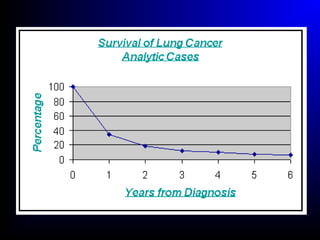
    Probability of survivalaccording to clinical stage
  • 35.
  • 36.
    Strategy of LungCancer Treatment  According to the pathological type – Small Cell Lung Cancer (SCLC) – Non-Small Cell Lung Cancer (NSCLC)  According to the TNM Clinical Stage  Choose the optimal therapeutic protocols  Follow-up regularly
  • 37.
    NSCLC: an overviewof treatment options  Localized tumor surgery  Regional tumor chemotherapy, radiotherapy (surgery)  Advanced tumor chemotherapy PDQ Guidelines
  • 38.
    Treatment of NSCLCstage 0  Lobectomy, segmentectomy, or wedge resection  Curative radiotherapy if surgery is contra-indicated  Endoscopic photodynamic therapy (under evaluation in selected patients) PDQ Guidelines
  • 39.
    Treatment of NSCLC stageI and stage II  Lobectomy or pneumonectomy  Curative radiotherapy if surgery is contra- indicated  Adjuvant chemotherapy  Adjuvant radiotherapy  Neoadjuvant chemotherapy PDQ Guidelines
  • 40.
    NSCLC stage I:surgery Locoregional recurrence rate (per person -year) Locoregional recurrence rate (% of patients) 0 10 20 30 40 50 Segmen- tectomy (n=68) Lobectomy (n=105) 00.0 0.01 0.02 0.03 0.04 0.05 0.06 0.07 0.08 0.09 0.10 Limited resection (n=122) Lobectomy (n=125) p=0.008 Warren and Faber 1994Ginsberg and Rubinstein1995 p<0.05
  • 41.
    Treatment of NSCLCstage III  Surgery alone (selected patients in stage IIIA only)  Postoperative radiotherapy  Chemotherapy + radiotherapy  Radiotherapy alone  Chemotherapy alone (stage IIIB with malignant pleural effusions) PDQ Guidelines
  • 42.
    Treatment of NSCLCstage IV  Chemotherapy (platinum-based), modest survival benefits  New chemotherapy agents  External beam radiotherapy (palliative relief)  Endobronchial laser or endobrochial therapy for obstruction PDQ Guidelines
  • 43.
    NSCLC recurrence after chemotherapy Surgery (selected patients with isolated brain metastases)  Palliative radiotherapy  Palliative chemotherapy  Endobronchial laser therapy or interstitial radiotherapy PDQ Guidelines
  • 44.
  • 45.
    NSCLC: future developments Currenttreatment remains unsatisfactory  Prevention  Earlier diagnosis  Improved treatment PDQ Guidelines
  • 46.
    Prevention  Education – avoidanceof environmental carcinogens such as tobacco smoke  Chemoprevention? – vitamin A – isotretinoin
  • 47.
    Earlier diagnosis  Obstructivelung disease  Genetic risk factors  Sputum cytology  Molecular tumor markers  Computed tomography  Positron emission tomography (PET) Edell 1997
  • 48.
    Treatment NSCLC Novel biological targets Immunology: - interleukins - interferons -vaccines New chemotherapy drugs Gene therapy: - interleukins - K-ras
  • 49.
    Novel biological approaches -molecular target therapy  Epidermal growth factor (EGF) tyrosine kinase inhibitors (TKI)  Anti-vascular therapy  Metalloproteinase inhibitors
  • 50.
    Immunotherapy and genetherapy  Immunomodulators – interferons, interleukins  Vaccination – passive immunisation – active immunisation  Gene therapy? – oncogenes eg K-ras – immunomodulators eg interleukins
  • 51.

Editor's Notes

  • #16 In a recent study of 673 patients with NSCLC, the major presenting lung cancer symptoms at diagnosis were dyspnea (87% patients), cough (86%), pain (81%), loss of appetite (75%) and hemoptysis (41%).1 Although 81% of these patients had three or more of these symptoms, there were some patients who presented with only one symptom (5% of patients) or no symptoms (2% of patients).1 Although not included in the Lung Cancer Symptom Scale1, weight loss is also a major symptom of NSCLC. 1. Hollen PJ, et al. Support Care Cancer 1999; 7: 140-148.
  • #20 Non-small cell lung cancer X-ray: This X-ray shows an irregular mass (approximately 5cm x 4cm) at the right hemi thorax infiltrating into the adjacent mediastinum. Some mediastinum lymphadenopathy is present leading to a narrowing of the trachea. X-rays can give an approximate location of the tumour and an indication of the tumour size. Straight and lateral views are usually required to provide a complete picture of the depth of the tumour.
  • #21 Non-small cell lung cancer CT scans: There is a mass measuring approximately 5cm x 5cm. Tiny lung metastases are also evident on the images. Computerised tomography scanning provides a more accurate location of the tumour than the X-ray; it is, therefore, valuable if surgery or radiotherapy is contemplated. CT scans can detect chest wall invasion and mediastinal lymphadenopathy, either of which are contraindications to surgical resection. Inclusion of the liver and adrenal glands can also detect distant metastasis in these organs. Some studies have shown that low dose spiral CT in comparison with conventional radiography of the chest was superior for screening and detection of small peripheral lung cancers.1 However, a much larger-scale clinical trial is warranted to further examine this.1 1.Kaneko M, et al. Radiol 1996; 201: 798 - 802 1. Webb WR, et al. Radiology 1991; 178: 705-713.
  • #28 All patients should undergo a history-taking and physical examination, chest X-ray and chest computed tomography (CT) scans (including the adrenal glands), liver CT scan or abdominal ultrasound. Other evaluations include a complete blood count, electrolytes, liver function tests, calcium, blood urea nitrogen, and creatinine, as well as a baseline ECG. Bone scans and/or brain CT scans may be appropriate in some patients.1 The extent of the tumor, the involvement of the lymph nodes, and chest wall or mediastinal invasion can be determined with similar efficacy using either CT or MRI. CT is used more commonly, although MRI may be preferable in specific situations, for example in evaluating superior sulcus tumors.2 Positron emission tomography (PET) with radiolabeled fluoro-2-deoxyglucose combined with CT was significantly more accurate than CT alone in identifying lymph node involvement in NSCLC.3 1. NCCN Guidelines. 2. Webb WR, et al. Radiology 1991; 178: 705-713. 3. Vansteenkiste JF, et al. J Clin Oncol 1998; 16: 2142-2149.
  • #32 Lung cancer is staged according to three parameters: tumor (T), lymph nodes (N), and metastatic involvement (M).1 Tumor stages: TX: primary tumor cannot be assessed T0: no evidence of primary tumor TIS: carcinoma in situ (confined to airway lining) T1: tumor &amp;lt;3 cm in greatest dimension, surrounded by lung or visceral pleura, without bronchoscopic evidence of invasion more proximal than the lobar bronchus T2: tumor with any of the following features: &amp;gt;3 cm in greatest dimension; involves main bronchus ?2 cm distal to the carina; invades the visceral pleura. Any associated atelactasis or obstructive pneumonitis should involve less than the entire lung T3: tumor of any size that directly invades into the chest wall, diaphragm, mediastinal pleura or parietal pericardium; a tumor in the main bronchus &amp;lt;2 cm distal to the carina but not involving the carina; a tumor with associated atelactasis or obstructive pneumonitis of the whole lung T4: tumor of any size that invades the mediastinum, heart, great vessels, trachea, esophagus, vertebral body or carina; a tumor with malignant pleural or pericardial effusion; a tumor with satellite tumor nodules within the ipsilateral primary tumor lobe of the lung. Lymph node stages: NX: regional lymph nodes cannot be assessed N0: no regional lymph node metastasis N1: metastasis to ipsilateral peribronchial and/or ipsilateral hilar lymph nodes and intrapulmonary nodes involved by direct extension of primary tumor N2: metastasis to ipsilateral mediastinal and/or subcarinal lymph node(s) N3: metastasis to contralateral mediastinal, contralateral hilar, ipsilateral or contralateral scalene, or supraclavicular lymph node(s). Distant metastasis stages: MX: presence of distant metastasis cannot be assessed M0: no distant metastasis M1: distant metastasis present. 1. Mountain CF. Chest 1997; 111: 1710-1717.
  • #33 Schematic diagram showing examples of some tumor stages. Stage 0 (carcinoma in situ) - tumor is confined to the airway lining. Stage IA (T1 N0 M0) - tumor has spread to nearby lung tissue but has not reached the main bronchus. Stage IIB (T2 N1 M0) - tumor has reached main bronchus and local lymph nodes. Stage IIIB (T4 N3 M0) - tumor has invaded chest wall, trachea and the contralateral lymph nodes. Stage IV (T1 N0 M1) - distant metastasis present in the brain.
  • #34 Survival progressively declines as the stage of disease at presentation advances.1 Five-year survival is poor even at relatively early stages, reflecting the lack of satisfactory treatment. 1. Mountain CF. Chest 1997; 111: 1710-1717.
  • #38 For localized tumors (stage 0, I, II), surgery is usually the treatment of choice. Radiotherapy may be used in patients who are medically unsuitable for surgery. The role of induction chemotherapy in these early stages is still under investigation. Locally or regionally advanced tumors (stage III) are usually too extensive curative surgery, but are still confined to the chest. The standard treatment is chemotherapy plus radiotherapy. Downstaging the tumor with chemotherapy (with or without radiotherapy) may allow surgery in certain cases. Advanced tumors (stage IV) are treated with chemotherapy. Palliative radiotherapy may be used to relieve symptoms. 1. PDQ Treatment Guidelines.
  • #39 Surgery is the treatment of choice. It may remove all the affected lobe (lobectomy), or part of the lobe (segmentectomy or wedge resection).1 Curative radiotherapy may be used in patients with contra-indications to surgery.1 Endoscopic photodynamic therapy is under evaluation.1 It involves systemic injection of a photosensitive chemical. After a delay to allow uptake into the cancer cells, an optic fiber is inserted into the lung through a bronchoscope and used to transmit laser light, which activates the photosensitive chemical and kills the tumor cells. Complete response rates of up to 85%, with a median duration of 14 months, have been reported2, but the limited light penetration means that the technique is currently practicable only for small tumors located in the large airways. 1. PDQ Treatment Guidelines. 2. Furuse K, et al. J Clin Oncol 1993; 11: 1852-1857.
  • #40 Surgery is the treatment of choice, lobectomy, pneumonectomy (removal of entire lung), segmentectomy or wedge resection depending on the patient.1 Curative radiotherapy may be used in patients with contra-indications to surgery.1 30-50% of patients resected for stage I/II NSCLC may later develop regional or distant metastases. Adjuvant chemotherapy or radiotherapy following surgery, and neoadjuvant chemotherapy, are currently under investigation.1 1. PDQ Treatment Guidelines.
  • #41 The recurrence rate after surgery appears to be higher for limited surgery than for lobectomy. The left-hand graph shows the locoregional recurrence rate (per patient per year) in 247 patients with stage IA (T1 N0) NSCLC, who were randomized to either lobectomy or limited (segment or wedge) resection. The recurrence rate was three times higher in the patients undergoing limited resection, and the death rate was increased by 30%.1 Similarly, a retrospective non-randomized study in 173 patients with stage I NSCLC found that the percentage of patients experiencing a local or regional recurrence within 5 years was higher in patients undergoing anatomic segmentectomy than lobectomy.2 1. Ginsberg RJ, Rubinstein LV. Ann Thorac Surg 1995; 60: 615-623. 2. Warren WH, Faber LP. J Thorac Cardiovasc Surg 1994; 107: 1087-1094.
  • #42 Stage IIIA:1 surgery alone in highly selected cases chemotherapy combined with radiotherapy, chemotherapy plus radiotherapy followed by surgery, or chemotherapy after surgery (encouraging results for patients with good performance status) surgery and postoperative radiation therapy (can improve local control, but there is controversy over whether it improves survival) radiation therapy (long-term survival benefit in 5-10% of patients; patients with high performance status are most likely to benefit). Stage IIIB:1 radiation therapy alone (patients with advanced disease and high performance status are most likely to benefit) chemotherapy combined with radiation therapy (modest survival benefits compared with radiation therapy alone) chemotherapy and/or radiation therapy followed by surgery chemotherapy alone (for patients with malignant pleural effusion). 1. PDQ Treatment Guidelines.
  • #43 Cisplatin-containing combination regimens produce higher response rates than single-agent chemotherapy.1 However, current treatments produce only modest survival benefits compared with supportive care alone, and there is no standard regimen.1 New chemotherapy agents are being evaluated in clinical trials.1 External radiation therapy may be used for palliation of symptoms such as compression of the trachea, esophagus or bronchus; bone or brain metastases; local pain; vocal cord paralysis; hemoptysis; or superior vena cava syndrome.1 Endobronchial laser therapy or brachytherapy may be useful in treating lesions obstructing the proximal airways.1 1. PDQ Treatment Guidelines.
  • #44 Surgery and postoperative radiotherapy for patients with a solitary brain metastasis and no evidence of other tumors.1 Stereotactic radiosurgery may be useful in highly selected patients with good performance status and with metastases confined to the brain.1 Palliative external beam radiotherapy.1 Chemotherapy for symptom palliation in patients with good performance status. 1 Some chemotherapy regimens may prolong time to progression and survival. Docetaxel 100 mg/m2 every 3 weeks significantly (p=0.044) prolonged time to progression compared with vinorelbine and ifosfamide (p&amp;lt;0.001) in 373 patients with recurrent NSCLC after platinum-based chemotherapy.2 Taxotere 75 mg/m2 significantly (p&amp;lt;0.05) prolonged survival compared with best supportive care in patients with NSCLC previously treated with platinum-based chemotherapy.3 Endobronchial laser therapy or interstitial radiotherapy for endobronchial lesions.1 1. PDQ Treatment Guidelines. 2. Fossella FV, et al. ASCO 1999, abs. 1776. 3. Shepherd E, et al. ECCO 1999, abs. 979.
  • #46 Current treatment for NSCLC is not satisfactory, except possibly for the small subset of patients with surgically curable T1 N0 M0 stage I disease.1 Prevention would reduce the overall burden of disease (most lung cancer is caused by environmental factors, which could be avoided). Earlier diagnosis could increase the percentage of patients treated at stage I, where the outcome of treatment is often good. Improved treatment of regional and advanced disease. Patients with NSCLC should be considered for clinical trials.1 1. PDQ Treatment Guidelines.
  • #47 Up to 90% of cases of lung cancer can be attributed to the use of tobacco, and lung cancer incidence and death rates in the US mirror patterns of cigarette smoking.1 Lung cancer incidence and death could be significantly reduced by: deterring people from beginning smoking helping people to stop smoking protecting non-smokers from environmental tobacco smoke.1 Possible strategies include reducing the availability of tobacco products to adolescents, education, increasing the cost of tobacco products, and use of tobacco tax revenue to fund mass media campaigns to reduce consumption.1 Although still investigational, there is some preliminary evidence that the risk of tumor recurrence in patients who have had one stage I NSCLC tumor completely removed by surgery may be reduced by treatment with high-dose vitamin A (retinol palmitate 300,000 IU/day for 12 months)2 or isotretinoin.3 1.Wingo PA, et al. J Natl Cancer Inst 1999; 91: 675-690. 2.Pastorino U, et al. J Clin Oncol 1993; 11: 1216-1222. 3.Lippman SM, University of Texas-MD Anderson Cancer Center: MDA-ID-91025, clinical trial closed 04/09/1997.
  • #48 Identification of risk factors could allow more intensive monitoring of high-risk patients, which may improve diagnosis. Risk factors include: obstructive lung disease increases the risk of lung cancer approximately four-fold1 genetic factors. There was a 30% increased risk of cancer in non-smoking women whose parents or siblings had a history of respiratory tract cancer.1 Sputum cytology screening can identify pre-malignant dysplasia in people with chronic obstructive lung disease and a history of cigarette smoking.1 Molecular tumor markers such as ras and p53 can be identified in bronchoalveloar lavage fluids.1 In a study in Sweden, a routine chest X-ray every 2 years identified 28 cases of lung cancer, and the 4-year survival for these patients was 42% (compared with 10% for patients diagnosed with symptoms).1 Low dose spiral CT scanning detected small peripheral lung cancers in 15 patients, 11 of whom were negative on chest X-ray. Enhanced CT (taking scans before and after injection of contrast medium) accurately differentiated between benign and malignant lesions in patients with peripheral lung nodules.1 PET with radiolabeled fluoro-2-deoxyglucose detected all but 14 of 346 lung cancers, and the tumors missed were all smaller than 1 cm.1 PET plus CT was significantly more accurate than CT alone in staging lymph node involvement in a study of 68 patients with potentially operable NSCLC, and has the potential to reduce the need for invasive surgical staging.2 1. Edell ES. Curr Opin Pulmonary Med 1997; 3: 247-251. 2. Vansteenkiste JF, et al. J Clin Oncol 1998; 16: 2142-2149.
  • #49 Novel biological targets. Advances in molecular and cellular biology have led to the identification of a growing number of molecules in the tumor and host that are potential targets for novel anticancer drug development. New chemotherapy agents, such as topoisomerase inhibitors, taxanes and novel antimetabolites, may offer improved efficacy and/or reduced toxicity. Immunotherapy offers a range of possibilities: immunomodulators (eg interferons, interleukins) to increase the activity of the immune system passive immunisation active immunisation. Gene therapy is still in its infancy. Possible targets include oncogenes known to be associated with lung cancer, such as K-ras, or genes for powerful immunomodulators such as interleukins.
  • #50 Epidermal growth factor (EGF) is an important growth factor for cells of epidermal origin. In NSCLC it may directly stimulate tumor cell proliferation, promote cancer cell adhesion (which may be important in the development of metastases), and stimulate the development of new blood vessels in the tumor (angiogenesis). EGF acts by activating a tyrosine kinase on the intracellular side of its receptor.1 Tumors are reliant on a good blood supply from the host in order to survive and proliferate. Antiangiogenesis agents aim to prevent the development of new blood vessels within the tumor, but are of limited use when the tumor already has an established blood supply. Antivascular agents aim to inhibit the vascular function of existing tumor blood vessels, leading to tumor necrosis as a result of metabolic deprivation.2 Metalloproteinases degrade the extracellullar matrix, allowing tumor cells to invade adjacent tissues, metastasis, and develop new blood vessels. In NSCLC, metalloproteinase activity is correlated to the degree of tumor spread. Metalloproteinase inhibitors could be a new class of anticancer compounds.3 1. Kris M, et al. Clin Cancer Res 1999; 5: S. 2. Chaplin DJ, et al. Anticancer Res 1999; 19: 189-196. 3. Ferrante K, et al. Cancer Chemother Pharmacol 1999; 43 (suppl.): S61-S68.
  • #51 Both these potential new therapies are still in their infancy. Immunotherapy works on the principle of stimulating the patient抯 immune system to attack and destroy the tumor cells. There are three possible approaches: treatment with immunomodulators (eg interleukins, interferons), to stimulate proliferation and activation of host immune cells passive immunisation, in which ready-made antibodies raised against tumor antigens are injected into the patient. Treatment would need to be repeated at regular intervals as antibodies have a relatively short lifespan active immunisation, in which tumor antigens are injected in combination with an adjuvant (either a traditional vaccine adjuvant such as BCG, or antigen-presenting cells grown in tissue culture). This operates on the same principle as vaccination against infection, by stimulating the host to mount an immune response against the antigen. Gene therapy is at an even earlier stage of research. Two broad approaches are being explored: activation of the genes which control production of immunomodulators (eg interferons, interleukins). This should have a similar effect to external administration of such compounds modulation of the expression of known oncogenes such as K-ras.