"Update on SABR for medically operable
early NSCLC: Current Status".
DR KANHU CHARAN PATRO
MD,DNB(Radiation Oncology),MBA,FICRO,FAROI(USA),PDCR,CEPC
HOD,RADIATION ONCOLOGY
Mahatma Gandhi Cancer Hospital And Research Institute, Visakhapatnam
drkcpatro@gmail.com /M- +91-9160470564
YROC 26th FEB 2023
Disclaimer
Dr Shyam Dr Ayush
Introduction
• Since decades, the gold standard for treatment of early-stage non-small
cell lung cancer is surgical lobectomy plus mediastinal lymph node
dissection
• Patients in worse health status are treated with sub lobar resection or
radiation treatment.
• With development of stereotactic-body-radiotherapy (SBRT), outcome
of patients treated with radiation was substantially improved.
• Comparison of SBRT and surgical techniques is difficult due to the lack of
randomized trials.
• However, all available evidence in form of case control studies of
population-based studies show equivalence between sub lobar resection
and SBRT indicating that SBRT—when performed by a trained and
experienced team—should be offered to all high-risk surgical patients.
• For patients not willing to take the risk of lobectomy and therefore
refusing surgery, SBRT is an excellent treatment option.
LEVELS OF EVIDENCE
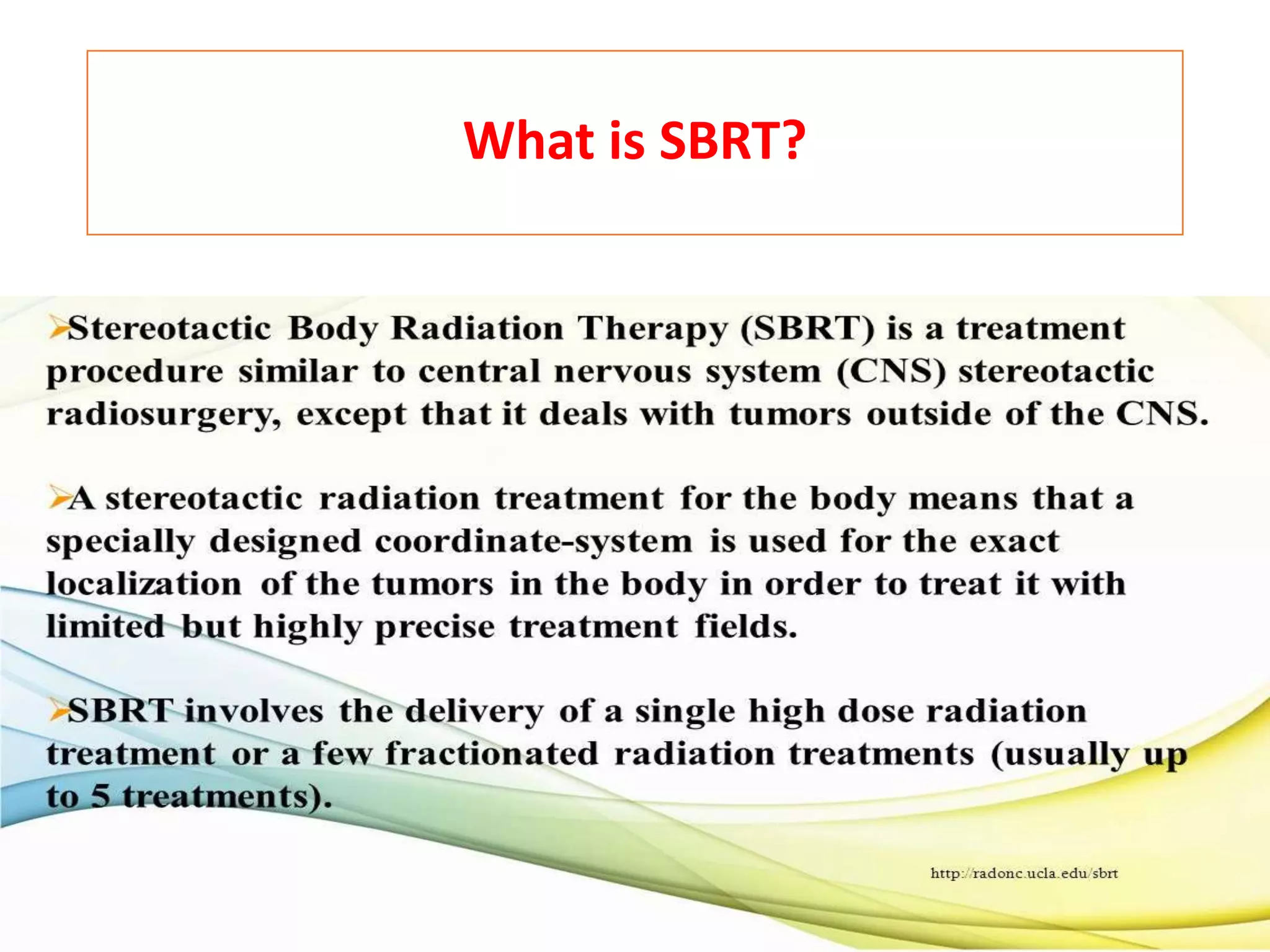
What is SBRT?
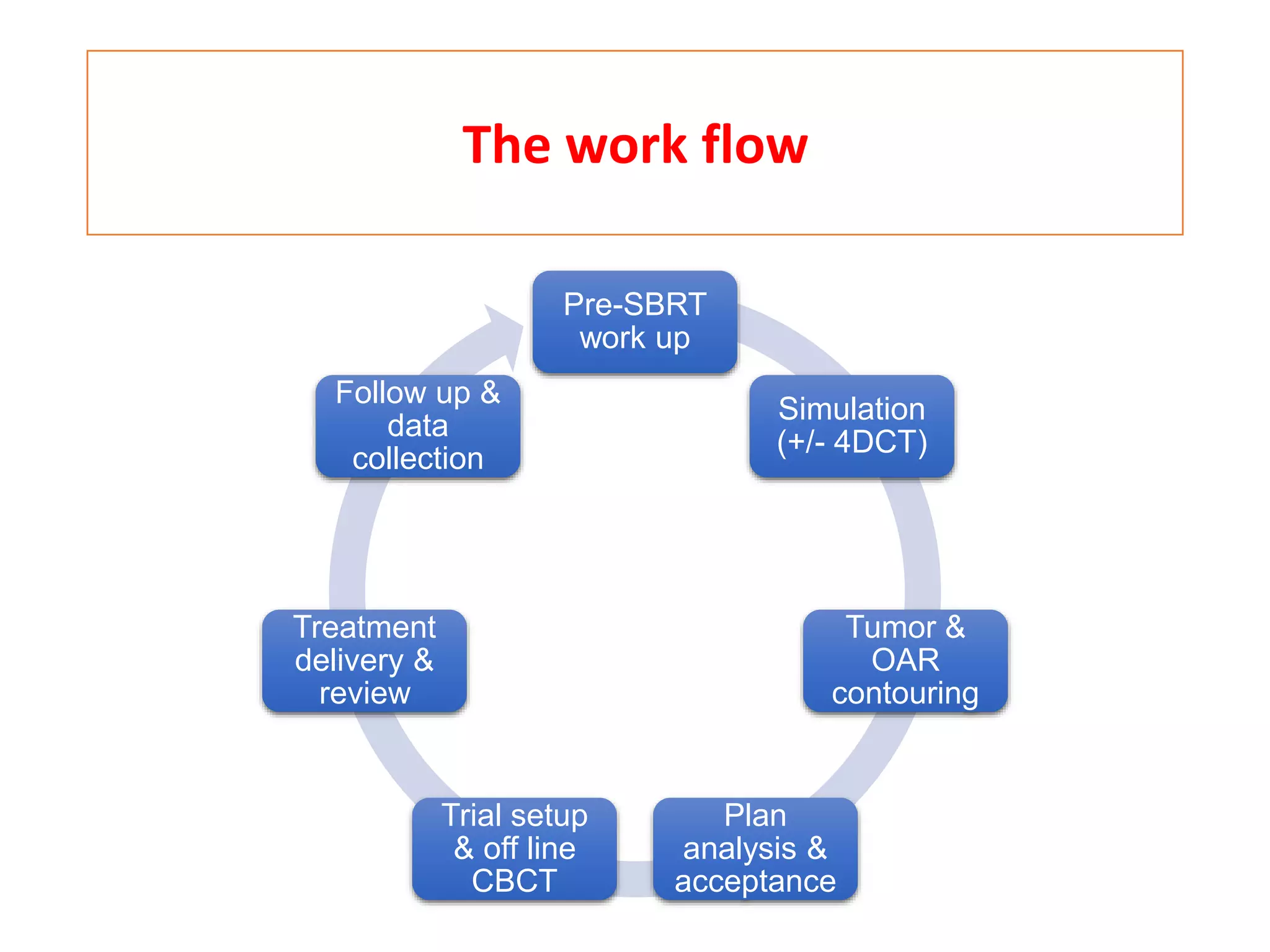
The work flow
Pre-SBRT
work up
Simulation
(+/- 4DCT)
Tumor &
OAR
contouring
Plan
analysis &
acceptance
Trial setup
& off line
CBCT
Treatment
delivery &
review
Follow up &
data
collection
Patient selection for SBRT
SBRT is recommended in the NSCLC for patients
with
 Stage I and II (T1–3,N0,M0)
 NSCLC who are medically inoperable
 High risk- elderly
 Refuse surgery after appropriate consultation
SBRT has no established role in small cell lung
cancer
 PFT (FEV1 or
DLCO < 40%)
 DM/CAD
 Cerebral
disease
 Pul. HTN
 PS 0-2
 Able to lie flat for
at least one hour
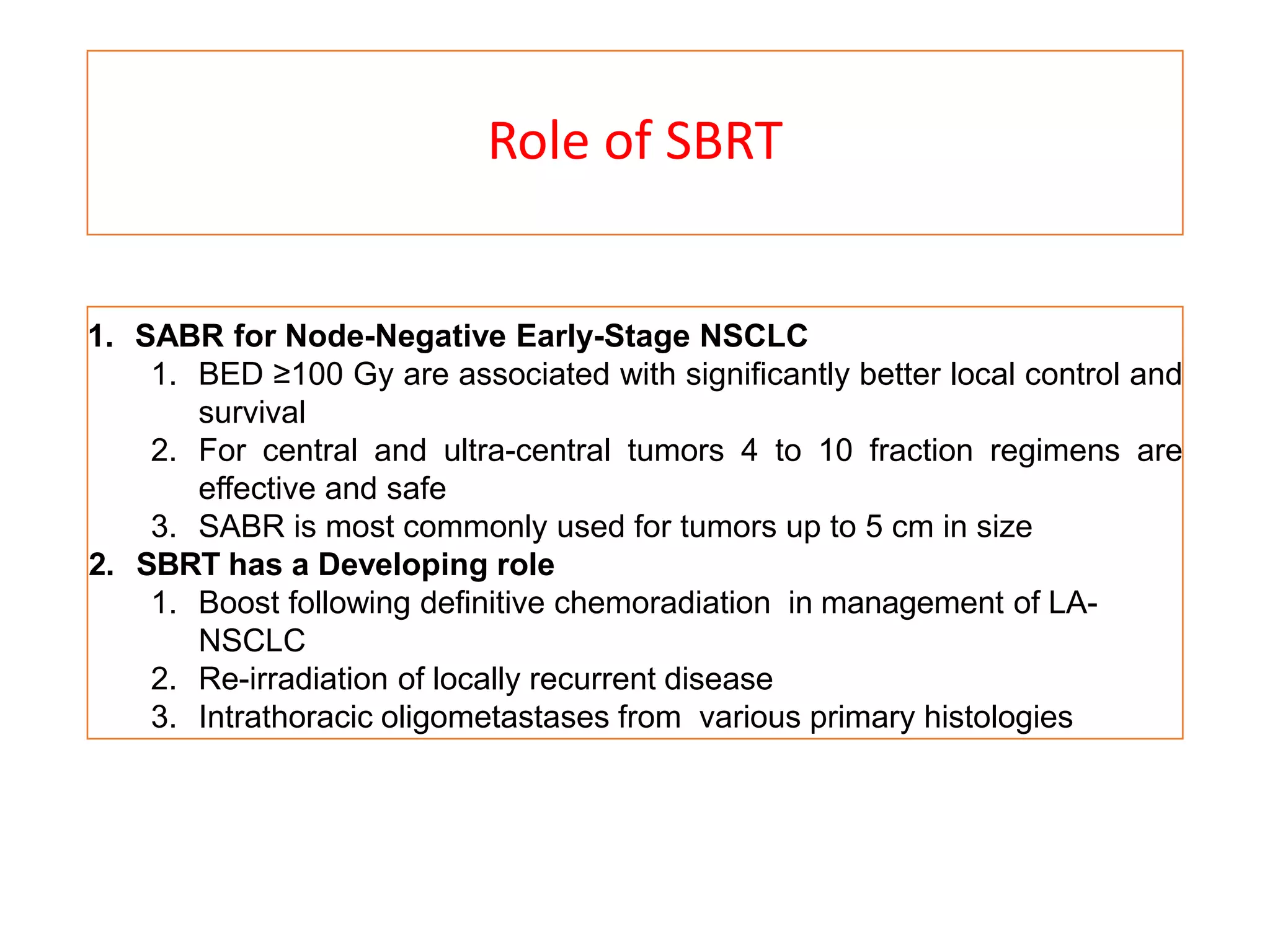
1. SABR for Node-Negative Early-Stage NSCLC
1. BED ≥100 Gy are associated with significantly better local control and
survival
2. For central and ultra-central tumors 4 to 10 fraction regimens are
effective and safe
3. SABR is most commonly used for tumors up to 5 cm in size
2. SBRT has a Developing role
1. Boost following definitive chemoradiation in management of LA-
NSCLC
2. Re-irradiation of locally recurrent disease
3. Intrathoracic oligometastases from various primary histologies
Role of SBRT
The
Timmerman
NCCN ALGORITHM
NCCN ALGORITHM
What NCCN SAYS?
1. Early-Stage NSCLC (Stage I, selected node-negative Stage IIA)
2. SABR (also known as SBRT) has achieved good primary tumor control rates and
overall survival, higher than conventionally fractionated radiotherapy.
3. Although SABR is not proven equivalent to lobectomy, some prospective
series have demonstrated similar overall and cancerspecific survival
4. SABR is also an appropriate option for patients with high surgical risk (able to
tolerate sublobar resection but not lobectomy [eg, age ≥75 years, poor lung
function])
5. More modestly hypofractionated or dose-intensified conventionally
fractionated 3D-CRT regimens are less preferred alternatives and may be
considered if referral for SABR is not feasible.
6. Close follow-up and therapy for isolated local and/or locoregional recurrence
after SABR have been shown to improve overall survival in a large
retrospective study
What NCCN SAYS?
SABR for Node-Negative Early-Stage NSCLC
1. The high-dose intensity and conformity of SABR require minimizing the PTV.
2. Dosing regimen For SABR, intensive regimens of BED ≥100 Gy are associated with
significantly better local control and survival than less intensive regimens
3. In the United States, only regimens of ≤5 fractions meet the arbitrary billing code
definition of SBRT, but slightly more protracted regimens are appropriate as well.
4. For centrally located tumors (defined variably as within 2 cm of the proximal bronchial
tree and/or abutting mediastinal pleura) and even ultra-central tumors (defined as
abutting the proximal bronchial tree), 4 to 10 fraction risk adapted SABR regimens
appear to be effective and safe, while 54 to 60 Gy in 3 fractions is unsafe and should be
avoided.
5. However, particular attention should be paid to tumors abutting the bronchial tree and
esophagus to avoid severe toxicity.
6. RTOG 0813 evaluated the toxicity of 5-fraction regimens and found no high-grade
toxicities at 50 Gy in 5 fractions
7. SABR is most commonly used for tumors up to 5 cm in size, though selected larger
isolated tumors can be treated safely if normal tissue constraints are respected.
TYPE OF LESIONS
• Peripheral lesions
• They are located > 2 cm from the primary bronchi or trachea
• Central lesions
• Located within 2 cm of the proximal bronchial tree and/or abutting
mediastinal pleura
• Ultra-Central lesions
• Lesions abutting the proximal bronchial tree
TYPE OF LESIONS
Evidences
STARS AND ROSEL
Pooed demographic
RFS AND OS
Local- regional
and distant
recurrences
SBRT VS SURGERY
Combined ROSEL/STARS analysis (Chang Lancet Oncol 2015):
• n=58 patients from two trials
• T1-T2 (<4 cm) N0 medically operable NSCLC
• SBRT (54 Gy in 3 fractions, 50 Gy in 4 fractions if central) vs
lobectomy and mediastinal lymph node dissection.
• 3-year OS improved for SBRT (95%) vs surgery (79%). Grade 3–4
toxicity 10% for SBRT vs 44% for surgery.
Indiana (Timmerman JCO 2006; Fakiris, IJROBP
2009)
• n=70
• T1–3N0 (≤7 cm)
• 60–66 Gy in 3 fx over 1–2 weeks.
• Three-year LC 88%, CSS 82%, OS 43%, regional failure 9%, and distant failure
13%.
• Patients with central tumors had increased risk of grade 3–5 toxicity (27% vs
10%).
• Established “no-fly-zone” of 2 cm surrounding proximal bronchial tree for
3-fraction treatment.
Onishi (Cancer, 2004)
• n=245
• T1–2N0 treated
• 18–75 Gy in 1–22 fx
• LF was 8% for BED ≥100 Gy vs 26% for BED <100 Gy.
• Three-year OS was 88% for BED ≥100 Gy vs 69% for BED <100 Gy.
RTOG 0236 (Timmerman 2010)
• T1–3N0 (≤5 cm), medically inoperable tumors >2 cm from proximal
bronchial tree treated
• SBRT 20 Gy × 3 over 1.5–2 weeks (54 Gy applying heterogeneity
correction).
• GTV = CTV. PTV = 0.5 cm axial margin and 1 cm superior/inferior
margin.
• 5-year LC 93%, LRC 62%, 31% DM, DFS 26%, OS 40%.
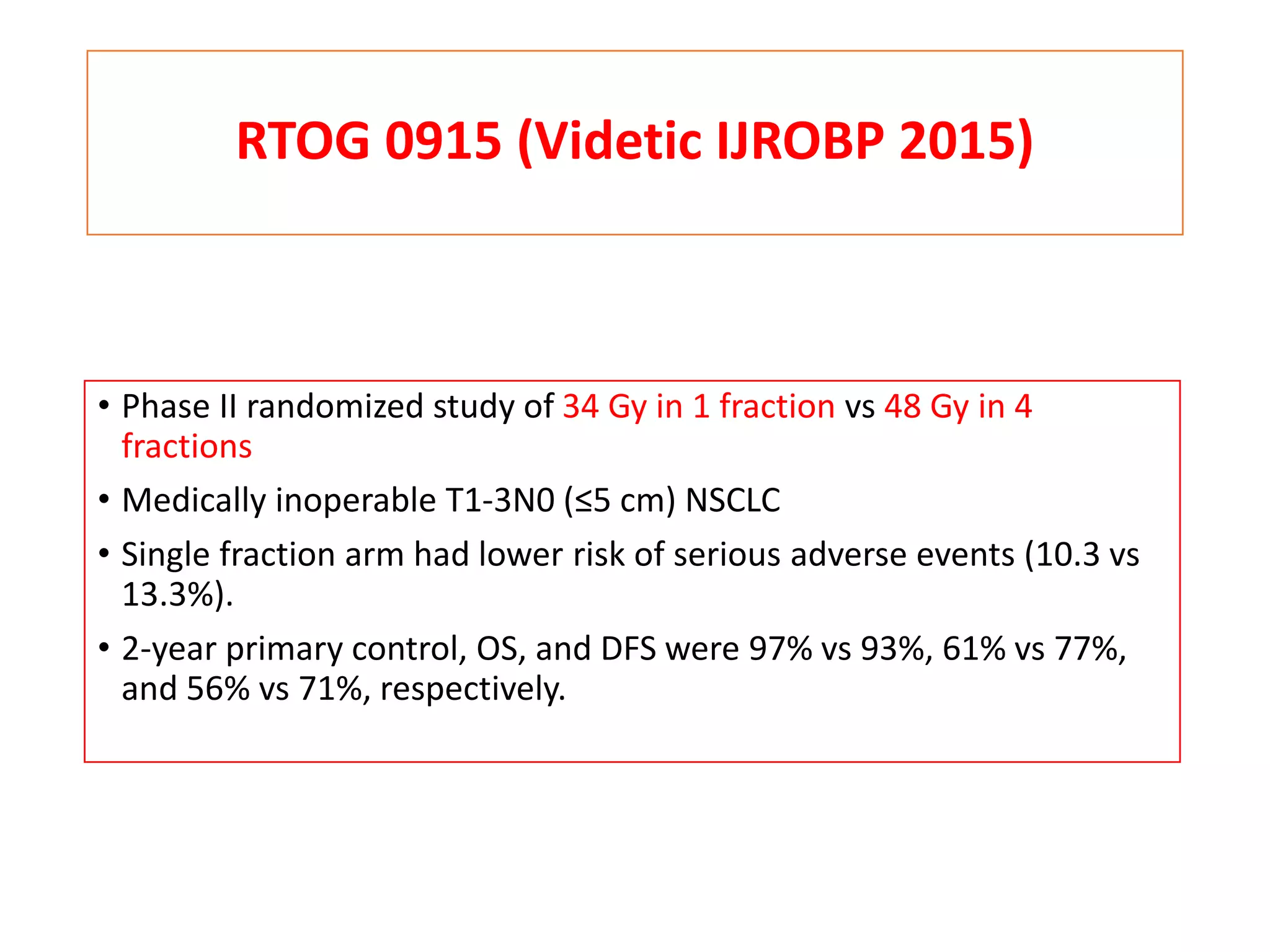
RTOG 0915 (Videtic IJROBP 2015)
• Phase II randomized study of 34 Gy in 1 fraction vs 48 Gy in 4
fractions
• Medically inoperable T1-3N0 (≤5 cm) NSCLC
• Single fraction arm had lower risk of serious adverse events (10.3 vs
13.3%).
• 2-year primary control, OS, and DFS were 97% vs 93%, 61% vs 77%,
and 56% vs 71%, respectively.
RTOG 0813 (Bezjak ASTRO 2016)
• Phase I/II dose escalation trial for medically inoperable early-stage
NSCLC with centrally located lesions (<2 cm from the bronchial tree)
• Arm I- 57.5 Gy (n=38), Arm II-60 Gy (n=33).
• Dose escalated from 50 Gy in 5 fractions to 60 Gy in 5 fractions.
• 2 yr LC 88–89%, PFS 52–55%, OS 70–73%, grade 3 toxicity 6–7%
VUMC (Senthi, Lancet Oncol 2012)
• n=676
• PET+ clinical stage T1–2 N0 NSCLC
• 2/5-yr LF 5/11%, regional failure 8/13%, DM 15/20%.
Conclusion
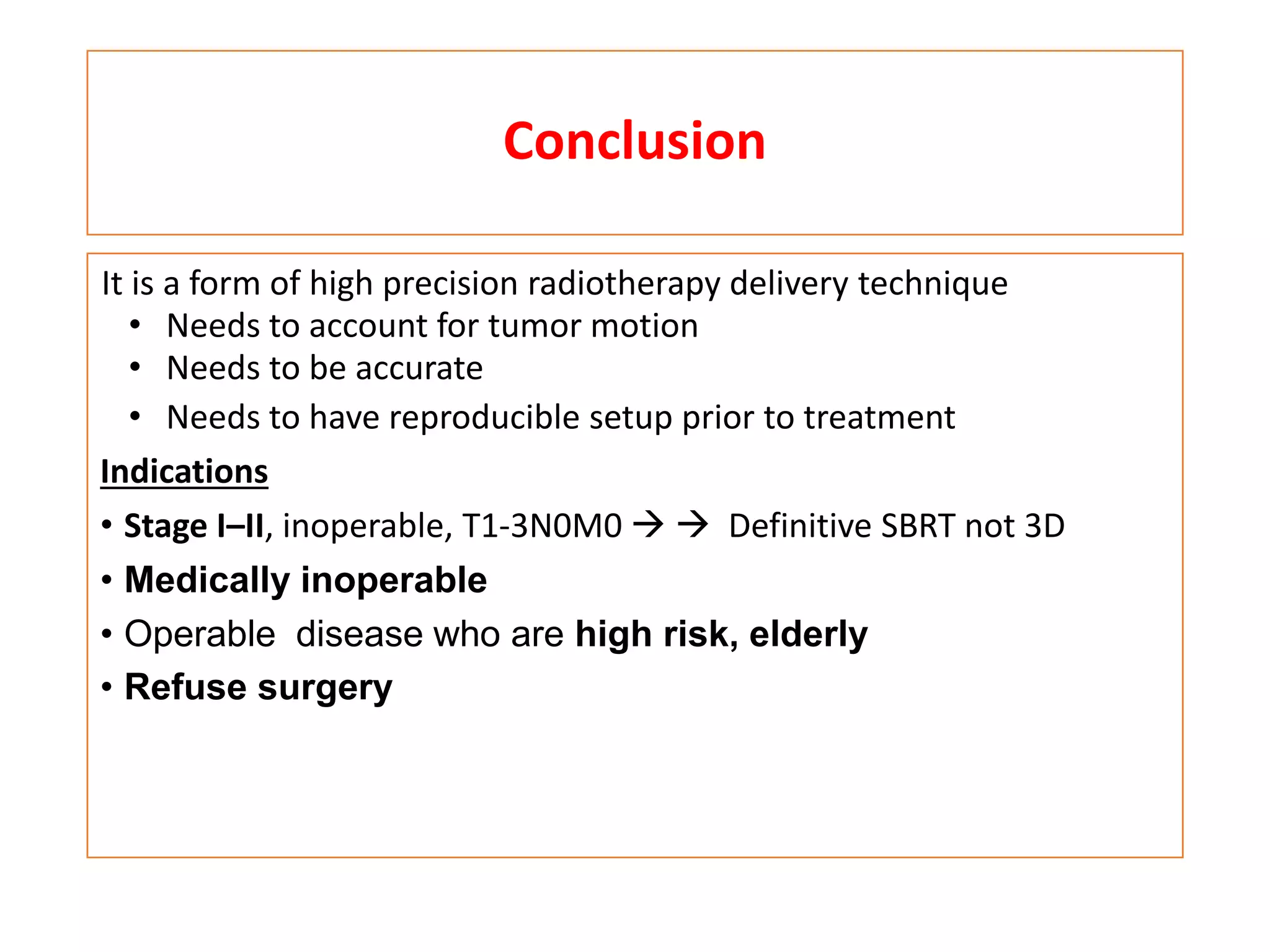
It is a form of high precision radiotherapy delivery technique
• Needs to account for tumor motion
• Needs to be accurate
• Needs to have reproducible setup prior to treatment
Indications
• Stage I–II, inoperable, T1-3N0M0   Definitive SBRT not 3D
• Medically inoperable
• Operable disease who are high risk, elderly
• Refuse surgery
RTOG 0618
• Single-arm phase 2 NRG Oncology Radiation Therapy
Oncology Group 0618 study enrolled patients from
December 2007 to May 2010 with median follow-up of 48.1
months (range, 15.4-73.7 months).
• The SBRT prescription dose was 54 Gy delivered in 3 at 18-
Gy fractions over 1.5 to 2.0 weeks.
• Primary end point was primary tumor control, with survival,
adverse events, and the incidence and outcome of surgical
salvage as secondary end points.
OS AND DFS
Summary
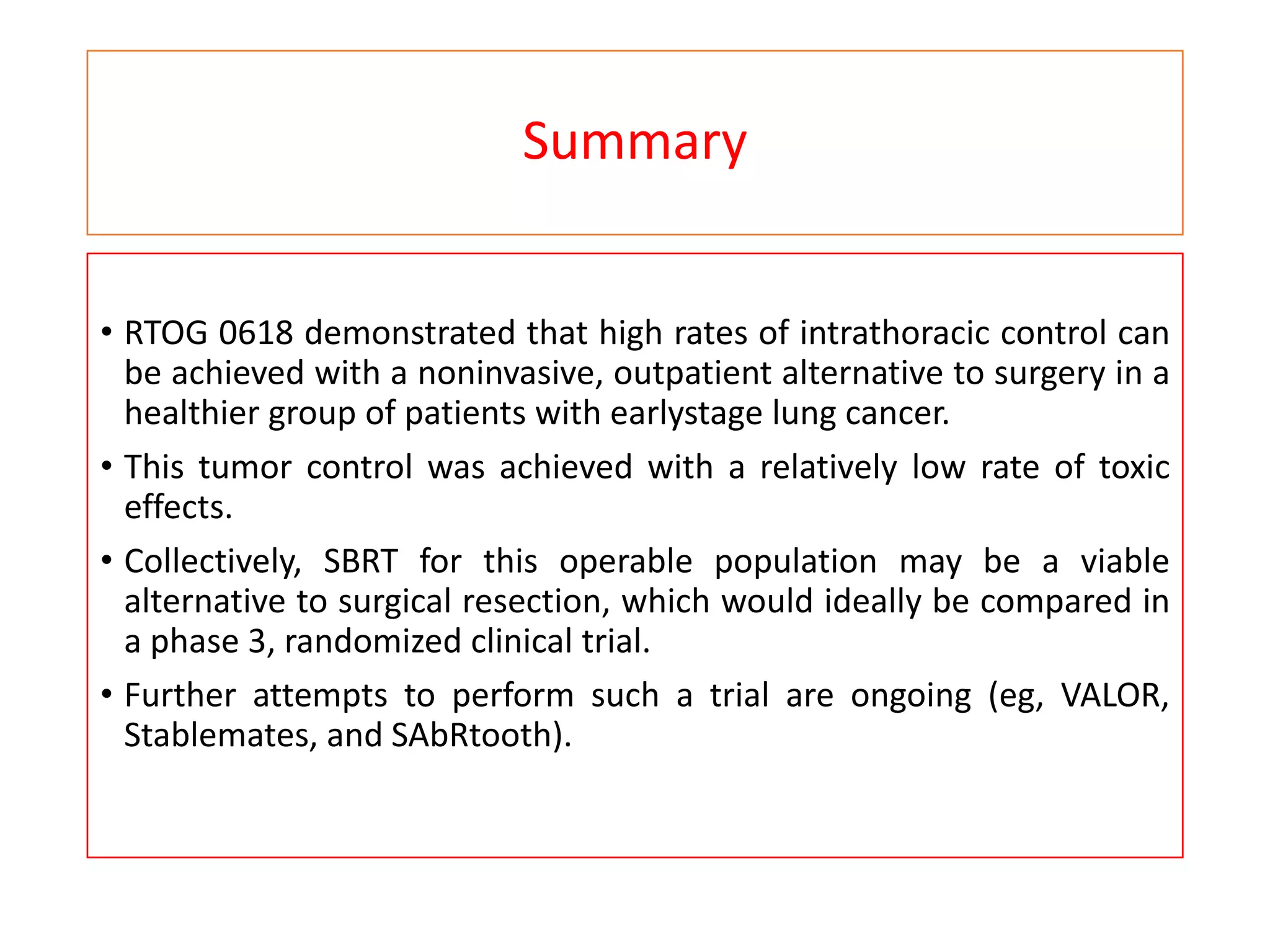
• RTOG 0618 demonstrated that high rates of intrathoracic control can
be achieved with a noninvasive, outpatient alternative to surgery in a
healthier group of patients with earlystage lung cancer.
• This tumor control was achieved with a relatively low rate of toxic
effects.
• Collectively, SBRT for this operable population may be a viable
alternative to surgical resection, which would ideally be compared in
a phase 3, randomized clinical trial.
• Further attempts to perform such a trial are ongoing (eg, VALOR,
Stablemates, and SAbRtooth).
HETEROGENOUS DATA
Toxicity
23 observational studies
1 Chang et al, Pooled analysis
Residual important baseline differences in the surgery and SBRT cohorts could not be eliminated
• Only 8 studies capture PFT.
• Tumor size , location missing frequently.
• 2/3 of surgical pt were staged pathologically vs all SBRT were stages clinically
• Many trials <100BED
Lei Peng Metanalysis
• Six retrospective studies
• Total of 11,813 clinical stage I NSCLCs who received wedge resection
or SBRT were included
• The results showed that patients receiving wedge resection had a
significantly better OS (HR = 1.20, 95% CI = [1.07, 1.34], P = 0.002)
than those with SBRT, but no significant difference of DFS (HR 1.53,
95% CI = [0.83–2.83], P = 0.17) was observed
• Our meta-analysis showed that clinical stage I NSCLCs treated with
wedge resection had superior OS than those treated with SBRT.
• However, more prospective clinical trials should be well-designed to
evaluate the optimal treatment modality of early-stage NSCLCs
Michiel A. Ijsseldijk metanalysis
• A total of 100 studies with patients treated for clinical stage I non-
small-cell lung carcinoma were included.
• Long-term overall and disease-free survival after LR was superior
over SBRT in all comparisons
• SR was superior to SBRT. Noncomparative studies showed superior
long-term overall and disease-free survival for both LR and SR over
SBRT
• Results of this systematic review and meta-analysis showed that LR
has superior outcomes compared to SBRT for cI non-small-cell lung
carcinoma.
• New trials are underway evaluating long-term results of SBRT in
potentially operable patients.
Michiel A. Ijsseldijk metanalysis
Can Li Meta-analysis
Can Li Metanalysis
• We identified 11,110 articles, 17 of which were eventually included in
this study; these 17 articles had 17,973 patients (SBRT: 7395; CRT:
10,578).
• Compared to CRT for the treatment of inoperable stage I NSCLC, SBRT
had superior survival in terms of
• With better survival and a lower rate of dyspnea, esophagitis and
radiation pneumonitis than CRT, SBRT appears to be more suitable for
patients with inoperable stage I NSCLC.
Can Li Metanalysis
Take home message!!
• SBRT is SOC: Med. inoperable/Refuse Surgery: SOC
• Local control is equivalent to surgery.
• Regional/metastatic control: smaller T with properly staged =
Surgery
• Aggressive mediastinal staging is key.
• Need randomized trials for Level I evidence!!(VALOR, SABARTooth,
POSTLIVE..)
SBRT VS SURGERY-Trials undergoing
• JoLT-Ca STABLE-MATES trial (NCT02468024)
• VALOR (Veterans Affairs Lung cancer surgery Or stereotactic
Radiotherapy trial, NCT02984761)
• SABRTOOTH (NCT02629458)
STABLE MATES
STABLE MATES
VALOR STUDY
VALOR STUDY
SABRTooth
Summary
• SBRT is an evidence-based and effective treatment option for patients
with stage I NSCLC.
• Superiority to best supportive care and conventional radiotherapy has
been documented in prospective and retrospective studies.
• Local tumor control rates exceeding 90% is consistently achieved and
OS is mainly limited by comorbidities.
• Equivalence to surgery has been consistently reported in matched
pair analysis and studies using propensity score matching but level A
evidence is missing due to a lack of successfully completed randomized
trials: a multi-professional team experienced and trained in SBRT, and
image guided radiotherapy is essential for safe practice.
• Discussion in multidisciplinary tumor boards considering the
perioperative risk of the patient and patient’s preference is important.
Why not popular?
• No randomized trials
• Surgeon dominant
• Are we inefficient?
• Cases are coming through surgeon- all filtered
10/20/12 01:12 PM 66
Whenever not
possible, make friends
67
10/20/12 01:12 PM
68
10/20/12 01:12 PM
THANKS

LUNG SBRT A LITERATURE REVIEW

  • 1.
    "Update on SABRfor medically operable early NSCLC: Current Status". DR KANHU CHARAN PATRO MD,DNB(Radiation Oncology),MBA,FICRO,FAROI(USA),PDCR,CEPC HOD,RADIATION ONCOLOGY Mahatma Gandhi Cancer Hospital And Research Institute, Visakhapatnam drkcpatro@gmail.com /M- +91-9160470564 YROC 26th FEB 2023
  • 2.
  • 3.
    Introduction • Since decades,the gold standard for treatment of early-stage non-small cell lung cancer is surgical lobectomy plus mediastinal lymph node dissection • Patients in worse health status are treated with sub lobar resection or radiation treatment. • With development of stereotactic-body-radiotherapy (SBRT), outcome of patients treated with radiation was substantially improved. • Comparison of SBRT and surgical techniques is difficult due to the lack of randomized trials. • However, all available evidence in form of case control studies of population-based studies show equivalence between sub lobar resection and SBRT indicating that SBRT—when performed by a trained and experienced team—should be offered to all high-risk surgical patients. • For patients not willing to take the risk of lobectomy and therefore refusing surgery, SBRT is an excellent treatment option.
  • 4.
  • 5.
  • 6.
    The work flow Pre-SBRT workup Simulation (+/- 4DCT) Tumor & OAR contouring Plan analysis & acceptance Trial setup & off line CBCT Treatment delivery & review Follow up & data collection
  • 7.
    Patient selection forSBRT SBRT is recommended in the NSCLC for patients with  Stage I and II (T1–3,N0,M0)  NSCLC who are medically inoperable  High risk- elderly  Refuse surgery after appropriate consultation SBRT has no established role in small cell lung cancer  PFT (FEV1 or DLCO < 40%)  DM/CAD  Cerebral disease  Pul. HTN  PS 0-2  Able to lie flat for at least one hour
  • 8.
    1. SABR forNode-Negative Early-Stage NSCLC 1. BED ≥100 Gy are associated with significantly better local control and survival 2. For central and ultra-central tumors 4 to 10 fraction regimens are effective and safe 3. SABR is most commonly used for tumors up to 5 cm in size 2. SBRT has a Developing role 1. Boost following definitive chemoradiation in management of LA- NSCLC 2. Re-irradiation of locally recurrent disease 3. Intrathoracic oligometastases from various primary histologies Role of SBRT
  • 9.
  • 11.
  • 12.
  • 13.
    What NCCN SAYS? 1.Early-Stage NSCLC (Stage I, selected node-negative Stage IIA) 2. SABR (also known as SBRT) has achieved good primary tumor control rates and overall survival, higher than conventionally fractionated radiotherapy. 3. Although SABR is not proven equivalent to lobectomy, some prospective series have demonstrated similar overall and cancerspecific survival 4. SABR is also an appropriate option for patients with high surgical risk (able to tolerate sublobar resection but not lobectomy [eg, age ≥75 years, poor lung function]) 5. More modestly hypofractionated or dose-intensified conventionally fractionated 3D-CRT regimens are less preferred alternatives and may be considered if referral for SABR is not feasible. 6. Close follow-up and therapy for isolated local and/or locoregional recurrence after SABR have been shown to improve overall survival in a large retrospective study
  • 14.
    What NCCN SAYS? SABRfor Node-Negative Early-Stage NSCLC 1. The high-dose intensity and conformity of SABR require minimizing the PTV. 2. Dosing regimen For SABR, intensive regimens of BED ≥100 Gy are associated with significantly better local control and survival than less intensive regimens 3. In the United States, only regimens of ≤5 fractions meet the arbitrary billing code definition of SBRT, but slightly more protracted regimens are appropriate as well. 4. For centrally located tumors (defined variably as within 2 cm of the proximal bronchial tree and/or abutting mediastinal pleura) and even ultra-central tumors (defined as abutting the proximal bronchial tree), 4 to 10 fraction risk adapted SABR regimens appear to be effective and safe, while 54 to 60 Gy in 3 fractions is unsafe and should be avoided. 5. However, particular attention should be paid to tumors abutting the bronchial tree and esophagus to avoid severe toxicity. 6. RTOG 0813 evaluated the toxicity of 5-fraction regimens and found no high-grade toxicities at 50 Gy in 5 fractions 7. SABR is most commonly used for tumors up to 5 cm in size, though selected larger isolated tumors can be treated safely if normal tissue constraints are respected.
  • 17.
    TYPE OF LESIONS •Peripheral lesions • They are located > 2 cm from the primary bronchi or trachea • Central lesions • Located within 2 cm of the proximal bronchial tree and/or abutting mediastinal pleura • Ultra-Central lesions • Lesions abutting the proximal bronchial tree
  • 18.
  • 20.
  • 23.
  • 25.
  • 26.
  • 27.
  • 28.
    SBRT VS SURGERY CombinedROSEL/STARS analysis (Chang Lancet Oncol 2015): • n=58 patients from two trials • T1-T2 (<4 cm) N0 medically operable NSCLC • SBRT (54 Gy in 3 fractions, 50 Gy in 4 fractions if central) vs lobectomy and mediastinal lymph node dissection. • 3-year OS improved for SBRT (95%) vs surgery (79%). Grade 3–4 toxicity 10% for SBRT vs 44% for surgery.
  • 29.
    Indiana (Timmerman JCO2006; Fakiris, IJROBP 2009) • n=70 • T1–3N0 (≤7 cm) • 60–66 Gy in 3 fx over 1–2 weeks. • Three-year LC 88%, CSS 82%, OS 43%, regional failure 9%, and distant failure 13%. • Patients with central tumors had increased risk of grade 3–5 toxicity (27% vs 10%). • Established “no-fly-zone” of 2 cm surrounding proximal bronchial tree for 3-fraction treatment.
  • 30.
    Onishi (Cancer, 2004) •n=245 • T1–2N0 treated • 18–75 Gy in 1–22 fx • LF was 8% for BED ≥100 Gy vs 26% for BED <100 Gy. • Three-year OS was 88% for BED ≥100 Gy vs 69% for BED <100 Gy.
  • 31.
    RTOG 0236 (Timmerman2010) • T1–3N0 (≤5 cm), medically inoperable tumors >2 cm from proximal bronchial tree treated • SBRT 20 Gy × 3 over 1.5–2 weeks (54 Gy applying heterogeneity correction). • GTV = CTV. PTV = 0.5 cm axial margin and 1 cm superior/inferior margin. • 5-year LC 93%, LRC 62%, 31% DM, DFS 26%, OS 40%.
  • 32.
    RTOG 0915 (VideticIJROBP 2015) • Phase II randomized study of 34 Gy in 1 fraction vs 48 Gy in 4 fractions • Medically inoperable T1-3N0 (≤5 cm) NSCLC • Single fraction arm had lower risk of serious adverse events (10.3 vs 13.3%). • 2-year primary control, OS, and DFS were 97% vs 93%, 61% vs 77%, and 56% vs 71%, respectively.
  • 33.
    RTOG 0813 (BezjakASTRO 2016) • Phase I/II dose escalation trial for medically inoperable early-stage NSCLC with centrally located lesions (<2 cm from the bronchial tree) • Arm I- 57.5 Gy (n=38), Arm II-60 Gy (n=33). • Dose escalated from 50 Gy in 5 fractions to 60 Gy in 5 fractions. • 2 yr LC 88–89%, PFS 52–55%, OS 70–73%, grade 3 toxicity 6–7%
  • 34.
    VUMC (Senthi, LancetOncol 2012) • n=676 • PET+ clinical stage T1–2 N0 NSCLC • 2/5-yr LF 5/11%, regional failure 8/13%, DM 15/20%.
  • 35.
    Conclusion It is aform of high precision radiotherapy delivery technique • Needs to account for tumor motion • Needs to be accurate • Needs to have reproducible setup prior to treatment Indications • Stage I–II, inoperable, T1-3N0M0   Definitive SBRT not 3D • Medically inoperable • Operable disease who are high risk, elderly • Refuse surgery
  • 37.
    RTOG 0618 • Single-armphase 2 NRG Oncology Radiation Therapy Oncology Group 0618 study enrolled patients from December 2007 to May 2010 with median follow-up of 48.1 months (range, 15.4-73.7 months). • The SBRT prescription dose was 54 Gy delivered in 3 at 18- Gy fractions over 1.5 to 2.0 weeks. • Primary end point was primary tumor control, with survival, adverse events, and the incidence and outcome of surgical salvage as secondary end points.
  • 38.
  • 39.
    Summary • RTOG 0618demonstrated that high rates of intrathoracic control can be achieved with a noninvasive, outpatient alternative to surgery in a healthier group of patients with earlystage lung cancer. • This tumor control was achieved with a relatively low rate of toxic effects. • Collectively, SBRT for this operable population may be a viable alternative to surgical resection, which would ideally be compared in a phase 3, randomized clinical trial. • Further attempts to perform such a trial are ongoing (eg, VALOR, Stablemates, and SAbRtooth).
  • 42.
  • 43.
  • 46.
    23 observational studies 1Chang et al, Pooled analysis
  • 47.
    Residual important baselinedifferences in the surgery and SBRT cohorts could not be eliminated • Only 8 studies capture PFT. • Tumor size , location missing frequently. • 2/3 of surgical pt were staged pathologically vs all SBRT were stages clinically • Many trials <100BED
  • 48.
  • 49.
  • 50.
    Lei Peng Metanalysis •Six retrospective studies • Total of 11,813 clinical stage I NSCLCs who received wedge resection or SBRT were included • The results showed that patients receiving wedge resection had a significantly better OS (HR = 1.20, 95% CI = [1.07, 1.34], P = 0.002) than those with SBRT, but no significant difference of DFS (HR 1.53, 95% CI = [0.83–2.83], P = 0.17) was observed • Our meta-analysis showed that clinical stage I NSCLCs treated with wedge resection had superior OS than those treated with SBRT. • However, more prospective clinical trials should be well-designed to evaluate the optimal treatment modality of early-stage NSCLCs
  • 51.
  • 52.
    Michiel A. Ijsseldijkmetanalysis • A total of 100 studies with patients treated for clinical stage I non- small-cell lung carcinoma were included. • Long-term overall and disease-free survival after LR was superior over SBRT in all comparisons • SR was superior to SBRT. Noncomparative studies showed superior long-term overall and disease-free survival for both LR and SR over SBRT • Results of this systematic review and meta-analysis showed that LR has superior outcomes compared to SBRT for cI non-small-cell lung carcinoma. • New trials are underway evaluating long-term results of SBRT in potentially operable patients.
  • 53.
  • 54.
  • 55.
    Can Li Metanalysis •We identified 11,110 articles, 17 of which were eventually included in this study; these 17 articles had 17,973 patients (SBRT: 7395; CRT: 10,578). • Compared to CRT for the treatment of inoperable stage I NSCLC, SBRT had superior survival in terms of • With better survival and a lower rate of dyspnea, esophagitis and radiation pneumonitis than CRT, SBRT appears to be more suitable for patients with inoperable stage I NSCLC.
  • 56.
  • 57.
    Take home message!! •SBRT is SOC: Med. inoperable/Refuse Surgery: SOC • Local control is equivalent to surgery. • Regional/metastatic control: smaller T with properly staged = Surgery • Aggressive mediastinal staging is key. • Need randomized trials for Level I evidence!!(VALOR, SABARTooth, POSTLIVE..)
  • 58.
    SBRT VS SURGERY-Trialsundergoing • JoLT-Ca STABLE-MATES trial (NCT02468024) • VALOR (Veterans Affairs Lung cancer surgery Or stereotactic Radiotherapy trial, NCT02984761) • SABRTOOTH (NCT02629458)
  • 59.
  • 60.
  • 61.
  • 62.
  • 63.
  • 64.
    Summary • SBRT isan evidence-based and effective treatment option for patients with stage I NSCLC. • Superiority to best supportive care and conventional radiotherapy has been documented in prospective and retrospective studies. • Local tumor control rates exceeding 90% is consistently achieved and OS is mainly limited by comorbidities. • Equivalence to surgery has been consistently reported in matched pair analysis and studies using propensity score matching but level A evidence is missing due to a lack of successfully completed randomized trials: a multi-professional team experienced and trained in SBRT, and image guided radiotherapy is essential for safe practice. • Discussion in multidisciplinary tumor boards considering the perioperative risk of the patient and patient’s preference is important.
  • 65.
    Why not popular? •No randomized trials • Surgeon dominant • Are we inefficient? • Cases are coming through surgeon- all filtered
  • 66.
    10/20/12 01:12 PM66 Whenever not possible, make friends
  • 67.
  • 68.
  • 69.