RESTAURANT DESIGN 
THE 
CEILING 
backofen PLASTER AND LATHE 
MATERIALS USED 
PLASTER & LATH 
LATH AND PLASTER IS A BUILDING PROCESS USED TO FINISH MAINLY 
INTERIOR WALLS AND CEILINGS. 
AN ADVANTAGE OF USING LATH IS FOR OR NAME NT AL OR UNUSUAL SHAPE S. 
FOR INSTANCE, BUILDING A ROUNDED WALL WOULD BE DIFFICULT IF DRYWALL WERE 
USED EXCLUSIVELY, AS DRYWALL IS NOT FLEXIBLE ENOUGH TO ALLOW TIGHT RADII. 
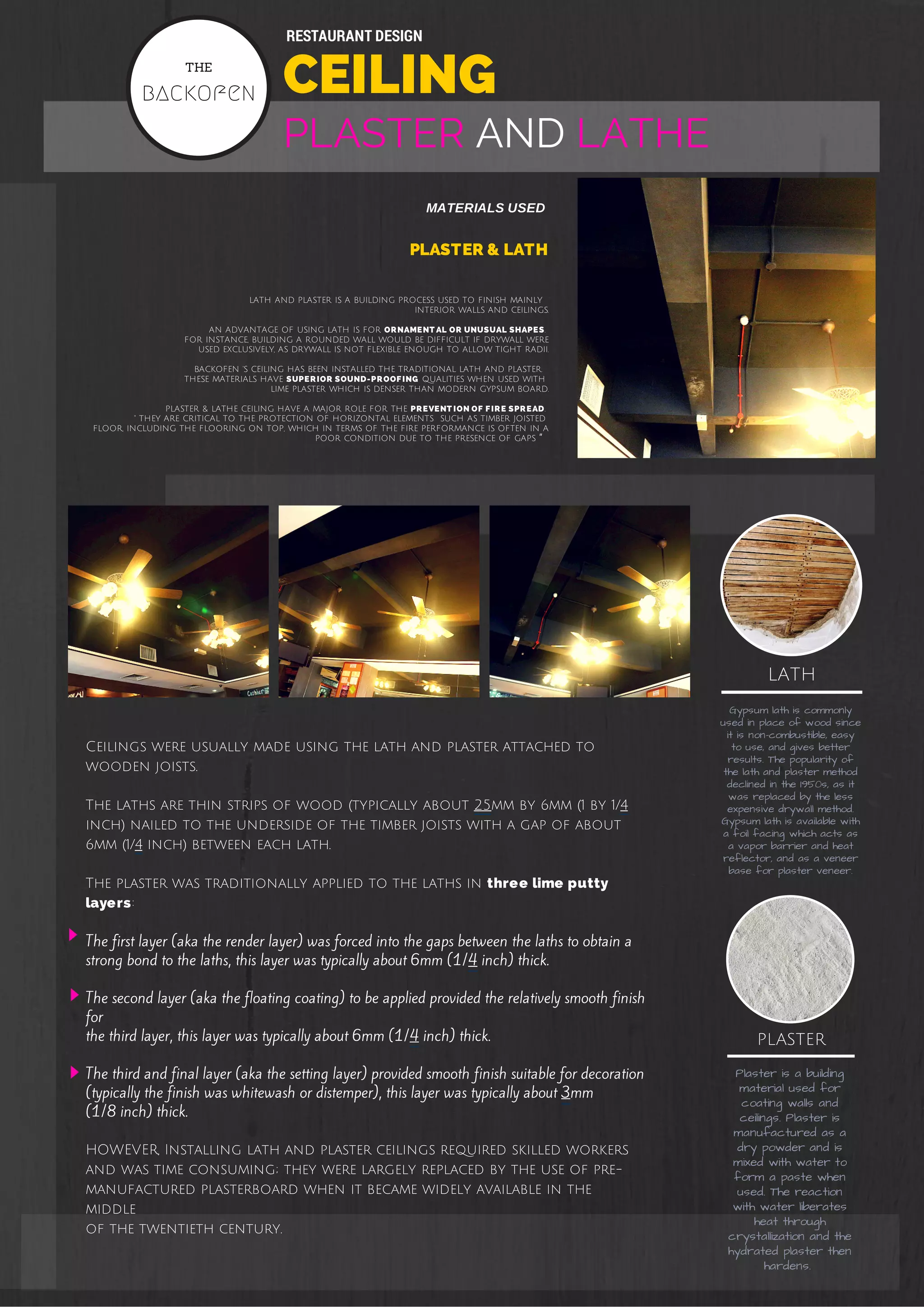
BACKOFEN 'S CEILING HAS BEEN INSTALLED THE TRADITIONAL LATH AND PLASTER. 
THESE MATERIALS HAVE SUPE R IOR SOUND-PR OOF ING QUALITIES WHEN USED WITH 
LIME PLASTER WHICH IS DENSER THAN MODERN GYPSUM BOARD. 
PLASTER & LATHE CEILING HAVE A MAJOR ROLE FOR THE PR E VE NT ION OF F IR E SPR E AD. 
" THEY ARE CRITICAL TO THE PROTECTION OF HORIZONTAL ELEMENTS SUCH AS TIMBER JOISTED 
FLOOR, INCLUDING THE FLOORING ON TOP, WHICH IN TERMS OF THE FIRE PERFORMANCE IS OFTEN IN A 
POOR CONDITION DUE TO THE PRESENCE OF GAPS " 
Ceilings were usually made using the lath and plaster attached to 
wooden joists. 
The laths are thin strips of wood (typically about 25mm by 6mm (1 by 1/4 
inch) nailed to the underside of the timber joists with a gap of about 
6mm (1/4 inch) between each lath. 
The plaster was traditionally applied to the laths in thre e lime putty 
laye rs: 
The first layer (aka the render layer) was forced into the gaps between the laths to obtain a 
strong bond to the laths, this layer was typically about 6mm (1/4 inch) thick. 
The second layer (aka the floating coating) to be applied provided the relatively smooth finish 
for 
the third layer, this layer was typically about 6mm (1/4 inch) thick. 
The third and final layer (aka the setting layer) provided smooth finish suitable for decoration 
(typically the finish was whitewash or distemper), this layer was typically about 3mm 
(1/8 inch) thick. 
HOWEVER, Installing lath and plaster ceilings required skilled workers 
and was time consuming; they were largely replaced by the use of pre-manufactured 
plasterboard when it became widely available in the 
middle 
of the twentieth century. 
LATH 
Gypsum lath is commonly 
used in place of wood since 
it is non-combustible, easy 
to use, and gives better 
results. The popularity of 
the lath and plaster method 
declined in the 1950s, as it 
was replaced by the less 
expensive drywall method. 
Gypsum lath is available with 
a foil facing which acts as 
a vapor barrier and heat 
reflector, and as a veneer 
base for plaster veneer. 
PLASTER 
Plaster is a building 
material used for 
coating walls and 
ceilings. Plaster is 
manufactured as a 
dry powder and is 
mixed with water to 
form a paste when 
used. The reaction 
with water liberates 
heat through 
crystallization and the 
hydrated plaster then 
hardens.

Building Materials Assignment

  • 1.
    RESTAURANT DESIGN THE CEILING backofen PLASTER AND LATHE MATERIALS USED PLASTER & LATH LATH AND PLASTER IS A BUILDING PROCESS USED TO FINISH MAINLY INTERIOR WALLS AND CEILINGS. AN ADVANTAGE OF USING LATH IS FOR OR NAME NT AL OR UNUSUAL SHAPE S. FOR INSTANCE, BUILDING A ROUNDED WALL WOULD BE DIFFICULT IF DRYWALL WERE USED EXCLUSIVELY, AS DRYWALL IS NOT FLEXIBLE ENOUGH TO ALLOW TIGHT RADII. BACKOFEN 'S CEILING HAS BEEN INSTALLED THE TRADITIONAL LATH AND PLASTER. THESE MATERIALS HAVE SUPE R IOR SOUND-PR OOF ING QUALITIES WHEN USED WITH LIME PLASTER WHICH IS DENSER THAN MODERN GYPSUM BOARD. PLASTER & LATHE CEILING HAVE A MAJOR ROLE FOR THE PR E VE NT ION OF F IR E SPR E AD. " THEY ARE CRITICAL TO THE PROTECTION OF HORIZONTAL ELEMENTS SUCH AS TIMBER JOISTED FLOOR, INCLUDING THE FLOORING ON TOP, WHICH IN TERMS OF THE FIRE PERFORMANCE IS OFTEN IN A POOR CONDITION DUE TO THE PRESENCE OF GAPS " Ceilings were usually made using the lath and plaster attached to wooden joists. The laths are thin strips of wood (typically about 25mm by 6mm (1 by 1/4 inch) nailed to the underside of the timber joists with a gap of about 6mm (1/4 inch) between each lath. The plaster was traditionally applied to the laths in thre e lime putty laye rs: The first layer (aka the render layer) was forced into the gaps between the laths to obtain a strong bond to the laths, this layer was typically about 6mm (1/4 inch) thick. The second layer (aka the floating coating) to be applied provided the relatively smooth finish for the third layer, this layer was typically about 6mm (1/4 inch) thick. The third and final layer (aka the setting layer) provided smooth finish suitable for decoration (typically the finish was whitewash or distemper), this layer was typically about 3mm (1/8 inch) thick. HOWEVER, Installing lath and plaster ceilings required skilled workers and was time consuming; they were largely replaced by the use of pre-manufactured plasterboard when it became widely available in the middle of the twentieth century. LATH Gypsum lath is commonly used in place of wood since it is non-combustible, easy to use, and gives better results. The popularity of the lath and plaster method declined in the 1950s, as it was replaced by the less expensive drywall method. Gypsum lath is available with a foil facing which acts as a vapor barrier and heat reflector, and as a veneer base for plaster veneer. PLASTER Plaster is a building material used for coating walls and ceilings. Plaster is manufactured as a dry powder and is mixed with water to form a paste when used. The reaction with water liberates heat through crystallization and the hydrated plaster then hardens.