STRAW BALE
CONSTRUCTION
Presented by
B.Sireesha
15761A0106
 Straw bale constructions is a building method
that uses bales of straw (commonly wheat,
rice, rye and oats straw) as structural
elements, building insulation, or both.
 This method is commonly used in natural
building or “Brown “construction projects.
straw bale construction
 Straw houses have been built on the African plains since
the Paleolithic era.
 Straw bales were used in construction 400 years ago in
Germany.
 It proved particularly useful in the Nebraska Sand hills.
 since 1990s straw bale construction has been
substantially revived, particularly in North America,
Europe and Australia.
History
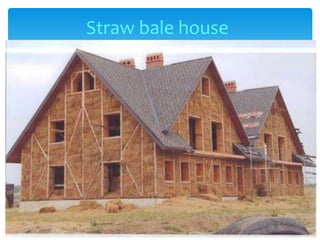
Straw bale house
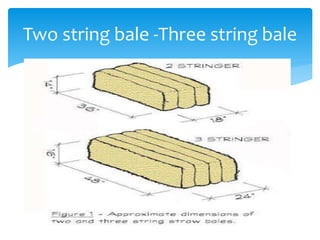
 There are two types of straw bales commonly used,
those bound together with two strings and those with
three.
 The three string bale is the larger in all the three
dimensions.
 Bale walls can be tied together with pins of bamboo or
wood ,.
 The bales may actually provide the structural support for
the building.
Methods
Two string bale -Three string bale
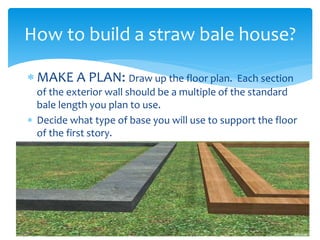
 MAKE A PLAN: Draw up the floor plan. Each section
of the exterior wall should be a multiple of the standard
bale length you plan to use.
 Decide what type of base you will use to support the floor
of the first story.
How to build a straw bale house?
 Prepare the foundation footings to be below the frost line in
cold climates, and floor to be level, on an attractive slope or
level ground.
 Build a frame of timber or metal. The frame transfers the
load of the roof down on to the foundation and should be
strong enough for this purpose.
 Stay dry during construction by putting the roof on
before going any further.
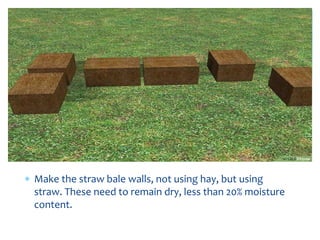
 Make the straw bale walls, not using hay, but using
straw. These need to remain dry, less than 20% moisture
content.
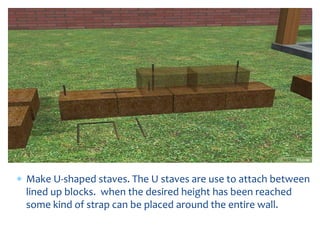
 Make U-shaped staves. The U staves are use to attach between
lined up blocks. when the desired height has been reached
some kind of strap can be placed around the entire wall.
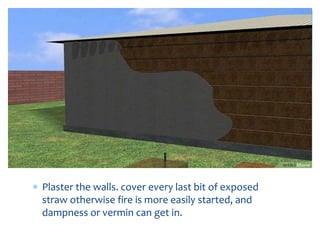
 Plaster the walls. cover every last bit of exposed
straw otherwise fire is more easily started, and
dampness or vermin can get in.
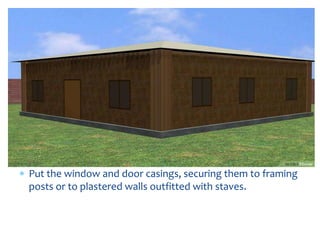
 Put the window and door casings, securing them to framing
posts or to plastered walls outfitted with staves.
 Apply breathable paints which is free of artificial resins,
petroleum solvents but is weather and UV resistant.
 Dimensional lumber
 Straw bales
 Flyash concrete
 Earth materials
 Roofing
 Insulation
 Windows and doors
 Cabinets
 Paints, finishes and adhesives
 Floor coverings.
Materials for straw bale construction
 Compressed straw bales have a wide range of documented
R-value.
 Straw bales are very cheap, highly insulating from noise,,
cold and hot weather.
 Straw bales do not trap dampness in the house.
 Straw bales 100% biodegradable. These are made from a
waste product.
 Straw bale insulation is most effective in climates where
heating or cooling of home is essential for comfort.
Advantages
 Most contractors are unfamiliar with straw bale
building.
 Straw bale walls need to be kept dry as moisture is
detrimental to not only straw, but to the materials.
 Successibility to rot.
 High space requirement for the straw itself.
Disadvantages
 During construction the bales must be kept as dry as possible
at all times.
 The bale walls should be raised above ground level on a
masonry plinth.
 Wall building should preferably be done in the dry season and
the roof structure should go on quickly.
 Allow the bales to yellow or season before plastering is
begun.
Precautions
Thank you

Straw bale construction (1)

  • 1.
  • 2.
     Straw baleconstructions is a building method that uses bales of straw (commonly wheat, rice, rye and oats straw) as structural elements, building insulation, or both.  This method is commonly used in natural building or “Brown “construction projects. straw bale construction
  • 3.
     Straw houseshave been built on the African plains since the Paleolithic era.  Straw bales were used in construction 400 years ago in Germany.  It proved particularly useful in the Nebraska Sand hills.  since 1990s straw bale construction has been substantially revived, particularly in North America, Europe and Australia. History
  • 4.
  • 5.
     There aretwo types of straw bales commonly used, those bound together with two strings and those with three.  The three string bale is the larger in all the three dimensions.  Bale walls can be tied together with pins of bamboo or wood ,.  The bales may actually provide the structural support for the building. Methods
  • 6.
    Two string bale-Three string bale
  • 7.
     MAKE APLAN: Draw up the floor plan. Each section of the exterior wall should be a multiple of the standard bale length you plan to use.  Decide what type of base you will use to support the floor of the first story. How to build a straw bale house?
  • 8.
     Prepare thefoundation footings to be below the frost line in cold climates, and floor to be level, on an attractive slope or level ground.
  • 9.
     Build aframe of timber or metal. The frame transfers the load of the roof down on to the foundation and should be strong enough for this purpose.
  • 10.
     Stay dryduring construction by putting the roof on before going any further.
  • 11.
     Make thestraw bale walls, not using hay, but using straw. These need to remain dry, less than 20% moisture content.
  • 12.
     Make U-shapedstaves. The U staves are use to attach between lined up blocks. when the desired height has been reached some kind of strap can be placed around the entire wall.
  • 13.
     Plaster thewalls. cover every last bit of exposed straw otherwise fire is more easily started, and dampness or vermin can get in.
  • 14.
     Put thewindow and door casings, securing them to framing posts or to plastered walls outfitted with staves.
  • 15.
     Apply breathablepaints which is free of artificial resins, petroleum solvents but is weather and UV resistant.
  • 16.
     Dimensional lumber Straw bales  Flyash concrete  Earth materials  Roofing  Insulation  Windows and doors  Cabinets  Paints, finishes and adhesives  Floor coverings. Materials for straw bale construction
  • 17.
     Compressed strawbales have a wide range of documented R-value.  Straw bales are very cheap, highly insulating from noise,, cold and hot weather.  Straw bales do not trap dampness in the house.  Straw bales 100% biodegradable. These are made from a waste product.  Straw bale insulation is most effective in climates where heating or cooling of home is essential for comfort. Advantages
  • 18.
     Most contractorsare unfamiliar with straw bale building.  Straw bale walls need to be kept dry as moisture is detrimental to not only straw, but to the materials.  Successibility to rot.  High space requirement for the straw itself. Disadvantages
  • 19.
     During constructionthe bales must be kept as dry as possible at all times.  The bale walls should be raised above ground level on a masonry plinth.  Wall building should preferably be done in the dry season and the roof structure should go on quickly.  Allow the bales to yellow or season before plastering is begun. Precautions
  • 20.