Downloaded 5,345 times

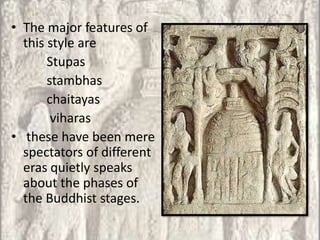



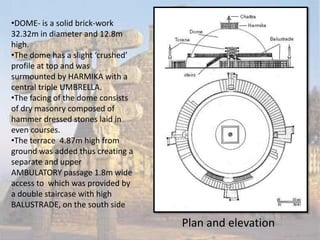
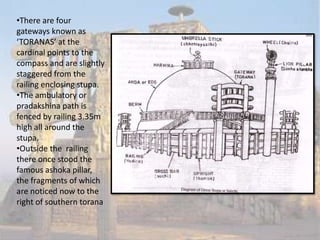
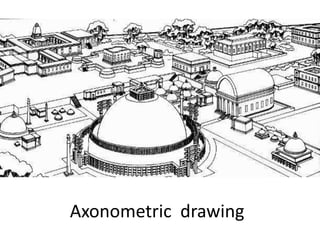
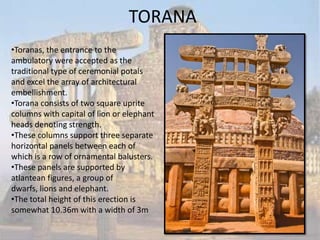

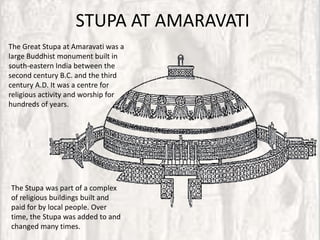
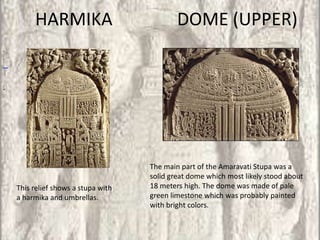
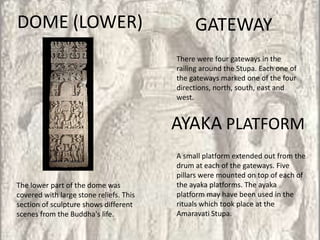

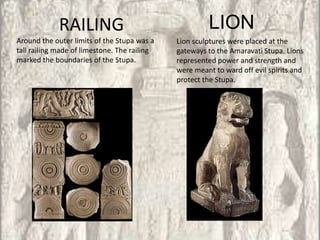
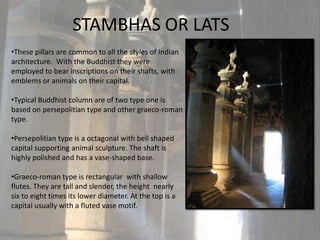
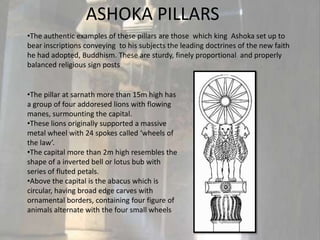
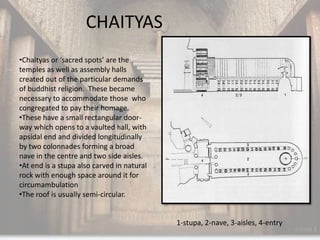
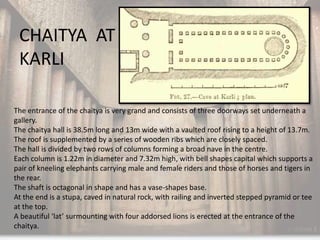
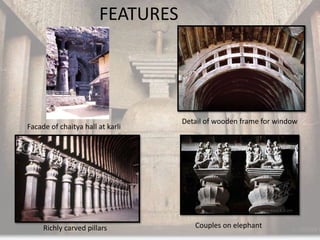
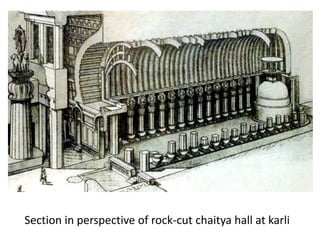

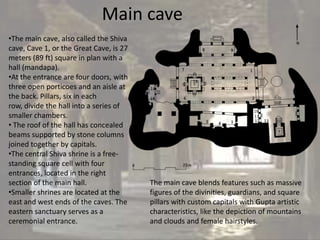

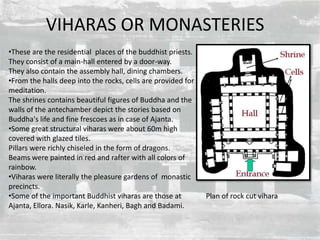

The document discusses key features of Buddhist architecture that developed in India. It began with symbolic structures representing Buddha's life, promoted by Emperor Ashoka in the 3rd century BCE. Major architectural forms included stupas to house Buddhist relics, pillars (stambhas) bearing inscriptions, and chaityas/viharas that were temples and monastery halls carved into rock. The Great Stupa at Sanchi and reliefs at sites like Amaravati and the caves/temples at Ellora and Elephanta are highlighted as iconic examples that demonstrate the evolution of Buddhist architectural styles and motifs over centuries.


![谷歌霸屏推广[ 𝙩𝙤𝙥 𝟮𝟯𝟯. 𝙘 𝙤𝙢 ]](https://cdn.slidesharecdn.com/ss_thumbnails/top233-260130171247-43791db0-thumbnail.jpg?width=640&height=640&fit=bounds)


