
Bt gene insertion in
Wheat
BY
AYESHA TAQDEES
SYEDA BATOOL ABBAS
The need for GM crop
1) The insecticidal spray had to be made stronger with time by
concentrating the spray and by applying it more frequently.
2) With every spray, these pests were getting stronger and building
up immunity to the pesticides due to natural selection.
3) Bt insertion in plants does not require any modification n
concentration or applying frequency it simply release toxins in the
insect body and kills that insect .
Gene of Interest : Bt
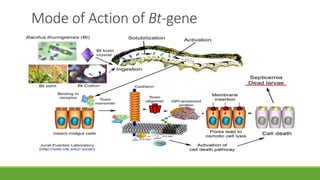
Bacillus thuringiensis (Bt) is a soil bacterium that produces insecticidal toxins.
Genes from Bt can be inserted into crop plants to make them capable of
producing an insecticidal toxin and therefore resistant to certain pests.
There are no known adverse human health effects associated with Bt .
Target organisms: Moths and butterflies
 Crops already modified with Bt: cotton, corn, wheat, maize, potato
 PROMOTER USED: CAMV35S
TERMINATOR USED: nos terminator
PROTEIN EXPRESSED : CRY protein
Extraction of Desired DNA
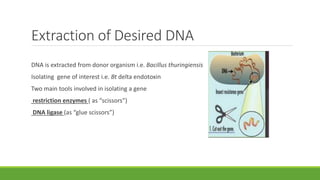
DNA is extracted from donor organism i.e. Bacillus thuringiensis
Isolating gene of interest i.e. Bt delta endotoxin
Two main tools involved in isolating a gene
restriction enzymes ( as “scissors”)
DNA ligase (as “glue scissors”)
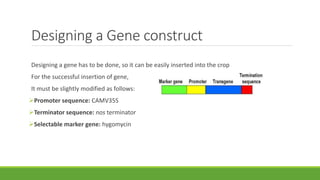
Designing a Gene construct
Designing a gene has to be done, so it can be easily inserted into the crop
For the successful insertion of gene,
It must be slightly modified as follows:
Promoter sequence: CAMV35S
Terminator sequence: nos terminator
Selectable marker gene: hygomycin
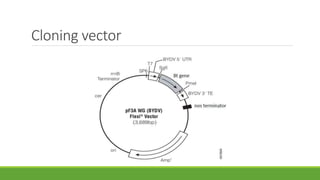
Cloning vector
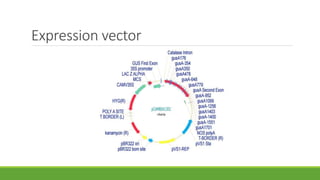
Expression vector
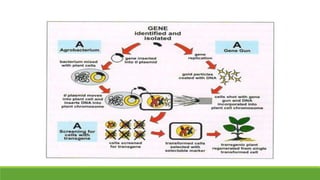
Transformation
There are two methods: 1)Biolistic gene gun
2) Agrobacterium method
Purpose :
To transfer the DNA into the plant cell.
Explant used: WHEAT SEED
Transgenic Plants
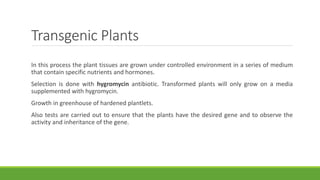
In this process the plant tissues are grown under controlled environment in a series of medium
that contain specific nutrients and hormones.
Selection is done with hygromycin antibiotic. Transformed plants will only grow on a media
supplemented with hygromycin.
Growth in greenhouse of hardened plantlets.
Also tests are carried out to ensure that the plants have the desired gene and to observe the
activity and inheritance of the gene.
Mode of Action of Bt-gene
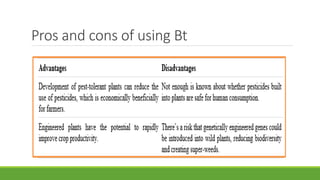
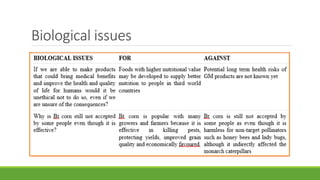
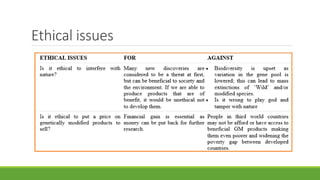
Pros and cons of using Bt
Biological issues
Ethical issues
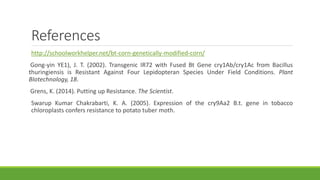
References
http://schoolworkhelper.net/bt-corn-genetically-modified-corn/
Gong-yin YE1), J. T. (2002). Transgenic IR72 with Fused Bt Gene cry1Ab/cry1Ac from Bacillus
thuringiensis is Resistant Against Four Lepidopteran Species Under Field Conditions. Plant
BIotechnology, 18.
Grens, K. (2014). Putting up Resistance. The Scientist.
Swarup Kumar Chakrabarti, K. A. (2005). Expression of the cry9Aa2 B.t. gene in tobacco
chloroplasts confers resistance to potato tuber moth.
Thankyou !

Bt gene insertion in wheat

  • 1.
    Bt gene insertionin Wheat BY AYESHA TAQDEES SYEDA BATOOL ABBAS
  • 2.
    The need forGM crop 1) The insecticidal spray had to be made stronger with time by concentrating the spray and by applying it more frequently. 2) With every spray, these pests were getting stronger and building up immunity to the pesticides due to natural selection. 3) Bt insertion in plants does not require any modification n concentration or applying frequency it simply release toxins in the insect body and kills that insect .
  • 3.
    Gene of Interest: Bt Bacillus thuringiensis (Bt) is a soil bacterium that produces insecticidal toxins. Genes from Bt can be inserted into crop plants to make them capable of producing an insecticidal toxin and therefore resistant to certain pests. There are no known adverse human health effects associated with Bt . Target organisms: Moths and butterflies  Crops already modified with Bt: cotton, corn, wheat, maize, potato  PROMOTER USED: CAMV35S TERMINATOR USED: nos terminator PROTEIN EXPRESSED : CRY protein
  • 4.
    Extraction of DesiredDNA DNA is extracted from donor organism i.e. Bacillus thuringiensis Isolating gene of interest i.e. Bt delta endotoxin Two main tools involved in isolating a gene restriction enzymes ( as “scissors”) DNA ligase (as “glue scissors”)
  • 5.
    Designing a Geneconstruct Designing a gene has to be done, so it can be easily inserted into the crop For the successful insertion of gene, It must be slightly modified as follows: Promoter sequence: CAMV35S Terminator sequence: nos terminator Selectable marker gene: hygomycin
  • 6.
  • 7.
  • 8.
    Transformation There are twomethods: 1)Biolistic gene gun 2) Agrobacterium method Purpose : To transfer the DNA into the plant cell. Explant used: WHEAT SEED
  • 10.
    Transgenic Plants In thisprocess the plant tissues are grown under controlled environment in a series of medium that contain specific nutrients and hormones. Selection is done with hygromycin antibiotic. Transformed plants will only grow on a media supplemented with hygromycin. Growth in greenhouse of hardened plantlets. Also tests are carried out to ensure that the plants have the desired gene and to observe the activity and inheritance of the gene.
  • 11.
    Mode of Actionof Bt-gene
  • 12.
    Pros and consof using Bt
  • 13.
  • 14.
  • 15.
    References http://schoolworkhelper.net/bt-corn-genetically-modified-corn/ Gong-yin YE1), J.T. (2002). Transgenic IR72 with Fused Bt Gene cry1Ab/cry1Ac from Bacillus thuringiensis is Resistant Against Four Lepidopteran Species Under Field Conditions. Plant BIotechnology, 18. Grens, K. (2014). Putting up Resistance. The Scientist. Swarup Kumar Chakrabarti, K. A. (2005). Expression of the cry9Aa2 B.t. gene in tobacco chloroplasts confers resistance to potato tuber moth.
  • 16.