Presented by:
PREETIKA MITRA SAMARTHY
ROLLNO:16
Malla Reddy College Of Teacher Education
Accredited With NAAC ’B” Grade
Suraram X Road, Qutubullapur Mandal, RR District
Hyderabad- 500055
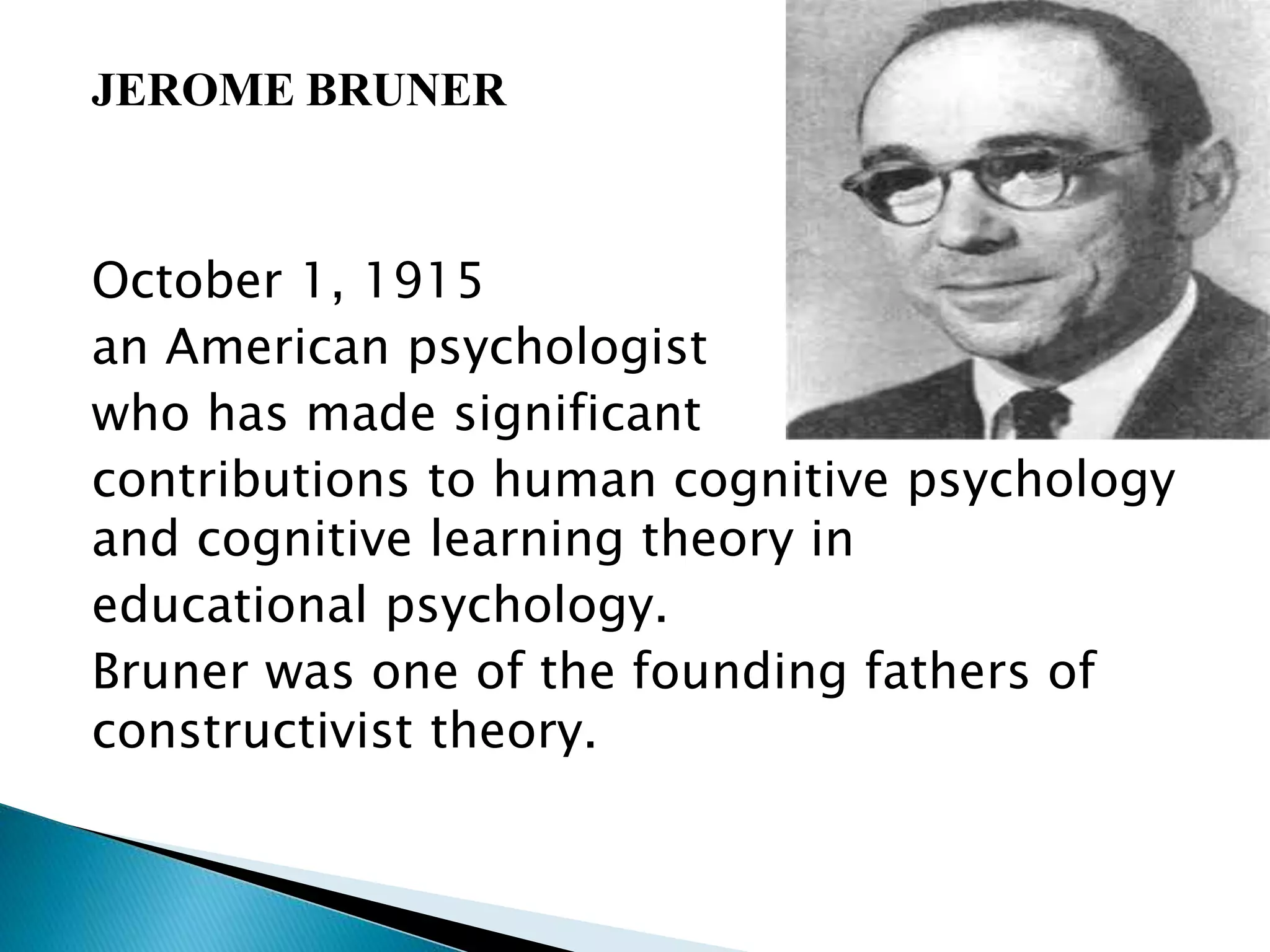
JEROME BRUNER
October 1, 1915
an American psychologist
who has made significant
contributions to human cognitive psychology
and cognitive learning theory in
educational psychology.
Bruner was one of the founding fathers of
constructivist theory.
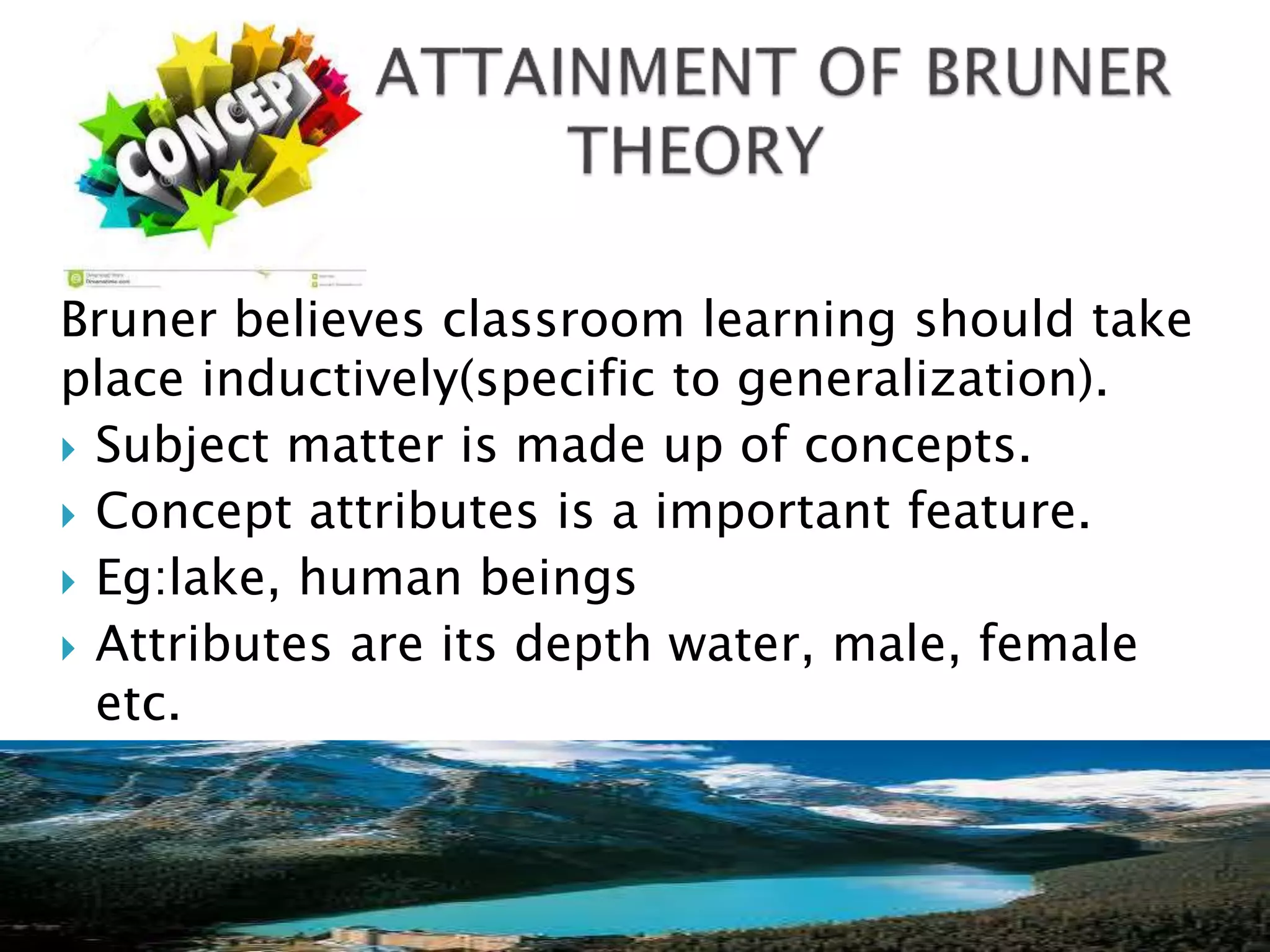
Bruner believes classroom learning should take
place inductively(specific to generalization).
 Subject matter is made up of concepts.
 Concept attributes is a important feature.
 Eg:lake, human beings
 Attributes are its depth water, male, female
etc.
 He said subject must be taught
when the teacher believes the
child has reached the
appropriate state of cognitive
maturity.
 Bruner opposed Piaget's notion
of readiness.
 He argued that schools waste
time trying to match the
complexity of subject material
to a child's cognitive stage of
development.
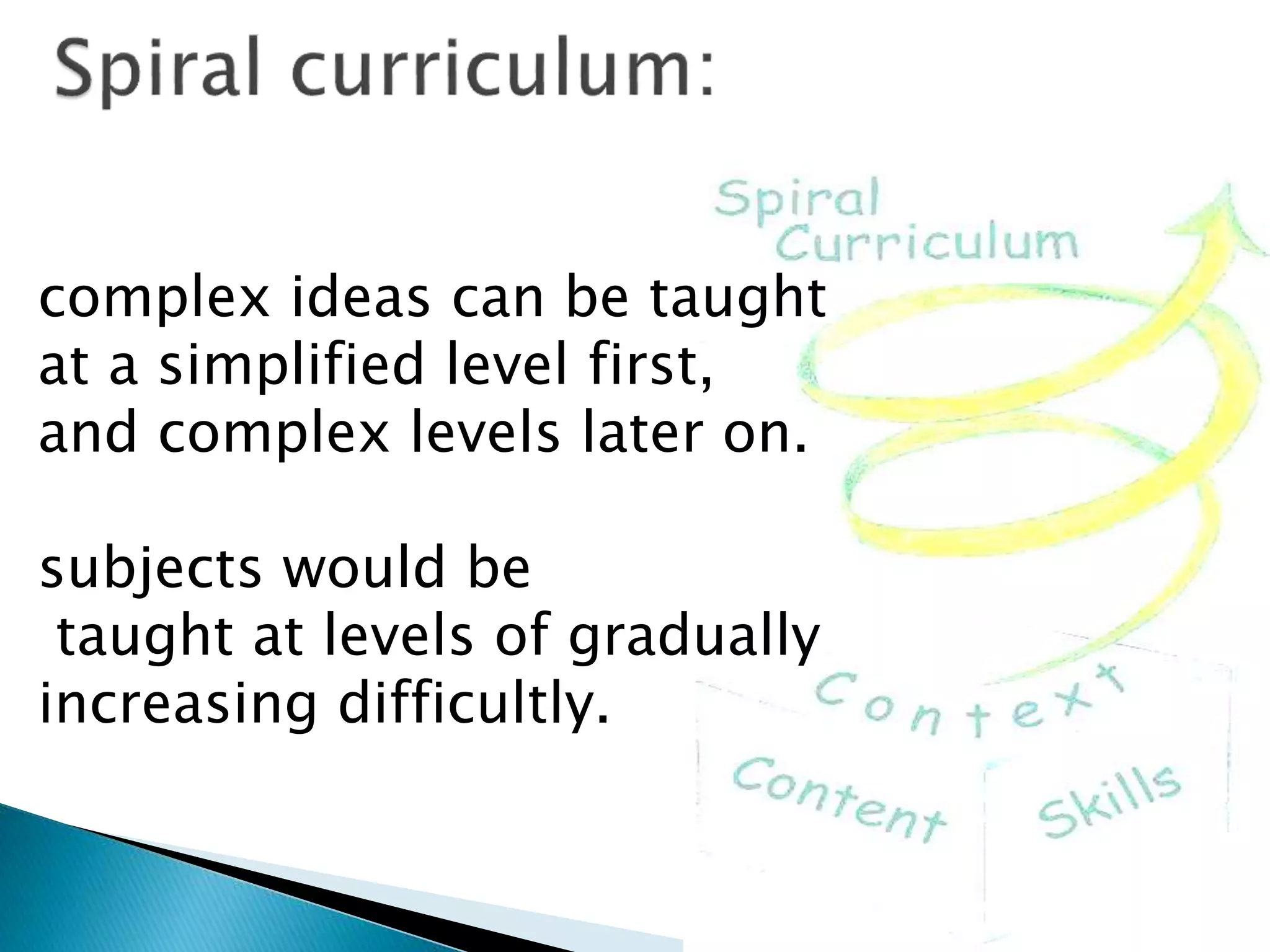
complex ideas can be taught
at a simplified level first,
and complex levels later on.
subjects would be
taught at levels of gradually
increasing difficultly.
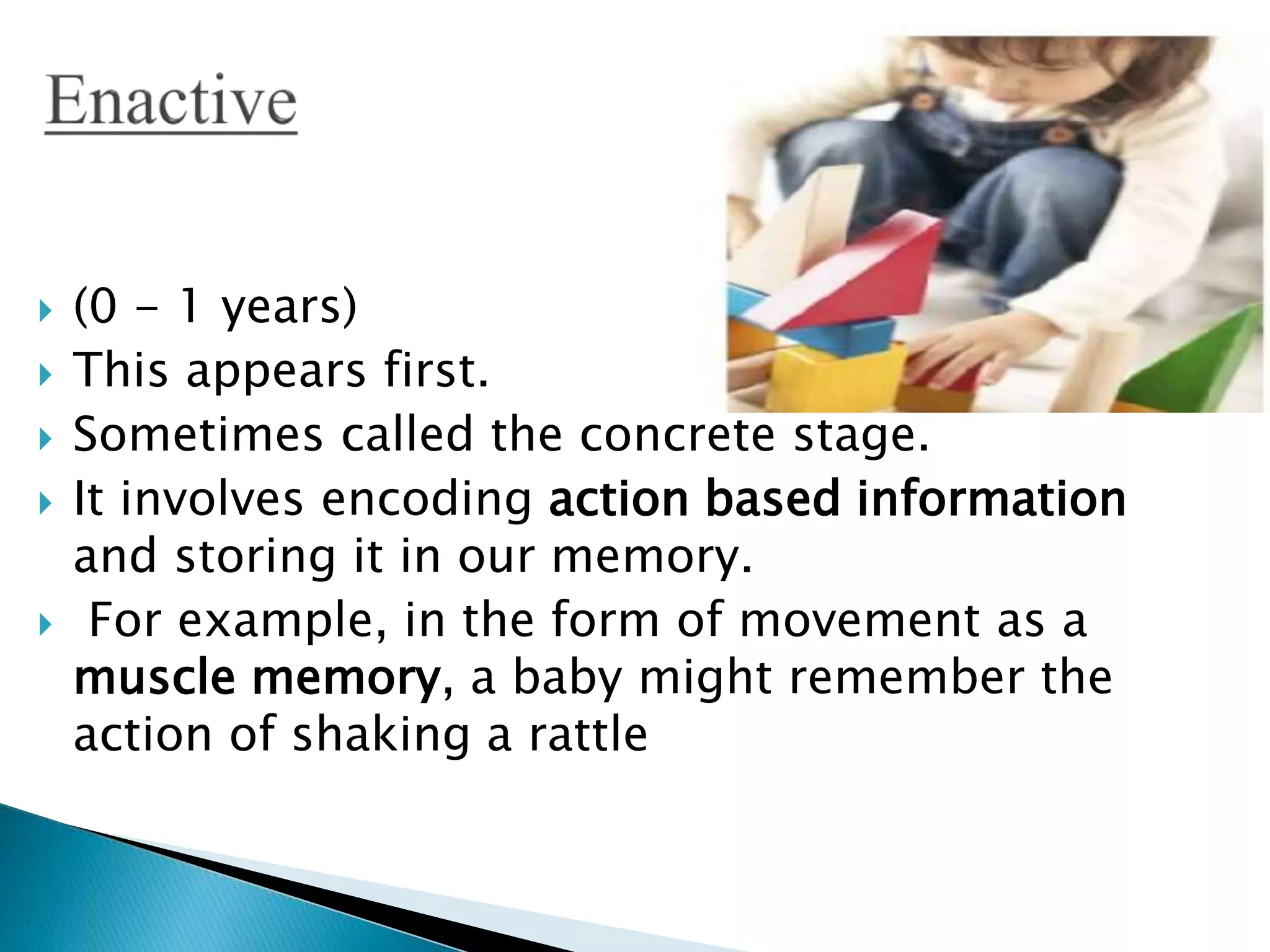
 (0 - 1 years)
 This appears first.
 Sometimes called the concrete stage.
 It involves encoding action based information
and storing it in our memory.
 For example, in the form of movement as a
muscle memory, a baby might remember the
action of shaking a rattle
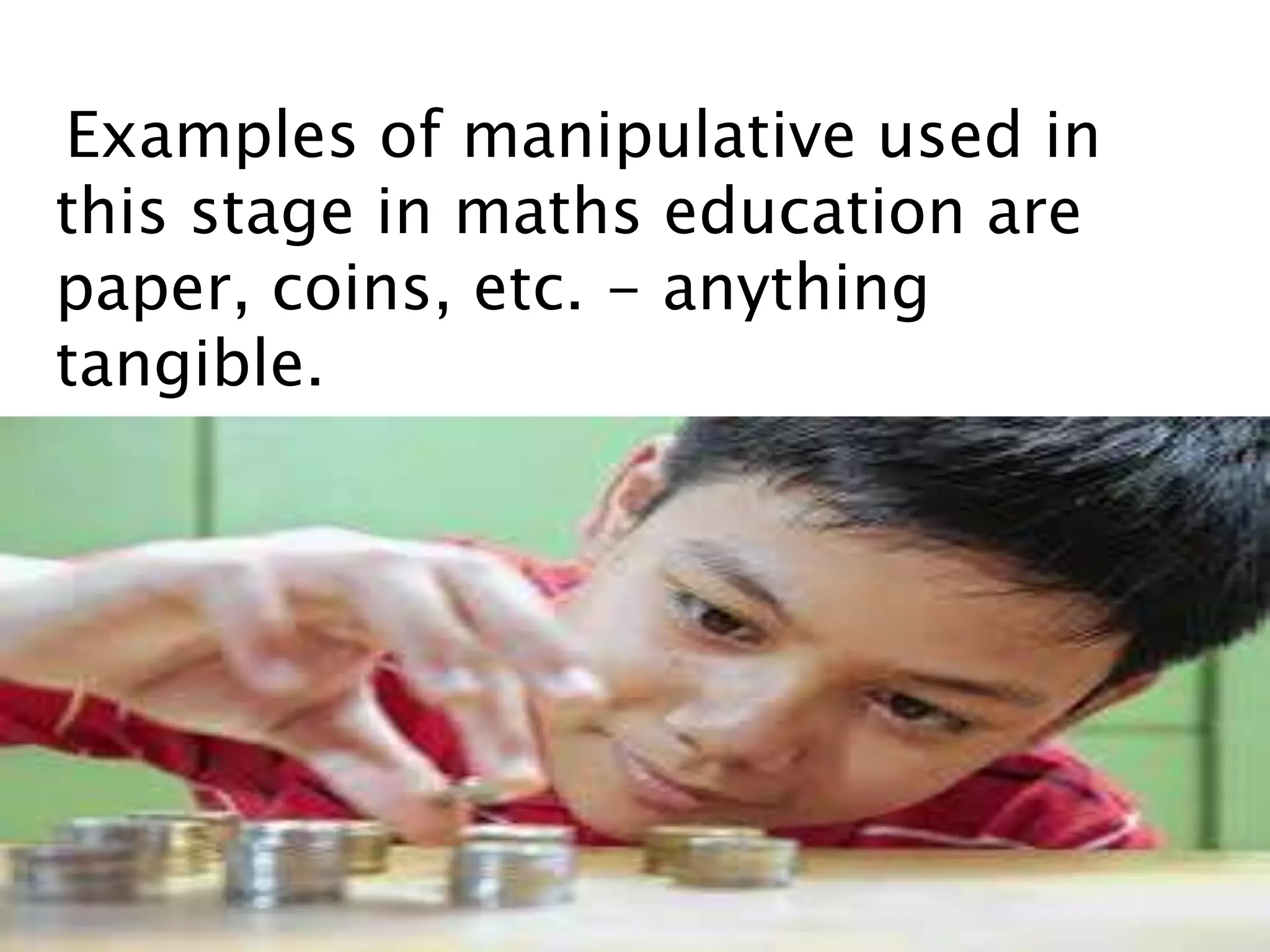
Examples of manipulative used in
this stage in maths education are
paper, coins, etc. - anything
tangible.
Also called the pictorial stage(photographic
memory).
this stage involves images or other visuals to
represent the concrete situation.
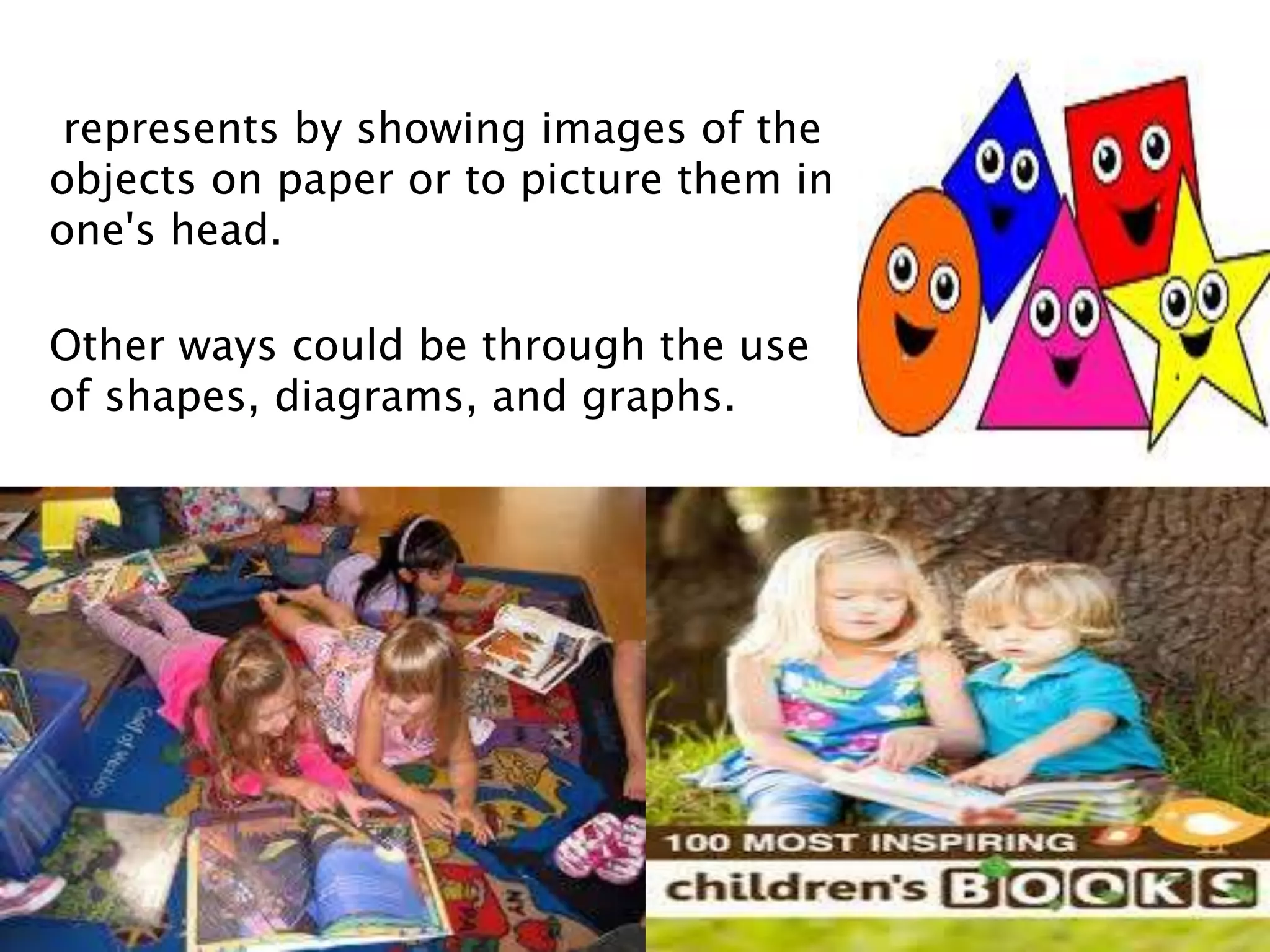
represents by showing images of the
objects on paper or to picture them in
one's head.
Other ways could be through the use
of shapes, diagrams, and graphs.
 called the abstract stage.
 the last stage takes the images from the
second stage and represents them using words
and symbols.
 The use of words and symbols "allows a student
to organize information in the mind by relating
concepts together
 The words and symbols are abstractions, they
do not necessarily have a direct connection to
the information.
 For example, a number is a symbol used to
describe how many of something there are,
but the number in itself has little meaning
without the understanding of it means for
there to be that number of something.
Other examples would be variables such as
x or y, or mathematical symbols such as +,
-, /, etc. Finally, language and words are
another way to abstractly represent the
idea. In the context of math, this could be
the use of words such as addition, infinite,
the number three, etc.
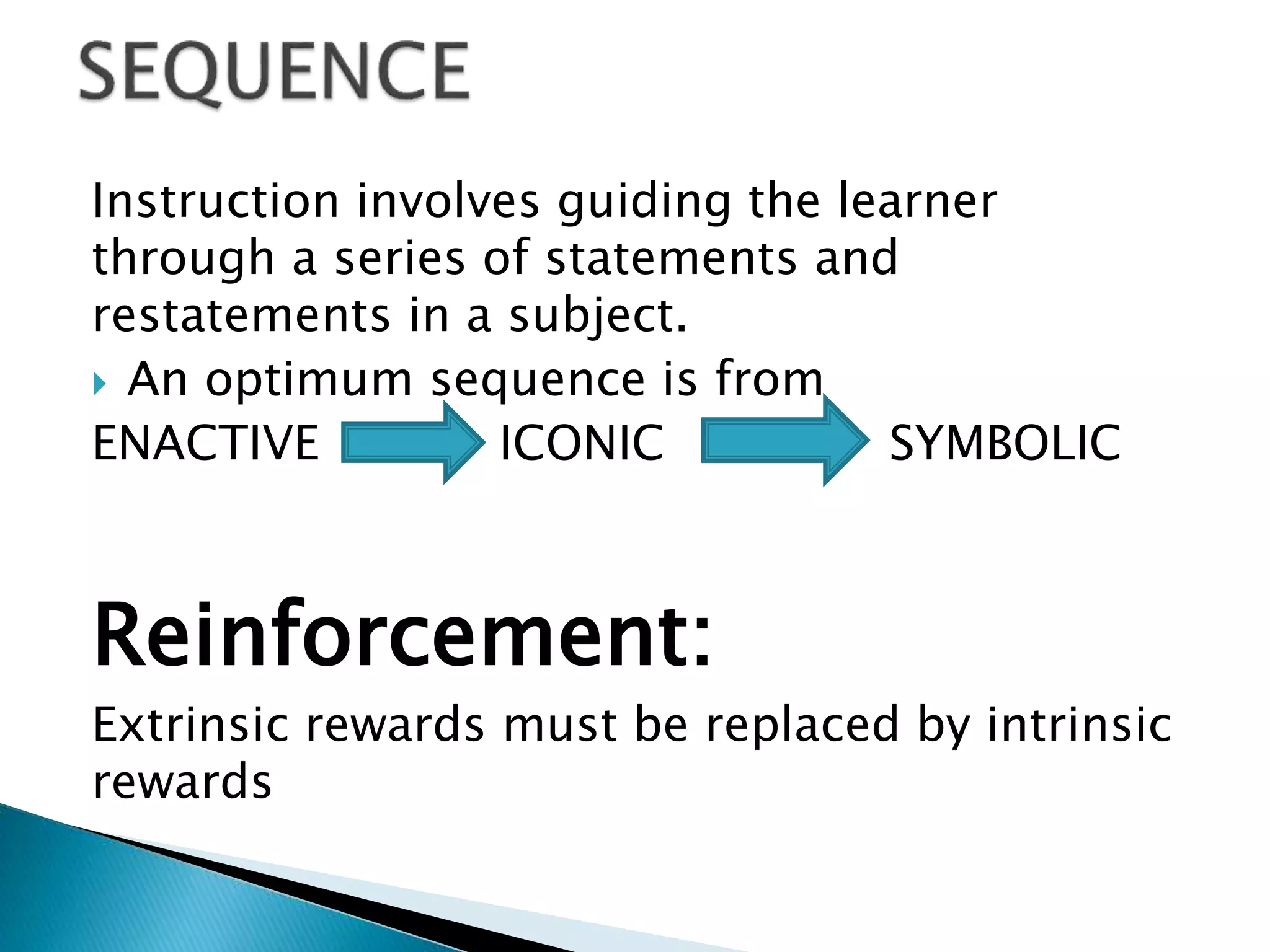
Instruction involves guiding the learner
through a series of statements and
restatements in a subject.
 An optimum sequence is from
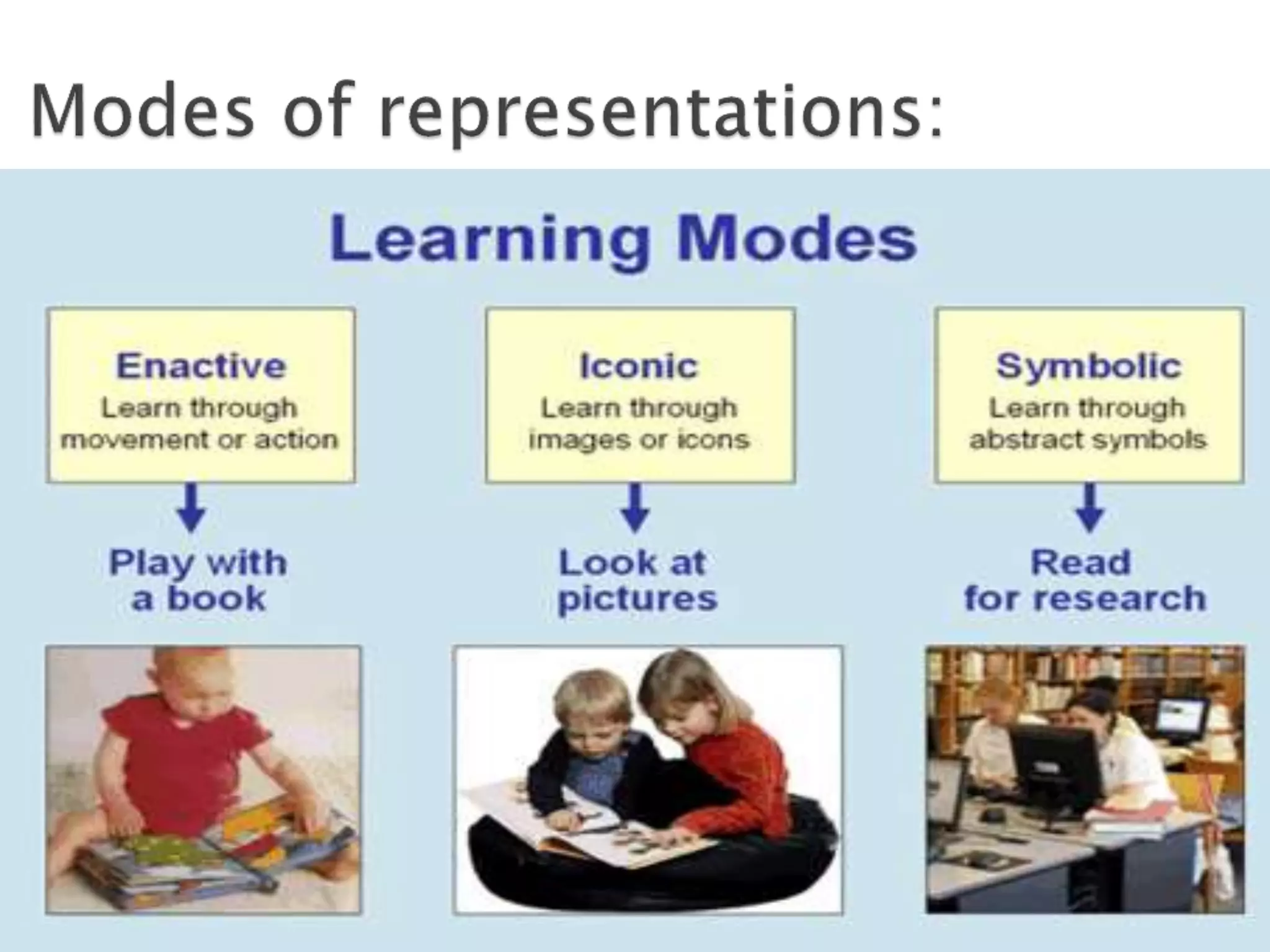
ENACTIVE ICONIC SYMBOLIC
Reinforcement:
Extrinsic rewards must be replaced by intrinsic
rewards
 Allows students to proceed according to their
abilities.
 Teacher acts as a facilitator in constructing
concepts.
 Learners are encouraged to think logically.
 Learners are intrinsically motivated because
he is learning actively.
 It is difficult to carry out in large groups and
with slow learners.
 Sometimes teachers may be chaotic.
 A few students may be quick in responding
leaving the rest behind.
References:
Bruner theory of instruction

Bruner theory of instruction

  • 1.
    Presented by: PREETIKA MITRASAMARTHY ROLLNO:16 Malla Reddy College Of Teacher Education Accredited With NAAC ’B” Grade Suraram X Road, Qutubullapur Mandal, RR District Hyderabad- 500055
  • 2.
    JEROME BRUNER October 1,1915 an American psychologist who has made significant contributions to human cognitive psychology and cognitive learning theory in educational psychology. Bruner was one of the founding fathers of constructivist theory.
  • 3.
    Bruner believes classroomlearning should take place inductively(specific to generalization).  Subject matter is made up of concepts.  Concept attributes is a important feature.  Eg:lake, human beings  Attributes are its depth water, male, female etc.
  • 4.
     He saidsubject must be taught when the teacher believes the child has reached the appropriate state of cognitive maturity.  Bruner opposed Piaget's notion of readiness.  He argued that schools waste time trying to match the complexity of subject material to a child's cognitive stage of development.
  • 5.
    complex ideas canbe taught at a simplified level first, and complex levels later on. subjects would be taught at levels of gradually increasing difficultly.
  • 7.
     (0 -1 years)  This appears first.  Sometimes called the concrete stage.  It involves encoding action based information and storing it in our memory.  For example, in the form of movement as a muscle memory, a baby might remember the action of shaking a rattle
  • 8.
    Examples of manipulativeused in this stage in maths education are paper, coins, etc. - anything tangible.
  • 9.
    Also called thepictorial stage(photographic memory). this stage involves images or other visuals to represent the concrete situation.
  • 10.
    represents by showingimages of the objects on paper or to picture them in one's head. Other ways could be through the use of shapes, diagrams, and graphs.
  • 11.
     called theabstract stage.  the last stage takes the images from the second stage and represents them using words and symbols.  The use of words and symbols "allows a student to organize information in the mind by relating concepts together  The words and symbols are abstractions, they do not necessarily have a direct connection to the information.
  • 12.
     For example,a number is a symbol used to describe how many of something there are, but the number in itself has little meaning without the understanding of it means for there to be that number of something. Other examples would be variables such as x or y, or mathematical symbols such as +, -, /, etc. Finally, language and words are another way to abstractly represent the idea. In the context of math, this could be the use of words such as addition, infinite, the number three, etc.
  • 13.
    Instruction involves guidingthe learner through a series of statements and restatements in a subject.  An optimum sequence is from ENACTIVE ICONIC SYMBOLIC Reinforcement: Extrinsic rewards must be replaced by intrinsic rewards
  • 14.
     Allows studentsto proceed according to their abilities.  Teacher acts as a facilitator in constructing concepts.  Learners are encouraged to think logically.  Learners are intrinsically motivated because he is learning actively.
  • 15.
     It isdifficult to carry out in large groups and with slow learners.  Sometimes teachers may be chaotic.  A few students may be quick in responding leaving the rest behind.
  • 16.