Glenn Kleiman and Phil Emer 
September 2014 Presentation to the 
NC State Board of Education
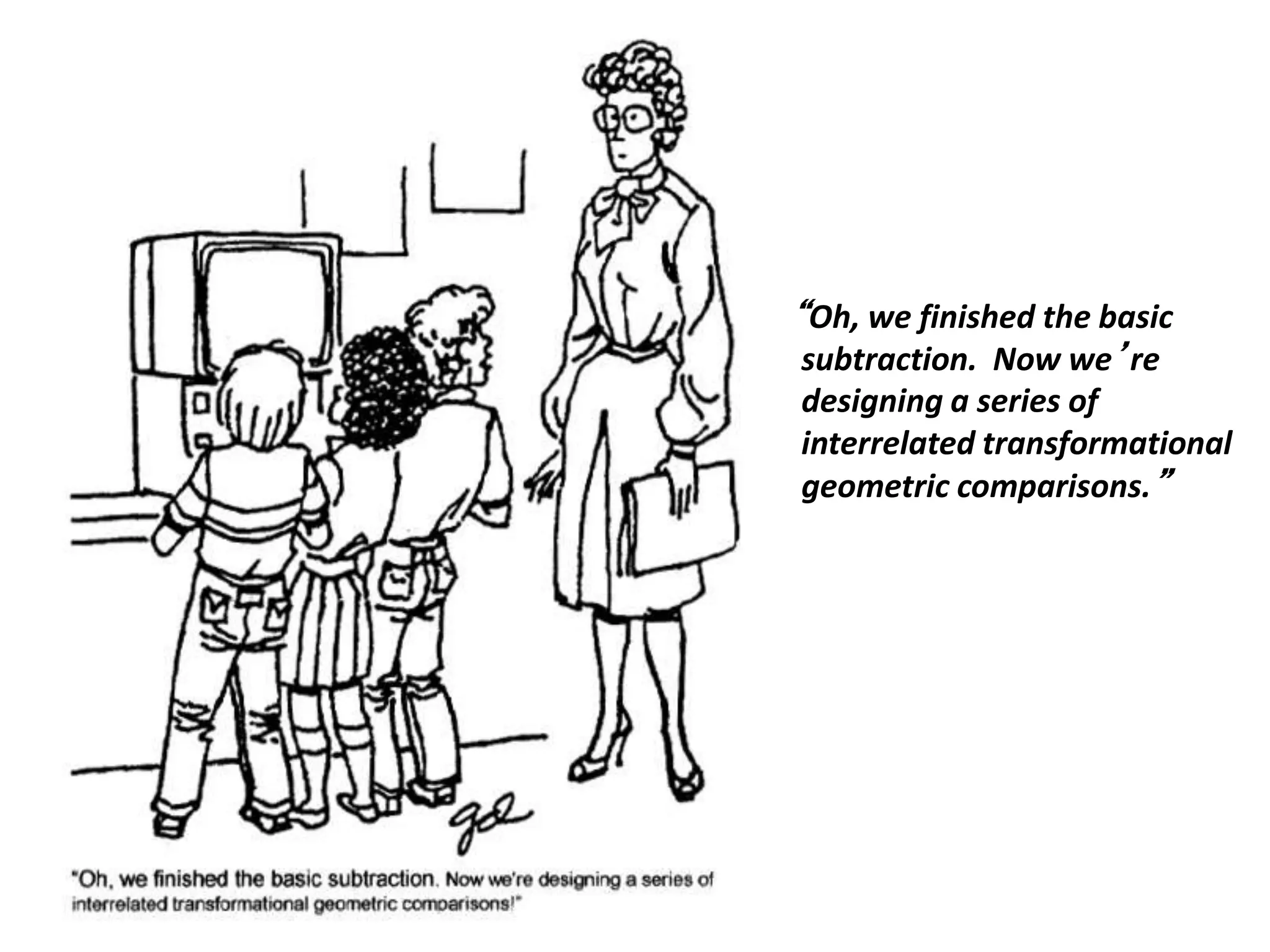
“Oh, we finished the basic 
subtraction. Now we’re 
designing a series of 
interrelated transformational 
geometric comparisons.”
Presentation Topics 
• Foundations for the Digital Learning Plan 
• Our approach to the planning process 
• Next steps
Two Views 
Digital Learning Plan 
or 
Digital Learning Plan
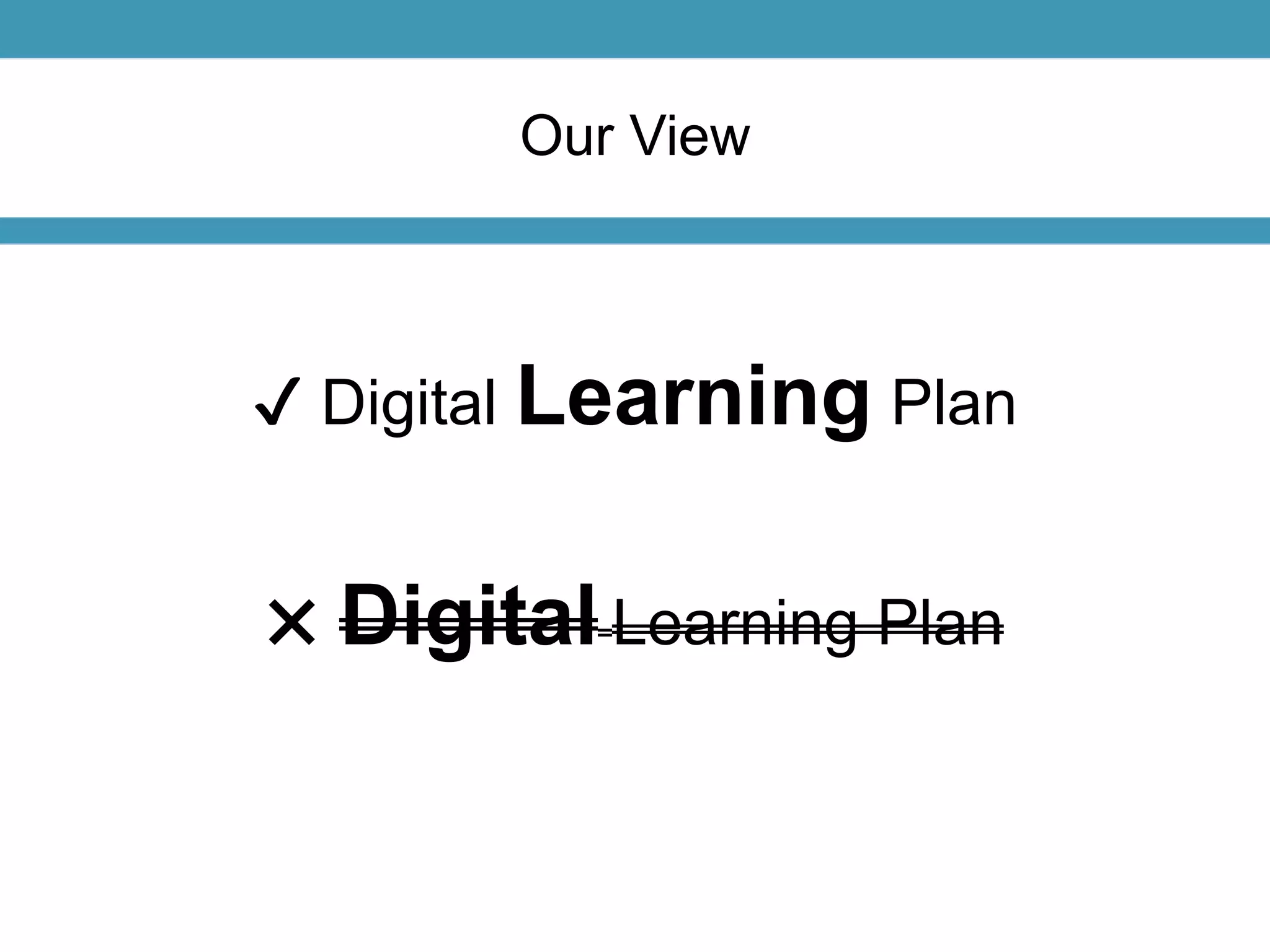
Our View 
✔ Digital Learning Plan 
✖ Digital Learning Plan
Consistent with NASBE 
• “The real promise … is in using technology to rethink 
what teachers, students and schools do, and how they 
are organized to do it.” 
• “The transformative potential [requires that] we employ 
educational technologies to reshape teachers’ and 
students’ roles, and that technology is coupled with 
fundamental organizational changes that re-engineer 
legacy school structures, processes, and all forms of 
instructional delivery.
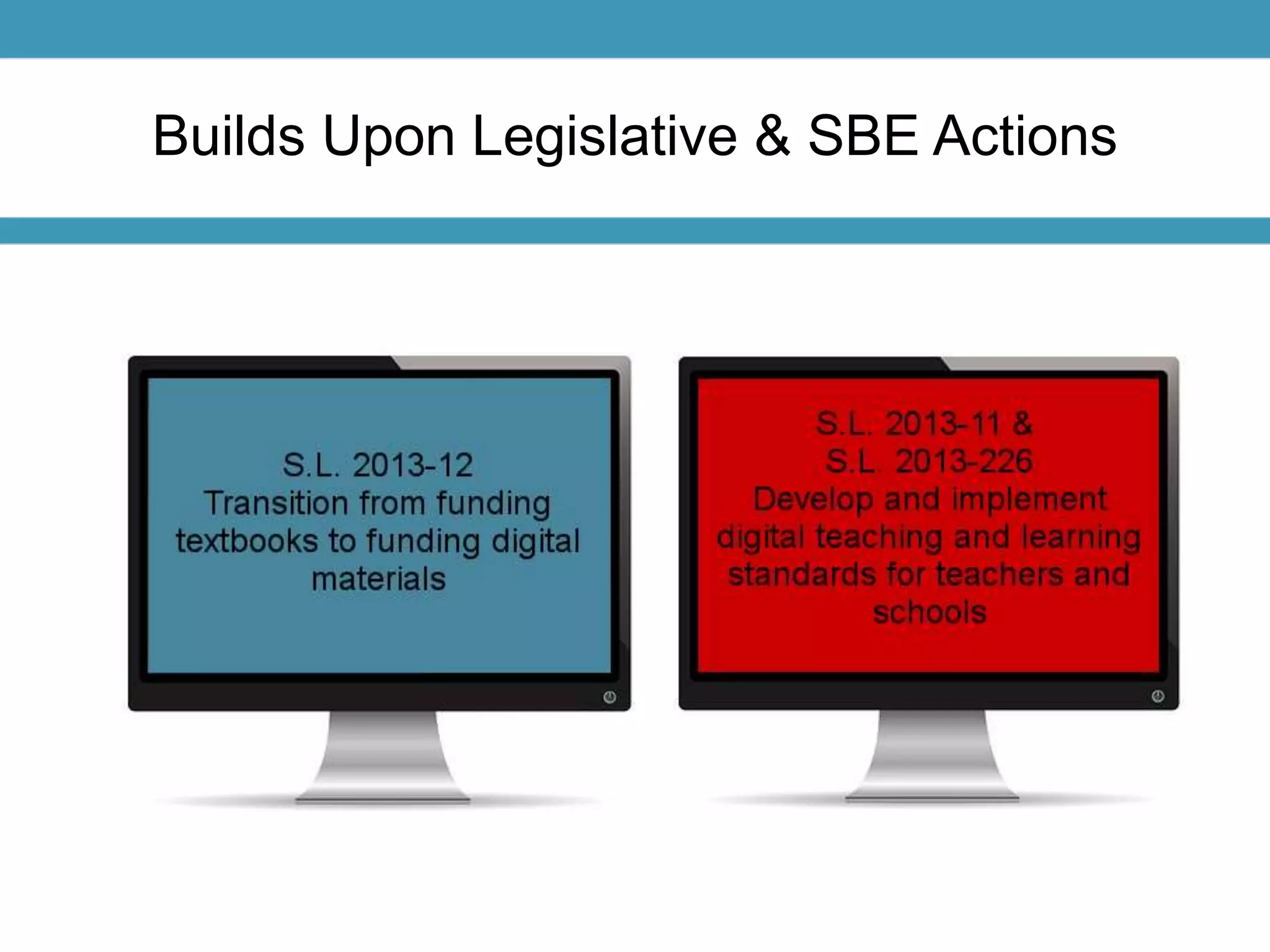
Builds Upon Legislative & SBE Actions
Addresses our students in whose world: 
• All information is instantly available 
• Multimedia, interactive experiences are the norm 
• Communication and collaborative is constant 
• Powerful creativity tools are readily available 
• Change is constant and rapid 
• Your online presence is part of who you are 
• Options are abundant; personalization is expected
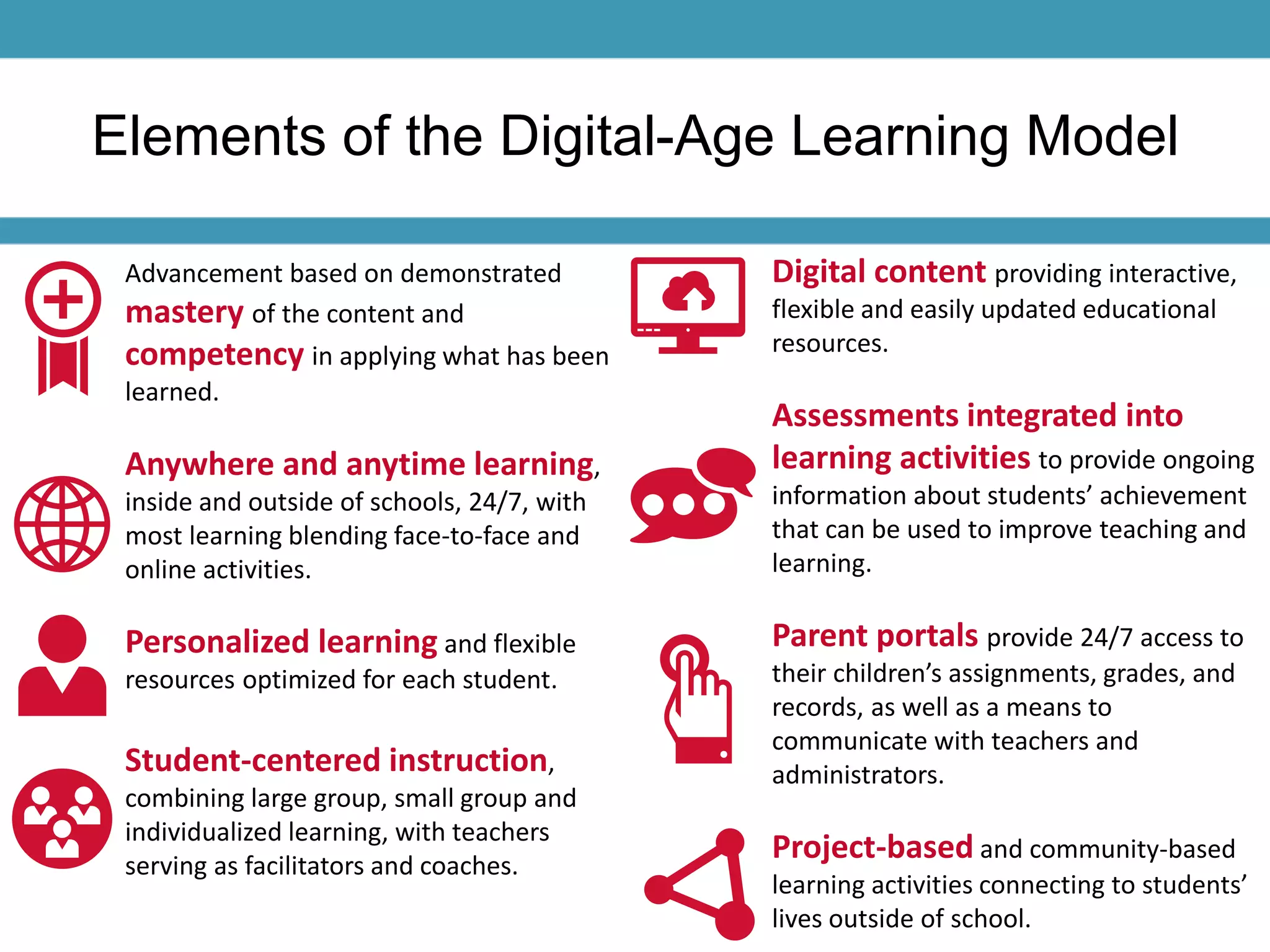
Elements of the Digital-Age Learning Model 
Advancement based on demonstrated 
mastery of the content and 
competency in applying what has been 
learned. 
Anywhere and anytime learning, 
inside and outside of schools, 24/7, with 
most learning blending face-to-face and 
online activities. 
Personalized learning and flexible 
resources optimized for each student. 
Student-centered instruction, 
combining large group, small group and 
individualized learning, with teachers 
serving as facilitators and coaches. 
Digital content providing interactive, 
flexible and easily updated educational 
resources. 
Assessments integrated into 
learning activities to provide ongoing 
information about students’ achievement 
that can be used to improve teaching and 
learning. 
Parent portals provide 24/7 access to 
their children’s assignments, grades, and 
records, as well as a means to 
communicate with teachers and 
administrators. 
Project-based and community-based 
learning activities connecting to students’ 
lives outside of school.
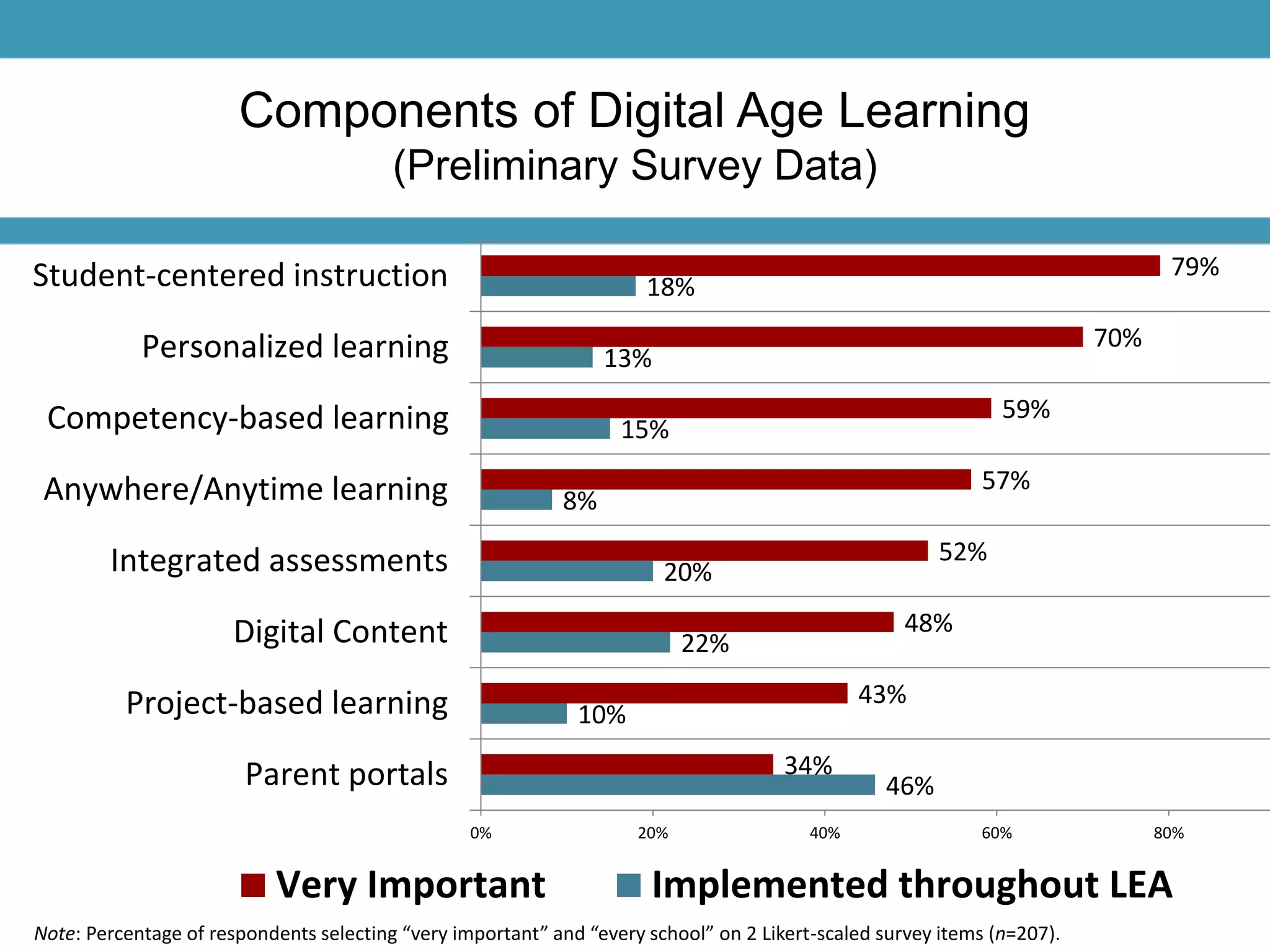
Components of Digital Age Learning 
(Preliminary Survey Data) 
59% 
57% 
52% 
48% 
43% 
46% 
8% 
18% 
13% 
15% 
10% 
20% 
22% 
34% 
Student-centered instruction 
Personalized learning 
Competency-based learning 
Anywhere/Anytime learning 
Integrated assessments 
Digital Content 
Project-based learning 
Note: Percentage of respondents selecting “very important” and “every school” on 2 Likert-scaled survey items (n=207). 
70% 
79% 
0% 20% 40% 60% 80% 
Parent portals 
Very Important Implemented throughout LEA
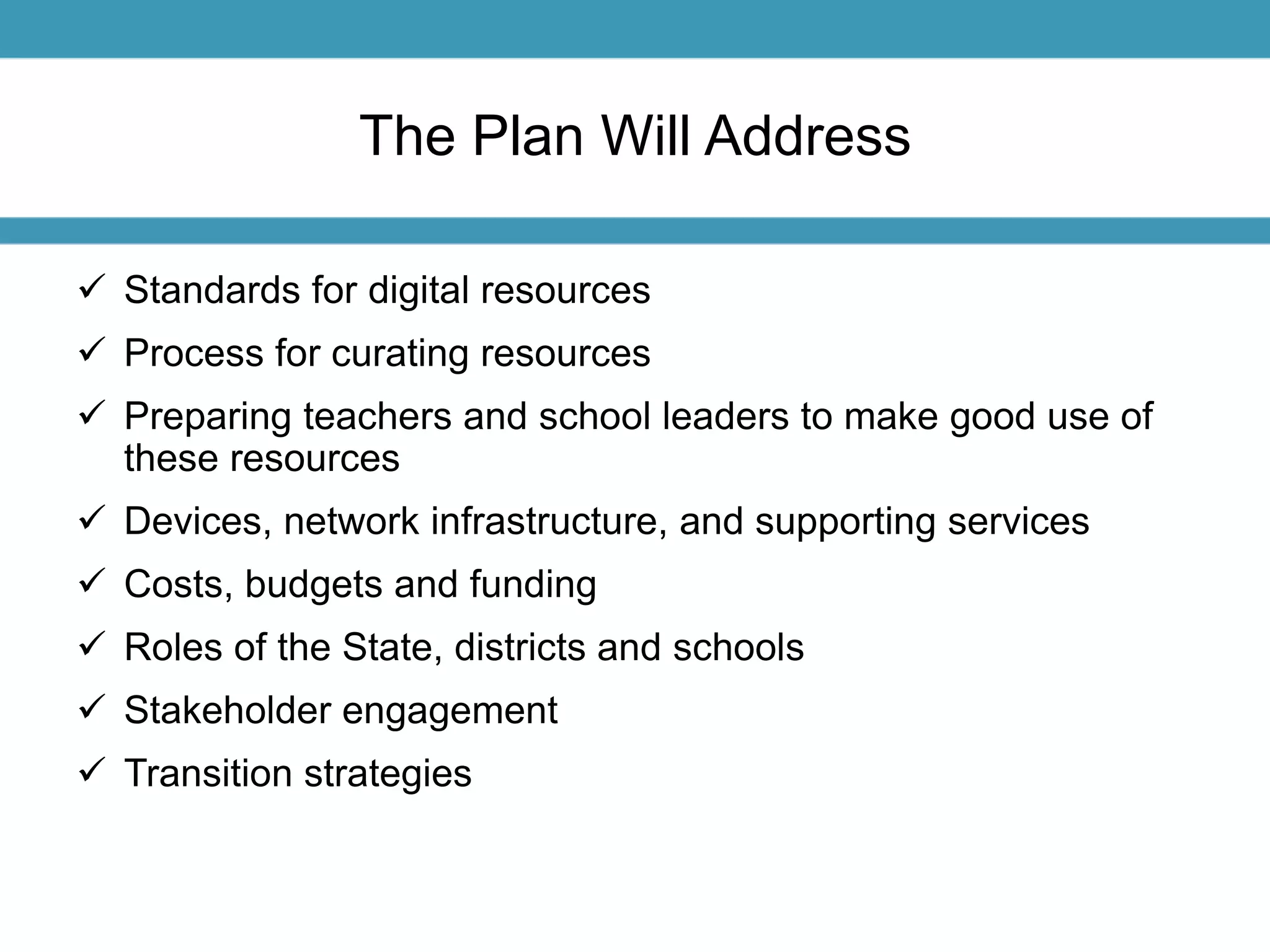
The Plan Will Address 
 Standards for digital resources 
 Process for curating resources 
 Preparing teachers and school leaders to make good use of 
these resources 
 Devices, network infrastructure, and supporting services 
 Costs, budgets and funding 
 Roles of the State, districts and schools 
 Stakeholder engagement 
 Transition strategies
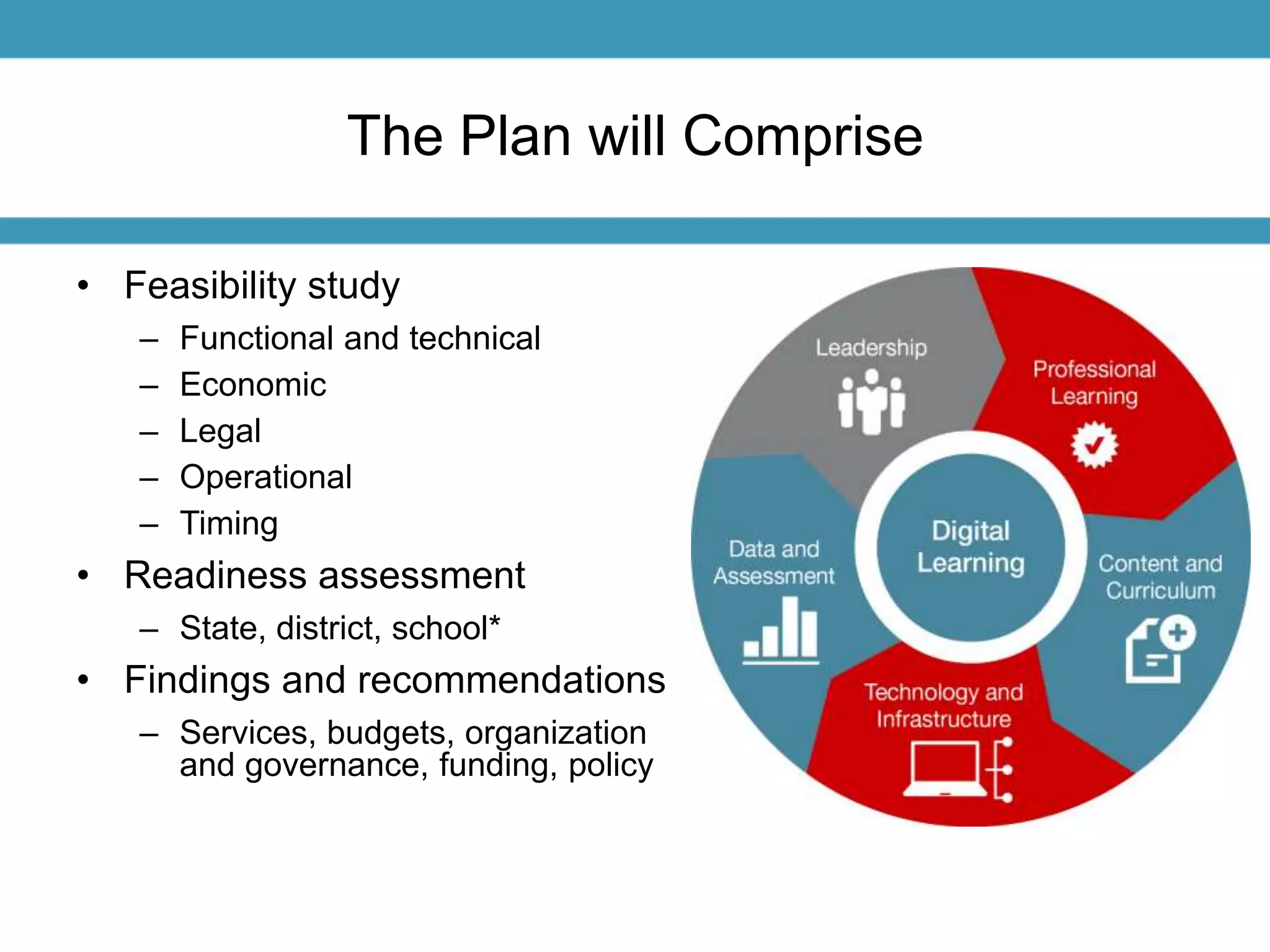
The Plan will Comprise 
• Feasibility study 
– Functional and technical 
– Economic 
– Legal 
– Operational 
– Timing 
• Readiness assessment 
– State, district, school* 
• Findings and recommendations 
– Services, budgets, organization 
and governance, funding, policy
It will build on existing statewide systems 
and many more….
and on lessons learned in NC and elsewhere 
• Research on digital learning implementations 
• Effective practices and lessons from 
– Mooresville and other NC districts 
– Maine statewide program 
– Summit charter schools 
– Texas Power On initiative 
– Alberta, Canada 
– … many others
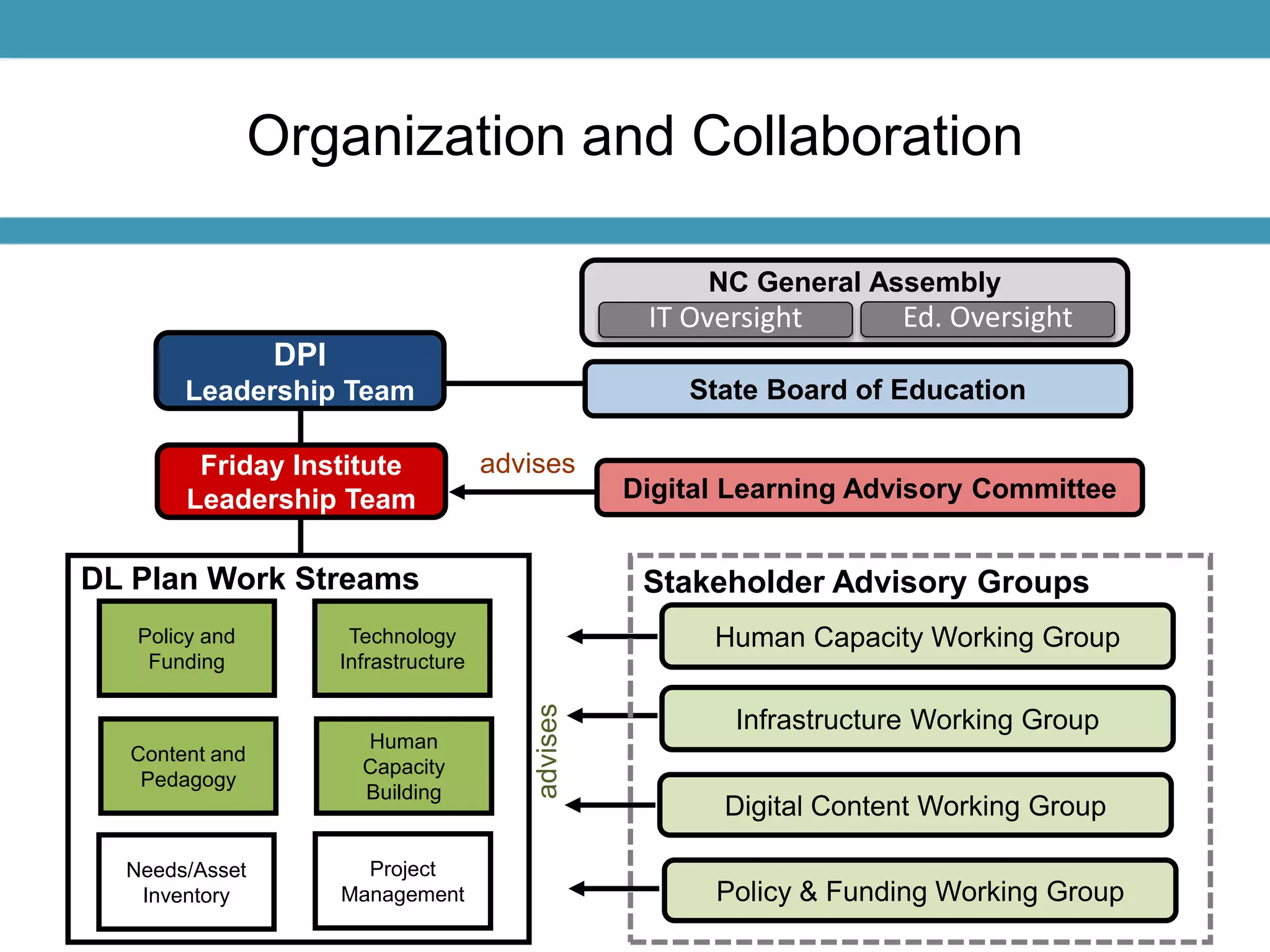
Organization and Collaboration 
advises 
DPI 
Leadership Team 
NC General Assembly 
IT Oversight Ed. Oversight 
State Board of Education 
Digital Learning Advisory Committee 
Policy and 
Funding 
Content and 
Pedagogy 
Technology 
Infrastructure 
Human 
Capacity 
Building 
advises 
Human Capacity Working Group 
Infrastructure Working Group 
Digital Content Working Group 
Friday Institute 
Leadership Team 
Needs/Asset 
Inventory 
Project 
Management 
Stakeholder Advisory Groups 
Policy & Funding Working Group 
DL Plan Work Streams
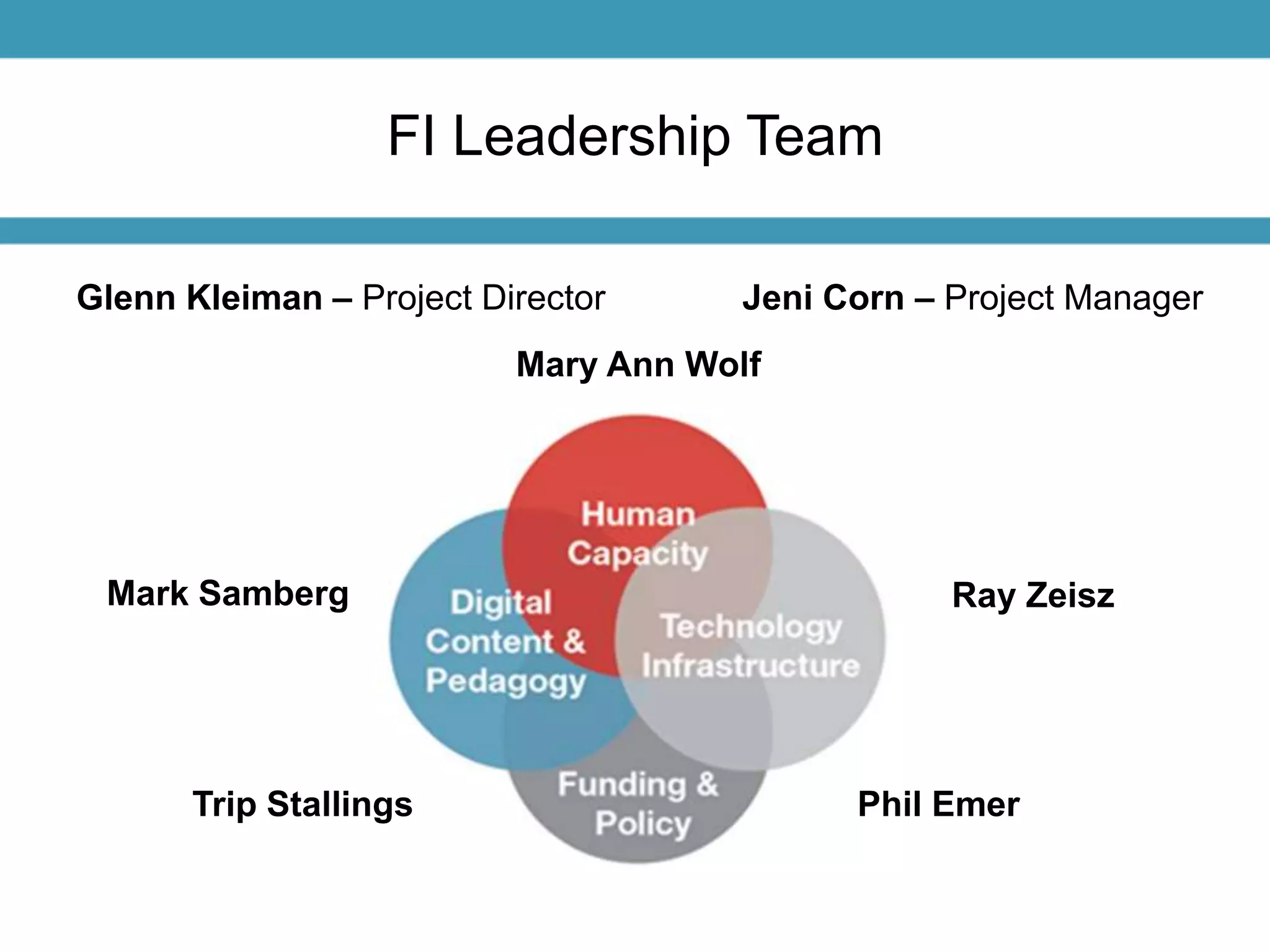
FI Leadership Team 
Glenn Kleiman – Project Director Jeni Corn – Project Manager 
Mark Samberg 
Phil Emer 
Mary Ann Wolf 
Ray Zeisz 
Trip Stallings
We will engage stakeholders 
• Advisory Board 
• Regional town halls 
• Meetings with 
– Educators: superintendents, principals, tech directors, teachers, 
– Policy makers 
– Business leaders 
• Webinars and online surveys
and use evidence-based approaches 
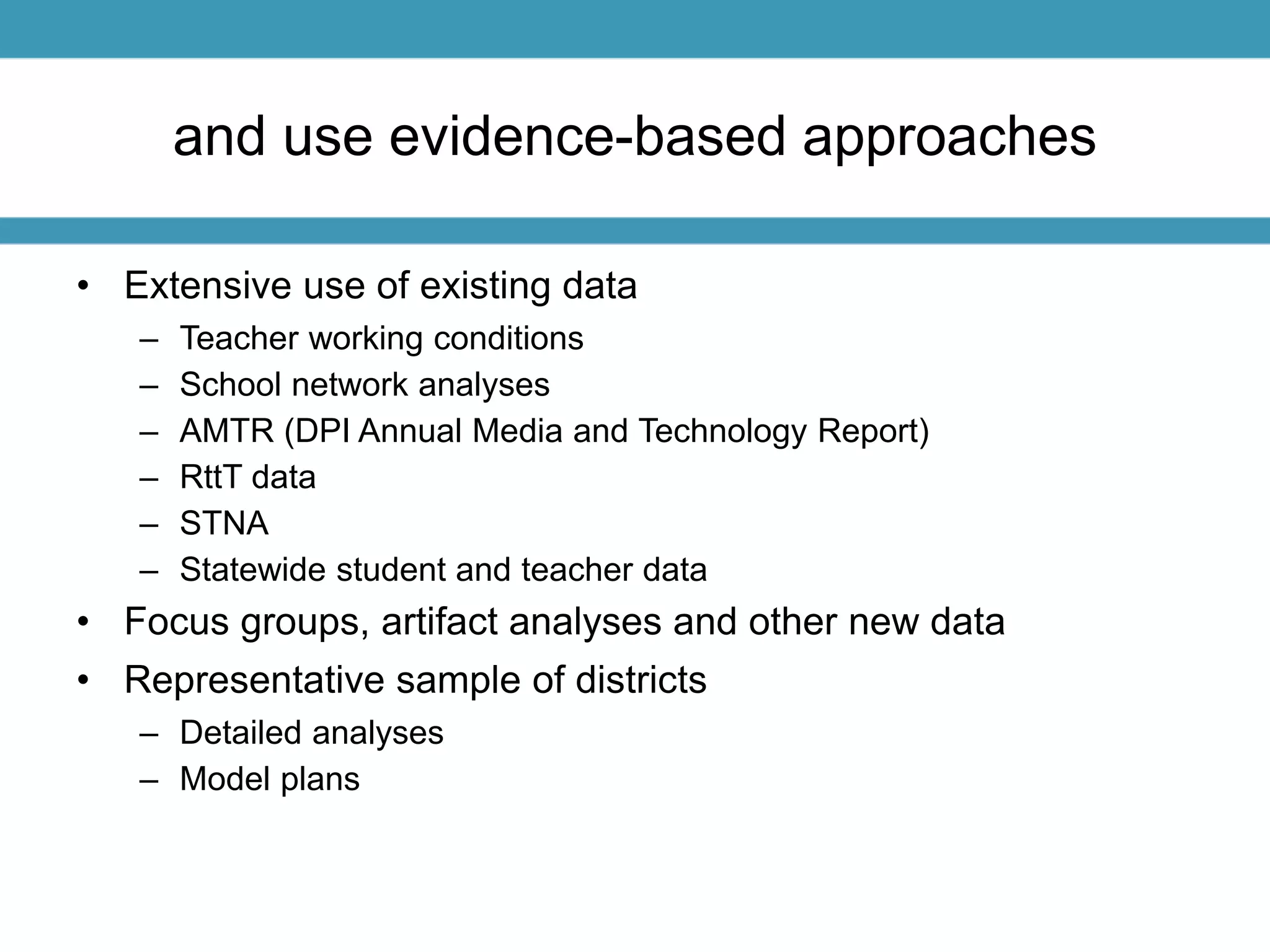
• Extensive use of existing data 
– Teacher working conditions 
– School network analyses 
– AMTR (DPI Annual Media and Technology Report) 
– RttT data 
– STNA 
– Statewide student and teacher data 
• Focus groups, artifact analyses and other new data 
• Representative sample of districts 
– Detailed analyses 
– Model plans
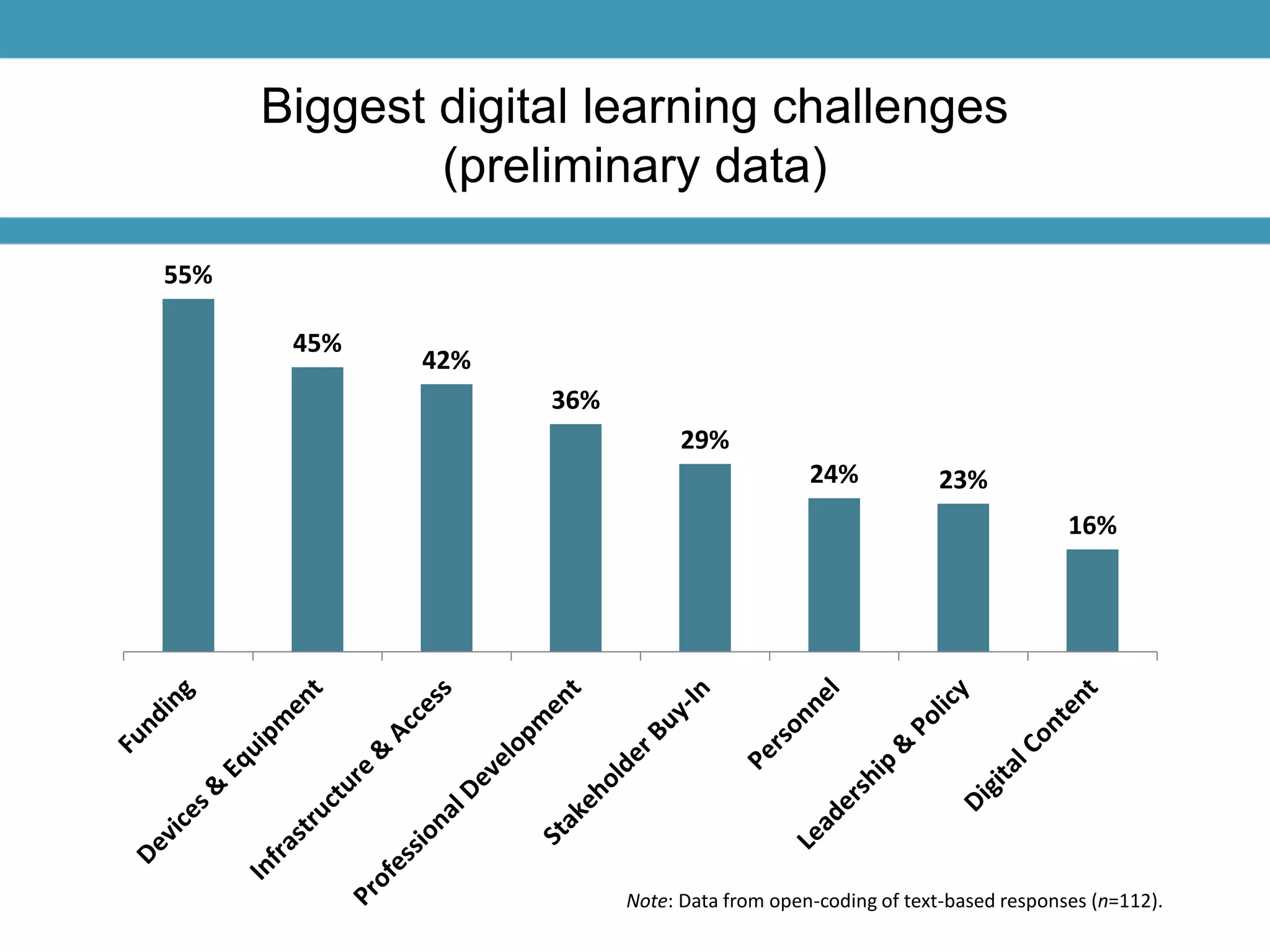
Biggest digital learning challenges 
(preliminary data) 
55% 
45% 
42% 
36% 
29% 
24% 23% 
16% 
Note: Data from open-coding of text-based responses (n=112).
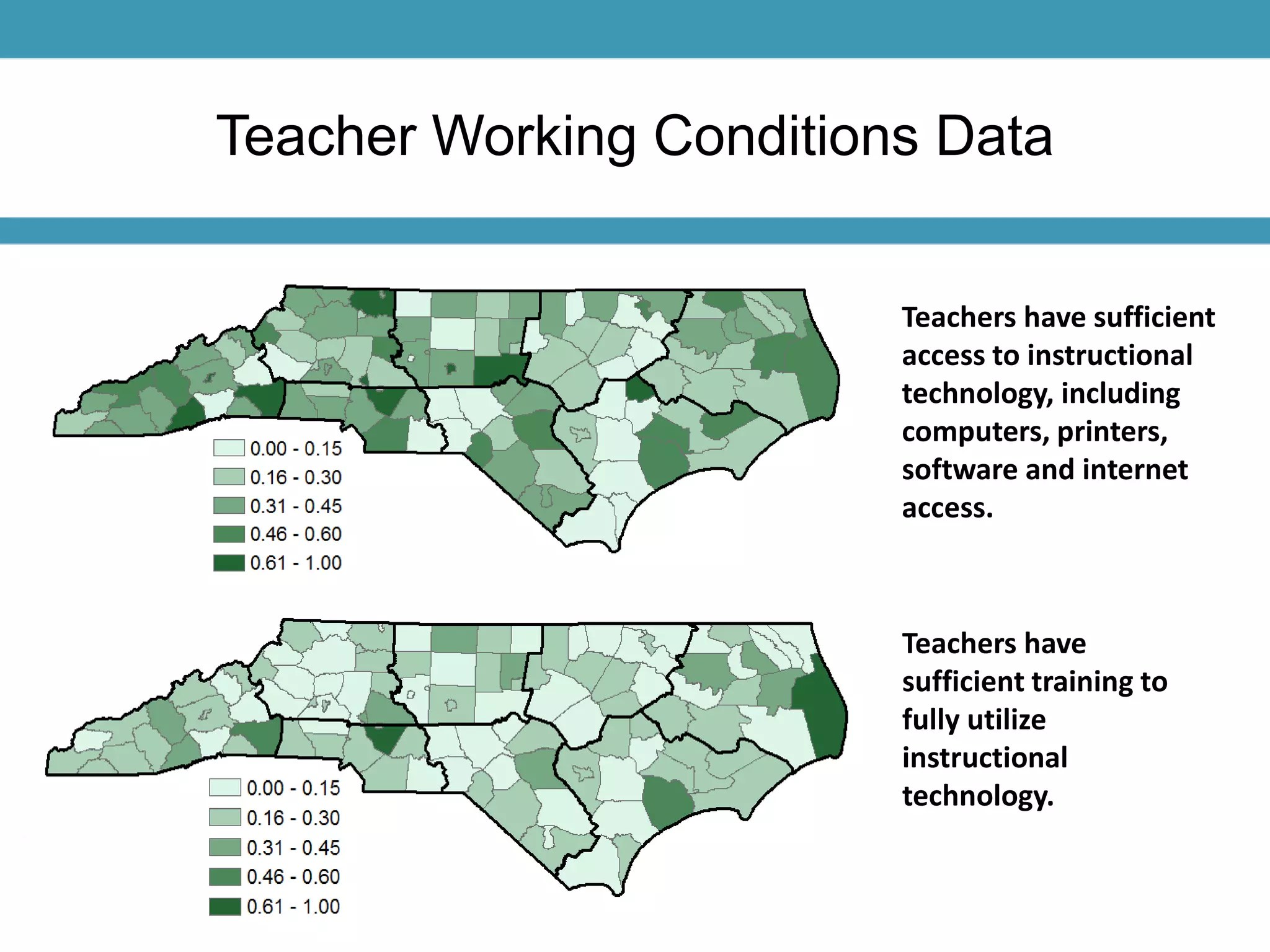
Teacher Working Conditions Data 
Teachers have sufficient 
access to instructional 
technology, including 
computers, printers, 
software and internet 
access. 
Teachers have 
sufficient training to 
fully utilize 
instructional 
technology.
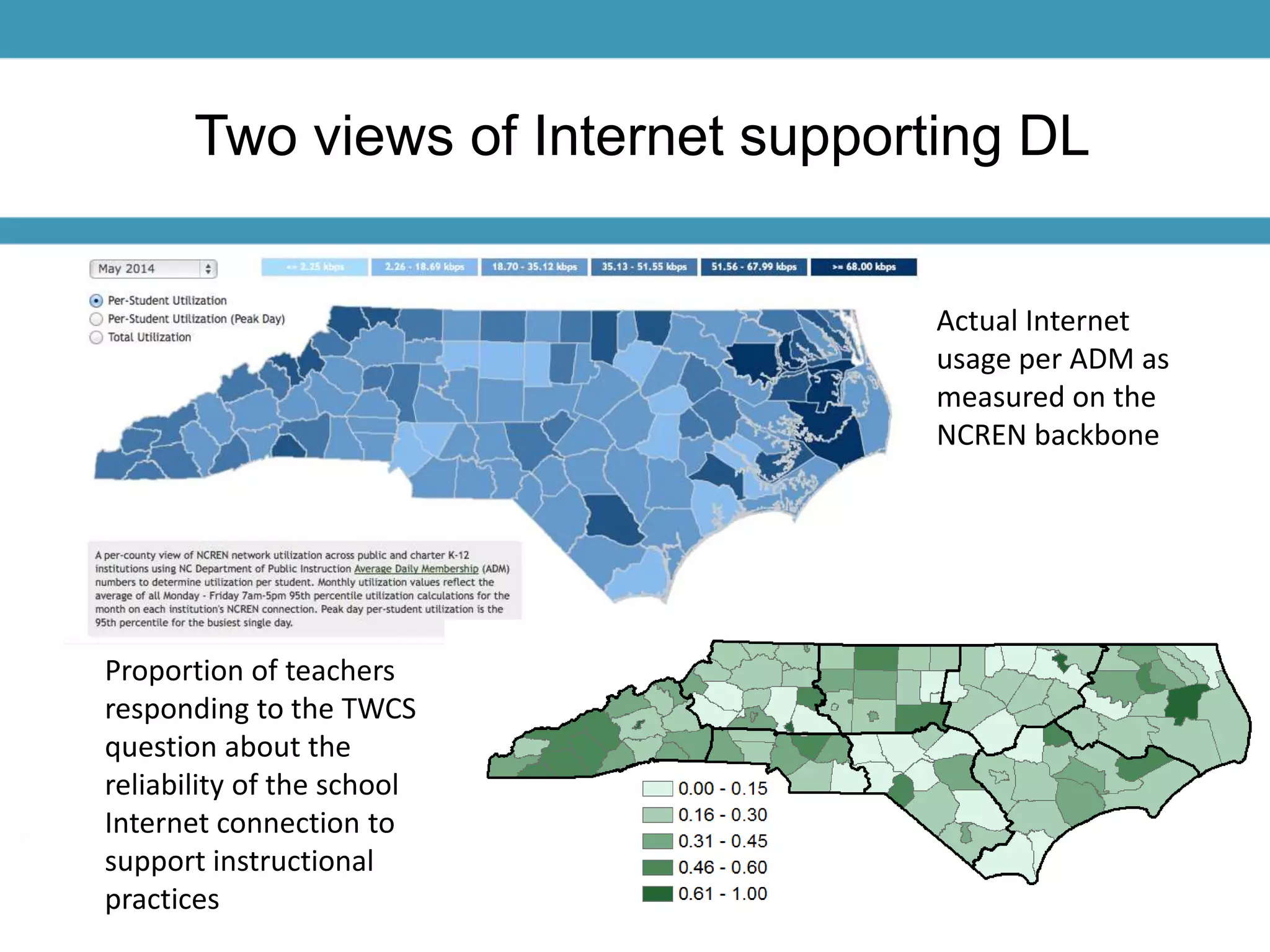
Two views of Internet supporting DL 
Proportion of teachers 
responding to the TWCS 
question about the 
reliability of the school 
Internet connection to 
support instructional 
practices 
Actual Internet 
usage per ADM as 
measured on the 
NCREN backbone
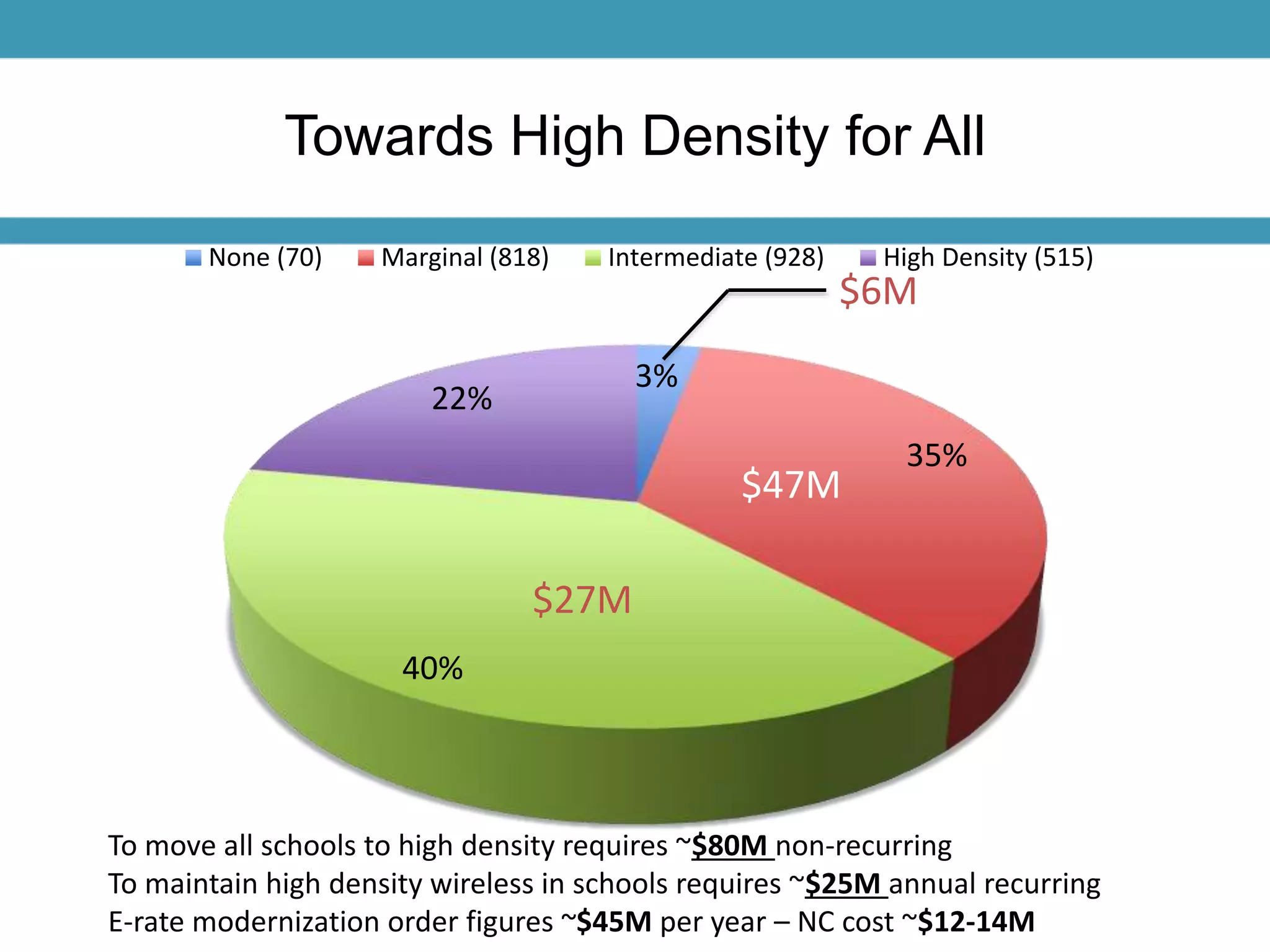
Towards High Density for All 
None (70) Marginal (818) Intermediate (928) High Density (515) 
3% 
$6M 
35% 
22% 
40% 
$27M 
$47M 
To move all schools to high density requires ~$80M non-recurring 
To maintain high density wireless in schools requires ~$25M annual recurring 
E-rate modernization order figures ~$45M per year – NC cost ~$12-14M
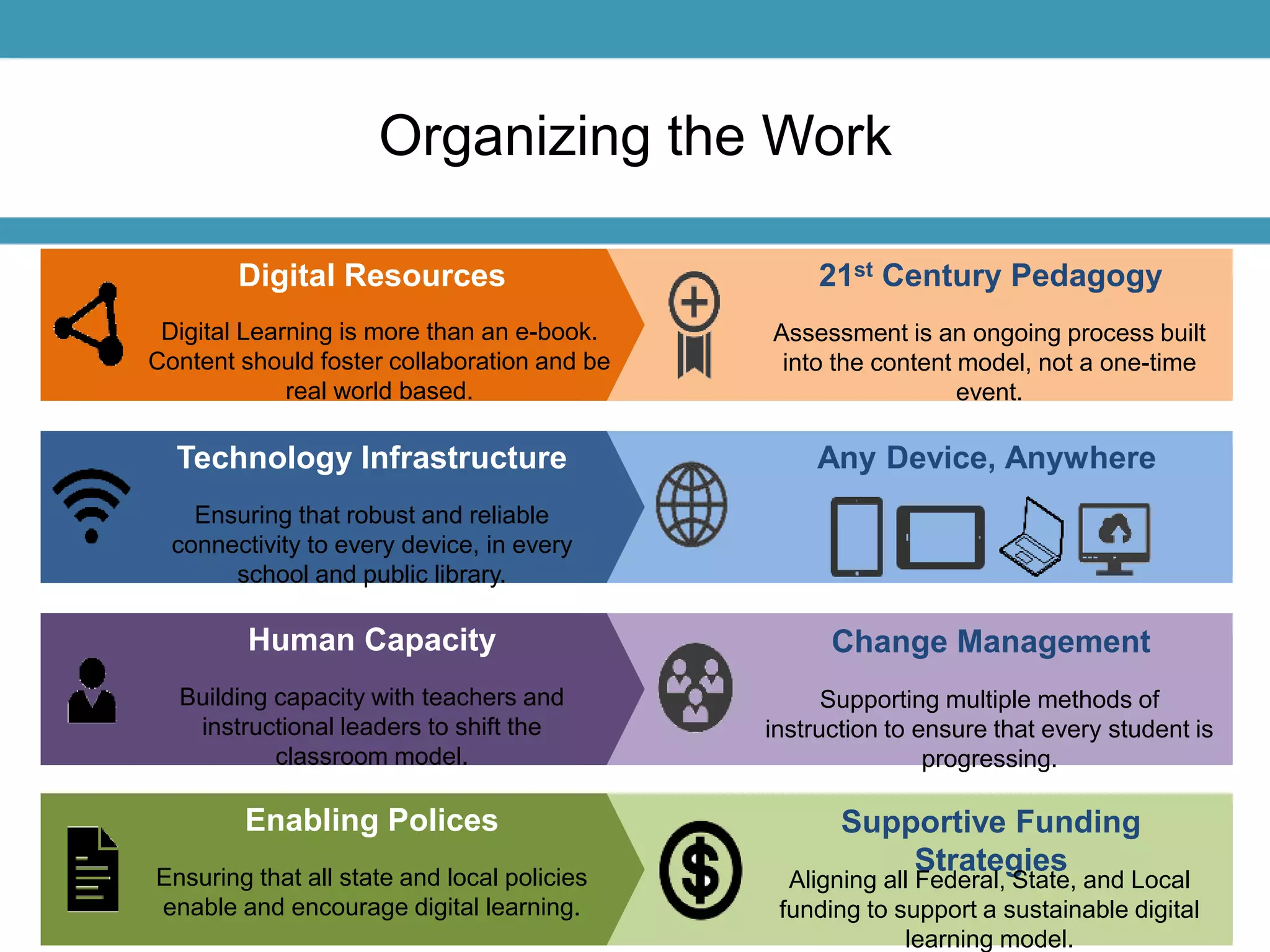
Digital Resources 21st Century Pedagogy 
Digital Learning is more than an e-book. 
Content should foster collaboration and be 
real world based. 
Technology Infrastructure Any Device, Anywhere 
Human Capacity Change Management 
Enabling Polices Supportive Funding 
Strategies 
Ensuring that all state and local policies 
enable and encourage digital learning. 
Aligning all Federal, State, and Local 
funding to support a sustainable digital 
learning model. 
Building capacity with teachers and 
instructional leaders to shift the 
classroom model. 
Supporting multiple methods of 
instruction to ensure that every student is 
progressing. 
Ensuring that robust and reliable 
connectivity to every device, in every 
school and public library. 
Assessment is an ongoing process built 
into the content model, not a one-time 
event. 
Organizing the Work
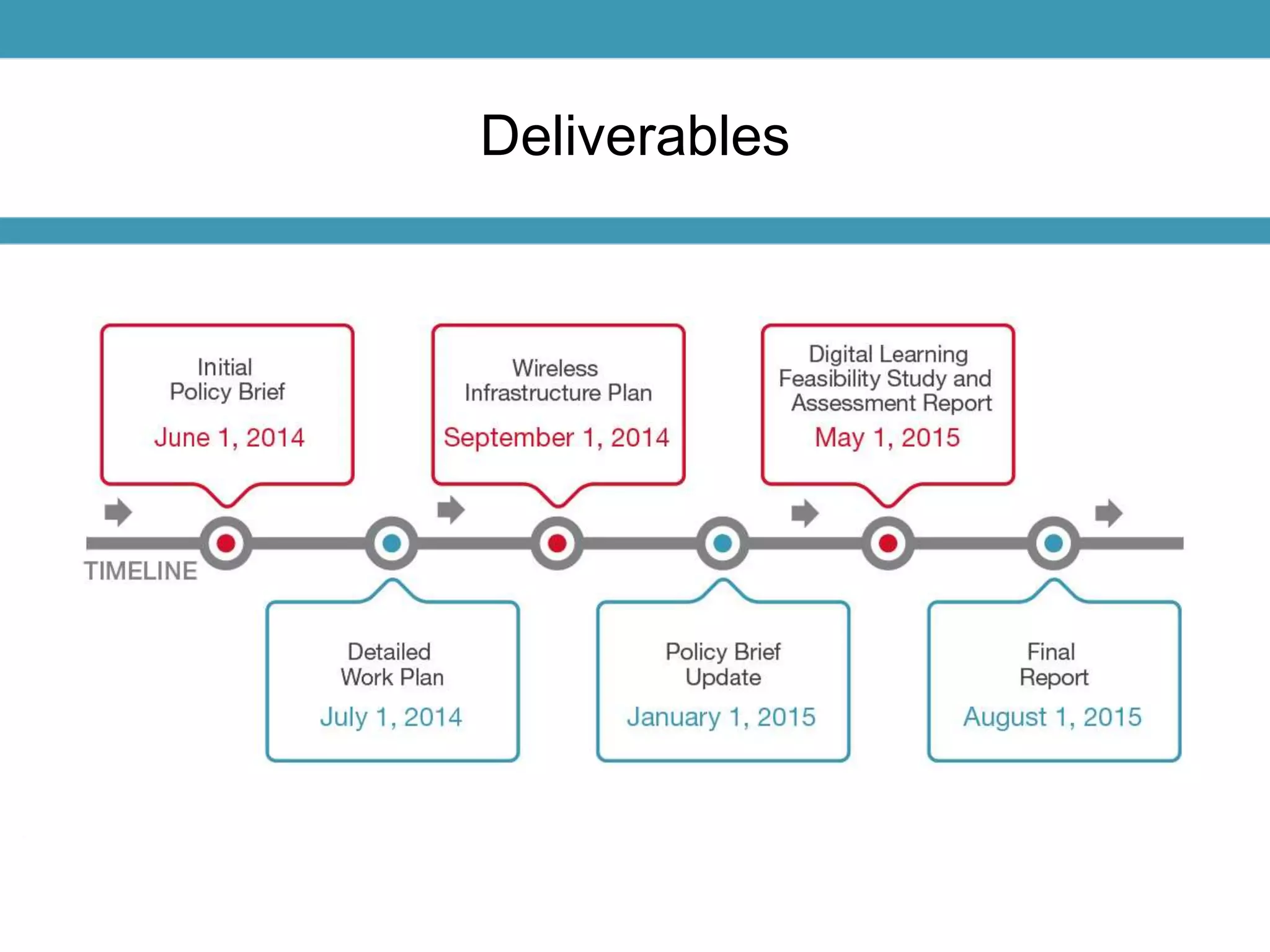
Deliverables
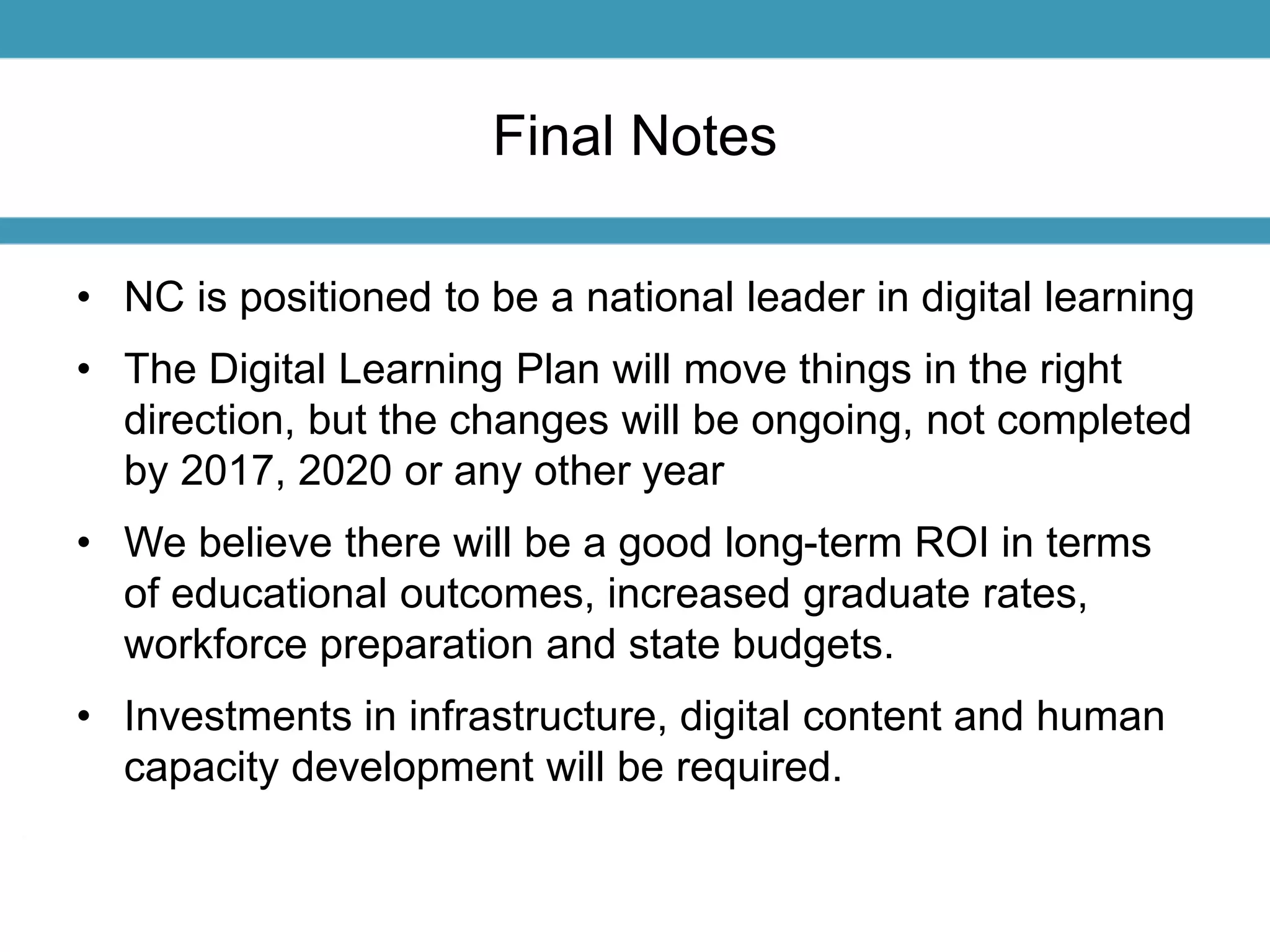
Final Notes 
• NC is positioned to be a national leader in digital learning 
• The Digital Learning Plan will move things in the right 
direction, but the changes will be ongoing, not completed 
by 2017, 2020 or any other year 
• We believe there will be a good long-term ROI in terms 
of educational outcomes, increased graduate rates, 
workforce preparation and state budgets. 
• Investments in infrastructure, digital content and human 
capacity development will be required.
• For the Policy Brief and other 
deliverables and information: 
http://ncdlplan.fi.ncsu.edu. 
• To submit inquires and 
recommendations: 
ncdlplan@fi.ncsu.edu. 
• Digital Learning Plan Information 
Gathering: http://go.ncsu.edu/n7f4nf 
• Working Group Interest 
Form: 
http://go.ncsu.edu/ncdl.working.group

FI Presentation to State Board of Education

  • 1.
    Glenn Kleiman andPhil Emer September 2014 Presentation to the NC State Board of Education
  • 2.
    “Oh, we finishedthe basic subtraction. Now we’re designing a series of interrelated transformational geometric comparisons.”
  • 3.
    Presentation Topics •Foundations for the Digital Learning Plan • Our approach to the planning process • Next steps
  • 4.
    Two Views DigitalLearning Plan or Digital Learning Plan
  • 5.
    Our View ✔Digital Learning Plan ✖ Digital Learning Plan
  • 6.
    Consistent with NASBE • “The real promise … is in using technology to rethink what teachers, students and schools do, and how they are organized to do it.” • “The transformative potential [requires that] we employ educational technologies to reshape teachers’ and students’ roles, and that technology is coupled with fundamental organizational changes that re-engineer legacy school structures, processes, and all forms of instructional delivery.
  • 7.
  • 8.
    Addresses our studentsin whose world: • All information is instantly available • Multimedia, interactive experiences are the norm • Communication and collaborative is constant • Powerful creativity tools are readily available • Change is constant and rapid • Your online presence is part of who you are • Options are abundant; personalization is expected
  • 9.
    Elements of theDigital-Age Learning Model Advancement based on demonstrated mastery of the content and competency in applying what has been learned. Anywhere and anytime learning, inside and outside of schools, 24/7, with most learning blending face-to-face and online activities. Personalized learning and flexible resources optimized for each student. Student-centered instruction, combining large group, small group and individualized learning, with teachers serving as facilitators and coaches. Digital content providing interactive, flexible and easily updated educational resources. Assessments integrated into learning activities to provide ongoing information about students’ achievement that can be used to improve teaching and learning. Parent portals provide 24/7 access to their children’s assignments, grades, and records, as well as a means to communicate with teachers and administrators. Project-based and community-based learning activities connecting to students’ lives outside of school.
  • 10.
    Components of DigitalAge Learning (Preliminary Survey Data) 59% 57% 52% 48% 43% 46% 8% 18% 13% 15% 10% 20% 22% 34% Student-centered instruction Personalized learning Competency-based learning Anywhere/Anytime learning Integrated assessments Digital Content Project-based learning Note: Percentage of respondents selecting “very important” and “every school” on 2 Likert-scaled survey items (n=207). 70% 79% 0% 20% 40% 60% 80% Parent portals Very Important Implemented throughout LEA
  • 11.
    The Plan WillAddress  Standards for digital resources  Process for curating resources  Preparing teachers and school leaders to make good use of these resources  Devices, network infrastructure, and supporting services  Costs, budgets and funding  Roles of the State, districts and schools  Stakeholder engagement  Transition strategies
  • 12.
    The Plan willComprise • Feasibility study – Functional and technical – Economic – Legal – Operational – Timing • Readiness assessment – State, district, school* • Findings and recommendations – Services, budgets, organization and governance, funding, policy
  • 13.
    It will buildon existing statewide systems and many more….
  • 14.
    and on lessonslearned in NC and elsewhere • Research on digital learning implementations • Effective practices and lessons from – Mooresville and other NC districts – Maine statewide program – Summit charter schools – Texas Power On initiative – Alberta, Canada – … many others
  • 15.
    Organization and Collaboration advises DPI Leadership Team NC General Assembly IT Oversight Ed. Oversight State Board of Education Digital Learning Advisory Committee Policy and Funding Content and Pedagogy Technology Infrastructure Human Capacity Building advises Human Capacity Working Group Infrastructure Working Group Digital Content Working Group Friday Institute Leadership Team Needs/Asset Inventory Project Management Stakeholder Advisory Groups Policy & Funding Working Group DL Plan Work Streams
  • 16.
    FI Leadership Team Glenn Kleiman – Project Director Jeni Corn – Project Manager Mark Samberg Phil Emer Mary Ann Wolf Ray Zeisz Trip Stallings
  • 17.
    We will engagestakeholders • Advisory Board • Regional town halls • Meetings with – Educators: superintendents, principals, tech directors, teachers, – Policy makers – Business leaders • Webinars and online surveys
  • 18.
    and use evidence-basedapproaches • Extensive use of existing data – Teacher working conditions – School network analyses – AMTR (DPI Annual Media and Technology Report) – RttT data – STNA – Statewide student and teacher data • Focus groups, artifact analyses and other new data • Representative sample of districts – Detailed analyses – Model plans
  • 19.
    Biggest digital learningchallenges (preliminary data) 55% 45% 42% 36% 29% 24% 23% 16% Note: Data from open-coding of text-based responses (n=112).
  • 20.
    Teacher Working ConditionsData Teachers have sufficient access to instructional technology, including computers, printers, software and internet access. Teachers have sufficient training to fully utilize instructional technology.
  • 21.
    Two views ofInternet supporting DL Proportion of teachers responding to the TWCS question about the reliability of the school Internet connection to support instructional practices Actual Internet usage per ADM as measured on the NCREN backbone
  • 22.
    Towards High Densityfor All None (70) Marginal (818) Intermediate (928) High Density (515) 3% $6M 35% 22% 40% $27M $47M To move all schools to high density requires ~$80M non-recurring To maintain high density wireless in schools requires ~$25M annual recurring E-rate modernization order figures ~$45M per year – NC cost ~$12-14M
  • 23.
    Digital Resources 21stCentury Pedagogy Digital Learning is more than an e-book. Content should foster collaboration and be real world based. Technology Infrastructure Any Device, Anywhere Human Capacity Change Management Enabling Polices Supportive Funding Strategies Ensuring that all state and local policies enable and encourage digital learning. Aligning all Federal, State, and Local funding to support a sustainable digital learning model. Building capacity with teachers and instructional leaders to shift the classroom model. Supporting multiple methods of instruction to ensure that every student is progressing. Ensuring that robust and reliable connectivity to every device, in every school and public library. Assessment is an ongoing process built into the content model, not a one-time event. Organizing the Work
  • 24.
  • 25.
    Final Notes •NC is positioned to be a national leader in digital learning • The Digital Learning Plan will move things in the right direction, but the changes will be ongoing, not completed by 2017, 2020 or any other year • We believe there will be a good long-term ROI in terms of educational outcomes, increased graduate rates, workforce preparation and state budgets. • Investments in infrastructure, digital content and human capacity development will be required.
  • 26.
    • For thePolicy Brief and other deliverables and information: http://ncdlplan.fi.ncsu.edu. • To submit inquires and recommendations: ncdlplan@fi.ncsu.edu. • Digital Learning Plan Information Gathering: http://go.ncsu.edu/n7f4nf • Working Group Interest Form: http://go.ncsu.edu/ncdl.working.group