BROADBAND ISDN
AND ATM
Presented By
M.LAVANYA
M Sc (CS&IT)
INTRODUCTION
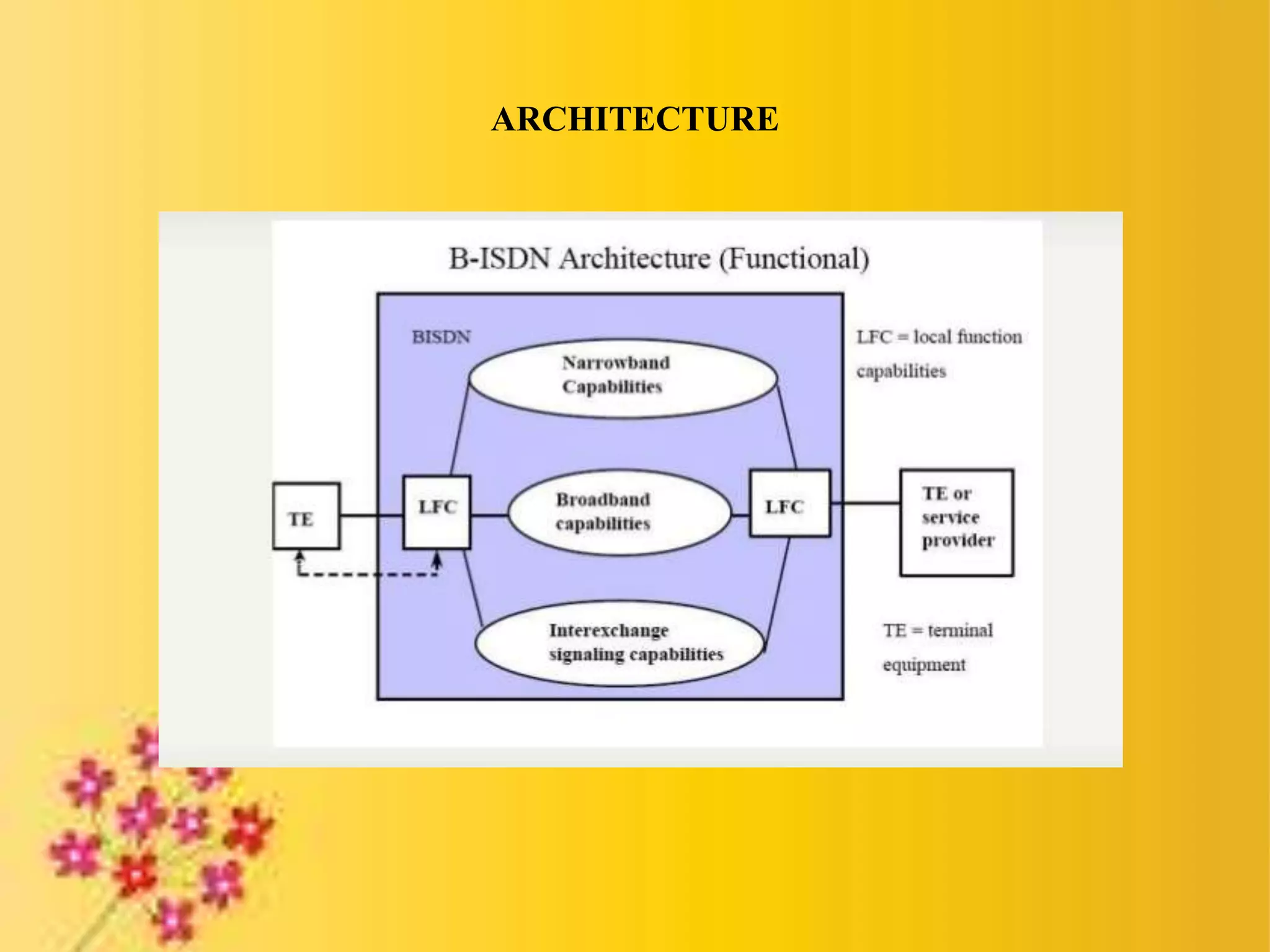
• BISDN is an extension of ISDN in term of capabilities, i.e. it not only has the
narrowband capability of ISDN but also the broadband capability.
• ISDN, which means Integrated Service Digital Network.
• It is a set of CCITT/ITU standards for digital transmission over ordinary telephone
copper wire as well as over other media.
• ISDN is the integration of both analogue or voice data , together with digital data
over the same network.
ARCHITECTURE
B – ISDN SERVICES
• Interactive Services
 Conversational Services
 Messaging Services
 Retrieval Services
• Distributive Services
 No User Control of Presentation
 User Control of Presentation
• ISDN is an underlying technology, which privies cost-effective networking through
the public telephone networks.
• ISDN is an important step forward in the adaptation of the network to handle the
increasing global demand for computer-to computer data communications.
• ISDN brings us closer to the goal of a ubiquitous multi-service network, integrating
voice, data, voice and image.
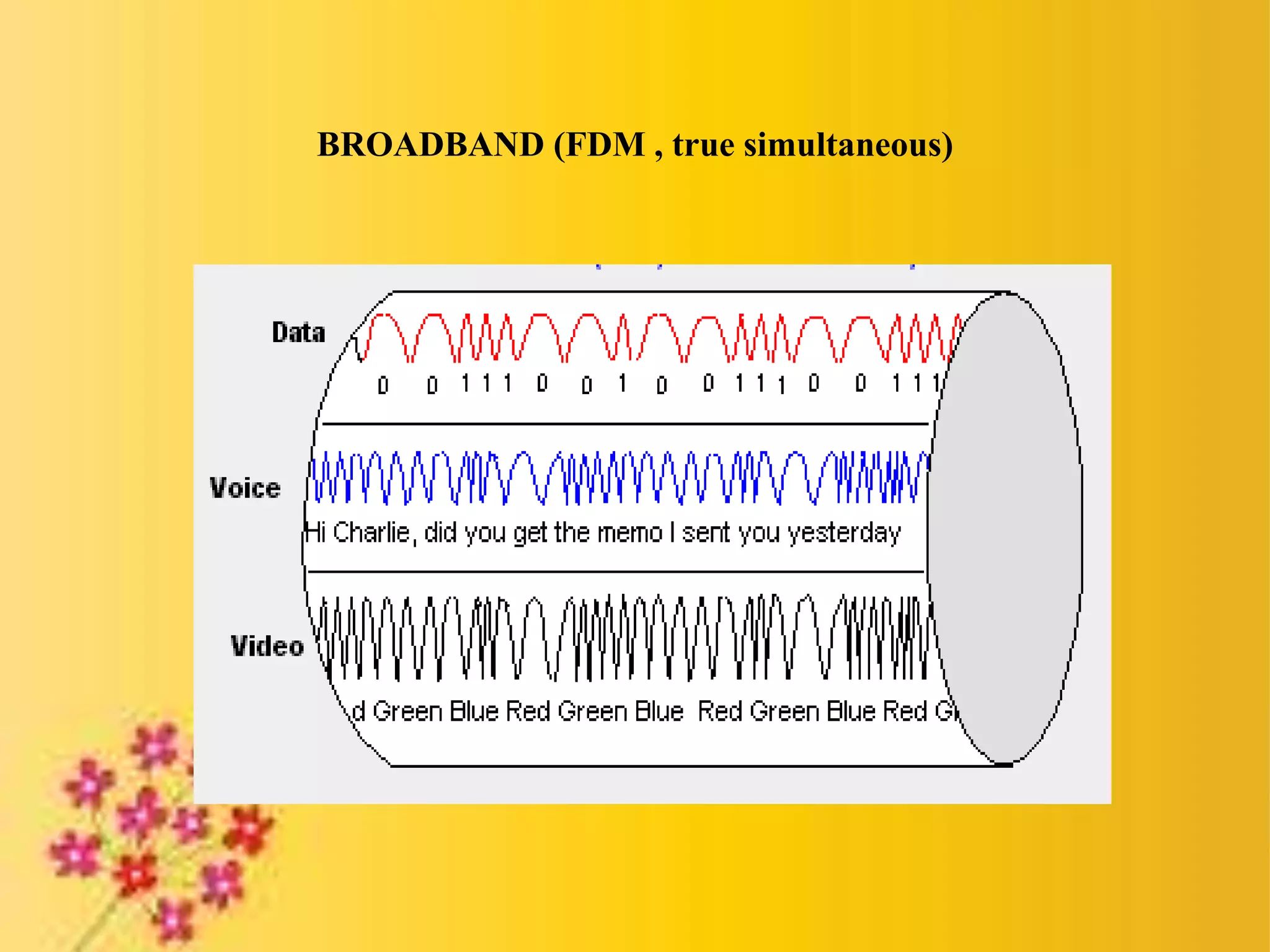
BROADBAND (FDM , true simultaneous)
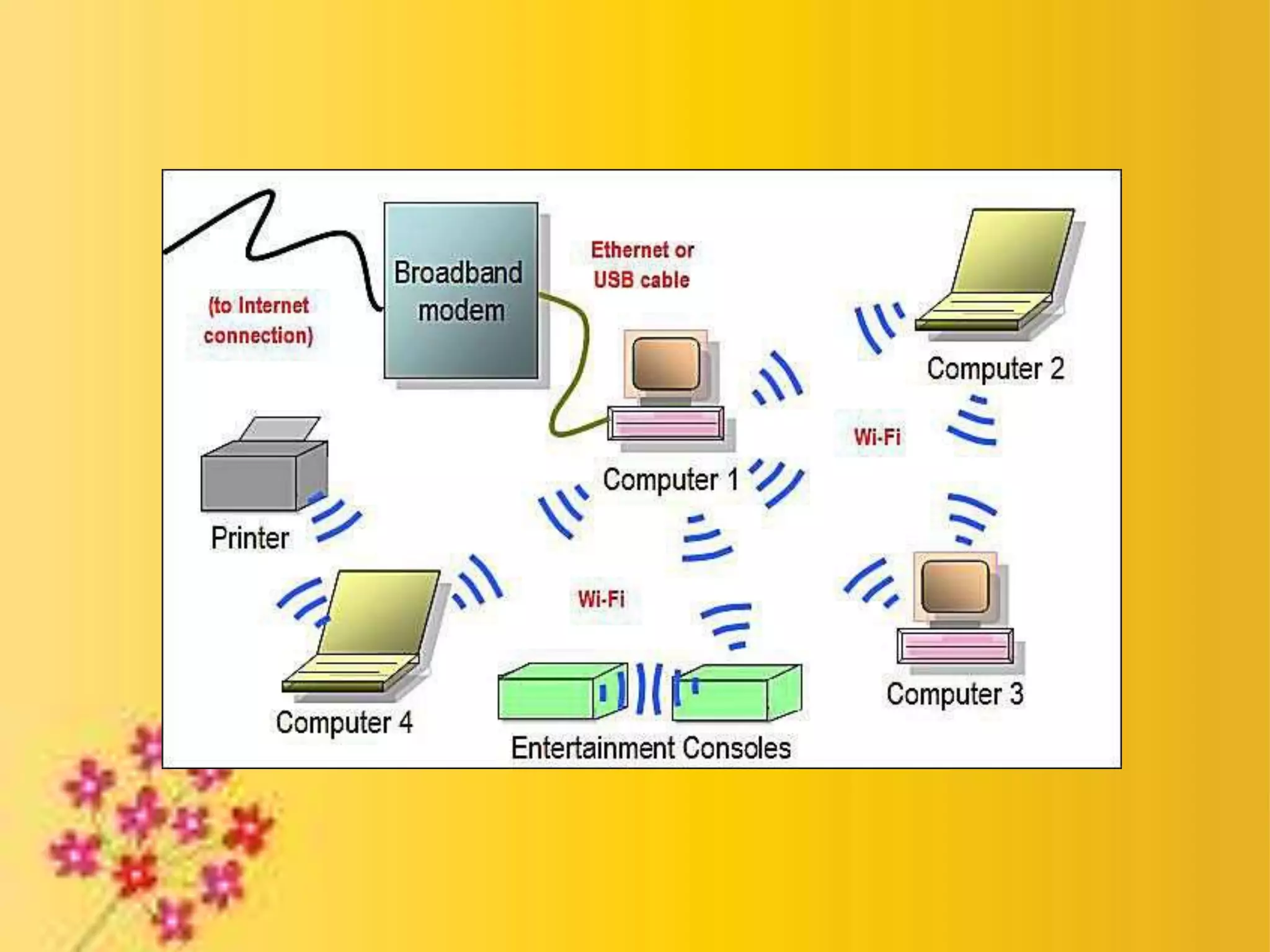
BROADBAND CONNECTION
• much greater bandwidth than modems.
• DSL uses standard phone lines and is provided y phone companies in many areas.
• Cable Modems provide fast network connections through cable television
networks in many areas.
• High-Speed Wireless connections can connect computers to networks sing radio
waves rather than wires.
• Satellite Dishes can deliver fast computer network connections as well as television
programs.
CABLE BROADBAND : ADVANTAGES & DISADVANTAGES.
• ADVANTAGES:
High speed connection.
Always on.
Easy installation.
• DISADVANTAGES:
Not available to all TV networks.
This can cause congestion which slows down /upload speeds.
Requires TV connection.
ASYNCHRONOUS TRANSFR MODE(ATM)
• Asynchronous Transfer Mode, a network technology based on transferring data in
cells or packets of a fixed size.
• Asynchronous transfer mode is the cell relay protocol designed by the ATM Forum
and adopted by the ITU-T.
• The cell used with ATM is relatively small compared to units used with older
technologies.
• ATM was developed to meet the need of the “Broadband Integrated service
digital network” and designed to telecommunication and computer network.
• The small, constant cell size allows ATM equipment to transmit video, audio, and
computer data over the same network.
ASYNCHRONOUS TRANSFER MODE(ATM)
ATM USES TWO TYPES OF CONNECTION
• ATM provides permanent virtual connections and switched virtual connections.
• Permanent virtual connections(PVC)
permanent connections set up manually by network manager.
• Switched virtual connections(SVC)
Setup and released on demand by the end user via signaling procedures.
ATM SOLUTION – ATM NETWORK
• Uses ATM switch in star.
• Communication via switch.
• Network is highly scalable.
• Extremely high data rates – 1.544Mbps to 155Mpbs.
• 2 OFC between host and switch for full duplex line.
• Developed as part of broadband ISDN.
• Used in private non – ISDN networks.
• Also called Cell Relay.
• Higher and Lower speeds are possible.
ATM PROTOCOL STACK
Broadband  isdn and atm

Broadband isdn and atm

  • 1.
    BROADBAND ISDN AND ATM PresentedBy M.LAVANYA M Sc (CS&IT)
  • 2.
    INTRODUCTION • BISDN isan extension of ISDN in term of capabilities, i.e. it not only has the narrowband capability of ISDN but also the broadband capability. • ISDN, which means Integrated Service Digital Network. • It is a set of CCITT/ITU standards for digital transmission over ordinary telephone copper wire as well as over other media. • ISDN is the integration of both analogue or voice data , together with digital data over the same network.
  • 3.
  • 4.
    B – ISDNSERVICES • Interactive Services  Conversational Services  Messaging Services  Retrieval Services • Distributive Services  No User Control of Presentation  User Control of Presentation
  • 5.
    • ISDN isan underlying technology, which privies cost-effective networking through the public telephone networks. • ISDN is an important step forward in the adaptation of the network to handle the increasing global demand for computer-to computer data communications. • ISDN brings us closer to the goal of a ubiquitous multi-service network, integrating voice, data, voice and image.
  • 6.
    BROADBAND (FDM ,true simultaneous)
  • 7.
    BROADBAND CONNECTION • muchgreater bandwidth than modems. • DSL uses standard phone lines and is provided y phone companies in many areas. • Cable Modems provide fast network connections through cable television networks in many areas. • High-Speed Wireless connections can connect computers to networks sing radio waves rather than wires. • Satellite Dishes can deliver fast computer network connections as well as television programs.
  • 9.
    CABLE BROADBAND :ADVANTAGES & DISADVANTAGES. • ADVANTAGES: High speed connection. Always on. Easy installation. • DISADVANTAGES: Not available to all TV networks. This can cause congestion which slows down /upload speeds. Requires TV connection.
  • 10.
    ASYNCHRONOUS TRANSFR MODE(ATM) •Asynchronous Transfer Mode, a network technology based on transferring data in cells or packets of a fixed size. • Asynchronous transfer mode is the cell relay protocol designed by the ATM Forum and adopted by the ITU-T. • The cell used with ATM is relatively small compared to units used with older technologies. • ATM was developed to meet the need of the “Broadband Integrated service digital network” and designed to telecommunication and computer network. • The small, constant cell size allows ATM equipment to transmit video, audio, and computer data over the same network.
  • 11.
  • 12.
    ATM USES TWOTYPES OF CONNECTION • ATM provides permanent virtual connections and switched virtual connections. • Permanent virtual connections(PVC) permanent connections set up manually by network manager. • Switched virtual connections(SVC) Setup and released on demand by the end user via signaling procedures.
  • 13.
    ATM SOLUTION –ATM NETWORK • Uses ATM switch in star. • Communication via switch. • Network is highly scalable. • Extremely high data rates – 1.544Mbps to 155Mpbs. • 2 OFC between host and switch for full duplex line. • Developed as part of broadband ISDN. • Used in private non – ISDN networks. • Also called Cell Relay. • Higher and Lower speeds are possible.
  • 14.