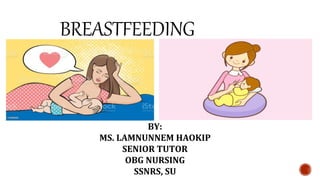
BREASTFEEDING
BY:
MS. LAMNUNNEM HAOKIP
SENIOR TUTOR
OBG NURSING
SSNRS, SU
 Breast feeding is a optimal source of nutrition.
 Human milk is specie specific and it provides all the
essential nutrients necessary for growth and development
of new born infant.
 WHO recommended exclusive breastfeeding for first
6months of life,and Continuous breastfeeding for
12months.
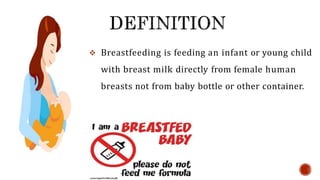
 Breastfeeding is feeding an infant or young child
with breast milk directly from female human
breasts not from baby bottle or other container.
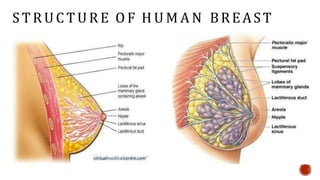
STRUCTURE OF HUMAN BREAST
 Human breast is one kind of gland which is responsible for
lactation.
 Made up of adipose tissues and fibrous connective tissue.
 Different hormones are responsible for development of breast &
changes during pregnancy.
 Hormones responsible for development and enlargement are
estrogen, progesterone & prolactin.
 Each breast contains 20 lobes and each lobes contains several
lobules which at the end have alveoli in which milk is produced .
S T R U CT U R E O F H U M A N BREAST
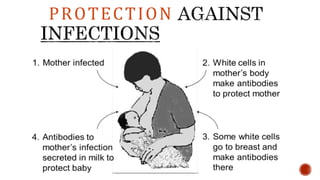
PROTECTION
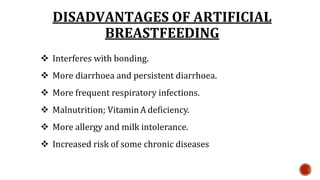
DISADVANTAGES OF ARTIFICIAL
BREASTFEEDING
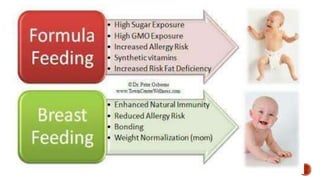
 Interferes with bonding.
 More diarrhoea and persistent diarrhoea.
 More frequent respiratory infections.
 Malnutrition; Vitamin A deficiency.
 More allergy and milk intolerance.
 Increased risk of some chronic diseases
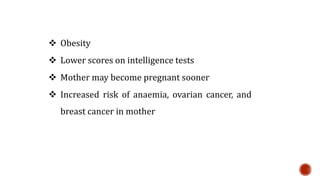
 Obesity
 Lower scores on intelligence tests
 Mother may become pregnant sooner
 Increased risk of anaemia, ovarian cancer, and
breast cancer in mother
OTHER OPTIONS IF BREASTFEEDING IS NOT
POSSIBLE
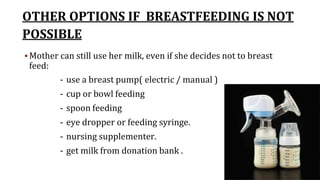
 Mother can still use her milk, even if she decides not to breast
feed:
- use a breast pump( electric / manual )
- cup or bowl feeding
- spoon feeding
- eye dropper or feeding syringe.
- nursing supplementer.
- get milk from donation bank .
BABY FRIENDLY HOSPITAL INITIATIVE
 The first few days of a newborn’s life are not only critical for the child, but
also an important window for providing mothers with the support they
need to breastfeed successfully. UNICEF and WHO launched the Baby-
Friendly Hospital Initiative to encourage health facilities worldwide to
better support breastfeeding
 The initiative developed the following Ten Steps to Successful
Breastfeeding to promote optimal clinical care for new mothers and their
infants. There is substantial evidence that implementing the Ten Steps
significantly improves breastfeeding rates
TEN STEPS TO SUCCESSFUL BREASTFEEDING
Critical management procedures
1. a) Comply fully with the International Code of Marketing of Breast-milk
Substitutes and relevant World Health Assembly resolutions. b) Have a
written infant feeding policy that is routinely communicated to staff and
parents. c) Establish ongoing monitoring and data-management
systems.
2. Ensure that staff have sufficient knowledge, competence and skills to
support breastfeeding.
Key clinical practices
3. Discuss the importance and management of breastfeeding with pregnant
women and their families.
4. Facilitate immediate and uninterrupted skin-to-skin contact and support
mothers to initiate breastfeeding as soon as possible after birth.
5. Support mothers to initiate and maintain breastfeeding and manage
common difficulties.
6. Do not provide breastfed newborns any food or fluids other than breast
milk, unless medically indicated
7. Enable mothers and their infants to remain together and to practise
rooming-in 24 hours a day.
8. Support mothers to recognize and respond to their infants’ cues for
feeding.
9. Counsel mothers on the use and risks of feeding bottles, teats and
pacifiers.
10.Coordinate discharge so that parents and their infants have timely
access to ongoing support and care.
BREASTFEEDING.pptx

BREASTFEEDING.pptx

  • 1.
  • 2.
     Breast feedingis a optimal source of nutrition.  Human milk is specie specific and it provides all the essential nutrients necessary for growth and development of new born infant.  WHO recommended exclusive breastfeeding for first 6months of life,and Continuous breastfeeding for 12months.
  • 3.
     Breastfeeding isfeeding an infant or young child with breast milk directly from female human breasts not from baby bottle or other container.
  • 4.
    STRUCTURE OF HUMANBREAST  Human breast is one kind of gland which is responsible for lactation.  Made up of adipose tissues and fibrous connective tissue.  Different hormones are responsible for development of breast & changes during pregnancy.  Hormones responsible for development and enlargement are estrogen, progesterone & prolactin.  Each breast contains 20 lobes and each lobes contains several lobules which at the end have alveoli in which milk is produced .
  • 5.
    S T RU CT U R E O F H U M A N BREAST
  • 16.
  • 17.
    DISADVANTAGES OF ARTIFICIAL BREASTFEEDING Interferes with bonding.  More diarrhoea and persistent diarrhoea.  More frequent respiratory infections.  Malnutrition; Vitamin A deficiency.  More allergy and milk intolerance.  Increased risk of some chronic diseases
  • 18.
     Obesity  Lowerscores on intelligence tests  Mother may become pregnant sooner  Increased risk of anaemia, ovarian cancer, and breast cancer in mother
  • 19.
    OTHER OPTIONS IFBREASTFEEDING IS NOT POSSIBLE  Mother can still use her milk, even if she decides not to breast feed: - use a breast pump( electric / manual ) - cup or bowl feeding - spoon feeding - eye dropper or feeding syringe. - nursing supplementer. - get milk from donation bank .
  • 20.
    BABY FRIENDLY HOSPITALINITIATIVE  The first few days of a newborn’s life are not only critical for the child, but also an important window for providing mothers with the support they need to breastfeed successfully. UNICEF and WHO launched the Baby- Friendly Hospital Initiative to encourage health facilities worldwide to better support breastfeeding  The initiative developed the following Ten Steps to Successful Breastfeeding to promote optimal clinical care for new mothers and their infants. There is substantial evidence that implementing the Ten Steps significantly improves breastfeeding rates
  • 21.
    TEN STEPS TOSUCCESSFUL BREASTFEEDING Critical management procedures 1. a) Comply fully with the International Code of Marketing of Breast-milk Substitutes and relevant World Health Assembly resolutions. b) Have a written infant feeding policy that is routinely communicated to staff and parents. c) Establish ongoing monitoring and data-management systems. 2. Ensure that staff have sufficient knowledge, competence and skills to support breastfeeding.
  • 22.
    Key clinical practices 3.Discuss the importance and management of breastfeeding with pregnant women and their families. 4. Facilitate immediate and uninterrupted skin-to-skin contact and support mothers to initiate breastfeeding as soon as possible after birth. 5. Support mothers to initiate and maintain breastfeeding and manage common difficulties. 6. Do not provide breastfed newborns any food or fluids other than breast milk, unless medically indicated
  • 23.
    7. Enable mothersand their infants to remain together and to practise rooming-in 24 hours a day. 8. Support mothers to recognize and respond to their infants’ cues for feeding. 9. Counsel mothers on the use and risks of feeding bottles, teats and pacifiers. 10.Coordinate discharge so that parents and their infants have timely access to ongoing support and care.