
Abruptio Placentae (Placental Abruption)
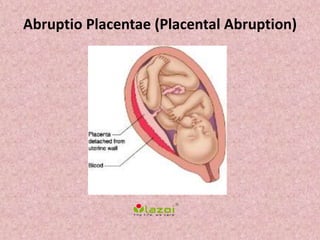
The placenta connects the growing baby to the mother’s uterus. It
acts as a "lifeline" that gives food and oxygen to the baby through
the umbilical cord. Placental abruption happens when the
placenta separates from the uterus before the baby is born. In
most cases, the placenta stays attached to the uterus. In the case
of placental abruption, this lifeline is placed at risk.
Placental abruption (abruptio placentae) can be life-threatening
to the baby and sometimes to the mother. It can lead
to premature birth, low birth weight, blood loss in the mother,
and in rare cases, it can cause the baby’s death.
Approximately 1 in 100 pregnancies has placental abruption. This
condition is usually seen in the third trimester, but it can also
happen after 20 weeks of pregnancy.
What are the causes of placental abruption
(abruptio placentae)?
Trauma to the uterus (such as a car accident) can separate
the placenta from the uterus. Other reasons that can cause
placental abruption (abruptio placentae) include:
• A prior pregnancy with placental abruption
• A multiple pregnancy
• High blood pressure
• Pre-eclampsia
• Cigarette smoking
• Cocaine use
• Pregnancy in older mother
Symptoms
Each woman can have different symptoms of placental
abruption (abruptio placentae). However, the most
common symptom is vaginal bleeding with pain during
the third trimester of pregnancy. Sometimes the blood
will be behind the placenta. In that case, there will be no
bleeding. Symptoms also can include:
• Abdominal pain
• Uterine contractions
• Tender uterus
• Backache
Remember, these symptoms also can be similar to those
of other conditions. Talk to your gynaecologist about any
symptoms that you may be having.
Tests and diagnosis of placental abruption
(abruptio placentae)
If your gynaecologist suspects placental abruption, he or she
will do a physical exam to check for uterine tenderness or
rigidity. To help identify possible sources of vaginal bleeding,
you might need blood tests or an ultrasound.
During an ultrasound, high-frequency sound waves are used
to create an image of your uterus on a monitor. It's not
always possible to see a placental abruption on an
ultrasound, however.
Treatments
Treatment options for placental abruption (abruptio placentae)
It’s not possible to reattach a placenta that's separated from the
wall of the uterus. Treatment options for placental
abruption depend on the circumstances:
• The baby isn’t close to full term: If the abruption seems mild, your
baby's heart rate is normal and it's too soon for the baby to be
born - generally before 34 weeks of pregnancy - you might be
hospitalised for close monitoring. If the bleeding stops and your
baby's condition is stable, you might be able to rest at home. In
some cases, you might be given medication to help your baby's
lungs mature, in case early delivery becomes necessary.
Treatments
• The baby is close to full term: If your baby is almost full term
- generally after 34 weeks of pregnancy - and the placental
abruption seems minimal, a closely monitored vaginal
delivery might be possible. If the abruption progresses or
jeopardizes your health or your baby's health, you'll need an
immediate delivery – usually by caesarean section. If you
experience severe bleeding, you might need a blood
transfusion.
Continue:
Prevention of placental abruption
(abruptio placentae)
You can't directly prevent placental abruption, but you can
decrease certain risk factors that make placental abruption
more likely. For example, don't smoke or use illegal drugs,
such as cocaine. If you have high blood pressure, talk to your
gynaecologist to control the condition.
If you've had any kind of abdominal trauma from an auto
accident, fall or other injury - seek immediate medical help
because of the increased risk of placental abruption and
other complications.
CONNECT WITH US
Logon to
www.lazoi.com
Like us on Facebook
https://www.facebook.com/LazoiTheLife
Follow us on Twitter
https://www.twitter.com/lazoithelife
Follow us on Pinterest
https://www.in.pinterest.com/lazoithelife

Abruptio placentae

  • 1.
  • 2.
    Abruptio Placentae (PlacentalAbruption) The placenta connects the growing baby to the mother’s uterus. It acts as a "lifeline" that gives food and oxygen to the baby through the umbilical cord. Placental abruption happens when the placenta separates from the uterus before the baby is born. In most cases, the placenta stays attached to the uterus. In the case of placental abruption, this lifeline is placed at risk. Placental abruption (abruptio placentae) can be life-threatening to the baby and sometimes to the mother. It can lead to premature birth, low birth weight, blood loss in the mother, and in rare cases, it can cause the baby’s death. Approximately 1 in 100 pregnancies has placental abruption. This condition is usually seen in the third trimester, but it can also happen after 20 weeks of pregnancy.
  • 3.
    What are thecauses of placental abruption (abruptio placentae)? Trauma to the uterus (such as a car accident) can separate the placenta from the uterus. Other reasons that can cause placental abruption (abruptio placentae) include: • A prior pregnancy with placental abruption • A multiple pregnancy • High blood pressure • Pre-eclampsia • Cigarette smoking • Cocaine use • Pregnancy in older mother
  • 4.
    Symptoms Each woman canhave different symptoms of placental abruption (abruptio placentae). However, the most common symptom is vaginal bleeding with pain during the third trimester of pregnancy. Sometimes the blood will be behind the placenta. In that case, there will be no bleeding. Symptoms also can include: • Abdominal pain • Uterine contractions • Tender uterus • Backache Remember, these symptoms also can be similar to those of other conditions. Talk to your gynaecologist about any symptoms that you may be having.
  • 5.
    Tests and diagnosisof placental abruption (abruptio placentae) If your gynaecologist suspects placental abruption, he or she will do a physical exam to check for uterine tenderness or rigidity. To help identify possible sources of vaginal bleeding, you might need blood tests or an ultrasound. During an ultrasound, high-frequency sound waves are used to create an image of your uterus on a monitor. It's not always possible to see a placental abruption on an ultrasound, however.
  • 6.
    Treatments Treatment options forplacental abruption (abruptio placentae) It’s not possible to reattach a placenta that's separated from the wall of the uterus. Treatment options for placental abruption depend on the circumstances: • The baby isn’t close to full term: If the abruption seems mild, your baby's heart rate is normal and it's too soon for the baby to be born - generally before 34 weeks of pregnancy - you might be hospitalised for close monitoring. If the bleeding stops and your baby's condition is stable, you might be able to rest at home. In some cases, you might be given medication to help your baby's lungs mature, in case early delivery becomes necessary.
  • 7.
    Treatments • The babyis close to full term: If your baby is almost full term - generally after 34 weeks of pregnancy - and the placental abruption seems minimal, a closely monitored vaginal delivery might be possible. If the abruption progresses or jeopardizes your health or your baby's health, you'll need an immediate delivery – usually by caesarean section. If you experience severe bleeding, you might need a blood transfusion. Continue:
  • 8.
    Prevention of placentalabruption (abruptio placentae) You can't directly prevent placental abruption, but you can decrease certain risk factors that make placental abruption more likely. For example, don't smoke or use illegal drugs, such as cocaine. If you have high blood pressure, talk to your gynaecologist to control the condition. If you've had any kind of abdominal trauma from an auto accident, fall or other injury - seek immediate medical help because of the increased risk of placental abruption and other complications.
  • 9.
    CONNECT WITH US Logonto www.lazoi.com Like us on Facebook https://www.facebook.com/LazoiTheLife Follow us on Twitter https://www.twitter.com/lazoithelife Follow us on Pinterest https://www.in.pinterest.com/lazoithelife