Download as PDF, PPTX

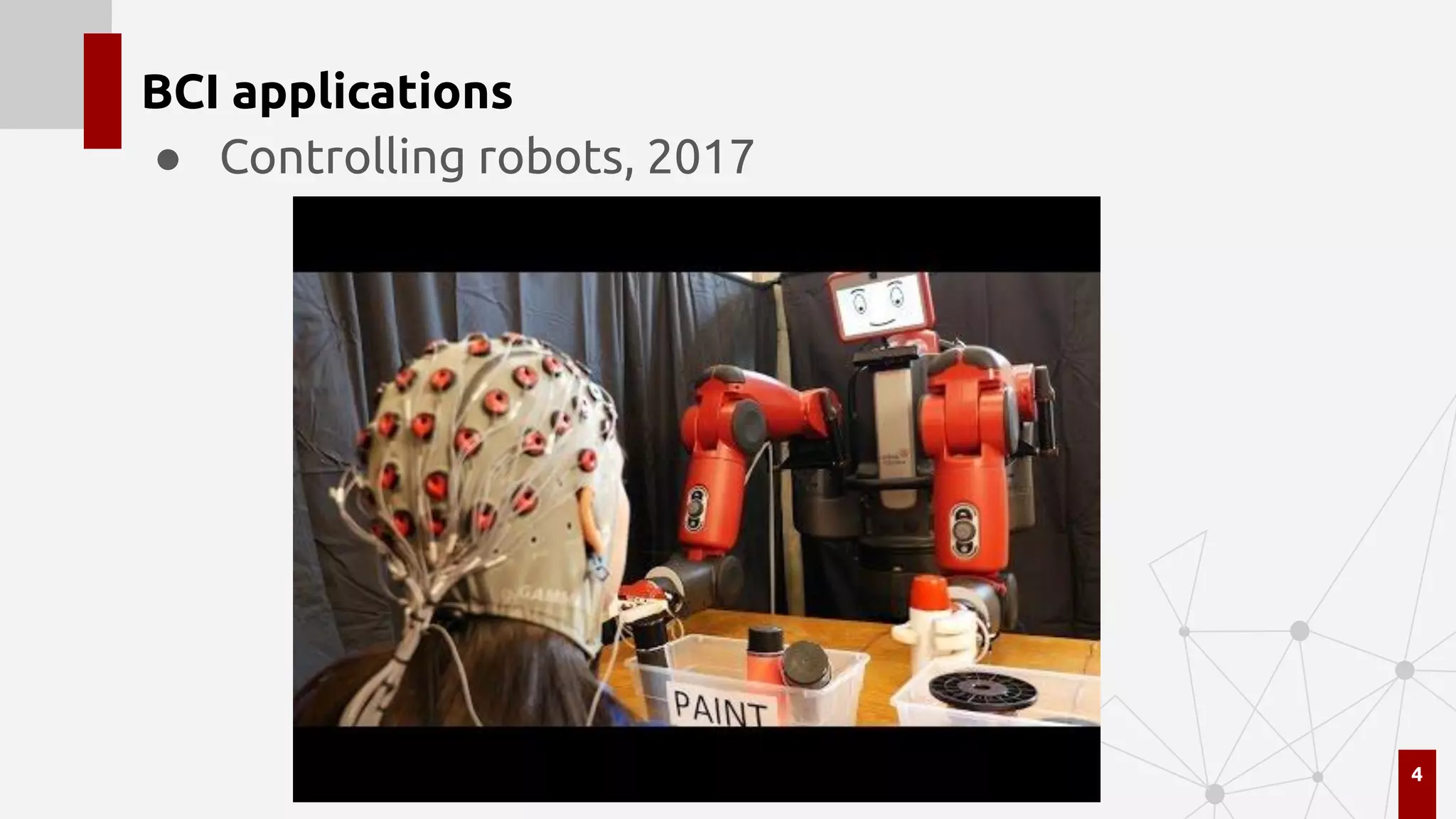
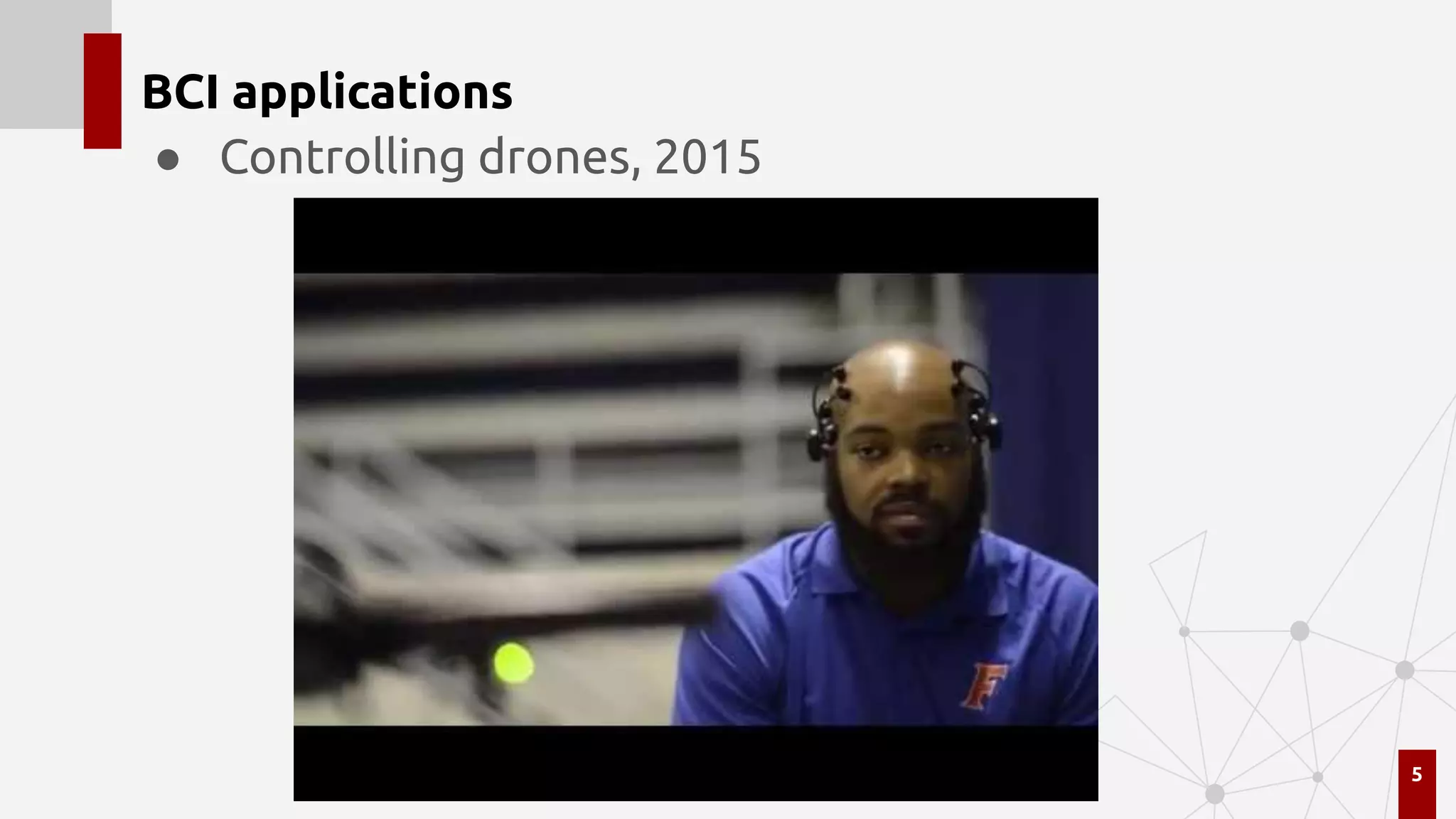
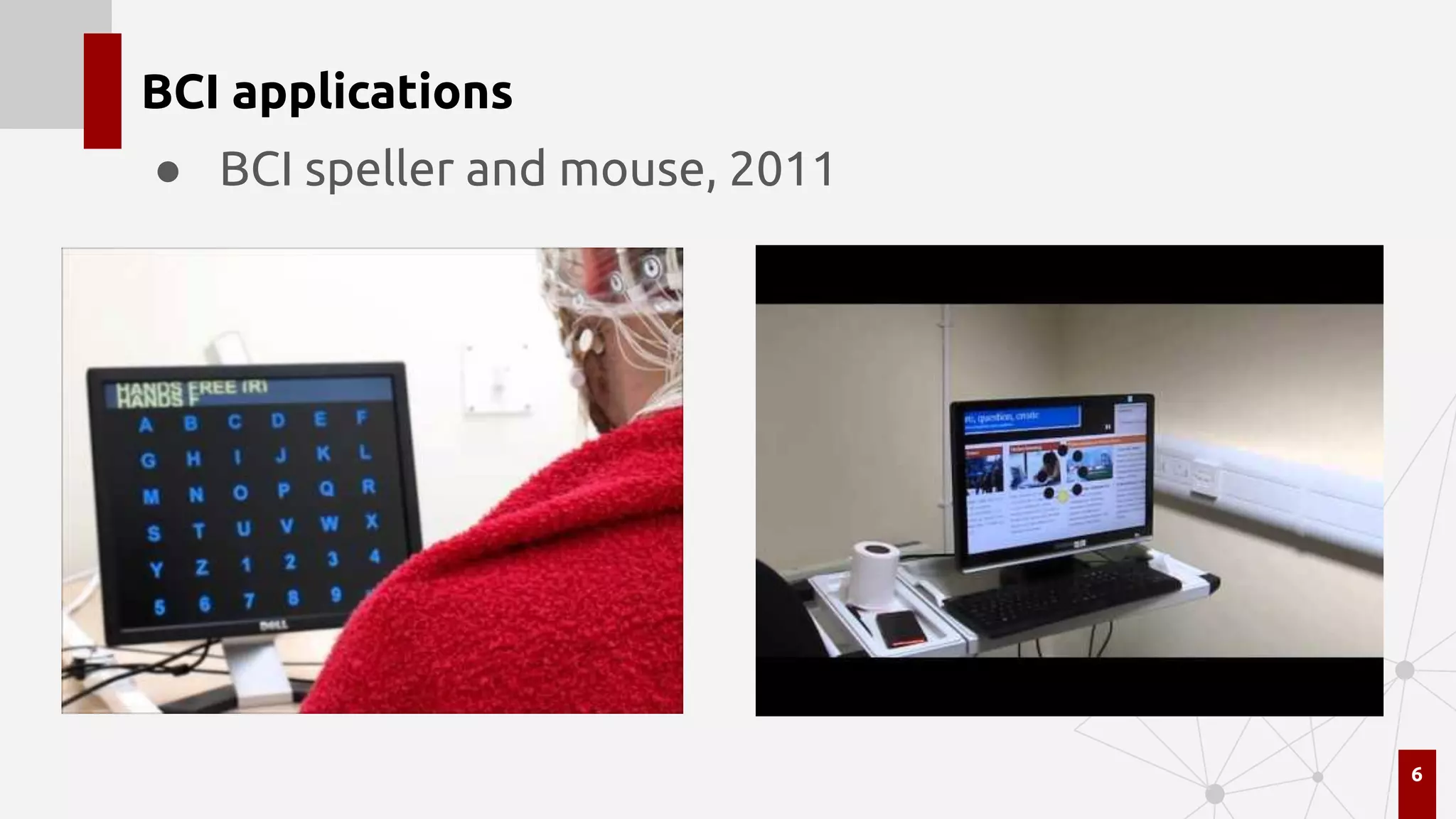
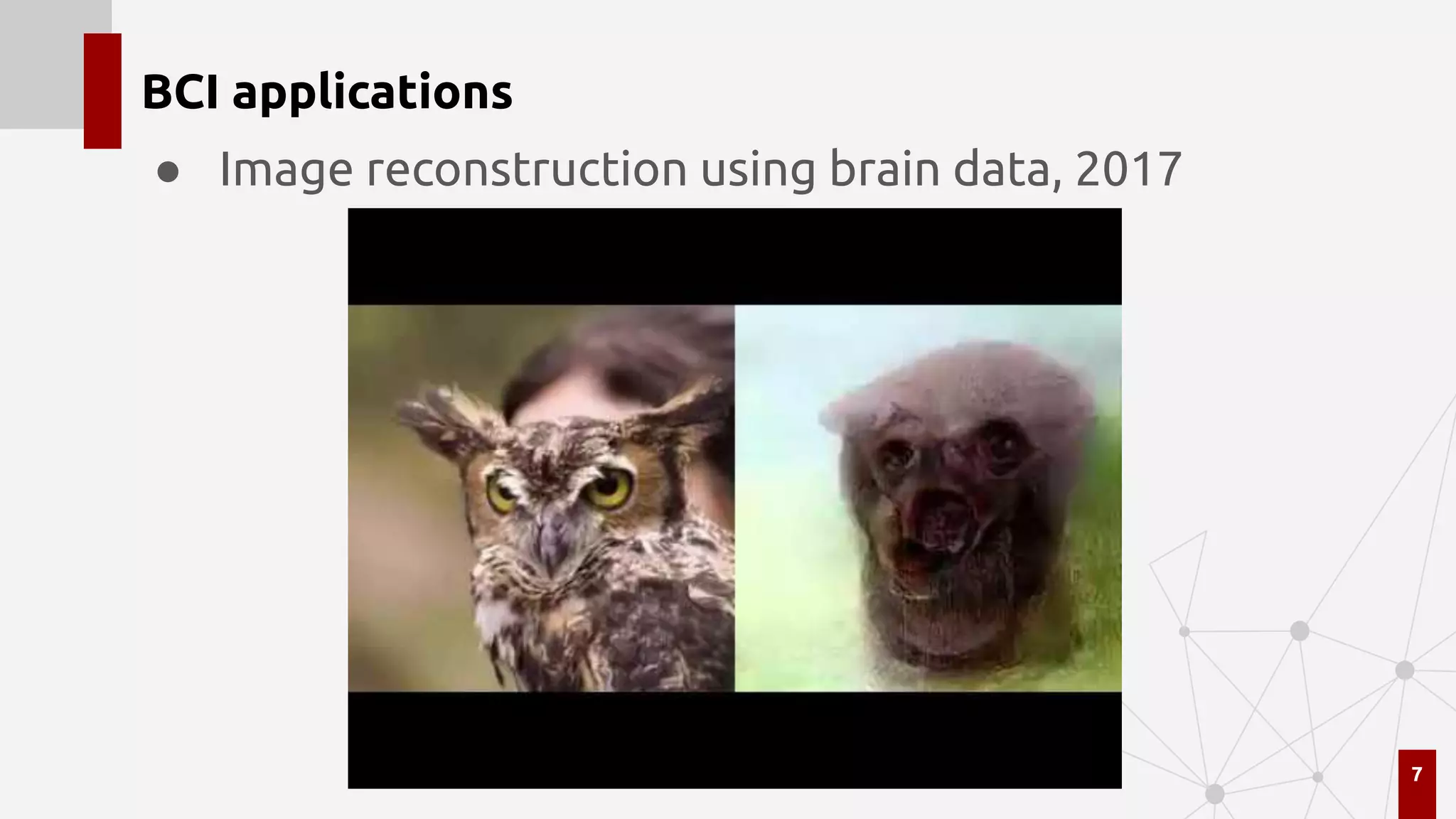
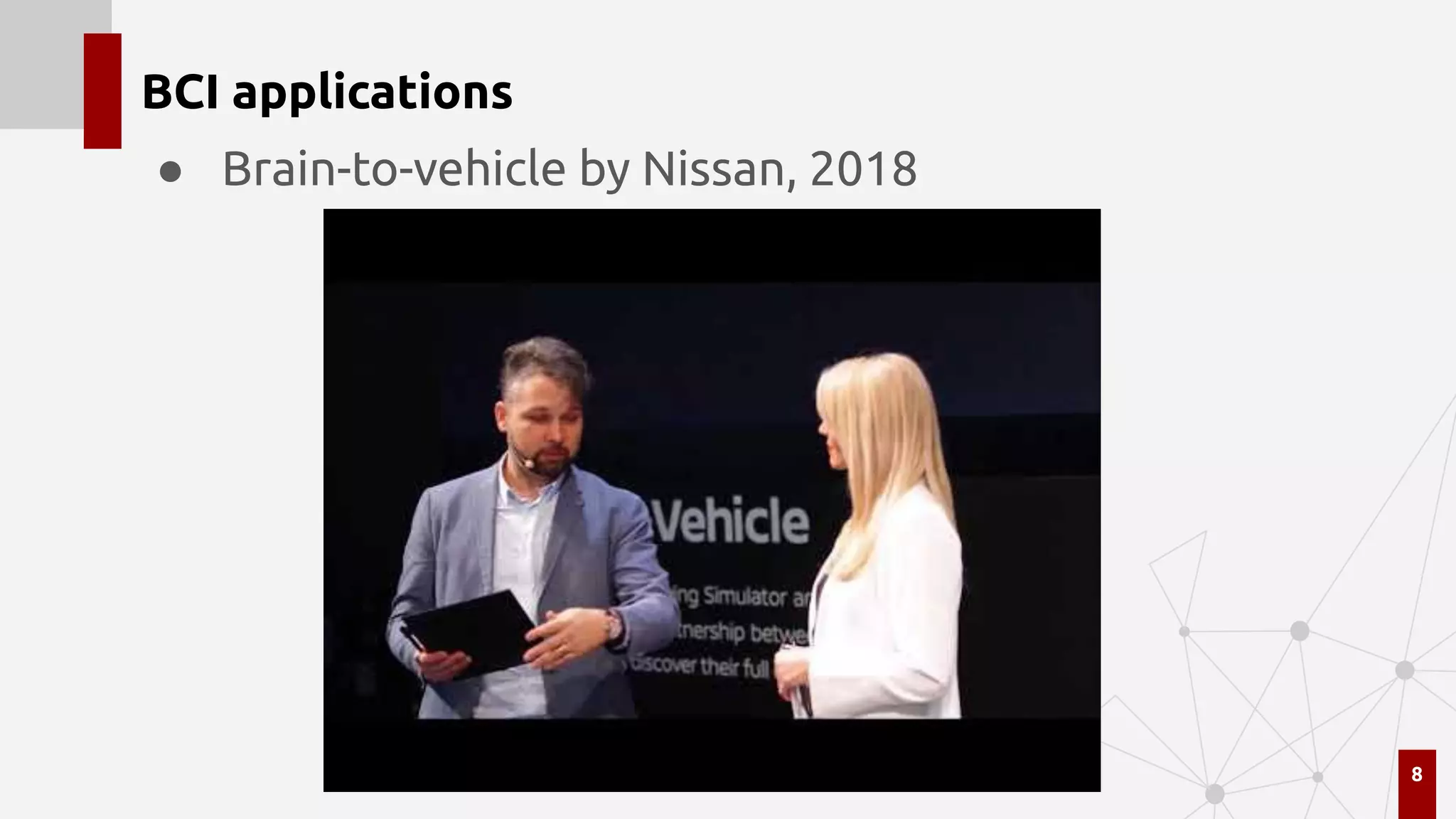
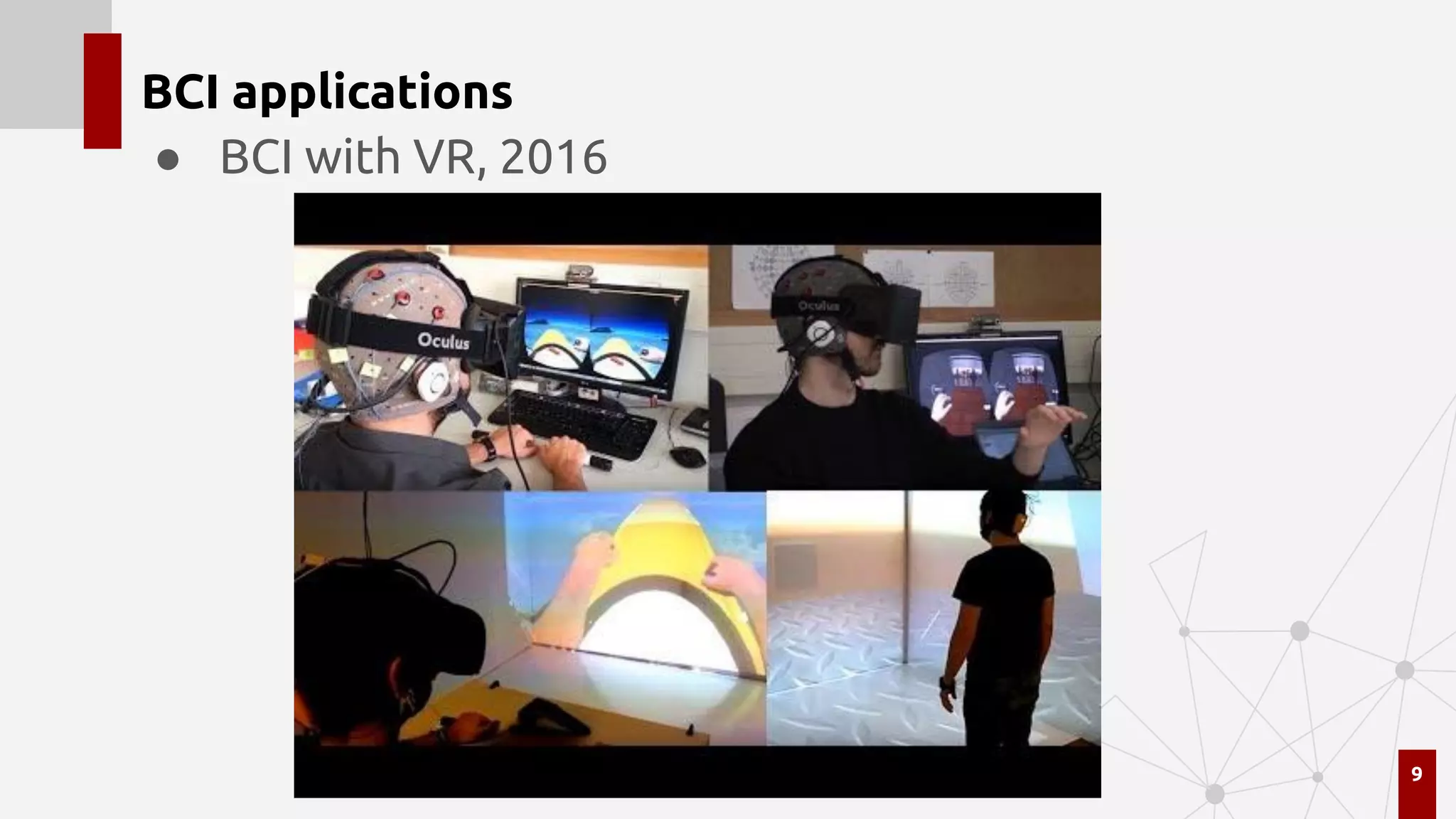
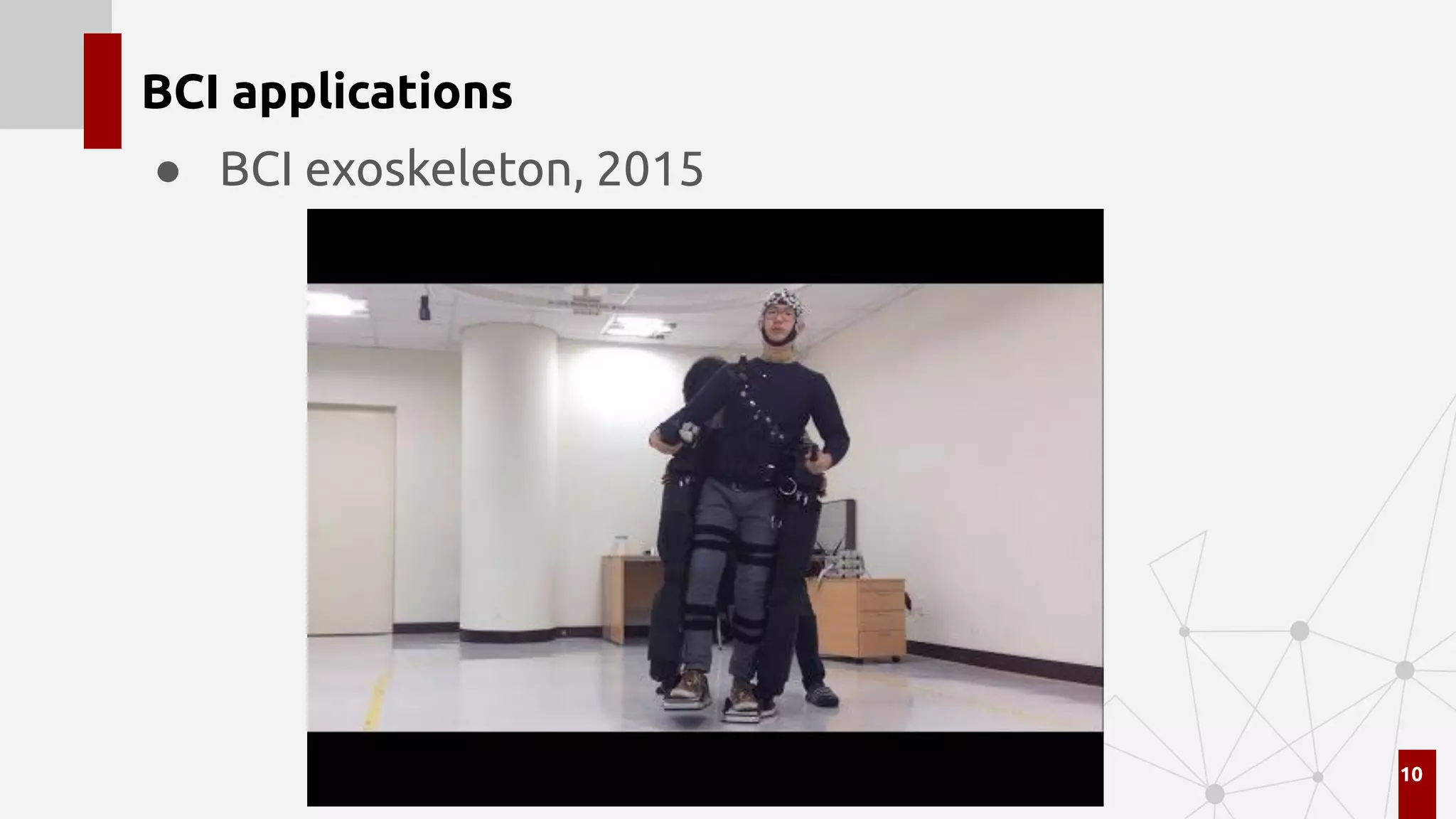

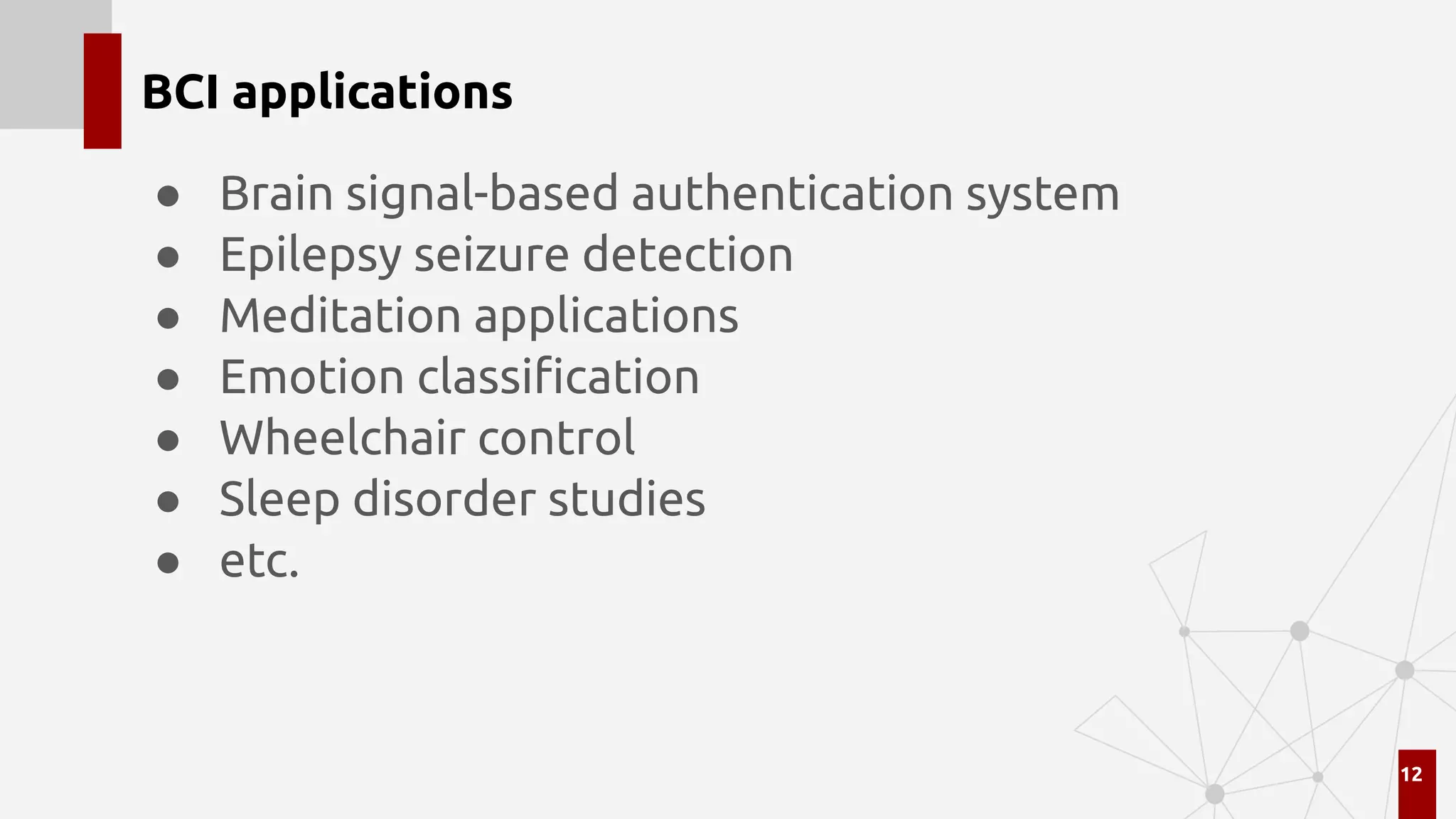
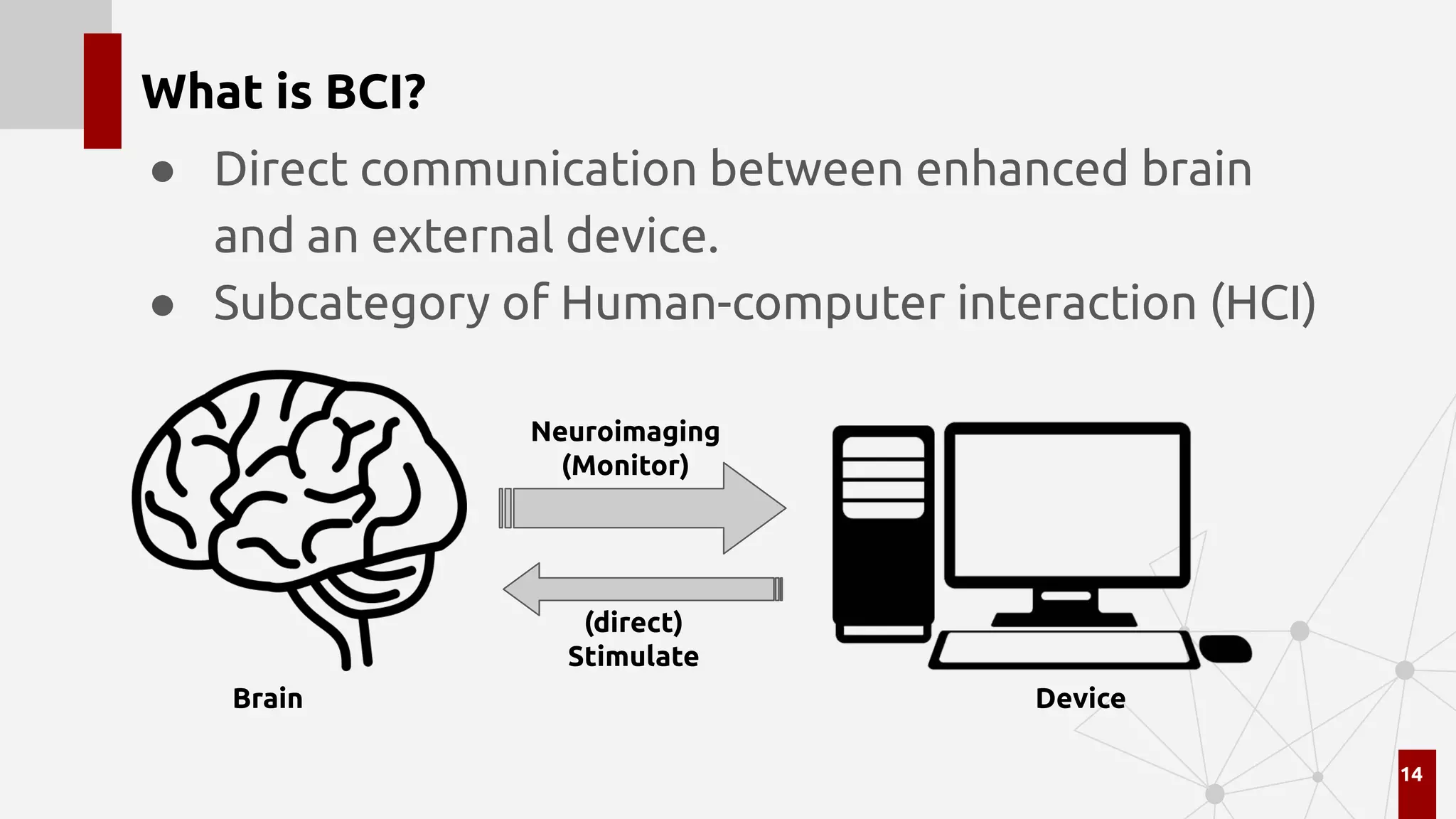
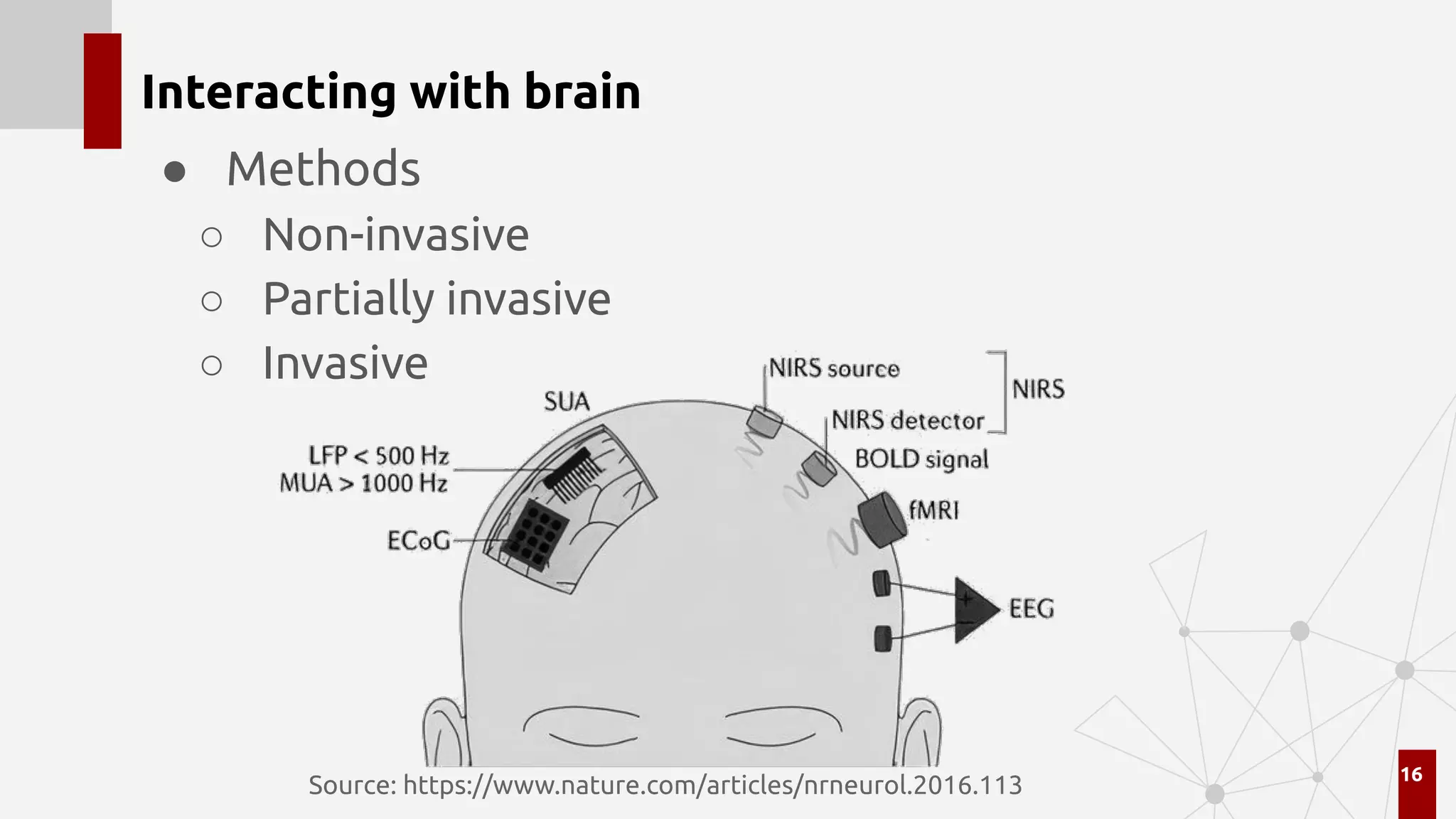
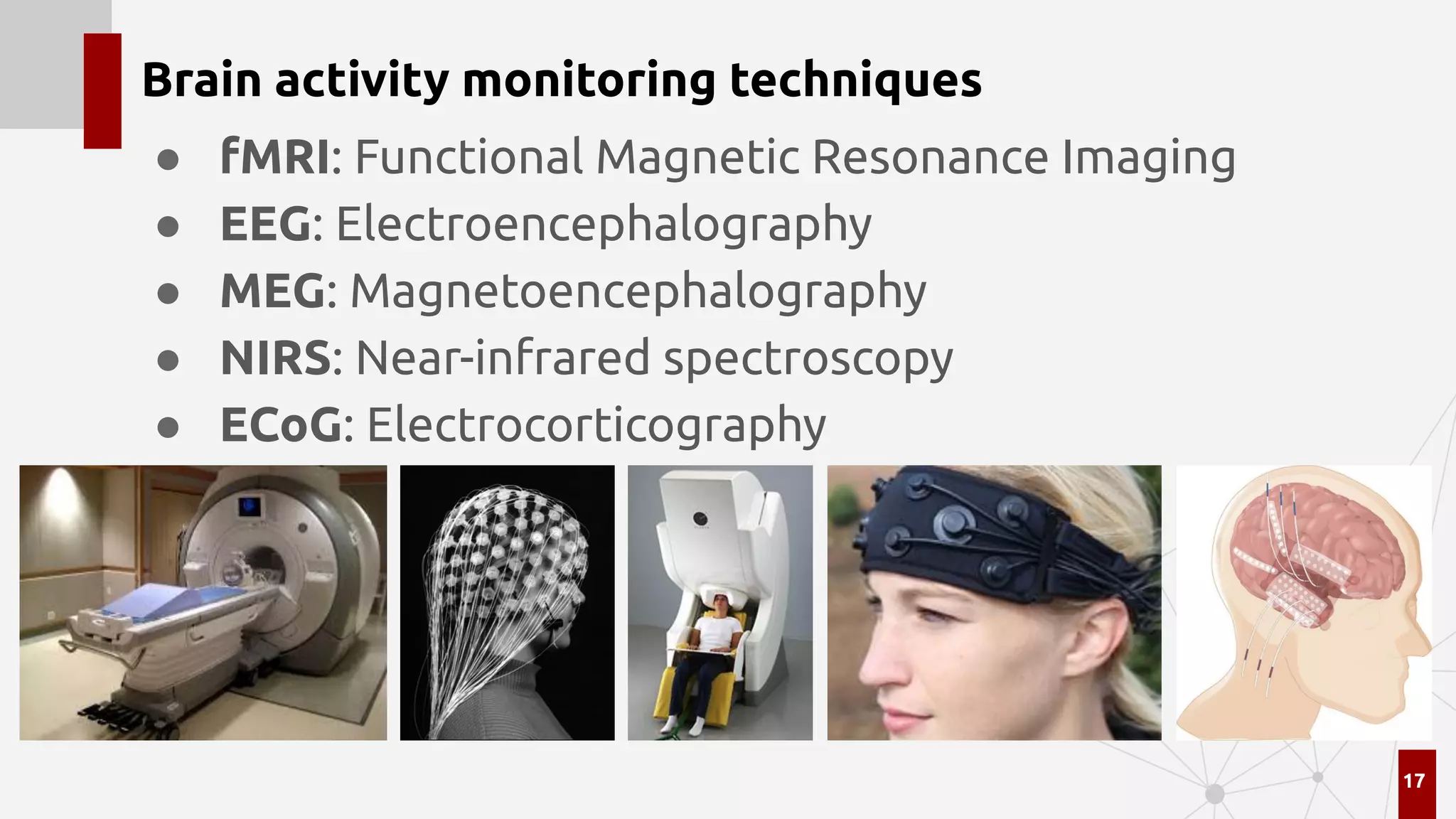
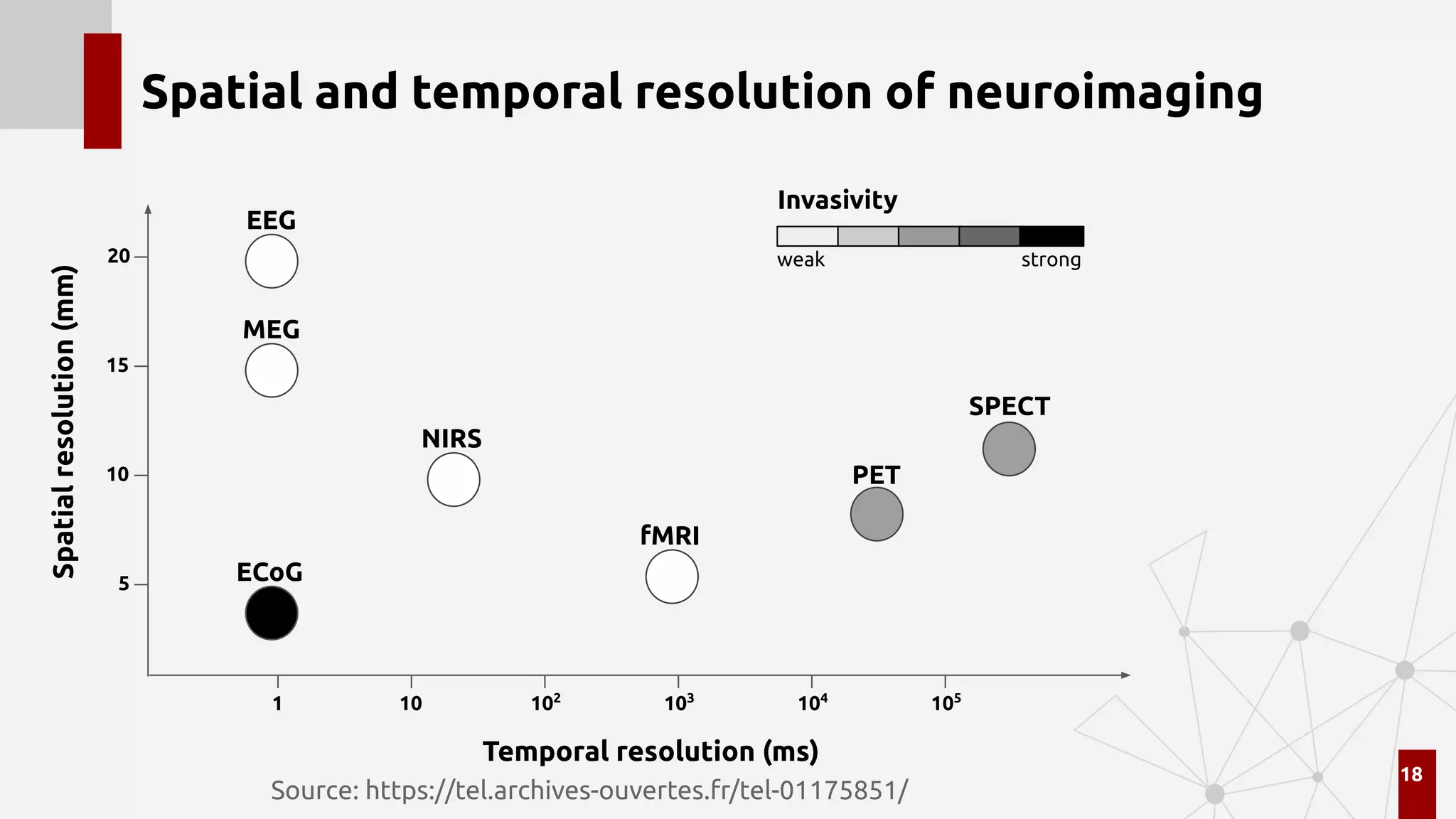
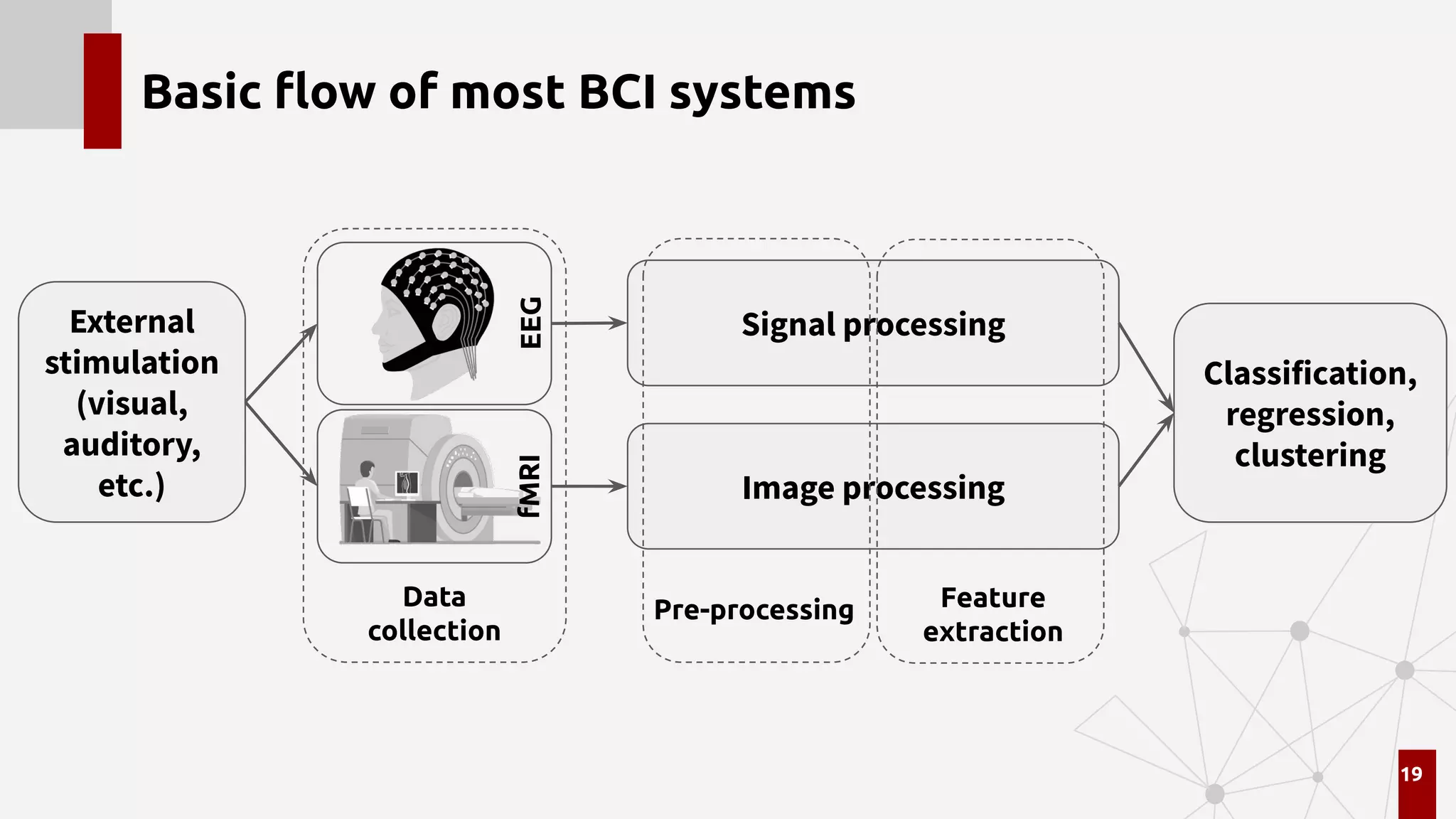
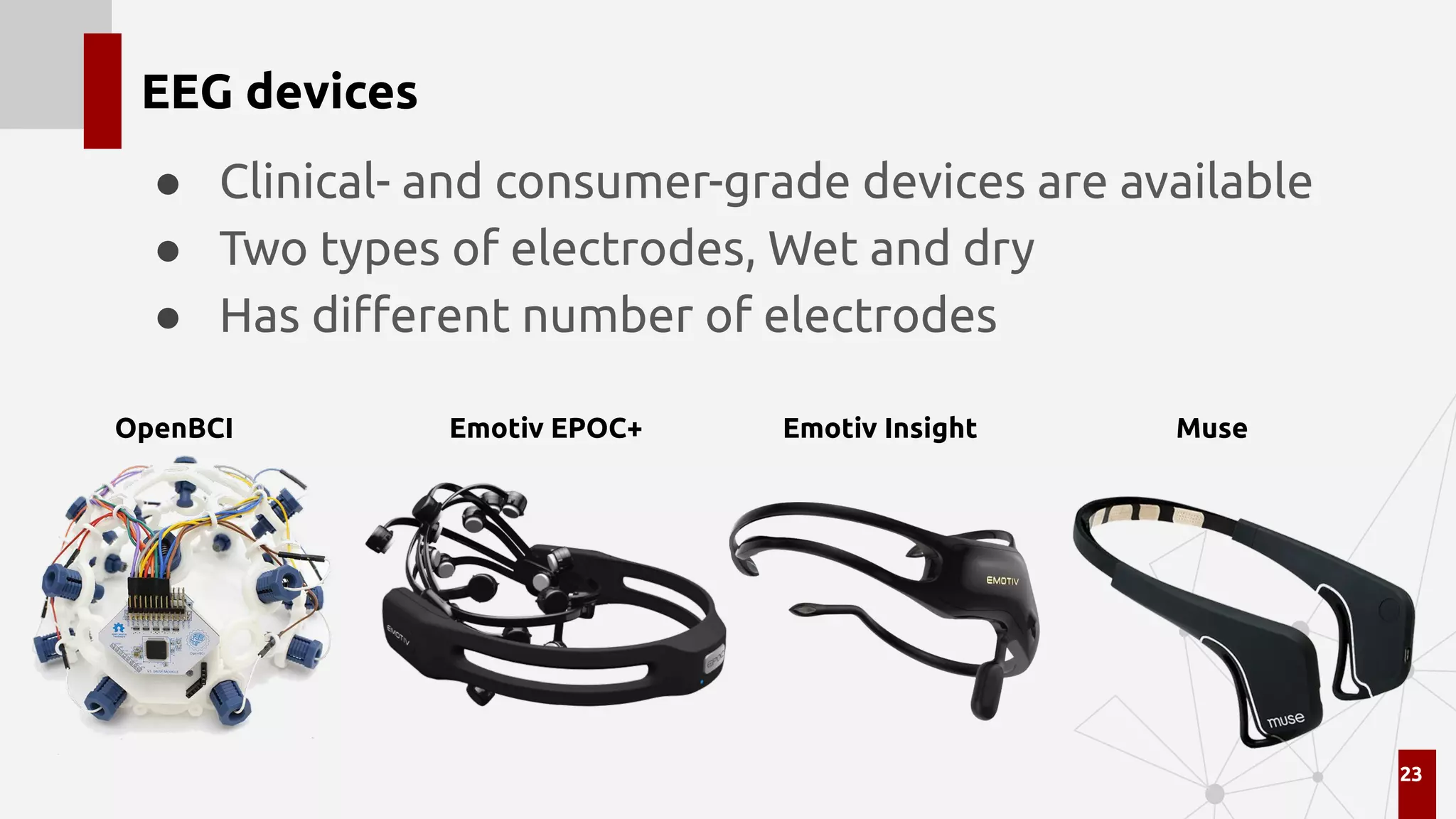
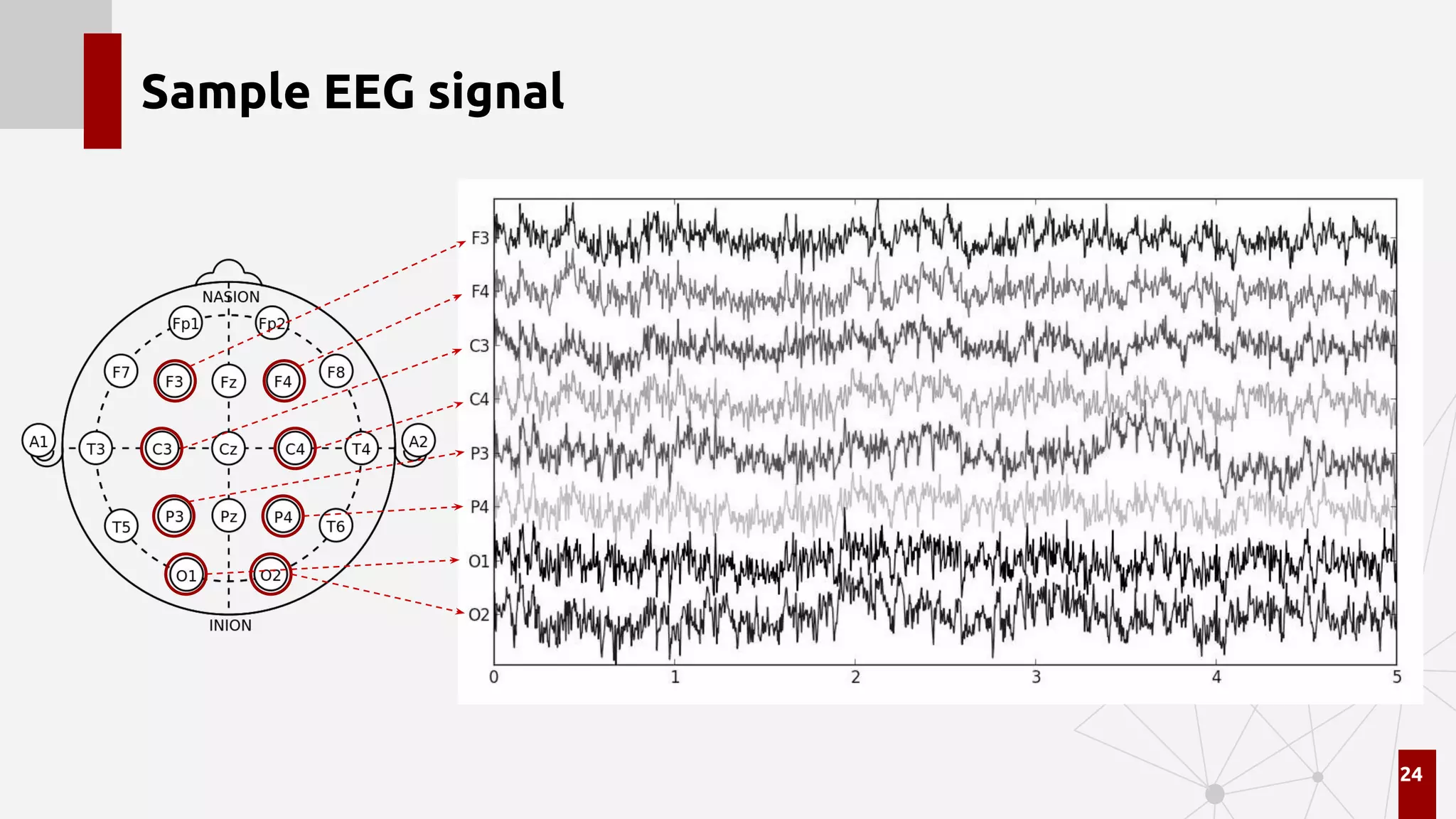
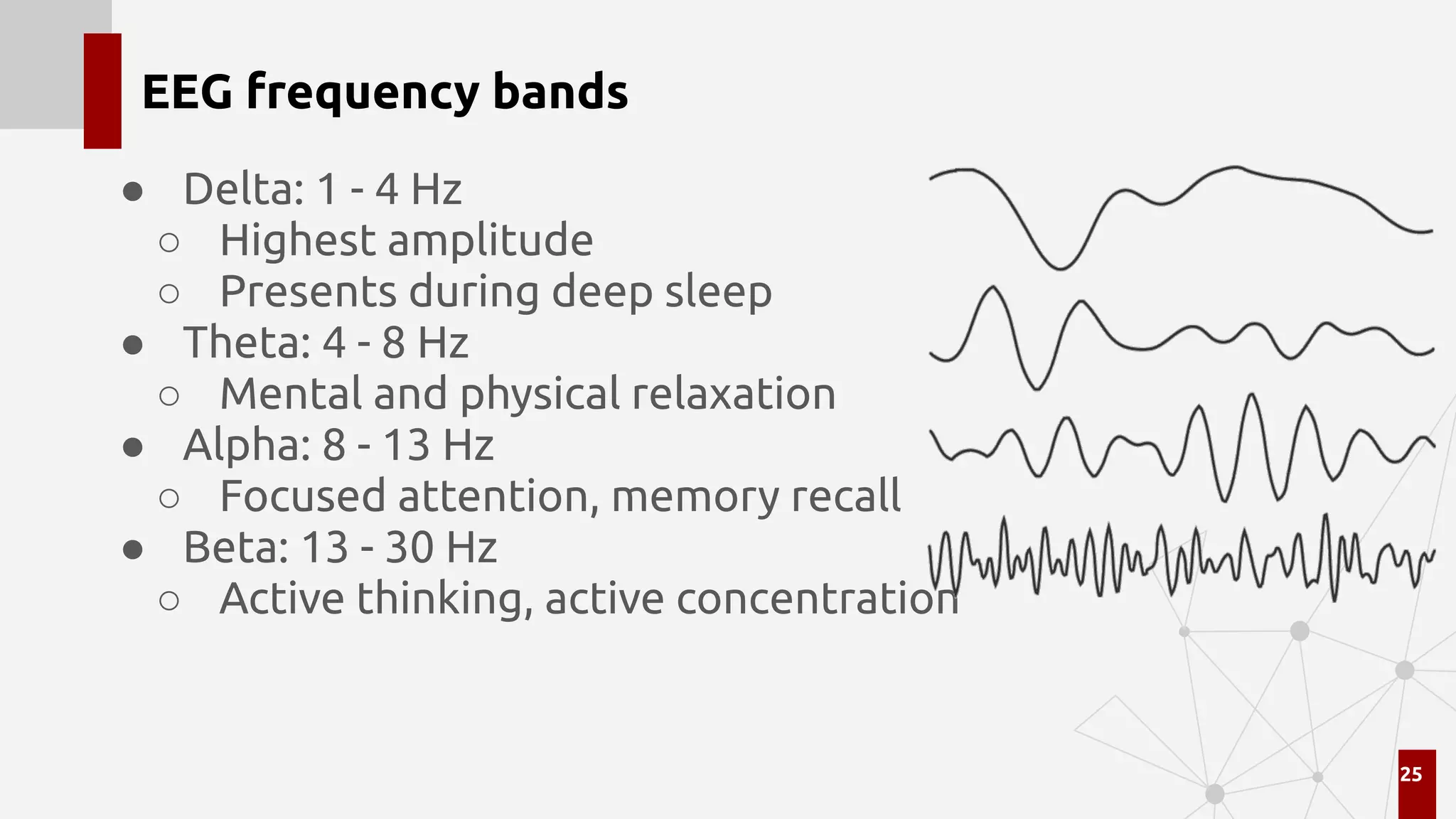
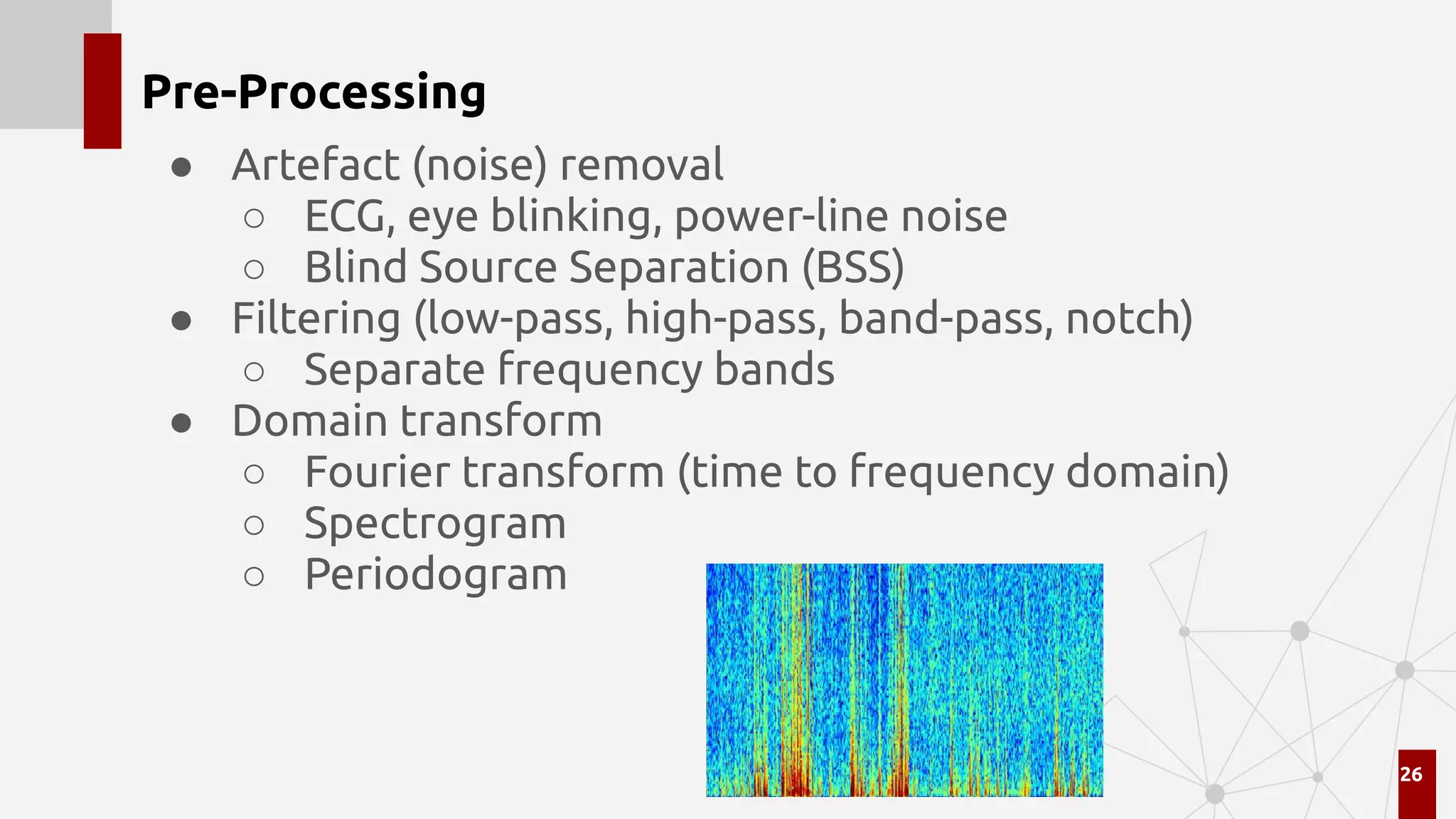
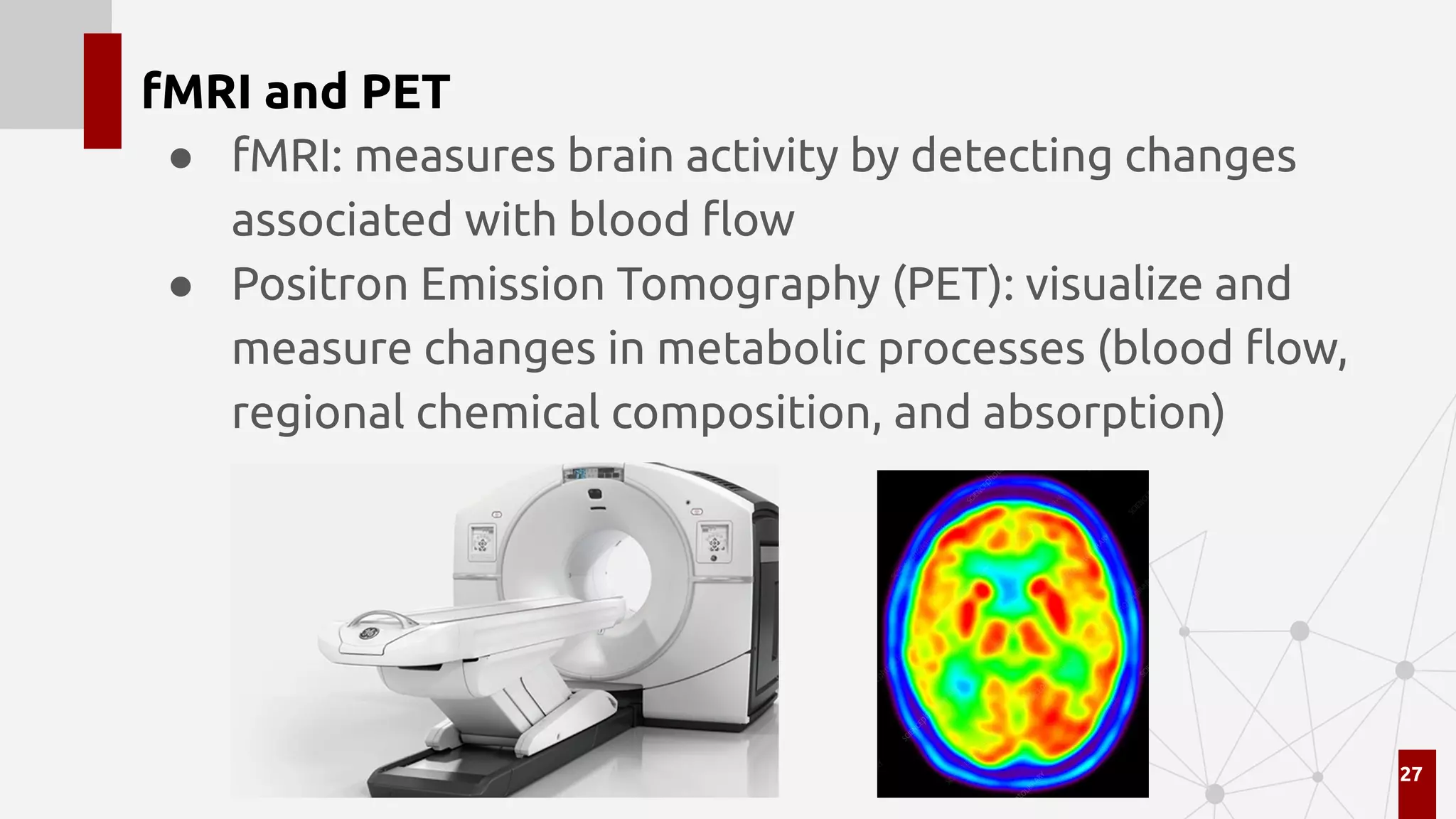
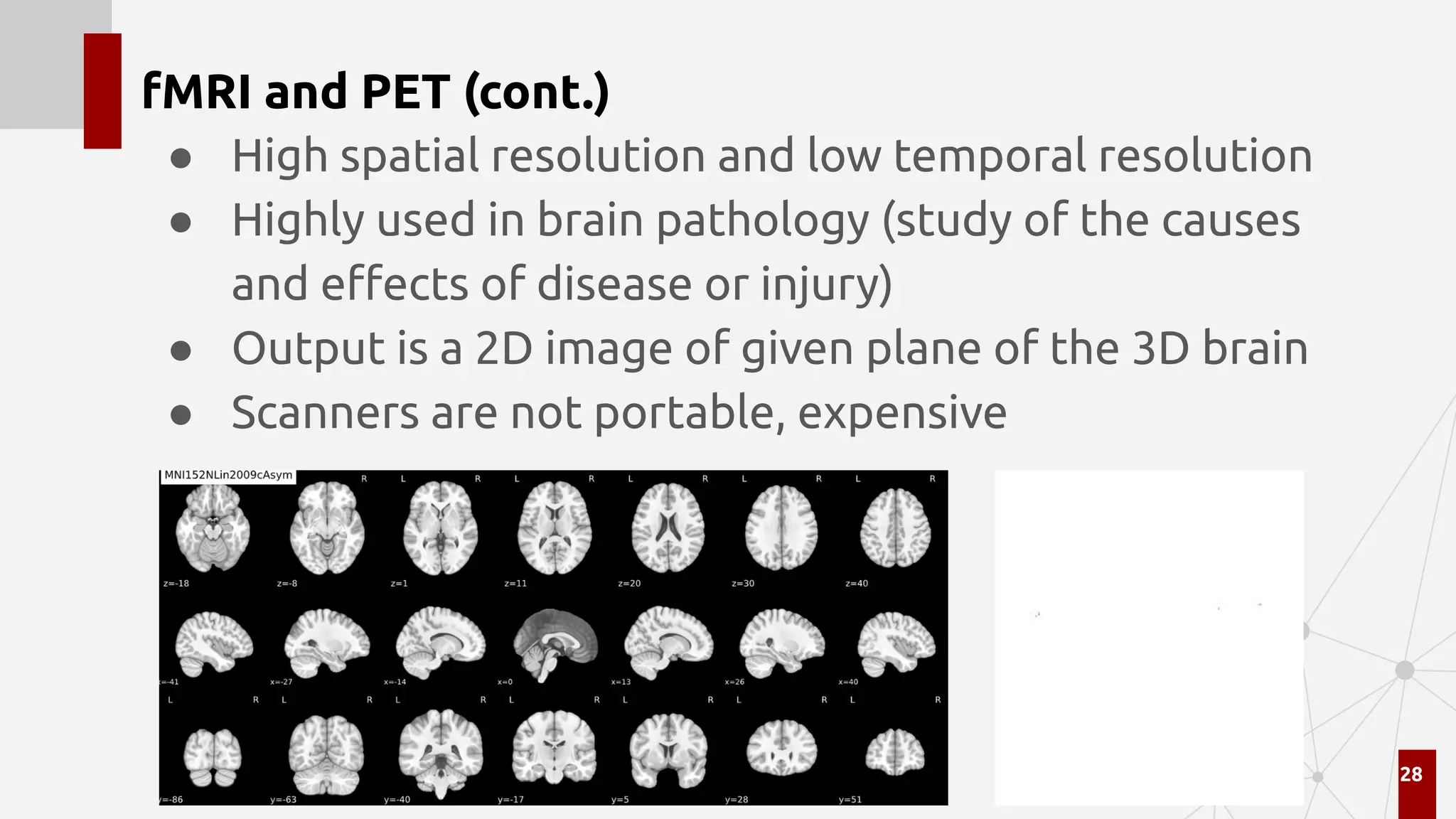
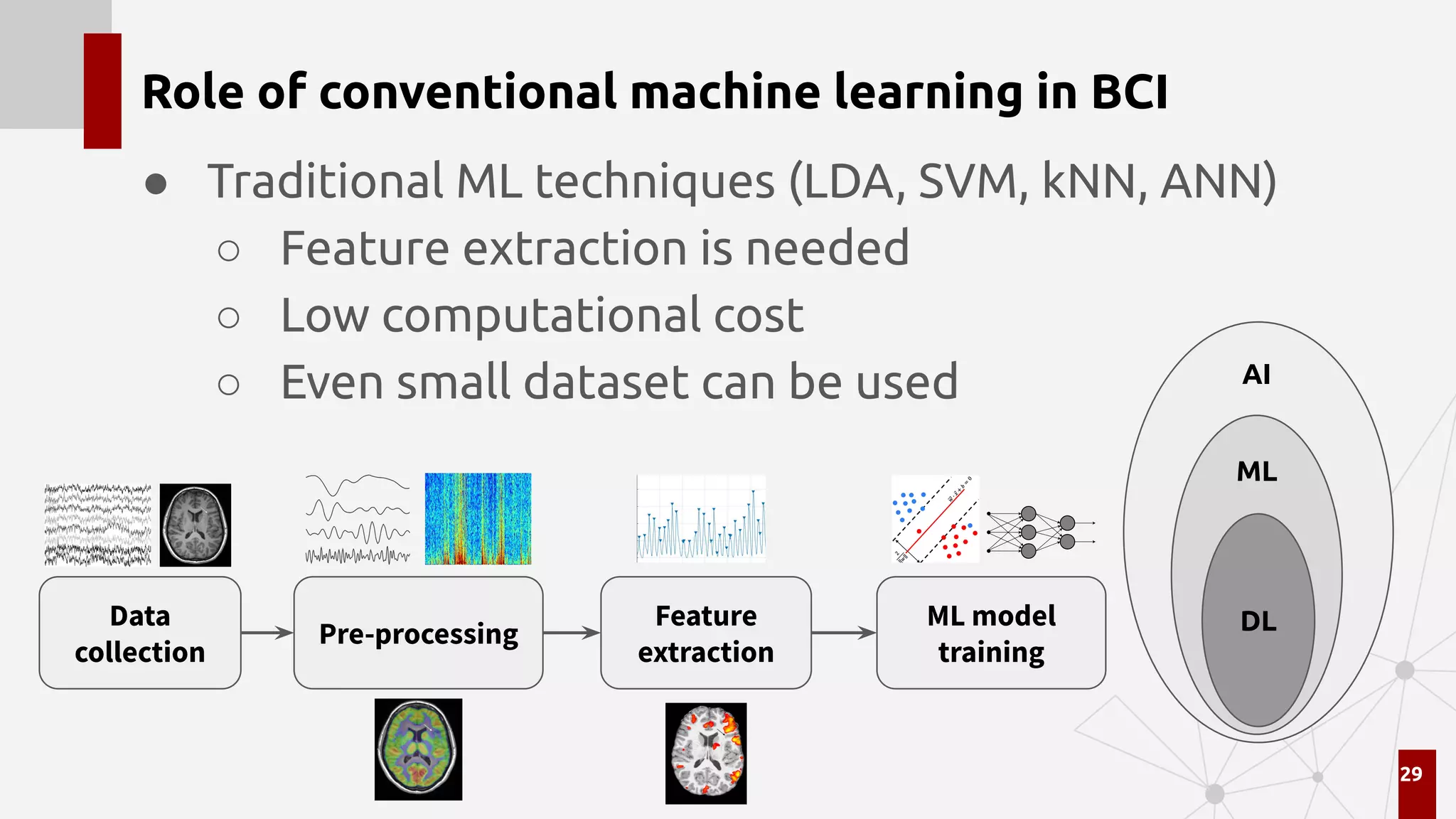
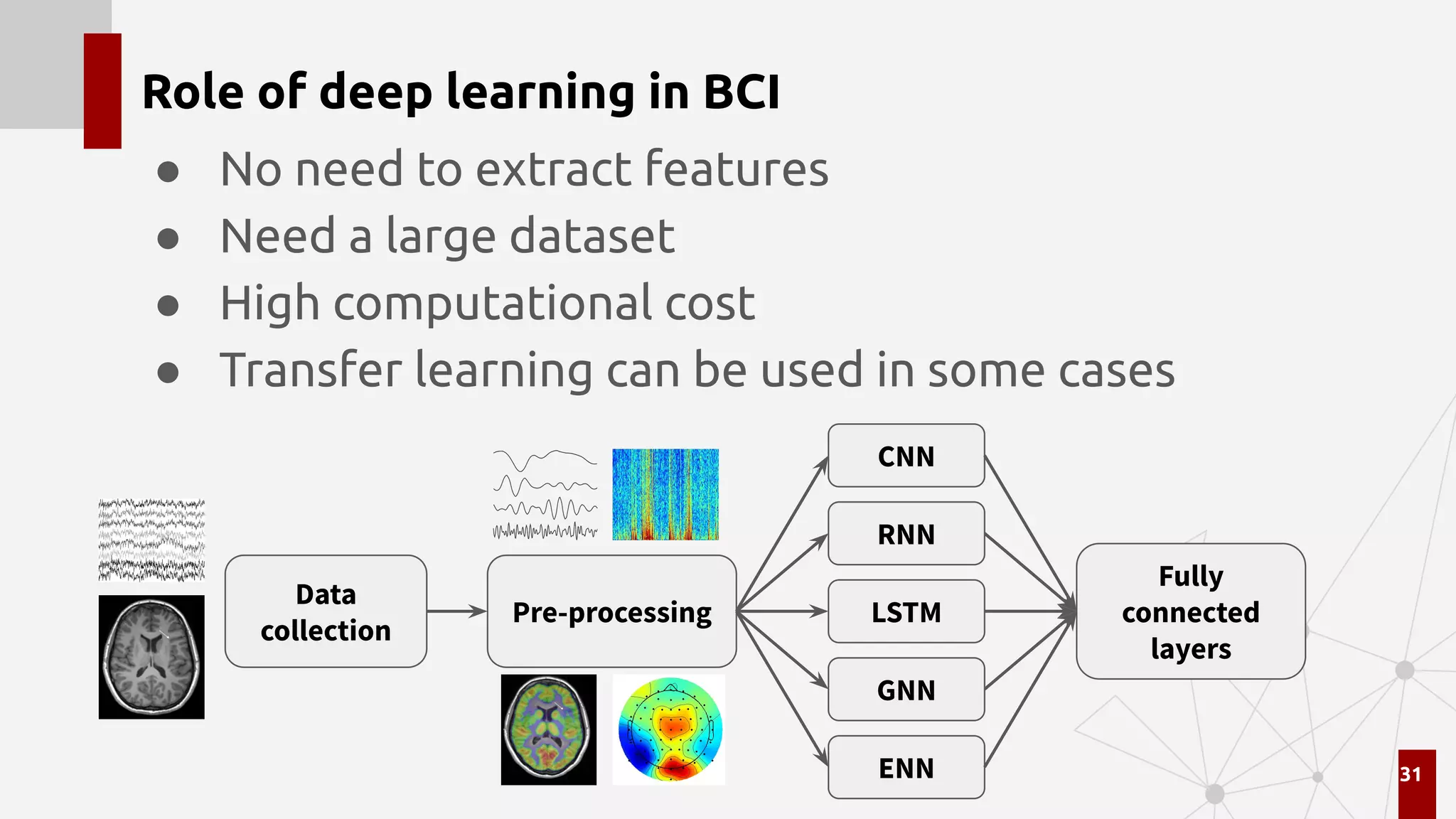
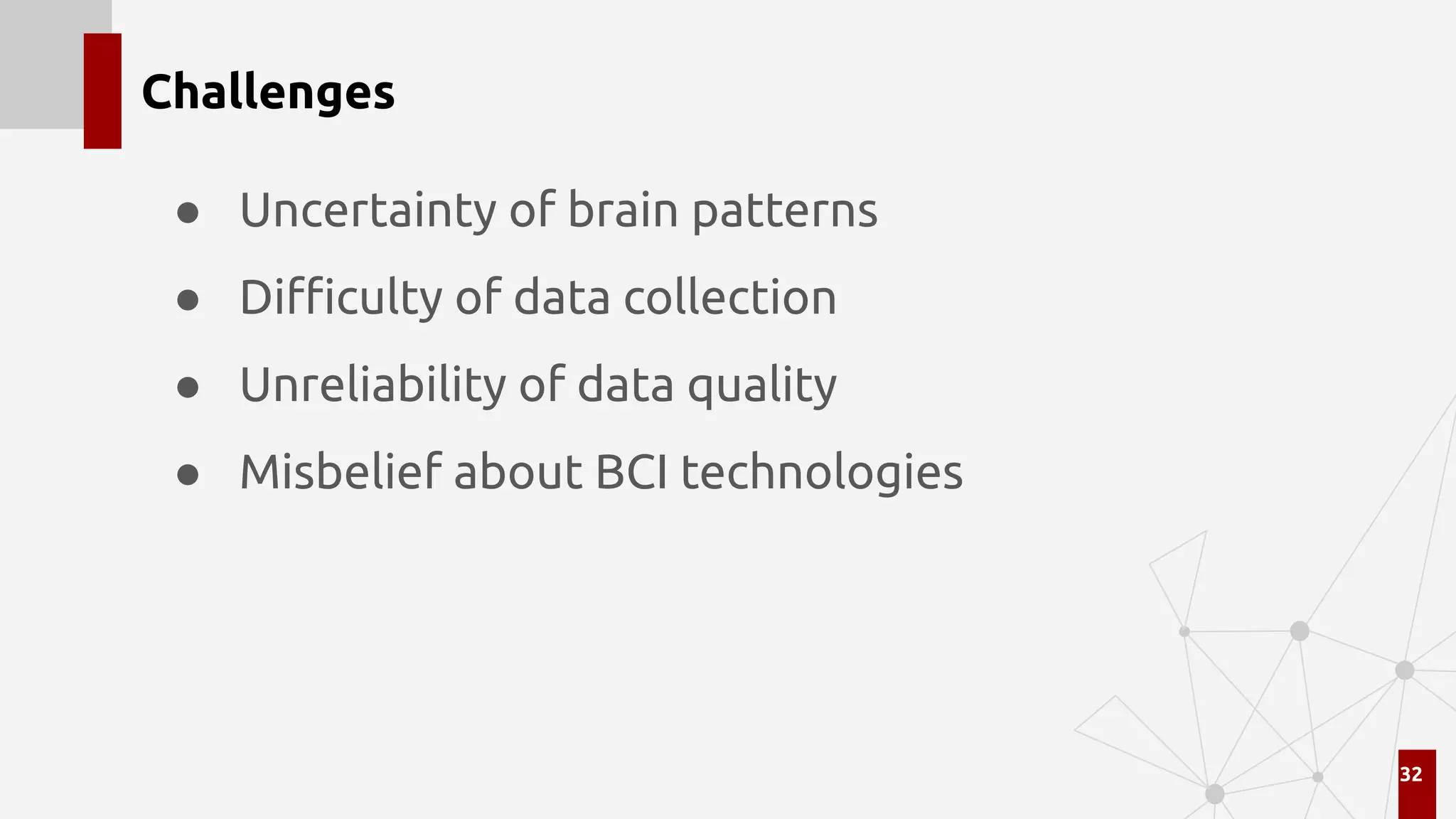
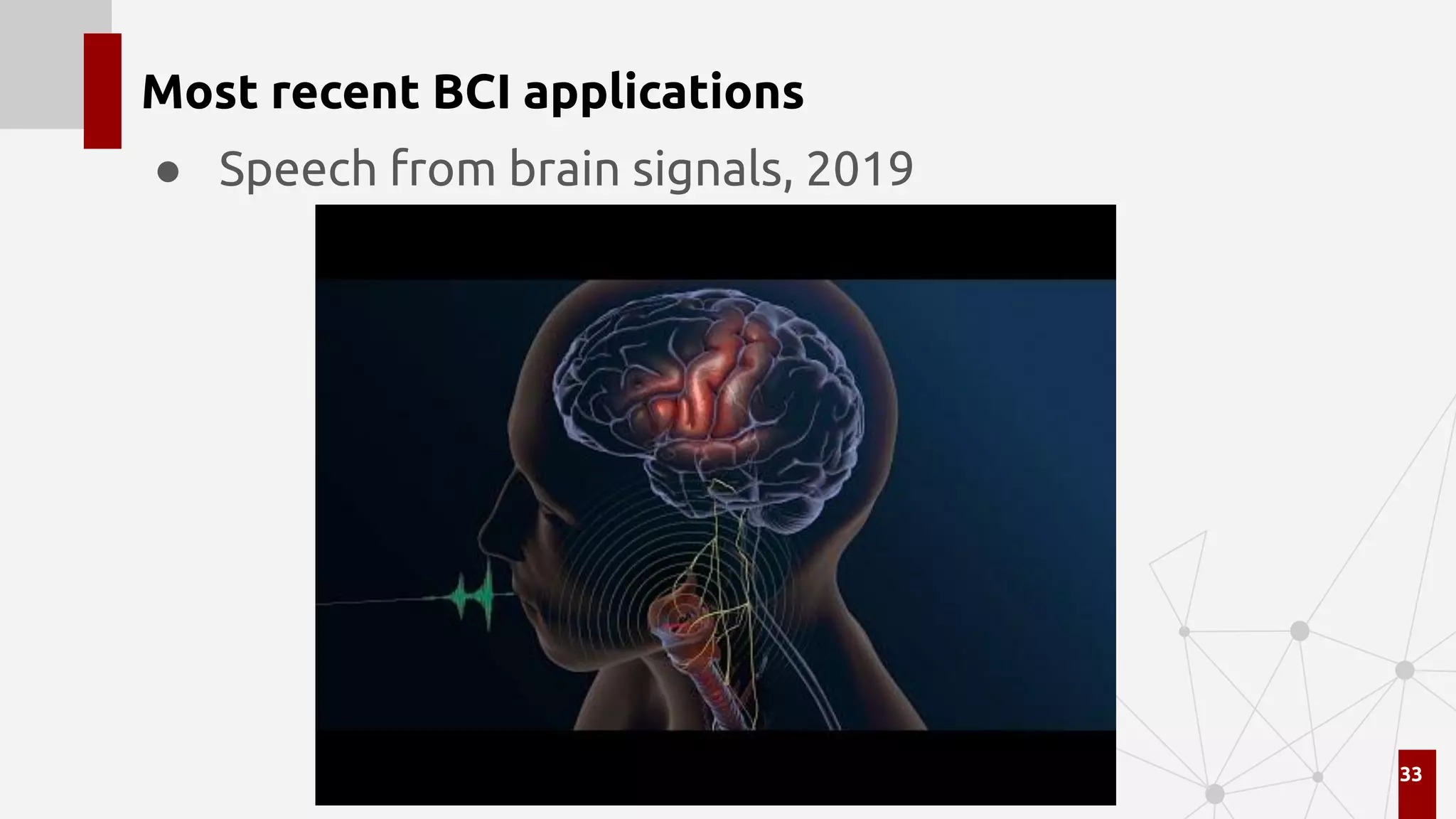
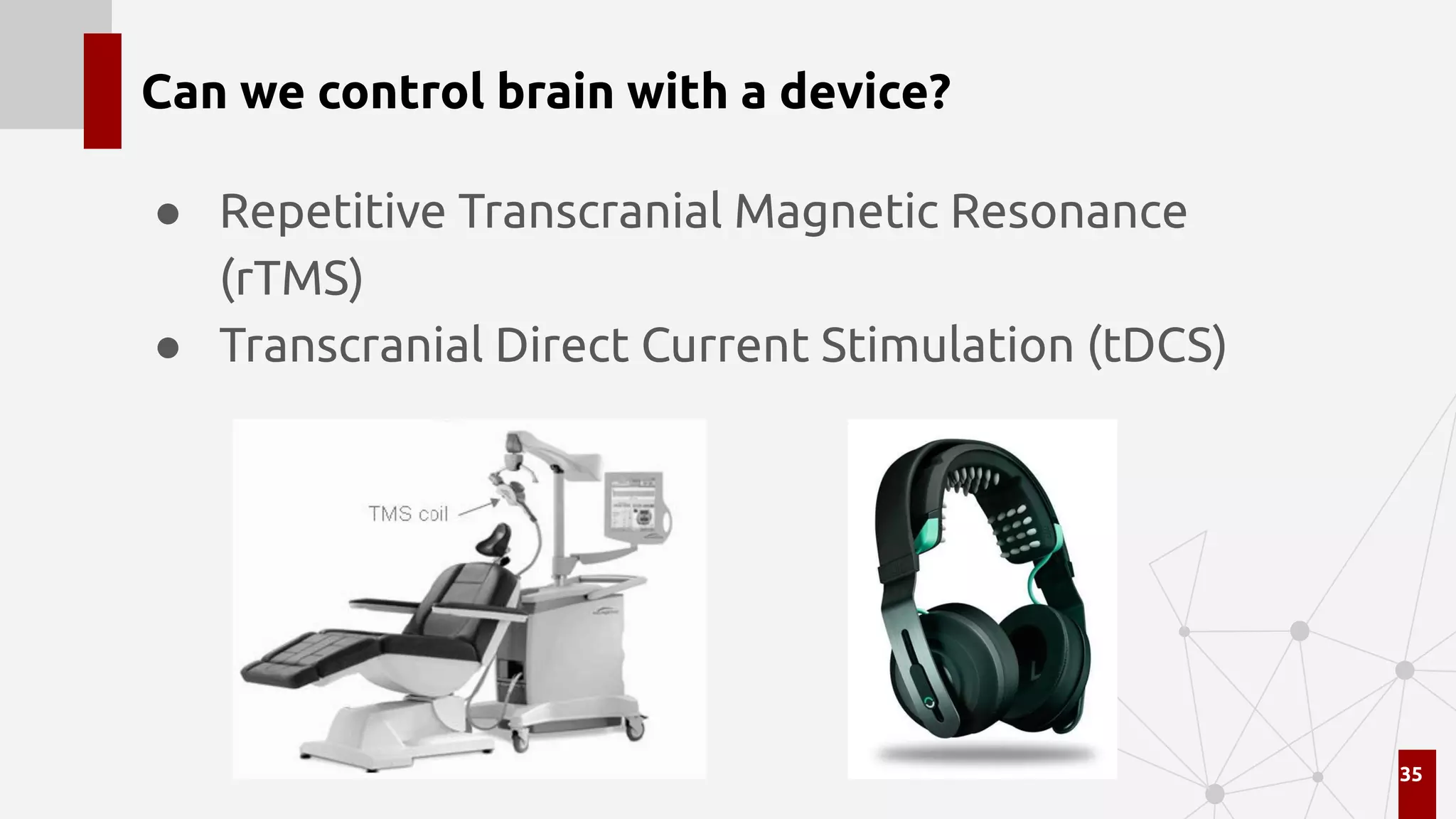
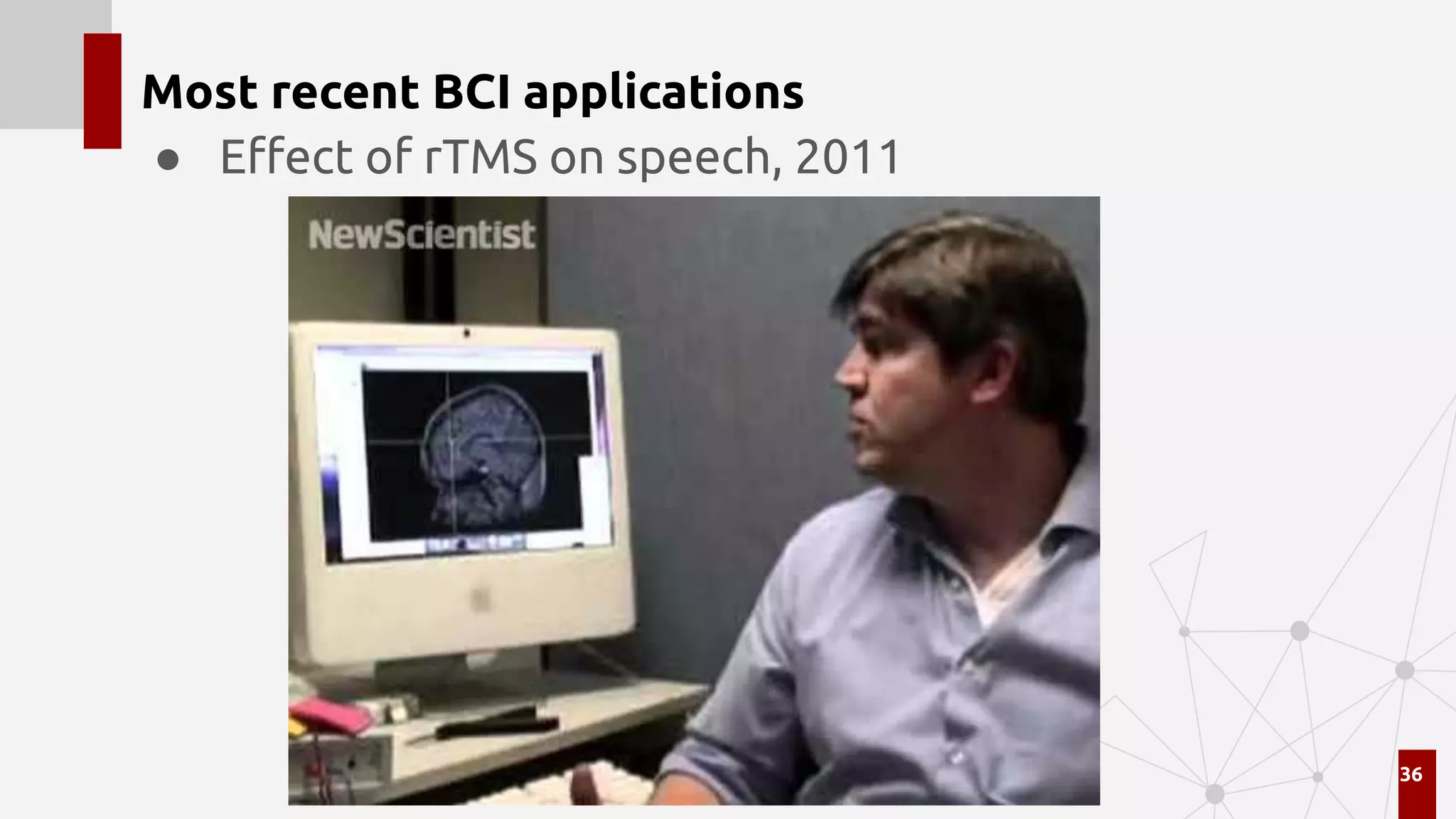
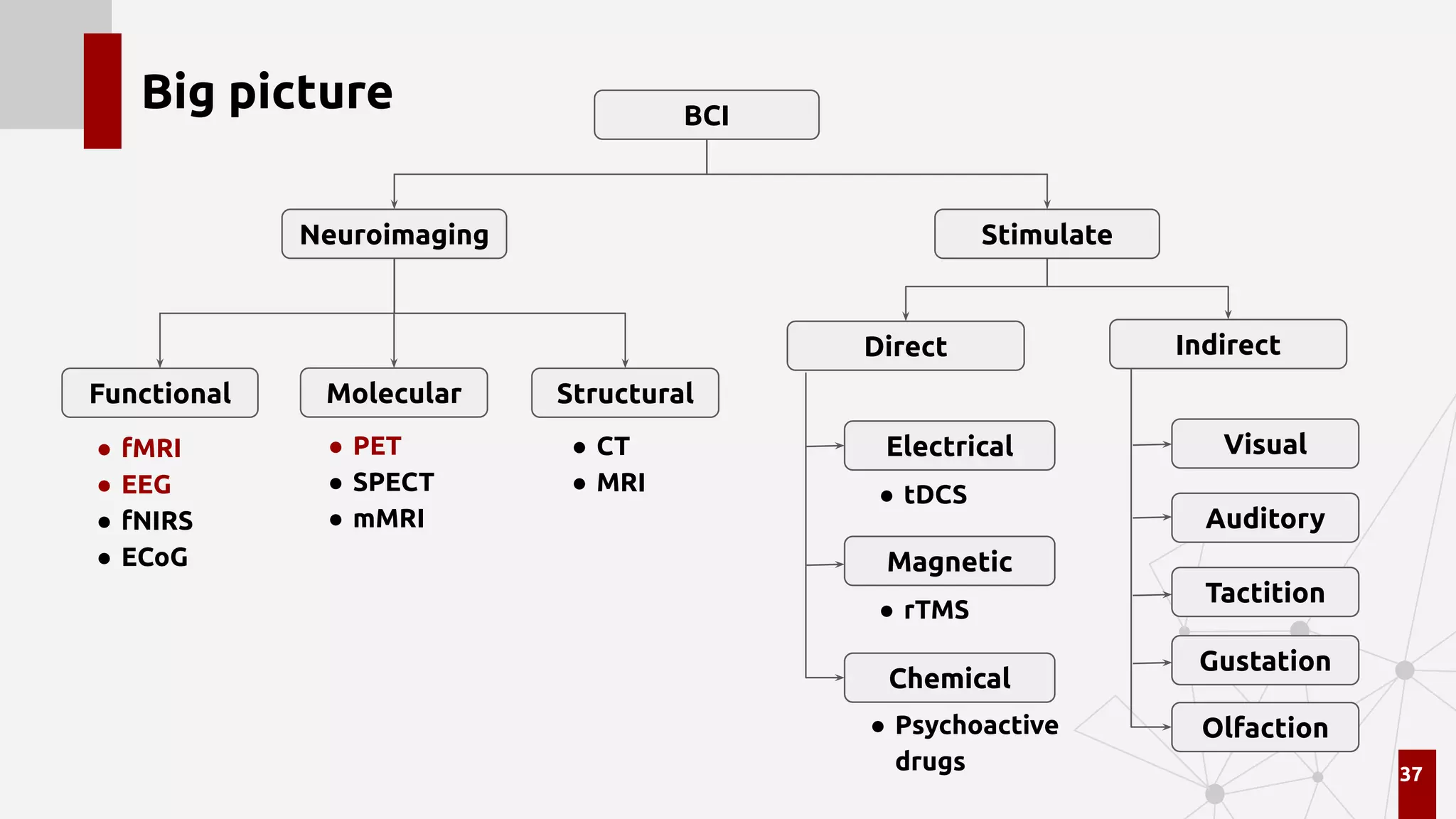


This document provides an overview of brain-computer interfaces (BCI), including their applications, monitoring techniques, machine learning role, and challenges. It discusses how BCIs allow direct communication between the brain and external devices using non-invasive or invasive neuroimaging methods like EEG, fMRI, and PET. Popular BCI applications include controlling robots, drones, wheelchairs as well as developing assistive technologies. Machine learning, especially deep learning, plays an important role in processing brain signals for BCI. Key challenges include uncertainty of brain patterns and difficulty collecting reliable neuroimaging data.


