Brachial Plexus 
Anatomy 
 Abdulaziz R. Alanzi 
 Medical Student, Al-Imam University 
 Riyadh, Saudi Arabia
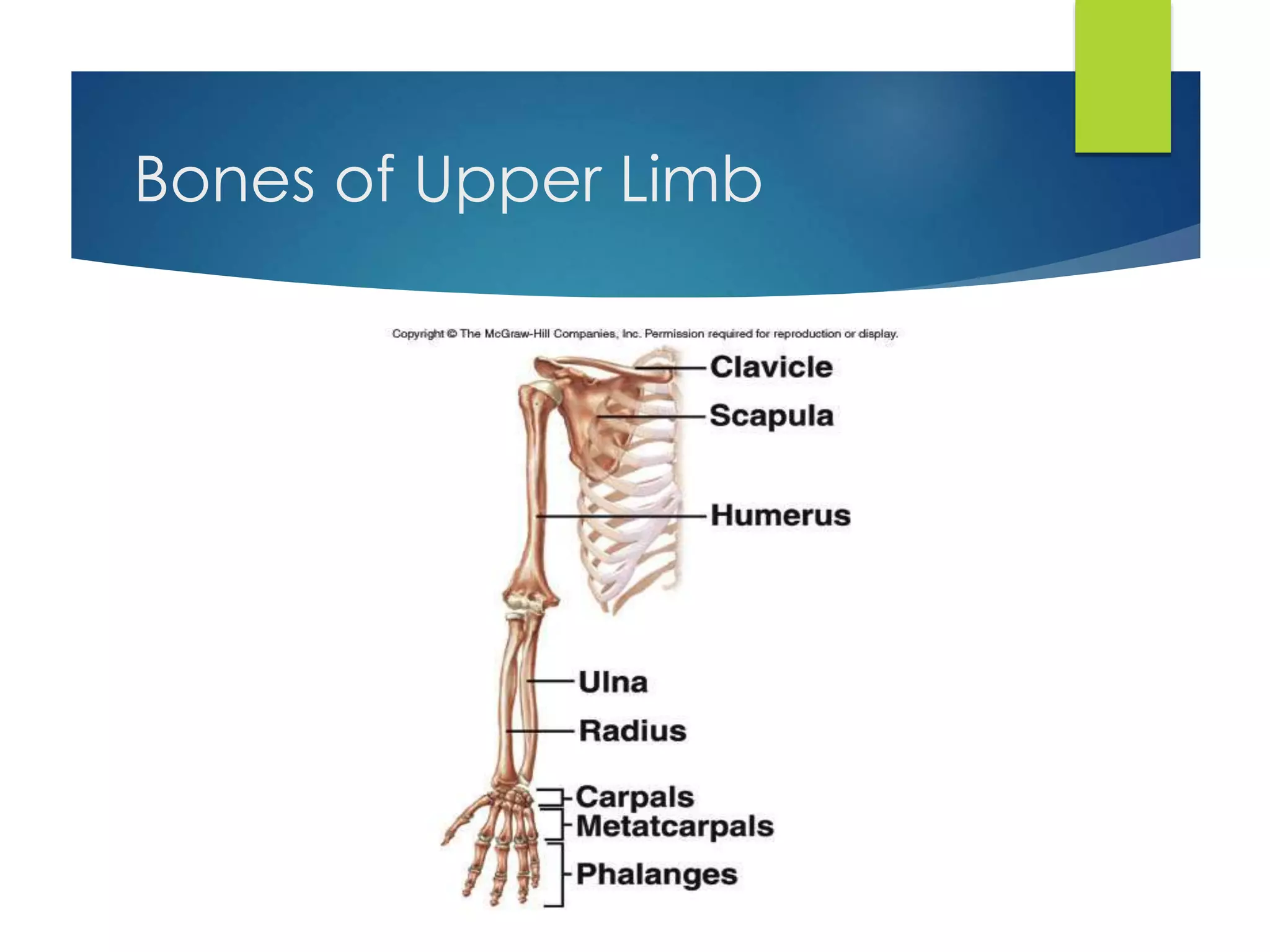
Bones of Upper Limb
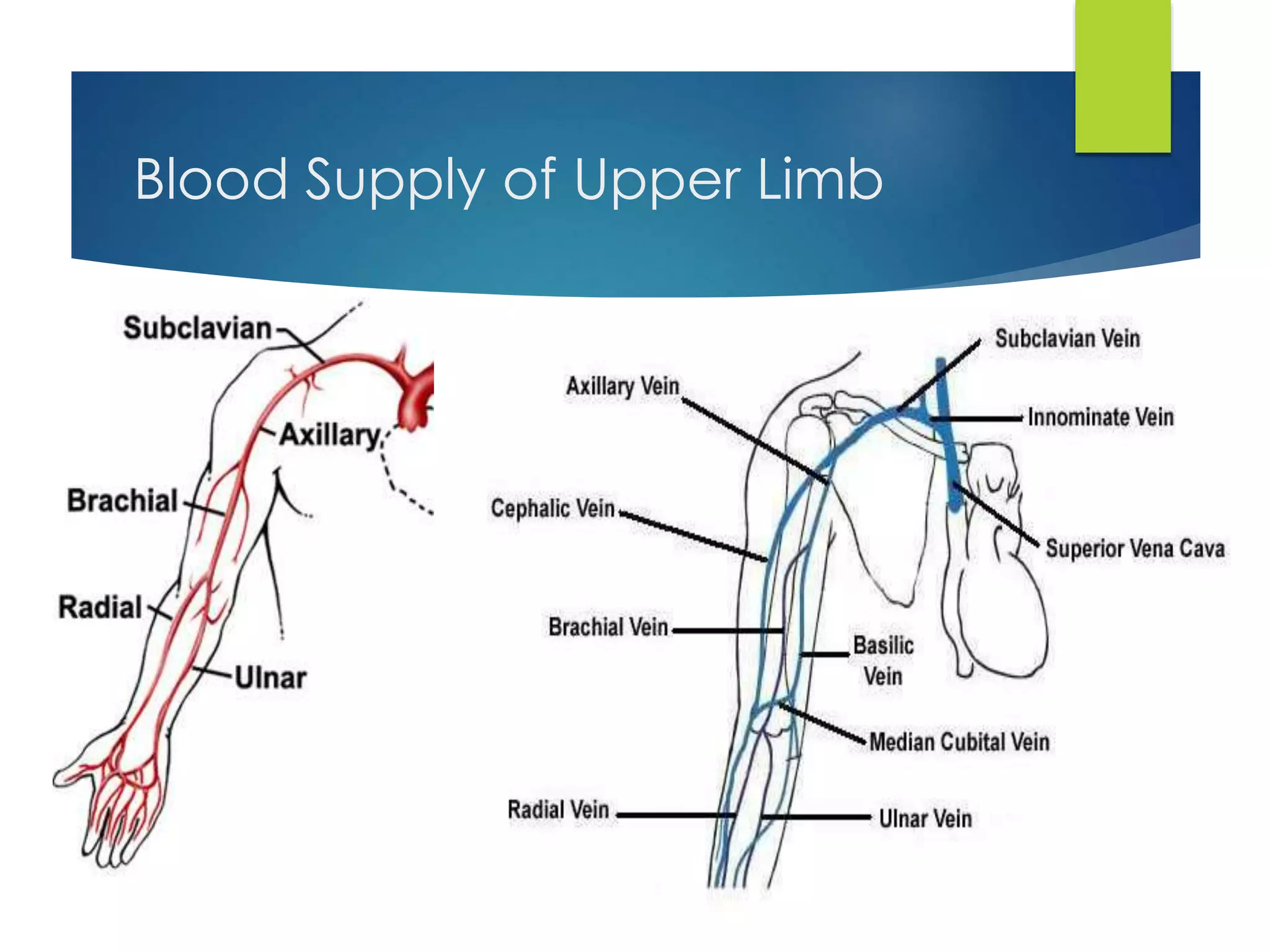
Blood Supply of Upper Limb
Definition of Brachial Plexus 
The brachial plexus (plexus brachialis) is a somatic 
nerve plexus formed by intercommunications among the 
ventral rami (roots) of the lower 4 cervical nerves (C5-C8) 
and the first thoracic nerve (T1). The plexus, depicted in 
the images below, is responsible for the motor 
innervation of all of the muscles of the 
upper extremity, with the exception 
of the trapezius and levator scapula.
Cont’d 
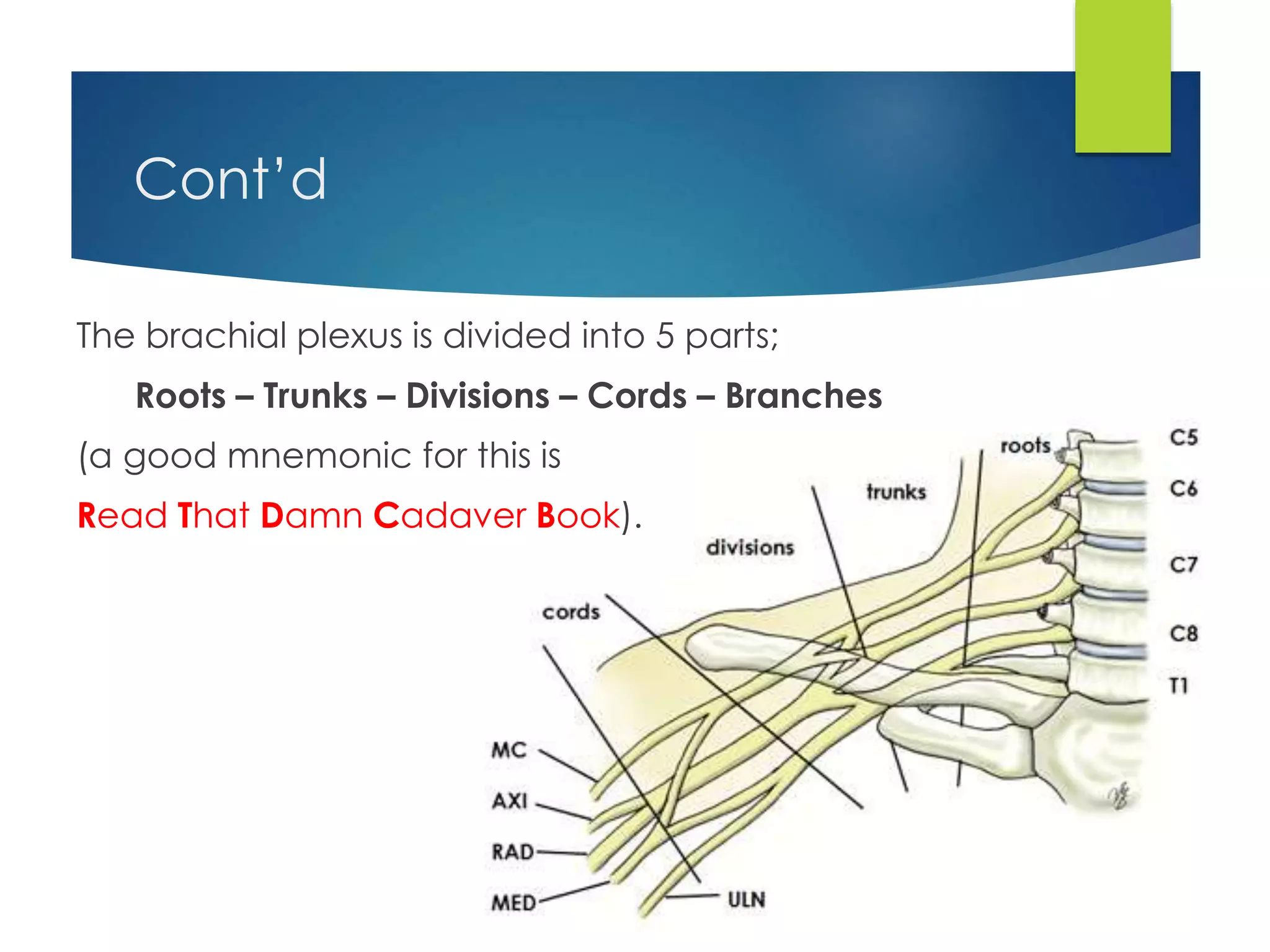
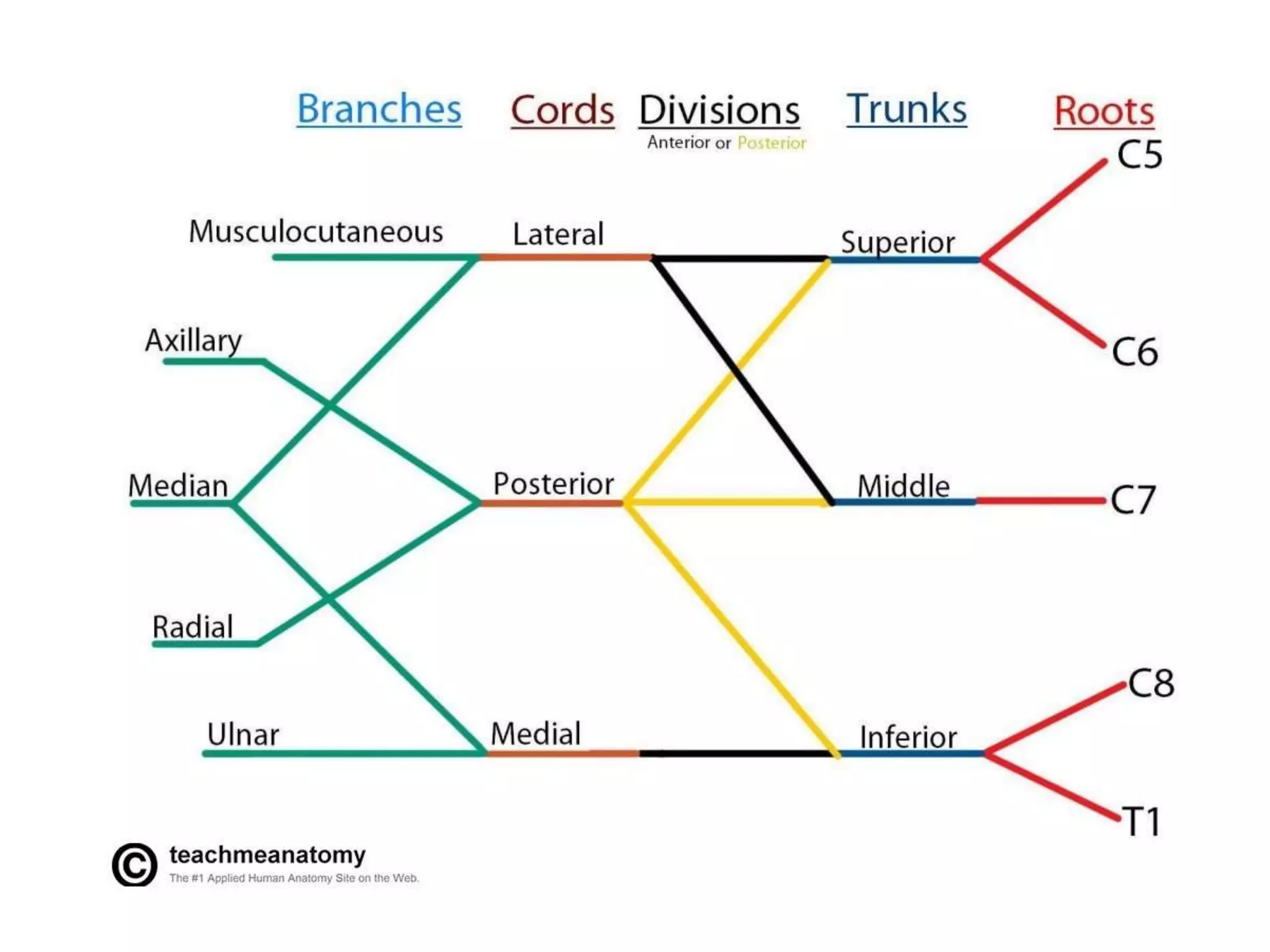
The brachial plexus is divided into 5 parts; 
Roots – Trunks – Divisions – Cords – Branches 
(a good mnemonic for this is 
Read That Damn Cadaver Book).
Parts of Brachial Plexus 
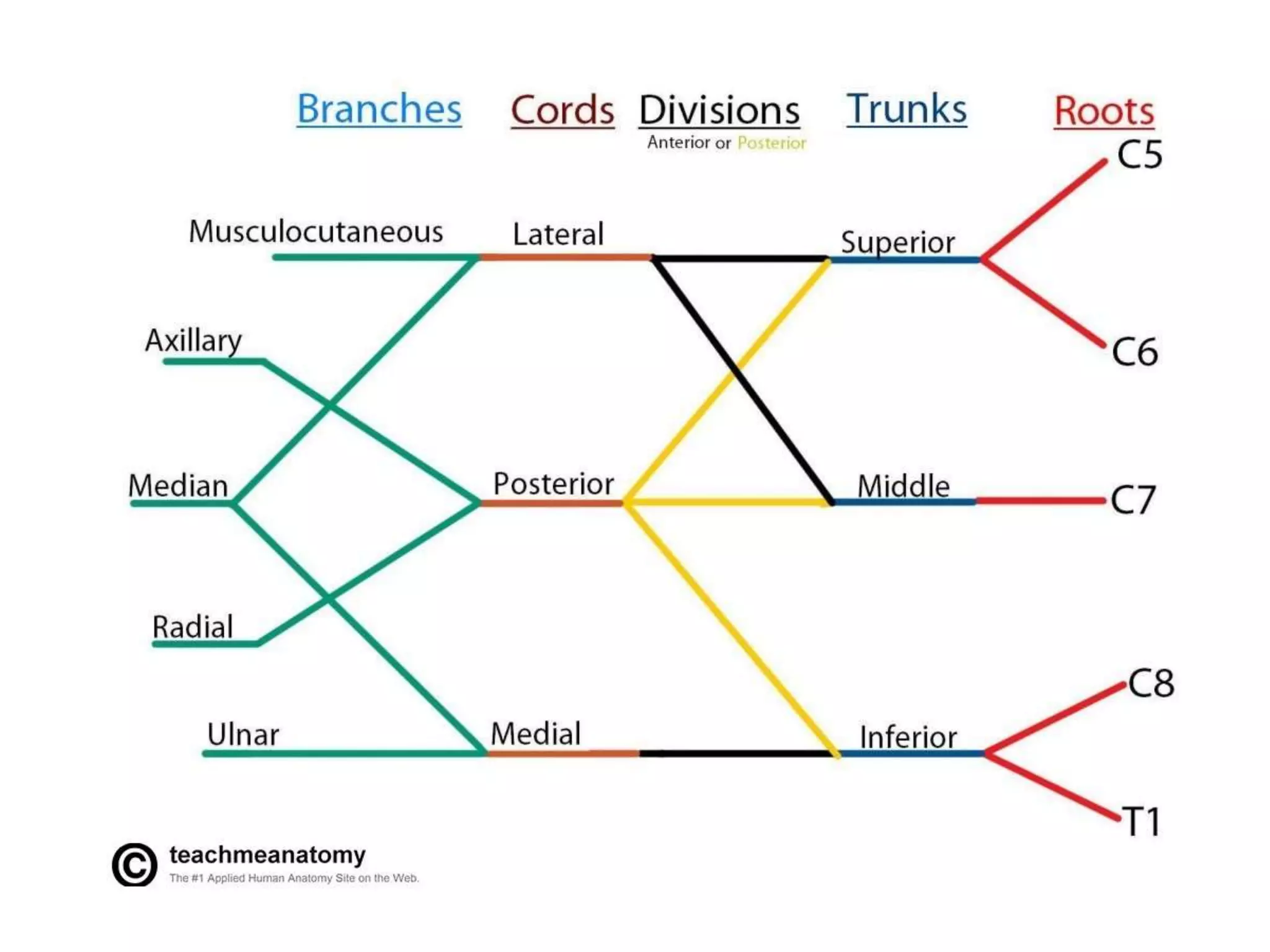
1- Roots: 
The ventral rami of spinal nerves C5 to T1 are referred to as the 
"roots" of the plexus. The roots emerge from the transverse 
processes of the cervical vertebrae immediately posterior to 
the vertebral artery. 
2- Trunks: 
• Superior trunk: A combination of C5 and C6 roots. 
• Middle trunk: A continuation of C7. 
• Inferior trunk: A combination of C8 and T1 roots.
Parts of Brachial Plexus 
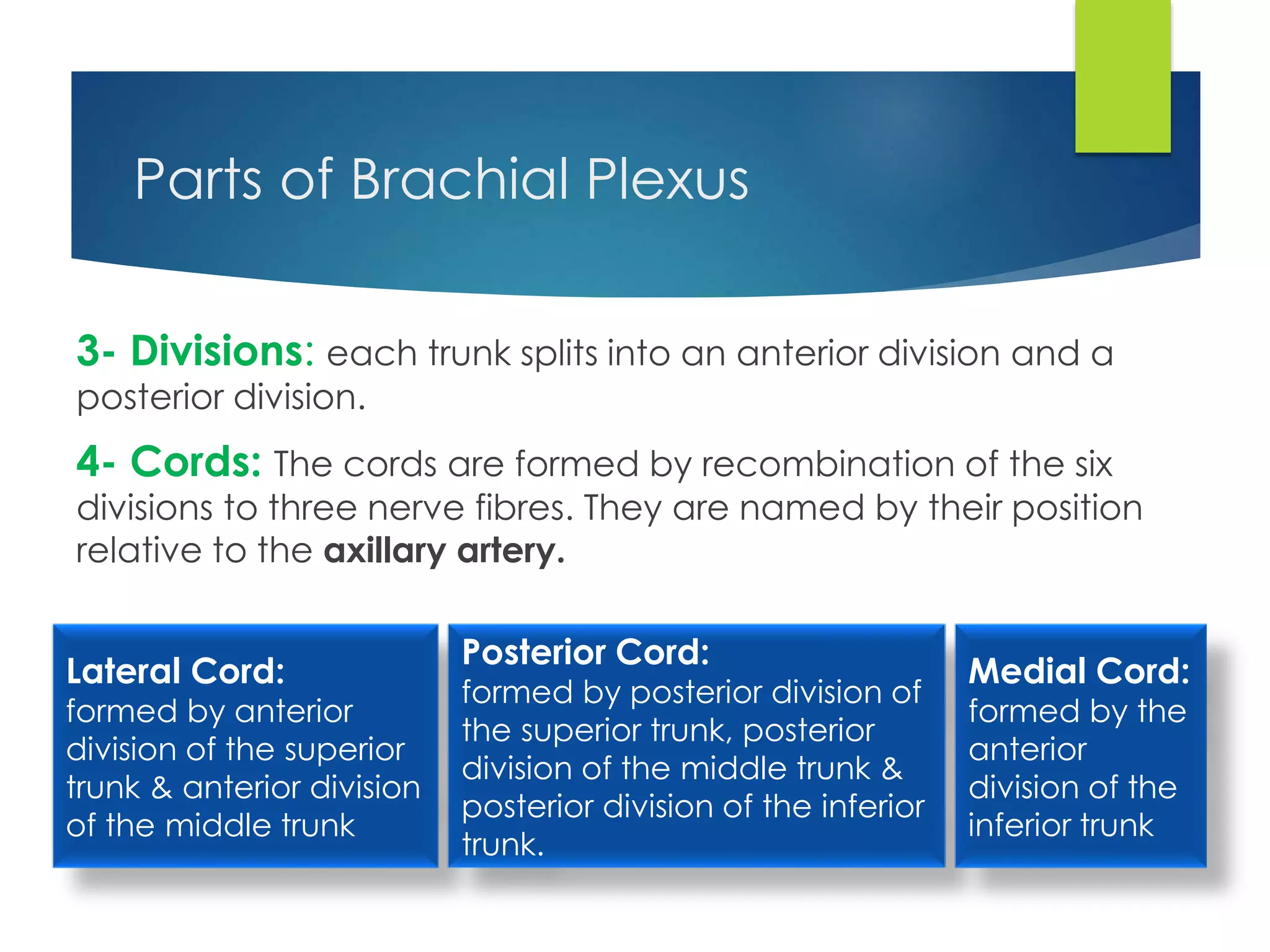
3- Divisions: each trunk splits into an anterior division and a 
posterior division. 
4- Cords: The cords are formed by recombination of the six 
divisions to three nerve fibres. They are named by their position 
relative to the axillary artery. 
Lateral Cord: 
formed by anterior 
division of the superior 
trunk & anterior division 
of the middle trunk 
Posterior Cord: 
formed by posterior division of 
the superior trunk, posterior 
division of the middle trunk & 
posterior division of the inferior 
trunk. 
Medial Cord: 
formed by the 
anterior 
division of the 
inferior trunk
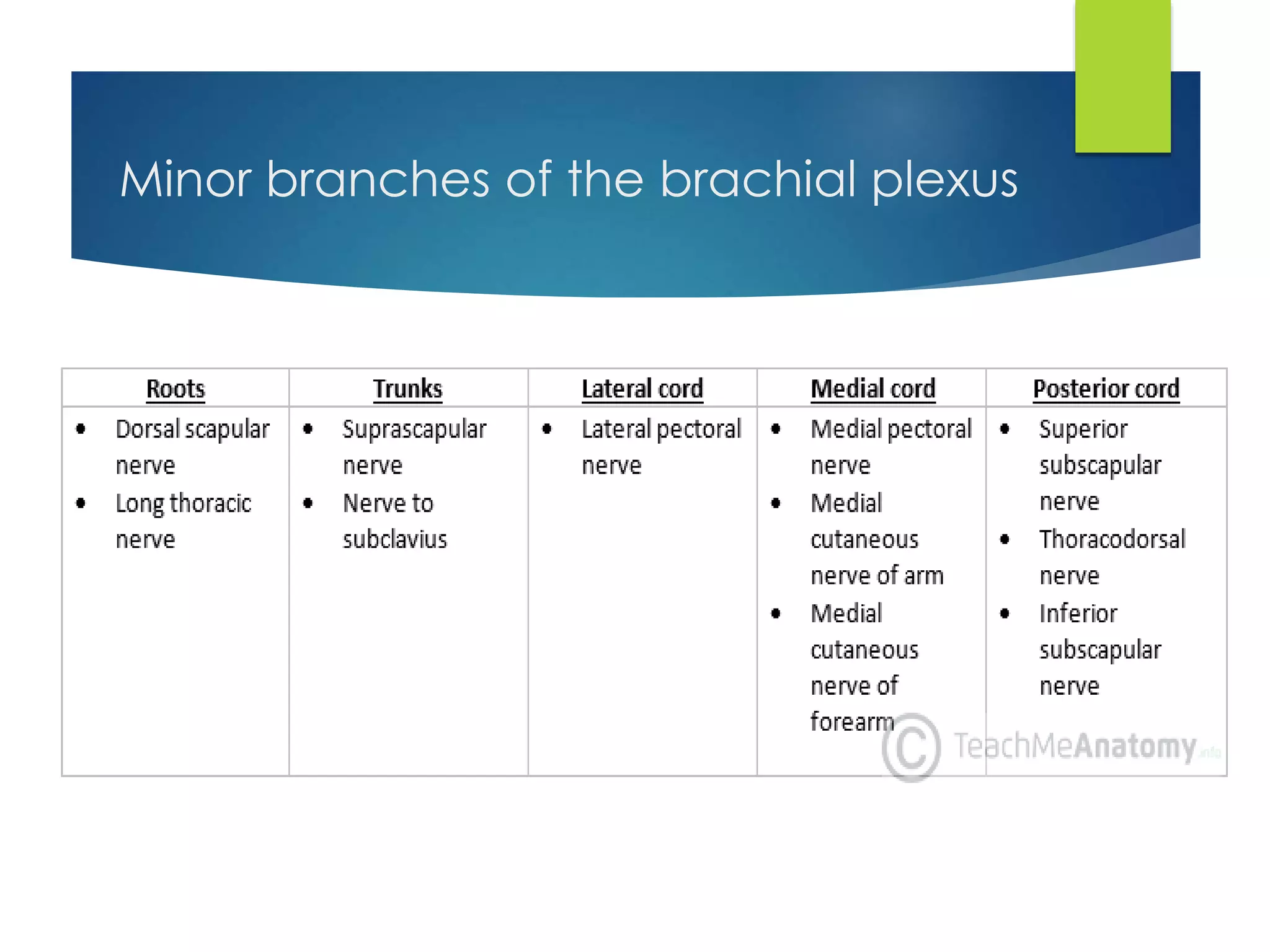
Minor branches of the brachial plexus
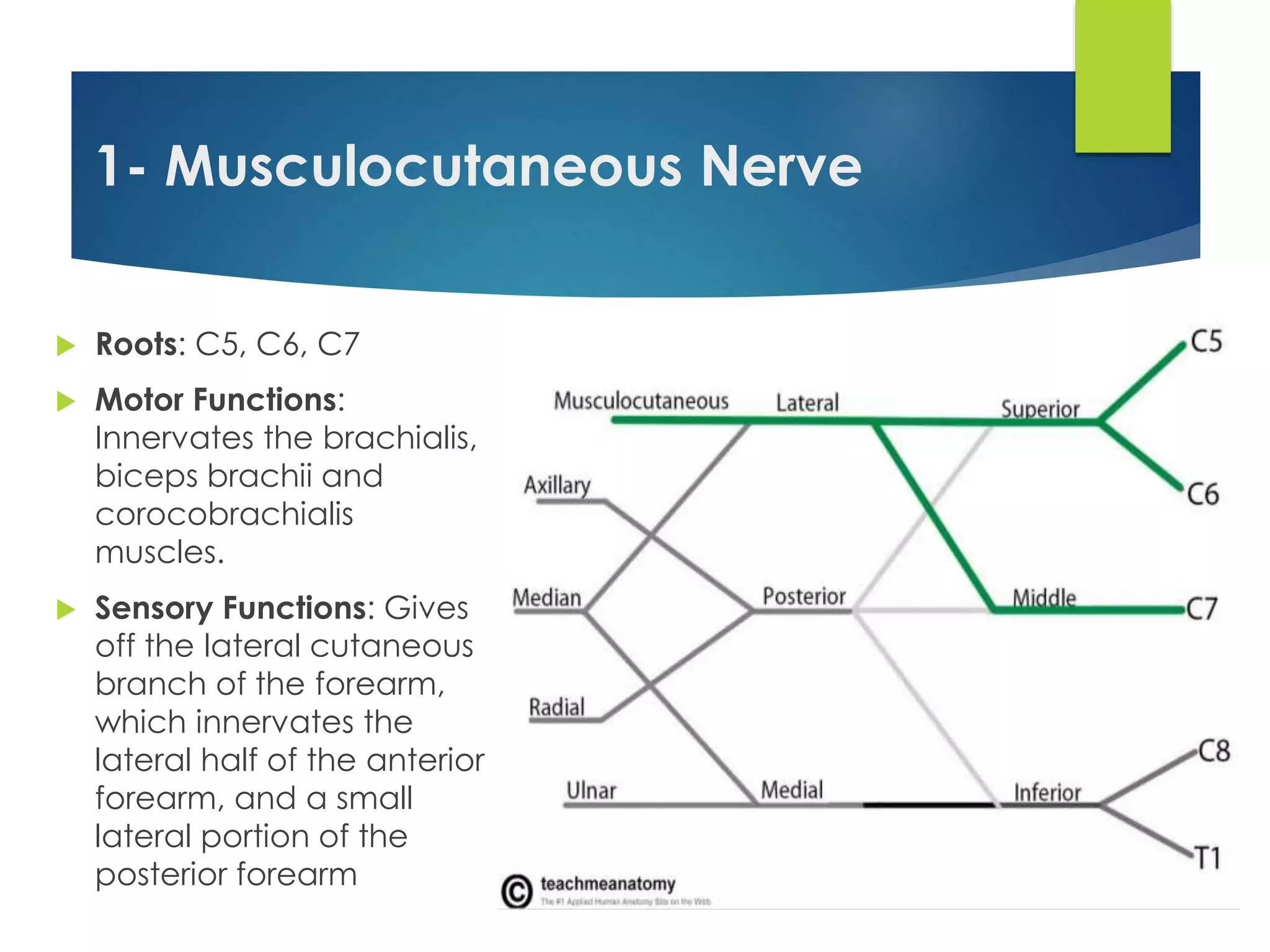
1- Musculocutaneous Nerve 
 Roots: C5, C6, C7 
 Motor Functions: 
Innervates the brachialis, 
biceps brachii and 
corocobrachialis 
muscles. 
 Sensory Functions: Gives 
off the lateral cutaneous 
branch of the forearm, 
which innervates the 
lateral half of the anterior 
forearm, and a small 
lateral portion of the 
posterior forearm
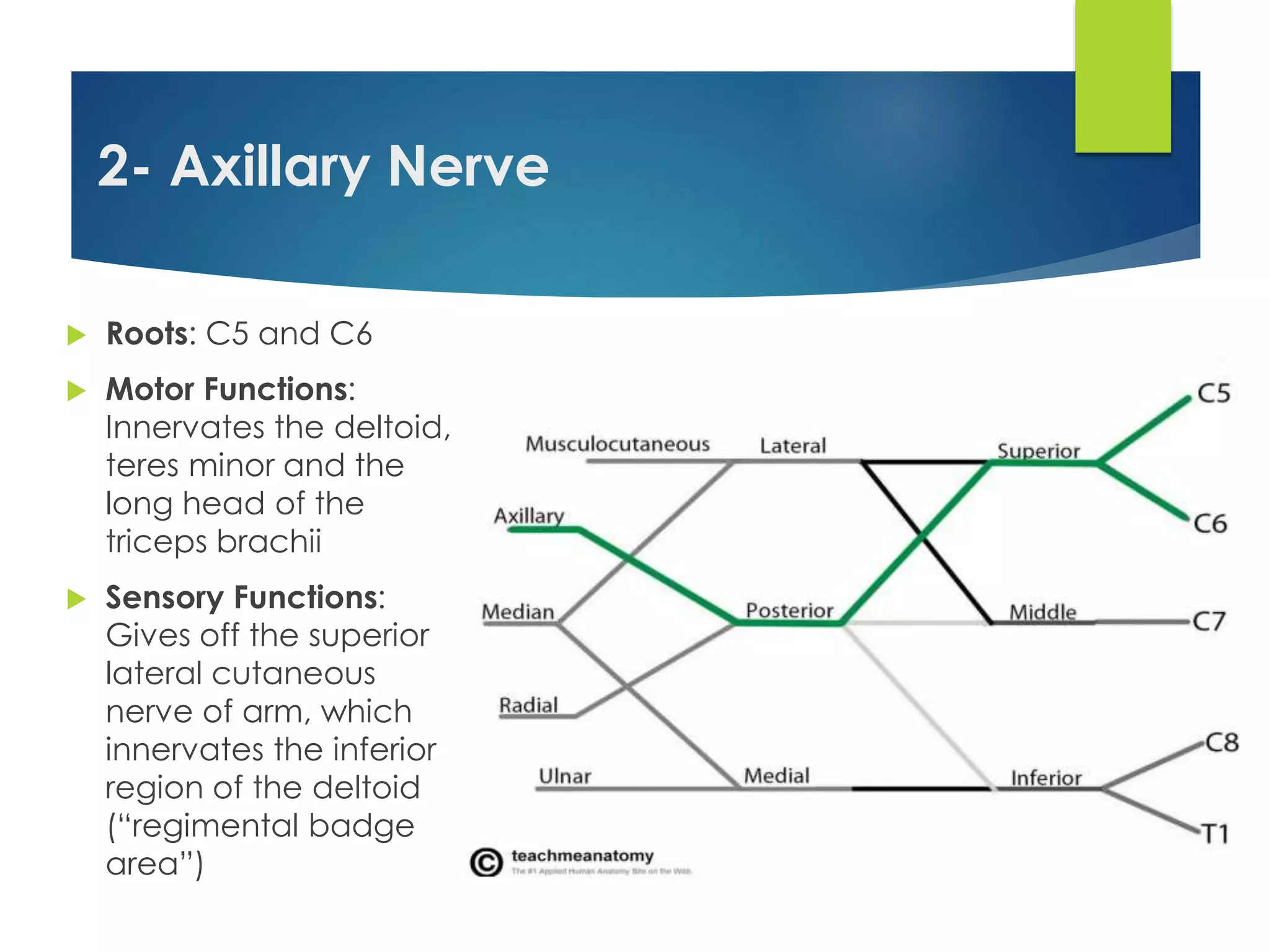
2- Axillary Nerve 
 Roots: C5 and C6 
 Motor Functions: 
Innervates the deltoid, 
teres minor and the 
long head of the 
triceps brachii 
 Sensory Functions: 
Gives off the superior 
lateral cutaneous 
nerve of arm, which 
innervates the inferior 
region of the deltoid 
(“regimental badge 
area”)
3- Median Nerve 
 Roots: C6 – C8 and T1 
 Motor Functions: Innervates 
most of the flexor muscles in 
the forearm, the thenar 
muscles, and the two lateral 
lumbrical muscles that move 
the index and middle fingers 
 Sensory Functions: Gives off 
the palmar cutaneous branch, 
which innervates the lateral 
part of the palm, and the 
digital cutaneous branch, 
which innervates the lateral 
three and a half fingers on the 
anterior (palmar) surface of 
the hand.
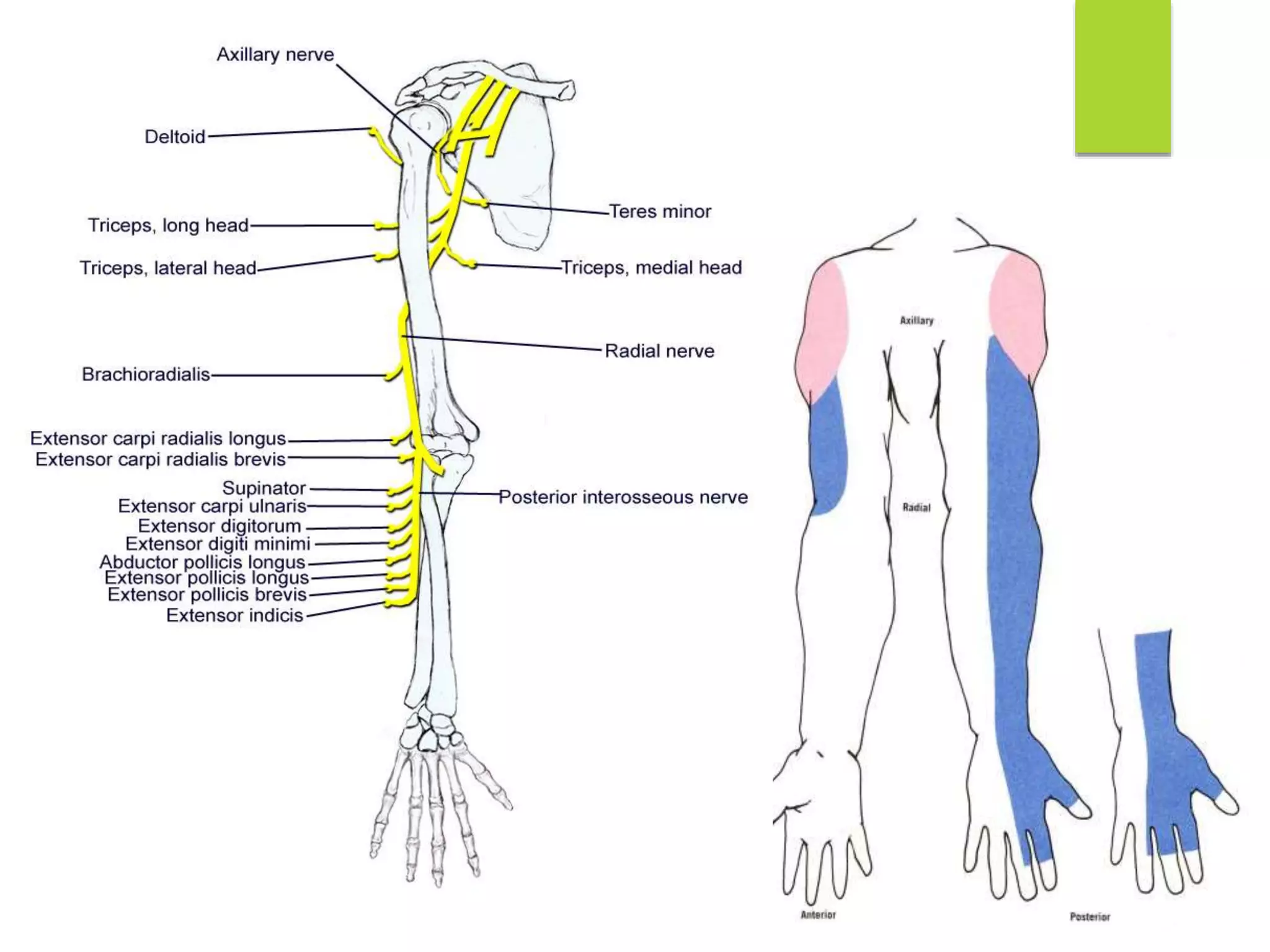
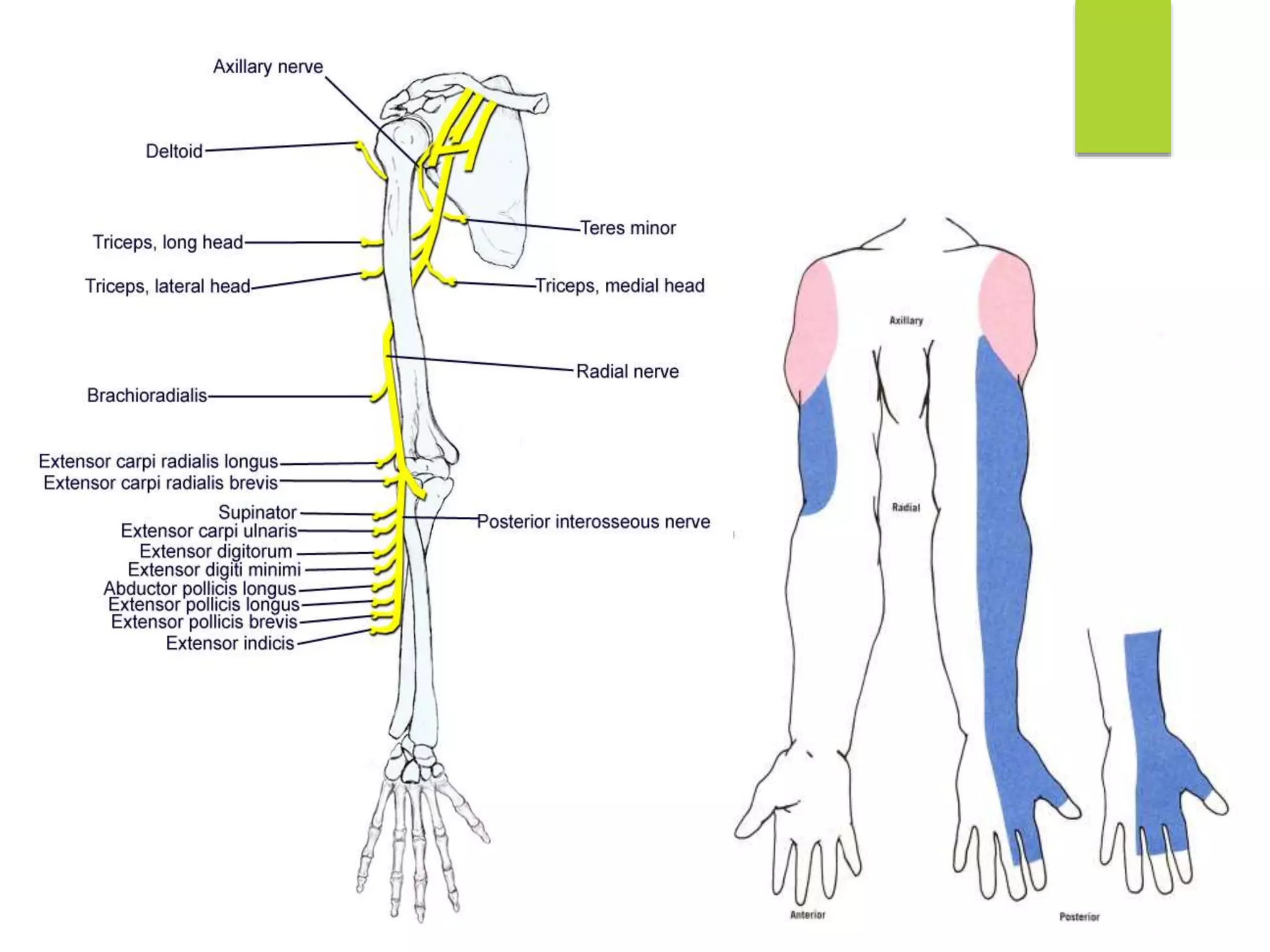
4- Radial Nerve 
 Roots: C5-C8 and T1 
 Motor Functions: 
innervates the triceps 
brachii, and the 
extensor muscles in the 
posterior compartment 
of the forearm. 
 Sensory Functions: 
Innervates the posterior 
aspect of the arm and 
forearm, and the 
posterior, lateral aspect 
of the hand.
5- Ulnar Nerve 
 Roots: C8 and T1 
 Motor Functions: 
Innervates the muscles 
of the hand (apart from 
the thenar muscles and 
two lateral lumbricals), 
flexor carpi ulnaris and 
medial half of flexor 
digitorum profundus 
 Sensory Functions: 
Innervates the anterior 
and posterior surfaces of 
the medial one and half 
fingers, and associated 
palm area
Blood Supply of the Brachial Plexus 
 The blood supply of the brachial plexus is based largely on the 
subclavian (which becomes the axillary) artery and its branches, 
and variations exist. 
 Generally, the vessels involved are the vertebral, the ascending 
and deep cervical, and the superior intercostal arteries. 
The cord and roots: 
supplied by the anterior 
and posterior spinal 
branches of the 
vertebral artery. 
The trunks of the plexus: 
supplied by muscular branches 
of the ascending and deep 
cervical arteries and superior 
intercostals, and occasionally by 
the subclavian itself.[
References 
 Medscape Reference 
 http://teachmeanatomy.info/
Thank You 
AbdulazizROA@gmail.com 
@Azizocyte

Brachial Plexus Anatomy

  • 1.
    Brachial Plexus Anatomy  Abdulaziz R. Alanzi  Medical Student, Al-Imam University  Riyadh, Saudi Arabia
  • 2.
  • 3.
    Blood Supply ofUpper Limb
  • 4.
    Definition of BrachialPlexus The brachial plexus (plexus brachialis) is a somatic nerve plexus formed by intercommunications among the ventral rami (roots) of the lower 4 cervical nerves (C5-C8) and the first thoracic nerve (T1). The plexus, depicted in the images below, is responsible for the motor innervation of all of the muscles of the upper extremity, with the exception of the trapezius and levator scapula.
  • 5.
    Cont’d The brachialplexus is divided into 5 parts; Roots – Trunks – Divisions – Cords – Branches (a good mnemonic for this is Read That Damn Cadaver Book).
  • 6.
    Parts of BrachialPlexus 1- Roots: The ventral rami of spinal nerves C5 to T1 are referred to as the "roots" of the plexus. The roots emerge from the transverse processes of the cervical vertebrae immediately posterior to the vertebral artery. 2- Trunks: • Superior trunk: A combination of C5 and C6 roots. • Middle trunk: A continuation of C7. • Inferior trunk: A combination of C8 and T1 roots.
  • 8.
    Parts of BrachialPlexus 3- Divisions: each trunk splits into an anterior division and a posterior division. 4- Cords: The cords are formed by recombination of the six divisions to three nerve fibres. They are named by their position relative to the axillary artery. Lateral Cord: formed by anterior division of the superior trunk & anterior division of the middle trunk Posterior Cord: formed by posterior division of the superior trunk, posterior division of the middle trunk & posterior division of the inferior trunk. Medial Cord: formed by the anterior division of the inferior trunk
  • 10.
    Minor branches ofthe brachial plexus
  • 11.
    1- Musculocutaneous Nerve  Roots: C5, C6, C7  Motor Functions: Innervates the brachialis, biceps brachii and corocobrachialis muscles.  Sensory Functions: Gives off the lateral cutaneous branch of the forearm, which innervates the lateral half of the anterior forearm, and a small lateral portion of the posterior forearm
  • 13.
    2- Axillary Nerve  Roots: C5 and C6  Motor Functions: Innervates the deltoid, teres minor and the long head of the triceps brachii  Sensory Functions: Gives off the superior lateral cutaneous nerve of arm, which innervates the inferior region of the deltoid (“regimental badge area”)
  • 15.
    3- Median Nerve  Roots: C6 – C8 and T1  Motor Functions: Innervates most of the flexor muscles in the forearm, the thenar muscles, and the two lateral lumbrical muscles that move the index and middle fingers  Sensory Functions: Gives off the palmar cutaneous branch, which innervates the lateral part of the palm, and the digital cutaneous branch, which innervates the lateral three and a half fingers on the anterior (palmar) surface of the hand.
  • 17.
    4- Radial Nerve  Roots: C5-C8 and T1  Motor Functions: innervates the triceps brachii, and the extensor muscles in the posterior compartment of the forearm.  Sensory Functions: Innervates the posterior aspect of the arm and forearm, and the posterior, lateral aspect of the hand.
  • 19.
    5- Ulnar Nerve  Roots: C8 and T1  Motor Functions: Innervates the muscles of the hand (apart from the thenar muscles and two lateral lumbricals), flexor carpi ulnaris and medial half of flexor digitorum profundus  Sensory Functions: Innervates the anterior and posterior surfaces of the medial one and half fingers, and associated palm area
  • 21.
    Blood Supply ofthe Brachial Plexus  The blood supply of the brachial plexus is based largely on the subclavian (which becomes the axillary) artery and its branches, and variations exist.  Generally, the vessels involved are the vertebral, the ascending and deep cervical, and the superior intercostal arteries. The cord and roots: supplied by the anterior and posterior spinal branches of the vertebral artery. The trunks of the plexus: supplied by muscular branches of the ascending and deep cervical arteries and superior intercostals, and occasionally by the subclavian itself.[
  • 22.
    References  MedscapeReference  http://teachmeanatomy.info/
  • 23.

Editor's Notes

  • #3 The brachial plexus is a network of nerve fibres that run through the neck and axilla, into the arm. The basic anatomical relationships of the brachial plexus (BP). The BP is subdivided into roots, trunks, divisions, cords, and branches. LC stands for lateral cord, PC stands for the posterior cord, and MC stands for the medial cord.
  • #4 The brachial plexus is a network of nerve fibres that run through the neck and axilla, into the arm. The basic anatomical relationships of the brachial plexus (BP). The BP is subdivided into roots, trunks, divisions, cords, and branches. LC stands for lateral cord, PC stands for the posterior cord, and MC stands for the medial cord.
  • #5 The brachial plexus is a network of nerve fibres that run through the neck and axilla, into the arm. The basic anatomical relationships of the brachial plexus (BP). The BP is subdivided into roots, trunks, divisions, cords, and branches. LC stands for lateral cord, PC stands for the posterior cord, and MC stands for the medial cord.
  • #6 the brachial plexus is composed of 5 roots, 3 trunks, 6 divisions, 3 cords, and terminal branches, as seen in the image below.