in the
Foreign
Language
Classroom
Bloom’s
Taxonomy
Tips, Tools and Resources to help
your students rise in proficiency
and communicate with confidence.
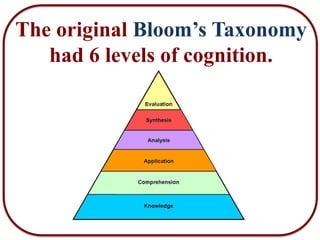
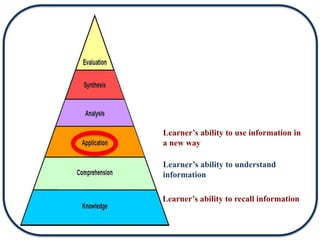
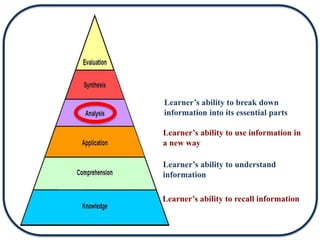
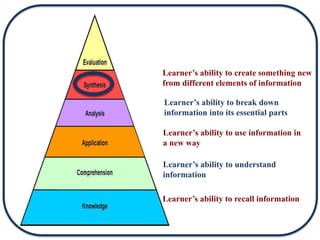
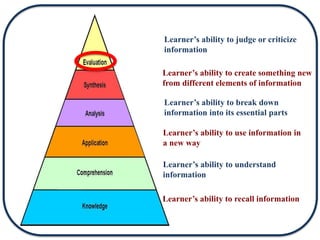
The original Bloom’s Taxonomy
had 6 levels of cognition.
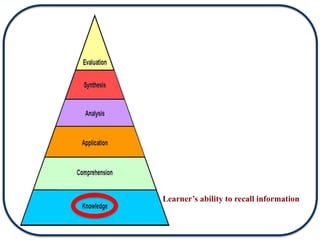
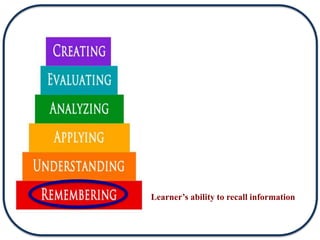
Learner’s ability to recall information
Learner’s ability to understand
information
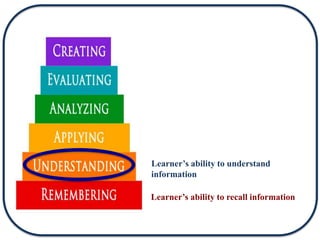
Learner’s ability to recall information
Learner’s ability to understand
information
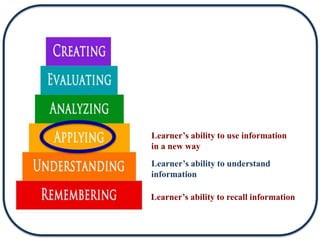
Learner’s ability to use information in
a new way
Learner’s ability to recall information
Learner’s ability to understand
information
Learner’s ability to use information in
a new way
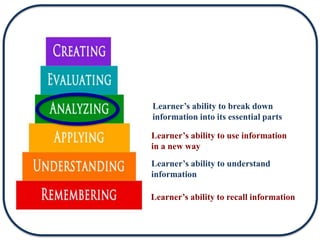
Learner’s ability to break down
information into its essential parts
Learner’s ability to recall information
Learner’s ability to understand
information
Learner’s ability to use information in
a new way
Learner’s ability to break down
information into its essential parts
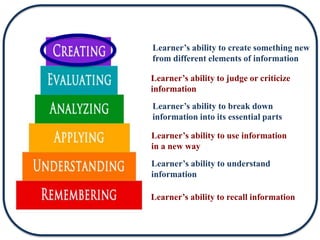
Learner’s ability to create something new
from different elements of information
Learner’s ability to recall information
Learner’s ability to understand
information
Learner’s ability to use information in
a new way
Learner’s ability to break down
information into its essential parts
Learner’s ability to create something new
from different elements of information
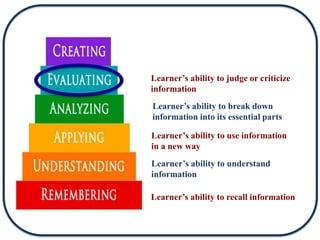
Learner’s ability to judge or criticize
information
Learner’s ability to recall information
Learner’s ability to understand
information
Learner’s ability to recall information
Learner’s ability to understand
information
Learner’s ability to use information
in a new way
Learner’s ability to recall information
Learner’s ability to understand
information
Learner’s ability to use information
in a new way
Learner’s ability to break down
information into its essential parts
Learner’s ability to recall information
Learner’s ability to understand
information
Learner’s ability to use information
in a new way
Learner’s ability to break down
information into its essential parts
Learner’s ability to judge or criticize
information
Learner’s ability to recall information
Learner’s ability to understand
information
Learner’s ability to use information
in a new way
Learner’s ability to break down
information into its essential parts
Learner’s ability to judge or criticize
information
Learner’s ability to create something new
from different elements of information
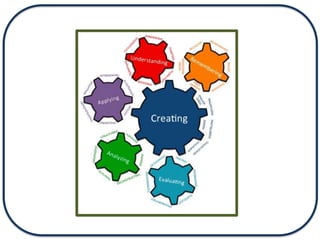
Theses updates reflect a more
active thought process and
include two main changes:
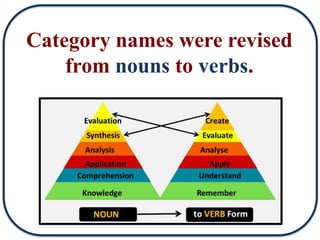
Category names were revised
from nouns to verbs.
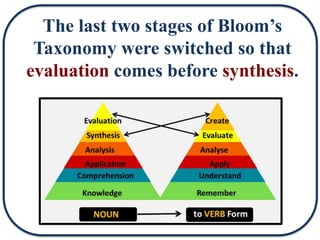
The last two stages of Bloom’s
Taxonomy were switched so that
evaluation comes before synthesis.
When learning a foreign
language it is important to
recognize that these skills
are not a hierarchy,
but are interrelated.
Here are questions to use when
creating tasks, activities &
assessments in the world language
classroom using the updated
Bloom’s taxonomy categories:
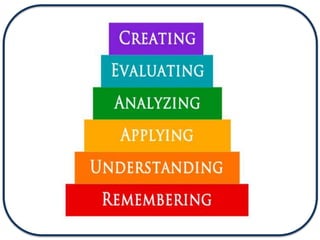
Remember:
Can the student recall or
remember the information?
Understand:
Can the student explain ideas
or concepts?
Apply:
Can the student use the
information in a new way?
Analyze:
Can the student distinguish
between the different parts?
Evaluate:
Can the student justify a
stand or decision?
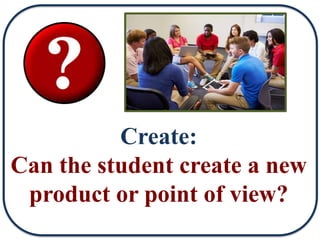
Create:
Can the student create a new
product or point of view?
Click below to download a list of
over 60 verbs to use when
creating tasks, activities &
assessments using Bloom’s
(updated) taxonomy.
Click HERE
to read my blog
post on Bloom’s
Taxonomy.
www.wlclassroom.com
Tips, Tools and Resources to help
your students rise in proficiency and
communicate with confidence.
Click to follow
Lorin Anderson and David
Krathwohl : A Taxonomy for
Learning, Teaching, and Assessing:
A Revision of Bloom’s Taxonomy of
Educational Objectives. New York :
Longman, ©2001.

Bloom's Taxonomy in the Foreign Language Classroom #wlclassroom

  • 1.
  • 2.
    Tips, Tools andResources to help your students rise in proficiency and communicate with confidence.
  • 5.
    The original Bloom’sTaxonomy had 6 levels of cognition.
  • 6.
    Learner’s ability torecall information
  • 7.
    Learner’s ability torecall information Learner’s ability to understand information
  • 8.
    Learner’s ability torecall information Learner’s ability to understand information Learner’s ability to use information in a new way
  • 9.
    Learner’s ability torecall information Learner’s ability to understand information Learner’s ability to use information in a new way Learner’s ability to break down information into its essential parts
  • 10.
    Learner’s ability torecall information Learner’s ability to understand information Learner’s ability to use information in a new way Learner’s ability to break down information into its essential parts Learner’s ability to create something new from different elements of information
  • 11.
    Learner’s ability torecall information Learner’s ability to understand information Learner’s ability to use information in a new way Learner’s ability to break down information into its essential parts Learner’s ability to create something new from different elements of information Learner’s ability to judge or criticize information
  • 14.
    Learner’s ability torecall information
  • 15.
    Learner’s ability torecall information Learner’s ability to understand information
  • 16.
    Learner’s ability torecall information Learner’s ability to understand information Learner’s ability to use information in a new way
  • 17.
    Learner’s ability torecall information Learner’s ability to understand information Learner’s ability to use information in a new way Learner’s ability to break down information into its essential parts
  • 18.
    Learner’s ability torecall information Learner’s ability to understand information Learner’s ability to use information in a new way Learner’s ability to break down information into its essential parts Learner’s ability to judge or criticize information
  • 19.
    Learner’s ability torecall information Learner’s ability to understand information Learner’s ability to use information in a new way Learner’s ability to break down information into its essential parts Learner’s ability to judge or criticize information Learner’s ability to create something new from different elements of information
  • 20.
    Theses updates reflecta more active thought process and include two main changes:
  • 21.
    Category names wererevised from nouns to verbs.
  • 22.
    The last twostages of Bloom’s Taxonomy were switched so that evaluation comes before synthesis.
  • 23.
    When learning aforeign language it is important to recognize that these skills are not a hierarchy, but are interrelated.
  • 26.
    Here are questionsto use when creating tasks, activities & assessments in the world language classroom using the updated Bloom’s taxonomy categories:
  • 27.
    Remember: Can the studentrecall or remember the information?
  • 28.
    Understand: Can the studentexplain ideas or concepts?
  • 29.
    Apply: Can the studentuse the information in a new way?
  • 30.
    Analyze: Can the studentdistinguish between the different parts?
  • 31.
    Evaluate: Can the studentjustify a stand or decision?
  • 32.
    Create: Can the studentcreate a new product or point of view?
  • 33.
    Click below todownload a list of over 60 verbs to use when creating tasks, activities & assessments using Bloom’s (updated) taxonomy.
  • 34.
    Click HERE to readmy blog post on Bloom’s Taxonomy.
  • 35.
    www.wlclassroom.com Tips, Tools andResources to help your students rise in proficiency and communicate with confidence.
  • 36.
  • 37.
    Lorin Anderson andDavid Krathwohl : A Taxonomy for Learning, Teaching, and Assessing: A Revision of Bloom’s Taxonomy of Educational Objectives. New York : Longman, ©2001.