ACTFL
Tips, Tools and Resources to help your
students rise in proficiency and
communicate with confidence.
ACTFL defines
3 modes of
communication
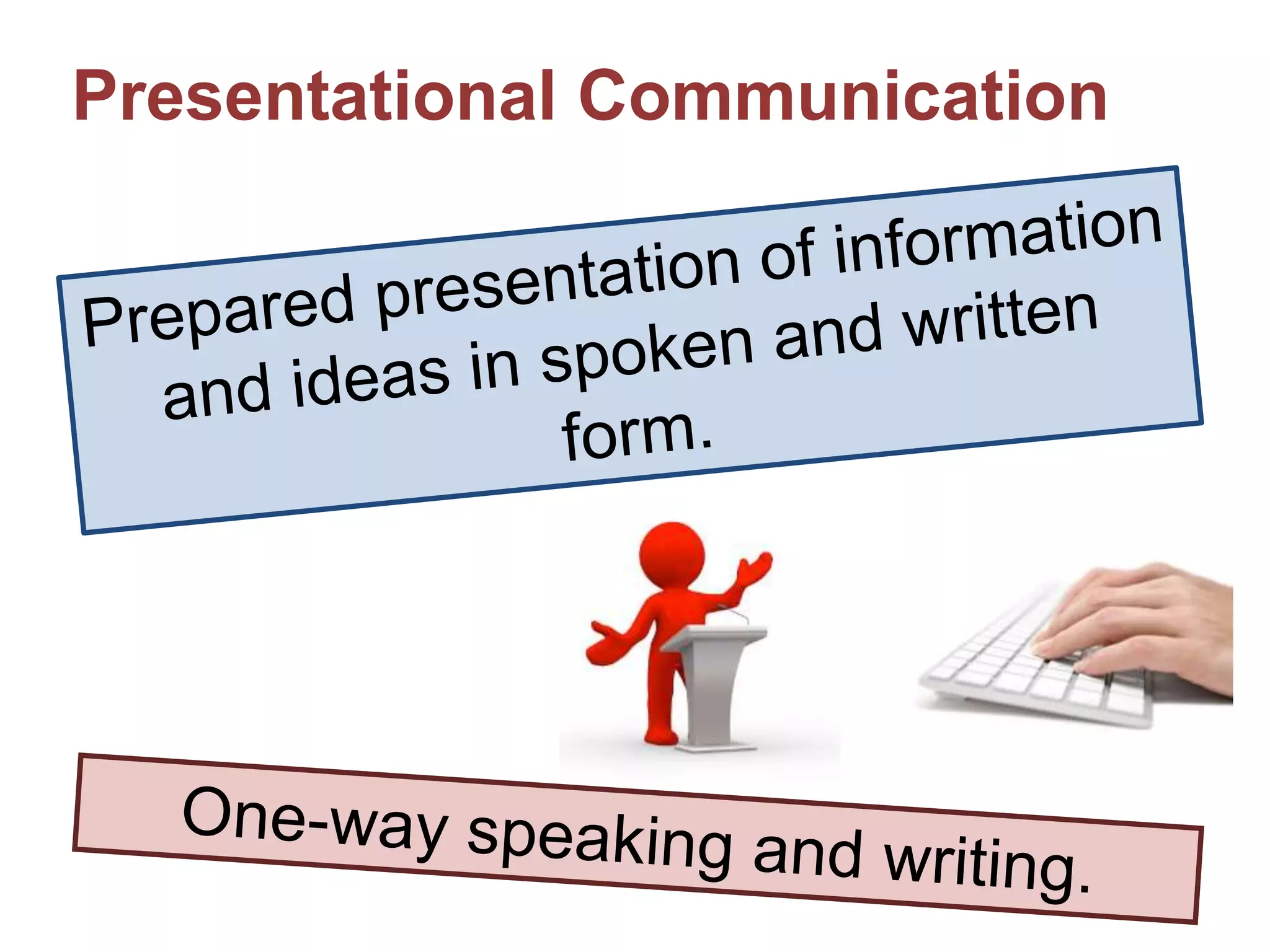
Presentational
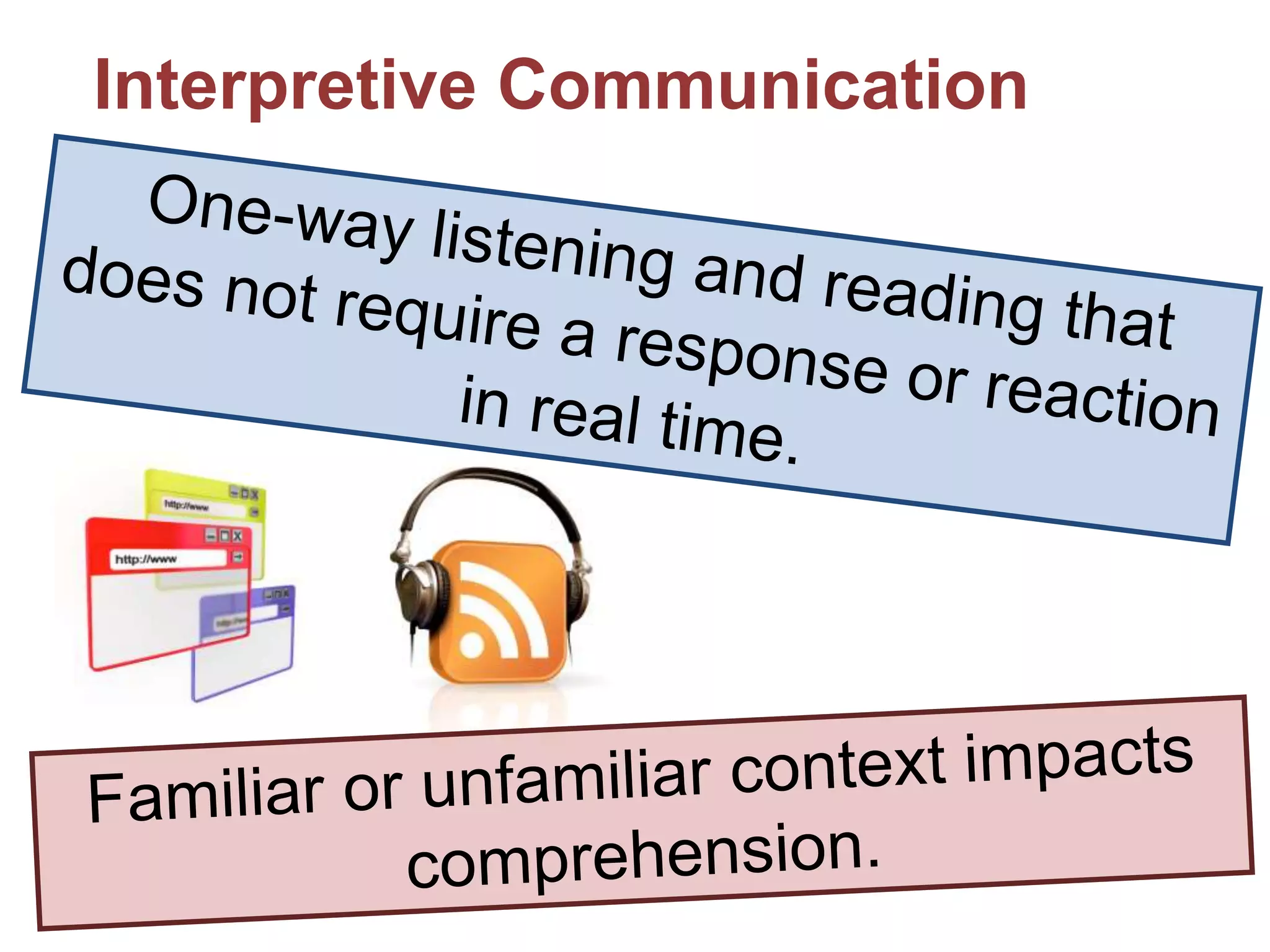
Interpretive
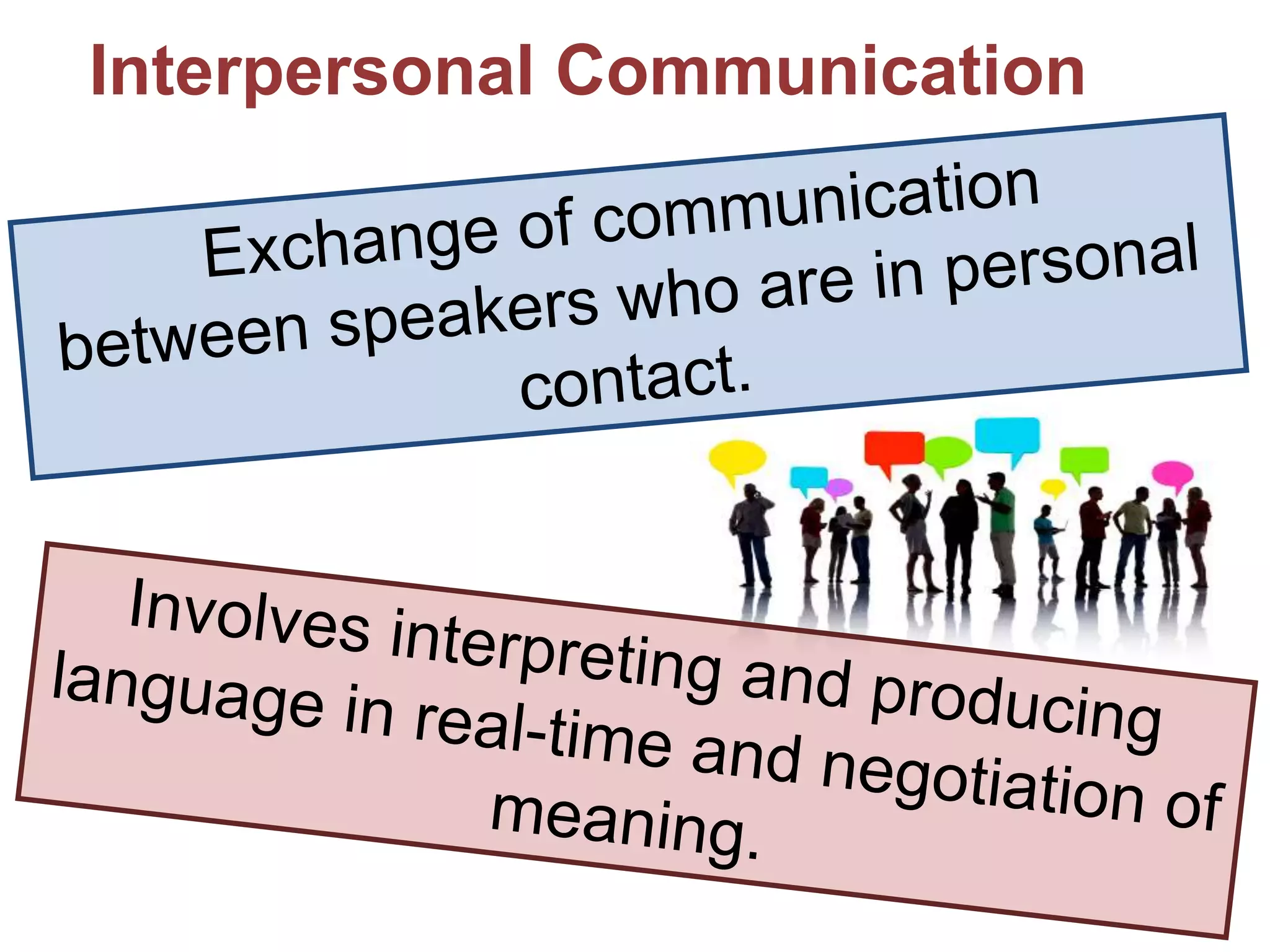
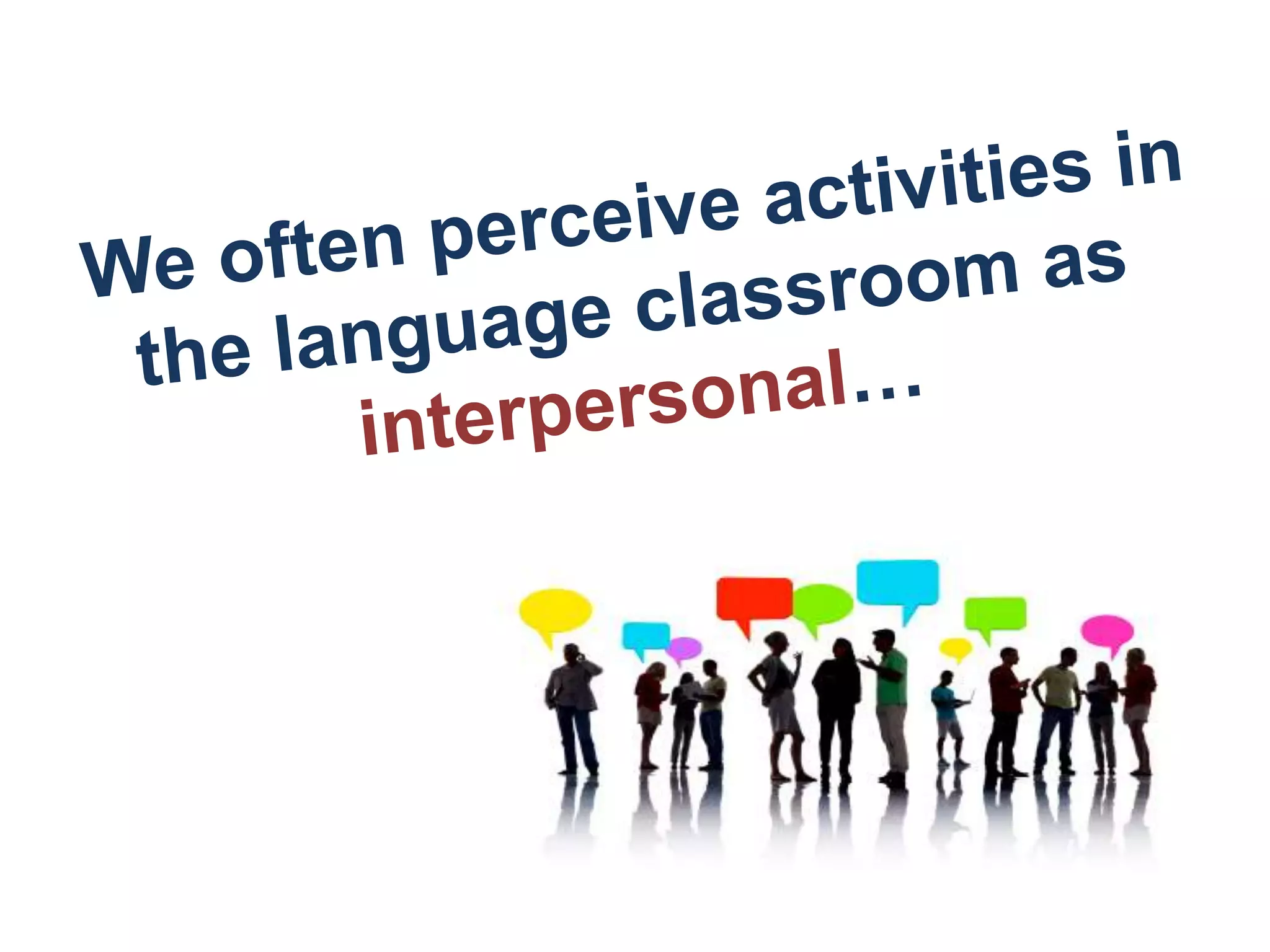
Interpersonal
How do we distinguish
& define these 3
modes?
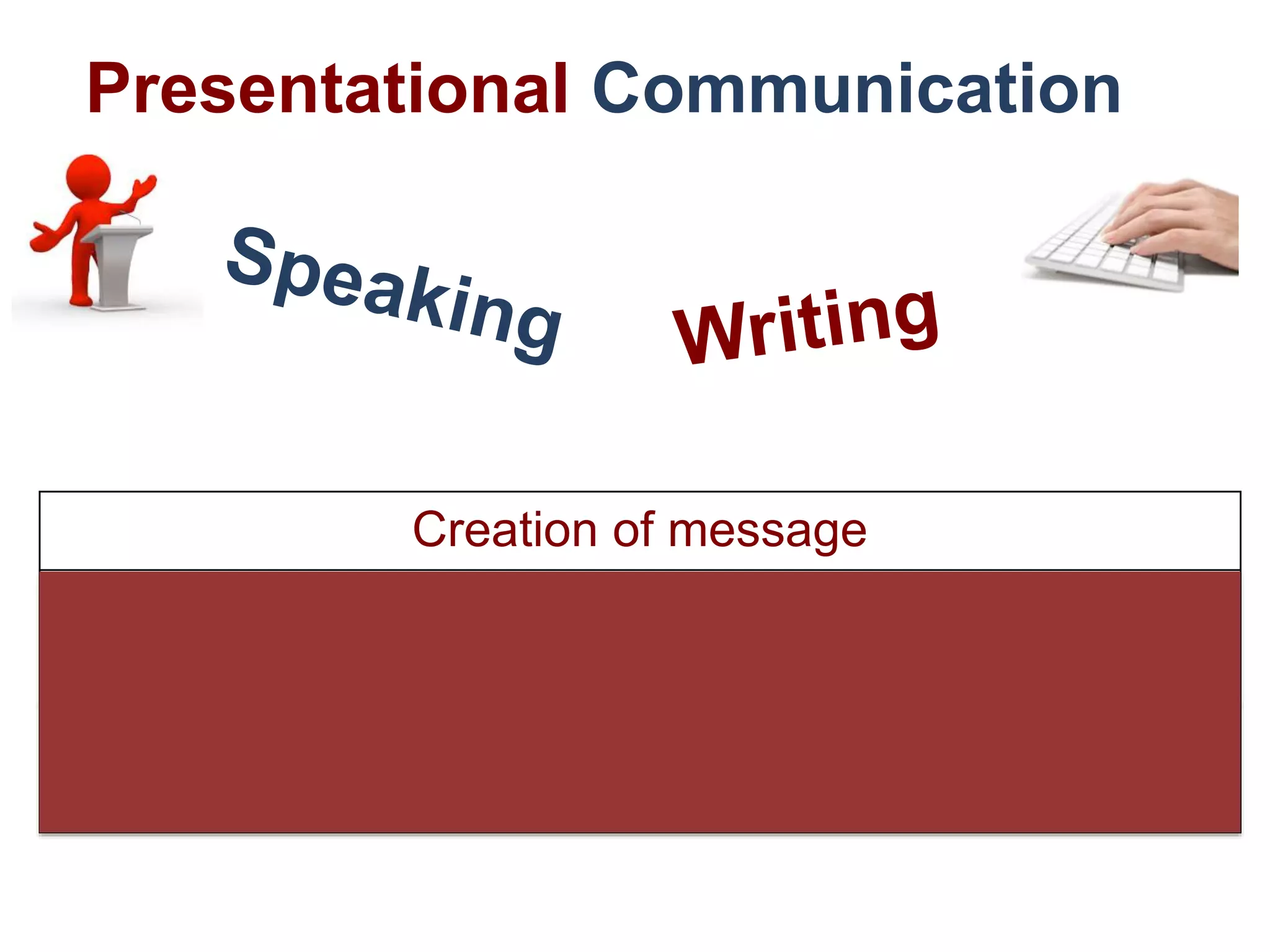
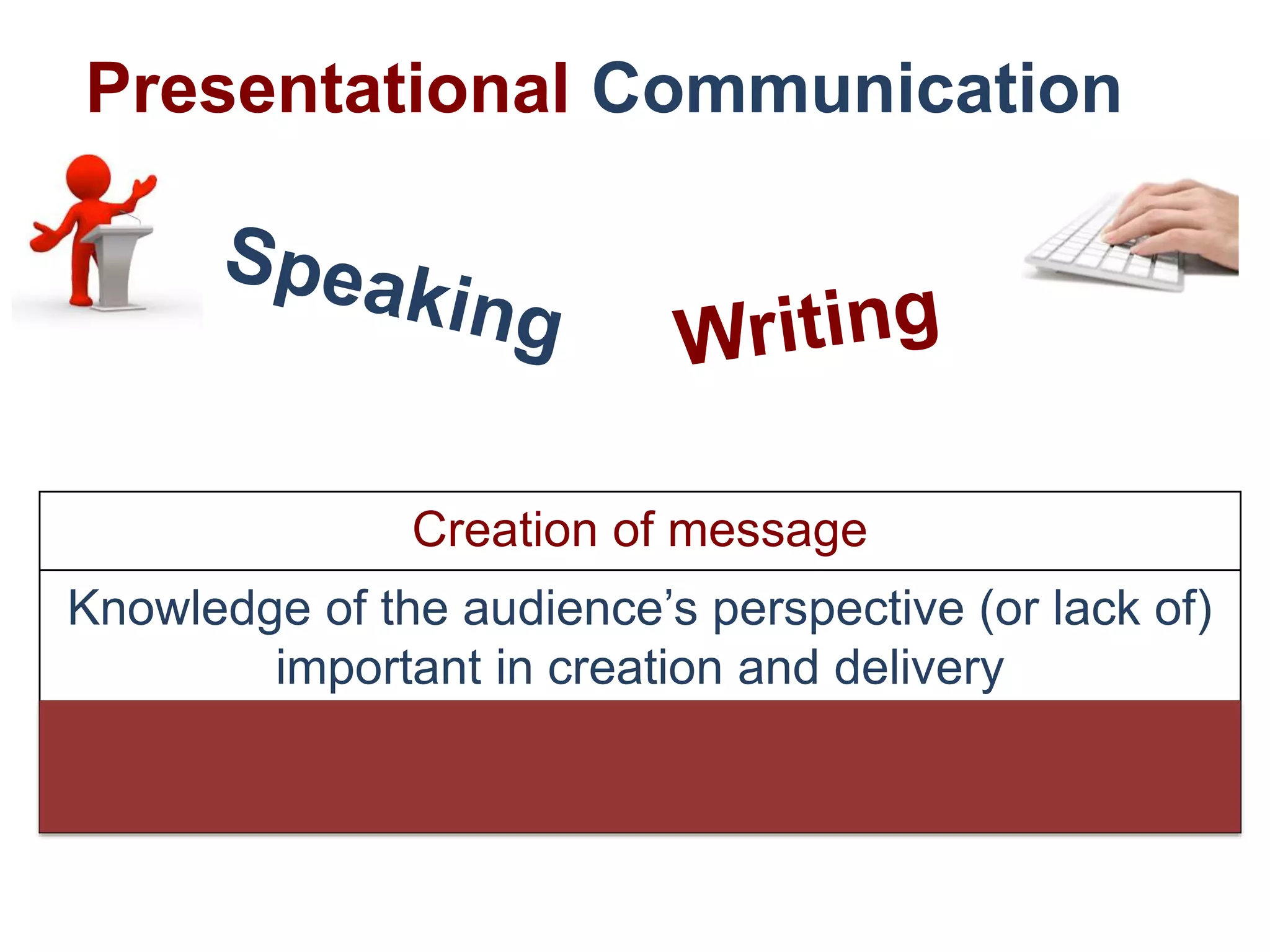
Presentational Communication
Interpretive Communication
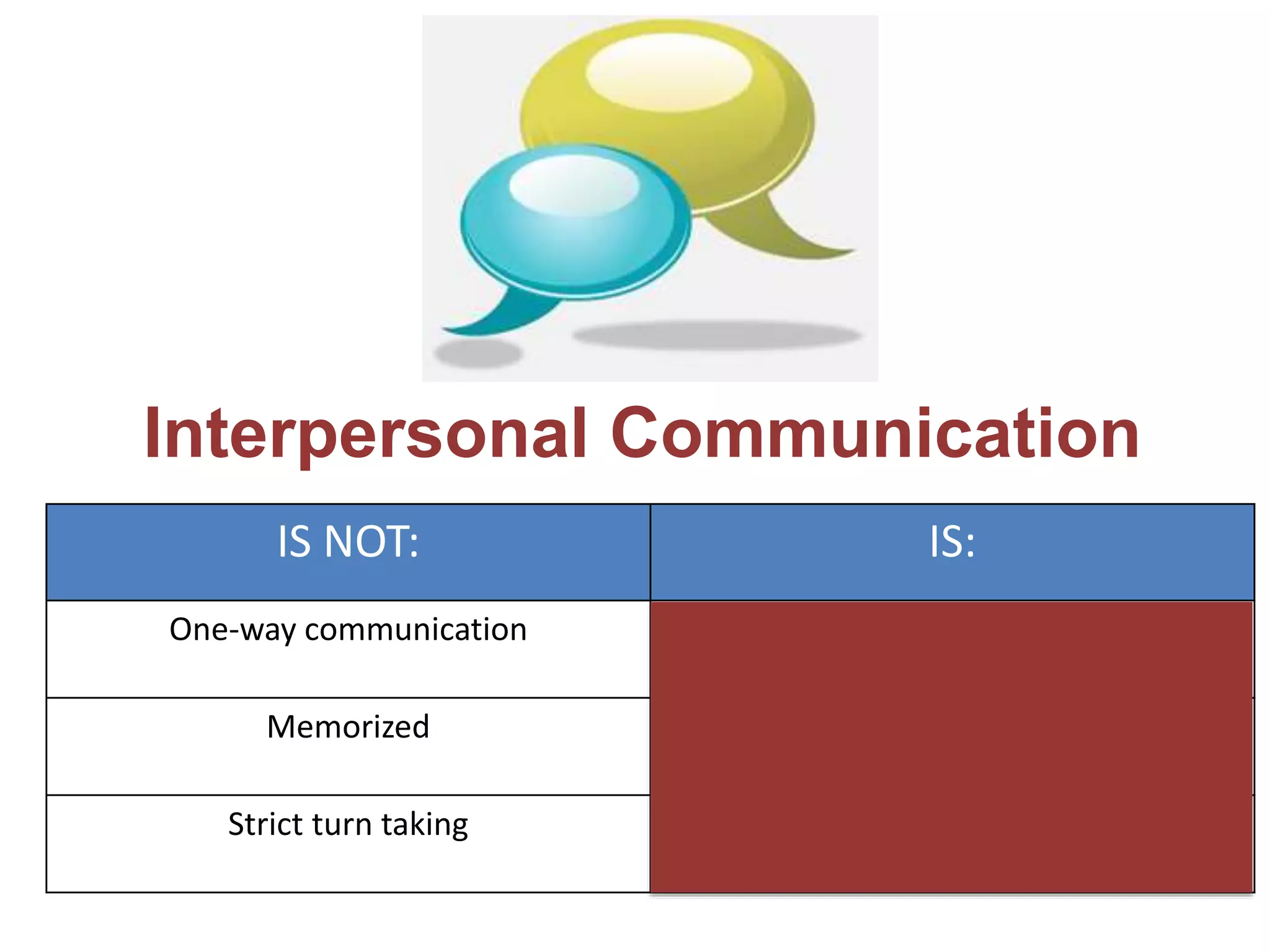
Interpersonal Communication
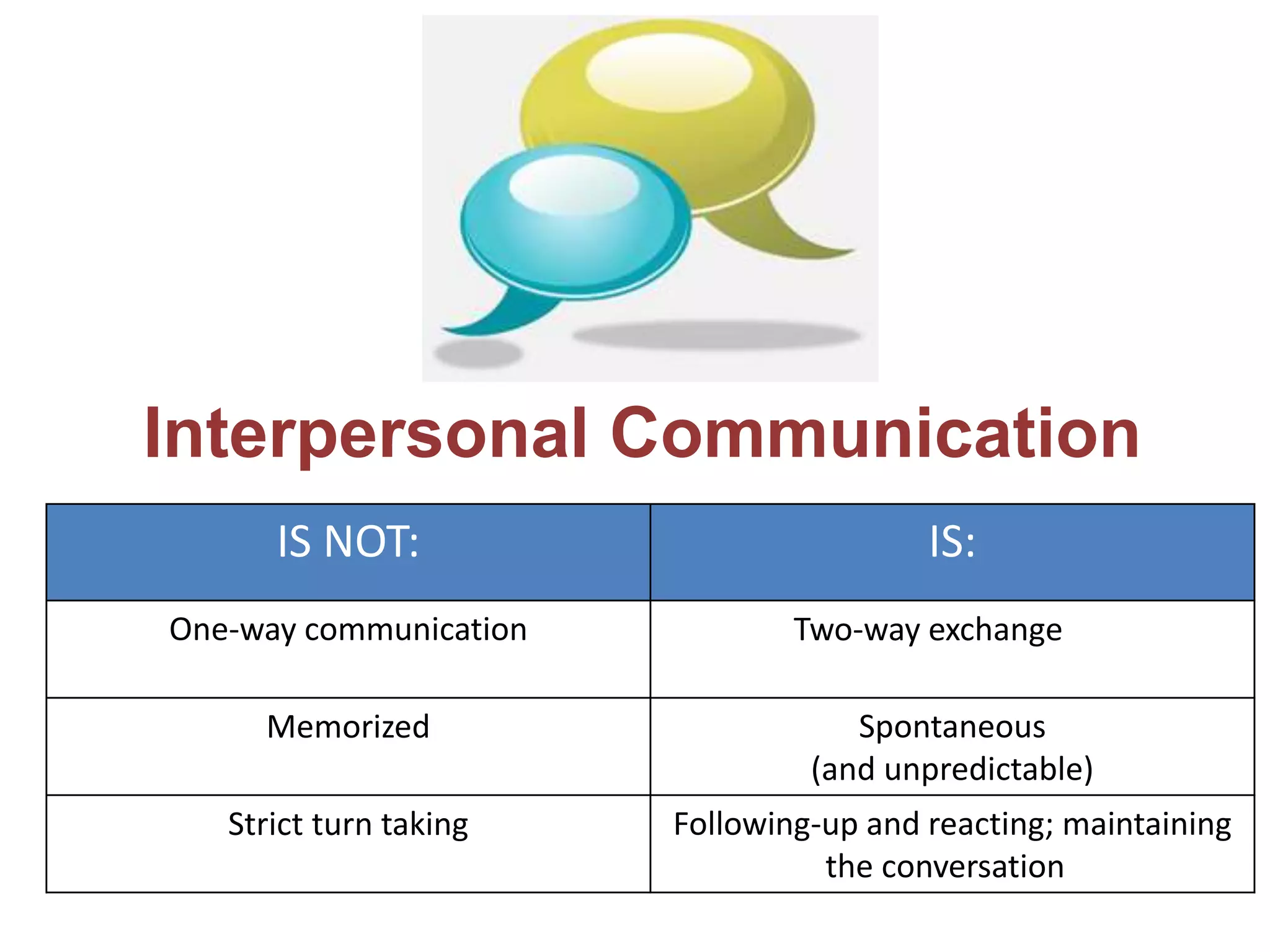
IS NOT: IS:
One-way communication Two-way exchange
Memorized Spontaneous
(and unpredictable)
Strict turn taking Following-up and reacting; maintaining
the conversation
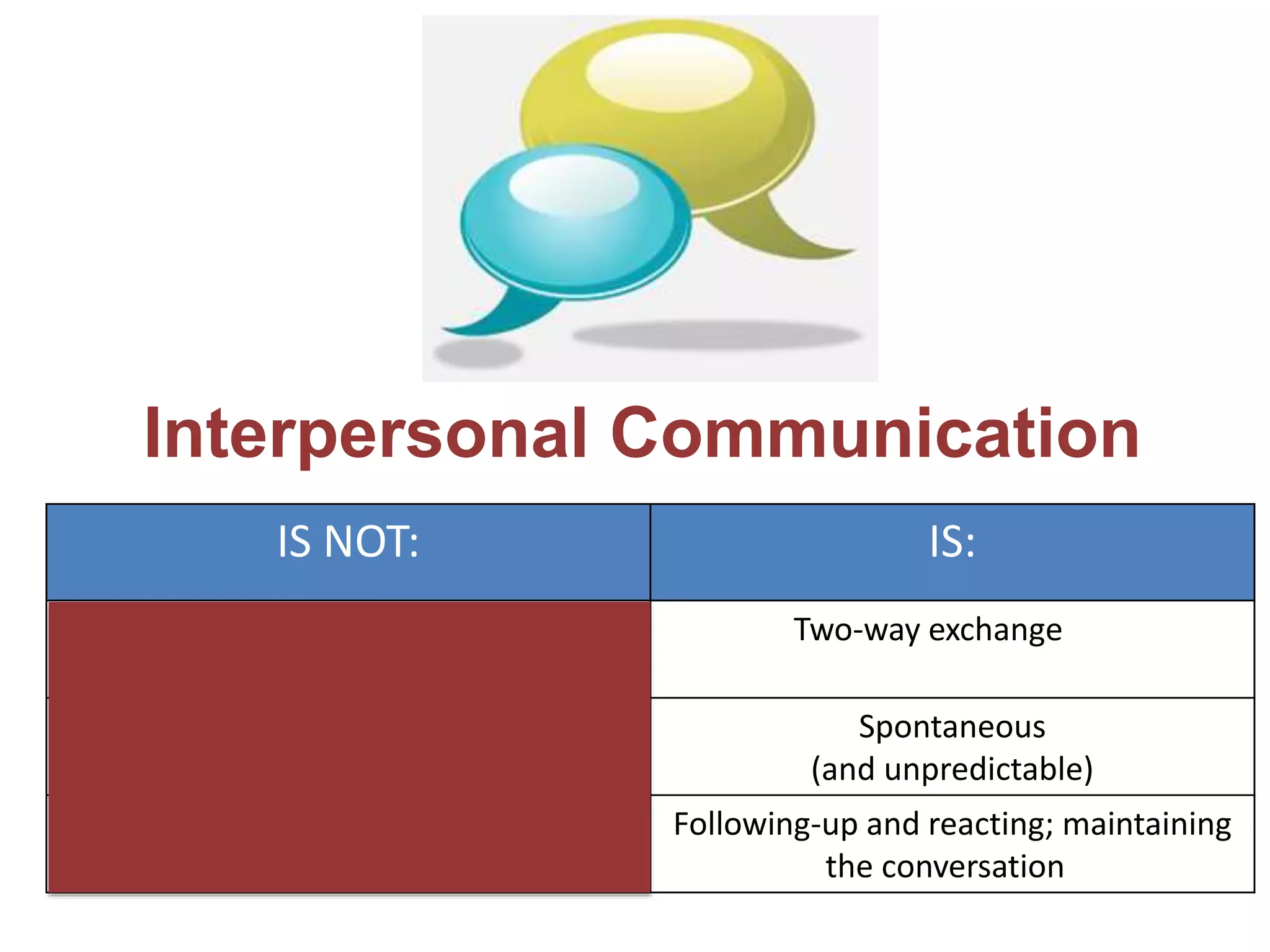
Interpersonal Communication
IS NOT: IS:
One-way communication Two-way exchange
Memorized Spontaneous
(and unpredictable)
Strict turn taking Following-up and reacting; maintaining
the conversation
Interpersonal Communication
IS NOT: IS:
One-way communication Two-way exchange
Memorized Spontaneous
(and unpredictable)
Strict turn taking Following-up and reacting; maintaining
the conversation
Interpersonal Communication
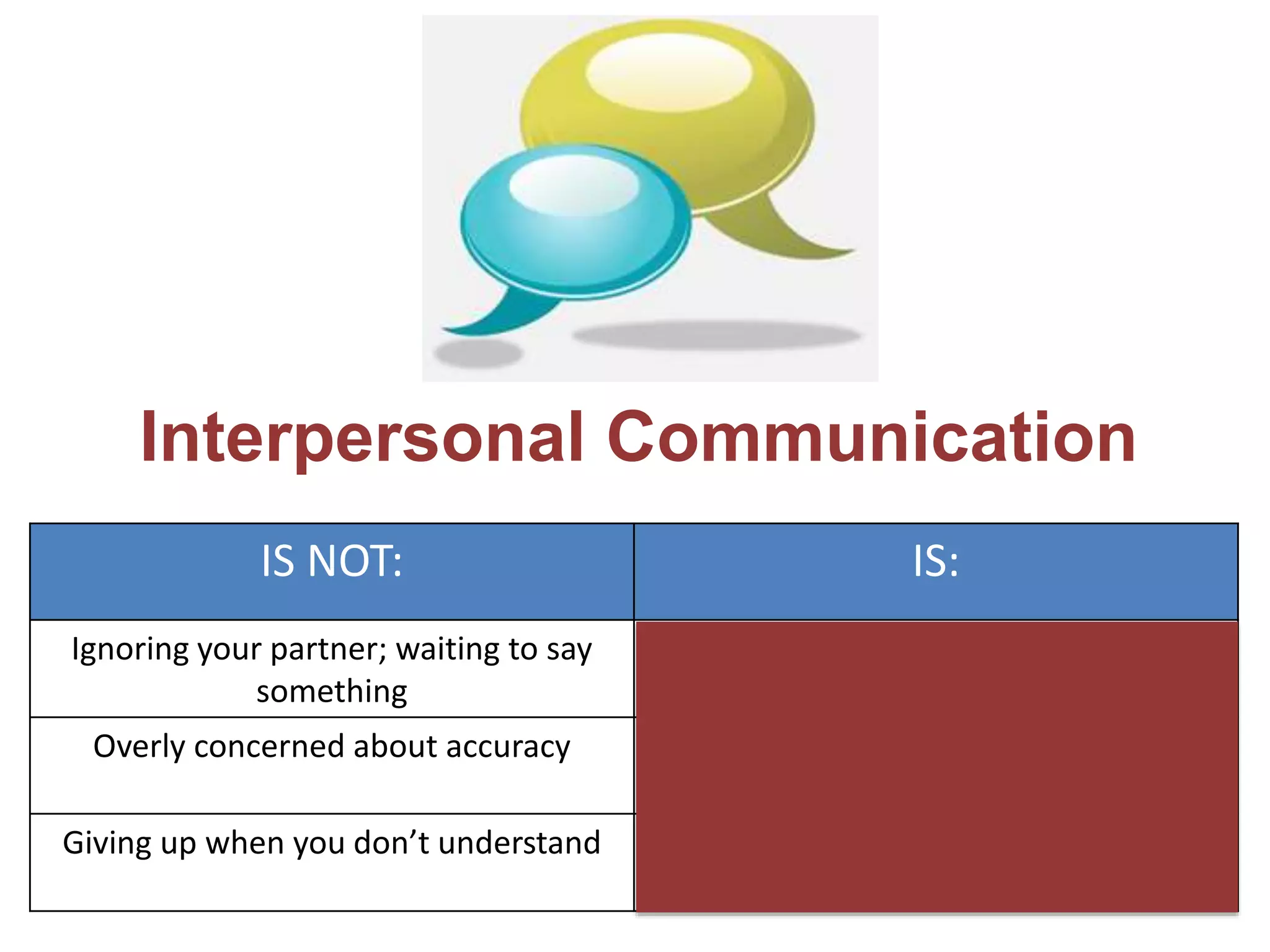
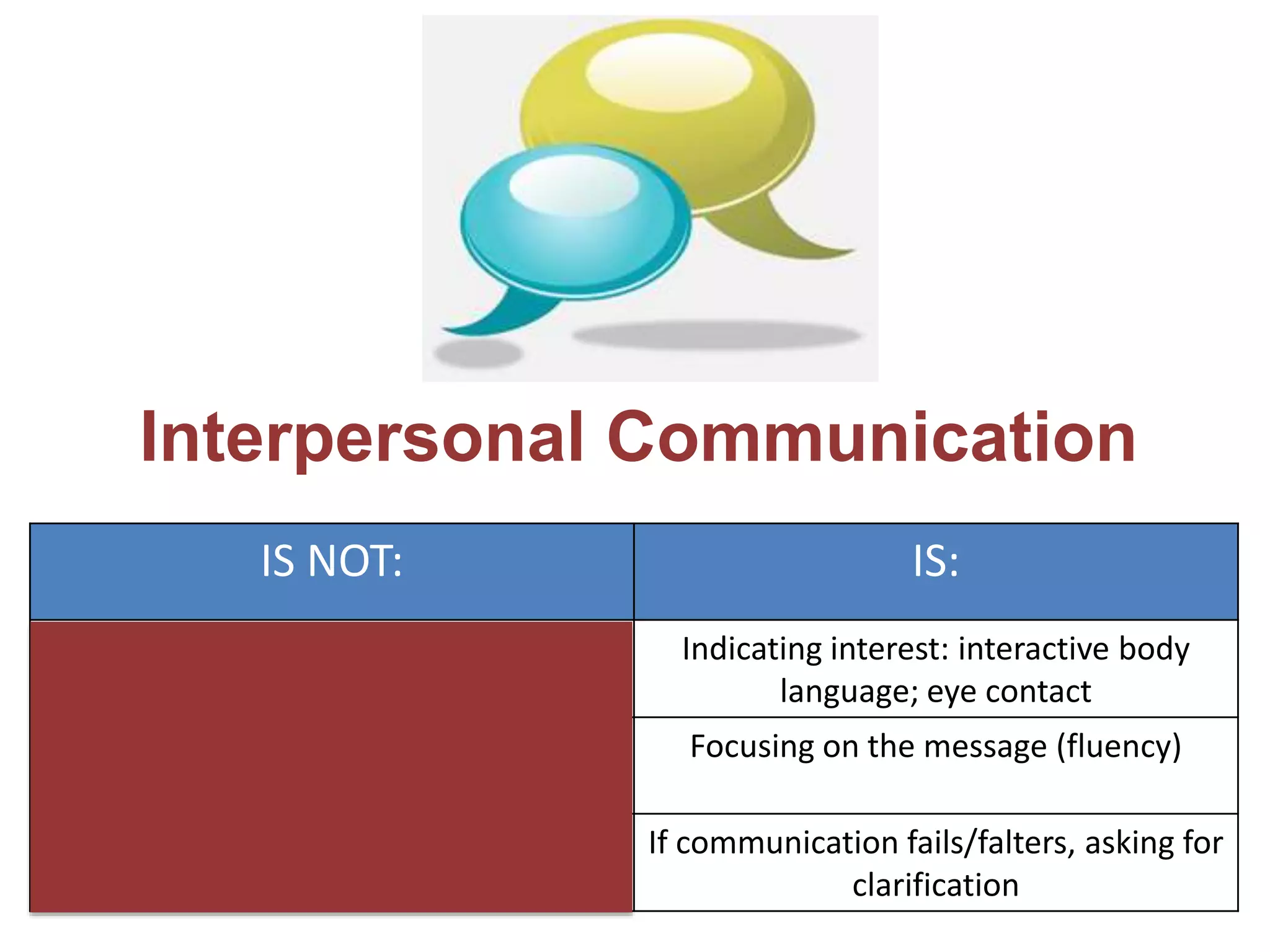
IS NOT: IS:
Ignoring your partner; waiting to say
something
Indicating interest: interactive body
language; eye contact
Overly concerned about accuracy Focusing on the message (fluency)
Giving up when you don’t understand If communication fails/falters, asking for
clarification
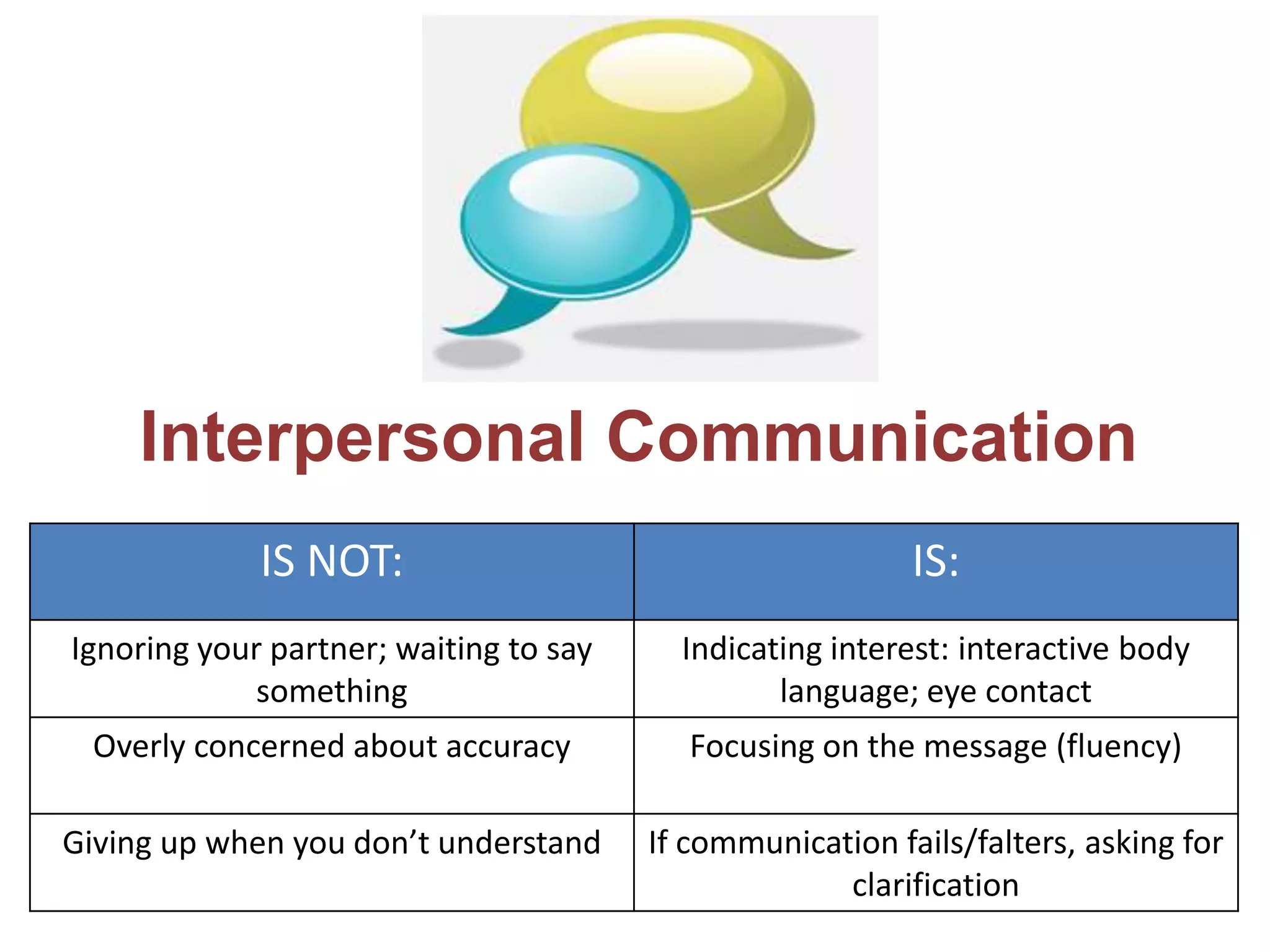
Interpersonal Communication
IS NOT: IS:
Ignoring your partner; waiting to say
something
Indicating interest: interactive body
language; eye contact
Overly concerned about accuracy Focusing on the message (fluency)
Giving up when you don’t understand If communication fails/falters, asking for
clarification
Interpersonal Communication
IS NOT: IS:
Ignoring your partner; waiting to say
something
Indicating interest: interactive body
language; eye contact
Overly concerned about accuracy Focusing on the message (fluency)
Giving up when you don’t understand If communication fails/falters, asking for
clarification
Creation of message
Knowledge of the audience’s perspective (or lack of)
important in creation and delivery
No direct opportunity for the
active negotiation of meaning
Presentational Communication
Creation of message
Knowledge of the audience’s perspective (or lack of)
important in creation and delivery
No direct opportunity for the
active negotiation of meaning
Presentational Communication
Creation of message
Knowledge of the audience’s perspective (or lack of)
important in creation and delivery
No direct opportunity for the
active negotiation of meaning
Presentational Communication
Creation of message
Knowledge of the audience’s perspective (or lack of)
important in creation and delivery
No direct opportunity for the
active negotiation of meaning
Presentational Communication
Interpretation of message
Understanding of the writer/speaker’s perspective
important to interpretation
No direct opportunity for the
active negotiation of meaning
Interpretive Communication
Interpretation of message
Understanding of the writer/speaker’s perspective
important to interpretation
No direct opportunity for the
active negotiation of meaning
Interpretive Communication
Interpretation of message
Understanding of the writer/speaker’s perspective
important to interpretation
No direct opportunity for the
active negotiation of meaning
Interpretive Communication
Interpretation of message
Understanding of the writer/speaker’s perspective
important to interpretation
No direct opportunity for the
active negotiation of meaning
Interpretive Communication
www.wlclassroom.com
Tips, Tools and Resources to help your
students rise in proficiency and
communicate with confidence.
Click to follow

ACTFL Modes of Communication #wlclassroom

  • 1.
  • 2.
    Tips, Tools andResources to help your students rise in proficiency and communicate with confidence.
  • 3.
    ACTFL defines 3 modesof communication
  • 4.
  • 5.
    How do wedistinguish & define these 3 modes?
  • 6.
  • 7.
  • 8.
  • 12.
    Interpersonal Communication IS NOT:IS: One-way communication Two-way exchange Memorized Spontaneous (and unpredictable) Strict turn taking Following-up and reacting; maintaining the conversation
  • 13.
    Interpersonal Communication IS NOT:IS: One-way communication Two-way exchange Memorized Spontaneous (and unpredictable) Strict turn taking Following-up and reacting; maintaining the conversation
  • 14.
    Interpersonal Communication IS NOT:IS: One-way communication Two-way exchange Memorized Spontaneous (and unpredictable) Strict turn taking Following-up and reacting; maintaining the conversation
  • 16.
    Interpersonal Communication IS NOT:IS: Ignoring your partner; waiting to say something Indicating interest: interactive body language; eye contact Overly concerned about accuracy Focusing on the message (fluency) Giving up when you don’t understand If communication fails/falters, asking for clarification
  • 17.
    Interpersonal Communication IS NOT:IS: Ignoring your partner; waiting to say something Indicating interest: interactive body language; eye contact Overly concerned about accuracy Focusing on the message (fluency) Giving up when you don’t understand If communication fails/falters, asking for clarification
  • 18.
    Interpersonal Communication IS NOT:IS: Ignoring your partner; waiting to say something Indicating interest: interactive body language; eye contact Overly concerned about accuracy Focusing on the message (fluency) Giving up when you don’t understand If communication fails/falters, asking for clarification
  • 20.
    Creation of message Knowledgeof the audience’s perspective (or lack of) important in creation and delivery No direct opportunity for the active negotiation of meaning Presentational Communication
  • 21.
    Creation of message Knowledgeof the audience’s perspective (or lack of) important in creation and delivery No direct opportunity for the active negotiation of meaning Presentational Communication
  • 22.
    Creation of message Knowledgeof the audience’s perspective (or lack of) important in creation and delivery No direct opportunity for the active negotiation of meaning Presentational Communication
  • 23.
    Creation of message Knowledgeof the audience’s perspective (or lack of) important in creation and delivery No direct opportunity for the active negotiation of meaning Presentational Communication
  • 24.
    Interpretation of message Understandingof the writer/speaker’s perspective important to interpretation No direct opportunity for the active negotiation of meaning Interpretive Communication
  • 25.
    Interpretation of message Understandingof the writer/speaker’s perspective important to interpretation No direct opportunity for the active negotiation of meaning Interpretive Communication
  • 26.
    Interpretation of message Understandingof the writer/speaker’s perspective important to interpretation No direct opportunity for the active negotiation of meaning Interpretive Communication
  • 27.
    Interpretation of message Understandingof the writer/speaker’s perspective important to interpretation No direct opportunity for the active negotiation of meaning Interpretive Communication
  • 31.
    www.wlclassroom.com Tips, Tools andResources to help your students rise in proficiency and communicate with confidence.
  • 32.