What does language look
like at various foreign
language proficiency levels?
And, what can
students do
to level up?
Tips, Tools and Resources to help
your students rise in proficiency
and communicate with confidence.
The ACTFL Proficiency
Levels and Performance
Descriptors provide a
very useful tool for
seeing exactly what
learners are able to
communicate and
produce at the various
proficiency levels.
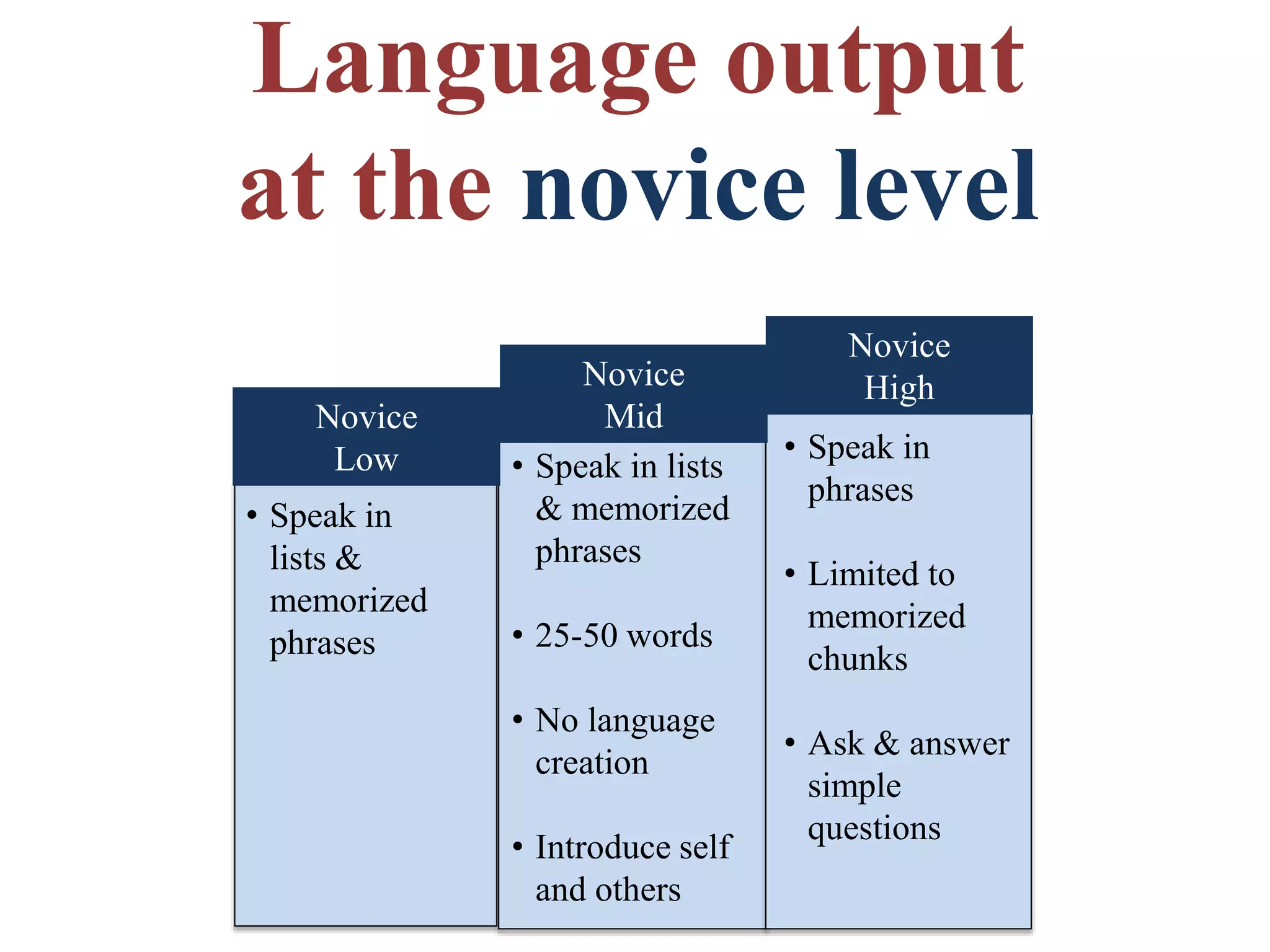
Language output
at the novice level
Novice
Low
Novice
Mid
Novice
High
• Speak in
lists &
memorized
phrases
• Speak in lists
& memorized
phrases
• 25-50 words
• No language
creation
• Introduce self
and others
• Speak in
phrases
• Limited to
memorized
chunks
• Ask & answer
simple
questions
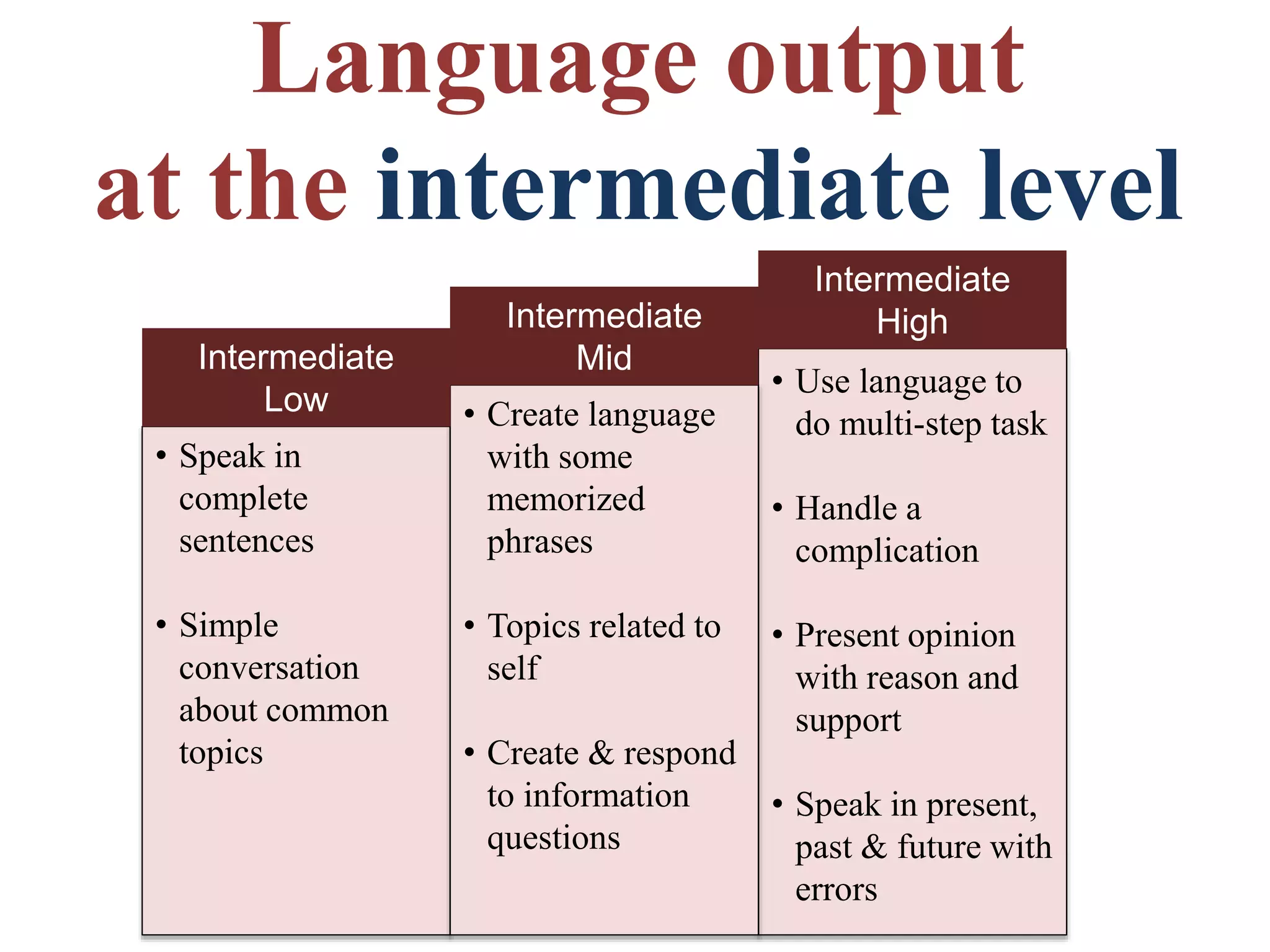
Language output
at the intermediate level
Intermediate
Low
Intermediate
Mid
Intermediate
High
• Speak in
complete
sentences
• Simple
conversation
about common
topics
• Use language to
do multi-step task
• Handle a
complication
• Present opinion
with reason and
support
• Speak in present,
past & future with
errors
• Create language
with some
memorized
phrases
• Topics related to
self
• Create & respond
to information
questions
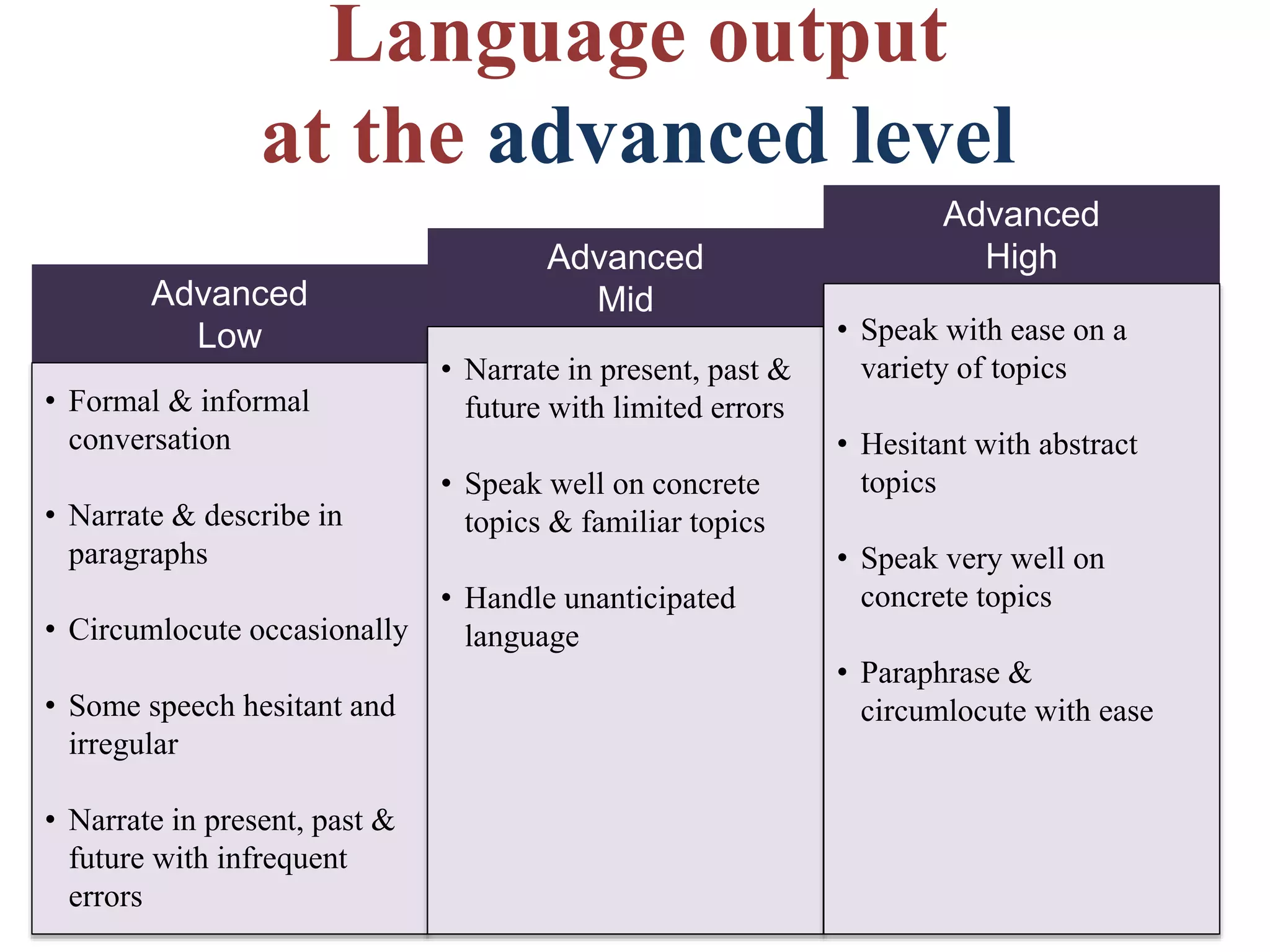
Language output
at the advanced level
Advanced
Low
Advanced
Mid
Advanced
High
• Formal & informal
conversation
• Narrate & describe in
paragraphs
• Circumlocute occasionally
• Some speech hesitant and
irregular
• Narrate in present, past &
future with infrequent
errors
• Narrate in present, past &
future with limited errors
• Speak well on concrete
topics & familiar topics
• Handle unanticipated
language
• Speak with ease on a
variety of topics
• Hesitant with abstract
topics
• Speak very well on
concrete topics
• Paraphrase &
circumlocute with ease
How can students move up
in their proficiency level?
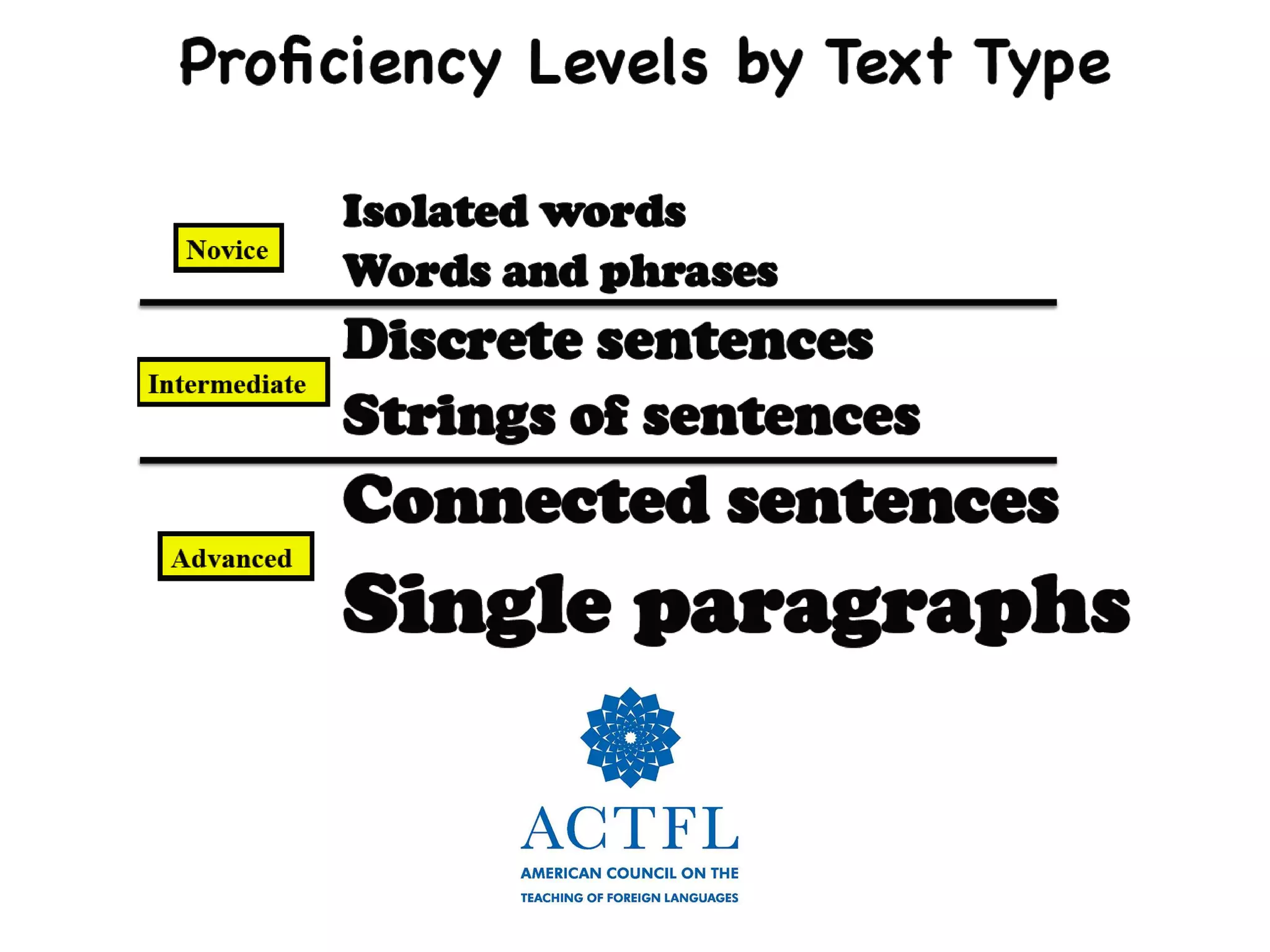
The ACTFL Text Types show the specific
types of language that novice, intermediate
and advanced learners produce.
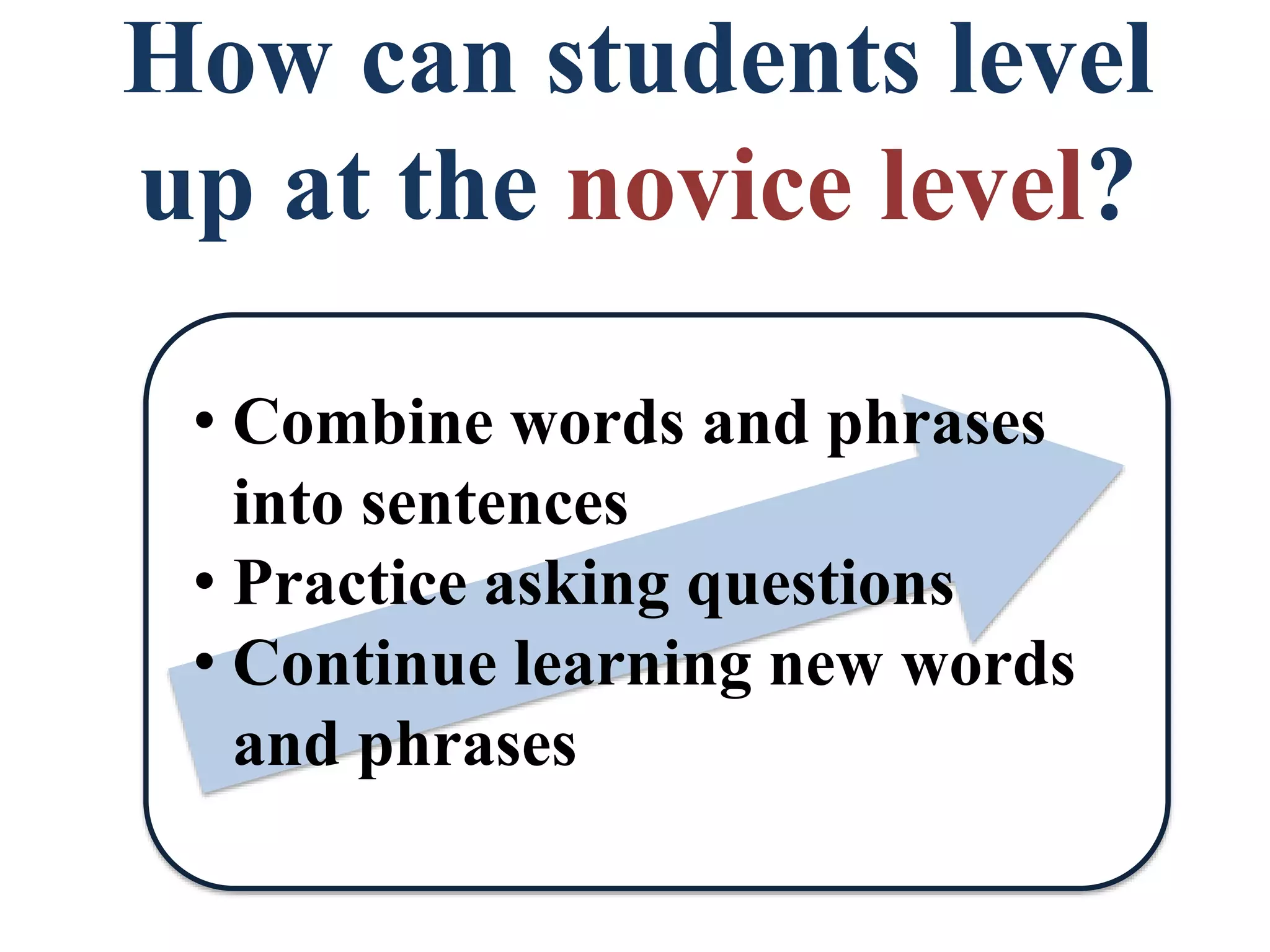
How can students level
up at the novice level?
• Combine words and phrases
into sentences
• Practice asking questions
• Continue learning new words
and phrases
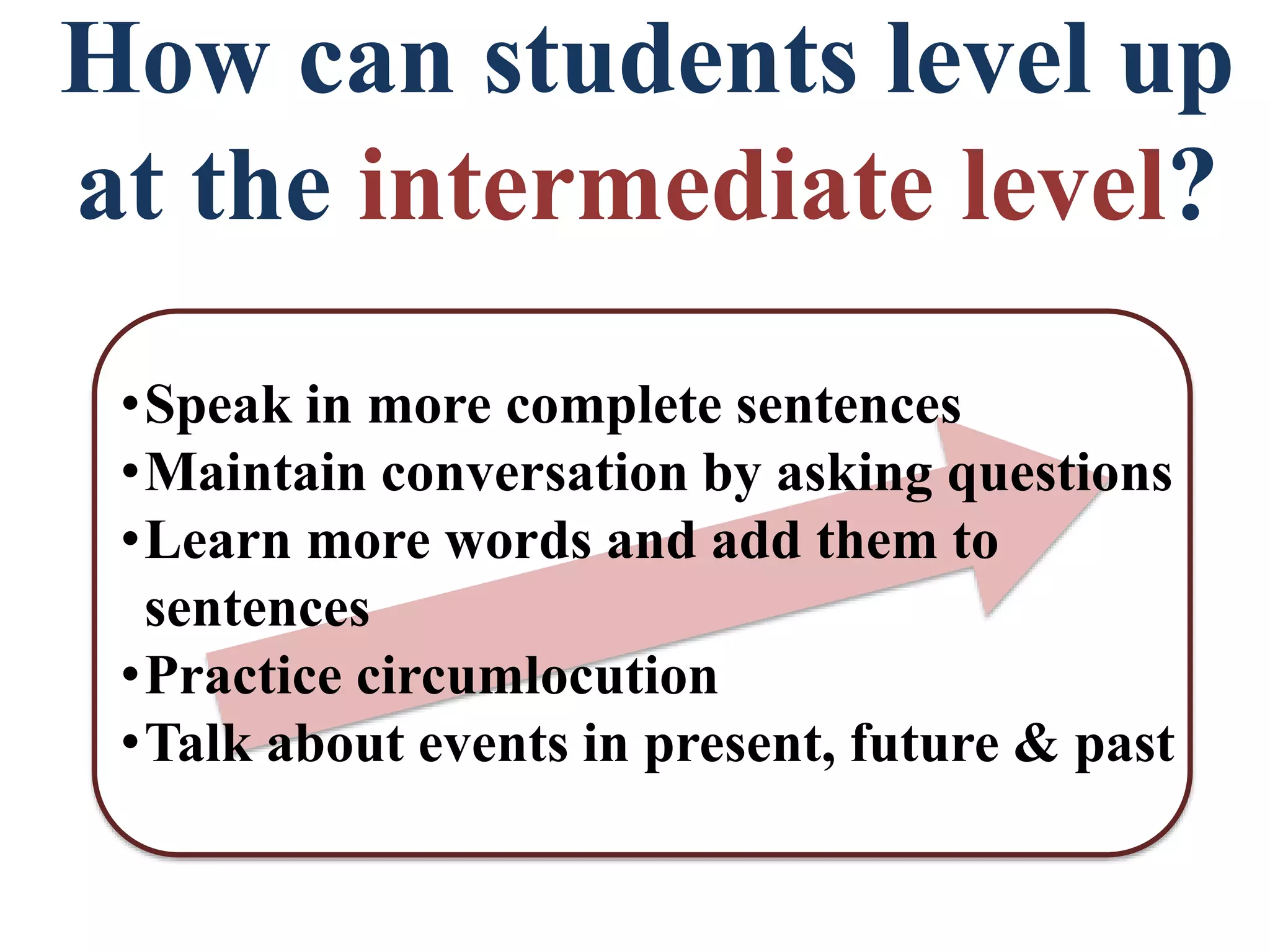
How can students level up
at the intermediate level?
•Speak in more complete sentences
•Maintain conversation by asking questions
•Learn more words and add them to
sentences
•Practice circumlocution
•Talk about events in present, future & past
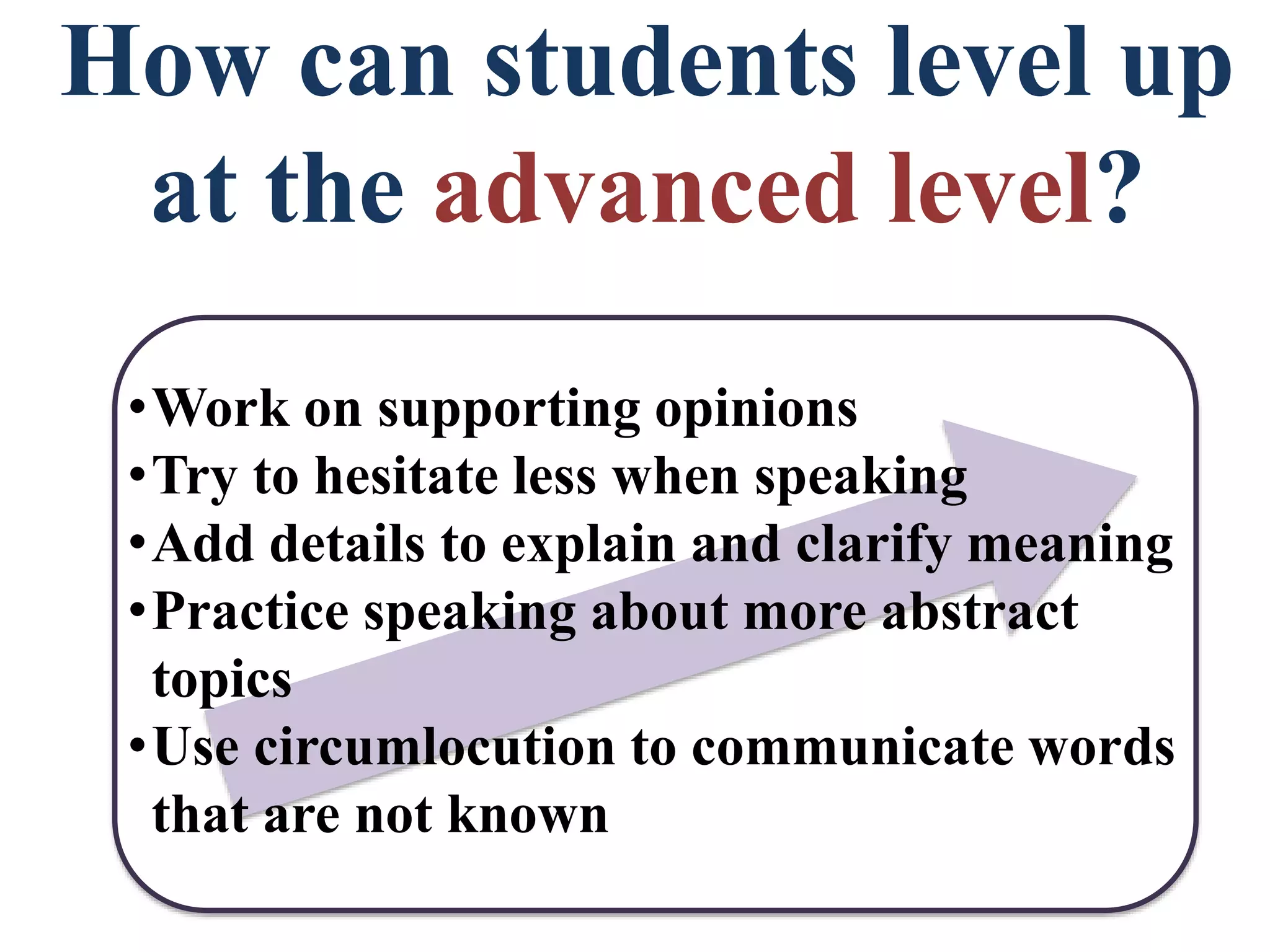
How can students level up
at the advanced level?
•Work on supporting opinions
•Try to hesitate less when speaking
•Add details to explain and clarify meaning
•Practice speaking about more abstract
topics
•Use circumlocution to communicate words
that are not known
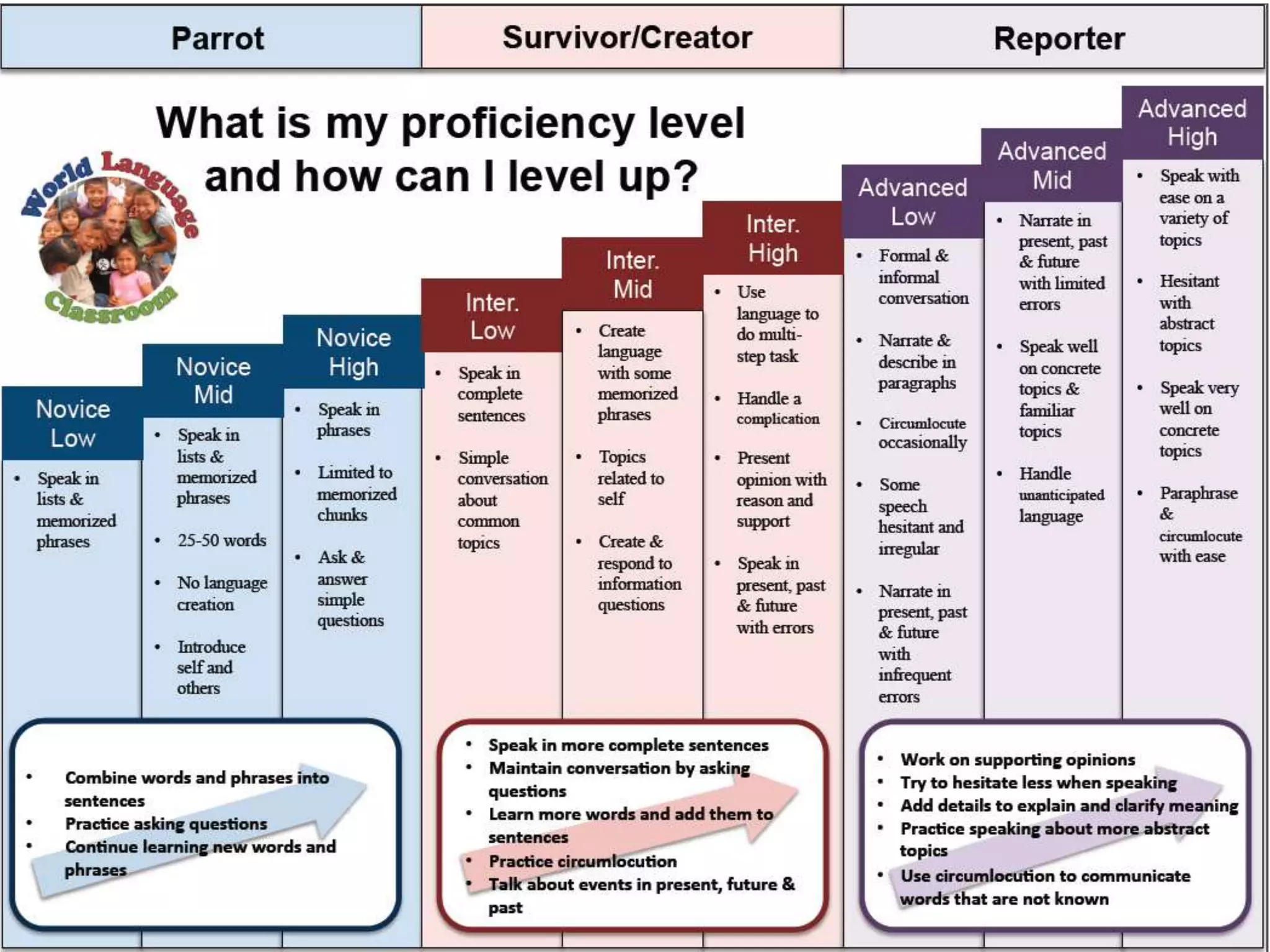
On the next slide you
can see all of the
information together
in one graphic.
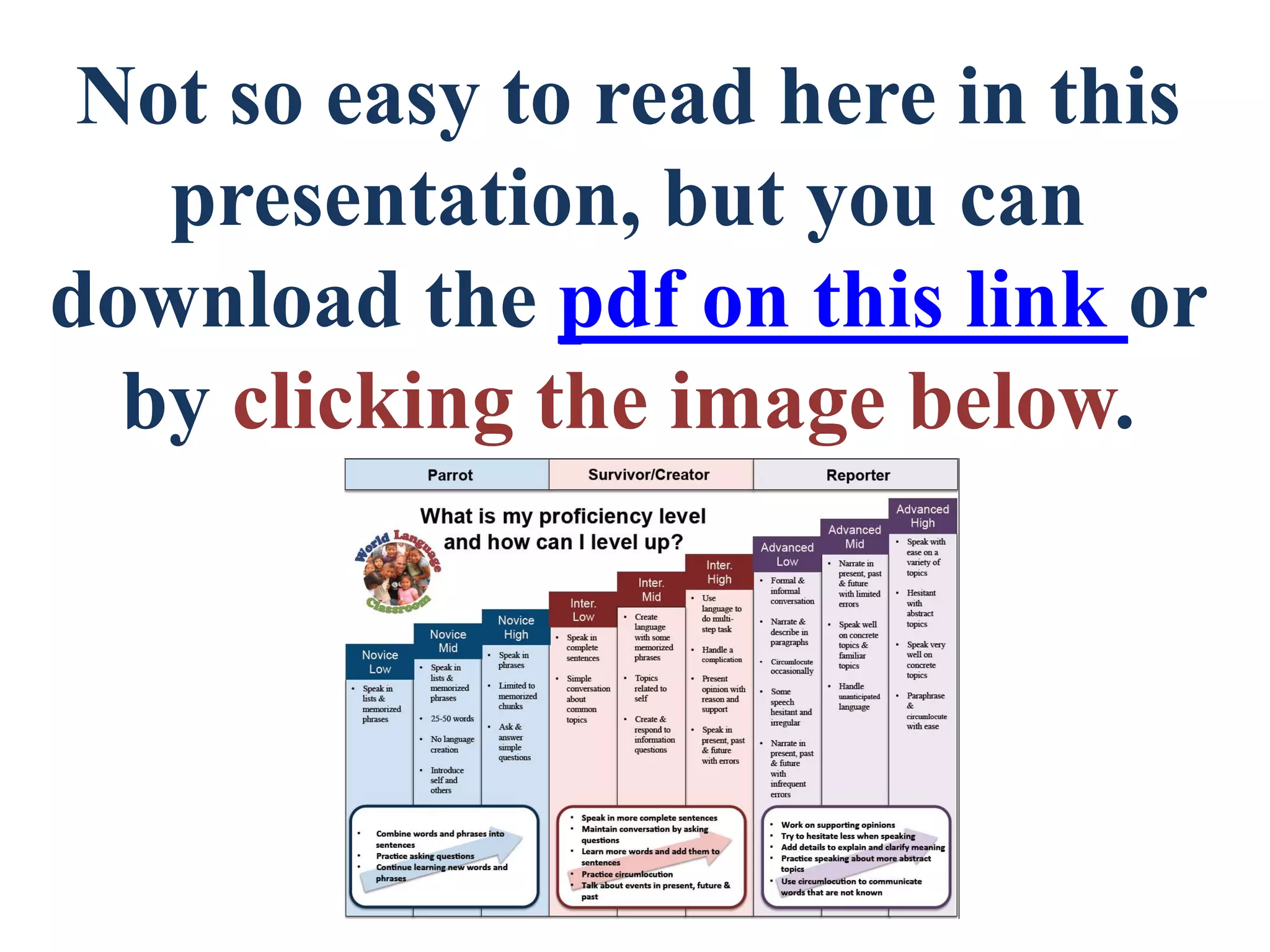
Not so easy to read here in this
presentation, but you can
download the pdf on this link or
by clicking the image below.
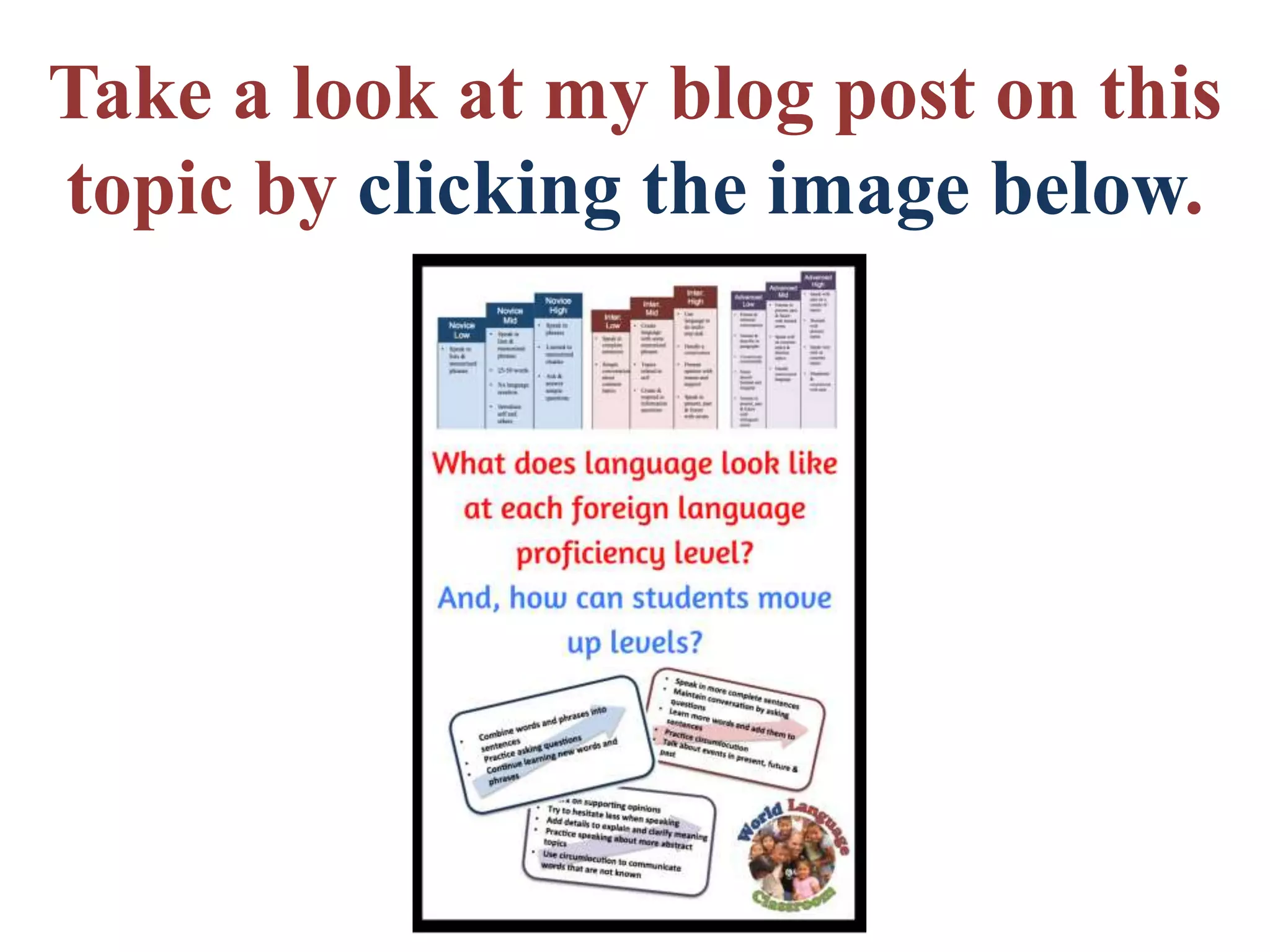
Take a look at my blog post on this
topic by clicking the image below.
www.wlclassroom.com
Tips, Tools and Resources to help
your students rise in proficiency and
communicate with confidence.
Click to follow

What Does Language Look Like at the Various Proficiency Levels? #wlclassroom

  • 1.
    What does languagelook like at various foreign language proficiency levels? And, what can students do to level up?
  • 2.
    Tips, Tools andResources to help your students rise in proficiency and communicate with confidence.
  • 3.
    The ACTFL Proficiency Levelsand Performance Descriptors provide a very useful tool for seeing exactly what learners are able to communicate and produce at the various proficiency levels.
  • 5.
    Language output at thenovice level Novice Low Novice Mid Novice High • Speak in lists & memorized phrases • Speak in lists & memorized phrases • 25-50 words • No language creation • Introduce self and others • Speak in phrases • Limited to memorized chunks • Ask & answer simple questions
  • 6.
    Language output at theintermediate level Intermediate Low Intermediate Mid Intermediate High • Speak in complete sentences • Simple conversation about common topics • Use language to do multi-step task • Handle a complication • Present opinion with reason and support • Speak in present, past & future with errors • Create language with some memorized phrases • Topics related to self • Create & respond to information questions
  • 7.
    Language output at theadvanced level Advanced Low Advanced Mid Advanced High • Formal & informal conversation • Narrate & describe in paragraphs • Circumlocute occasionally • Some speech hesitant and irregular • Narrate in present, past & future with infrequent errors • Narrate in present, past & future with limited errors • Speak well on concrete topics & familiar topics • Handle unanticipated language • Speak with ease on a variety of topics • Hesitant with abstract topics • Speak very well on concrete topics • Paraphrase & circumlocute with ease
  • 8.
    How can studentsmove up in their proficiency level? The ACTFL Text Types show the specific types of language that novice, intermediate and advanced learners produce.
  • 11.
    How can studentslevel up at the novice level? • Combine words and phrases into sentences • Practice asking questions • Continue learning new words and phrases
  • 12.
    How can studentslevel up at the intermediate level? •Speak in more complete sentences •Maintain conversation by asking questions •Learn more words and add them to sentences •Practice circumlocution •Talk about events in present, future & past
  • 13.
    How can studentslevel up at the advanced level? •Work on supporting opinions •Try to hesitate less when speaking •Add details to explain and clarify meaning •Practice speaking about more abstract topics •Use circumlocution to communicate words that are not known
  • 14.
    On the nextslide you can see all of the information together in one graphic.
  • 16.
    Not so easyto read here in this presentation, but you can download the pdf on this link or by clicking the image below.
  • 17.
    Take a lookat my blog post on this topic by clicking the image below.
  • 18.
    www.wlclassroom.com Tips, Tools andResources to help your students rise in proficiency and communicate with confidence.
  • 19.