Reference and inference 
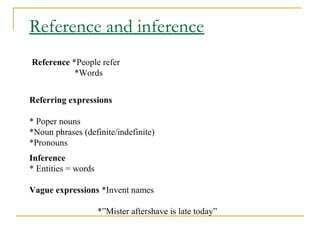
Reference *People refer 
*Words 
Referring expressions 
* Poper nouns 
*Noun phrases (definite/indefinite) 
*Pronouns 
Inference 
* Entities = words 
Vague expressions *Invent names 
*”Mister aftershave is late today”
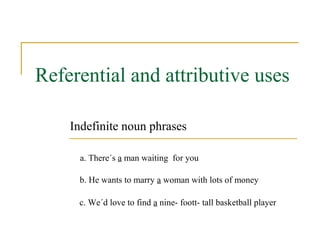
Referential and attributive uses 
Indefinite noun phrases 
a. There´s a man waiting for you 
b. He wants to marry a woman with lots of money 
c. We´d love to find a nine- foott- tall basketball player
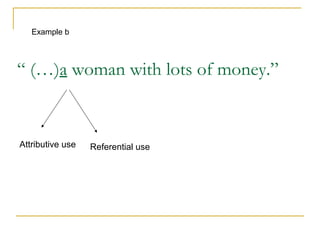
Example b 
“ (…)a woman with lots of money.” 
Attributive use Referential use
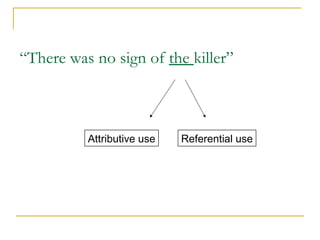
“There was no sign of the killer” 
Attributive use Referential use
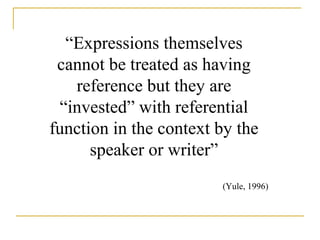
“Expressions themselves 
cannot be treated as having 
reference but they are 
“invested” with referential 
function in the context by the 
speaker or writer” 
(Yule, 1996)
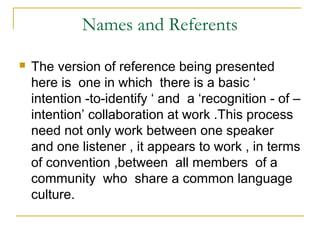
Names and Referents 
 The version of reference being presented 
here is one in which there is a basic ‘ 
intention -to-identify ‘ and a ‘recognition - of – 
intention’ collaboration at work .This process 
need not only work between one speaker 
and one listener , it appears to work , in terms 
of convention ,between all members of a 
community who share a common language 
culture.
THE ROLE OF CO-TEXT 
THE CHEESE SANDWICH LEFT WITHOUT 
PAYING.
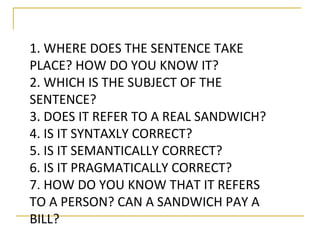
1. WHERE DOES THE SENTENCE TAKE 
PLACE? HOW DO YOU KNOW IT? 
2. WHICH IS THE SUBJECT OF THE 
SENTENCE? 
3. DOES IT REFER TO A REAL SANDWICH? 
4. IS IT SYNTAXLY CORRECT? 
5. IS IT SEMANTICALLY CORRECT? 
6. IS IT PRAGMATICALLY CORRECT? 
7. HOW DO YOU KNOW THAT IT REFERS 
TO A PERSON? CAN A SANDWICH PAY A 
BILL?
SHAKESPEARE IS ON THE SECOND 
SHELF.
1. WHERE DOES THE SENTENCE 
TAKE PLACE? HOW DO YOU KNOW 
IT? 
2. WHICH IS THE SUBJECT OF THE 
SENTENCE? 
3. DOES IT REFER TO THE WRITER 
OR WHAT? 
4. IS IT SYNTAXLY CORRECT? 
5. IS IT SEMANTICALLY CORRECT? 
6. IS IT PRAGMATICALLY CORRECT?
 ALL THE WORDS WHICH SURROUND THE 
REFERRING EXPRESSION HELP US TO INFERER THE 
MEANING. THIS IS CALLED CO-TEXT. 
 IT ACCOMPANIES THE REFERRING EXPRESSION AS 
IN “BRAZIL WINS WORLD CUP”, WHERE BRAZIL IS A 
REFERRING EXPRESSION AND WINS WORLD CUP IS 
PART OF THE CO-TEXT. 
 THE REFERRING EXPRESSION PROVIDES A RANGE 
OF REFERENCE BUT THE CO-TEXT LIMITS IT. 
 IT HELPS US TO REDUCE ONLY ONE POSSIBILITY.  
CO-TEXT IS JUST A LINGUISTIC PART OF THE 
ENVIRONMENT IN WHICH A REFERRING EXPRESSION 
IS 
USED BUT THE PHYSICAL ENVIRONMENT IS CALLED 
CONTEXT. SO, THE WORLD AROUND US, THE 
SITUATION IN WHICH A PIECE OF DISCURSE 
HAPPENS IS THE CONTEXT
CAN WE ANALYSE THIS EXAMPLE? 
THE HEART- ATTACK MUSTN´T BE 
MOVED. 
1. WHICH IS THE CONTEXT HERE? 
2. WHICH IS THE REFERRING 
EXPRESSION IN THE SENTENCE? 
3. WHICH IS THE CO-TEXT HERE?
* REFERENCE DEPENDS ON LOCAL 
CONTEXT AND THE LOCAL 
KNOWLEDGE OF THE PARTICIPANTS. 
* REFERENCE IS A SOCIAL ACT IN 
WHICH THE SPEAKER ASSUMES 
THAT THE WORD OR PHRASE 
CHOSEN TO 
IDENTIFY AND OBJECT OR PERSON 
WILL BE INTERPRETED AS THE 
SPEAKER INTENDED.
ANAPHORIC 
REFERENCE 
INITIAL REFERENCE 
INTRODUCTORY MENTION 
(INDEFINITE) 
“A man ……”
SUBSEQUENT REFERENCE, 
ANAPHORIC REFERENCE or 
ANAPHORA (DEFINITE) 
“There was a man …..Then 
the man….”
ZERO ANAPHORA or 
ELLIPSIS 
“Peel an onion and slice it. 
Cook for three minutes”

Referential and attributive uses chapter 3, George Yule

  • 1.
    Reference and inference Reference *People refer *Words Referring expressions * Poper nouns *Noun phrases (definite/indefinite) *Pronouns Inference * Entities = words Vague expressions *Invent names *”Mister aftershave is late today”
  • 2.
    Referential and attributiveuses Indefinite noun phrases a. There´s a man waiting for you b. He wants to marry a woman with lots of money c. We´d love to find a nine- foott- tall basketball player
  • 3.
    Example b “(…)a woman with lots of money.” Attributive use Referential use
  • 4.
    “There was nosign of the killer” Attributive use Referential use
  • 5.
    “Expressions themselves cannotbe treated as having reference but they are “invested” with referential function in the context by the speaker or writer” (Yule, 1996)
  • 6.
    Names and Referents  The version of reference being presented here is one in which there is a basic ‘ intention -to-identify ‘ and a ‘recognition - of – intention’ collaboration at work .This process need not only work between one speaker and one listener , it appears to work , in terms of convention ,between all members of a community who share a common language culture.
  • 7.
    THE ROLE OFCO-TEXT THE CHEESE SANDWICH LEFT WITHOUT PAYING.
  • 8.
    1. WHERE DOESTHE SENTENCE TAKE PLACE? HOW DO YOU KNOW IT? 2. WHICH IS THE SUBJECT OF THE SENTENCE? 3. DOES IT REFER TO A REAL SANDWICH? 4. IS IT SYNTAXLY CORRECT? 5. IS IT SEMANTICALLY CORRECT? 6. IS IT PRAGMATICALLY CORRECT? 7. HOW DO YOU KNOW THAT IT REFERS TO A PERSON? CAN A SANDWICH PAY A BILL?
  • 9.
    SHAKESPEARE IS ONTHE SECOND SHELF.
  • 10.
    1. WHERE DOESTHE SENTENCE TAKE PLACE? HOW DO YOU KNOW IT? 2. WHICH IS THE SUBJECT OF THE SENTENCE? 3. DOES IT REFER TO THE WRITER OR WHAT? 4. IS IT SYNTAXLY CORRECT? 5. IS IT SEMANTICALLY CORRECT? 6. IS IT PRAGMATICALLY CORRECT?
  • 11.
     ALL THEWORDS WHICH SURROUND THE REFERRING EXPRESSION HELP US TO INFERER THE MEANING. THIS IS CALLED CO-TEXT.  IT ACCOMPANIES THE REFERRING EXPRESSION AS IN “BRAZIL WINS WORLD CUP”, WHERE BRAZIL IS A REFERRING EXPRESSION AND WINS WORLD CUP IS PART OF THE CO-TEXT.  THE REFERRING EXPRESSION PROVIDES A RANGE OF REFERENCE BUT THE CO-TEXT LIMITS IT.  IT HELPS US TO REDUCE ONLY ONE POSSIBILITY.  CO-TEXT IS JUST A LINGUISTIC PART OF THE ENVIRONMENT IN WHICH A REFERRING EXPRESSION IS USED BUT THE PHYSICAL ENVIRONMENT IS CALLED CONTEXT. SO, THE WORLD AROUND US, THE SITUATION IN WHICH A PIECE OF DISCURSE HAPPENS IS THE CONTEXT
  • 12.
    CAN WE ANALYSETHIS EXAMPLE? THE HEART- ATTACK MUSTN´T BE MOVED. 1. WHICH IS THE CONTEXT HERE? 2. WHICH IS THE REFERRING EXPRESSION IN THE SENTENCE? 3. WHICH IS THE CO-TEXT HERE?
  • 13.
    * REFERENCE DEPENDSON LOCAL CONTEXT AND THE LOCAL KNOWLEDGE OF THE PARTICIPANTS. * REFERENCE IS A SOCIAL ACT IN WHICH THE SPEAKER ASSUMES THAT THE WORD OR PHRASE CHOSEN TO IDENTIFY AND OBJECT OR PERSON WILL BE INTERPRETED AS THE SPEAKER INTENDED.
  • 14.
    ANAPHORIC REFERENCE INITIALREFERENCE INTRODUCTORY MENTION (INDEFINITE) “A man ……”
  • 15.
    SUBSEQUENT REFERENCE, ANAPHORICREFERENCE or ANAPHORA (DEFINITE) “There was a man …..Then the man….”
  • 16.
    ZERO ANAPHORA or ELLIPSIS “Peel an onion and slice it. Cook for three minutes”