BLOOD TYPES; TRANSFUSION; 
TISSUE AND ORGAN TRANSPLANTATION 
BY DR. MUHAMMAD UMAIR
BLOOD TYPES 
 Multiplicity of Antigens in the Blood Cells. 
 At least 30 commonly occurring antigens 
 O-A-B system and the Rh system. 
 Antigenicity & Immune Reactions of Blood 
The bloods of different people have different 
antigenic and immune properties, so that antibodies 
in the plasma of one blood will react with antigens on 
the surfaces of the red cells of another blood type 
causing a transfusion reaction.
O-A-B BLOOD TYPES 
A and B Antigens—Agglutinogens 
 Major O-A-B Blood Types. depend on the 
presence or absence of A and B agglutinogens. 
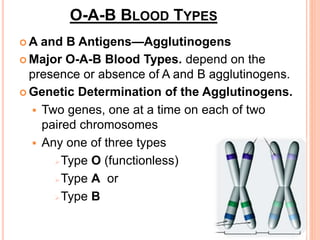
 Genetic Determination of the Agglutinogens. 
 Two genes, one at a time on each of two 
paired chromosomes 
 Any one of three types 
Type O (functionless) 
Type A or 
Type B
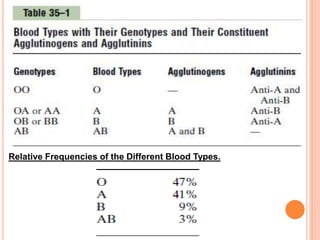
Relative Frequencies of the Different Blood Types.
AGGLUTININS (ANTIBODIES) 
Anti-A agglutinins 
 Anti-B agglutinins 
 Type O blood, containing no agglutinogens, 
does contain both anti-A and anti-B agglutinins 
 Type A blood contains type A agglutinogens and 
anti-B agglutinins 
 Type B blood contains type B agglutinogens and 
anti-A agglutinins. 
 Type AB blood contains both A and B agglutinogens 
but no agglutinins.
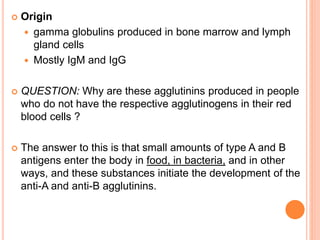
 Origin 
 gamma globulins produced in bone marrow and lymph 
gland cells 
 Mostly IgM and IgG 
 QUESTION: Why are these agglutinins produced in people 
who do not have the respective agglutinogens in their red 
blood cells ? 
 The answer to this is that small amounts of type A and B 
antigens enter the body in food, in bacteria, and in other 
ways, and these substances initiate the development of the 
anti-A and anti-B agglutinins.
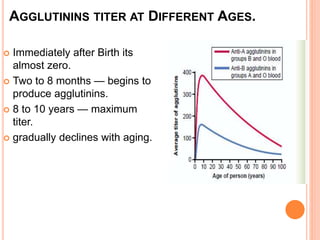
AGGLUTININS TITER AT DIFFERENT AGES. 
 Immediately after Birth its 
almost zero. 
 Two to 8 months — begins to 
produce agglutinins. 
 8 to 10 years — maximum 
titer. 
 gradually declines with aging.
AGGLUTINATION PROCESS IN TRANSFUSION REACTIONS 
In mismatched blood transfusion, the 
agglutinins of recipient’s blood are mixed 
with the agglutinogens of the donar RBCs. 
Agglutinis having binding sites attach to 
RBCs 
This binding causes the RBCs to clump. 
these clumps plug small blood vessels 
throughout the circulatory system
 “Delayed Hemolysis” ( during hours to days) 
 physical distortion of the cells or 
 Destruction of the agglutinated cells 
membranes, releasing hemoglobin into the 
plasma 
 ‘‘Acute Hemolysis’’ 
 activation the complement system, which releases 
proteolytic enzymes (the lytic complex) 
 Far less common because it requires 
high titer of antibodies for lysis 
Hemolysins. (IgM antibodies)
BLOOD TYPING 
 PROCEDURE 
 The red blood cells are first separated from the plasma 
and diluted with saline. 
 One portion is then mixed with anti-A agglutinin and 
another portion with anti-B agglutinin. 
 After several minutes, the mixtures are observed under a 
microscope. 
 An antibody antigen reaction: If the red blood cells 
have become clumped—“agglutinated”
RH BLOOD TYPES 
 O-A-B system VS the Rh system 
 massive exposure to an Rh antigen(blood transfusion) before 
enough agglutinins production to cause a significant transfusion 
reaction. 
 Rh Antigens 
 Rh factor (six common types of Rh antigens) 
 C,D, E, c, d, and e 
 A person who has a C antigen does not have the c antigen and vice 
versa 
 each person has one of each of the three pairs of antigens. 
 Type D antigen— widely prevalent and more antigenic 
 “Rh-Positive” and “Rh-Negative” People. 
 +ve = having D antigen 
 -ve = no D anitgen
RH IMMUNE RESPONSE 
 Formation of Anti-Rh Agglutinins. 
 When RBCs containing Rh factor are injected into Rh-negative 
person—(with no Rh factor) 
 Develop slowly. 
 Reach maximum conc. In about 2 to 4 months. 
 With multiple exposures to the Rh factor, an Rh-negative 
person eventually becomes strongly “sensitized” to Rh factor. 
 Characteristics of Rh Transfusion Reactions. 
 Rh +ve blood transfusion 
in previously unexposed Rh –ve person = no immediate but 
delayed reaction ( after 2-4 weeks ) due to anti Rh 
antibodies development 
In previously exposed Rh –ve person = immediate and 
severe
ERYTHROBLASTOSIS FETALIS (“HEMOLYTIC DISEASE 
OF THE NEWBORN”) 
 disease of the fetus and newborn child characterized 
by agglutination and phagocytosis of the fetus’s red 
blood cells. 
 Mother = Rh -ve 
 Father = Rh +ve 
 Baby = Rh +ve 
 mother develops anti-Rh agglutinins from exposure to 
the fetus’s Rh antigen. 
 Which then diffuse through the placenta into the fetus 
and cause red blood cell agglutination. 
 Incidence of the Disease rises progressively with 
subsequent pregnancies
 Clinical Picture of Erythroblastosis. 
 Anemic , jaundice, kernicterus. 
 Hepatomegally and spleenomegally 
 nucleated blastic red blood cells in blood picture 
 Mental retardation 
 Death 
 Treatment of the Erythroblastotic Neonate. 
 Exchange Transfusion 
 Prevention of Erythroblastosis Fetalis. 
 Rh immunoglobulinglobin, an anti-D antibody 
 at 28 to 30 weeks of gestation and after delivery 
 inhibit antigen-induced B lymphocyte antibody production in 
the expectant mother. 
 anti-D antibody also attaches to D antigen sites on Rh-positive 
fetal RBCs hence interfere with immune response to 
D antigen.

Blood presentation1

  • 1.
    BLOOD TYPES; TRANSFUSION; TISSUE AND ORGAN TRANSPLANTATION BY DR. MUHAMMAD UMAIR
  • 2.
    BLOOD TYPES Multiplicity of Antigens in the Blood Cells.  At least 30 commonly occurring antigens  O-A-B system and the Rh system.  Antigenicity & Immune Reactions of Blood The bloods of different people have different antigenic and immune properties, so that antibodies in the plasma of one blood will react with antigens on the surfaces of the red cells of another blood type causing a transfusion reaction.
  • 3.
    O-A-B BLOOD TYPES A and B Antigens—Agglutinogens  Major O-A-B Blood Types. depend on the presence or absence of A and B agglutinogens.  Genetic Determination of the Agglutinogens.  Two genes, one at a time on each of two paired chromosomes  Any one of three types Type O (functionless) Type A or Type B
  • 4.
    Relative Frequencies ofthe Different Blood Types.
  • 5.
    AGGLUTININS (ANTIBODIES) Anti-Aagglutinins  Anti-B agglutinins  Type O blood, containing no agglutinogens, does contain both anti-A and anti-B agglutinins  Type A blood contains type A agglutinogens and anti-B agglutinins  Type B blood contains type B agglutinogens and anti-A agglutinins.  Type AB blood contains both A and B agglutinogens but no agglutinins.
  • 6.
     Origin gamma globulins produced in bone marrow and lymph gland cells  Mostly IgM and IgG  QUESTION: Why are these agglutinins produced in people who do not have the respective agglutinogens in their red blood cells ?  The answer to this is that small amounts of type A and B antigens enter the body in food, in bacteria, and in other ways, and these substances initiate the development of the anti-A and anti-B agglutinins.
  • 7.
    AGGLUTININS TITER ATDIFFERENT AGES.  Immediately after Birth its almost zero.  Two to 8 months — begins to produce agglutinins.  8 to 10 years — maximum titer.  gradually declines with aging.
  • 8.
    AGGLUTINATION PROCESS INTRANSFUSION REACTIONS In mismatched blood transfusion, the agglutinins of recipient’s blood are mixed with the agglutinogens of the donar RBCs. Agglutinis having binding sites attach to RBCs This binding causes the RBCs to clump. these clumps plug small blood vessels throughout the circulatory system
  • 9.
     “Delayed Hemolysis”( during hours to days)  physical distortion of the cells or  Destruction of the agglutinated cells membranes, releasing hemoglobin into the plasma  ‘‘Acute Hemolysis’’  activation the complement system, which releases proteolytic enzymes (the lytic complex)  Far less common because it requires high titer of antibodies for lysis Hemolysins. (IgM antibodies)
  • 10.
    BLOOD TYPING PROCEDURE  The red blood cells are first separated from the plasma and diluted with saline.  One portion is then mixed with anti-A agglutinin and another portion with anti-B agglutinin.  After several minutes, the mixtures are observed under a microscope.  An antibody antigen reaction: If the red blood cells have become clumped—“agglutinated”
  • 11.
    RH BLOOD TYPES  O-A-B system VS the Rh system  massive exposure to an Rh antigen(blood transfusion) before enough agglutinins production to cause a significant transfusion reaction.  Rh Antigens  Rh factor (six common types of Rh antigens)  C,D, E, c, d, and e  A person who has a C antigen does not have the c antigen and vice versa  each person has one of each of the three pairs of antigens.  Type D antigen— widely prevalent and more antigenic  “Rh-Positive” and “Rh-Negative” People.  +ve = having D antigen  -ve = no D anitgen
  • 12.
    RH IMMUNE RESPONSE  Formation of Anti-Rh Agglutinins.  When RBCs containing Rh factor are injected into Rh-negative person—(with no Rh factor)  Develop slowly.  Reach maximum conc. In about 2 to 4 months.  With multiple exposures to the Rh factor, an Rh-negative person eventually becomes strongly “sensitized” to Rh factor.  Characteristics of Rh Transfusion Reactions.  Rh +ve blood transfusion in previously unexposed Rh –ve person = no immediate but delayed reaction ( after 2-4 weeks ) due to anti Rh antibodies development In previously exposed Rh –ve person = immediate and severe
  • 13.
    ERYTHROBLASTOSIS FETALIS (“HEMOLYTICDISEASE OF THE NEWBORN”)  disease of the fetus and newborn child characterized by agglutination and phagocytosis of the fetus’s red blood cells.  Mother = Rh -ve  Father = Rh +ve  Baby = Rh +ve  mother develops anti-Rh agglutinins from exposure to the fetus’s Rh antigen.  Which then diffuse through the placenta into the fetus and cause red blood cell agglutination.  Incidence of the Disease rises progressively with subsequent pregnancies
  • 14.
     Clinical Pictureof Erythroblastosis.  Anemic , jaundice, kernicterus.  Hepatomegally and spleenomegally  nucleated blastic red blood cells in blood picture  Mental retardation  Death  Treatment of the Erythroblastotic Neonate.  Exchange Transfusion  Prevention of Erythroblastosis Fetalis.  Rh immunoglobulinglobin, an anti-D antibody  at 28 to 30 weeks of gestation and after delivery  inhibit antigen-induced B lymphocyte antibody production in the expectant mother.  anti-D antibody also attaches to D antigen sites on Rh-positive fetal RBCs hence interfere with immune response to D antigen.