BLOOD GROUPS , BLOOD TRANSFUSION
AND HAEMORRHAGE
DR.KHUSHBOO SAXENA
MDS 1ST
YEAR
ORAL MEDICINE AND RADIOLOGY
BLOOD GROUPS
โ€ข RBC membrane has antigens which has two groups
๏ƒ˜ ABO system
๏ƒ˜Rh system
ABO SYSTEM
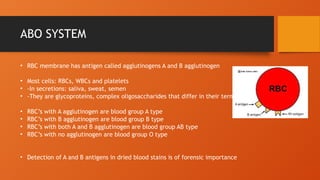
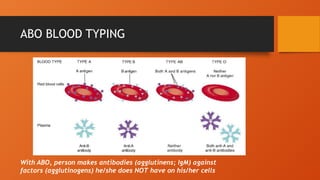
โ€ข RBC membrane has antigen called agglutinogens A and B agglutinogen
โ€ข Most cells: RBCs, WBCs and platelets
โ€ข -In secretions: saliva, sweat, semen
โ€ข -They are glycoproteins, complex oligosaccharides that differ in their terminal sugar
โ€ข RBCโ€™s with A agglutinogen are blood group A type
โ€ข RBCโ€™s with B agglutinogen are blood group B type
โ€ข RBCโ€™s with both A and B agglutinogen are blood group AB type
โ€ข RBCโ€™s with no agglutinogen are blood group O type
โ€ข Detection of A and B antigens in dried blood stains is of forensic importance
Agglutinin of ABO system
โ€ข Plasma has agglutinin which are antibody also kmown as alloantibody or isoantibody
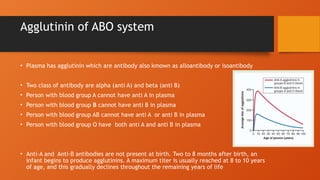
โ€ข Two class of antibody are alpha (anti A) and beta (anti B)
โ€ข Person with blood group A cannot have anti A in plasma
โ€ข Person with blood group B cannot have anti B in plasma
โ€ข Person with blood group AB cannot have anti A or anti B in plasma
โ€ข Person with blood group O have both anti A and anti B in plasma
โ€ข Anti-A and Anti-B antibodies are not present at birth. Two to 8 months after birth, an
infant begins to produce agglutinins. A maximum titer is usually reached at 8 to 10 years
of age, and this gradually declines throughout the remaining years of life
ABO BLOOD TYPING
With ABO, person makes antibodies (agglutinens; IgM) against
factors (agglutinogens) he/she does NOT have on his/her cells
RH SYSTEM
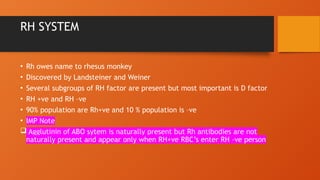
โ€ข Rh owes name to rhesus monkey
โ€ข Discovered by Landsteiner and Weiner
โ€ข Several subgroups of RH factor are present but most important is D factor
โ€ข RH +ve and RH โ€“ve
โ€ข 90% population are Rh+ve and 10 % population is โ€“ve
โ€ข IMP Note
๏ฑ Agglutinin of ABO sytem is naturally present but Rh antibodies are not
naturally present and appear only when RH+ve RBCโ€™s enter RH โ€“ve person
Some important facts
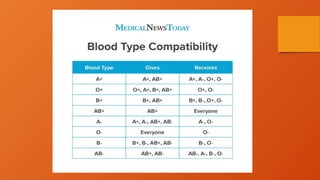
โ€ข 0-ve is universal donor and AB +ve is universal recipient
โ€ข In mismatched blood tansfusion donorโ€™s RBC are lysed and
recipient RBCโ€™s are unharmed
โ€ข If Rh_ve person receives Rh+ve blood and Rh-ve mother conceives
Rh+ve foetus then Rh antibody appears.
โ€ข Rh antibodies are os IgG type so can cross placental barrier
โ€ข Most common bloodgroup in India is O +ve and in world is B+ve
IMPORTANCE OF BLOOD GROUPS
โ€ข In blood transfusion.
โ€ข In preventing hemolytic disease (Rh incompatibility).
โ€ข In paternity disputes.
โ€ข In medico-legal cases.
โ€ข In knowing susceptibility to disease
โ€ข Group O-duodenal cancer
โ€ข Group A-Carcinoma of stomach, pancreas & salivary glands
BLOOD TRANFUSION
INDICATIONS
โ€ข Acute haemorrhage
โ€ข Severe anaemia
โ€ข Erythroblastis foetalis ( in this exchange transfusion is done)
โ€ข To supply necessary elements e.g. platelets , packed RBCโ€™s and
some clotting factors
Requirements prior to blood transfusion
โ€ข Typing (grouping) of the recipient : determiming red cell antigens in blood that is ABO
typing and Rh typing
โ€ข Cross matching : donor cells + recipientโ€™s serum
โ€ข Antibody screening
- Hepatitis B and C virus
- Antibody to HIV
- HIV antigens
- syphilis
- cytomegalovirus
Typing and Cross matching blood
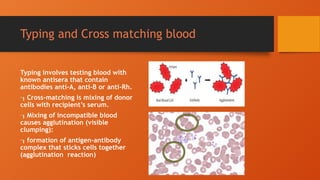
Typing involves testing blood with
known antisera that contain
antibodies anti-A, anti-B or anti-Rh.
๏ฑCross-matching is mixing of donor
cells with recipientโ€™s serum.
๏ฑMixing of incompatible blood
causes agglutination (visible
clumping):
๏ฑformation of antigen-antibody
complex that sticks cells together
(agglutination reaction)
Transfusion Reactions
1. Due to mismatching
๏ถ Clumping/hemolysis of RBCโ€™s occur which block fine blood vessel of fine organs causing ischemia
infarct
๏ถ Released Hb can block renal tubules causing Anuria
๏ถ If hemolysis occur after few days then hemolytic jaundice occurs
2. Excessive transfusion cause circulatory overload.
๏ถ Imperfect tissue oxygenation
๏ถ Blood stored at 4 C, if transfused at same temperature then free K+ ions can cause cardiac
arrythmia and death
3. Donor with STD , AIDS or Hepatitis virus can cause serious hazards
4. Repeated blood transfusion in thalassemia can cause iron overload
Symptoms and Signs of Transfusion Reactions
โ€ข Pain at site of infusion
โ€ข ๏ฑDyspnea
โ€ข ๏ฑNausea
โ€ข ๏ฑFlushing
โ€ข ๏ฑHypotension
โ€ข ๏ฑOliguria or Anuria (renal failure )
โ€ข ๏ฑChest Pain Back Pain
โ€ข ๏ฑChills
โ€ข ๏ฑShock
โ€ข ๏ฑFever
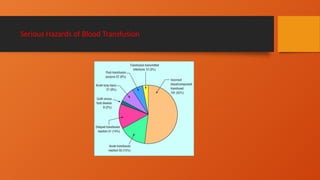
Serious Hazards of Blood Transfusion
ERTHROBLASTOSIS FETALIS/
HEMOLYTIC DISEASE OF NEW BORN
โ€ข Condition where RBCโ€™s of newborn are hemolysed by maternal
antibodies
โ€ข Two causes
โ€ข 1. ABO incompatibility (Affects 1st
pregnancy)
- When mother is O blood type and foetus is either A or B then agglutin of anti A/anti B
cross placenta causing hemolysis
- Newborn has hemolyic anaemia with low Hb
- Overactive haemopoietic system
- High bilirubin (mostly unconjugated)
Rh incompatibility
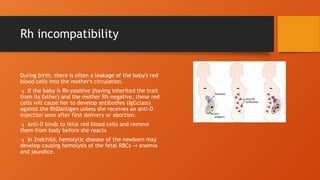
During birth, there is often a leakage of the baby's red
blood cells into the mother's circulation.
๏ฑ If the baby is Rh-positive (having inherited the trait
from its father) and the mother Rh-negative, these red
cells will cause her to develop antibodies (IgGclass)
against the RhDantigen unless she receives an anti-D
injection soon after first delivery or abortion.
๏ฑ Anti-D binds to fetal red blood cells and remove
them from body before she reacts
๏ฑ In 2ndchild, hemolytic disease of the newborn may
develop causing hemolysis of the fetal RBCs anemia
โ†’
and jaundice.
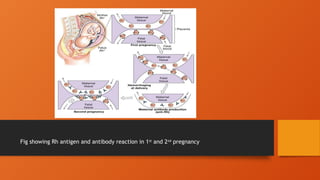
Fig showing Rh antigen and antibody reaction in 1st
and 2nd
pregnancy
Hemolytic disease of New born
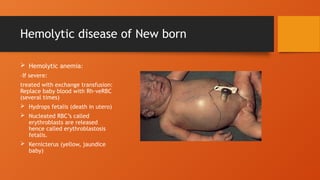
๏ƒ˜ Hemolytic anemia:
โ€“If severe:
treated with exchange transfusion:
Replace baby blood with Rh-veRBC
(several times)
๏ƒ˜ Hydrops fetalis (death in utero)
๏ƒ˜ Nucleated RBCโ€™s called
erythroblasts are released
hence called erythroblastosis
fetalis.
๏ƒ˜ Kernicterus (yellow, jaundice
baby)
Prevention of Hemolytic Disease of Newborn
โ€ข Rh immune globulin (RhIg) or Rhogamor anti-D:
โ€ข Shortly after each birth of an Rh-positive baby, the mother is given an injection
of anti-Rh antibodies.
โ€ข These antibodies destroy any Rh+ fetal cells that got into the maternal
circulation before they can stimulate an active immune response in the mother.
โ€ข The routine administration of such treatment to Rh โ€“ve mothers after the
delivery of Rh+ve baby has reduced the incidence of disease by >90%.
โ€ข Fetal Rh typing from amniocentesis, and treatment with small dose of Rh
immune serum will prevent
HAEMORRHAGE
New Microsoft PowerPoint Presentation.pptx

New Microsoft PowerPoint Presentation.pptx

  • 1.
    BLOOD GROUPS ,BLOOD TRANSFUSION AND HAEMORRHAGE DR.KHUSHBOO SAXENA MDS 1ST YEAR ORAL MEDICINE AND RADIOLOGY
  • 2.
    BLOOD GROUPS โ€ข RBCmembrane has antigens which has two groups ๏ƒ˜ ABO system ๏ƒ˜Rh system
  • 3.
    ABO SYSTEM โ€ข RBCmembrane has antigen called agglutinogens A and B agglutinogen โ€ข Most cells: RBCs, WBCs and platelets โ€ข -In secretions: saliva, sweat, semen โ€ข -They are glycoproteins, complex oligosaccharides that differ in their terminal sugar โ€ข RBCโ€™s with A agglutinogen are blood group A type โ€ข RBCโ€™s with B agglutinogen are blood group B type โ€ข RBCโ€™s with both A and B agglutinogen are blood group AB type โ€ข RBCโ€™s with no agglutinogen are blood group O type โ€ข Detection of A and B antigens in dried blood stains is of forensic importance
  • 4.
    Agglutinin of ABOsystem โ€ข Plasma has agglutinin which are antibody also kmown as alloantibody or isoantibody โ€ข Two class of antibody are alpha (anti A) and beta (anti B) โ€ข Person with blood group A cannot have anti A in plasma โ€ข Person with blood group B cannot have anti B in plasma โ€ข Person with blood group AB cannot have anti A or anti B in plasma โ€ข Person with blood group O have both anti A and anti B in plasma โ€ข Anti-A and Anti-B antibodies are not present at birth. Two to 8 months after birth, an infant begins to produce agglutinins. A maximum titer is usually reached at 8 to 10 years of age, and this gradually declines throughout the remaining years of life
  • 5.
    ABO BLOOD TYPING WithABO, person makes antibodies (agglutinens; IgM) against factors (agglutinogens) he/she does NOT have on his/her cells
  • 6.
    RH SYSTEM โ€ข Rhowes name to rhesus monkey โ€ข Discovered by Landsteiner and Weiner โ€ข Several subgroups of RH factor are present but most important is D factor โ€ข RH +ve and RH โ€“ve โ€ข 90% population are Rh+ve and 10 % population is โ€“ve โ€ข IMP Note ๏ฑ Agglutinin of ABO sytem is naturally present but Rh antibodies are not naturally present and appear only when RH+ve RBCโ€™s enter RH โ€“ve person
  • 8.
    Some important facts โ€ข0-ve is universal donor and AB +ve is universal recipient โ€ข In mismatched blood tansfusion donorโ€™s RBC are lysed and recipient RBCโ€™s are unharmed โ€ข If Rh_ve person receives Rh+ve blood and Rh-ve mother conceives Rh+ve foetus then Rh antibody appears. โ€ข Rh antibodies are os IgG type so can cross placental barrier โ€ข Most common bloodgroup in India is O +ve and in world is B+ve
  • 9.
    IMPORTANCE OF BLOODGROUPS โ€ข In blood transfusion. โ€ข In preventing hemolytic disease (Rh incompatibility). โ€ข In paternity disputes. โ€ข In medico-legal cases. โ€ข In knowing susceptibility to disease โ€ข Group O-duodenal cancer โ€ข Group A-Carcinoma of stomach, pancreas & salivary glands
  • 10.
  • 11.
    INDICATIONS โ€ข Acute haemorrhage โ€ขSevere anaemia โ€ข Erythroblastis foetalis ( in this exchange transfusion is done) โ€ข To supply necessary elements e.g. platelets , packed RBCโ€™s and some clotting factors
  • 12.
    Requirements prior toblood transfusion โ€ข Typing (grouping) of the recipient : determiming red cell antigens in blood that is ABO typing and Rh typing โ€ข Cross matching : donor cells + recipientโ€™s serum โ€ข Antibody screening - Hepatitis B and C virus - Antibody to HIV - HIV antigens - syphilis - cytomegalovirus
  • 13.
    Typing and Crossmatching blood Typing involves testing blood with known antisera that contain antibodies anti-A, anti-B or anti-Rh. ๏ฑCross-matching is mixing of donor cells with recipientโ€™s serum. ๏ฑMixing of incompatible blood causes agglutination (visible clumping): ๏ฑformation of antigen-antibody complex that sticks cells together (agglutination reaction)
  • 14.
    Transfusion Reactions 1. Dueto mismatching ๏ถ Clumping/hemolysis of RBCโ€™s occur which block fine blood vessel of fine organs causing ischemia infarct ๏ถ Released Hb can block renal tubules causing Anuria ๏ถ If hemolysis occur after few days then hemolytic jaundice occurs 2. Excessive transfusion cause circulatory overload. ๏ถ Imperfect tissue oxygenation ๏ถ Blood stored at 4 C, if transfused at same temperature then free K+ ions can cause cardiac arrythmia and death 3. Donor with STD , AIDS or Hepatitis virus can cause serious hazards 4. Repeated blood transfusion in thalassemia can cause iron overload
  • 15.
    Symptoms and Signsof Transfusion Reactions โ€ข Pain at site of infusion โ€ข ๏ฑDyspnea โ€ข ๏ฑNausea โ€ข ๏ฑFlushing โ€ข ๏ฑHypotension โ€ข ๏ฑOliguria or Anuria (renal failure ) โ€ข ๏ฑChest Pain Back Pain โ€ข ๏ฑChills โ€ข ๏ฑShock โ€ข ๏ฑFever
  • 16.
    Serious Hazards ofBlood Transfusion
  • 17.
    ERTHROBLASTOSIS FETALIS/ HEMOLYTIC DISEASEOF NEW BORN โ€ข Condition where RBCโ€™s of newborn are hemolysed by maternal antibodies โ€ข Two causes โ€ข 1. ABO incompatibility (Affects 1st pregnancy) - When mother is O blood type and foetus is either A or B then agglutin of anti A/anti B cross placenta causing hemolysis - Newborn has hemolyic anaemia with low Hb - Overactive haemopoietic system - High bilirubin (mostly unconjugated)
  • 18.
    Rh incompatibility During birth,there is often a leakage of the baby's red blood cells into the mother's circulation. ๏ฑ If the baby is Rh-positive (having inherited the trait from its father) and the mother Rh-negative, these red cells will cause her to develop antibodies (IgGclass) against the RhDantigen unless she receives an anti-D injection soon after first delivery or abortion. ๏ฑ Anti-D binds to fetal red blood cells and remove them from body before she reacts ๏ฑ In 2ndchild, hemolytic disease of the newborn may develop causing hemolysis of the fetal RBCs anemia โ†’ and jaundice.
  • 19.
    Fig showing Rhantigen and antibody reaction in 1st and 2nd pregnancy
  • 20.
    Hemolytic disease ofNew born ๏ƒ˜ Hemolytic anemia: โ€“If severe: treated with exchange transfusion: Replace baby blood with Rh-veRBC (several times) ๏ƒ˜ Hydrops fetalis (death in utero) ๏ƒ˜ Nucleated RBCโ€™s called erythroblasts are released hence called erythroblastosis fetalis. ๏ƒ˜ Kernicterus (yellow, jaundice baby)
  • 21.
    Prevention of HemolyticDisease of Newborn โ€ข Rh immune globulin (RhIg) or Rhogamor anti-D: โ€ข Shortly after each birth of an Rh-positive baby, the mother is given an injection of anti-Rh antibodies. โ€ข These antibodies destroy any Rh+ fetal cells that got into the maternal circulation before they can stimulate an active immune response in the mother. โ€ข The routine administration of such treatment to Rh โ€“ve mothers after the delivery of Rh+ve baby has reduced the incidence of disease by >90%. โ€ข Fetal Rh typing from amniocentesis, and treatment with small dose of Rh immune serum will prevent
  • 22.