PRESENTED BY: 
BINDU JACOB
Introduction 
• Galactose is a simple sugar found in many 
foods. 
• When lactose is broken down in the body, 
glucose and galactose are produced. 
• Galactose is converted into glucose in the 
body for energy purpose in the Leloir 
pathway.
SOURCES 
• Dairy products 
• Fruits 
• Vegetables
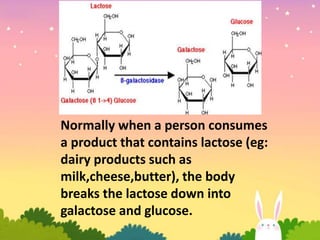
Normally when a person consumes 
a product that contains lactose (eg: 
dairy products such as 
milk,cheese,butter), the body 
breaks the lactose down into 
galactose and glucose.
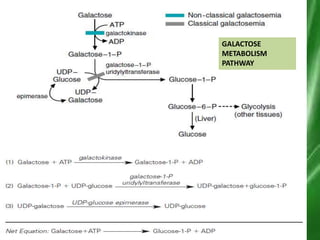
GALACTOSE 
METABOLISM 
PATHWAY
WHAT IS GALACTOSEMIA? 
It is a rare genetic metabolic disorder that 
affects how the body processes a simple sugar 
called galactose. 
Inability of the body to use galactose to produce 
energy.
3 inborn errors related to galactose 
metabolism: 
1. Galactose-1-phosphate uridyltransferase 
deficiency 
2. Galactokinase deficiency 
3. Uridine diphosphate-galactose 4-epimerase 
deficiency
Galactosemia is due to deficiency of the enzyme 
galactose 1-phosphate uridyltransferase. 
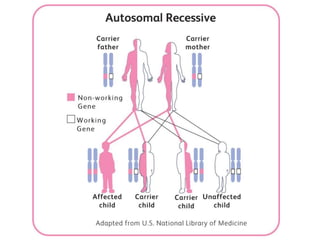
It is a rare congenital disease in infants, inherited as 
autosomal recessive disorder. 
Mutation in the GALT gene located on chromosome 9 is 
responsible for this disorder. 
1. Galactose metabolism is impaired leading to increased 
galactose levels in blood (galactosemia) and urine 
(galactosuria). 
2. Accumulated galactose is diverted for production of 
galactitol by the enzyme aldol reductase. Galactitol has 
been implicated in the development of cataract.
3. The accumulation of galactose 1-phosphate and 
galactitol in various tissues like liver, nervous tissue, 
lens and kidney leads to impairment in their function. 
4. The accumulation of galactose 1-phosphate in liver 
results in the depletion of inorganic phosphate for 
other metabolic functions. 
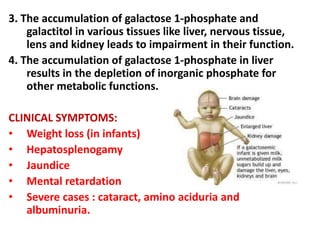
CLINICAL SYMPTOMS: 
• Weight loss (in infants) 
• Hepatosplenogamy 
• Jaundice 
• Mental retardation 
• Severe cases : cataract, amino aciduria and 
albuminuria.
DIAGNOSIS: 
Early detection of galactosemia is possible 
by measuring the activity of galactose 1- 
phosphate uridyl transferase in 
erythrocytes. 
Genetic screening test done. 
TREATMENT: 
Supplying diet deprived of galactose and 
lactose.
• Defect in the enzyme galactokinase 
responsible for phosphorylation of galactose. 
• Mutation in GALK1 gene. 
• Galactose is shunted to the formation of 
galactitol. 
• Cataract development at a very early age, 
sometimes within an year after birth. 
• Treatment involves removal of galaatose and 
lactose from the diet.
• Extremely rare. 
• Mutations in GALE gene is responsible. 
• Symptoms vary from mild to severe and can 
include cataracts, delayed growth and 
development, intellectual disability, liver 
disease and kidney problems.
Galactose metabolism disorders

Galactose metabolism disorders

  • 1.
  • 2.
    Introduction • Galactoseis a simple sugar found in many foods. • When lactose is broken down in the body, glucose and galactose are produced. • Galactose is converted into glucose in the body for energy purpose in the Leloir pathway.
  • 3.
    SOURCES • Dairyproducts • Fruits • Vegetables
  • 4.
    Normally when aperson consumes a product that contains lactose (eg: dairy products such as milk,cheese,butter), the body breaks the lactose down into galactose and glucose.
  • 5.
  • 6.
    WHAT IS GALACTOSEMIA? It is a rare genetic metabolic disorder that affects how the body processes a simple sugar called galactose. Inability of the body to use galactose to produce energy.
  • 7.
    3 inborn errorsrelated to galactose metabolism: 1. Galactose-1-phosphate uridyltransferase deficiency 2. Galactokinase deficiency 3. Uridine diphosphate-galactose 4-epimerase deficiency
  • 8.
    Galactosemia is dueto deficiency of the enzyme galactose 1-phosphate uridyltransferase. It is a rare congenital disease in infants, inherited as autosomal recessive disorder. Mutation in the GALT gene located on chromosome 9 is responsible for this disorder. 1. Galactose metabolism is impaired leading to increased galactose levels in blood (galactosemia) and urine (galactosuria). 2. Accumulated galactose is diverted for production of galactitol by the enzyme aldol reductase. Galactitol has been implicated in the development of cataract.
  • 10.
    3. The accumulationof galactose 1-phosphate and galactitol in various tissues like liver, nervous tissue, lens and kidney leads to impairment in their function. 4. The accumulation of galactose 1-phosphate in liver results in the depletion of inorganic phosphate for other metabolic functions. CLINICAL SYMPTOMS: • Weight loss (in infants) • Hepatosplenogamy • Jaundice • Mental retardation • Severe cases : cataract, amino aciduria and albuminuria.
  • 11.
    DIAGNOSIS: Early detectionof galactosemia is possible by measuring the activity of galactose 1- phosphate uridyl transferase in erythrocytes. Genetic screening test done. TREATMENT: Supplying diet deprived of galactose and lactose.
  • 12.
    • Defect inthe enzyme galactokinase responsible for phosphorylation of galactose. • Mutation in GALK1 gene. • Galactose is shunted to the formation of galactitol. • Cataract development at a very early age, sometimes within an year after birth. • Treatment involves removal of galaatose and lactose from the diet.
  • 13.
    • Extremely rare. • Mutations in GALE gene is responsible. • Symptoms vary from mild to severe and can include cataracts, delayed growth and development, intellectual disability, liver disease and kidney problems.