- Angel Yoanna
Blood Buffer System
Introduction
The maintenance of the blood pH is important for the
proper functioning of our body and can be critical if
not maintained.
The main buffers in blood are bicarbonate,
haemoglobin, plasma proteins and phosphates.
Mainly, the buffer involves carbonic acid (H2CO3), a
weak acid, and bicarbonate ion (HCO3-), the
conjugate base.
Bicarbonate Buffer System
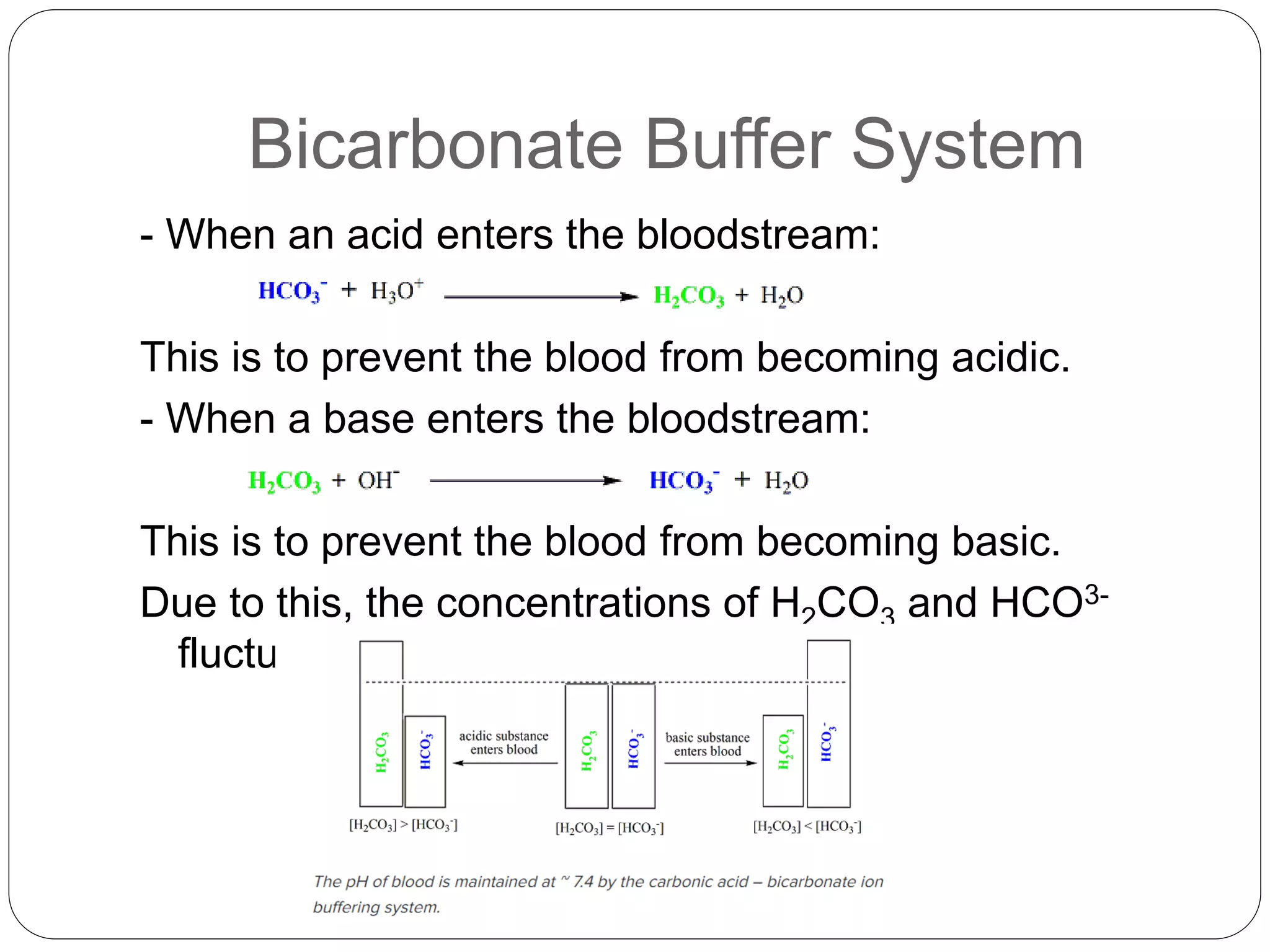
- When an acid enters the bloodstream:
This is to prevent the blood from becoming acidic.
- When a base enters the bloodstream:
This is to prevent the blood from becoming basic.
Due to this, the concentrations of H2CO3 and HCO3-
fluctuate.
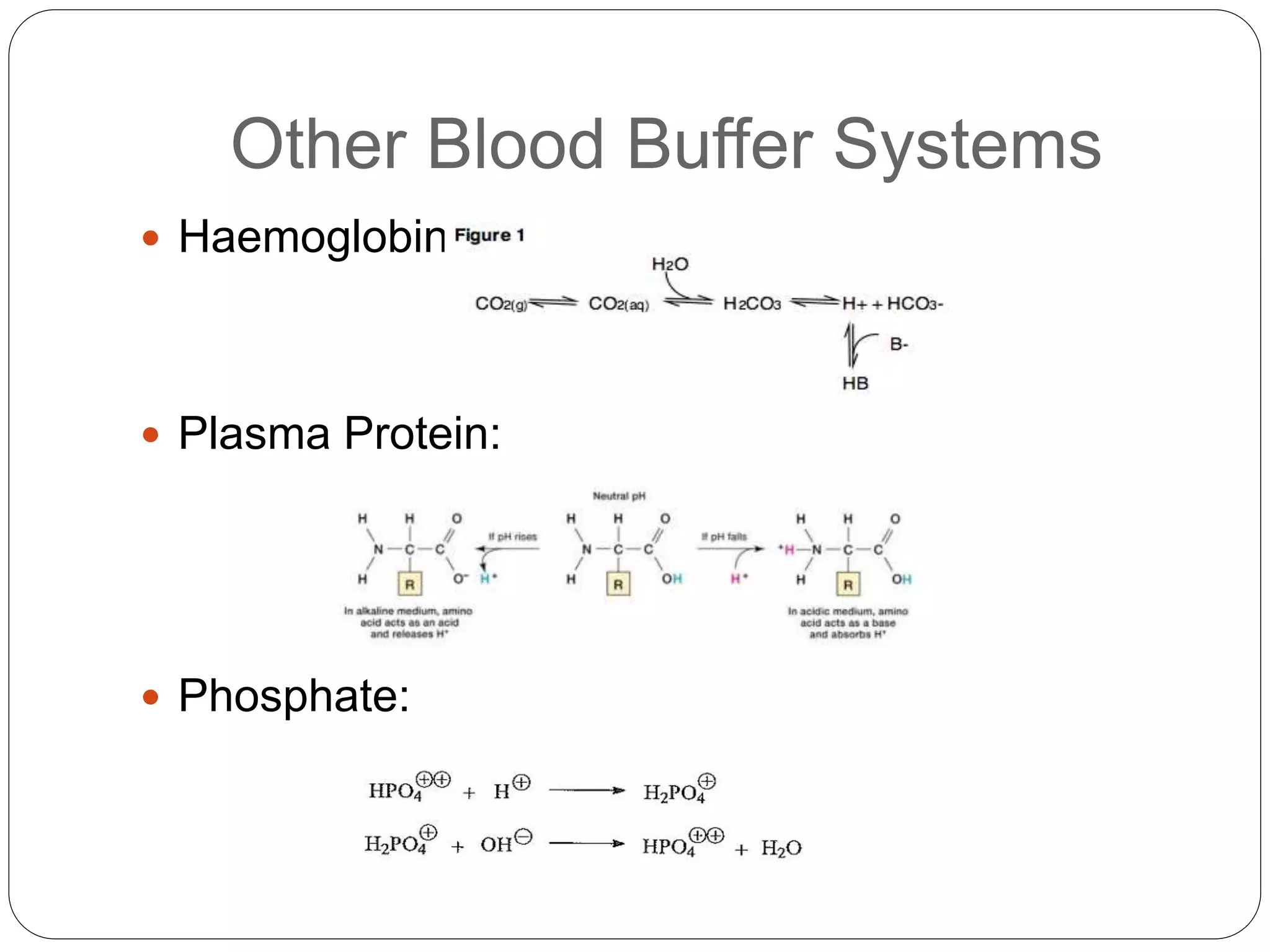
Other Blood Buffer Systems
 Haemoglobin:
 Plasma Protein:
 Phosphate:
Why is This Critical?
If the blood pH goes lower than 6.8 or higher than
7.4, the enzymes and cells would denature and
stop functioning which would cause death.
Cells and enzymes function at a specific
temperature and pH level. Therefore, anything
below or above the specific temperature and pH
level would denature it and the body would stop
functioning causing a lot of diseases and
eventually death!
Abnormalities
Acidosis: an abnormal condition due to excess of
acid in blood that cause the pH to drop below
7.35.
Alkalosis: an abnormal condition due to excess of
base in blood that cause the pH to rise above
7.45.
Causation
Acidosis is caused by:
 Increased acid
production within body.
 Consumption of
substances metabolized
by acid.
 Decreased acid
secretion
 Increased base
secretion
Alkalosis is caused by:
 Disturbances in
electrolyte due to
severe dehydration or
prolonged vomiting.
 Consumption of base
 Hyperventilation with
increased excretion of
acid in the form of CO2.
Also any disease that affects the lungs, kidneys, metabolism
or breathing can cause these two conditions.
Treatment
The treatment for Acidosis and Alkalosis is to
identify the cause of the pH imbalance and
providing medications or support according to it.
The treatment to this is mostly never direct. But at
times, health practitioners give intravenous HCO3-
to people who have dangerously low blood pH.
Citation
 https://www.khanacademy.org/test-
prep/mcat/chemical-processes/acid-base-
equilibria/a/chemistry-of-buffers-and-buffers-in-
blood
 https://labtestsonline.org/understanding/condition
s/acidosis/
 Google Images
Thank you!

Blood buffer system

  • 1.
    - Angel Yoanna BloodBuffer System
  • 2.
    Introduction The maintenance ofthe blood pH is important for the proper functioning of our body and can be critical if not maintained. The main buffers in blood are bicarbonate, haemoglobin, plasma proteins and phosphates. Mainly, the buffer involves carbonic acid (H2CO3), a weak acid, and bicarbonate ion (HCO3-), the conjugate base.
  • 3.
    Bicarbonate Buffer System -When an acid enters the bloodstream: This is to prevent the blood from becoming acidic. - When a base enters the bloodstream: This is to prevent the blood from becoming basic. Due to this, the concentrations of H2CO3 and HCO3- fluctuate.
  • 4.
    Other Blood BufferSystems  Haemoglobin:  Plasma Protein:  Phosphate:
  • 5.
    Why is ThisCritical? If the blood pH goes lower than 6.8 or higher than 7.4, the enzymes and cells would denature and stop functioning which would cause death. Cells and enzymes function at a specific temperature and pH level. Therefore, anything below or above the specific temperature and pH level would denature it and the body would stop functioning causing a lot of diseases and eventually death!
  • 6.
    Abnormalities Acidosis: an abnormalcondition due to excess of acid in blood that cause the pH to drop below 7.35. Alkalosis: an abnormal condition due to excess of base in blood that cause the pH to rise above 7.45.
  • 7.
    Causation Acidosis is causedby:  Increased acid production within body.  Consumption of substances metabolized by acid.  Decreased acid secretion  Increased base secretion Alkalosis is caused by:  Disturbances in electrolyte due to severe dehydration or prolonged vomiting.  Consumption of base  Hyperventilation with increased excretion of acid in the form of CO2. Also any disease that affects the lungs, kidneys, metabolism or breathing can cause these two conditions.
  • 8.
    Treatment The treatment forAcidosis and Alkalosis is to identify the cause of the pH imbalance and providing medications or support according to it. The treatment to this is mostly never direct. But at times, health practitioners give intravenous HCO3- to people who have dangerously low blood pH.
  • 9.
  • 10.