PARTHENOGENESIS
_ Dr Zaid Wani
History
• Parthenogenesis was first recognized in 1745 by
CHARLES BONNET
• JACQUES LOEB stimulated parthenogenesis in sea
urchin and frog eggs by artificial means in 1900.
• G.PINCUS in 1936 artificially produced the first
known parthenogenetic offspring in a mammal
{rabbit}.
Definition
• Parthenogenesis is a natural form of asexual
reproduction.
• Growth and development of embryos occur
without fertilization.
• It is a component of apomixis.
Occurrence
• Parthenogenesis is found in many
invertebrates such as rotifers and arthropods.
• Crustaceans , insects and arachnids {spider,
mites}
• some vertebrates {rock lizards and birds}.
• Snails, Sharks, Amphibians
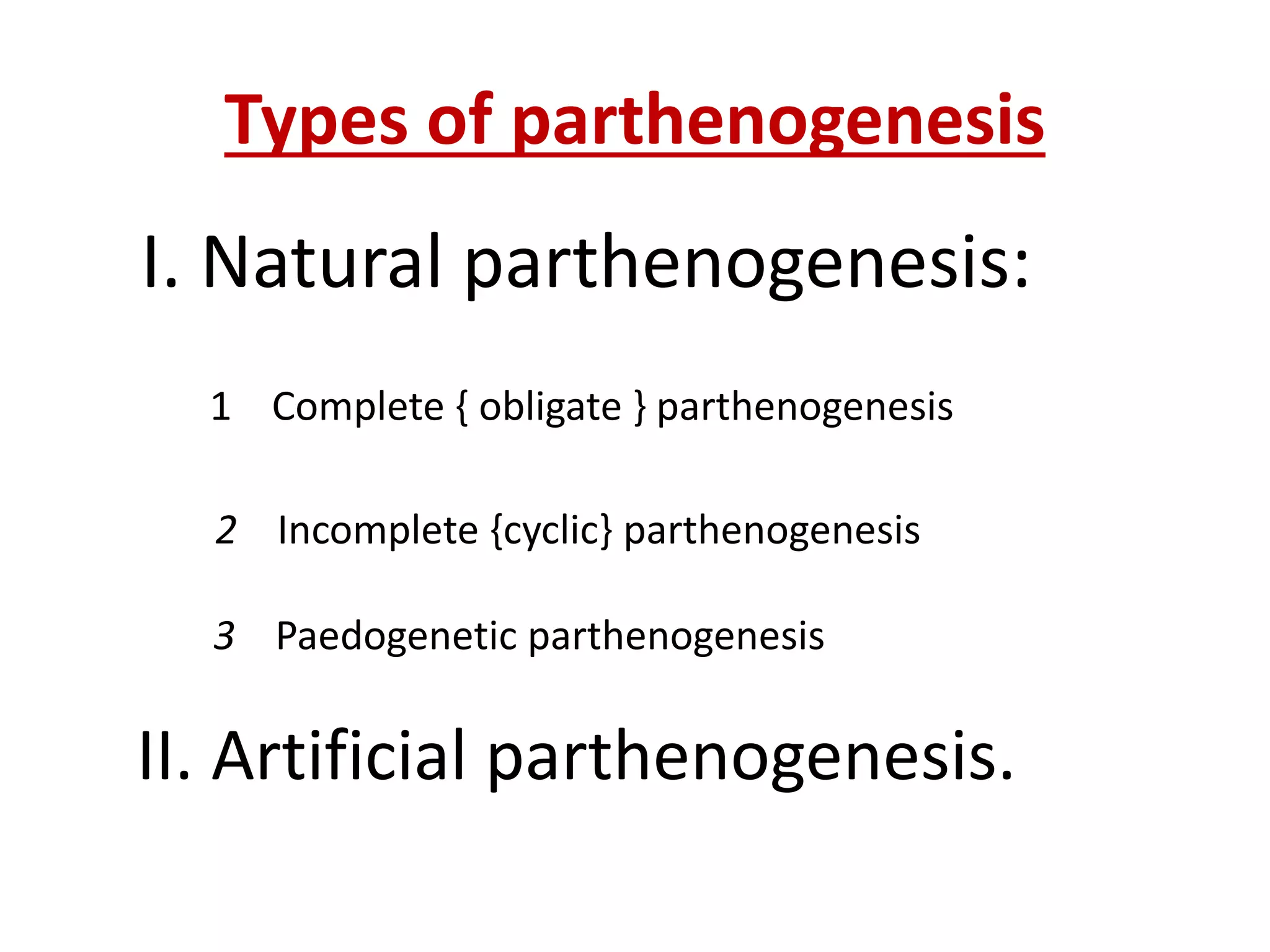
Types of parthenogenesis
I. Natural parthenogenesis:
1 Complete { obligate } parthenogenesis
2 Incomplete {cyclic} parthenogenesis
• 3 Paedogenetic parthenogenesis
II. Artificial parthenogenesis.
I. Natural Parthenogenesis
In certain animals the parthenogenesis occurs
regularly, constantly and naturally in their life
cycles and is known as the natural
parthenogenesis.
• The natural parthenogenesis may be of two
types, viz., complete or incomplete
Complete Parthenogenesis:
• Certain insects have no sexual phase and no
males. They depend exclusively on the
parthenogenesis for the self-reproduction.
• This type of parthenogenesis is known as the
complete parthenogenesis or obligatory
parthenogenesis.
• Examples : Rotifers, Caucasian Rock Lizard.
Incomplete parthenogensis:
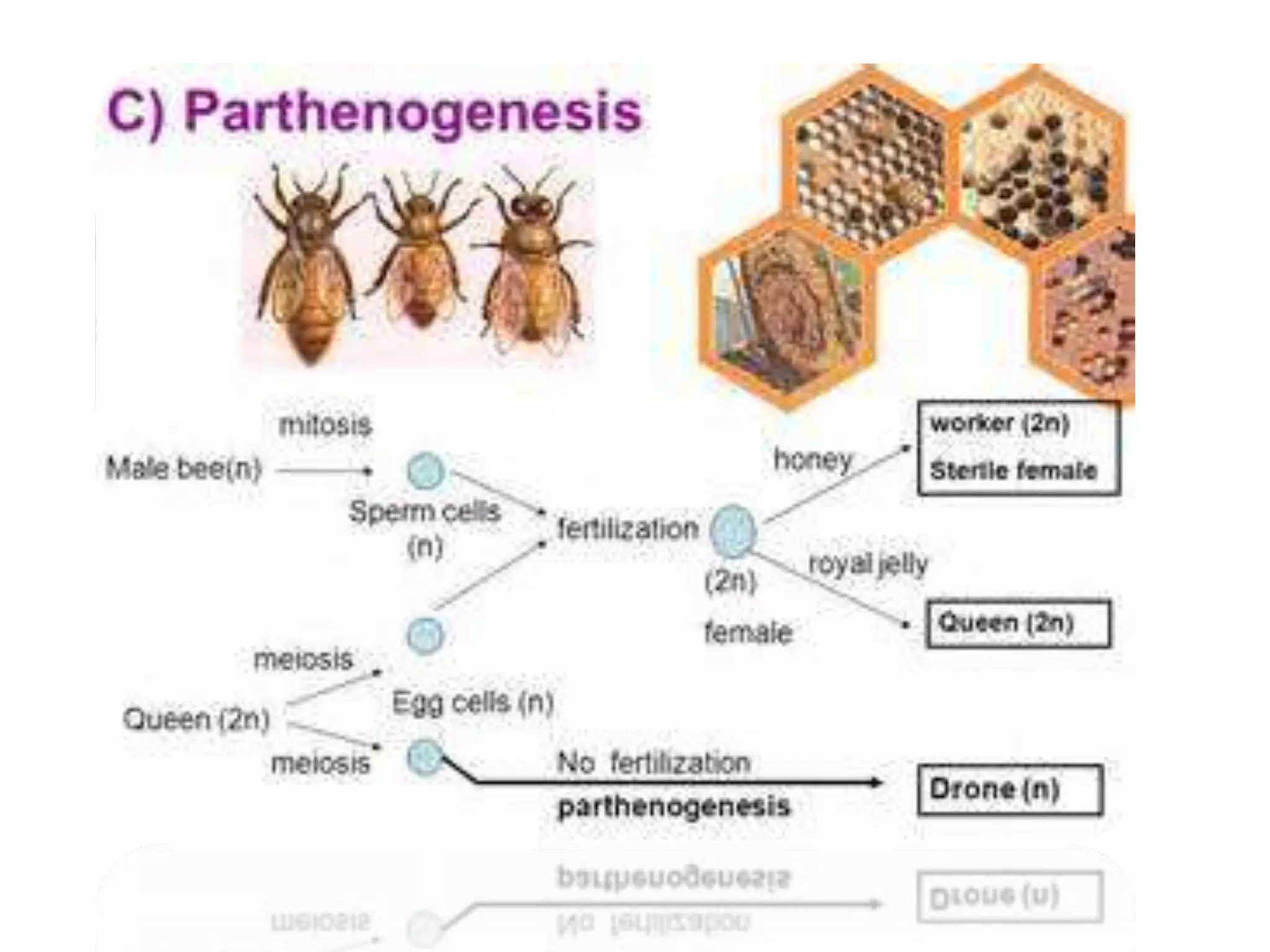
• The life cycle of certain insects includes two
generations, the sexual generation and
parthenogenetic generation, both of which alternate to
each other.
• In such cases, the diploid eggs produce females and the
un-fertilised eggs produce males.
• This type of parthenogenesis is known as the partial or
incomplete or cyclic parthenogenesis.
• Examples : Aphids, Honeybees, Rotifers, Birds.
The complete or incomplete type of natural
parthenogenesis may be of following two types:
• 1. Haploid or arrhenotokous parthenogenesis.
• 2. Diploid or thelytokous parthenogenesis.
• Haploid or arrhenotokous parthenogenesis:
In the arrhenotokous parthenogenesis the
haploid eggs are not fertilised by the sperms and
develop into the haploid individuals. Eg,
Honeybees
• Diploid or thelytokous parthenogenesis:
In the diploid parthenogenesis, the young
individuals develop from the un-fertilised
diploid eggs.
 Types:
(i) Ameiotic Parthenogenesis:
• Sometimes during the oogenesis, first meiotic or
reduction division does not occur but second meiotic
division occurs as usual.
• Such eggs contain diploid number of chromosomes and
develop into new individuals without the fertilisation.
• This type of parthenogenesis is known as apomictic or
ameiotic parthenogenesis and occurs in weevils and
long-horned grasshoppers.
ii) Meiotic Parthenogenesis:
• Certain eggs develop by the usual process of
oogenesis but at certain stages diplosis or
doubling of chromosome number and production
of diploid eggs occur.
• Such eggs develop into the diploid individuals
and this phenomenon is known as the meiotic
parthenogenesis.
Paedogenetic parthenogenisis:
• Larvae of some insects lays eggs which
develop parthenogenetically into new
generation of larvae. Eg , Dipterous insects.
Artificial Parthenogenesis
• The eggs which always develop into the young
individuals by the fertilisation sometimes may
develop parthenogenetically under certain
artificial conditions.
• The artificial parthenogenesis may be induced
by various chemical and physical means.
Significance
1. The parthenogenesis serves as the means for the
determination of sex in the honey bees, wasps, etc.
2. The parthenogenesis is the most simple, stable and
easy process of reproduction.
3. The parthenogenesis eliminates the variation from
the populations.
4. The parthenogenesis is the best way of high rate of
multiplication in certain insects, e.g., aphids.
5. The parthenogenesis causes the polyploidy in the
organisms.
6. The parthenogenesis encourages advantageous
mutant characters.
7. No need for the organisms to waste their energy in
the process of mating.
THANK YOU

Parthenogenesis

  • 1.
  • 2.
    History • Parthenogenesis wasfirst recognized in 1745 by CHARLES BONNET • JACQUES LOEB stimulated parthenogenesis in sea urchin and frog eggs by artificial means in 1900. • G.PINCUS in 1936 artificially produced the first known parthenogenetic offspring in a mammal {rabbit}.
  • 3.
    Definition • Parthenogenesis isa natural form of asexual reproduction. • Growth and development of embryos occur without fertilization. • It is a component of apomixis.
  • 4.
    Occurrence • Parthenogenesis isfound in many invertebrates such as rotifers and arthropods. • Crustaceans , insects and arachnids {spider, mites} • some vertebrates {rock lizards and birds}. • Snails, Sharks, Amphibians
  • 5.
    Types of parthenogenesis I.Natural parthenogenesis: 1 Complete { obligate } parthenogenesis 2 Incomplete {cyclic} parthenogenesis • 3 Paedogenetic parthenogenesis II. Artificial parthenogenesis.
  • 6.
    I. Natural Parthenogenesis Incertain animals the parthenogenesis occurs regularly, constantly and naturally in their life cycles and is known as the natural parthenogenesis. • The natural parthenogenesis may be of two types, viz., complete or incomplete
  • 7.
    Complete Parthenogenesis: • Certaininsects have no sexual phase and no males. They depend exclusively on the parthenogenesis for the self-reproduction. • This type of parthenogenesis is known as the complete parthenogenesis or obligatory parthenogenesis. • Examples : Rotifers, Caucasian Rock Lizard.
  • 8.
    Incomplete parthenogensis: • Thelife cycle of certain insects includes two generations, the sexual generation and parthenogenetic generation, both of which alternate to each other. • In such cases, the diploid eggs produce females and the un-fertilised eggs produce males. • This type of parthenogenesis is known as the partial or incomplete or cyclic parthenogenesis. • Examples : Aphids, Honeybees, Rotifers, Birds.
  • 10.
    The complete orincomplete type of natural parthenogenesis may be of following two types: • 1. Haploid or arrhenotokous parthenogenesis. • 2. Diploid or thelytokous parthenogenesis.
  • 11.
    • Haploid orarrhenotokous parthenogenesis: In the arrhenotokous parthenogenesis the haploid eggs are not fertilised by the sperms and develop into the haploid individuals. Eg, Honeybees • Diploid or thelytokous parthenogenesis: In the diploid parthenogenesis, the young individuals develop from the un-fertilised diploid eggs.
  • 12.
     Types: (i) AmeioticParthenogenesis: • Sometimes during the oogenesis, first meiotic or reduction division does not occur but second meiotic division occurs as usual. • Such eggs contain diploid number of chromosomes and develop into new individuals without the fertilisation. • This type of parthenogenesis is known as apomictic or ameiotic parthenogenesis and occurs in weevils and long-horned grasshoppers.
  • 14.
    ii) Meiotic Parthenogenesis: •Certain eggs develop by the usual process of oogenesis but at certain stages diplosis or doubling of chromosome number and production of diploid eggs occur. • Such eggs develop into the diploid individuals and this phenomenon is known as the meiotic parthenogenesis.
  • 15.
    Paedogenetic parthenogenisis: • Larvaeof some insects lays eggs which develop parthenogenetically into new generation of larvae. Eg , Dipterous insects.
  • 16.
    Artificial Parthenogenesis • Theeggs which always develop into the young individuals by the fertilisation sometimes may develop parthenogenetically under certain artificial conditions. • The artificial parthenogenesis may be induced by various chemical and physical means.
  • 17.
    Significance 1. The parthenogenesisserves as the means for the determination of sex in the honey bees, wasps, etc. 2. The parthenogenesis is the most simple, stable and easy process of reproduction. 3. The parthenogenesis eliminates the variation from the populations. 4. The parthenogenesis is the best way of high rate of multiplication in certain insects, e.g., aphids.
  • 18.
    5. The parthenogenesiscauses the polyploidy in the organisms. 6. The parthenogenesis encourages advantageous mutant characters. 7. No need for the organisms to waste their energy in the process of mating.
  • 19.