1/20
Drug products for which BA/BE can be waived


Biowaivers for solid oral dosage form based on
BCS
Biowaiver extensions
Data to support biowaivers

                                           2/20
Drug Products for which
bioavailability or bioequivalence can
be waived

    Bioavailability is self evident
    IVIVC
    BCS based biowaivers


                                        3/20
Biowaivers for immediate release
solid oral dosage form based on
BCS (FDA Guidance for Industry)


 Recommendations provided by guidance


                                        4/20
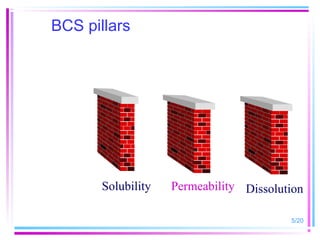
BCS pillars


       Solubility   Permeability Dissolution

                                         5/20
BCS drug substance are classified as
below:

• Class 1: High Solubility, High Permeability

• Class 2: Low Solubility, High Permeability

• Class 3: High Solubility, Low Permeability

• Class 4: Low Solubility, Low Permeability


                                                6/20
Biopharmaceutics Classification System


Solubility

 Easy to determine

Permeability

 Harder to determine


                                    7/20
Solubility

 Objective: to determine equilibrium solubility of a
 drug substance under physiological pH conditions.

  pH-solubility profile of test drug at 37oC in aqueous
   media with a pH range of 1 to 7.5
  Shake-flask or titration method
  Analysis by validated stability-indicating assay


                                                           8/20
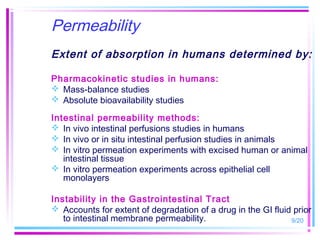
Permeability
Extent of absorption in humans determined by:

Pharmacokinetic studies in humans:
 Mass-balance studies
 Absolute bioavailability studies

Intestinal permeability methods:
 In vivo intestinal perfusions studies in humans
 In vivo or in situ intestinal perfusion studies in animals
 In vitro permeation experiments with excised human or animal
   intestinal tissue
 In vitro permeation experiments across epithelial cell
   monolayers

Instability in the Gastrointestinal Tract
 Accounts for extent of degradation of a drug in the GI fluid prior
   to intestinal membrane permeability.                       9/20
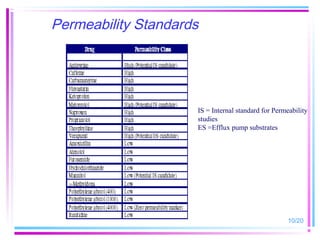
Permeability Standards


                     IS = Internal standard for Permeability
                     studies
                     ES =Efflux pump substrates


                                                     10/20
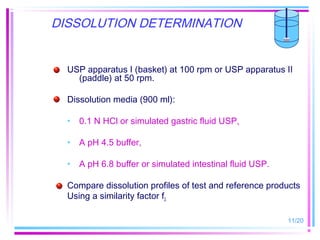
DISSOLUTION DETERMINATION


  USP apparatus I (basket) at 100 rpm or USP apparatus II
    (paddle) at 50 rpm.

  Dissolution media (900 ml):

  •   0.1 N HCl or simulated gastric fluid USP,

  •   A pH 4.5 buffer,

  •   A pH 6.8 buffer or simulated intestinal fluid USP.

  Compare dissolution profiles of test and reference products
  Using a similarity factor f2.

                                                           11/20
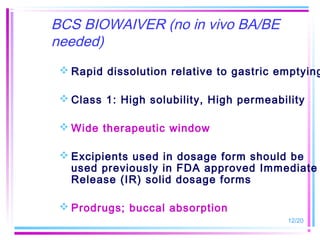
BCS BIOWAIVER (no in vivo BA/BE
needed)
  Rapid dissolution relative to gastric emptying

  Class 1: High solubility, High permeability

  Wide therapeutic window

  Excipients used in dosage form should be
   used previously in FDA approved Immediate
   Release (IR) solid dosage forms

  Prodrugs; buccal absorption
                                          12/20
No biowaiver for:


 locally applied, systemically acting products
 non-oral immediate release forms with systemic action
 modified release products
 transdermal products


                                                         13/20
Biowaiver Extensions ?!

 Provided that ......

  drug solubility is high,
  permeability is limited,
  excipients do not affect kinetics,
  excipients do not interact ,.....


                                        14/20
Biowaiver Extensions ?!
 ....then very rapid dissolution (e.g.>85% in 15 min)
     of test and reference may ensure similar product
     characteristics
 because...
 ....absorption process is probably independent from
 dissolution and not product related…


  limited absorption kinetics due to poor drug
   permeability and/or gastric emptying

 ♦ Biowaiver for BCS class III drugs (e.g. Atenolol)?!

                                                  15/20
Biowaiver Extensions ?!

 For drugs showing ....

    ‘very’ high permeability

    pH-dependent solubility within the physiologically
     relevant pH range

 .....an ‘intermediate solubility’ class is suggested


                                                   16/20
Data to support Biowaivers

 Data supporting

 High solubility
 High permeability
 Rapid and similar dissolution


                                 17/20
Write note on drug products for which BA/BE
  studies can be waived. (5 marks)
Write note on BCS based biowaivers. (5 marks)
Enlist the methods to determine the permeability
 of drug substance. (2 marks)
Comment on Biowaiver extensions. (2 marks)

                                            18/20
REFERENCES
 http://ikev.org/haber/bioav/Barends_Istanbul
  %2004-1_korr.pdf

 http://www.absorption.com/site/Services/BCS.as
  px

 http://ikev.org/haber/bioav/BA-BE%20Intro-01-
  30-color.pdf

 http://medicine.iupui.edu/clinical/F813_spring200
  6/S_ClinicalPKF813Lecture1709March2006Bioa
  vailabilityandBioequivalencerevised.pdf

 http://www.sfbci.com/SFBC/upload/sfbc/Generat
  eur/LeonShargel.pdf

                                                      19/20
20/20

Biowaivers

  • 1.
  • 2.
    Drug products forwhich BA/BE can be waived Biowaivers for solid oral dosage form based on BCS Biowaiver extensions Data to support biowaivers 2/20
  • 3.
    Drug Products forwhich bioavailability or bioequivalence can be waived Bioavailability is self evident IVIVC BCS based biowaivers 3/20
  • 4.
    Biowaivers for immediaterelease solid oral dosage form based on BCS (FDA Guidance for Industry) Recommendations provided by guidance 4/20
  • 5.
    BCS pillars Solubility Permeability Dissolution 5/20
  • 6.
    BCS drug substanceare classified as below: • Class 1: High Solubility, High Permeability • Class 2: Low Solubility, High Permeability • Class 3: High Solubility, Low Permeability • Class 4: Low Solubility, Low Permeability 6/20
  • 7.
    Biopharmaceutics Classification System Solubility Easy to determine Permeability  Harder to determine 7/20
  • 8.
    Solubility Objective: todetermine equilibrium solubility of a drug substance under physiological pH conditions.  pH-solubility profile of test drug at 37oC in aqueous media with a pH range of 1 to 7.5  Shake-flask or titration method  Analysis by validated stability-indicating assay 8/20
  • 9.
    Permeability Extent of absorptionin humans determined by: Pharmacokinetic studies in humans:  Mass-balance studies  Absolute bioavailability studies Intestinal permeability methods:  In vivo intestinal perfusions studies in humans  In vivo or in situ intestinal perfusion studies in animals  In vitro permeation experiments with excised human or animal intestinal tissue  In vitro permeation experiments across epithelial cell monolayers Instability in the Gastrointestinal Tract  Accounts for extent of degradation of a drug in the GI fluid prior to intestinal membrane permeability. 9/20
  • 10.
    Permeability Standards IS = Internal standard for Permeability studies ES =Efflux pump substrates 10/20
  • 11.
    DISSOLUTION DETERMINATION USP apparatus I (basket) at 100 rpm or USP apparatus II (paddle) at 50 rpm. Dissolution media (900 ml): • 0.1 N HCl or simulated gastric fluid USP, • A pH 4.5 buffer, • A pH 6.8 buffer or simulated intestinal fluid USP. Compare dissolution profiles of test and reference products Using a similarity factor f2. 11/20
  • 12.
    BCS BIOWAIVER (noin vivo BA/BE needed)  Rapid dissolution relative to gastric emptying  Class 1: High solubility, High permeability  Wide therapeutic window  Excipients used in dosage form should be used previously in FDA approved Immediate Release (IR) solid dosage forms  Prodrugs; buccal absorption 12/20
  • 13.
    No biowaiver for: locally applied, systemically acting products non-oral immediate release forms with systemic action modified release products transdermal products 13/20
  • 14.
    Biowaiver Extensions ?! Provided that ......  drug solubility is high,  permeability is limited,  excipients do not affect kinetics,  excipients do not interact ,..... 14/20
  • 15.
    Biowaiver Extensions ?! ....then very rapid dissolution (e.g.>85% in 15 min) of test and reference may ensure similar product characteristics because... ....absorption process is probably independent from dissolution and not product related…  limited absorption kinetics due to poor drug permeability and/or gastric emptying ♦ Biowaiver for BCS class III drugs (e.g. Atenolol)?! 15/20
  • 16.
    Biowaiver Extensions ?! For drugs showing ....  ‘very’ high permeability  pH-dependent solubility within the physiologically relevant pH range .....an ‘intermediate solubility’ class is suggested 16/20
  • 17.
    Data to supportBiowaivers Data supporting High solubility High permeability Rapid and similar dissolution 17/20
  • 18.
    Write note ondrug products for which BA/BE studies can be waived. (5 marks) Write note on BCS based biowaivers. (5 marks) Enlist the methods to determine the permeability of drug substance. (2 marks) Comment on Biowaiver extensions. (2 marks) 18/20
  • 19.
    REFERENCES  http://ikev.org/haber/bioav/Barends_Istanbul %2004-1_korr.pdf  http://www.absorption.com/site/Services/BCS.as px  http://ikev.org/haber/bioav/BA-BE%20Intro-01- 30-color.pdf  http://medicine.iupui.edu/clinical/F813_spring200 6/S_ClinicalPKF813Lecture1709March2006Bioa vailabilityandBioequivalencerevised.pdf  http://www.sfbci.com/SFBC/upload/sfbc/Generat eur/LeonShargel.pdf 19/20
  • 20.